
 VoIP
VoIP  Blog
Blog  Business Communication
  Customer Experience
  Leadership
  Marketing & Sales
  Nextiva News
  Productivity


Businesses exploring Five9 alternatives often want more predictable pricing, faster deployment, advanced AI capabilities, or a platform that combines contact center and internal communications.
With 79% of customer experience leaders viewing customer experience as a revenue driver, choosing the right contact center software is increasingly important. Pricing, automation, channel coverage, and reliable customer data all influence that decision.
In this guide, we compare 10 of the best Five9 alternatives and competitors for 2026, covering their features, pricing, strengths, and ideal use cases to help you find the right fit.
Five9 Quick Overview
Five9 is an established cloud-based Contact Center as a Service (CCaaS) platform designed for businesses managing inbound, outbound, and blended customer interactions. It’s known for enterprise scalability, advanced outbound dialing, CRM integrations, and workforce engagement tools.
The platform also offers AI-powered capabilities, including virtual agents, agent assistance, conversation intelligence, and GenAI Studio for developing generative AI applications.
While Five9 is well suited to large contact centers with complex workflows, businesses may consider alternatives if they need:
- More transparent pricing and flexible contracts
- Faster deployment with fewer implementation requirements
- Unified communications and contact center tools in one platform
- Built-in workforce management and advanced analytics
- Voice, messaging, chat, and social channels in one workspace
- AI-powered automation that can handle customer requests and complete tasks
Ultimately, the right alternative depends on your team size, budget, customer communication channels, and operational complexity.
Comparing Five9 Alternatives
The products in this guide fall into two broad categories:
| Platform type | Typical use | Examples |
|---|---|---|
| Enterprise CCaaS | Inbound, outbound, and mixed contact center operations with complex routing, analytics, and workforce management | Genesys Cloud CX, Talkdesk, NiCE CXone, Amazon Connect |
| Unified communications and contact center | Business calling, team collaboration, and contact center functions in one environment | Nextiva, 8×8 |
| Voice-first contact center | Sales calling, customer support, dialers, and CRM-connected voice workflows | Aircall, CloudTalk |
| Digital-first customer experience | Social media, messaging, chat, and digital journey management | Sprinklr Service |
| AI-powered contact center intelligence and automation | Real-time agent assistance, automated quality assurance, conversation analytics, AI coaching, and customer service automation | Observe.AI |
Cloud-hosted contact center software is managed by the provider. The provider handles the servers, platform updates, and infrastructure, while the customer accesses the system remotely. Call center software can also be categorized as inbound, outbound, mixed, on-premises, or cloud-hosted.
Top Five9 Alternatives at a Glance
| Provider | Pricing model | Primary strengths | Best fit |
|---|---|---|---|
| Nextiva | $15–$75+ per user/month for published phone plans; custom contact center plans may apply | Unified UCaaS and CCaaS, AI summaries, omnichannel routing, workflow automation, WFM | Mid-market and enterprise teams that want one communications platform |
| Genesys Cloud CX | Starts at $75 per user/month in the referenced pricing | Journey orchestration, omnichannel routing, analytics, WEM | Large enterprises with complex customer journeys |
| Talkdesk | Starts at $85 per user/month in the referenced pricing | Industry-specific tools, visual workflow design, AI assistance | Regulated industries and mid-market companies |
| NiCE CXone | $71–$249+ per user/month in the referenced pricing | Workforce optimization, analytics, agent coaching | Data-driven enterprise contact centers |
| 8×8 | Custom quote | UCaaS and CCaaS, international communications, global calling | Multinational teams |
| Observe.AI | Custom quote (enterprise pricing) | Automated QA, real-time agent coaching, conversation intelligence, and AI agents | Mid-market and enterprise contact centers prioritizing AI automation |
| Amazon Connect | Usage-based billing | AWS integration, custom workflows, consumption pricing | AWS-native and engineering-led teams |
| Aircall | Published Essentials, Professional, and Custom plans | Voice calling, CRM integrations, shared inboxes, call monitoring | Startups and SMBs with voice-first needs |
| CloudTalk | Published Lite, Essential, and Expert plans | Outbound dialing, international numbers, analytics, AI summaries | International sales and outbound teams |
| Sprinklr Service | Custom quote | Digital channels, social listening, unified CXM | Consumer brands with digital-first support |
Prices change frequently. Buyers should confirm current pricing, user minimums, usage charges, contract terms, and feature availability before signing an agreement.
Strengths of Five9
Five9 provides several capabilities that make it a credible enterprise contact center platform:
- Mature outbound dialing: Predictive, progressive, and preview dialers support high-volume sales, collections, and service campaigns.
- Salesforce integration: Five9 can connect contact center workflows with Salesforce records, screen pops, and activity logging.
- Enterprise scale: The platform supports large contact center deployments and enterprise compliance requirements.
- Inbound and outbound coverage: Businesses can manage customer service queues, outbound campaigns, and blended operations.
- Digital channels: Five9 supports voice alongside channels such as email, chat, and SMS.
- AI development tools: GenAI Studio helps teams create and configure generative AI applications.
Five9 can suit organizations with dedicated technical teams and established contact center operations. Its configuration model, pricing structure, and separation from internal communications may lead other teams to compare alternatives.
Why Customers Consider Five9 Competitors
Separate UCaaS and CCaaS products
Five9 is a CCaaS platform rather than a complete internal communications suite. Businesses that need corporate phone service, team messaging, meetings, and contact center operations may need a separate UCaaS platform.
Separate systems can create:
- Application switching for agents
- Additional administration for IT teams
- More complex user provisioning
- Separate contracts and support channels
- Fragmented reporting and communication history
Platforms such as Nextiva and 8×8 combine business communications with contact center capabilities.
Pricing and contract structure
Five9 pricing can vary by package, channel, usage, support level, and contract terms. Some businesses also encounter user minimums, premium feature tiers, or paid add-ons.
A buying review should confirm:
- Per-user or usage-based pricing
- Minimum seat requirements
- Recording and storage fees
- Digital channel charges
- AI and analytics add-ons
- Support coverage
- Contract length and renewal terms
Implementation requirements
Complex call flows, reporting dashboards, integrations, and workforce rules may require specialist resources. Smaller teams may prefer visual workflow builders and prebuilt integrations that reduce development work.
AI configuration
Five9 offers generative AI capabilities through GenAI Studio. Teams that need AI to complete tasks, update records, surface knowledge, or manage routine customer interactions may prefer platforms with more automation in the base product. Agentic AI focuses on completing actions across a customer journey rather than only producing text or summaries.
Data retention questions
Some Five9 users report concerns about historical data access and retention. Buyers should confirm recording retention, attachment storage, export options, and applicable compliance controls during procurement.
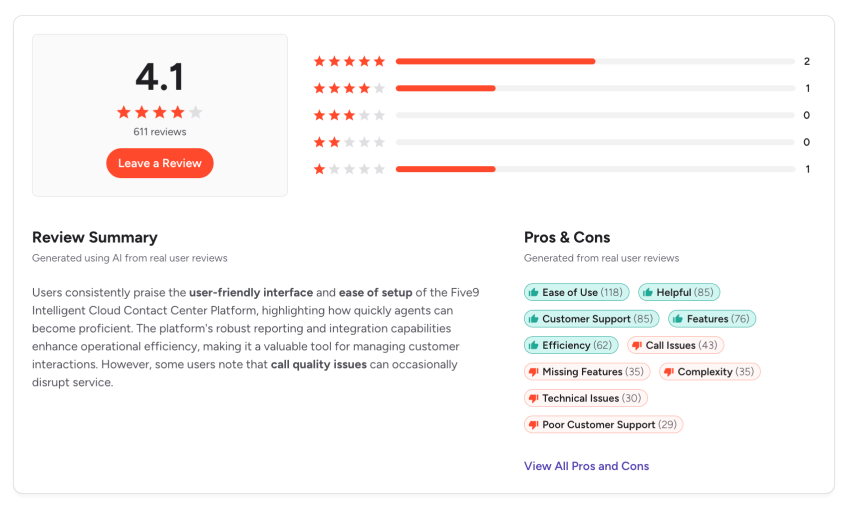
Additional customer feedback is available in G2 reviews of Five9.

How the Alternatives Were Evaluated
The comparison considers the factors that affect contact center selection and migration:
- Deployment model: Cloud-hosted, usage-based, unified communications, or enterprise CCaaS.
- Workload coverage: Inbound, outbound, blended, and digital customer interactions.
- Routing: IVR, skills-based routing, queues, callbacks, business rules, and omnichannel assignment.
- AI capabilities: Transcription, summaries, sentiment analysis, agent assistance, self-service, and task automation.
- Workforce management: Forecasting, scheduling, quality management, coaching, and performance reporting.
- Integrations: CRM, helpdesk, collaboration, workflow, and data platforms.
- Pricing: Public list prices, custom quotes, usage charges, minimum users, and contract requirements.
- Reliability and compliance: Uptime commitments, data controls, security certifications, and regulatory support.
- Administration: Workflow design, reporting configuration, user management, and implementation effort.
- Support: Availability of technical support and the support tiers attached to each plan.
10 Best Five9 Competitors
1. Nextiva – best overall Five9 alternative
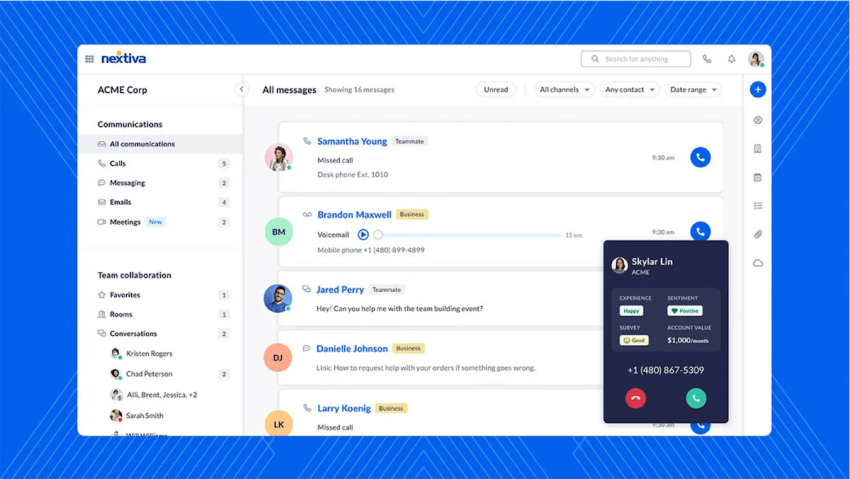
Nextiva, a unified customer experience platform, combines contact center and business communications in one environment. Nextiva Contact Center connects voice, video, team chat, SMS, and digital contact center routing with conversational AI, live transcription, sentiment detection, knowledge surfacing, and automated summaries.
For teams leaving Five9, the main benefit is platform consolidation. Agents can contact back-office specialists through internal communication tools without switching products. Administrators can manage business communications and customer interactions within a unified environment.
Nextiva supports omnichannel routing based on business rules and code-free drag-and-drop workflow automation. Nextiva says its contact center uses more than 30 self-healing systems and has no planned downtime. Its VoIP service carries a 99.999% uptime claim. Contact center details and service commitments should be confirmed for the specific plan and deployment.
Why businesses consider Nextiva
- Unified communications: Combines UCaaS and CCaaS functions in one platform.
- Omnichannel workflows: Routes voice, digital, and social interactions according to business rules.
- AI assistance: Provides summaries, transcripts, sentiment detection, and knowledge-base support.
- Workflow automation: Lets administrators create customer journeys with drag-and-drop tools.
- Workforce management: Provides workforce management capabilities.
- Security controls: Nextiva supports encrypted data and compliance standards such as PCI DSS, HIPAA, and SOC 2 for applicable AI products and deployments.
- Support access: Nextiva provides 24/7 support at every level.
Key features:
- Unified UCaaS and CCaaS workspace
- Voice, SMS, video, chat, email, and social channels
- IVR and visual workflow design
- Omnichannel routing
- AI conversation intelligence
- Automated call summaries and transcripts
- Live sentiment detection
- Workforce management
- CRM and business application integrations
- Data redaction for sensitive information in call records
Pricing
Nextiva pricing lists three cloud phone tiers:
- Core: $15 per user/month
- Engage: $25 per user/month
- Scale: $75 per user/month
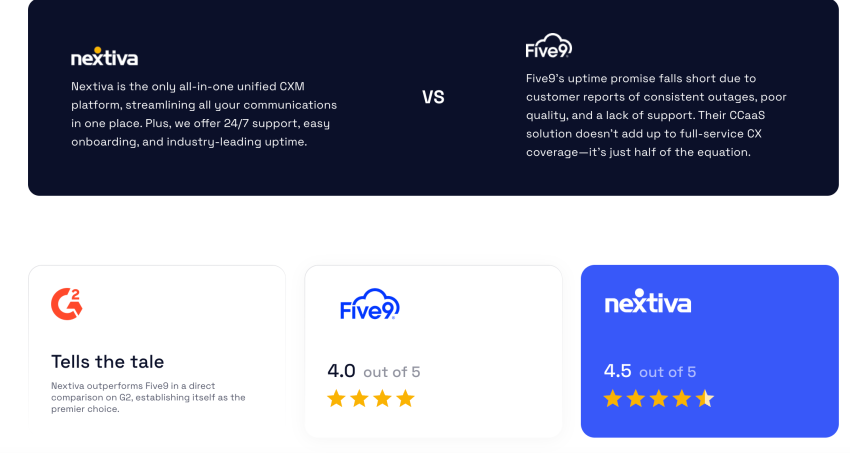
Custom contact center requirements may affect the final price. Buyers should confirm channel, user, storage, AI, and support costs.
Best for: Growing mid-market and enterprise organizations that want unified communications, omnichannel contact center tools, and accessible AI without maintaining separate UCaaS and CCaaS systems.
Nextiva Trusted by Contact Center Leaders
Nextiva is recognized as a Strong Performer in the 2025 Gartner® Peer Insights “Voice of the Customer” for Contact Center as a Service. Based on verified peer reviews from IT and customer experience decision-makers, the report reflects how customers rate their experience across leading CCaaS providers.
Nextiva was among the highest performers for its deployment, sales, and support experiences. Get the free report ↗
2. Genesys Cloud CX – best for enterprise journey orchestration
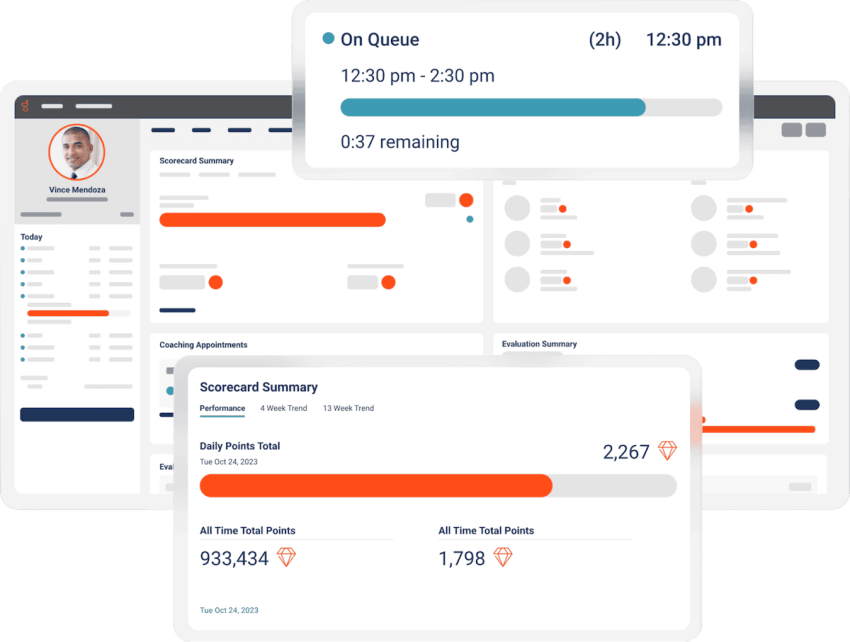
Genesys Cloud CX targets large organizations with complex customer journeys. It supports omnichannel orchestration, predictive engagement, analytics, self-service, and workforce engagement management.
Genesys can track customer behavior across digital touchpoints and use journey data to guide engagement and routing. It is suited to organizations that need extensive customization across voice, digital channels, AI, and workforce operations.
Key features:
- Predictive engagement
- Voicebots and chatbots
- Speech and text analytics
- Journey orchestration
- Workforce engagement management
- Scheduling, quality management, and gamification
- CRM and enterprise service integrations
Key strengths:
- Broad enterprise configuration options
- Mature workforce management capabilities
- Strong support for complex, multichannel operations
- Suitable for inbound, outbound, and blended contact centers
Pricing
Genesys pricing starts at $75 per user/month in the referenced pricing information. Digital channels, AI, workforce tools, usage, and support can affect the total cost.
Best for: Global enterprises that need advanced journey mapping, extensive configuration, and workforce engagement tools.
3. Talkdesk – best for regulated industries
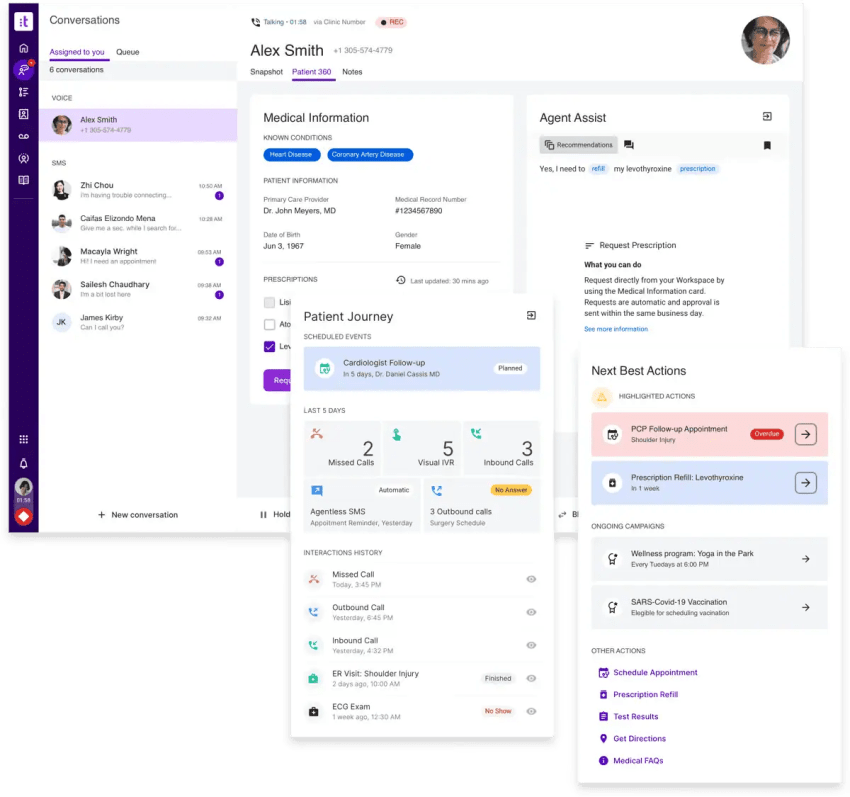
Talkdesk provides a cloud contact center with industry-focused products for sectors such as healthcare, banking, retail, and insurance.
Its visual workflow tools help administrators create IVR flows and customer journeys without extensive programming. Regulated businesses may also value compliance templates and integrations with industry applications.
Key features:
- Visual workflow and IVR design
- AI-powered agent assistance
- Customer experience analytics
- Industry-specific tools
- CRM and helpdesk integrations
- Omnichannel routing
- Quality and performance reporting
Key strengths:
- Industry-focused deployment options
- Visual administration tools
- Support for inbound, outbound, and blended operations
- Fit for organizations that need specialized compliance workflows
Pricing
Talkdesk pricing starts at $85 per user/month in the referenced pricing. Industry-specific packages and long-term commitments may increase total costs.
Best for: Mid-market and enterprise organizations in regulated sectors that need specialized workflows and compliance support.
4. NiCE CXone – best for workforce optimization and analytics
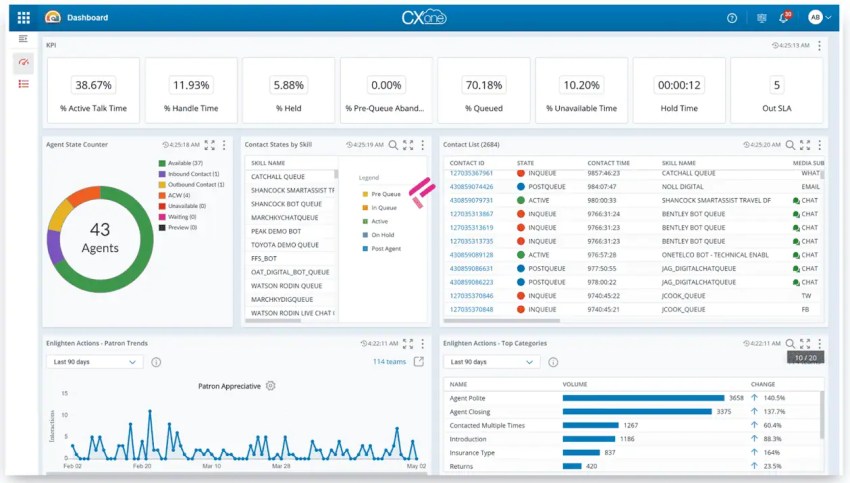
NiCE CXone is an enterprise CCaaS platform with a strong focus on workforce optimization, quality management, analytics, and agent assistance.
Organizations comparing NiCE CXone with Five9 may prioritize real-time coaching, sentiment analysis, forecasting, scheduling, and performance management. Its open platform approach also suits teams that need APIs and custom integrations.
Key features:
- AI-assisted coaching
- Sentiment analysis
- Automated quality management
- Forecasting and scheduling
- Agent development tools
- Journey orchestration
- Speech and text analytics
- Open APIs for customization
Key strengths:
- Workforce management depth
- Operational analytics
- Real-time agent assistance
- Support for complex enterprise contact centers
Pricing
Digital tiers start at $71 per user/month in the referenced pricing. Voice and omnichannel packages range from $94 to $249+ per user/month, depending on the selected capabilities.
Best for: Enterprise operations that prioritize data-driven agent coaching, workforce management, and deep performance analytics.
5. 8×8 – best for international teams needing a flexible platform
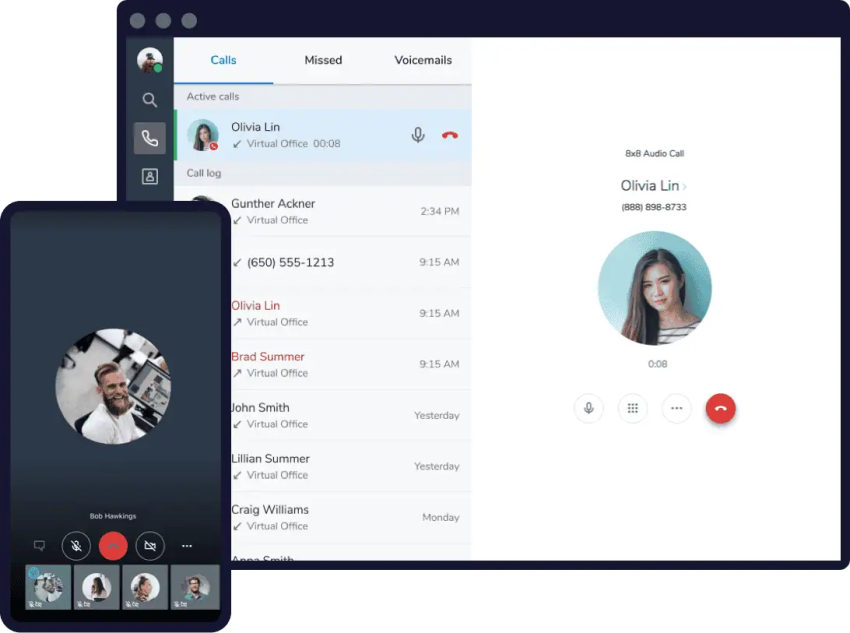
8×8 Contact Center combines UCaaS and CCaaS functions through a unified communications model. It can suit international organizations that want internal collaboration and customer communications under one platform.
Key features:
- Unified agent workspace
- Voice, chat, email, social, and messaging channels
- Speech and text analytics
- Workforce and quality management
- International calling
- Collaboration between agents and other employees
Key strengths:
- UCaaS and CCaaS consolidation
- International communications support
- Unified administration for internal and external communications
- Fit for inbound, outbound, and blended teams
Pricing
8×8 pricing uses custom quotes. Buyers should request a breakdown of seats, calling regions, channels, recording, analytics, support, and contract terms.
Best for: Multinational organizations that need international calling, internal collaboration, and contact center operations in one environment.

6. Observe.AI – best for AI-powered contact center intelligence and automation
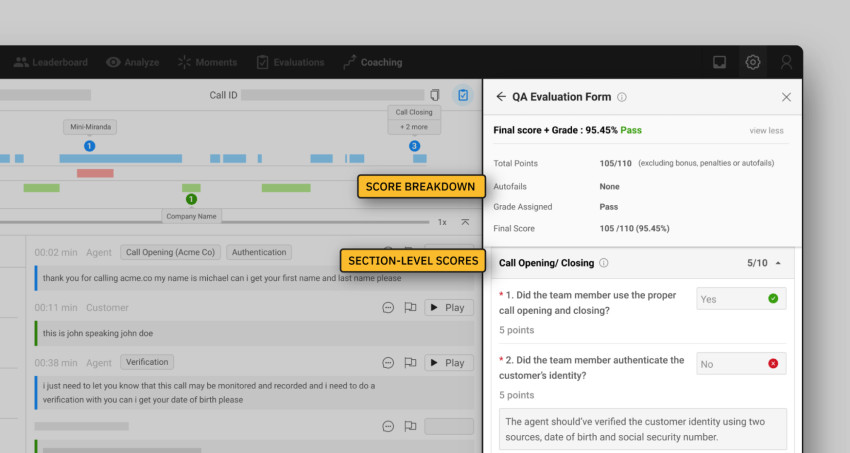
Observe.AI is an AI-powered customer experience platform designed to help contact centers improve agent performance, automate quality assurance, and analyze customer conversations.
Unlike Five9, which provides a complete cloud contact center solution, Observe.AI focuses on enhancing existing contact center systems with AI-driven intelligence.
Key features:
- Real-time agent guidance and coaching
- Automated quality assurance (Auto QA)
- AI-powered conversation analytics and sentiment analysis
- Automatic call summaries and transcription
- Compliance monitoring and script adherence alerts
- AI voice agents for customer service automation
- Integrations with Five9, Genesys, and other contact center platforms
Key strengths:
- Automated quality scoring across customer interactions
- AI-powered insights into agent performance and customer sentiment
- Ability to enhance existing contact center infrastructure without replacing it
- Enterprise-focused AI automation for customer service operations
Pricing
Observe.AI pricing is custom and quote-based, with no publicly listed starting price or standard per-user subscription tiers.
Best for: Mid-market and enterprise contact centers that want to automate quality assurance, improve agent coaching, and add advanced AI capabilities to their existing contact center systems.
7. Amazon Connect – best for usage-based contact center billing
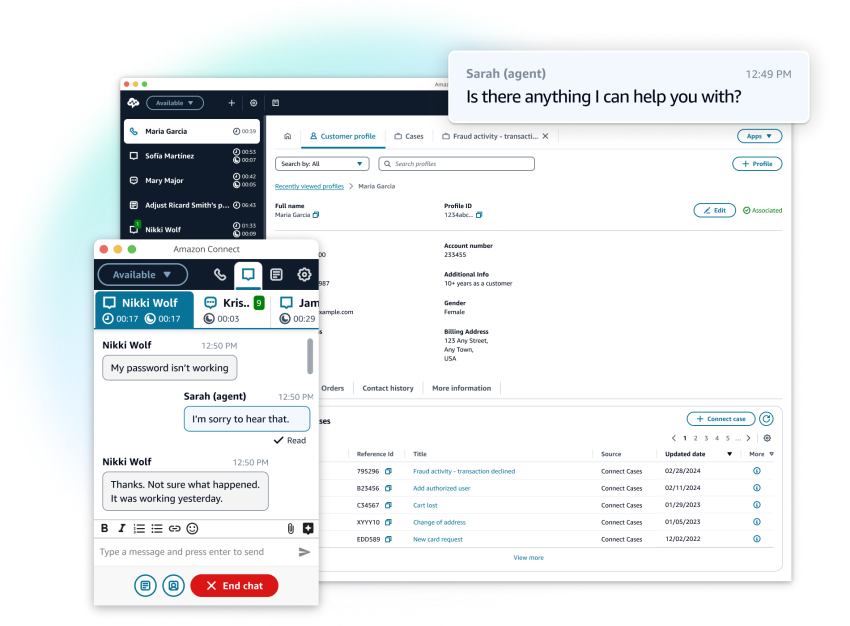
Amazon Connect is an AWS-native contact center platform with consumption-based billing. Customers pay for services such as voice minutes, chat messages, and automated tasks rather than a standard per-user license.
The platform suits engineering-led teams that can build custom workflows with AWS services. It can also help businesses manage seasonal demand because costs can follow usage.
Key features:
- Contact Lens analytics
- Transcription and sentiment analysis
- Drag-and-drop contact flows
- Voice authentication
- Amazon Lex integration
- AWS Lambda and broader AWS connectivity
- Custom routing architectures
Key strengths:
- Usage-based billing
- AWS ecosystem integration
- High scalability
- Flexible custom development
- Support for inbound, outbound, and blended workflows
Pricing
Amazon Connect pricing includes usage-based rates such as $0.018 per minute for basic voice usage and $0.038 per minute for unlimited AI features in the referenced pricing. Telephony and phone numbers may incur separate charges.
Best for: AWS-native businesses with in-house developers that need customized routing and consumption-based pricing.
8. Aircall – best for voice-first support teams

Aircall is an SMB-focused cloud-based phone system, prioritizing simplicity, clean design, and rapid implementation. It unifies voice and SMS workflows and offers a comprehensive app marketplace.
Aircall can be a practical alternative to Five9 for teams that need basic customer service or sales calling without a large enterprise implementation. Businesses that need more than voice-first calling should also compare Nextiva, Talkdesk, CloudTalk, and 8×8.
Key features:
- Power dialing
- Click-to-dial
- Shared call inboxes
- Call recording
- Live monitoring
- Whispering and barging
- CRM and helpdesk integrations
- Voice and SMS workflows
Pricing
Aircall’s published pricing includes Essentials, Professional, and Custom plans. Essentials and Professional require a minimum of three users. Each includes one local or toll-free number, while additional numbers cost $6 per month. Both plans include unlimited inbound and internal calls, excluding toll-free calls, and unlimited domestic outbound calls in the United States and Canada. International outbound rates require confirmation from Aircall.
Aircall’s retention and analytics terms vary by plan. Essentials includes up to one year of call recordings by request, with six months available in the dashboard. Professional includes unlimited recordings by request and basic and advanced analytics for up to six months.
Best for: Startups and small-to-medium teams that need a simple, voice-centric system with CRM integration.
9. CloudTalk – best for international outbound sales

CloudTalk is a cloud contact center platform for sales and service teams with significant outbound calling requirements. It is particularly relevant to organizations that need international numbers, outbound productivity tools, and CRM connectivity.
CloudTalk alternatives include Nextiva, Aircall, Talkdesk, and other platforms. The right choice depends on whether the team needs a voice-first sales system, a complete UCaaS and CCaaS platform, or a broader omnichannel contact center.
Key features:
- Call-flow designer
- IVR and call queuing
- Call recording
- Real-time monitoring
- Analytics and reporting
- International SMS
- WhatsApp messaging
- Workflow automation
- Bring-your-own-carrier support
- AI call summaries and tagging
- Click-to-call
- Power dialing
- Preview dialing
- Voicemail drop
- Answering-machine detection
- Parallel dialing across up to 10 lines
- AI sales dialer
Pricing
The referenced pricing lists:
- Lite: $19 per user/month
- Essential: $39 per user/month
- Expert: $65 per user/month
Teams should confirm current prices, user minimums, international calling rates, messaging charges, and contract requirements before purchase.
Best for: Outbound sales, telemarketing, and international teams that need dialers, local numbers, call analytics, and voice-focused workflows.
10. Sprinklr Service – best for digital and social support
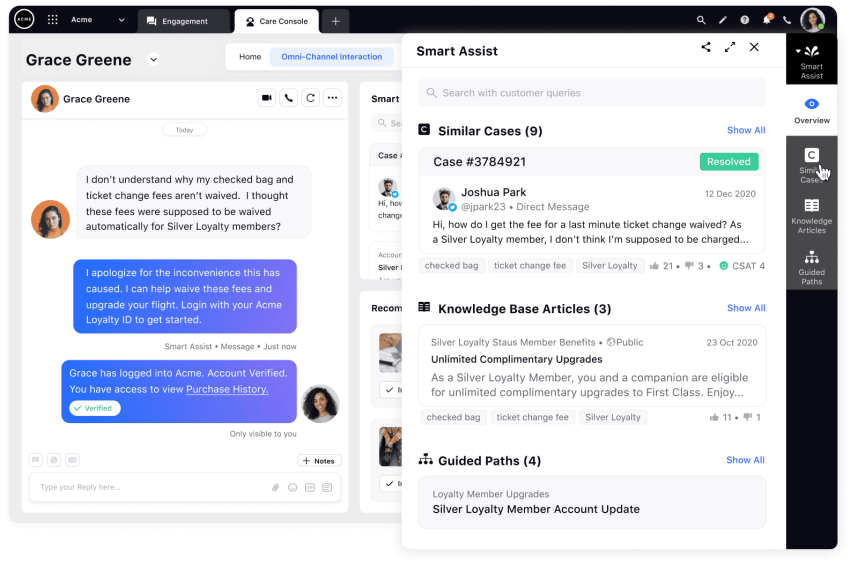
Sprinklr Service is a digital contact center product built on a unified customer experience management platform. It focuses on social media, messaging, community forums, live chat, and other digital channels.
Sprinklr may fit brands whose customers interact more through social and messaging platforms than traditional voice. Its digital-first approach differs from Five9’s historical focus on voice and outbound operations.
Key features:
- Digital and social channel management
- Voice and messaging in a shared workspace
- AI agents and agent copilots
- Social listening
- Intent matching
- Quality and compliance analysis
- Omnichannel surveys
- Workforce forecasting and scheduling
- Customer satisfaction prediction
Key strengths:
- Digital-first customer service
- Social media management
- Text analytics
- Brand monitoring
- Support for large consumer organizations
Pricing
Sprinklr pricing uses custom enterprise quotes.
Best for: Large consumer brands that need social media, messaging, digital routing, and brand monitoring.
Choosing the Right Five9 Alternative
Match the platform to the workload
Businesses should identify the balance between inbound service, outbound sales, and blended interactions.
- Inbound teams need IVR, skills-based routing, queues, callbacks, recording, quality management, and knowledge access.
- Outbound teams need predictive or power dialing, local numbers, call lists, voicemail drop, campaign reporting, and disposition controls.
- Blended teams need routing rules that let agents move between inbound and outbound work without separate systems.
- Digital-first teams need messaging, chat, social channels, automation, and digital journey reporting.
- Enterprise teams need workforce management, compliance controls, APIs, advanced analytics, and migration support.
Compare pricing and contracts
| Pricing approach | Platforms in this guide | Questions to ask |
|---|---|---|
| Public per-user pricing | Nextiva, Genesys Cloud CX, Talkdesk, NiCE CXone, CloudTalk | Which features require higher tiers or add-ons? |
| Custom quote | 8×8, Sprinklr Service, Observe.AI, some enterprise plans | What is included in the base quote? |
| Usage-based pricing | Amazon Connect | How are minutes, numbers, messages, storage, AI, and integrations billed? |
| User minimums | Aircall and some other voice-first products | What is the minimum number of users and numbers? |
| Contract-based pricing | Enterprise plans across multiple providers | What is the term, renewal policy, and cancellation process? |
Public prices provide an initial comparison. They do not always include telephony, storage, recordings, AI, workforce management, implementation, premium support, or international usage.
Verify integrations and controls
Before selecting a platform, buyers should confirm:
- Salesforce, HubSpot, Zendesk, ServiceNow, Microsoft Teams, or other required integrations
- Native connectors versus API-only integrations
- CRM screen pops and automatic activity logging
- Data export and retention periods
- Call recording controls and redaction
- PCI DSS, HIPAA, SOC 2, GDPR, or industry-specific requirements
- Regional data hosting
- Uptime commitments and service credits
- 24/7 support availability
- Migration assistance and training
Why Consider Nextiva?
For organizations migrating from specialized, disconnected contact center solutions like Five9, Nextiva offers a streamlined, all-in-one alternative. Its primary value proposition lies in unifying UCaaS and CCaaS into a single operating environment. This consolidation eliminates the need for separate corporate communication tools and customer support applications, significantly reducing administrative overhead for IT and application-switching for agents.
Rather than requiring complex, developer-heavy implementations, Nextiva empowers teams with code-free workflow automation and intelligent omnichannel routing. It pairs enterprise-grade reliability—backed by a 99.999% VoIP uptime claim and self-healing infrastructure—with accessible AI tools. Teams can leverage live sentiment detection, automated conversation summaries, and sensitive-data redaction seamlessly integrated into major business applications like Salesforce, HubSpot, and ServiceNow.
Designed for scalability and protected by stringent security standards (including PCI DSS, HIPAA, and SOC 2), Nextiva Contact Center equips businesses with both live agent workflows and virtual assistants in one cohesive workspace.
Nextiva’s cloud phone plans include Core at $15 per user/month, Engage at $25 per user/month, and Scale at $75 per user/month. See current Nextiva pricing.
Nextiva Contact Center is designed for businesses that want live agents and virtual assistants in one operating environment. Review contact center capabilities.
Ready to see if it’s right for you?
The complete call center solution. See why top brands use Nextiva to handle calls at scale.
Frequently Asked Questions
The best Five9 alternatives depend on your organization’s specific needs, team size, and required deployment model. The top 10 competitors include:
Nextiva: Best overall alternative for businesses that want to consolidate unified communications (UCaaS) and contact center (CCaaS) into a single platform.
Genesys Cloud CX: Best for large enterprises requiring complex omnichannel journey orchestration.
Talkdesk: Ideal for regulated industries needing visual workflow design and compliance templates.
NiCE CXone: Strongest for enterprise workforce optimization, quality management, and analytics.
8×8: Best for multinational teams needing international unified communications.
Observe.AI: Best for mid-market and enterprise contact centers that want to add advanced AI capabilities to their existing contact center systems.
Amazon Connect: Best for engineering-led teams that prefer AWS-native customization and usage-based billing.
Aircall & CloudTalk: Best for voice-first support and high-volume outbound sales teams.
Sprinklr Service: Best for consumer brands requiring digital-first and social media support.
Top alternatives for enterprise-grade operations include:
Nextiva: For organizations looking to modernize by combining their internal business communications and contact center operations into one unified cloud environment.
Genesys Cloud CX: For global enterprises transitioning to advanced cloud-based journey orchestration and workforce engagement management.
NiCE CXone: For data-driven enterprises that require deep workforce optimization, forecasting, and open APIs.
Talkdesk: For mid-market and enterprise organizations in regulated sectors that want visual administration tools without extensive programming.
The best Aircall alternatives depend on whether your team wants to maintain a simple voice-centric system or expand into a broader contact center platform:
For broader omnichannel capabilities: Nextiva, Talkdesk, 8×8, and Genesys Cloud CX provide more comprehensive options for teams that need digital channels, internal collaboration, workforce management, or complex omnichannel routing.
For voice-first and outbound sales: CloudTalk remains a highly relevant, voice-focused option tailored for international sales teams that need robust dialers and analytics.
CloudTalk alternatives vary based on your team’s approach to outbound sales, international calling, and internal collaboration. Top competitors include:
Aircall: Best for startups and small-to-medium teams that need a simple, fast-deploying voice workflow with strong CRM integrations.
Nextiva and 8×8: Best for organizations that want to consolidate their outbound operations with internal unified communications (UCaaS and CCaaS combined).
Amazon Connect: Best for AWS-native businesses with in-house developers that prefer custom routing architectures and consumption-based billing.