

 VoIP
VoIP  Blog
Blog  Business Communication
  Customer Experience
  Leadership
  Marketing & Sales
  Nextiva News
  Productivity

As customer experience budgets face greater scrutiny, businesses are evaluating contact center platforms based on usability, reliability, integrations, AI capabilities, and return on investment.
NiCE CXone combines contact center software, workforce management, analytics, automation, and AI capabilities in one platform. However, its scope, pricing structure, and implementation requirements may not suit every organization.
In this guide, we compare 10 NiCE CXone alternatives based on their features, pricing, advantages, limitations, and use cases to help you identify a contact center platform that fits your team, budget, and customer experience strategy.
Top NiCE CXone Alternatives at a Glance
Below, we’ll go through these alternatives in more detail, but for now, here’s a quick comparison table.
| Provider | Pricing | Key features | Integrations | Best for |
|---|---|---|---|---|
| Nextiva | $15–$75+ | Omnichannel voice, chat, SMS, social, AI summaries, AI transcription, WFM, real-time analytics, skills-based routing, journey orchestration, UCaaS + CCaaS, XBert AI | Salesforce, HubSpot, Zendesk, Teams | Businesses wanting unified CCaaS + UCaaS |
| CloudTalk | $25–$49+ | Voice-focused platform, power dialing, conversational intelligence, call analytics | CRM integrations | Sales and support voice teams |
| Five9 | $119–$159+ | Predictive dialing, AI IVR, sentiment analysis, advanced reporting, and WFM | CRM, WFM, enterprise apps | Enterprise outbound contact centers |
| JustCall | $29–$89+ | Voice and SMS workflows, AI transcripts, call scoring, sentiment analysis | HubSpot, Salesforce, Pipedrive | SMB sales and support teams |
| Genesys | $75–$240+ | Omnichannel orchestration, predictive engagement, advanced AI, and analytics | Salesforce, Teams, Zendesk | Complex enterprise CX operations |
| Aircall | $30–$50+ | Voice calling, smart routing, analytics dashboards, and team collaboration tools | 100+ CRM and helpdesk integrations | SMBs and startups |
| Talkdesk | $85–$225+ | Omnichannel CCaaS, Autopilot and Copilot AI, WFM, compliance-ready workflows | Salesforce, Zendesk, AppConnect | Regulated industries |
| RingCentral RingCX | $65–$145+ | Voice, video, SMS, AI summaries, omnichannel routing, RingSense analytics | RingEX, Salesforce, Zendesk | Teams wanting unified communications |
| 8×8 Contact Center | Contact sales | Omnichannel routing, speech analytics, WEM, and global calling | Dynamics, Zendesk, Salesforce | Global enterprises and compliance-heavy teams |
| Amazon Connect Customer | Usage-based | AWS-native CCaaS, AI option, omnichannel routing, Contact Lens analytics | AWS ecosystem, Salesforce | AWS-native engineering-led teams |
Strengths of NiCE CXone
Understanding NiCE CXone’s strengths provides a baseline for evaluating its alternatives. Here are some of its key benefits:
Customization and flexibility
NiCE CXone excels at extensive customization options so businesses can adapt the platform to their workflows. Users can design custom call scripts, dashboards, reports, and queue routing. For example, a financial services company can customize dashboards to prioritize calls from high-volume customers, while a retail company can focus on tracking customer satisfaction scores.
Omnichannel capabilities
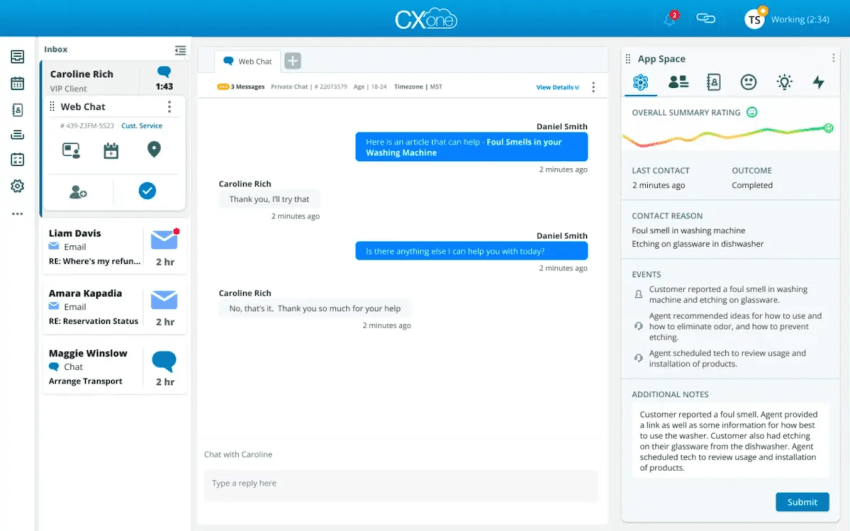
With support for over 30 digital channels, including phone, email, live chat, social media, and mobile apps, NiCE CXone facilitates communication across different customer touchpoints. Contact centers can easily meet customers where they are, whether through social media for quick questions or email for more complex inquiries.
Advanced AI-powered features
NiCE CXone includes AI-driven tools like virtual assistants, interaction summaries, and AI-powered co-pilots. These features can automate routine tasks, provide real-time agent support, and improve customer interactions. Imagine a virtual assistant that handles initial requests and frees human agents to focus on more complex problems.
Competitive pricing
While not the cheapest option, NiCE CXone offers competitive pricing and is often considered good value for the features it provides.
They offer several pricing plan options, with each higher-tier plan adding more advanced features.
- Omnichannel Suite: $110/agent/month
- Essential Suite: $135/agent/month
- Core Suite: $169/agent/month
- Complete Suite: $209/agent/month
- Ultimate Suite: $249/agent/month or $0.25/session in the applicable pricing model
Why Customers Look for NiCE CXone Alternatives
While NiCE CXone has several strong selling points, it’s not perfect. Below are the many reasons customers and businesses might look elsewhere for their contact center needs:
UCaaS is available as an integrated option
NiCE CXone is primarily a CCaaS solution, while its 1CX offering adds UCaaS capabilities such as voice, video conferencing, team messaging, and collaboration. Businesses looking for broader unified communications capabilities should evaluate whether 1CX meets their needs or whether another UCaaS provider is a better fit.
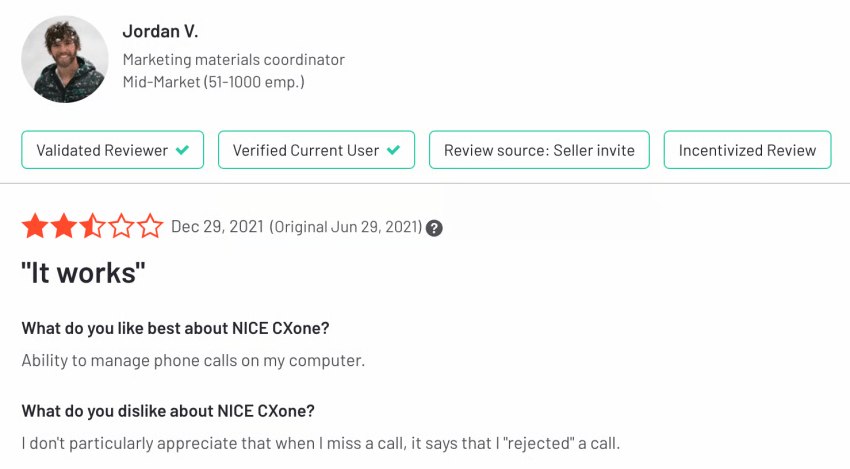
Jordan, a NiCE CXone user, highlights the lack of nuanced feature recognition:

What do you dislike about NICE CXone Mpower?
I don’t particularly appreciate that when I miss a call, it says that I “rejected” a call. It’s suitable for small companies who need an easy-to-use phone system.
Complex configuration
Some users report that NiCE CXone can be complex to configure and manage, requiring significant time and resources. It’s a barrier for smaller businesses with limited technical expertise. The complexity stems from the initial setup, integration with other systems, and ongoing maintenance.
Another user review underpins this complexity:
[NICE] charges heavy fees for such support (not included with your recurring service fees) and as such there are a lot of features we’re simply not leveraging. We’ve even abandoned the use of some features because the way they present in the client software is too cumbersome for end users to handle reliably.”
Service issues and customer support
NiCE also suffers from several technical drawbacks. Some users report experiencing bugs with core functions like logging in, transferring calls, and viewing call history. These experiences vary by implementation and should be evaluated during a trial or demo.
A big frustration is the inability to link direct lines or extensions through the MAX agent. Calls routed to cell phones sometimes experience delays. A recurring complaint is the limited call history view, with agents only able to access recent calls, rather than a complete, timestamped log. These technical issues can obstruct efficiency and impact user experience.
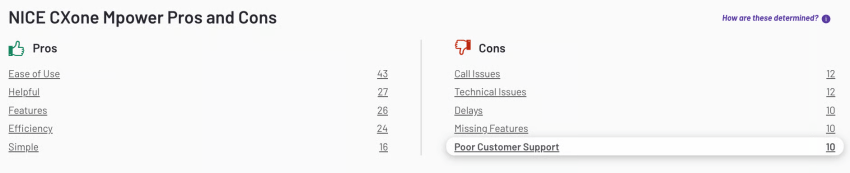
Other users have also expressed dissatisfaction with the quality of the customer support they’ve received, with unresolved issues. Users have reported high fees for customer support, which can be a challenge for businesses with limited budgets and technical expertise.
Restrictive licensing
NiCE CXone’s licensing can be restrictive, limiting how the platform can be used within an organization. Businesses with specific or niche contact center requirements should carefully review the licensing terms to ensure they align with their needs.
Inability to make international calls is one downside; as our company grows its reach to a global audience, this may pose limitations as currently the system only recognizes and accepts U.S. numbers. This may not necessarily be attributed to functionality but rather licensing. It would be nice if it had log off automatically when window collapses or some other function in case I forget to log out.
Learning curves for reporting and add-ons
CXone has a steep learning curve. The challenges with reporting and using add-on software are particularly noteworthy, with customers pointing the site often experiences technical issues, causing toolbars to not load consistently. Reporting and dashboards can be labor-intensive and require a higher learning curve to create custom reports.
How We Evaluated These Alternatives
To build this list, we evaluated more than 30 CCaaS and contact center platforms and shortlisted the 10 that consistently come up when teams are weighing alternatives to NiCE CXone. Each alternative was assessed against seven dimensions that reflect the real reasons businesses leave:
- AI and agentic capabilities: Depth of conversational AI, agent assist, automated summarization, and (where available) autonomous agent functionality. AI is where the competitive bar has moved most across CCaaS in the past 18 months, so this carried significant weight.
- Omnichannel coverage: Voice, email, chat, SMS, social, and messaging support, and whether channels are unified in a single agent workspace or stitched together through add-ons.
- UCaaS integration: Whether the platform combines contact center and unified communications natively, given that the lack of native UCaaS is one of the most commonly cited reasons teams move off NiCE CXone.
- Pricing transparency and predictability: How predictable the total cost is at scale, whether essentials sit behind add-ons or required contract minimums, and whether published pricing reflects what teams actually pay once telephony, AI usage, and compliance fees are factored in.
- Implementation complexity: Time-to-value, configuration overhead, and how many technical resources are required to run the platform day to day.
- Compliance and reliability: HIPAA, PCI-DSS, SOC 2, GDPR, and FedRAMP coverage where relevant, plus published uptime SLAs and reliability track record.
- Support accessibility: Whether 24/7 live support is included in base plans or gated behind premium tiers, and customer feedback on response times and resolution quality.
Each provider was weighted based on fit for different team sizes and use cases, from growing SMBs that need a working contact center fast to enterprises running complex multi-region operations. The recommendations reflect real-world trade-offs rather than feature-count marketing.
Top 10 NiCE CXone Alternatives
If NiCE CXone isn’t right for you, don’t worry. Several other CCaaS options exist. We’ve compiled a list of the top 10 NiCE competitors for your consideration.
1. Nextiva – Best overall NiCE CXone alternative
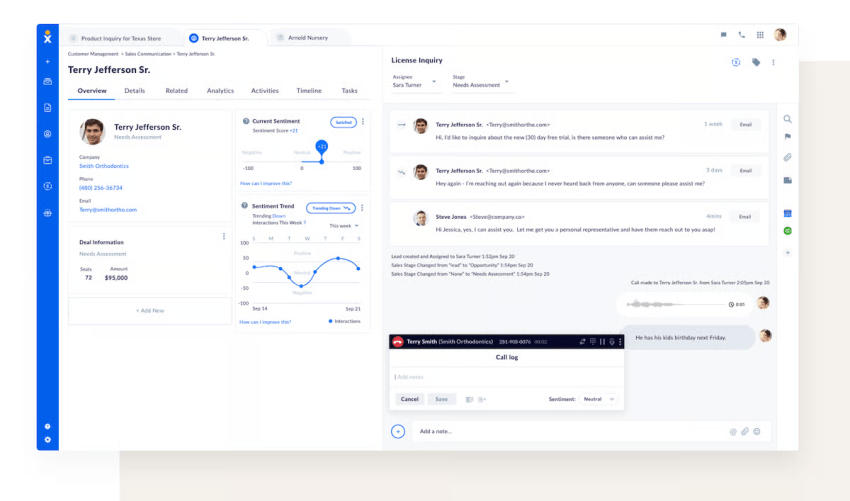
Nextiva is a unified customer experience platform that combines contact center (CCaaS) and unified communications (UCaaS) into a single product. Voice, video, SMS, team chat, and contact center capabilities run on the same backbone, with AI-powered routing, transcription, and summarization layered across customer interactions.
For teams leaving NiCE CXone, the most common reason to land here is the UCaaS gap. Organizations using CXone have to combine it with 1CX or another UCaaS provider for video meetings and internal collaboration, and to manage the integration between them depending on their communications needs. Nextiva consolidates both into one interface, which removes a category of vendor and integration overhead.
The other recurring driver is operational simplicity. NiCE CXone’s depth is genuine, but reviews regularly mention configuration complexity, steep reporting learning curves, and paid support tiers. Nextiva is consistently rated for ease of use in 24/7 support on every plan, which matters most for growing teams without dedicated CX engineering resources.
Key features:
- AI-powered customer engagement: 24/7 self-service and intelligent call routing with voice bots, chatbots, and IVAs, plus automated transcription and AI-powered interaction summaries.
- Unified omnichannel experience: Voice, email, chat, SMS, and social in one agent workspace for consistent and personalized interactions.
- Proactive customer outreach: Auto dialer and automated outbound campaign capabilities for sales and service follow-up.
- Actionable insights and analytics: Real-time dashboards, detailed reporting, and AI-powered summaries to optimize interactions and agent performance.
- Optimized workforce management: Integrated WFM tools including multi-skill forecasting, quality monitoring, and personalized coaching.
Key strengths:
- Combined CCaaS and UCaaS: A single platform for customer-facing and internal communications, removing one of the structural gaps in NiCE CXone.
- Reliability and 24/7 support: Carrier-grade network with 99.999% uptime and 24/7 support included on every plan, not gated behind premium tiers.
- Ease of use: Consistently rated as accessible to teams without dedicated IT resources, which contrasts sharply with NiCE CXone’s configuration complexity.
- Lower potential TCO: Combining business communications and contact center capabilities can reduce the cost and administrative overhead of maintaining multiple communications vendors.
- XBert AI: Nextiva’s XBert AI can answer calls, handle SMS and web chat, resolve routine questions, qualify leads, book appointments, and hand conversations to employees with context. It is available as a standalone product or as an add-on.
- Faster time to value: Nextiva emphasizes simplified setup and administration. Its XBert AI product, for example, is designed to be operational with ease without coding or complex integrations.
Pricing: Annual billing
Small business plans
- Core: $15/user/month (business phone essentials)
- Engage: $25/user/month (adds inbound call center and chat)
- Scale: $75/user/month (full omnichannel contact center with AI)
Enterprise CCaaS plans
- Essential contact center: From $75/agent/month (core contact center capabilities)
- Professional: Contact sales (advanced contact center capabilities)
- Premium: Contact sales (enterprise-level contact center capabilities)
Best for: Growing businesses seeking an all-in-one communication solution without the complexity typically associated with enterprise platforms. Particularly valuable for organizations without dedicated IT teams.
Nextiva Trusted by Contact Center Leaders
Nextiva is recognized as a Strong Performer in the 2025 Gartner® Peer Insights “Voice of the Customer” for Contact Center as a Service. Based on verified peer reviews from IT and customer experience decision-makers, the report reflects how customers rate their experience across leading CCaaS providers.
Nextiva was among the highest performers for its deployment, sales, and support experiences. Get the free report ↗
2. CloudTalk – Best for sales-driven voice teams

CloudTalk is a cloud-based call center platform aimed at sales and customer service teams, with a focus on outbound dialing, customizable routing, and broad international number coverage across 160+ countries. It’s a tighter, voice-first product compared to a full CCaaS suite like NiCE CXone.
The reason it shows up on this list is fit. NiCE CXone’s omnichannel breadth and configurability are genuinely valuable for large operations, but a meaningful slice of teams running primarily voice workflows don’t need 30 digital channels or industry-specific journey orchestration. CloudTalk delivers what those teams actually use (power dialing, IVR, CRM-linked workflows, call recording) at a fraction of the per-user cost.
The trade-offs are scope and scale. CloudTalk doesn’t compete on conversational AI depth, workforce engagement management, or compliance breadth, and live phone support is gated behind higher tiers. For sales-focused teams under a few hundred agents, that’s a reasonable trade. For enterprise contact centers with regulated workflows, it’s typically not enough.
Key features:
- Advanced dialing automation: Smart dialer and power dialer eliminate manual dialing and increase outbound throughput.
- AI-enhanced conversation analysis: Real-time transcription and recommendations for agents on higher tiers.
- CRM integration ecosystem: Native connectors to Pipedrive, Zendesk, Salesforce, HubSpot, and Freshdesk.
- Real-time monitoring and coaching: Supervisor tools for live call monitoring and agent coaching.
- International local presence: Local numbers in 160+ countries for teams selling cross-border.
Key strengths:
- Stable, user-friendly voice product: Clean interface and fast setup compared to enterprise CCaaS platforms.
- Strong CRM integration depth: Activity logging and screen pops across major sales platforms.
- International number coverage: One of the broader geographic footprints at this price tier.
Pricing: Annual billing
- Starter: $25/user/month
- Essential: $29/user/month
- Expert: $49/user/month
Best for: Sales-driven organizations and customer service teams that prioritize voice quality and outbound efficiency over deep omnichannel or AI capabilities.
3. Five9 – Best for enterprise AI and predictive dialing
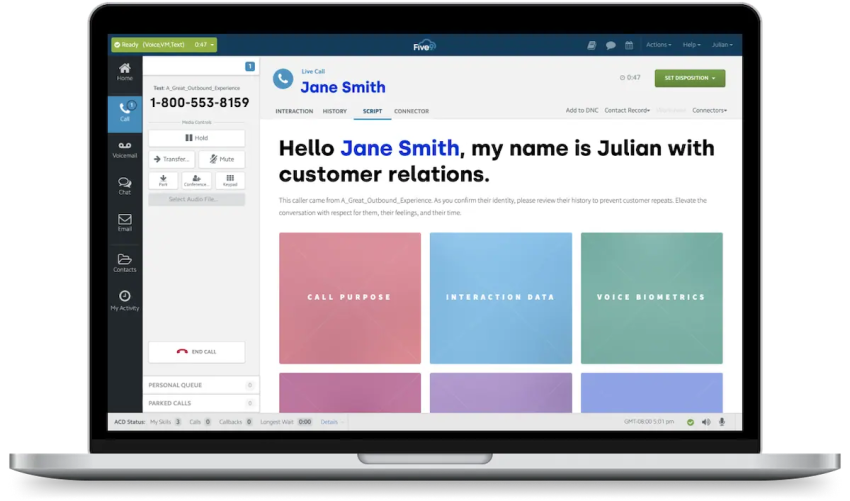
Five9 is an enterprise-grade cloud contact center platform with deep AI, predictive dialing, workforce management, and digital channels. It’s a direct head-to-head competitor to NiCE CXone at the enterprise tier and tends to win shortlist consideration when AI capabilities, outbound dialing volume, or analytics depth are the deciding factors.
Compared to NiCE CXone, Five9 leans harder into outbound and predictive engagement. Its machine-learning predictive dialer, sentiment analysis, and interaction analytics are particularly strong for high-volume sales operations and collections, where Five9 has built much of its enterprise install base. NiCE matches it on omnichannel breadth and AI depth, but Five9 remains the more natural fit for outbound-heavy contact centers.
The trade-offs are familiar at this tier: long implementation cycles and a steeper learning curve than mid-market alternatives. It’s the right platform for large operations with technical resources; it’s overkill for most SMBs.
Key features:
- Intelligent automation: AI-powered IVR and natural language processing for sophisticated self-service.
- Predictive engagement: Machine learning-optimized predictive dialing maximizes agent connect rates.
- Actionable insights: Interaction analytics and sentiment analysis across voice and digital channels.
- Personalized customer journeys: Sophisticated journey mapping for proactive service and outreach.
- Workforce engagement management: Quality monitoring, forecasting, scheduling, and coaching are included in higher tiers.
Key strengths:
- Advanced outbound dialing: Few competitors match its predictive dialer maturity at scale.
- Sophisticated AI and analytics: Deep capabilities for large operations that can support the implementation work.
- Strong WFM and QA stack: Workforce engagement tools built for enterprise contact centers rather than bolted on.
Pricing:
- Digital (digital channels only): $119/seat/month
- Core (with AI essential): $159/seat/month
- Plus (advanced AI): Contact sales
- Pro (AI essentials and WEM): Contact sales
- Enterprise (advanced AI and WEM): Contact sales
Published pricing is based on concurrent users and has a 50-seat minimum. Usage-based charges may also apply.
Best for: Large enterprises and high-volume contact centers requiring advanced automation, predictive dialing, and analytics, with the technical resources to fully leverage the platform.
4. JustCall – Best for SMB voice and messaging
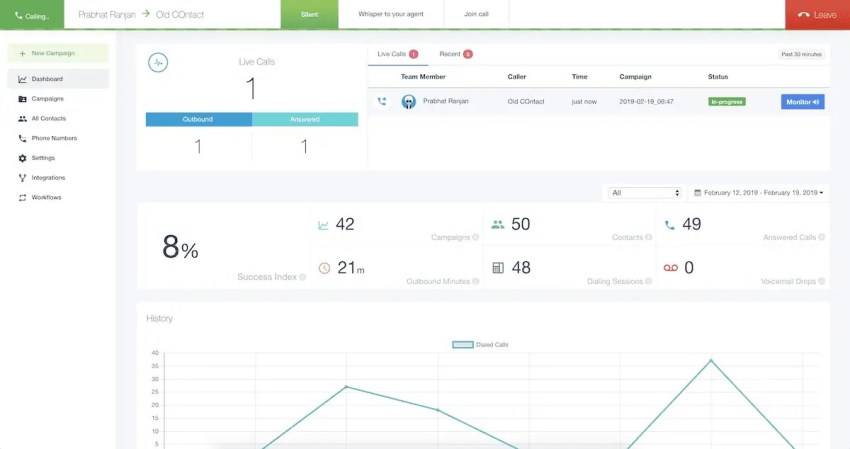
JustCall is a cloud phone system with a clear bias toward outbound sales productivity and SMS-heavy workflows. Power dialing, voicemail drop, call disposition tracking, and messaging campaigns are first-class features, and conversation intelligence (call scoring, transcription, sentiment analysis) is available on higher tiers.
The fit against NiCE CXone is a scale and focus question rather than a feature-by-feature comparison. NiCE CXone is built for organizations managing complex contact center operations across many channels and use cases; JustCall is built for SMB and mid-market sales and support teams whose daily reality is high-volume calling and messaging tied back to a CRM. Teams that don’t need omnichannel orchestration, deep WFM, or industry-specific compliance workflows usually find JustCall faster to deploy and significantly cheaper.
What it isn’t is a full unified communications platform. JustCall offers team collaboration features through Workspace, but it doesn’t provide the same breadth of enterprise UCaaS and contact center capabilities as platforms such as Nextiva or RingCentral.
Key features:
- Call transcripts and AI: Convert calls and voice recordings into transcripts via the JustCall IQ suite.
- Agent management tools: Team organization, performance tracking, and scheduling for sales and support teams.
- Performance analytics: Call scoring and dashboards for visibility into agent handling and quality.
- Sentiment analysis: Per-call sentiment scoring on higher tiers.
- CRM integrations: Native connectors to HubSpot, Salesforce, Pipedrive, ActiveCampaign, and 100+ others.
Key strengths:
- Strong messaging capabilities: SMS and MMS workflows that go beyond what most contact center platforms offer.
- Agent productivity focus: Power dialer, voicemail drop, and disposition tracking built around outbound velocity.
- Quick deployment: Browser-based apps and minimal setup compared to enterprise CCaaS platforms.
Pricing:
- Team: $29/user/month
- Pro: $49/user/month
- Pro Plus: $89/user/month
- Business: Contact sales
Best for: Small to medium-sized businesses that need a balance of features and affordability, particularly teams that heavily use both voice and messaging channels.
5. Genesys Cloud CX – Best for enterprise journey orchestration
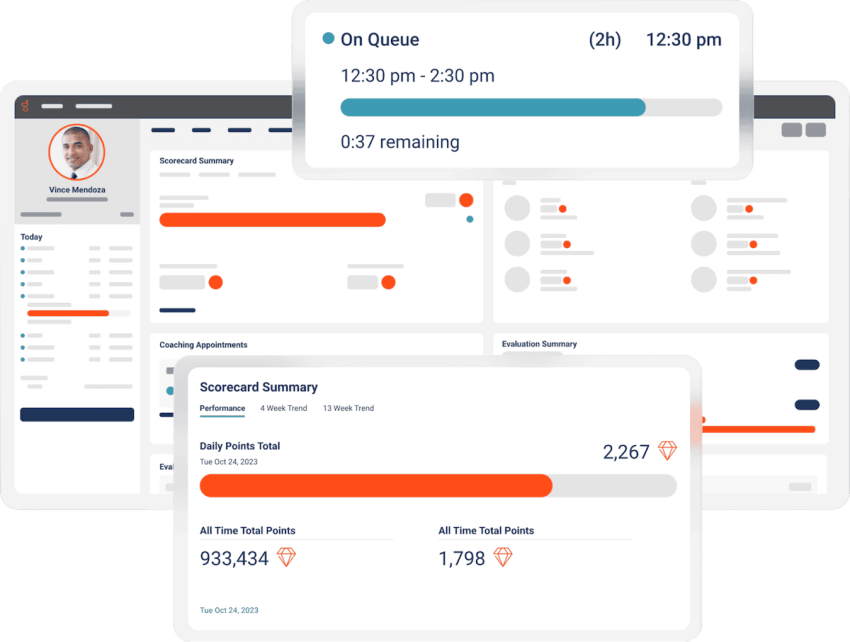
Genesys is one of the most established names in the contact center space, with a cloud platform that handles voice, digital channels, workforce engagement, and customer journey orchestration at enterprise scale. It’s built for organizations that think about CX in terms of multi-channel journeys rather than individual interactions.
The competitive overlap with NiCE CXone is significant. Both are enterprise CCaaS platforms with deep AI, advanced analytics, and broad omnichannel coverage, and both consistently appear on the same shortlists. The differentiation tends to be philosophical: Genesys leans harder into journey orchestration and predictive engagement, while NiCE CXone leans harder into agentic AI and the unified CX platform pitch. Teams looking specifically for nuanced sentiment analysis, customer journey mapping across long lifecycles, and deep configuration flexibility often prefer Genesys.
Pricing climbs steeply with AI and WEM capabilities, and implementation is rarely fast. Like NiCE CXone, Genesys rewards scale and investment.
Key features:
- Omnichannel routing: Route customers to the right agent across voice, email, chat, SMS, social, and web messaging.
- Predictive engagement: AI anticipates customer needs on the website and proactively engages with chatbots or targeted assistance.
- Real-time reporting and interaction analytics: Live supervisor dashboards plus deep interaction analysis across channels.
- AI-powered features: Speech and text analytics, agent assist, chatbots, and predictive routing.
- CRM and UCC integrations: Connectors to Zendesk, Microsoft Dynamics, Microsoft Teams, and Zoom.
Key strengths:
- Customer journey orchestration: Among the most mature in the market for multi-channel journey management.
- AI and sentiment depth: Nuanced analytics across voice and digital interactions.
- Configuration flexibility: Powerful for large enterprises with dedicated CX engineering capacity.
Pricing:
- Genesys Cloud CX 1: $75/user/month
- Genesys Cloud CX 2: $115/user/month
- Genesys Cloud CX 3: $155/user/month
- Genesys Cloud CX 4: $240/user/month
Best for: Large enterprises with complex customer service needs and global operations, particularly organizations requiring sophisticated journey orchestration and advanced analytics.
6. Aircall – Best for SMB voice with strong integrations
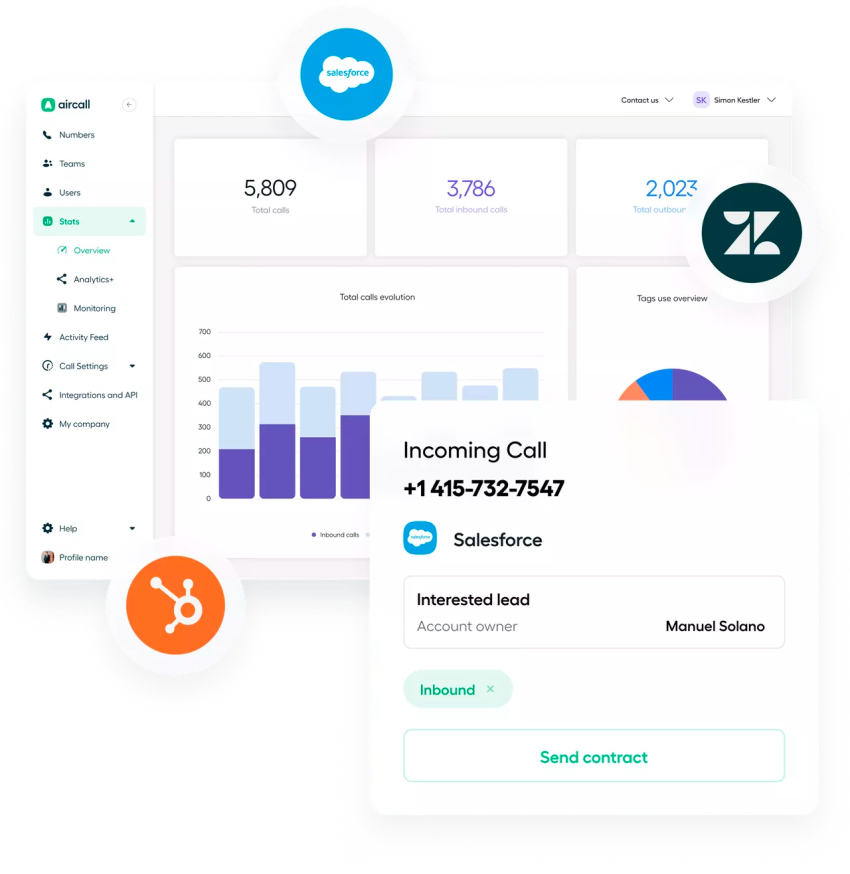
Aircall is a cloud-based phone system known for its user-friendly interface, seamless integrations, and SMB-first design. It’s primarily a voice product with a broad app marketplace, including 100+ one-click integrations across CRMs, helpdesks, and productivity tools.
Aircall isn’t a NiCE CXone replacement in any technical sense. NiCE CXone is a full enterprise CCaaS platform; Aircall is a focused SMB phone system. But it consistently appears on this comparison because a meaningful number of teams evaluate NiCE CXone, decide the platform is overbuilt for their actual needs, and end up looking at lighter, simpler products. For startups and growing teams whose use case is closer to “we need a working phone system with good integrations” than “we need an enterprise contact center,” Aircall is the more honest fit.
The trade-offs are scope and reliability at scale. Aircall doesn’t compete on AI depth, omnichannel breadth, or workforce management, and reviews flag latency and dropped calls as teams grow into larger or international deployments.
Key features:
- Actionable insights: Intuitive analytics and reporting dashboards for call activity and team performance.
- 100+ one-click integrations: CRM, helpdesk, and productivity tool connectors that work without custom development.
- Intelligent call routing: Smart call distribution to the right agent based on rules and availability.
- Team collaboration features: Shared inboxes, call commenting, and warm transfers built around team workflows.
- Virtual call center capabilities: Distributed-team features for managing inbound interactions across locations.
Key strengths:
- Simplicity and ease of use: Minimal training required and fast deployment.
- Strong integration ecosystem: One of the broader one-click marketplaces in the SMB phone category.
- Clean SMB-focused design: Built around how small teams actually work rather than retrofitted from enterprise tooling.
Pricing:
- Essentials: $30/license/month (minimum 3 licenses)
- Professional: $50/license/month
- Custom: 25-license minimum, contact sales
Professional now includes AI Assist at no additional cost, while AI Assist Pro remains a separate add-on.
Best for: Growing businesses and startups seeking a modern, no-fuss phone system with strong integration capabilities and a focus on simplicity over enterprise feature depth.
7. Talkdesk – Best for regulated industries
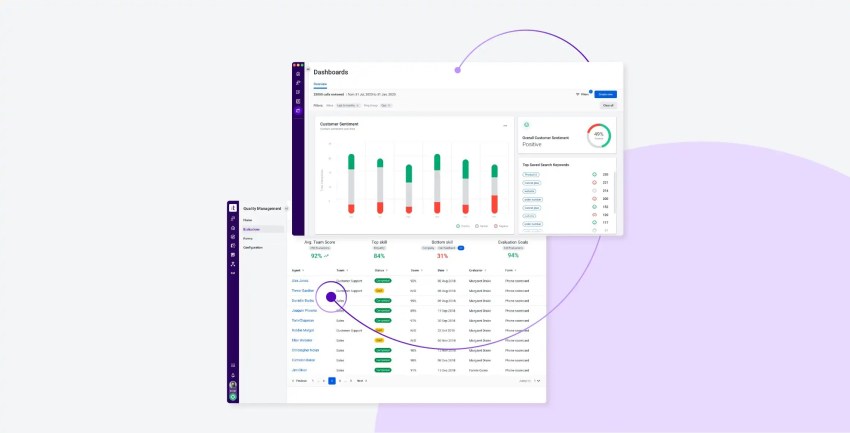
Talkdesk is a cloud contact center platform with a strong vertical bent. Alongside its general-purpose CX Cloud product, it ships dedicated “Industry Experience Clouds” for healthcare, banking, insurance, retail, government, and other regulated sectors, each with pre-built workflows, compliance configurations, and integrations shaped for that industry’s operational context.
Against NiCE CXone, vertical packaging is the clearest point of differentiation. Both platforms cover omnichannel CCaaS, conversational AI, and workforce engagement at a similar enterprise tier. Talkdesk goes further with industry-specific bundles that include pre-configured compliance, integrations with sector-specific systems (Epic in healthcare, for example), and workflow templates that match how regulated teams actually operate. For organizations where compliance and vertical-fit drive the decision, Talkdesk is often the cleaner choice.
The cost structure has trade-offs worth understanding. Pricing assumes a 3-year contract, telephony usage is billed separately, and key AI features like Autopilot (virtual agent) and Copilot (agent assist) are paid add-ons even on the most expensive Elite plan. Real total cost of ownership at scale lands meaningfully above the headline per-user price.
Key features:
- CXA platform with Autopilot and Copilot: Autonomous AI agent (Autopilot) and real-time agent assist (Copilot) for voice and digital channels.
- Industry Experience Clouds: Pre-built editions for healthcare, banking, insurance, retail, government, and more.
- Talkdesk Studio: Drag-and-drop visual flow designer for IVR and routing with no coding required.
- AppConnect marketplace: One-click integrations with Salesforce, Zendesk, Slack, and 70+ other platforms.
- Compliance and security: 30+ certifications, including SOC 2 Type II, ISO 27001, HIPAA, and PCI DSS Level 1.
Key strengths:
- Vertical-specific packaging: Compliance and workflow templates built for regulated industries, not retrofitted.
- Modern, intuitive interface: Cleaner UX than most enterprise CCaaS platforms and faster agent onboarding.
- Strong AI capabilities: CXA platform with autonomous and assistive AI, when configured with the necessary add-ons.
Pricing:
- Digital Essentials: $85/user/month
- Voice Essentials: $105/user/month
- Elite: $165/user/month
- Industry Experience Clouds: $225/user/month
- 3-year contract typically required; telephony billed separately
Best for: Mid-market and enterprise organizations in regulated industries (healthcare, financial services, insurance) that need compliance-ready workflows and vertical-tuned AI.
8. RingCentral RingCX – Best for combined unified CCaaS and UCaaS
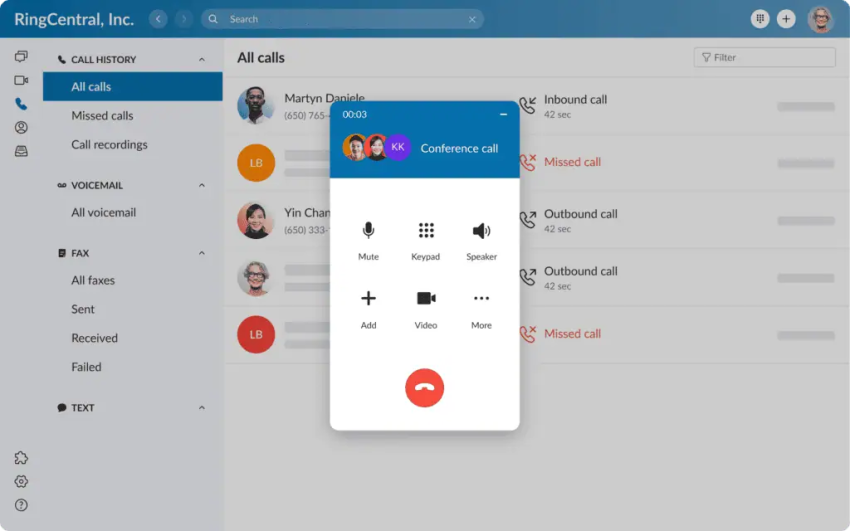
RingCentral provides unified communications through RingEX and contact center capabilities through RingCX. RingCX supports voice, SMS, video, and more than 20 digital channels, while RingEX adds business calling, video meetings, and team messaging. Using the two products together allows customer-facing teams and internal employees to work within the same product environment.
For organizations comparing RingCentral with NiCE CXone, the main distinction is product scope. NiCE CXone focuses on contact center as a service, so businesses may pair it with a separate unified communications platform. RingCentral offers both CCaaS and UCaaS products, which may simplify administration for organizations that want internal and customer communications from one provider.
The friction is the pricing structure. RingCX requires a RingEX account, but you should confirm with RingCentral whether separate RingEX subscriptions are needed for each of your agents or just a single administrative RingEX subscription.
Key features:
- Omnichannel routing: Supports voice and more than 20 digital channels in a shared agent workspace, with skills-based routing options.
- Generative AI capabilities: Includes automated call summaries, RingSense conversation analytics, and AI-assisted agent guidance.
- Outbound dialing: Provides predictive, progressive, and preview dialing modes for sales and outreach campaigns.
- CRM integrations: Offers prebuilt integrations with Salesforce and Zendesk, along with APIs for custom connections.
- Unified UCaaS and CCaaS: Connects RingCX with RingEX capabilities for business calling, video meetings, SMS, and team messaging.
Key strengths:
- Combined CCaaS and UCaaS: Allows organizations to manage contact center operations and internal communications through products from the same provider.
- AI-assisted workflows: RingSense supports conversation analysis, summaries, and agent assistance.
- Established communications platform: RingCentral provides infrastructure and administration tools for organizations with multiple users, teams, and locations.
Pricing:
- RingCX Standard: $65/user/month (requires RingEX subscription)
- RingCX Professional: $95/user/month
- RingCX Elite: $145/user/month
- RingCX Enterprise Contact Center: Contact sales
Suitable for: Mid-sized and enterprise organizations that want UCaaS and CCaaS capabilities in a connected product environment, particularly those already using or evaluating RingEX.
9. 8×8 Contact Center – Best for global operations and compliance
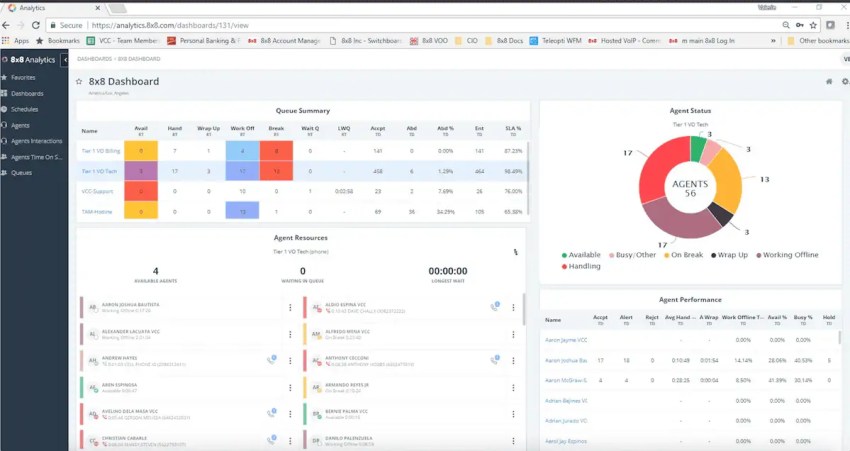
8×8 Contact Center is part of 8×8’s broader XCaaS platform, which combines unified communications and contact center capabilities under a single SLA. It targets mid-to-large organizations with global operations or compliance requirements, with particular strengths in international calling, workforce engagement management, and regulated industries.
Against NiCE CXone, the closest comparison is at the enterprise tier, where both compete on omnichannel depth, WEM, and global reach. 8×8’s standout differentiators are an industry-first 99.999% SLA covering both contact center and business communications, international calling across many countries on certain plans, and compliance breadth (HIPAA, FedRAMP, FCC) that suits regulated and public-sector deployments. NiCE matches it on AI depth, but 8×8 remains a strong pick where global voice and compliance are decisive.
The friction points are pricing transparency and total cost. Like NiCE CXone, 8×8 doesn’t publish list prices for Contact Center plans, with most quoted setups landing around $85/user/month or higher. Implementation fees and add-ons can stack significantly at scale.
Key features:
- Omnichannel skills-based routing: Voice, web chat, email, SMS, messaging, social, and video elevation in a single agent workspace.
- Unified agent and supervisor workspaces: Single-pane-of-glass interfaces for handling and managing interactions.
- Workforce engagement management: Quality management, coaching, workforce management, speech and text analytics, and post-call surveys.
- Global calling and PSTN replacement: Full PSTN coverage in 58 countries with unlimited calling included on certain plans. (8×8 offers unlimited calling to up to 48 countries on eligible X-series plans, while Contact Center usage can have separate allowances and billing rules).
- Compliance breadth: HIPAA, FedRAMP-certified, FCC, and E-Rate eligible for regulated and public-sector deployments.
Key strengths:
- 99.999% SLA across UCaaS and CCaaS: Financially backed reliability commitment that’s rare at this tier.
- Global voice footprint: One of the broader international calling profiles among enterprise CCaaS platforms.
- Compliance and security depth: Strong fit for healthcare, government, and education deployments.
Pricing:
- Contact sales; 8×8 offers solutions across contact center, CX beyond the contact center, communications APIs, and unified communications.
Best for: Mid-to-large enterprises with global operations or compliance requirements that need unified UCaaS and CCaaS under a single reliability SLA.
10. Amazon Connect Customer – Best for AWS-native and usage-based pricing
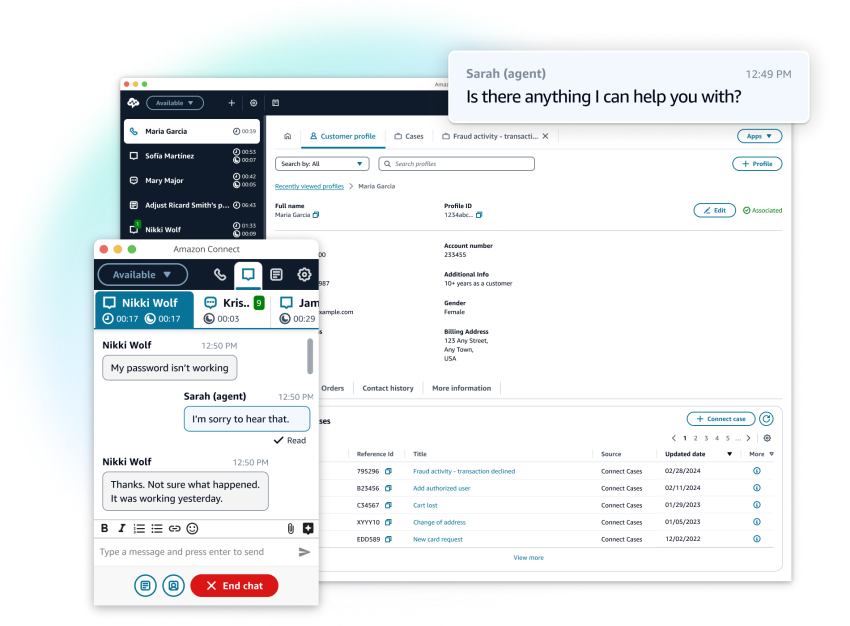
Amazon Connect is a cloud contact center built and operated by AWS. Unlike every other platform on this list, it doesn’t sell per-user licenses. Pricing is usage-based (pay-as-you-go, billed per minute of voice, per chat message, per email, and per task), with optional per-agent fees for workforce management and performance evaluations.
The fit against NiCE CXone depends almost entirely on the team profile. For organizations that run on AWS, have engineering capacity, and prefer building over configuring, Amazon Connect is an unusually flexible foundation. It includes native integrations with the rest of the AWS stack (Lambda, Lex, S3, Bedrock for AI), unlimited AI capabilities on the Customer plan, and a usage-based cost model that can land significantly below NiCE CXone for variable-volume operations or seasonal contact centers. For teams without AWS familiarity, the steeper learning curve and operational overhead can easily wipe out the cost advantage.
The cost predictability question cuts both ways. Pay-as-you-go is genuinely flexible, but predicting monthly spend requires accurate volume forecasts across voice minutes, chat messages, AI usage, telephony fees, and any à la carte features. Several teams that move to Connect for cost reasons end up surprised by the AWS bill once usage scales.
Key features:
- Pay-as-you-go pricing: Per-minute voice, per-message chat, per-email, and per-task billing with no seat licenses or contracts.
- Included AI plan: Agent assist, self-service AI, conversational analytics, post-contact summaries, screen recording, and performance evaluations included at a flat per-interaction rate.
- Native AWS integration: Direct connections to Lambda, Lex, S3, Bedrock, and the rest of the AWS service catalog.
- Omnichannel support: Voice, chat, email, SMS, tasks, and outbound campaigns with unified routing.
Key strengths:
- No seat licenses or long contracts: Genuine usage-based pricing that suits variable or seasonal volumes.
- AWS-native architecture: Strong fit for engineering-led teams already invested in the AWS ecosystem.
- Included AI capabilities: Flat per-interaction pricing that includes the full AI feature set, which can be cost-effective at higher volume.
Pricing (pay-as-you-go):
- Voice: $0.038/minute, plus applicable telephony charges
- Chat: $0.010/message (sent or received)
- Email: $0.080/email (sent or received)
- SMS and 3P messaging: $0.014/message (sent or received)
Customer basic: Available with lower base channel rates and separately priced features. Telephony, phone numbers, and outbound campaigns are billed separately.
Best for: AWS-native organizations with engineering capacity that want a builder-led contact center with usage-based pricing and unlimited AI included.
Evaluating contact centers? Get the buyer’s guide.
This guide reveals the five pillars of a modern platform, key questions to ask, and red flags to avoid.
Choosing the Right NiCE CXone Alternatives
Each platform excels in different areas. Here’s how you can quickly find the right NiCE CXone alternative for your primary needs.
Match the provider to your situation
- Choose Nextiva if you want unified CCaaS and UCaaS on one platform with 24/7 support and 99.999% uptime included from the entry tier. Best fit for growing businesses and mid-market teams without dedicated IT resources.
- Choose CloudTalk if you’re a sales-driven team that needs strong voice quality, power dialing, and CRM integration depth without omnichannel or enterprise WFM overhead.
- Choose Five9 if you’re an enterprise contact center with high outbound volume and need advanced predictive dialing, AI, and analytics, with engineering resources to support implementation.
- Choose JustCall if you’re an SMB sales or support team that uses both voice and SMS heavily and wants productivity tooling without unified communications.
- Choose Genesys if you’re a global enterprise running complex multi-channel customer journeys that require deep orchestration, predictive engagement, and configuration flexibility.
- Choose Aircall if you’re a startup or growing SMB that wants a clean voice platform with a broad integration marketplace and is honest that you don’t need a full CCaaS.
- Choose Talkdesk if you operate in healthcare, banking, insurance, or another regulated vertical and need compliance-ready workflows and industry-specific Experience Clouds.
- Choose RingCentral (RingCX) if you want native UCaaS and CCaaS bundled in one platform, particularly if your team is already on RingEX.
- Choose 8×8 Contact Center if you’re a mid-to-large enterprise with global operations and compliance requirements that need a 99.999% SLA covering both UCaaS and CCaaS.
- Choose Amazon Connect if you’re AWS-native, have engineering capacity, and prefer pay-as-you-go pricing and a builder-led contact center over per-seat licensing.
Evaluation principles to apply during demos
- Audit your motivation: Before booking demos, define why you’re leaving NiCE CXone. If the issue is UCaaS gaps, prioritize unified platforms. If it’s complexity, prioritize ease of use. If it’s pricing, build a full TCO model that includes telephony, AI usage, and support tier costs.
- Verify the uptime guarantee: Look for 99.999% as the gold standard and check the provider’s public status page history before signing.
- Test integration depth, not just connector count: Marketing pages list logos; the real test is whether the integration pops customer context before a call is answered and syncs activity back without manual logging. Ask to see it live during the trial.
- Check compliance fit: If you operate in healthcare, finance, or another regulated industry, confirm HIPAA, PCI-DSS, SOC 2, GDPR, or FedRAMP alignment in writing before signing. Some providers gate compliance behind enterprise tiers.
- Watch for hidden usage costs: AI add-ons, telephony minutes, regulatory fees, and contract minimums can change real per-user cost meaningfully. Ask for a total cost estimate that includes projected usage.
- Test peak performance: Take advantage of free trials to test reliability and support quality during peak hours.
When choosing a contact center solution, start by understanding your core requirements, including call volumes, necessary integrations, and compliance needs. Research thoroughly by scheduling demos with top contenders and gathering feedback from similar businesses.
Consider the total cost of ownership, including setup, training, and future scaling expenses. Remember that the ideal solution shouldn’t only meet your current needs but also support your future growth and align with your existing technology stack.
Why Nextiva Is the Top Option Among NiCE CXone Alternatives
Nextiva’s user-friendly interface, excellent customer support, competitive pricing, and robust yet easy-to-understand feature set make it a stand-out among the top NiCE CXone alternatives.
While NiCE CXone offers an extensive range of advanced features and AI capabilities, its complexity, occasional service issues, and restrictive licensing can be detrimental.
On the other hand, Nextiva is simple, reliable, and affordable, with account managers maintaining a direct relationship with customers to provide personalized support tailored to each user’s needs.
Top Ranked AI-Powered Contact Center Solution
Transform your customer interactions with Nextiva’s AI-powered CCaaS platform that saves you time and money, reduces agent stress, and adapts to fit your needs.