Customer Experience
 Blog
 Business Communication
 Leadership
 Marketing & Sales
 Nextiva News
 Productivity
 VoIP


Unified customer experience connects customer interactions across phone, email, live chat, social media, and SMS through shared data and coordinated workflows. Unified customer experience management (CXM) puts this approach into practice. It helps marketing, sales, and support teams understand past interactions and provide continuous service without making customers repeat information when they switch channels.
Grand View Research estimates the global customer experience management market will reach $17.7 billion in 2026. But before businesses invest in another tool, they need to identify the capabilities that will help their teams serve customers better. This guide explains how UCXM compares to traditional approaches, which features to look for in a CXM platform, and how to put it into practice.
Where Do You Rank on the AI Maturity Curve?
Take the 5-minute assessment and get a personalized score and recommended next steps.
What Is Unified CXM?
Unified CXM (unified customer experience management) is an approach that brings customer data, communication channels, and team workflows together to manage the customer journey. It helps marketing, sales, and support coordinate their work, from a customer’s first inquiry through purchase and ongoing service.
Customer experience management (CXM) involves understanding how customers experience your business and improving those experiences. Teams review customer feedback, identify problems, and adjust their processes. The “unified” part connects that work across departments so each team can understand what has already happened and decide what to do next.
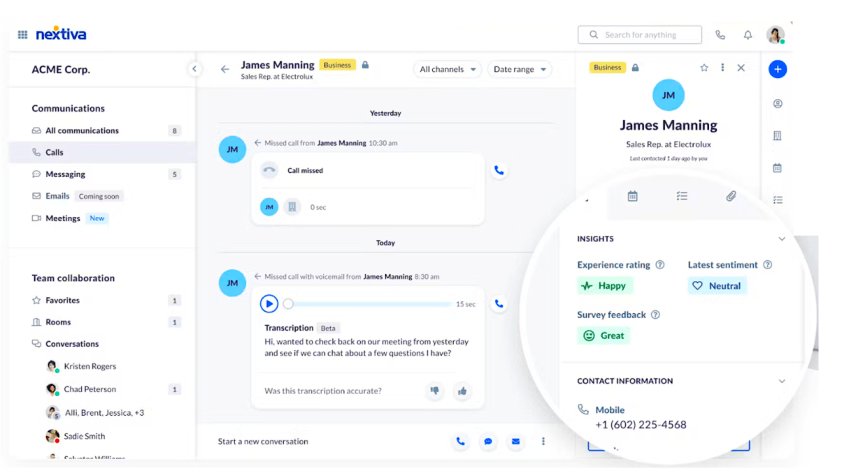
For example, a customer might report a billing issue through live chat and call the next day for an update. With a unified CXM platform, the agent can review the earlier conversation, check the issue’s status, and continue helping without starting over. Marketing can also use that context to pause promotional messages while the support team resolves the problem, if the platform supports that workflow.
The goal goes beyond collecting information in a dashboard. Teams need to use that information to coordinate their responses and follow through as customers move between channels and departments.

What Is a Unified CXM Platform?
A unified CXM platform is the software businesses use to put unified customer experience management into practice. It gives teams tools to manage conversations, assign tasks, automate follow-ups, and measure performance across the customer journey.
For example, a business can set up a workflow that routes a billing complaint to the right specialist, alerts a manager if the issue remains unresolved, and sends a feedback survey after the team closes the case. These steps give each request a clear owner and help teams follow through.

Why Do You Need Unified Customer Experience Management?
Unified customer experience means giving customers a connected experience as they move between your teams and communication channels. Each interaction builds on the previous one, so customers can continue their journey without repeating steps or receiving conflicting information.
The need for unified CXM arises when disconnected systems and isolated teams prevent businesses from delivering this connected experience. These gaps create several challenges:
- Incomplete customer visibility: Isolated data prevents a comprehensive understanding of customer behavior and personalized service, and leads to inconsistent customer interactions.
- Brand discordance: Disparate messaging across channels creates a confusing and unprofessional brand experience when customers interact with different touchpoints, eroding customer trust.
- Obstructed customer journey mapping: The inability to orchestrate the entire customer journey makes it hard to pinpoint friction points and optimize for seamless experiences.
- Elevated customer dissatisfaction: Requiring customers to reiterate information and endure inconsistent interactions breeds frustration and creates dissatisfied customers, which reduces loyalty and customer retention.
Understanding customer preferences helps improve various aspects of business operations, from marketing strategies and interactions to the overall customer experience. Optimizing every customer interaction across all channels strengthens relationships and is also important for meeting increased customer expectations and improving loyalty and operational efficiency.
Unified CXM effectively addresses these challenges, providing a central hub for customer interactions and enabling a consistent, personalized, and seamless customer experience.
How Unified CXM Differs from Traditional CXM
Traditional customer experience management treats each channel separately, resulting in siloed data and inconsistent customer experiences. In contrast, Unified customer experience management takes a comprehensive view of the customer journey, delivering cohesive and personalized interactions at scale.
| Dimension | CXM with disconnected tools | Unified CXM approach |
|---|---|---|
| Customer data | Teams may maintain separate records across tools. | Connected systems give teams a shared view of relevant customer information. |
| Communication channels | Teams manage conversations separately by channel. | Teams connect conversations across supported channels. |
| Analytics | Separate reports can make cross-channel patterns harder to identify. | Combined reporting helps teams analyze activity across connected channels. |
| Personalization | Teams work with the information available in each tool. | Teams can use shared interaction history to tailor responses. |
| Team collaboration | Employees may need to transfer notes or look up information manually. | Shared history and coordinated workflows help preserve context during handoffs. |
| Costs | Separate subscriptions, maintenance, and integrations contribute to costs. | Costs depend on the platform, implementation, integrations, usage, and selected features. |
Unified CXM also uses a centralized data source to provide consistent interactions throughout the customer journey, whereas traditional CXM may depend on fragmented data sources. The evolution from fragmented customer experience management approaches to a comprehensive strategy has improved the ability to track and enhance the customer journey.
Unified CXM also provides real-time analytics and insights into customer behavior and preferences, allowing businesses to respond quickly and effectively to customer needs. Traditional CXM relies on historical data and manual analysis, which can be time-consuming and less effective.
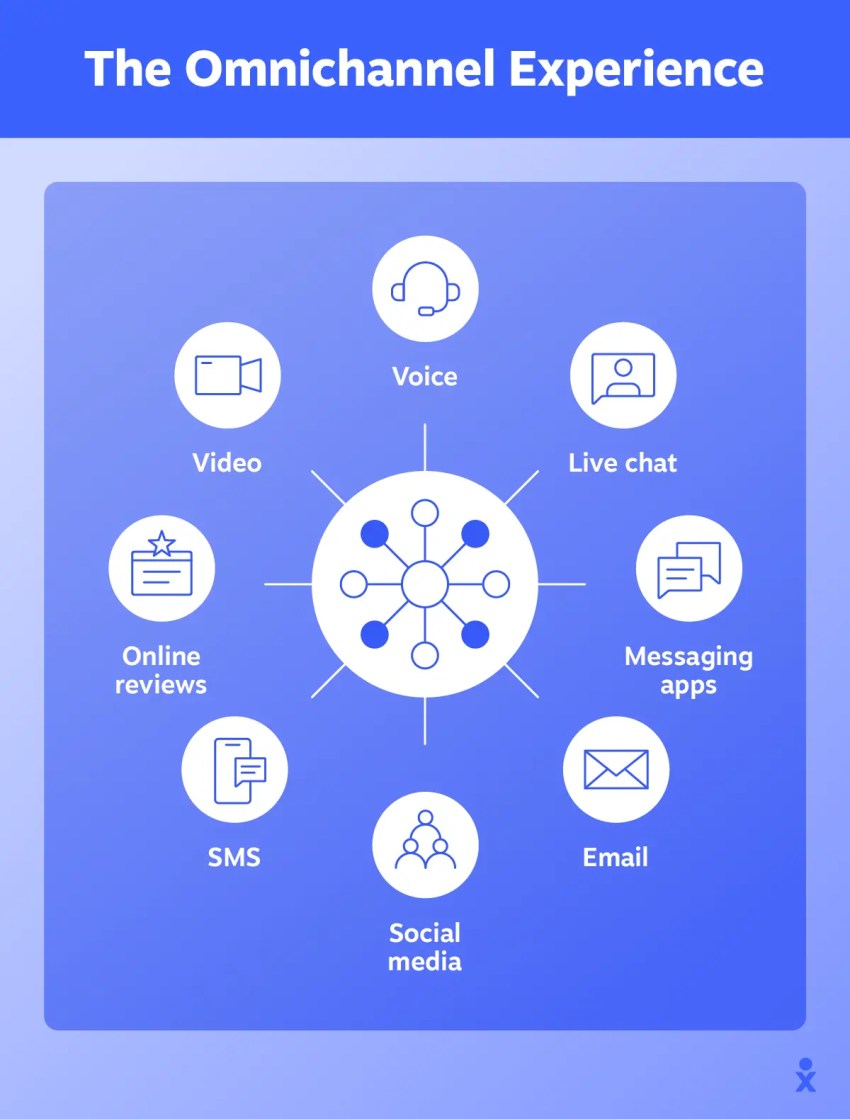
Furthermore, unified CXM supports omnichannel customer engagement, allowing customers to interact with businesses across multiple channels, including online, in-store, phone, and more. Traditional CXM focuses on a single channel or a limited set of channels, which can limit the customer’s ability to interact with the business seamlessly and conveniently.

Benefits of Unified CXM
Knowing your customers are everywhere is one thing. But how does unified CXM actually help you create amazing experiences and a growing business? Here’s how:
1. Better collaboration
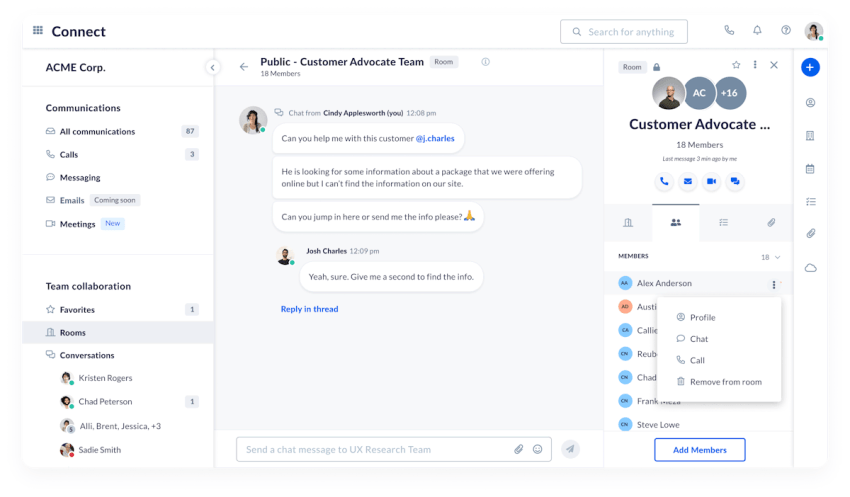
Unified customer experience tools let you know everything important about a customer the moment they contact you: past purchases, support tickets, social media interactions, the whole nine yards. Proper training for customer service representatives is important when using these tools. Optimizing each customer interaction across communication channels prevents digging through separate systems or asking customers to repeat information.
2. Improved customer experiences
Customers jump between your website, social media, email, and maybe even a good old-fashioned phone call. A unified CXM approach ensures a consistent customer experience by maintaining consistent brand messaging, voice, and interactions, regardless of where customers reach out. This builds trust, makes your brand instantly recognizable, builds a sense of reliability, and strengthens your brand identity.
3. Enhanced personalization
With a complete view of your customer, you can deliver experiences tailored to their unique needs and preferences. Think personalized product recommendations, targeted offers, and proactive support based on past customer interactions.
Hyperpersonalization makes customers feel valued, understood, and delighted in their journey. UCXM goes beyond basic customer segmentation to offer individualized experiences.

4. Improved efficiency and reduced costs
Unified CXM platforms eliminate redundancies and automate tasks. You achieve faster response times, fewer handoffs between departments, and reduced workload for your team.
Optimizing your processes saves valuable time and money while improving customer engagement. Your team can also focus on higher-value activities, like building customer relationships and innovating better.
5. Increased customer loyalty and advocacy
Happy customers are engaged customers. Consistently great customer experiences build strong customer relationships and brand loyalty.
Loyal customers are more likely to make repeat purchases, recommend your brand to others, and become advocates for your business. Unified customer experience turns satisfied customers into passionate brand champions.
6. Better data insights
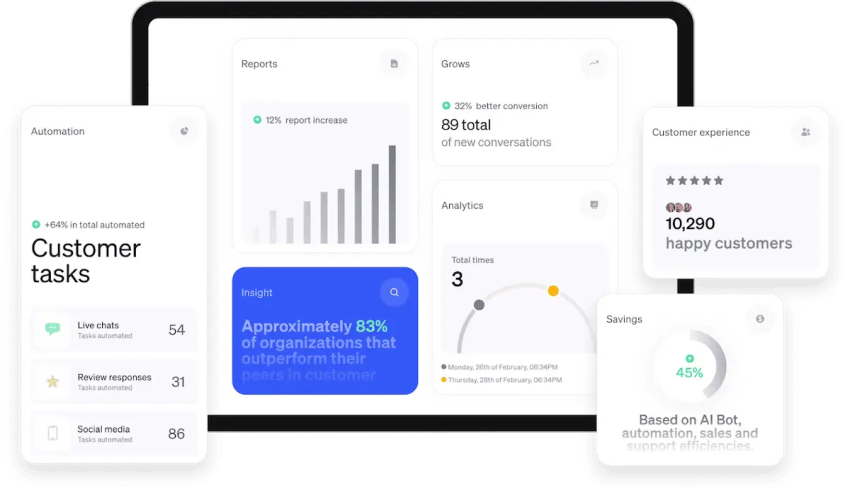
UCXM platforms enable businesses to move beyond gut feelings and make decisions based on concrete customer insights. Unified customer experience software centralizes your customer data and helps you analyze customer behavior, identify trends, and predict and anticipate customer needs. Key customer data drives informed decisions about your products, services, and customer experience strategy, keeping you a step ahead.
Essential Components of a Unified CXM Strategy
Building a successful unified customer experience management strategy requires the right parts to work together to achieve top speed. Here’s how unified CXM works:
Centralized customer data platform (CDP)
A unified view of your customer is essential for personalized experiences. CDPs gather customer data from all your systems CRM systems, marketing automation, and social media and create a unified and comprehensive customer profile. You can see the complete picture, understand customer needs, and tailor interactions accordingly.
For example, if a customer has recently browsed your website for running shoes, your marketing team can use this data to send them targeted emails about upcoming sales on running gear.
Omnichannel integration
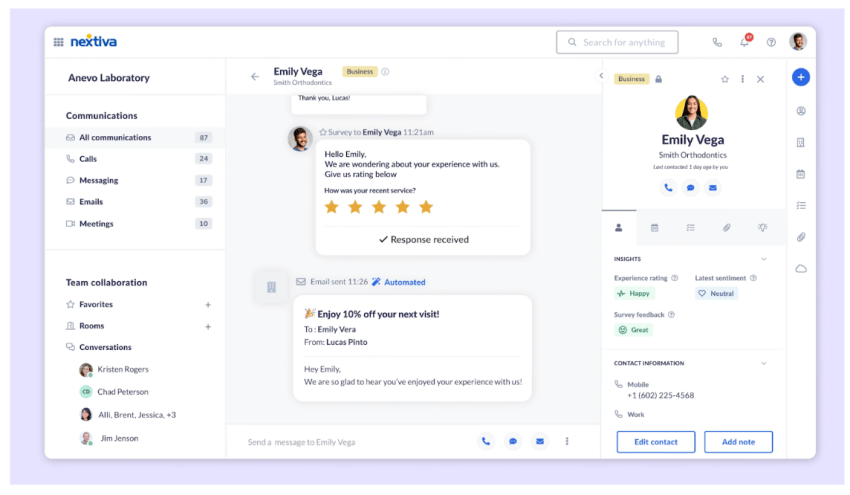
Omnichannel integration connects all your customer touchpoints: website, mobile app, social media, and email to create a unified customer experience. This means a customer can start a conversation on your website and continue it on social media without repeating themselves.
For example, a customer can inquire about a product on your website’s live chat, and then receive a follow-up email with more information and a personalized offer.
Automation and AI
AI chatbots can instantly answer common questions, freeing up human agents for more complex issues. AI algorithms leverage predictive analytics and analyze customer data to predict future needs and proactively offer support. For example, if a customer has a history of contacting support about a specific product feature, AI can trigger a proactive chat offering assistance before they even reach out.
Furthermore, AI-driven sentiment analysis can review social media posts and customer reviews to provide a quick overview of customer feelings about a brand. This allows for quick reactions to negative reviews and quick amplification of positive ones.
An AI-native CXM platform builds AI into its workflows and shared customer context. That can support tasks such as routing, summarizing conversations, and suggesting responses. Still, the label alone tells you little about performance. Ask vendors to demonstrate which data the AI can access, how permissions apply, and how customers reach a human when it cannot help.

Customer journey mapping and analytics
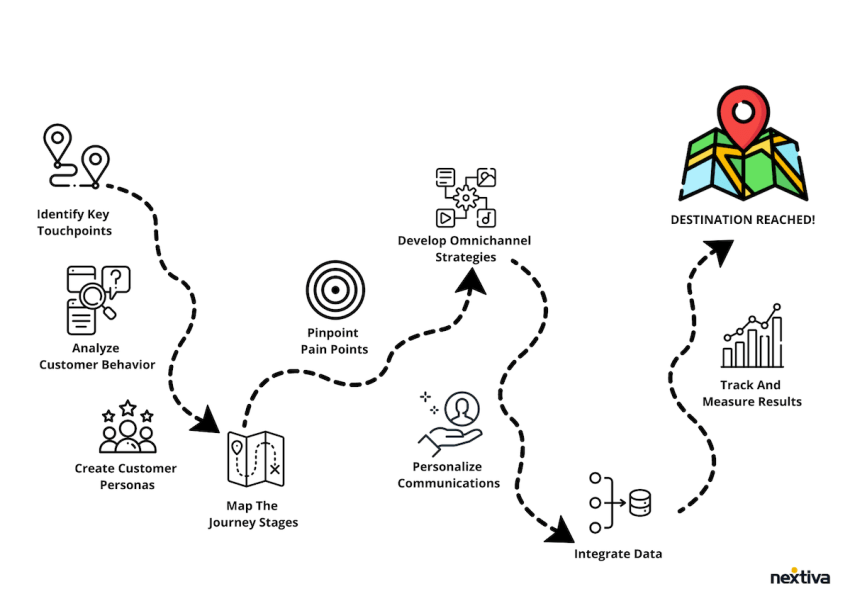
Customer journey mapping helps visualize the entire customer lifecycle, from initial awareness to purchase and beyond, and creates seamless customer journeys. Analytics provide actionable insights into customer behavior, showing you where they drop off, what channels they prefer, and what drives their decisions.
For example, if analytics reveal that many customers abandon their shopping carts at the checkout page, you can investigate friction points and optimize the checkout process.
Employee empowerment
Engaged employees create happy customers. Unified CXM platforms give your customer-facing teams access to complete customer information and the ability to easily switch between channels, so they can resolve issues faster and offer more personalized service. Happier employees feel confident in their ability to offer positive customer experiences.
Continuous feedback loops
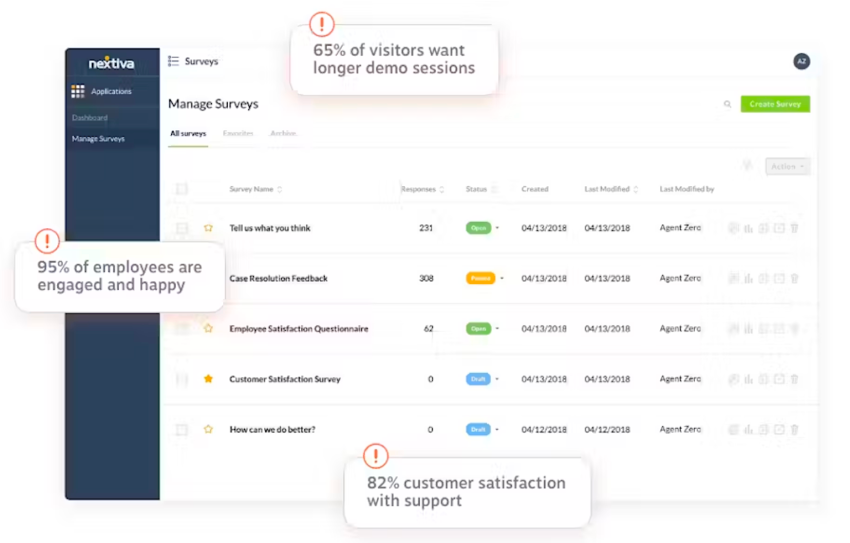
Unified CXM platforms collect customer feedback from multiple channels (surveys, reviews, social media) and analyze it to identify trends and areas for improvement. This creates a closed-loop system where you’re constantly listening, learning, and optimizing the customer experience.
If you notice a trend of negative reviews mentioning long wait times for customer support, you can take steps to improve response times and address the issue quickly.

Key Features of Unified CXM Platforms
Unified CXM platforms typically include a range of features that enable businesses to deliver personalized customer experiences. Some key features of UCXM software include:
- Data integration: Integrate customer data from various touchpoints to provide a unified customer view.
- Omnichannel support: Support customers across multiple channels, including online, in-store, phone, and more.
- Real-time analytics: Provide real-time insights into customer behavior and preferences.
- Personalization: Tailor interactions to individual customer needs and preferences.
- Customer journey mapping: Map the customer journey to identify pain points and areas for improvement.

Unified CXM platforms may also include features such as customer feedback and survey tools, customer loyalty programs, and customer engagement analytics. These features enable businesses to gather feedback from customers, reward loyal customers, and measure the effectiveness of their customer engagement efforts.
How To Create a Unified Customer Experience
Rolling out a unified customer experience management strategy isn’t a “set it and forget it” task. It requires careful planning, execution, and ongoing optimization. Here’s a roadmap to guide your unified customer experience strategy:
1. Define clear objectives
Start with the “why.” Before diving into implementation, clearly define what you aim to achieve with UCXM. Are you looking to boost customer satisfaction scores (CSAT)? Reduce customer churn? Increase customer lifetime value (CLTV)?
Having specific, measurable, achievable, relevant, and time-bound (SMART) goals will help you track progress, measure success, and keep your efforts focused.
2. Choose the right CXM platform
Not all customer experience platforms are created equal. The market is flooded with solutions, so choose wisely. Consider your needs, budget, existing tech stack, and company size. Look for a platform that easily integrates with your CRM, marketing automation tools, and other essential systems. Also, ask for demos, compare features, and read reviews before making a decision.

3. Break down silos
Unified customer experience is all about collaboration. Encourage communication and knowledge sharing between departments. Create cross-functional teams that work together to implement and optimize your unified customer experience strategy.
Breaking down silos ensures everyone is on the same page, working toward a common goal, and has access to the same customer information their role requires.
4. Prioritize data security and privacy
Customer data is valuable. Treat it with respect and protect it. Implement robust security measures to safeguard sensitive information and comply with relevant data privacy regulations like the General Data Protection Regulation (GDPR) and the California Consumer Privacy Act (CCPA). Transparency is key. Be open with customers about how you collect, store, and use their data.
5. Start small, iterate, and scale
Start with a pilot project, focusing on one customer segment or channel. Gather data, analyze results, and learn from your experiences. This iterative approach refines your strategy and gradually scales your UCXM efforts as you gain confidence and experience.
6. Measure, analyze, and optimize
What gets measured gets improved. Track key customer experience metrics like CSAT, net promoter score (NPS), churn rate, and CLTV. Regularly analyze these KPIs to identify areas for improvement and optimize your unified customer experience strategy for maximum impact. Use data-driven insights to make informed decisions and ensure your CXM strategy is always evolving.

The Right Unified CXM Starts With the Right Platform
Want more revenue, a better reputation, and a wildly loyal customer base? It all starts with the right UCXM platform.
Nextiva’s unified CXM solution and AI-driven contact center help thousands of companies deliver exceptional customer experiences across every touchpoint and optimize every aspect of their business.
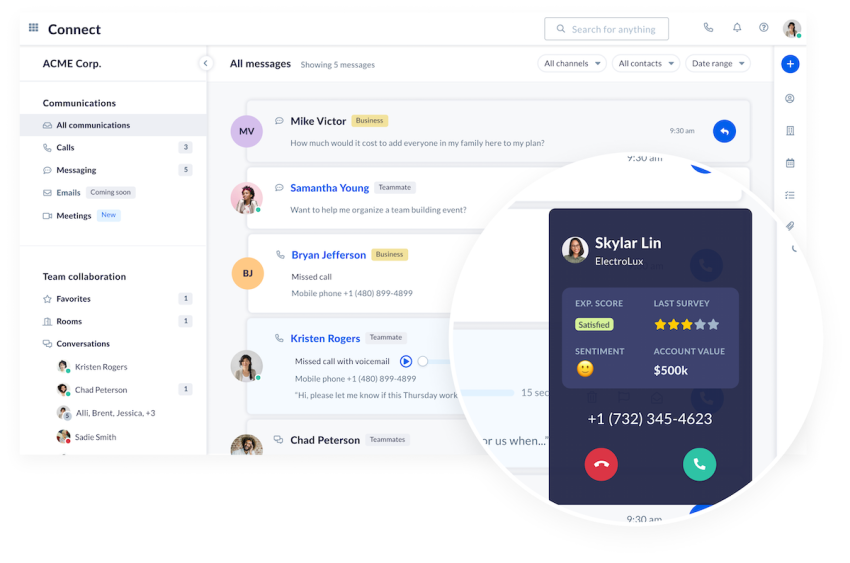
With Nextiva, customer experience management means:
- Multi-channel support: Engage with customers on their preferred channels, including email, live chat, messengers, SMS, and social media. Turn conversations into conversions by quickly transitioning between support and sales.
- Social media management: Schedule posts, monitor responses, and analyze social media trends to amplify your brand presence and manage your reputation.
- Unified messaging app integration: Connect with customers on popular messaging apps like Facebook Messenger and WhatsApp, automate responses, and deliver personalized support.
- AI-powered live chat: Build an efficient contact center with AI-powered chatbots and intelligent routing. Free up your team for complex issues while providing instant support.
- Integrated email ticketing: Centralize and manage all support requests in one platform. Real-time alerts and reminders ensure that no customer inquiry is missed.
- Review monitoring: Track and respond to customer reviews across various platforms. Analyze customer feedback, turn it into actionable improvements, and proactively manage your online reputation.
Bring your customer conversations together.
Connect your customer channels, conversations, and records in one place with the Nextiva NEXT Platform.
Unified CXM Is How You’ll Win
Now you know: Embracing unified CXM will give you the ultimate advantage. It gives customers the ease and comfort they need from customer experience and gives your business the growth and stability to thrive.
Which unified CXM solution do you need? A solution that is reliable, highly rated and recommended, and packed with features and plugins that make you efficient.
See how Canyon Coolers powers its customer conversations with Nextiva.

Frequently Asked Questions About Unified Customer Experience Management
Unified CXM provides a holistic approach covering all customer touchpoints across sales, marketing, support, and service interactions to create consistent experiences. CRM focuses primarily on managing customer data and interactions for sales and marketing purposes. Think of CRM as one component within the broader UCXM framework.
Costs vary based on vendor, features, number of users, and business size. Pricing models include tiered options based on contacts/users or customized quotes. Compare multiple vendors to find the best match for your budget and requirements.
Common challenges include:
– Data integration across various systems
– Change management when modifying existing workflows
– Ensuring employee adoption of the new platform
– Choosing the right platform that meets needs and integrates with existing systems
Success requires clear planning, leadership support, and effective communication throughout implementation.
No. Many unified customer experience management solutions are scalable for businesses of all sizes, from startups to large corporations. Platforms like Nextiva offer solutions tailored for small and medium-sized businesses (SMBs).
To measure the performance of your customer experience strategy, track the following key metrics:
– Enhanced customer satisfaction (CSAT) scores
– Reduced churn rate
– Increased customer lifetime value (CLTV)
– Improved operational efficiency
– Increased revenue
Tracking these metrics demonstrates the tangible benefits and positive business impact of your UCXM investment.
There is no fixed timeline. Results depend on your data quality, integration work, implementation costs, and employee adoption. A focused pilot can help you identify early improvements, such as fewer repeat contacts or faster responses. Financial ROI comes when measurable gains and savings exceed implementation and ongoing costs.
Start with contact details, account information, consent records, and communication preferences. Then connect relevant interaction history, such as recent support cases, purchases, and renewals. Define how your systems match customer identities and resolve duplicate or conflicting records before using that data for personalization and reporting.
Set clear rules for which tasks to automate and when to involve a person. Routing, conversation summaries, and routine updates may suit automation, while sensitive or complex issues may need human judgment. Review automated messages for accuracy, tone, and relevance, and give customers a clear way to reach an agent.