

 Customer Experience
  Blog
Blog  Business Communication
  Leadership
  Marketing & Sales
  Nextiva News
  Productivity
  VoIP
VoIP 
When it comes to measuring customer loyalty, one metric stands out: the Net Promoter Score (NPS).
It’s a simple yet powerful tool used by global brands like Apple and Tesla to measure customer satisfaction and predict business growth. But the NPS is more than just a number on a dashboard. It’s a direct line to your customers, showing you exactly how much they value your company and whether they would recommend it.
In fact, 2024-2025 reports from firms like Forrester show that customer experience quality has seen one of its steepest declines in years, making a strong NPS program more critical than ever to stand out.
For businesses that prioritize continuous improvement, understanding and using the NPS is key to reducing customer churn, increasing referrals, and creating a superior customer experience.
But what if you’re not using NPS today, or not using it effectively? Don’t worry.
This comprehensive guide walks you through everything you need to know about NPS.
What Is Net Promoter Score (NPS)?
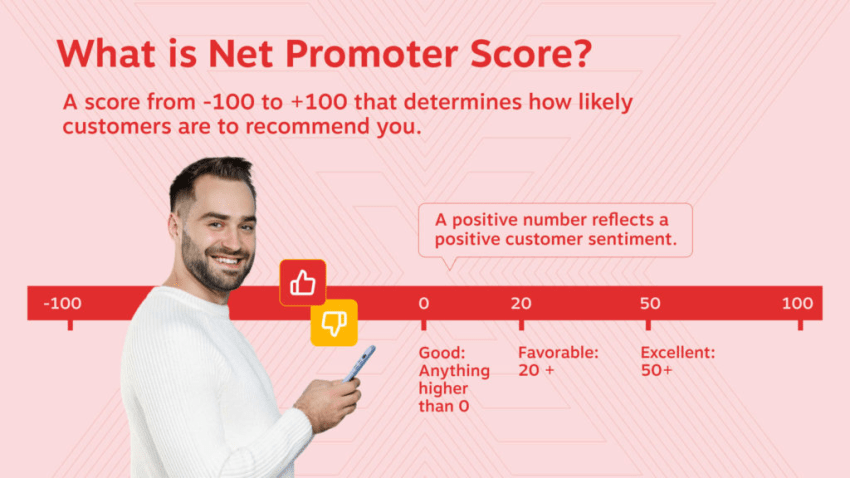
Net Promoter Score, or NPS, is a calculation used to measure the loyalty and advocacy of your customer base. It provides a simple, standardized score ranging from -100 to +100 and is called the gold standard customer experience metric.
Businesses use NPS to benchmark their performance against competitors and track customer sentiment over time. A rising NPS indicates that your customer experience initiatives are working, while a falling score signals an urgent need for improvement.
As customer experience expert Shep Hyken says, “Satisfactory is a rating. Loyalty is an emotion.” NPS is designed to measure that emotion.
The 3 NPS Customer Categories
To calculate your score, you first survey customers with the core question: “How likely are you to recommend our company to a friend or colleague?”
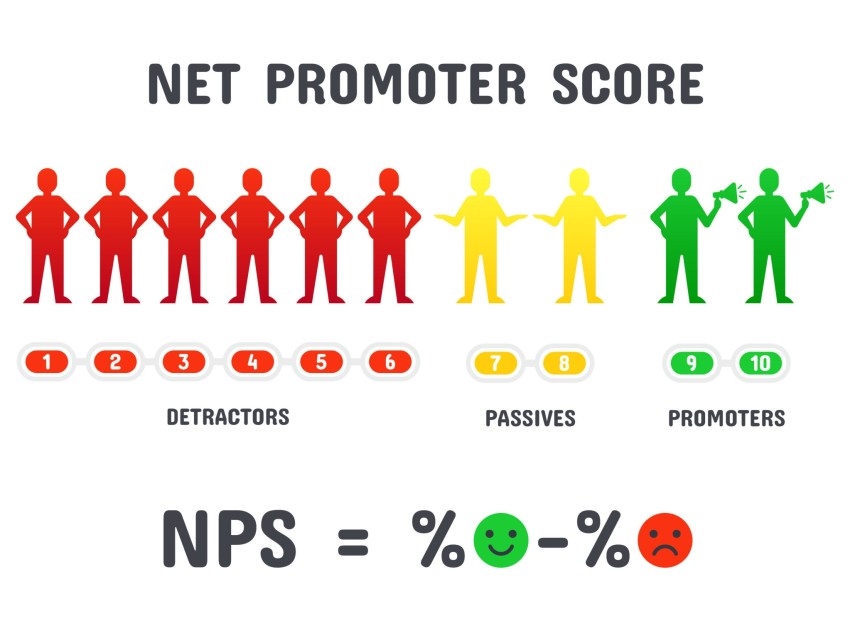
Respondents answer on a scale of 0 (Not at all likely) to 10 (Extremely likely). Based on their answers, you categorize them into three groups:
| Score | Category | Who they are |
|---|---|---|
| 9–10 | Promoters | These are your loyal fans, regular customers, brand advocates, and an important source of recommendations and positive reviews. |
| 7–8 | Passives | These customers are currently satisfied, but not loyal. They lack enthusiasm and are easily swayed by competitor offers or a single negative experience. |
| 0–6 | Detractors | These are your dissatisfied customers. They pose a high risk of churn and, even worse, can actively damage your brand by sharing their negative experiences. |
How Do You Calculate NPS? The Net Promoter Score Formula
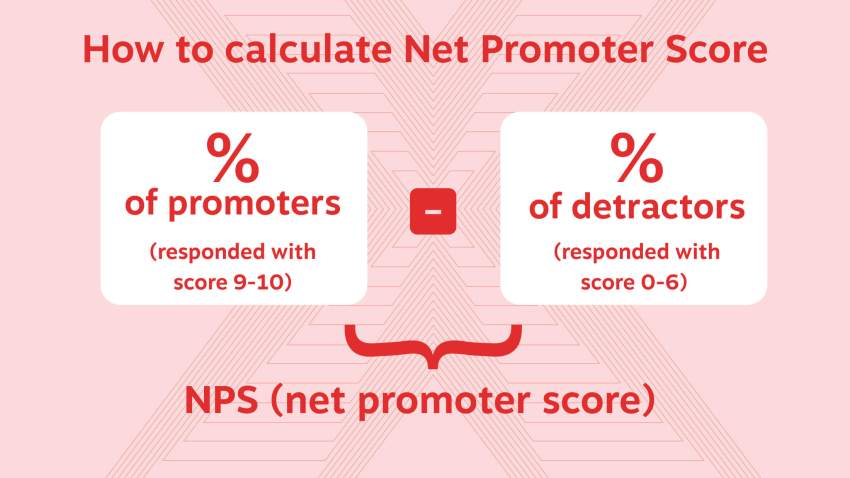
To determine the final NPS, use the following simple formula:
- Calculate the percentage of respondents who are Promoters.
- Calculate the percentage of respondents who are Detractors.
- Subtract the percentage of Detractors from the percentage of Promoters.
NPS = % Promoters – % Detractors
This is how you calculate Net Promoter Score in its simplest form.
| Example of NPS calculation: Say you survey 100 customers: 60 respond with a 9 or 10 (60% are Promoters) 30 respond with a 7 or 8 (30% are Passives) 10 respond with a 0 to 6 (10% are Detractors) Your Net Promoter Score calculation would be: 60% – 10% = 50 Your Net Promoter Score is 50. |
Why Is Net Promoter Score Important?
The Net Promoter Score is one of the most important key performance indicators (KPIs) you can track to gauge revenue growth and customer retention.
When part of a structured Net Promoter System, it not only measures customer satisfaction but also customer loyalty — an emotional bond that directly impacts your bottom line. A high NPS is a great indicator of future success.
Here’s why NPS is so critical to your business:
- It predicts revenue growth: Companies with the highest NPS in their industry typically grow revenues at twice the speed of their competitors. Industry studies show that a 12 point increase in NPS correlates to doubling of a company’s rate if growth.
- It drives customer lifetime value (LTV): Your Promoters are your most valuable asset. Data shows that loyal customers (Promoters) spend up to 67% more than new ones and have a 2-3x higher customer lifetime value (LTV) than Detractors.
- It reduces customer churn: Your NPS score is your best early warning system. Detractors are at high risk of churning, and by identifying them, you can intervene, solve their problems, and prevent revenue loss.
- It creates a system for action: The power of NPS isn’t the score but the feedback. It gives you a clear, systematic way to identify what you’re doing right (from Promoters) and what you need to fix (from Detractors).
As NPS creator Fred Reichheld of Bain & Company states, “NPS isn’t just a score; it’s a system for action. It’s about what you do with it to make Promoters that really count.”
Relational vs. Transactional NPS: What’s the Difference?
It’s important to understand that not all NPS surveys are created equal. Your program should include two types:
- Relational NPS: This regular survey (e.g., quarterly or annually) measures the customer relationship and loyalty with your brand. It’s an overview of customer satisfaction.
- Transactional NPS (tNPS): This survey is triggered immediately after a specific interaction or transaction. Examples include a support call, a purchase, or an installation performed by an employee. Transactional NPS gives you direct and detailed feedback on key touchpoints in the customer journey.
Why use both? Relational NPS shows you what customers think about you overall. Transactional NPS explains the reasons behind these opinions and highlights specific strengths and weaknesses (e.g., Our product is great, but our support is slow).
What Is the Difference Between NPS, CSAT, and CES?
This is the most common question. While all are customer experience metrics, they measure different things. Use them together for a complete picture.
| Metric | Stands for | What it measures | Example question |
|---|---|---|---|
| NPS | Net Promoter Score | Loyalty & relationship (The big picture health of your brand) | How likely are you to recommend our company to a friend? |
| CSAT | Customer Satisfaction Score | Satisfaction (With a specific, recent interaction or event) | How satisfied were you with your support call today? |
| CES | Customer Effort Score | Ease & effort (How easy it was for a customer to get something done) | How easy was it to get your issue resolved? |
What Is a Good Net Promoter Score? (Industry Benchmarks)
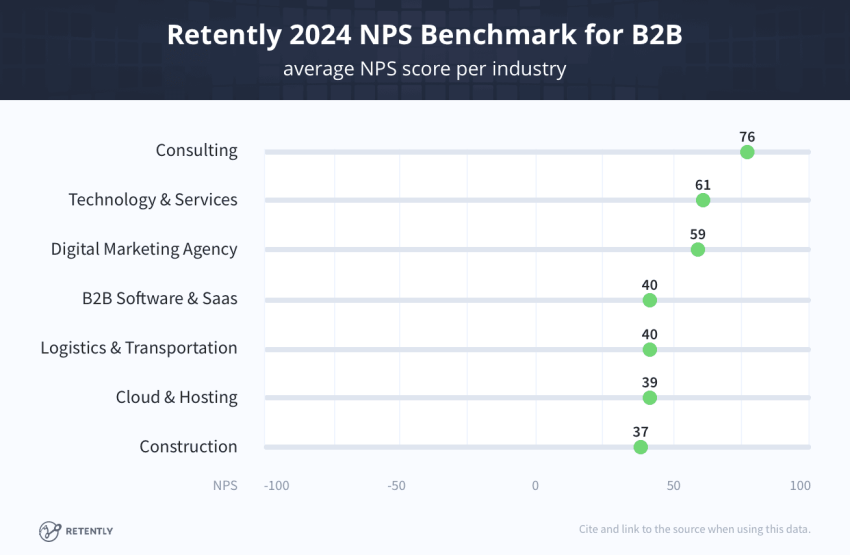
A common question is: “Is my NPS score good or bad?” The answer depends on your industry.
While Bain & Co., the firm that introduced NPS, provides general benchmarks, your score is best understood in context.
General NPS benchmarks:
- Above 0: Good (more Promoters than Detractors)
- Above 20: Favorable
- Above 50: Excellent
- Above 80: World Class (This is the elite tier achieved by brands like Tesla and Starbucks).
What is a bad NPS score?
Any score below 0 is considered bad and indicates that your business has more critics than advocates. A negative score highlights significant customer experience issues to address.
The highest possible score is +100 (all Promoters), and the lowest is -100 (all Detractors).
Average NPS scores by industry
| Industry | Average NPS (approx. range) | Context and key drivers |
|---|---|---|
| Software (SaaS) | +40 to +55 | Scores are driven by ease of use, strong customer support, and feature reliability. B2B SaaS averages around +41. |
| Technology (Overall) | +44 to +60 | Includes hardware and software. Leaders like Apple and Tesla often report scores in the 70s or 80s. |
| Telecommunications | +20 to +40 | Historically a low-scoring industry, but scores are rising with better self-service options and 5G reliability. |
| Healthcare | +30 to +55 | Driven by patient experience, wait times, and clarity of communication. Telehealth services often score well. |
| Retail (E-commerce) | +35 to +50 | Depends heavily on delivery speed, return policies, and website ease of use. |
| Financial Services | +25 to +45 | Traditional banks often lag, while fintech apps and neobanks tend to score much higher. |
As you can see, a good score in healthcare (e.g., 35) might be considered poor in the video streaming industry. Always benchmark against your direct competitors first.
How To Run an Effective NPS Survey Program
An NPS score only holds value when the data behind it is trustworthy. A successful NPS program requires a clear methodology, strong channels, and thoughtful timing to ensure that every survey response gives you accurate and actionable feedback.
1) Design your survey
Start by designing a short and focused survey because the strength of NPS comes from its simplicity. Include the simple question: “On a scale of 0–10, how likely are you to recommend [Company/Product] to a friend or colleague?” This format improves your response rate, which is essential for accurate results.

Follow that with one open-ended questions to give context to the score and see what drives satisfaction or frustration. Ask Promoters, “What did you love most about your experience?” Ask Passives or Detractors, “What is the main reason for your score?” or “How can we improve your experience?”
You can also add a permission survey question, such as, “Would it be okay for a member of our team to follow up with you about your feedback?” This lets you close the loop with Detractors and show customers that their input leads to meaningful action.
2) Choose your channel and timing
Choose your channel and timing carefully because the way you distribute your survey directly affects the quality of responses. Email, in-app prompts, SMS, and web chat widgets work well, and you should pick the channel that matches how customers already engage with your business.
Use relational timing when you want to measure long-term satisfaction. Send surveys at set intervals, such as quarterly, to track patterns and understand how sentiment shifts over time.
Use transactional timing when you want immediate customer feedback. Trigger surveys right after key interactions, for example, 30 minutes after a support chat ends or within 24 hours of product delivery, so you capture fresh and accurate sentiment.
3) Collect and organize feedback
Collect and organize feedback using a central NPS template that keeps everything centralized and easy to act on. Automate the process wherever you can by using customer experience software, CRM tools, or an integrated contact center platform so all results come into one place.
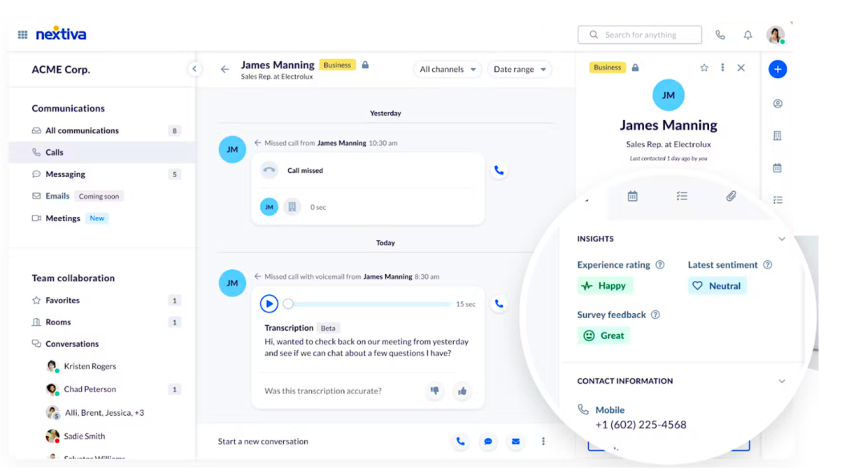
Set up a real-time dashboard that updates your overall NPS and displays written feedback next to the score. These qualitative insights explain the why behind the numbers and highlight the areas that need attention.
If you manage a large team, you can outsource feedback collection to a business process outsourcing (BPO) partner to ensure good delivery and professional follow-up questions. Make sure every response still flows back into your internal systems so your teams can act on the insights quickly.
What Can You Do With Your NPS Score?
The real impact of collecting your NPS score comes from what you do next, because turning feedback into action, called closing the loop, drives meaningful change across your business.
1) Triage and follow up immediately
Act fast, as every response deserves attention, but start with the most urgent. Understanding the percentage of Promoters, Passives, and Detractors helps you track loyalty trends among existing customers and across different demographics.
Detractors
Treat Detractors as your top priority and have a manager or senior support agent reach out within 24 hours to understand their experience and work toward a resolution. You may not always win them back, but fast, honest communication can stop churn and limit negative word of mouth.
Passives
Engage Passives to learn what kept them from giving a higher score, since their feedback highlights simple improvements that can make a big difference. Passives are valuable because they see both the good and the bad.
Promoters
Thank your Promoters and encourage them to share reviews, offer testimonials, or join referral programs so they can amplify their positive experiences. Promoters are natural advocates, so give them ways to amplify their positive experiences.

2) Analyze the why at scale
Every comment tells a story, so review all open-ended feedback and group responses by themes such as slow support, confusing checkout, or helpful staff. Organize those themes into clear categories so you can spot recurring problems and frequent compliments at a glance.
Run those categories through analytics tools to see trends and patterns across scores. Look for correlations: are Detractors calling out a recent product update, or do Promoters repeatedly praise a particular feature or employee? Use segmentation (by product, channel, or customer cohort) to surface where issues concentrate and where strengths cluster.
Turn those findings into action by prioritizing fixes that address the most common or most damaging issues and by scaling whatever customers continuously praise. These insights show where your business excels and where it falls short, and they guide real improvements that increase satisfaction over time.
3) Share insights across the company
NPS data should never remain within a single team, as every team benefits from understanding customer sentiment. This is how NPS insights help teams across the entire company:
- Product team: Product teams can use the feedback to spot bugs, design issues, and opportunities for new features.
- Marketing team: Marketing teams can draw from positive themes that Promoters highlight and use them to strengthen messaging and campaigns.
- Support team: Support teams can review comments to see which processes or interactions build loyalty and which create friction.
Sharing NPS insights regularly helps keep everyone aligned on improving the customer experience.
4) Integrate NPS into your CX strategy
Use NPS trends to guide your long-term business and customer experience (CX) strategy. Track how your score moves over time and connect those shifts to specific actions or events.
If your score drops after product launches, focus on improving onboarding or strengthening documentation. If it rises after training your service agents, continue investing in team development.
Let NPS shape your broader approach to digital transformation. When you link customer sentiment to operational decisions, you build a business that responds faster to problems, scales what works, and consistently moves closer to what customers expect. Over time, this creates an experience that is stronger, smarter, and more aligned with customer needs.

Limitations and Common NPS Pitfalls
While the NPS is informative, it’s not perfect. Be aware of the following common challenges it brings:
- Survey bias: Often, only the most satisfied or dissatisfied customers respond, skewing the score. Encourage all customer groups to participate.
- Recent experience bias: A customer’s most recent interaction (positive or negative) can disproportionately influence their score. This is why using both the relational and transactional NPS is important.
- NPS manipulation: Some teams try to artificially inflate their NPS by only surveying customers they know to be satisfied or (even worse) demanding the maximum 10. This renders the metric worthless.
- Ignoring the why: The biggest pitfall is focusing too much on the NPS and ignoring qualitative feedback. The NPS tells you if there’s a problem; the comments tell you what it is.
- Confusing with eNPS: Employee Net Promoter Score (eNPS) measures employee engagement. While a high eNPS (happy employees) leads to a high cNPS (happy customers), they are two distinct metrics. eNPS alone isn’t enough to understand your customer’s experience.

How To Improve Your NPS Score
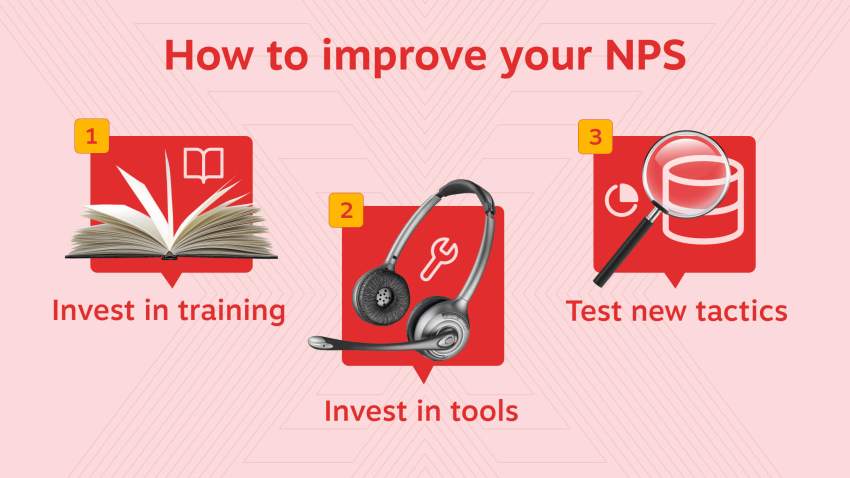
To improve your NPS score, build a plan that strengthens your team, upgrades your tools, and turns customer feedback into meaningful action.
1) Empower your team
Your customer service team influence how customers feel about your business. The right training and support can turn interactions into a positive experience. Use the following strategies to encourage your team:
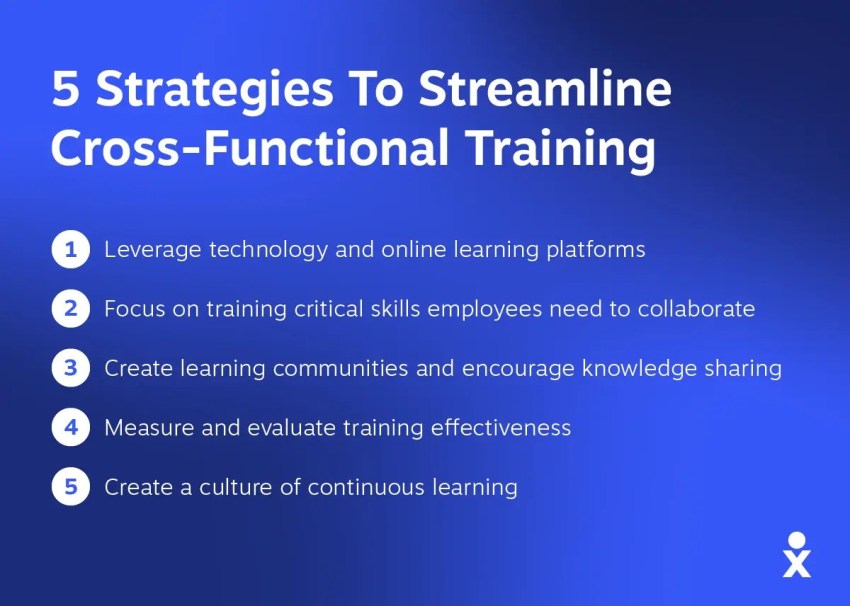
- Train continuously : Invest in the training and support they need to deliver better experiences. Keep training continuous rather than limiting it to onboarding, and review product updates, communication techniques, and ways to handle difficult situations.
- Use feedback: Use NPS responses as part of the process because Detractor comments show issues your customers face. Discuss these examples as a team and decide how similar situations should be handled going forward.
- Delegate authority: Give agents the authority to make decisions so they can resolve issues without waiting for approval. Whether offering a discount, adjusting billing, or escalating a ticket, empowered agents solve problems faster, and customers immediately feel the impact of that responsiveness.
2) Upgrade your tools
You can’t deliver a great customer experience with outdated systems. The right tools improve how customers interact with your team. Customer experience platforms connect people, data, and communication in one place, making every experience smoother and better.
- Route customers intelligently: One of the biggest customer frustrations is being transferred multiple times. With skills-based routing, a feature built into contact center platforms, calls reach the right agent the first time, reducing effort and increasing satisfaction.
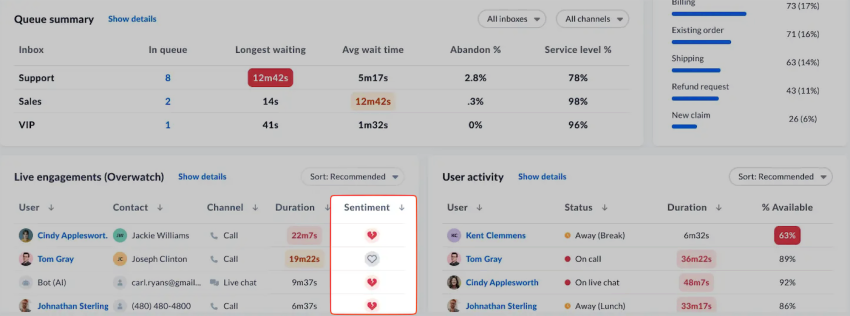
- Give agents context: When agents can view a customer’s entire journey, past purchases, support tickets, and previous NPS results in a single dashboard, they can personalize their approach and resolve issues faster. This level of visibility helps agents work confidently and creates a smoother experience for customers.
- Measure everything: Use voice analytics and real-time dashboards to detect rising issues before they impact NPS. Continuous tracking helps teams make quick adjustments and maintain consistent service quality. Nextiva’s platform simplifies these processes by combining communication, analytics, and automation tools that help teams respond faster and improve every customer interaction.

3) Refine your tactics
You improve NPS only when you turn feedback into action. A structured closing the loop process ensures that every customer voice leads to change.
Automate follow-ups
No Detractor should slip through the cracks. Configure your CRM or contact center platform to create a follow-up ticket whenever a low score appears. Your team will be able to respond quickly, address concerns, and prevent issues from escalating while making sure no unhappy customer goes unnoticed.
Conduct a SWOT analysis
Turn your insights into action by running a simple SWOT analysis that uses your NPS themes as the foundation. Identify the following:
- Strengths: Promoters love our 24/7 chat.
- Weaknesses: Detractors mention long hold times.
- Opportunities: Passives want access to a self-service knowledge base.
- Threats: A competitor just launched a feature our Detractors keep requesting.
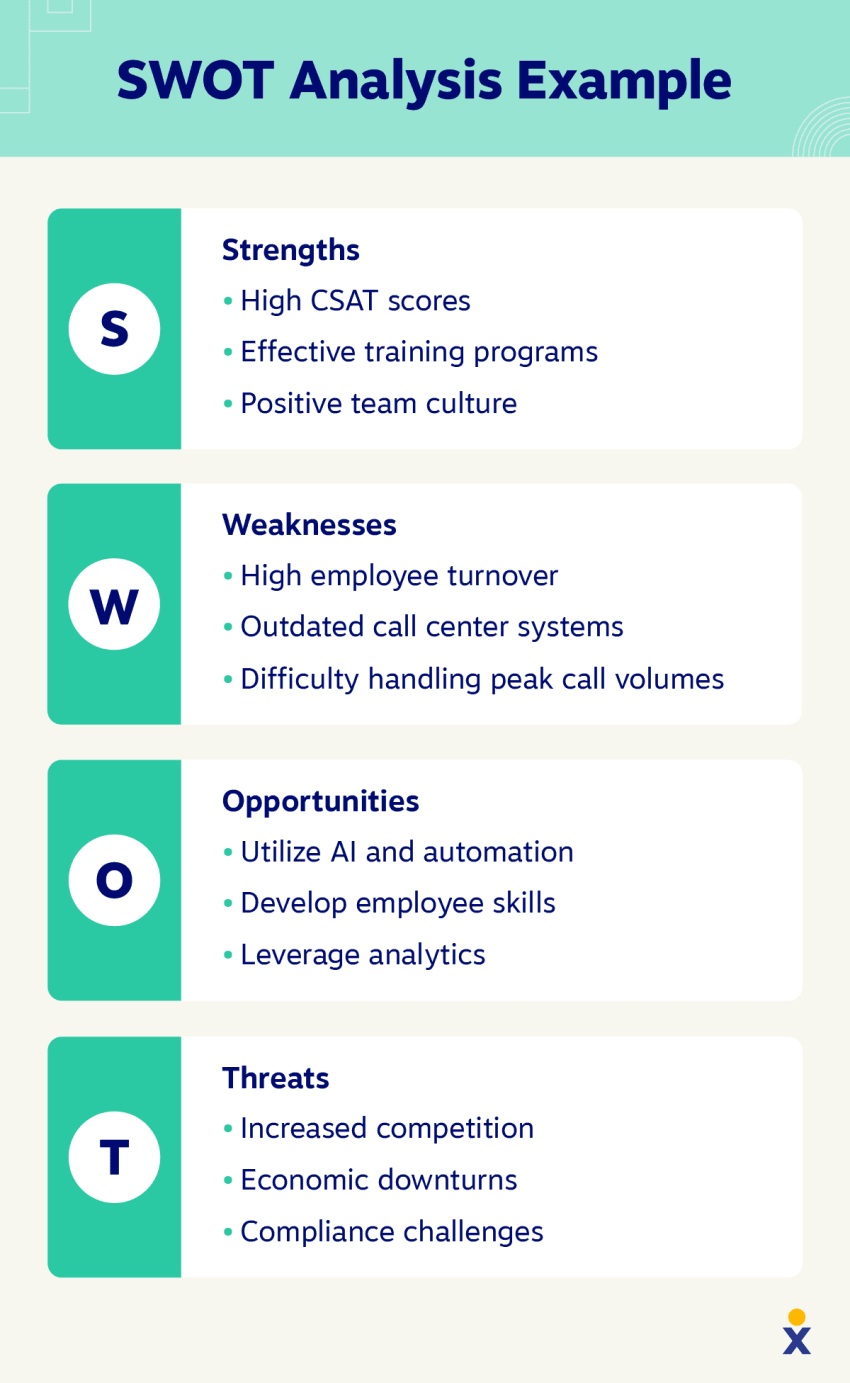
This approach keeps your strategy rooted in real feedback and focused on important improvements. Prompt and transparent response builds trust and strengthens every part of the customer experience.
How Nextiva Helps You Improve Your NPS
A low Net Promoter Score is almost always a symptom of a deeper communication problem. Your customers feel misunderstood, ignored, or frustrated by a cumbersome experience.
Nextiva helps you address these issues and provides the tools to delight customers at scale. Our contact center platform and process automation tools help you build a great customer experience.
- Customers hate long wait times and being transferred: Advanced ACD routing and skill-based routing connect customers to the right agent on the first try. Offer a callback via web or ACD so your customers never have to wait on hold again.
- Don’t know why your rating is low? Get full call history and AI-powered transcription. Analyze calls instantly and find the root cause of customer dissatisfaction without having to listen to hours of audio.
- Your agents lack context, and customers have to repeat questions: Nextiva integrates with your CRM and puts all customer data — from past purchases to support history — on a single platform for your agents.
- Your teams aren’t collaborating. Our platform unifies voice, video, SMS, and team chat. This allows your support, sales, and product teams to collaborate instantly and resolve unhappy customer issues in real time.
Don’t just measure your customer experience — actively improve it.
Top AI-Powered Contact Center Solution
Transform your customer interactions with a contact center platform that saves you time and money, reduces agent and supervisor stress, and flexibly adapts to fit your needs.
Frequently Asked Questions About NPS
While some critics call it a vanity metric, that’s only true if you only track the score. The value of NPS is as an operating system for customer-centric action. Its simplicity makes it easy for your entire company — from the C-suite to the frontline — to rally around one goal. Its correlation with revenue growth makes it an essential business KPI, not just another customer service metric.
It depends on your goal:
Relational NPS: Send this survey periodically (e.g., quarterly or annually) to the same customers to measure the overall health of your brand relationship and track trends over time.
Transactional NPS (tNPS): Send this survey immediately after a key interaction (like a support call, a new purchase, or after onboarding) to get instant feedback on that specific touchpoint.
eNPS stands for Employee Net Promoter Score. It’s the same concept, but for your internal team. It asks your employees: “On a scale of 0-10, how likely are you to recommend [Your Company] as a place to work?”
It’s a powerful metric for your HR team and a leading indicator: happy, engaged employees (a high eNPS) create happy, loyal customers (a high cNPS).
Yes. An NPS score can range from -100 (if 100% of respondents are Detractors) to +100 (if 100% are Promoters). A negative score simply means you have more Detractors than Promoters. While it may be alarming, it’s not a failure. It’s a critical, data-backed signal that your customer experience has major issues that need to be addressed immediately.
Net Promoter, Net Promoter System, Net Promoter Score, and NPS are registered trademarks of Bain & Company, Inc., Fred Reichheld, and Satmetrix Systems, Inc.