
 VoIP
VoIP  Blog
Blog  Business Communication
  Customer Experience
  Leadership
  Marketing & Sales
  Nextiva News
  Productivity
If you’re assessing different VoIP phone services and are particularly focused on the bottom-line price, it’s important to account for telecommunication taxes. The last thing you want, after all, is to budget carefully based on advertised prices only to be surprised with extra charges when your first phone bill arrives.
In addition to a provider’s base charges, you also need to account for costs like regulatory fees, use tax, and excise tax, and note that the taxes you pay can vary by state.
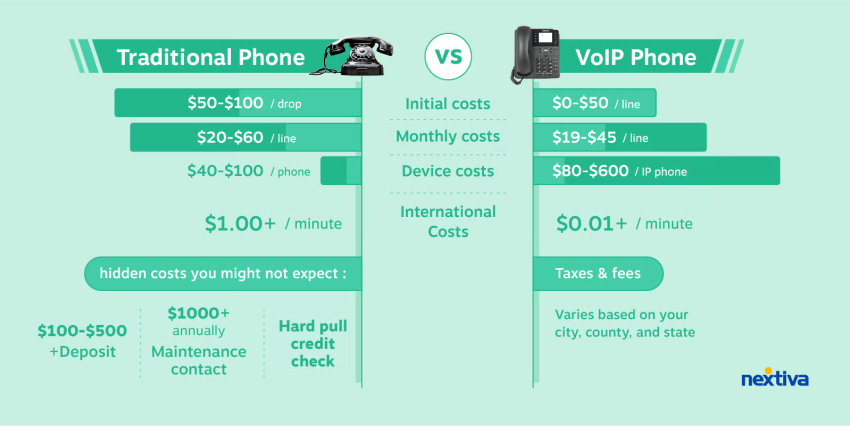
Here’s the good news, though: Even with taxes, VoIP compared to traditional landlines typically saves businesses money. Large businesses can see up to 90% lower upfront costs by eliminating expensive on-site PBX hardware, while maintaining average monthly operational savings of up to 60% compared to traditional landline bills.
As Nextiva’s CEO, I understand all too well how important full cost transparency is, especially when you’re making a decision as significant as choosing a phone provider. So in this post, I’m going to break down how VoIP taxes work, what specific taxes you can expect to see on your bill, and how factors like location can impact what you’re paying.
Why Is VoIP Taxed Like a Telecom Service?
Interconnected VoIP is regulated through the Federal Communications Commission (FCC) because it connects to the public-switched telephone network and supports emergency services.
Once a service can place calls to and receive calls from traditional phone numbers, it enters the same regulatory universe as legacy telecommunications. As a result, it’s taxed as a telecom service.
One important thing to note: The associated taxes are truly taxes, not add-on fees that your provider tacks on for extra profit. They’re designed to fund public infrastructure and do not contribute to your provider’s profit. VoIP providers didn’t invent these fees, as many of them existed long before cloud communications. Tax compliance is the key.
The Core VoIP Taxes and What They Fund
Understanding what specific taxes you may pay and what they fund can help you plan appropriately when choosing a VoIP service provider. Let’s discuss the common VoIP taxes you’ll likely see on your bill.
E911 fees
E911 fees ensure that every VoIP number is associated with a physical address and callback number so emergency responders can locate callers quickly.
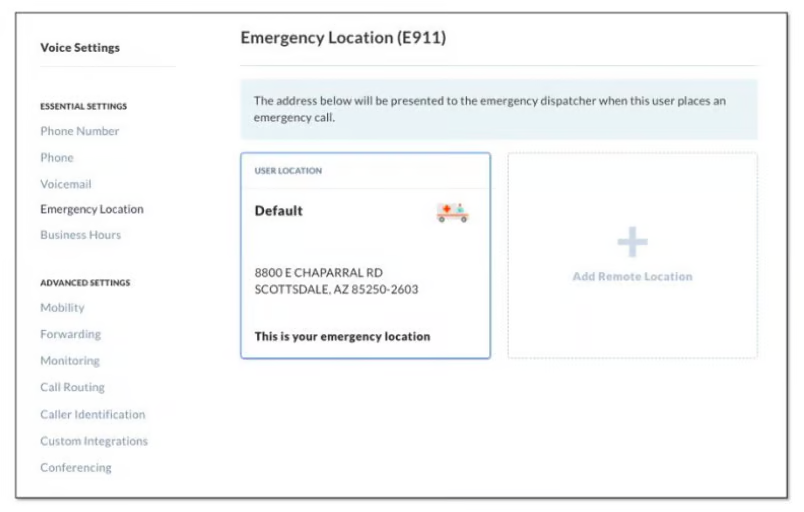
These funds support:
- Local emergency call routing systems, ensuring that any emergency call you place is directed to an operator geographically close to your location
- Address databases and location verification
- Ongoing upgrades to 911 infrastructure
And when it comes to what you’re paying, here’s what to expect:
- E911 fees are charged per phone line, per month.
- The typical cost is $0.20–$2.00 per line per month.
- Your rate will be set by state or local governments, not your provider.
Note: While many areas stay at the lower end, certain major metropolitan areas have higher rates to fund Next Generation 911 infrastructure upgrades.
Federal Universal Service Fund
The Federal Universal Service Fund (USF) was created to ensure nationwide access to communication services, particularly for underserved communities and rural healthcare.
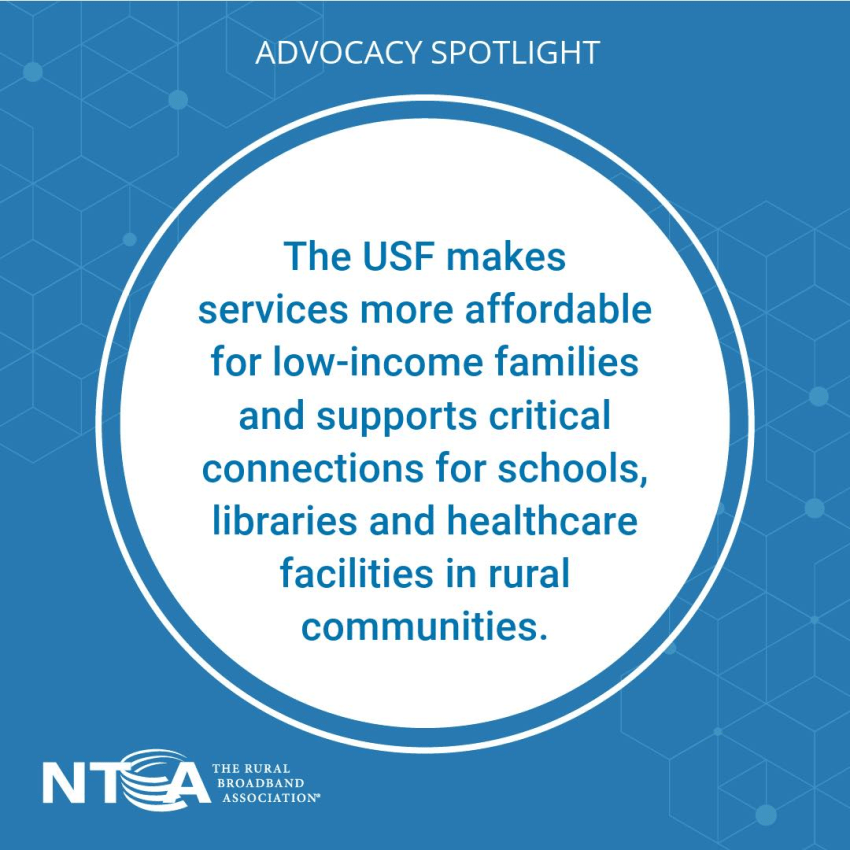
This program helps fund:
- Rural connectivity initiatives and high-cost area support
- The Lifeline program for low-income household assistance
- E-Rate programs for school and library broadband
- Rural healthcare communication infrastructure
I often explain to our customers that the USF isn’t a Nextiva fee, but a federal requirement. Here are the details every business leader should know:
- Quarterly adjustments: The exact contribution factor is adjusted quarterly by the FCC. While it historically sat around 25%, in 2026, we’re seeing it hover between 35% and 38% of eligible telecommunications service charges.
- Pass-through charges: While this is technically a tax on the provider, the FCC allows providers to pass this cost through to the customer. However, they’re legally prohibited from charging more than what they actually owe the fund.
- Fluctuation: Because the FCC adjusts this rate every three months to meet funding needs, you may see this specific line item change slightly on your bill throughout the year.
State and local telecom taxes
Where you operate matters. In addition to the federal charges I’ve already gone over, VoIP services may be subject to a combination of the following taxes and fees:
- State sales tax on telecommunication services, which would be based on service charges
- Municipal utility or communication taxes
- Franchise and right-of-way fees, which are charged by local jurisdictions if service providers use public infrastructure like poles or underground conduits to deliver service
- State-level 911 or telecom surcharges
State and local taxes pay for local infrastructure and may help pay for programs like telecommunications relay services (TRS), which provide communications access to those who have hearing, sight, or speech disabilities.

The fees and taxes vary widely by geography. They’re based on the customer’s registered service address, which is likely your business address. As a result, it’s always a good idea to look into your individual city and state policies when estimating potential costs.
What Businesses Can Expect to Pay by State
I can’t stress this enough: State and local jurisdictions can set their own taxes and fees outside of federal FCC regulations, so your total costs may be significantly different from those of other businesses with similar usage in other states, even nearby states. Organizations with intrastate branches may even have different tax rates from location to location.
Low-tax states
Examples of low-tax states include Oregon, Montana, and New Hampshire. They have minimal sales tax and limited state-level telecom-specific surcharges.
In low-tax states, you’re likely looking at $1–$3 per line per month for local charges.
Mid-range states
Mid-range states include Texas, Florida, and Colorado. They do have a combination of state sales tax (which often varies throughout the state) and telecom fees. These states also have moderate E911 and regulatory charges, which may help support infrastructure.
In mid-range tax states, you’ll likely pay an extra $3–$6 per line per month.
High-tax states
High-tax states include California, New York, and Illinois. They often have multiple overlapping state and local taxes. There may be higher utility and municipal surcharges, which can add up quickly.
In high-tax states, you may be paying an estimated $6–$10+ per line per month for state-related fees.
The bottom line: Location, not your provider, dictates what you’re paying in local fees.
One-Time and Situational VoIP Fees
We’ve talked about charges that will show up regularly on your bill, but there are also one-time or situational costs that you’ll want to plan for, too.
Local number portability
When you sign up for a new phone service, you can transfer your phone number to that new service. This is called porting, and some providers charge a fee to do so.
Porting fees cover the carrier costs to move phone numbers and typically range from $10–$20 per phone number if you’re charged.
I say “if” for a reason. Many providers will waive porting fees to minimize the friction of switching and to win new customers.
Intercarrier compensation
Intercarrier compensation fees are the fees carriers pay each other to originate and terminate calls. These fees will depend on the call type and the network path.
You may not see these fees at all on your invoice. They’re usually embedded in your overall standard pricing automatically and aren’t itemized on your bill. But if you see them, this is why these costs are showing up.
988 and AI surcharges
As you review your bill, you may see a small fee (usually under $0.10) for the 988 Suicide & Crisis Lifeline. Like the 911 fee, this is a government-mandated surcharge.
However, be wary of new AI Service Fees or LLM Surcharges popping up from some providers. Unlike government taxes, these are provider-set fees intended to cover their own cloud computing costs. Always ask if your AI tools are included in your base subscription or if they will trigger extra “usage-based” line items.
Fees That Are Legal but Require Scrutiny
The fees we’ve discussed so far are all standard and expected. There are a few fees, however, that are technically legal but that I’d raise an eyebrow if I saw them on my VoIP invoice. These are the fees that are set by providers and could potentially be negotiable.
Regulatory recovery and compliance fees
A regulatory recovery fee or compliance fee may be used to offset the following:
- The provider’s compliance operations
- The provider’s reporting and filing requirements
- The provider’s fraud prevention and security costs
Less trustworthy sales reps may make these fees sound like they’re required to maintain compliance or security, but that’s not the case. If providers charge these fees, they should be able to explain them clearly, and they should keep the fees modest.
Many providers won’t charge recovery or compliance fees. Instead, they will account for their compliance costs in their overall pricing model.
Administrative and service fees
You may see vague line items listed as an admin fee or a service charge. These should raise red flags right away, because they’re likely just additional ways for providers to pad their profit.
If you see these charges on an invoice, you should ask what the fee covers. Request written documentation that explains the charges, and ask them to be specific.
Because providers may add these charges onto your invoice quietly and not disclose them upfront, it’s always a good idea to compare sample invoices across providers before committing to one provider.
Contractual and feature-based fees
Without naming names, some VoIP service providers have less-than-transparent pricing models. They might flash an impressively low monthly cost up front, but then tack on fees, hidden in the fine print, after the fact.
These fees may include:
- Essential features like messaging, automation, or integrations that are sold as paid add-ons (even if the marketing wasn’t clear about that upfront)
- Early termination fees that are tied to long contracts
- Low base pricing that inflates over time
It’s important to read contracts up front and to make sure you understand exactly what you’re paying for. Ask about cancellation processes and if there is a way to lock in your rate for a specific period of time without a long contract.
Finally, check out customer reviews on sites like G2. Look for reviews that discuss hidden fees, cancellation processes, price increases, or overall pricing transparency.
Why VoIP Still Delivers up to 60% Savings
After scrolling through a list of taxes, you might wonder if the switch is worth it. The answer remains a definitive yes. The value proposition of VoIP has shifted from just cheaper minutes to operational efficiency.
While you can still expect up to 60% savings compared to legacy landline bills, the real bottom-line impact today comes from eliminating hidden operational costs:
- Zero hardware maintenance: Cloud-based solutions remove the need for expensive on-premise PBX hardware and the specialized technicians required to fix them.
- Included AI capabilities: In the past, features like transcription or sentiment analysis were expensive third-party add-ons. Today, platforms like Nextiva include these as core features, saving businesses thousands in software integration fees.
- Consolidated billing: By moving voice, video, and SMS into a single platform, you eliminate the vendor tax of paying for four different subscriptions.
Legacy providers bury taxes inside high base rates to make their invoices look cleaner. At Nextiva, we believe in showing you the math. Our pricing plans are designed so that the value of the features — like AI-powered summaries and omnichannel tools — far outweighs the mandated regulatory fees.


How to Evaluate a VoIP Bill Before You Buy
When you’re choosing a VoIP provider and getting budget approval, it can be frustrating to hear “it depends” when you’re asking about the cost of taxes and fees. Unfortunately, because so much is determined at local levels (including local sales tax laws), that’s the answer that’s often given.
Smart buying behavior, however, will help equip you with the information you need for evaluating providers.
The first step to smart buying is to request a sample invoice based on your expected usage and location, which should have all of the taxes and fees broken out. Take the time to separate mandated government taxes from optional provider fees and to inquire and learn more about admin or service fees.
You’ll also want to get clarity on price adjustments and additional fees, specifically:
- What is the current USF pass-through rate? (It should align with the current FCC quarterly factor.
- Are AI features like transcription and summarization included in my tier? (In Nextiva’s Power Suite, these are built-in.
- Is there a Regulatory Recovery Fee, and is it negotiable?
- Do you charge for 988 or other newer state-specific crisis line surcharges?
Transparency up front prevents frustration for the end-user later. At Nextiva, we prioritize pricing transparency, but not all providers do. Ask plenty of questions and get documentation so you’ll know exactly what you’re getting into.
Evaluating VoIP providers and have questions? Check out our VoIP FAQs for more.
You Know What You’re Paying for With Nextiva
It’s never fun to get an invoice and see a long list of taxes and fees. Unfortunately, telecom taxes aren’t optional, but they’re also not unique to VoIP service.
What matters, though, is how clearly providers explain potential costs and how responsibly and transparently they’re passed through.
Nextiva is a UCaaS platform and VoIP phone system known for straightforward pricing. We only have transparent tax pass-throughs, so you’ll always know exactly what each line on your invoice is for. We also minimize nonessential fees, ensuring that businesses understand what they’re paying for while still benefiting from the cost efficiency of modern cloud communications.
The VoIP phone system for modern work.
Get business phone calls, video meetings, and secure messaging in one platform. Easy setup. Budget-friendly. Trusted by millions.