

 VoIP
VoIP  Blog
Blog  Business Communication
  Customer Experience
  Leadership
  Marketing & Sales
  Nextiva News
  Productivity
If you’re using Verizon One Talk today, you probably chose it because it’s good enough to get business calls off personal lines fast. However, the minute your team starts thinking about clean call flows, real reporting, integrations, or scaling beyond a few users, One Talk starts to feel less like a phone system and more like a mobile add-on with guardrails you keep bumping into.
In this guide, I’ll break down what One Talk is, why it works for some teams, where it tends to break as you grow (including the limits Verizon documents), and the Verizon One Talk alternatives I’d shortlist if you want a real business phone platform.
What Verizon One Talk Is
Verizon One Talk is a business-grade VoIP solution that lets businesses provide a single number across multiple endpoints, so outbound calls display a consistent business caller ID instead of a personal mobile number. The cloud-based business calling phone service is available to customers across the United States under a Verizon Business account. Mobile devices that don’t have Verizon as their main carrier can even use it.

When it comes to compatibility, Verizon One Talk supports both iOS and Android devices, including computers, tablets, smartphones, and One Talk desk phones. In practice, the business phone system uses a single phone number for multiple devices, enabling smooth business communications across multiple channels simultaneously.
Why People Enjoy One Talk
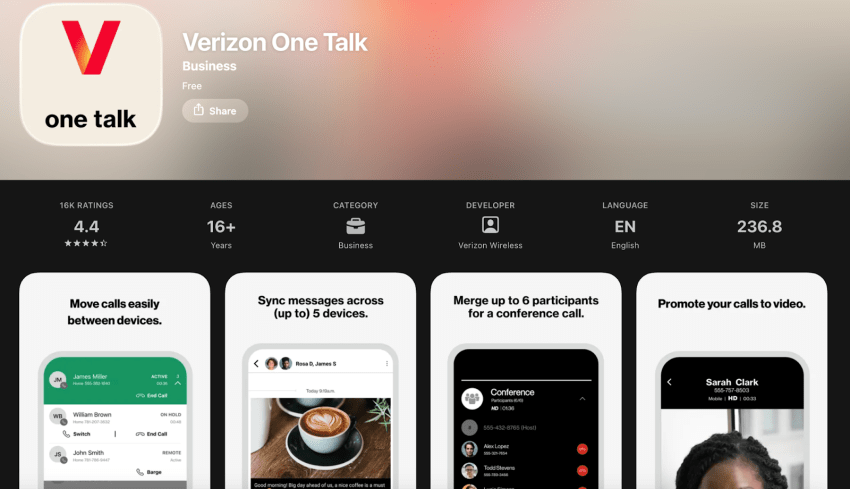
One Talk has a wide user base, and the app has over 16,000 reviews on the App Store. It’s a solid choice for teams that want business calling basics without changing how they buy or manage Verizon VoIP services. It’s especially beneficial if they’re already part of the Verizon ecosystem, since they’ll then be familiar with the platform’s features and structure.
Familiar Verizon buying path
If you already run Verizon Wireless, One Talk feels like a straightforward add-on. With it, you get to keep one VoIP provider, one relationship, and fewer procurement hoops to jump through for unified communications. It’s designed to extend business calling to mobile devices and streamline how small teams handle calls.
Multi-device reach and basic routing
One Talk’s core appeal is simple reach. Your business number can follow you across your mobile devices and the desktop app, so you’re not stuck answering everything from an SMS to conference calls on a cell phone. Verizon positions the One Talk mobile app around flexibility, which is exactly what small teams want when juggling sales, support, and ops.
Basic queueing for small groups
Smaller support desks can benefit from up to 40 One Talk lines for call queues. Verizon highlights call queues as part of its One Talk feature set. Queue sizes can be set to 10 or 25 calls.
Why Businesses Look for an Alternative
While Verizon One Talk has built a strong reputation, users report some drawbacks. Here are some issues teams often run into.
Pricing clarity and comparability
According to its pricing page, Verizon markets One Talk to have a per-line rate of $15. However, a representative can customize packages to fit specific business needs, which can make pricing less predictable. This isn’t ideal for businesses that require clear, transparent pricing with no add-ons from the outset.
Scaling limits that show up fast
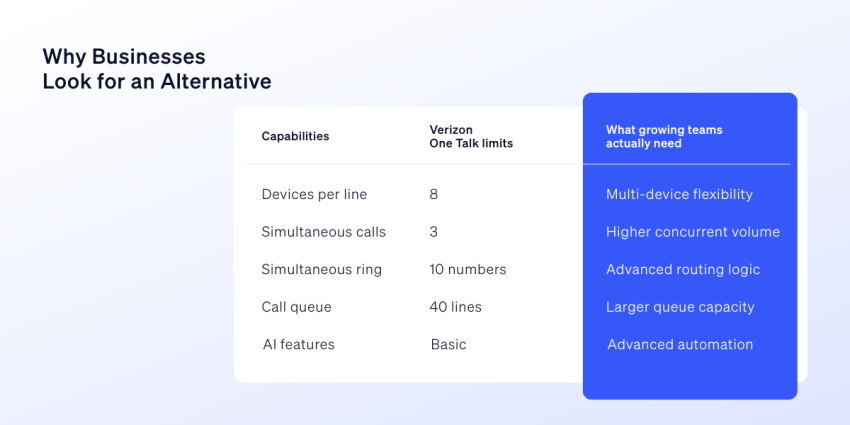
With Verizon One Talk, up to eight devices (e.g., two desk phones, one smartphone, and five One Talk mobile apps) can share a single line. While this sounds flexible, the bottleneck is in the usage: only three calls can happen simultaneously per line. For a growing sales or support team, this three-call wall creates immediate friction.
Adding up, the simultaneous ring feature is capped at 10 numbers, and call queues are limited to 40 lines. Businesses also need their systems to handle newer regulatory requirements — like intelligent routing for the 988 Suicide & Crisis Lifeline — which carrier-based apps struggle to customize compared to agile UCaaS platforms.
Modern business needs to outpace basic calling
Many businesses move on from certain apps and communication solutions when they’re unable to accommodate or address business requirements that arise from growth. This shift is typically caused by teams needing:
- Admin-friendly call flow design: Growing teams need drag-and-drop call routing, visual IVR builders, and easy rule changes that don’t require digging through carrier documentation.
- Better analytics and coaching tools: Modern operators want real-time dashboards, call recording with searchable transcripts, whisper or barge tools, and performance insights that help managers coach their teams.
- More native integrations across customer relationship management (CRM) and help desk systems: Businesses increasingly expect their phone system to talk directly to platforms like Salesforce, HubSpot, Zendesk, or ServiceNow.
- Artificial intelligence (AI) features that reduce manual work: The conversation has shifted from “Does it have AI?” to “Does it save my team time?” Companies are looking for real automation like voicemail transcription, auto-generated call summaries, smart auto attendants, intelligent routing based on intent, and top-tier customer support.
As organizations mature, they start evaluating phone systems as operational platforms. That’s usually the moment when a basic calling add-on starts to feel limiting, and teams start searching for solutions that offer unlimited calling.
Top Verizon One Talk Alternatives
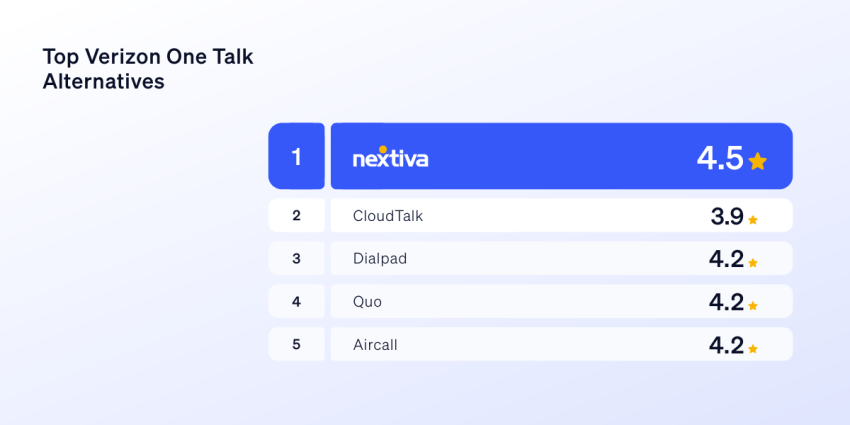
For teams looking to upgrade their phone systems, I’ve gathered the top five telephony solutions that combine functionality and flexibility. These picks are built as platforms (offering apps, admin control, routing, analytics, and integrations) rather than carrier add-ons. They scale with teams, enabling better communication as businesses grow.
| Nextiva | CloudTalk | Dialpad | Quo | Aircall | |
|---|---|---|---|---|---|
| Best for | Unified customer experience | High-volume sales teams | Remote/hybrid AI insights | Modern shared inboxes | CRM-centric workflows |
| AI capability | Agentic AI (XBert) for booking and FAQs | Sentiment and topic extraction | DialpadGPT real-time transcripts | Sona AI phone agents | Call transcription and summaries |
| Setup speed | Fast | Quick for tech-savvy teams | Fast/self-service | Instant | Moderate |
| Key advantage | Consolidates phone, SMS, and CRM | Power dialers and 160+ global numbers | Built-in AI action items for coaching | Collaborative shared numbers for teams | Deep native CRM integrations |
1. Nextiva
Rating: 4.7 on Trustpilot
For all-around functionality and scalability, Nextiva is a solid choice. It’s the strongest replacement for teams that want a clean path from their business phone to smarter routing, deeper analytics, and call center capabilities all on one platform. Plus, the platform is user-friendly, allowing teams to use the all-in-one app with a minimal learning curve.
Why Nextiva is a strong replacement
Businesses switching from One Talk are looking for fewer communication tools and better call insight. If you’re trying to consolidate tools (e.g., phone today, customer conversations tomorrow), Nextiva is designed to expand in that direction. It’s an all-in-one platform that works seamlessly across mobile and desktop, letting teams manage calls, messages, and customer interactions without switching between apps.
Clearer plan structure for growing teams
Unlike many carrier-led bundles, Nextiva publishes small-business phone pricing tiers. This tier system makes it easier to budget, compare, and align features. Plus, it’s easier to estimate costs as teams grow.
Platform approach instead of an add-on approach
One Talk is convenient if you’re already using Verizon Wireless. Still, many teams outgrow the phone solution the moment they need call flows that mirror real operations (think sales coverage, after-hours rules, and queue logic) and reporting that helps leaders coach and staff. Nextiva was built for that shift.
Pricing: Entry-level Core plan starts at $15/user/month (annually), with full AI capabilities in the Power Suite tier.
2. CloudTalk
Rating: 4.0 on Trustpilot
If your team is sales or support-heavy and you’re looking for phone solutions that feel more like a calling platform than an add-on, CloudTalk is a good choice. It offers global numbers for operations and productivity features that reduce manual dialing and administrative work. The platform also makes price comparisons easier by publicly posting plan tiers and pricing on its website.
Pros:
- Transparent pricing structure for quick and easy comparison
- Workflow-first design that prioritizes sales and support
- Flexible call handling and routing for fast-changing teams
Pricing: Starting at $19/user/month (annually) for the Lite tier, with AI Conversation Intelligence available as a $9 add-on.
3. Dialpad
Rating: 4.2 on Capterra
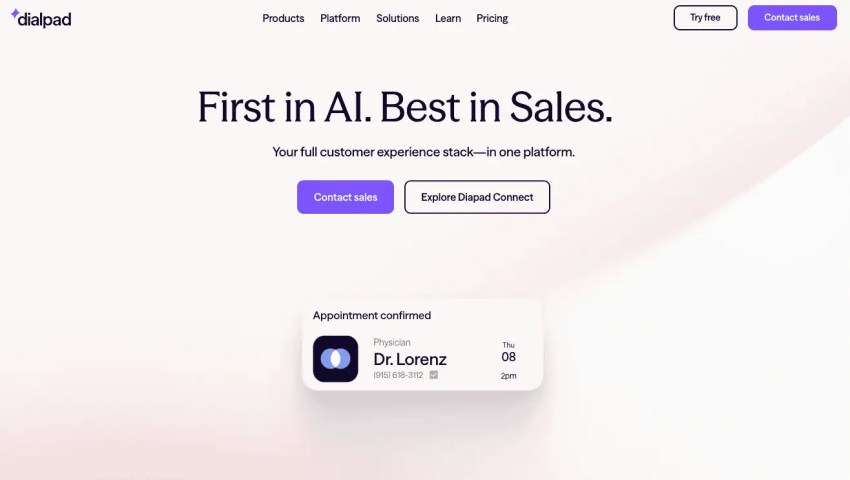
Dialpad is an AI-first option that turns your calls into rich insights fast. It offers a clean, intuitive app experience for hybrid teams. Instead of treating AI as a simple add-on, Dialpad integrates it into the core product experience, giving you real-time transcripts and call summaries. This matters if your team handles frequent questions (like pricing, availability, or troubleshooting) or needs a searchable call history for coaching and consistency.
Pros:
- Real-time transcripts and instant call summaries
- Insights embedded into daily workflows
- Transparent pricing plans that simplify budgeting and pricing comparisons
- AI capabilities that work without needing extra tools
AI is becoming a big part of workforces around the world, with employees excited about the growth of cutting-edge AI technologies. According to DataReportal, enthusiasm for AI grew by 0.4% as of Q2 2025, underscoring its role as a helpful tool for improving workflows.
Pricing: Professional Standard plans begin at $15/user/month (annually) and include unlimited calling and AI summaries.
4. Quo
Rating: 4.2 on Capterra
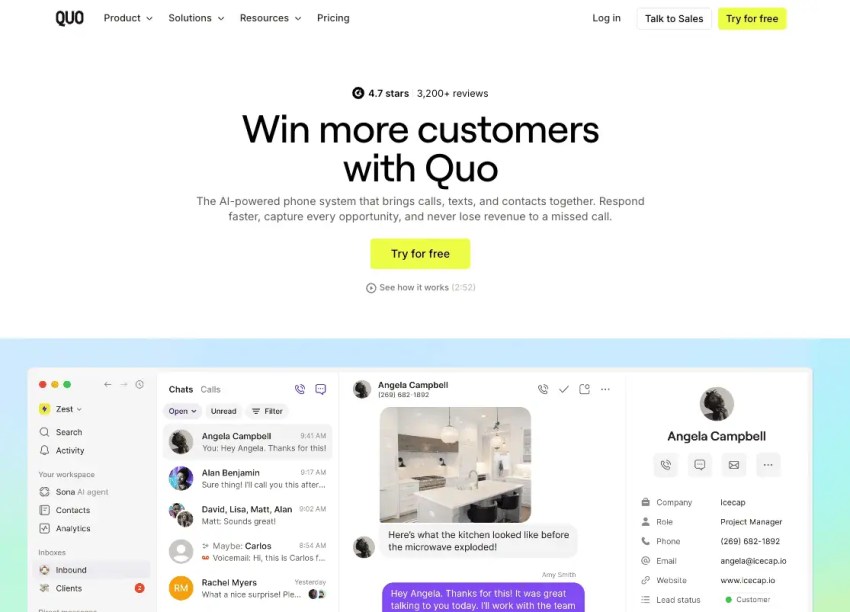
Many buyers still recognize Quo as OpenPhone, but the platform’s own site is explicit about the transition, clearly stating that “OpenPhone is now Quo.” Where it tends to win is in the shared inbox for calls and texts. It differentiates itself with shared numbers, lightweight collaboration, and a setup experience that’s closer to modern SaaS than legacy telecom.
For teams that want something cleaner and faster to deploy than a carrier add-on (and don’t want a heavy admin console), Quo could be a solid step up from One Talk.
Pros:
- Clear rebranding that prioritizes buyer clarity
- Shared number workflows supporting team collaboration across messages and calls
- Quick onboarding with predictable packaging
Pricing: Pricing starts at $15/user/month (annually) for the Starter tier, moving to $23 for AI-enabled features.
5. Aircall
Rating: 4.2 on Capterra
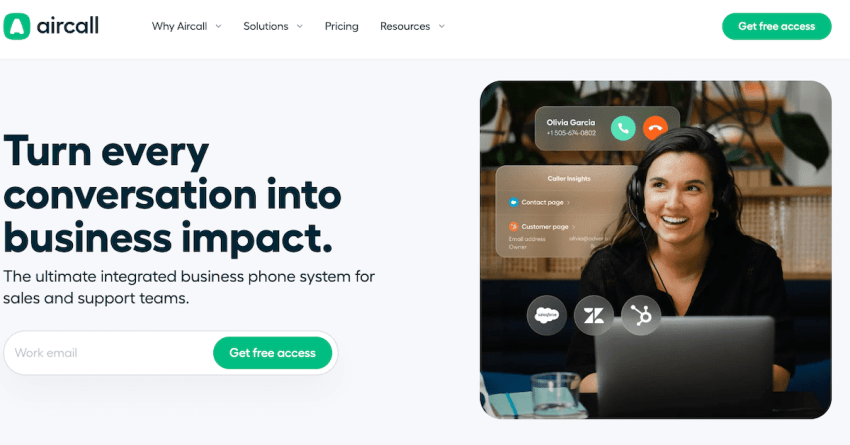
Aircall is a great alternative to One Talk when your phone system needs to seamlessly plug into the rest of your revenue stack (namely, CRMs and help desks). Aircall is typically positioned for sales and support teams that want more structure than basic calling (e.g., routing, permissions, analytics, integrations), but don’t want a heavy contact center system just to gain visibility and consistency.
Pros:
- Aircall’s pricing is public, which helps with fast shortlisting
- It offers a strong integrations-first posture for CRM and help desk-centric teams
- It’s a good fit if you want more workflow and oversight than basic calling
Pricing: Requires a 3-user minimum, with the Essentials plan starting at $30/user/month (annually).
Scaling Businesses Choose Nextiva
One Talk can be a solid starting point for businesses just getting going with smaller teams. But once your team grows, the challenges usually aren’t about the call quality. They’re about routing changes, visibility, coaching, and connecting conversations to the rest of the customer journey. That’s where a platform approach starts to matter.
Gartner highlights that modernizing systems and keeping up with customer needs will help businesses thrive in 2026.

Nextiva is built for that shift — from voice to messaging and even video conferencing — without forcing you to switch vendors later. You can start with straightforward business calling, then move into more advanced features like routing and call forwarding, analytics, and customer experience workflows as volume and complexity increase, without having to rip-and-replace your system later.
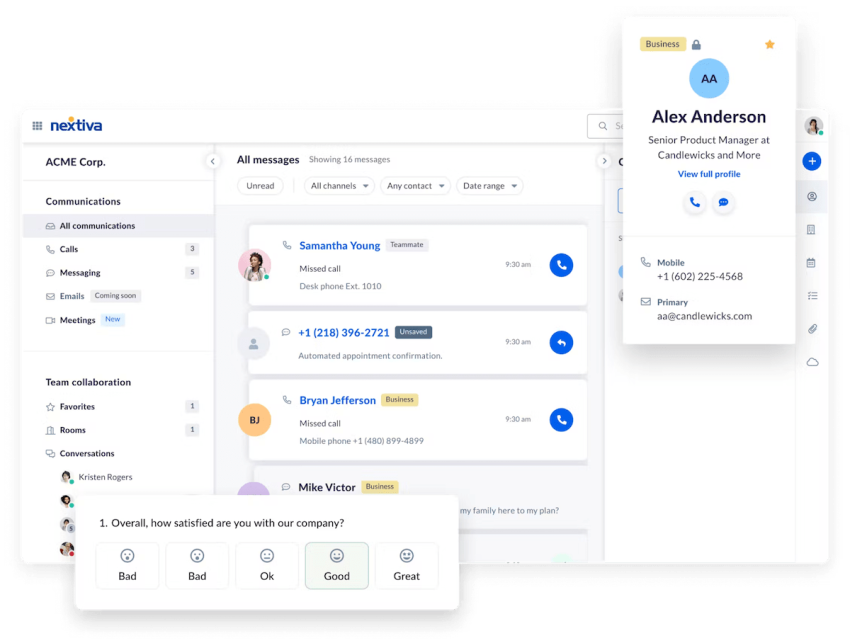
Nextiva also makes it easier to plan and budget by publishing entry-level pricing and clear tier paths publicly.
If One Talk got you through the early stages of your business, Nextiva is the safer long-term choice. The platform doesn’t force a second migration when you inevitably outgrow your basic calling solution and need a system built for scale, oversight, and the full customer journey.
Top AI-Powered Contact Center Solution
Transform your customer interactions with a contact center platform that saves you time and money, reduces agent and supervisor stress, and flexibly adapts to fit your needs.