
 Business Communication
  Blog
Blog  Customer Experience
  Leadership
  Marketing & Sales
  Nextiva News
  Productivity
  VoIP
VoIP 
You might assume that digital-native Gen Zers hate calling a business over the phone, but the data says the opposite: They prefer phone support and may cancel a service if they can’t get it.
Nextiva’s new study reveals that 72% of Gen Z respondents are “likely” or “very likely” to choose phone support. Though born and raised in tech ecosystems, Gen Z’s preferences reinforce one of the oldest rules of customer service: people want help from people.
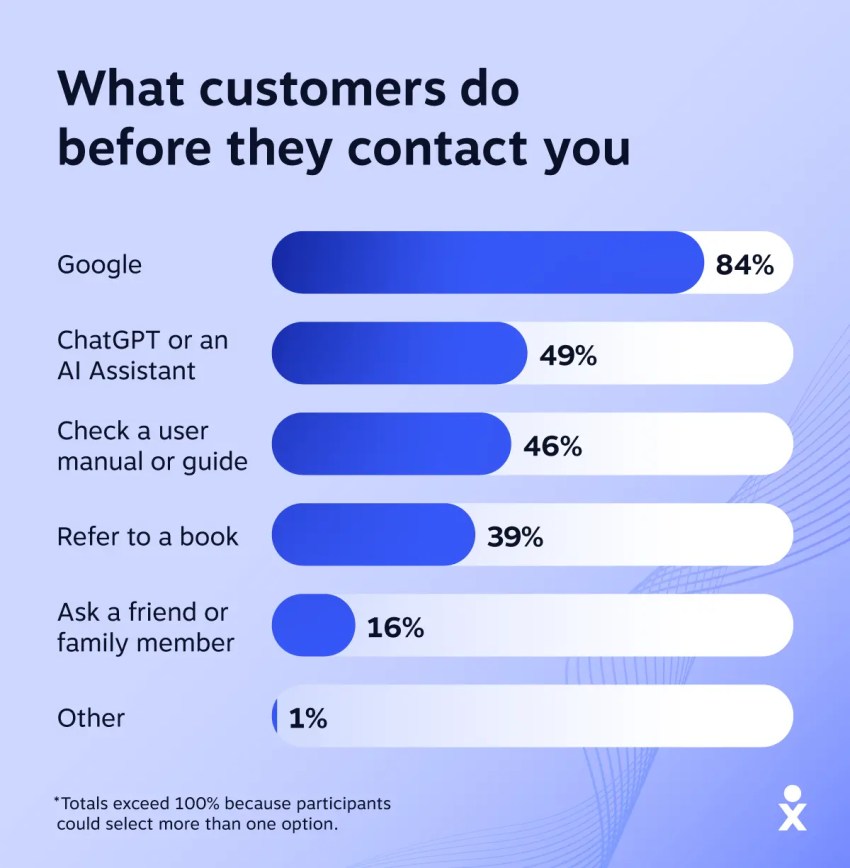
But, they also look for solutions themselves: 84% check Google and 49% now check an AI assistant before they get in touch. This can cause problems for phone agents because they’re missing information about the customer’s journey, unless you offer omnichannel solutions.
To provide exceptional customer service and keep Gen Z customers, brands must pair self-serve chatbots with live phone support.
Key Takeaways
- 77% of Gen Z respondents have used a phone call for support.
- Despite assumptions that young people avoid calls, 72% say they’re “likely” or “very likely” to choose phone support again.
- 50% of respondents turn to an AI assistant before contacting support, indicating a desire for self-serve support.
- Support quality impact purchase decisions: 45% of respondents have canceled a service due to difficulties getting support in the way they prefer.
Learn more about the popularity of phone support and AI-based chatbot support among Gen Z.
Gen Z Still Relies on Phone Support
No phone phobia here. On the contrary, Gen Z prefers voice-based support.
- 77% say they have used phone calls for support.
- 72% say they are “likely” or “very likely” to choose phone support again.
However, they don’t like to wait; keeping people on hold in silence (or with cheesy tunes) isn’t an acceptable practice anymore. 75.4% of respondents to another survey say they’d rather schedule a callback service than stay on hold.
Excellent Support Influences Purchasing Decisions
Real people giving real support create real results for customers, regardless of their generation. A good phone experience can make the difference between keeping a customer and losing them.
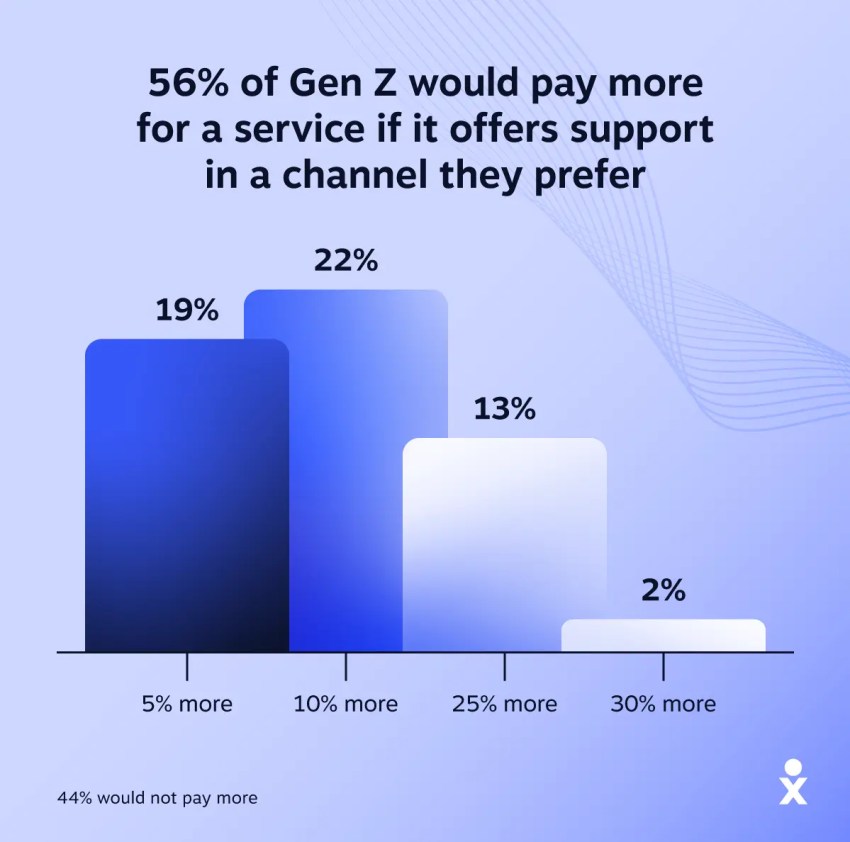
Gen Z will often pay more for a service that features support with contact channels they prefer:
- 22% would pay 10% more for a product or service with their preferred support options.
- 19% would pay 5% more for a product or service with their preferred support options.
On the other hand, 45% of Gen Z respondents have cancelled a product or service because their preferred support channel wasn’t available.
Gen Z Exhausts Self-Serve Options First
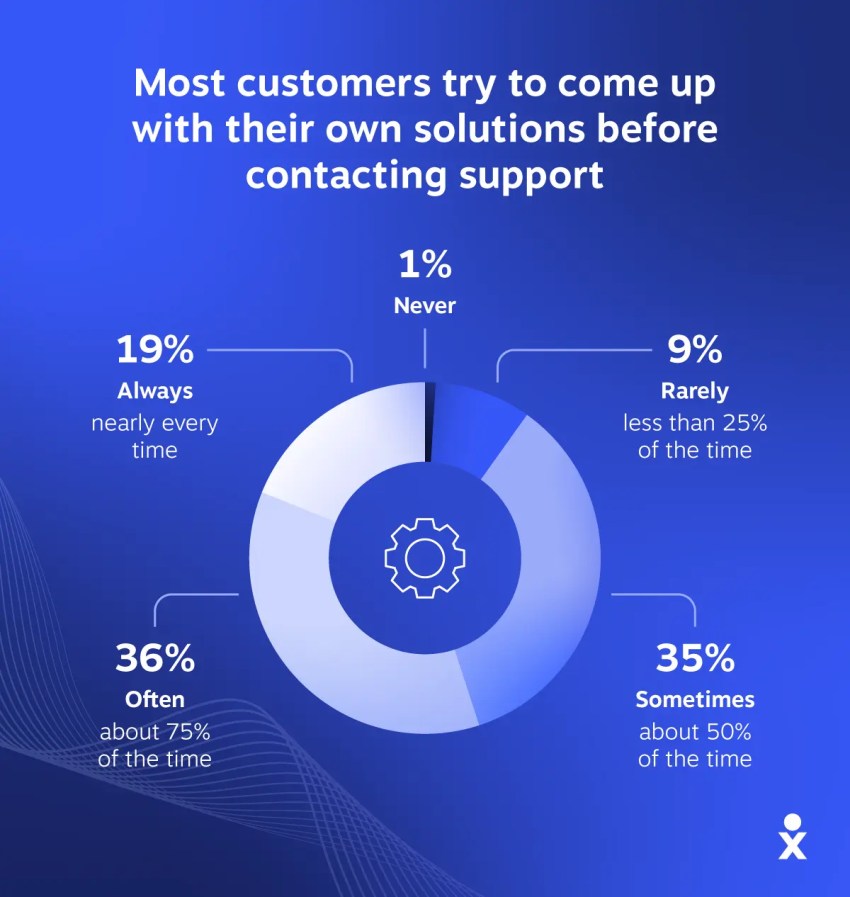
Despite their preference for phone support, Gen Z often tries to solve problems themselves.
In the age of Google, Reddit, and AI chatbots, there’s a wealth of information available to them. A majority (55%) of respondents “always” or “often” do their own research before they contact support for help.
Businesses should prepare for customers to choose their preferred contact method in the moment and switch devices or channels while performing the same task. This means developing a systematic approach to customer experience best practices across every contact channel and centralizing data from each point of contact.
The Rise of AI Assistants and What It Means for Support
We asked respondents what they do before reaching out for support with a multiple-choice question:
Eighty-four percent said they use Google, and 49% said they use AI tools like ChatGPT before contacting support.
With Google integrating AI Overviews and AI Mode into search, this means that the majority of Gen Z customers encounter an AI tool before they contact you.
The problem with self-service support is that users may not get reliable information. General-purpose AI chatbots, such as ChatGPT, can mislead users with hallucinations or outdated information. Then, when they reach your support channels, they might be confused or frustrated.
This creates additional friction that can result in customers abandoning their task or cancelling services: 75% of customers will only try contacting support 2–3 times before giving up, and 42% abandon a brand entirely after just two bad experiences.
Younger respondents (especially under 28) typically show the lowest tolerance for slow service and the highest expectation for instant chat or AI help.
Providing your own self-service option can help to mitigate these problems. An AI-based chatbot of your own gives users a do-it-yourself experience, but with much better knowledge of your brand and services. AI chatbots can’t fully replace the benefits of talking to a human if that’s what users want. But they can perform many customer service interactions end-to-end as well as detect situations that require escalation.
With automated workflows and conversational AI, it can field simple queries, perform account actions, direct customers to the best support option for their needs, and collect important information. This can reduce redundancy and repetition for users, who will abandon their search if they have to seek support multiple times.
Offering multiple avenues of high-quality customer support can help brands keep customers and justify pricing:
- AI or human chat support gives customers a self-service option inside your brand’s ecosystem.
- Phone support that can tackle complex issues or misunderstandings.
Benefits of Modern Phone Support
Effective phone support combines the trust-building power of human service with modern solutions that reduce friction, like callback services. Hold times are a frequent complaint among customers. Sitting on the phone with hold music is a frustrating and archaic experience.
Most respondents are at least somewhat willing to wait five minutes to receive support over text, phone, and email. If they can get on with their day while waiting for a response, that’s a much less frustrating experience.
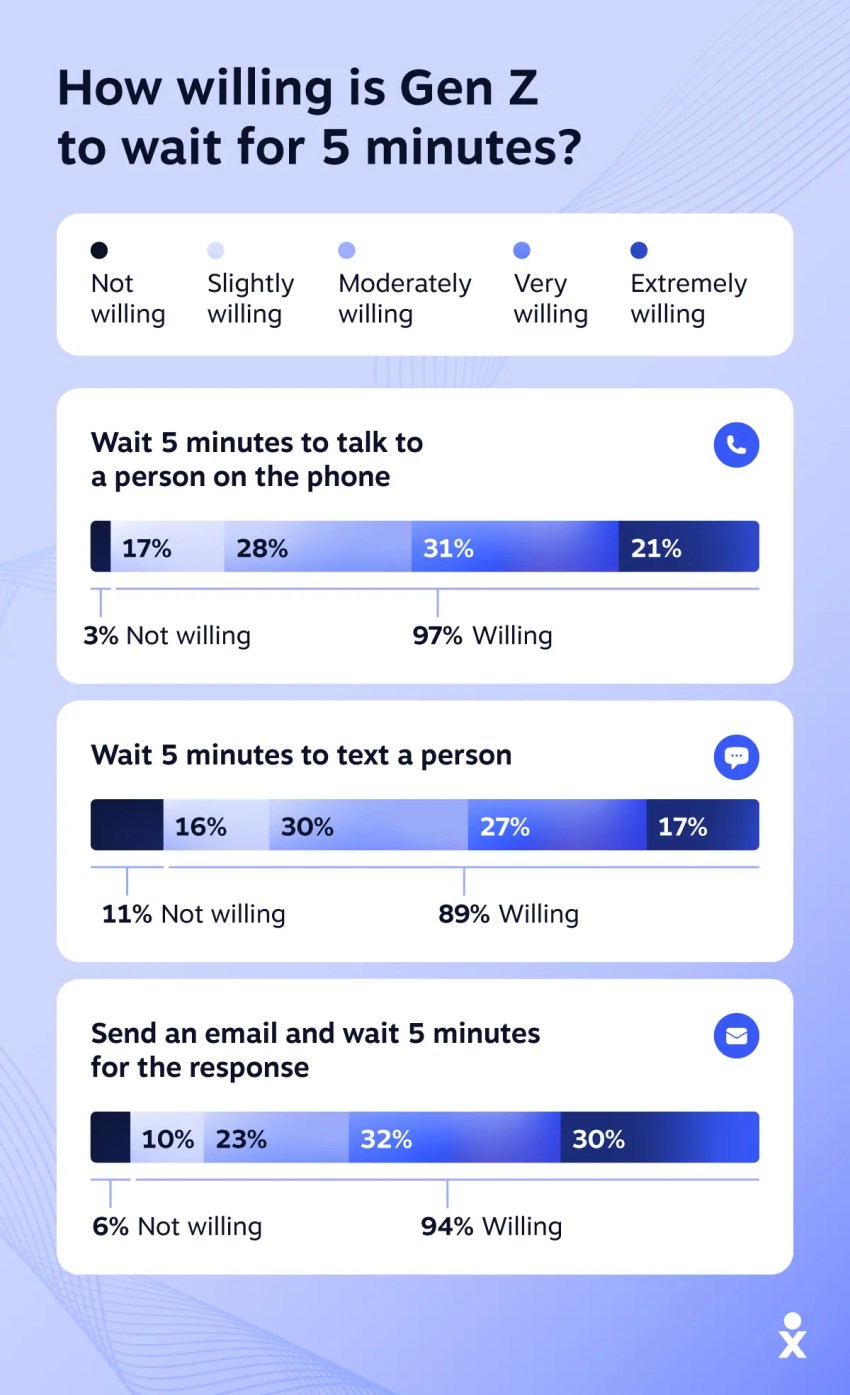
Modern call management solutions integrated with CRM services can significantly reduce call friction. The right application of AI workflows eliminates sources of customer frustration and empowers your customer service strategy:
- Automated queuing and outbound dialing allow businesses to call customers back instead of forcing them to wait on hold.
- Integrated CRM systems can make account lookups much more efficient to help agents deliver faster service.
- Teams can share information across multiple contact points, including chatbot interactions. This reduces how much customers must repeat themselves and makes the experience more personalized.
- Automated reporting on customer satisfaction metrics and call grading to identify areas of improvement.
User journeys of all kinds are becoming increasingly fragmented, but direct voice support remains the most effective way to build trust and empathy. Even the tech-native Generation Z wants to talk to people on the phone.
But that doesn’t mean the “old way” of running customer support is acceptable to young audiences. They expect the personalization and efficiency of digital services. An integrated, omnichannel approach to customer service efficiency ensures they get the experience they expect in the channel they prefer.
The Omnichannel Reality: Why Every Channel Matters
Digital experiences become more integrated every year, and that informs user expectations. Younger users expect a level of personalization and compatibility in their experiences. They complete actions across multiple channels and devices, and will quickly pivot if one avenue has too much friction.
- 56% of respondents immediately switch to another support channel when their first choice takes too long.
- 28% will simply walk away from the product or service rather than try again.
Gen Z will use many different methods to get in touch with support. The most popular options were phone calls (72%), email (76%), website chat (70%), and online tickets (69%).
The only real loser was video chat, where more respondents said they were unlikely to use it (48%) than likely (31.5%)
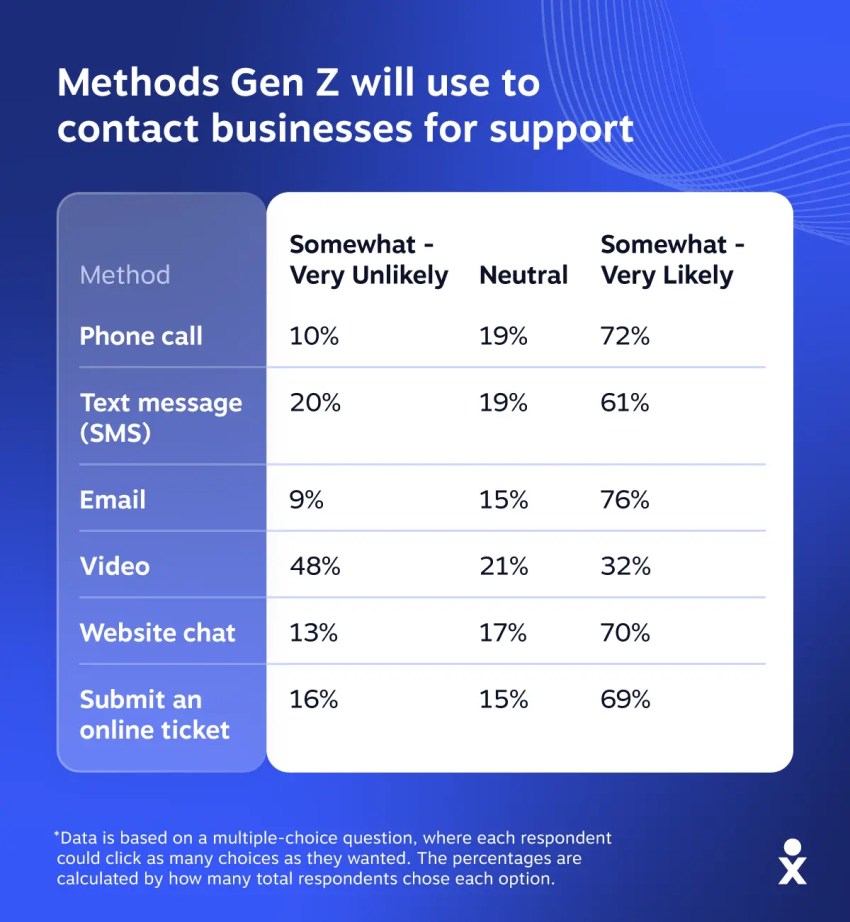
This data underscores that brands must have a comprehensive multi-channel support solution to ensure users receive a consistent level of quality. Gen Z especially wants to choose, and their choice might change depending on the context, time, or specifics of the problem.
No matter what channel they choose, young people expect fast results:
- Chat replies within ~1 minute.
- Phone/SMS/ticket responses within ~5 minutes.
- Email responses within 30 minutes.
Modern customers want seamless, intelligent support over multiple channels.

Keep All Your Customers Satisfied With Nextiva
Integrate unified communications, data, and customer experiences in a platform that meets their expectations. Nextiva gives your business the power to deliver personalized support faster and with less frustration.
Meet the AI contact center that helps you deliver support across phone calls, web chat, SMS, and email within automated workflows and conversation histories across every channel. With automated call scoring, Nextiva can also help you reduce the burden of call evaluation and coaching.
Empower your agents to delight customers and reduce wait times by giving them the information they need to provide exceptional customer service quickly.