

 Customer Experience
  Blog
Blog  Business Communication
  Leadership
  Marketing & Sales
  Nextiva News
  Productivity
  VoIP
VoIP 

What sets top-tier contact centers apart from their competitors? They don’t just focus on handling calls but also prioritize ongoing improvement.
Customer service has always been driven by rising and evolving customer expectations, and the increasing use of digital services has only added to the mix. This means that recurring issues, such as long wait times, unresolved inquiries, and agent burnout, can now significantly impact your bottom line.
And you certainly don’t want to risk customer frustration, churn, and reputational damage. Learning more about and using contact center optimization as a business strategy helps streamline your contact center operations, reduce employee overload, meet customer needs, and offer more positive customer experiences.
What exactly is contact center optimization? And how can you not only manage customer pain points but proactively eliminate them? We’ve compiled this guide with the strategies, metrics, and tools you need for an efficient and effective contact center that drives both customer satisfaction and business growth.
Note: We’ve used “call center optimization” and “contact center optimization” interchangeably in this article because their goals and strategies have almost completely merged. While “call center” traditionally referred to voice-only support, today’s businesses handle customer interactions across multiple communication channels (like chat, email, and SMS). A modern call center is, by definition, a contact center. The principles of improving efficiency, agent performance, and customer satisfaction apply to both.
What Is Contact Center Optimization?
Contact center optimization is a continuous, data-driven process that improves contact center performance, strengthens call center operations, maintains high service standards, ensures operational consistency, and delivers a memorable customer experience.
This process involves three core pillars:
- People: Your agents, supervisors, and support staff.
- Processes: The workflows, playbooks, and strategies you implement.
- Tools: The technology and call center optimization software that empower your team.
Some consultants and business analysts refer to this as the PPT framework. While automation and self-service are crucial, people are the heart of a contact center. Your technology and processes should be designed to empower, not replace them.

How Does Contact Center Optimization Work?
Teams use operational data, customer feedback, and interaction insights to understand how satisfied customers are, find call center performance problems, determine their causes, test targeted changes, and standardize successful changes and support continuous improvement. By analyzing customer feedback alongside operational data, center managers can identify trends, find performance gaps, and prioritize changes.
A practical contact center optimization framework includes these stages:
| Stage | Key action | Expected output |
|---|---|---|
| Measure | Establish current performance across customer, agent, operational, and financial outcomes. | A reliable performance baseline |
| Diagnose | Trace performance gaps to their root causes rather than treating individual symptoms. | A prioritized list of underlying problems |
| Design | Develop a specific change, assign an owner, and define its expected impact. | An optimization plan with measurable targets |
| Test | Pilot the change with a selected queue, channel, customer segment, or agent group. | Evidence showing whether the proposed change works |
| Scale | Expand successful changes and document the new operating standard. | A controlled organization-wide rollout |
| Review | Monitor results and check for unintended effects on other metrics. | A decision to retain, refine, or reverse the change |
The review stage feeds back into measurement, making optimization an ongoing process to prevent teams from applying broad changes before confirming the cause of a performance problem.
How Does Contact Center Optimization Help the Customer Experience?
Optimization and customer experience (CX) are closely linked. If your contact center runs smoothly, customers notice immediately. An improved customer experience is reflected in several ways, including:
- Shorter wait times: Optimized agent management and intelligent routing connect customers to the right agent more quickly.
- Higher first call resolution (FCR): Well-trained agents with access to the right customer data (from customer relationship management integrations) and the necessary expertise (from guides) resolve issues more often on the first contact.
- Personalized service: Thanks to a comprehensive overview of a customer’s previous interactions across all channels, agents can provide a personalized and individual experience without requiring the customer to repeat their queries.
- Consistent omnichannel communication: A fully optimized contact center delivers a smooth, omnichannel experience, whether customers call, use web chat, or send a text message. The conversation can be resumed exactly where it left off.
The Benefits of Optimizing Your Contact Center
A data-driven call center optimization strategy brings about tangible, measurable results and clear proof of added value. If you’re wondering why you should optimize your call center, here are some benefits that will reinforce your decision:
- Increased customer satisfaction (CSAT): Call center optimization reduces friction and improves the first-call resolution rate, contributing to improved customer satisfaction by delivering superior customer service, which can strengthen customer retention and loyalty.
- Improved operational efficiency: Optimizing call center processes, such as skills-based routing and IVR menus, reduces call transfers and average handling time (AHT), enabling your team to better serve more customers.
- Cost savings: Greater efficiency means lower operational costs. You reduce employee turnover through improved employee satisfaction, lower the cost per call, and optimize resource allocation to avoid overstaffing or understaffing.
- Increased agent productivity and motivation: With the necessary contact center optimization tools, training, and support at their disposal, your employees are less likely to experience frustration and burnout. Satisfied and motivated employees are more productive and provide better customer support.
What Should You Optimize in Your Call Center?
To optimize your call center, focus on optimizing all three pillars: personnel, processes, and tools in a coordinated way.
1. Optimize people management
Consider these four key elements for effective people management.
Workforce optimization
Optimizing your agents’ schedules based on call volume ensures adequate staffing. Workforce optimization allows more customers to reach contact center agents without long response times. The even distribution of calls reduces the workload for your employees, keeping them motivated and productive.
As a company, you also avoid unnecessary costs for additional staff to handle incoming customer inquiries. When planning staffing, consider which employees are best suited for which tasks (e.g., incoming calls, live chat, or omnichannel). Also, take your employees’ personal needs into account. Use call center software to give managers real-time data for forecasting staffing needs and balancing agent workloads. Good personnel management is based on satisfied and supported employees.

Hiring and agent training
Another key area for optimization is employee recruitment, onboarding, and training. You need a team with strong communication and problem-solving skills. At the same time, you must keep investing in their professional development to keep your employees up-to-date on products, services, and best practices to address knowledge gaps.
It helps to have a training program with regular reviews of skills, product knowledge, and performance. Simulation-based training prepares human agents to manage complex customer scenarios before handling them independently.
Agent performance management
When you combine clear performance goals with personalized measures, everyone works toward optimal results. Track your agents’ performance by monitoring interactions and providing regular constructive feedback. Regular coaching sessions help agents improve communication skills and address specific performance gaps.
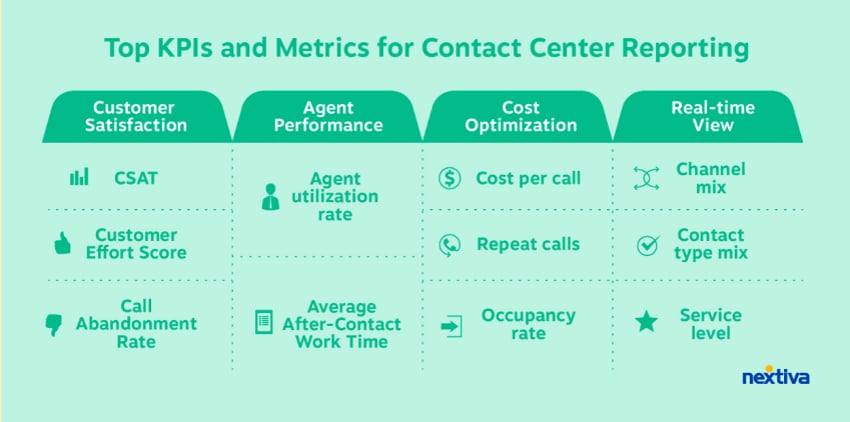
Use your contact center’s key performance indicators (KPIs) to identify which agents have potential for improvement in which areas. For example, some agents might have a low first-call resolution rate and need additional training, while others might be better suited to a different communication channel.
Employee experience
Creating a positive contact center experience that motivates agents and prevents burnout is crucial. Create a positive work environment by being transparent about company results, nominating top performers, and encouraging mutual recognition.
The best way to understand your agents’ needs is to survey them anonymously. You’ll quickly discover that engaged and satisfied agents are directly linked to customer loyalty and retention. So, it’s a must to contribute to your employee engagement.
2. Optimize processes and workflows
Good employees and tools need standardized, efficient guidelines to perform optimally, even in challenging situations. Create clear workflows for calls, escalations, follow-ups, and after call work. Standardized processes reduce errors and support teams in improving customer service.
To strengthen your processes and workflows even more, do the following:
Develop playbooks for common scenarios
Create step-by-step instructions that describe the best way to handle commonly occurring customer issues, from troubleshooting to recommended upselling techniques. You’ll be able to offer every customer the same high standard of service, regardless of the agent they work with.
Implement escalation strategies
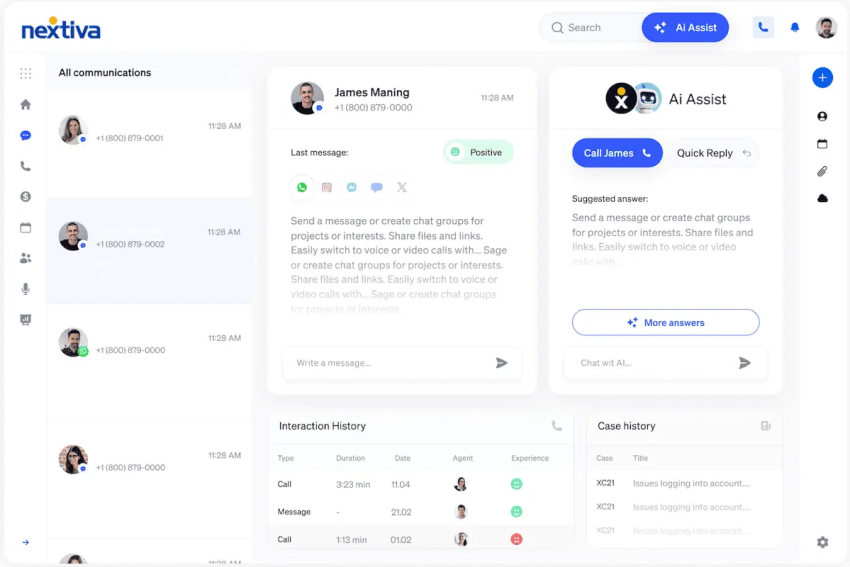
Establish clear, documented guidelines for when and how an agent should escalate a call to a supervisor or specialist. This plan should include escalation levels (P1, P2, etc.), criteria, and service level agreements (SLAs) to manage changing customer expectations. Escalation strategies work best for complex issues that are handled by the right people without disrupting your contact center’s workflow.
Develop contingency plans for disruptions
In the event of system failures or unexpectedly high call volumes, you need a tested and communicated contingency plan. This should include redirecting calls, providing replacement staff, and using chatbots for simple inquiries.
3. Optimize with technology and tools
The right technology stack and contact center optimization software connect your employees and processes, driving better contact center efficiency. These solutions may include routing, analytics, quality management, workforce management software, and automation tools that reduce repetitive administrative work. Here’s the technology you need to optimize your call center:
Interactive voice response (IVR)
A well-designed IVR system optimizes the customer journey across touchpoints by allowing customers to help themselves or reach a specific department via automated menus. This frees up employees, who can then focus on calls that match their expertise.
Skills-based routing
Skills-based routing assigns specific skills to each employee (e.g., contract renewals, technical support, Spanish language skills). It uses language, expertise, availability, and customer needs to route calls. Incoming calls are routed to the employee best qualified to handle the request, increasing the first-call resolution rate.
CRM integration
Contact center software integrated with your CRM systems helps agents access customer data, preferences, and past interactions from a single interface. This reduces app switching and gives agents the context they need for a personalized and efficient customer experience.
Call recording and quality management
Recording customer interactions is essential for continuous training, compliance, quality assurance, and overall call center quality management. It also helps teams in identifying areas for improvement. Contact center platforms can even use AI for speech analysis and customer sentiment analysis, informing supervisors about negative interactions in real time.
Self-service options
Help your customers find answers independently through online knowledge bases, chatbots, or FAQs. You’ll free up your employees to handle complex inquiries and deliver faster responses to your customers.
Unified Communications (UCaaS)
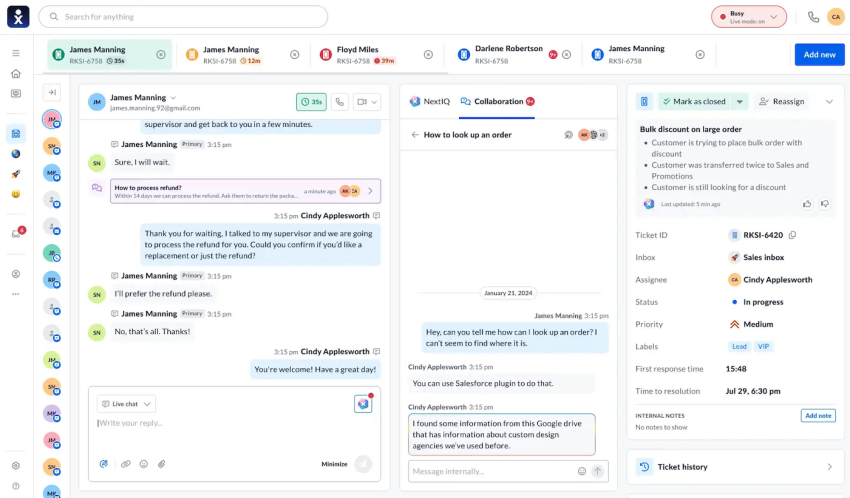
A UCaaS platform integrates all digital channels (phone, email, SMS, and chat) into a single user interface. This is where the real optimization takes place. Nextiva’s platform, for example, is designed to scale with your optimization needs.
You get basic UCaaS features and telephony, as well as tools for comprehensive optimization, including SMS communication between customers and teams, advanced reporting capabilities, speech analytics, web chat, and full omnichannel routing.
Top Performance Metrics To Measure Your Call Center Optimization Efforts
You can’t improve performance without tracking the right metrics. While many KPIs exist, focus on the ones that clearly show how well your contact center serves customers and manages contact center operations. These key performance metrics highlight both service quality and productivity.
Customer satisfaction (CSAT)
CSAT measures customer satisfaction scores based on how happy customers are after an interaction. It usually comes from a quick survey asking, “How would you rate your experience?” Customer Satisfaction (CSAT) is often measured on a scale of 1 to 5, although some organizations use different rating scales. A high CSAT score means agents are resolving issues promptly and creating positive customer experiences.
First call resolution (FCR)
FCR shows the percentage of customer issues solved in a single interaction. A high FCR means customers don’t need to call back for the same problem. This improves satisfaction, builds trust, and lowers operational costs.
Average handle time (AHT)
Average Handle Time (AHT) includes talk, hold, and after-call work time. It tracks the total time agents spend on a customer issue, from the start of the call to its resolution. The goal is to shorten this time while keeping service quality high. A balanced AHT means agents are productive without rushing the customer.
Net promoter score (NPS)
NPS measures customer loyalty through one simple question: “How likely are you to recommend us?” A higher score shows that customers trust the company and are willing to promote it. It’s a strong indicator of long-term relationships and brand reputation.
Agent occupancy rate
This metric indicates the percentage of an agent’s logged-in time spent on call-related tasks. A healthy occupancy rate means agents are productive but not overworked. Monitoring this helps call center managers balance workloads and maintain steady performance.
Customer effort score (CES)
CES measures how easy it is for customers to get help. The question is simple: “How easy was it to resolve your issue?” A lower effort experience keeps customers loyal. With effortless service, satisfaction, and repeat business naturally increase.

Common Pitfalls To Avoid When Optimizing Your Contact Center
Call center optimization can deliver strong results, but it’s easy to lose focus along the way. Avoid these common mistakes to make sure your efforts lead to real improvements in performance and enhance customer satisfaction.
Focusing on speed over quality
Reducing AHT can improve efficiency, but not if it hurts FCR. When call center agents rush through phone calls, customers need to call back for unresolved issues. This lowers satisfaction and raises operating costs. Aim for balanced key metrics that value both speed and accuracy.
Not tracking the right KPIs
Tracking too many or the wrong metrics can hide what truly matters. Call volume or average wait time might look important, but they don’t always show how well your team is serving customers. Focus on actionable KPIs like FCR, CSAT, and CES, metrics that reflect real performance and guide improvement.
Neglecting agent training
Call center technology alone doesn’t optimize a contact center. Without proper training, even the best tools can confuse your team and slow down contact center operations. Give agents the time and resources to master existing systems and learn new systems and processes. A trained team works with confidence and delivers better service.
Working in technology silos
Disconnected systems create unnecessary barriers. If your phone system, CRM, and chat tools don’t share information, agents spend more time switching between platforms and less time helping customers. A unified communications platform offers contact center technology that gives businesses complete visibility, speeding up responses and improving collaboration.
Forgetting to analyze and act
Collecting data is only the first step. Review your contact center dashboards regularly to find patterns, solve recurring issues, and recognize high-performing agents. Acting on insights is what turns data into progress. Consistent analysis ensures your optimization efforts stay on track and deliver measurable results.

Contact Center Optimization Challenges
Contact center optimization can require coordination across systems, departments, and business priorities. Even when teams understand what needs to improve, the following barriers can make implementation difficult.
Establishing cause and effect
Contact center performance can change because of seasonality, product updates, marketing campaigns, policy changes, outages, or shifts in customer demand. These factors make it difficult to determine whether an optimization initiative produced the observed result.
Use controlled pilots where possible, and document other changes occurring during the measurement period. Compare similar time periods, customer groups, or queues before attributing an improvement to one initiative.
Aligning departmental priorities
Customer service, finance, operations, sales, compliance, and workforce teams may have different expectations for the same project. Finance may prioritize cost reduction, while customer service may prioritize resolution quality and retention.
Define the primary business outcome, decision-making authority, and acceptable trade-offs before the project begins. This gives participating departments a shared definition of success.
Working within legacy system constraints
Older platforms may not support open integrations, flexible routing, real-time data exchange, or the automation a proposed improvement requires. Even a small operational change may depend on custom development or manual workarounds.
Determine whether the limitation comes from integrating technology with legacy systems, the platform’s current configuration, or the underlying process. This analysis clarifies whether the organization needs a system upgrade, a configuration change, or a redesigned workflow.
Managing cross-functional dependencies
The contact center does not control every cause of customer demand. Repeat contacts may originate from unclear invoices, fulfillment delays, product defects, website errors, or confusing policies owned by other departments.
Group contacts by their underlying cause and assign each issue to the department that can resolve it. The contact center can supply interaction evidence and measure the results, but another team may need to implement the solution.
Meeting privacy and compliance requirements
Call recording, interaction analytics, AI tools, and automated decisions can introduce privacy, consent, security, and data-retention requirements. These obligations may limit how customer and employee data can be collected, analyzed, or stored.
Include legal, security, and compliance teams during the design stage. Early review can prevent delays and costly revisions later in the project.
Contact Center Optimization Starts With the Right Foundation
Optimizing your contact center is an ongoing process based on people, processes, and tools.
When you shift from a reactive, crisis-driven mindset to a proactive, data-driven strategy, you turn your contact center from a cost center into a source of strong customer engagement and sustainable business growth.
Tired of constantly switching between different applications and want to provide your team with a unified customer experience platform? Then Nextiva is the right partner.
Nextiva’s AI-powered contact center offers advanced optimization functionality, covered in this guide and more. Get valuable insights into your performance, support your agents and customers, and maintain control with a best-in-class contact center solution, today and tomorrow.
Evaluating contact centers? Get the buyer’s guide.
This guide reveals the five pillars of a modern platform, key questions to ask, and red flags to avoid.
Frequently Asked Questions About Contact Center Optimization
Call center optimization traditionally focuses on improving the efficiency and service quality of telephone calls. Contact center optimization, on the other hand, is a more modern, advanced approach. It includes all call center activities and also optimizes all customer communication channels, including email, web chat, SMS, and social media, to ensure a seamless, unified omnichannel experience.
The first and most important step is establishing a baseline. What you don’t measure, you can’t optimize. Start by evaluating your current performance against your key performance indicators (KPIs), such as FCR, AHT, and CSAT. Once you’ve established your baseline, you can define clear and achievable goals for improvement.
Artificial intelligence accelerates optimization. It can:
Automate routine tasks, freeing up agents.
Power self-service chatbots and IVRs to resolve simple issues instantly.
Provide real-time sentiment analysis and agent-assist prompts during live calls.
Analyze complete customer interactions (not just a small sample) to show trends, compliance issues, and coaching opportunities.
Optimization directly counteracts burnout by simplifying agents’ daily work. The use of tools such as a unified CRM system, skills-based call routing, and self-service options reduces employee stress. Agents no longer have to switch between ten applications or handle calls for which they are not trained. Improved workforce management (WFM) also ensures fair working hours, prevents overload, and contributes to greater employee satisfaction.
Contact center management focuses on running daily operations, including agent scheduling, queue monitoring, workload distribution, and service-level performance. Contact center optimization uses data to improve those operations over time by changing staffing models, workflows, routing rules, training, and technology. Management maintains current performance, while optimization finds and tests ways to improve it.
Contact center leaders usually oversee optimization, but the process requires input from supervisors, agents, workforce planners, quality teams, IT, compliance, and other departments. Agents provide valuable insight because they work directly with customers and encounter workflow problems every day.
The timeline depends on the problem and the proposed change. Updating an IVR prompt or knowledge article may take days, while replacing a platform or redesigning workforce operations may take several months. Teams should begin with controlled improvements, measure their impact, and expand successful changes gradually.