
 Customer Experience
  Blog
Blog  Business Communication
  Leadership
  Marketing & Sales
  Nextiva News
  Productivity
  VoIP
VoIP 

When a customer or prospect calls your business, they either get the support they need or leave without an answer. In many cases, they may call a competitor next.
Just answering the call isn’t enough anymore. Callers want answers, booking confirmations, and practical support, not hold music or voicemail. In fact, 77% of customers expect to interact with someone immediately when they contact a company. But keeping every call covered becomes difficult during busy periods, after hours, and seasonal spikes.
An AI phone answering service, also called an AI receptionist or AI front desk, can cover these gaps and handle routine requests around the clock. However, voice quality, pricing, call limits, integrations, and human backup vary by provider.
This guide explains how these services work, what they cost, which features are important, and how to test one before letting it answer real customer calls.
Try the best AI answering service free for 14 days
XBert AI answers questions and captures leads. Add your 24/7 answering service in minutes.
What Is an AI Phone Answering Service?
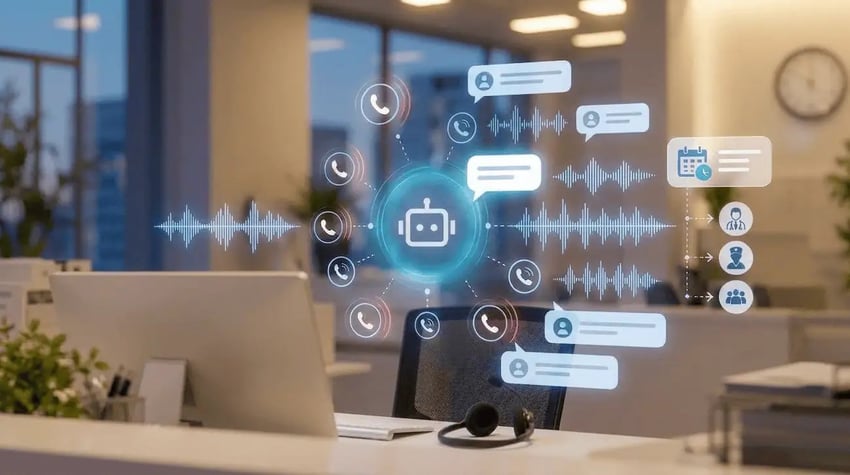
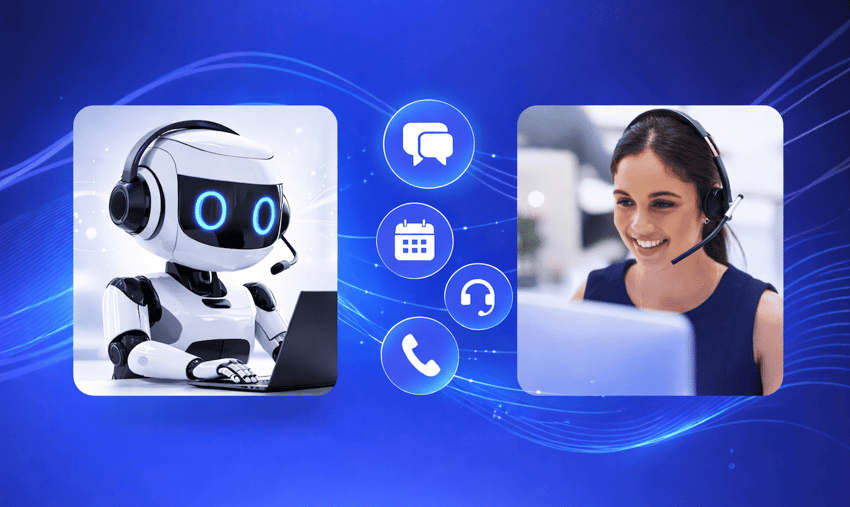
An AI phone answering service uses AI voice agents to answer business calls, understand caller requests, and complete approved tasks. It can answer frequently asked questions, schedule appointments, capture leads, screen calls, and route customers to the right employee.
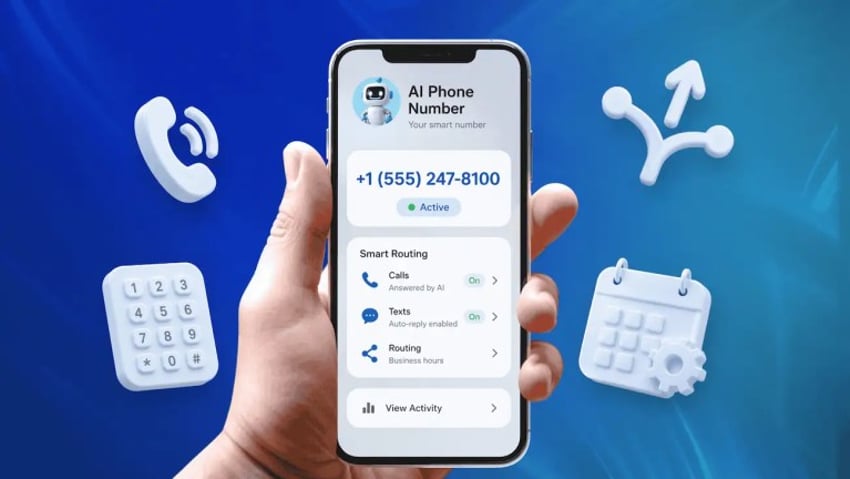
Some AI services work as standalone AI tools. Others connect with a full business phone system, CRM, calendar, or customer service platform. A business can often use its existing phone number through number porting or call forwarding. This makes it possible to add AI call handling without immediately replacing an existing phone system.
These services use artificial intelligence to manage conversations, answer routine questions, and complete approved tasks around the clock. They use speech recognition, natural language processing, voice synthesis, and business rules to conduct phone conversations.
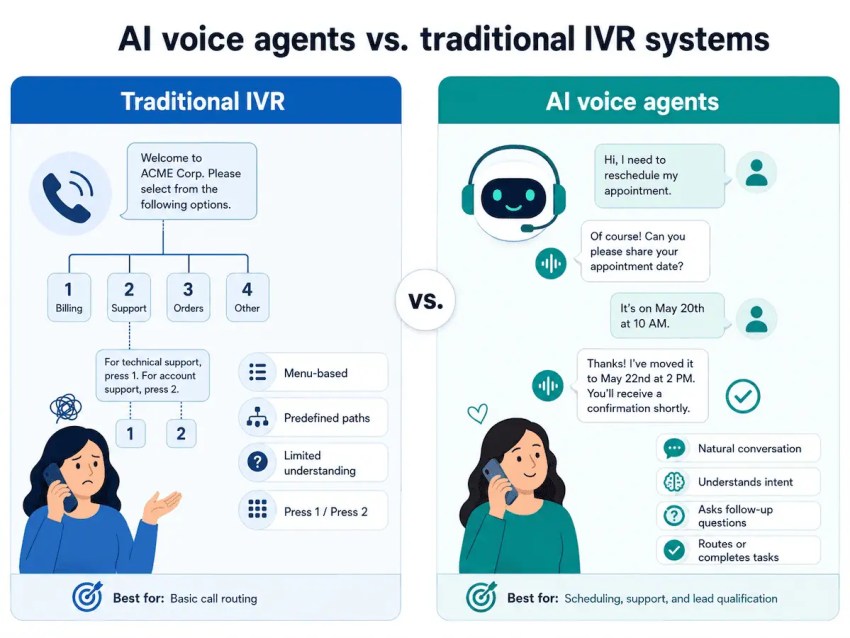
Unlike voicemail, the service responds during the call. Unlike a traditional IVR, it lets callers explain what they need instead of requiring them to follow a fixed keypad menu.
In addition to call answering, these systems provide all the services needed for efficient communication and automation, such as unlimited minutes, easy setup, and seamless integrations. Capabilities and usage limits vary by provider and plan, though.
Setting up an AI phone answering system is easy. Basic setup may take a few minutes, while advanced call flows and integrations require more time to configure and test.
Many businesses confuse AI phone answering services with voicemail systems or traditional IVR menus. Although these tools may appear similar, they handle customer interactions very differently.
| System type | Primary action | Customer experience |
|---|---|---|
| Voicemail | Records audio messages for later human review and callback | One-way communication with delayed resolution |
| Traditional IVR | Routes callers through predefined touch-tone or voice menu options | Linear experience that can become frustrating when menus are overly complex |
| Traditional human receptionist / Answering service | Uses live agents to answer calls, take messages, screen callers, or route requests | More personalized, but can become costly and create wait times during peak hours |
| AI chatbot | Handles text-based customer interactions on business websites, apps, or messaging channels | Fast for simple requests, but limited to digital text channels |
| AI phone answering service | Uses conversational AI to answer questions, route calls, book appointments, capture information, and trigger workflows through natural speech | Real-time, conversational, and context-aware customer interactions |
Traditional systems mainly answer, record, or route calls. AI phone answering services go further by completing tasks during the conversation itself.
Key Capabilities of an AI Phone Answering Service
Some of the key capabilities of an AI answering service include:
- Greeting and navigation: Provides a warm, brand-consistent welcome.
- Call answering: Handles incoming calls and responds to customers using approved business information.
- Instant FAQ support: Provides instant answers to questions about hours, pricing, or services using your knowledge base.
- Data capture: Gathers lead information or patient intake details.
- Lead qualification: Collects caller information and separates potential customers from spam or irrelevant sales calls.
- Appointment scheduling: Connects with calendars to book, reschedule, or cancel appointments.
- Call routing: Uses custom call flows to send callers to the right employee, department, or location.
- Sentiment analysis: Detects if a caller is upset and escalates the call to a human manager with a full summary.
- Call workflows: Manages call escalation, automation, lead qualification, and scheduling to enhance call handling efficiency.
- Workflow creation: Some platforms include a no-code workflow builder for creating routing, scheduling, and escalation rules.
- Call records: Stores call details, recordings, call transcripts, and instant call summaries for later review.
- Inbound and outbound workflows: Handles incoming requests and approved outbound calls, such as reminders and confirmations.
- Language options: Provides multilingual support for businesses serving callers in different languages.
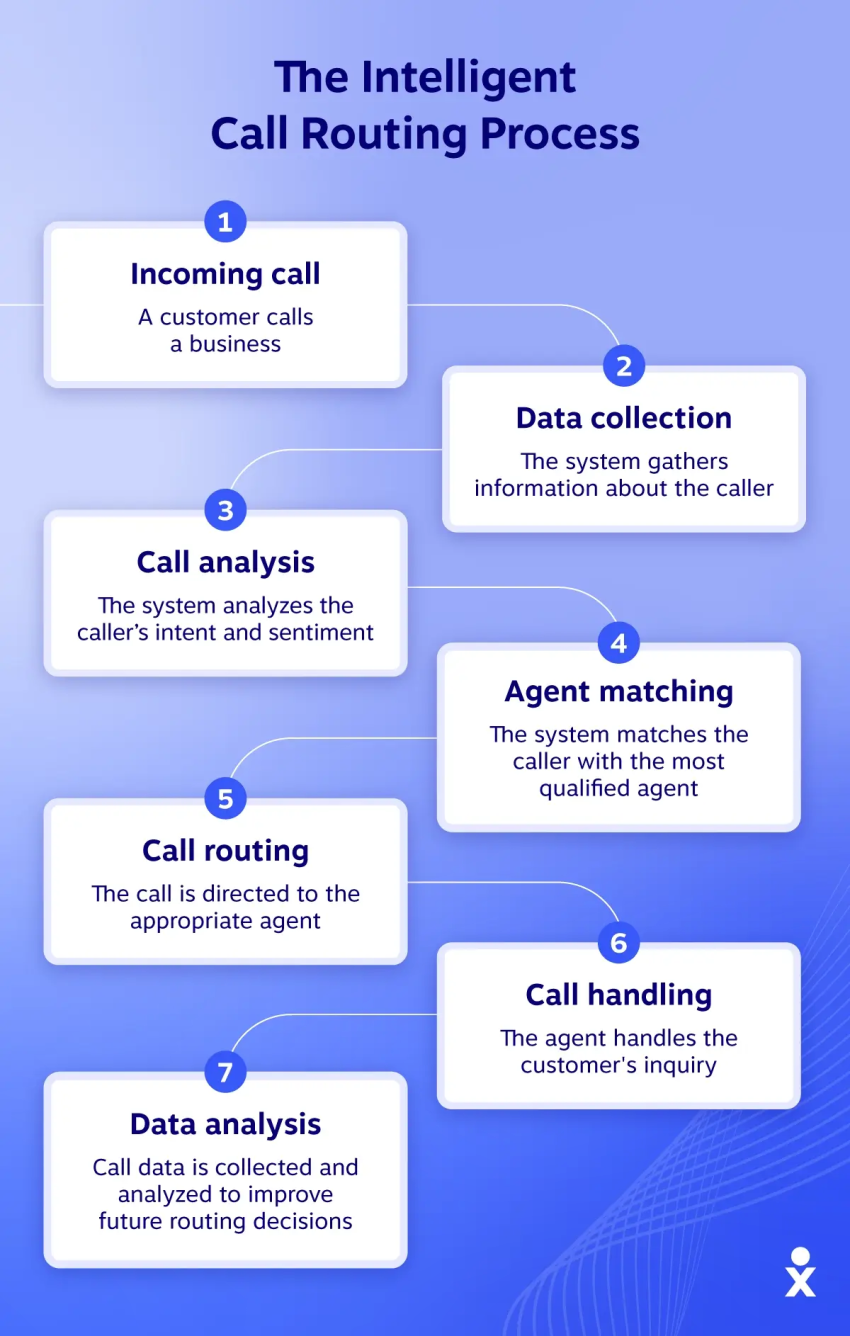
What’s more, the AI behind this tool means it’s always learning from transactions and data gathered about how well it’s performed on calls. For example, if a customer has responded positively to a particular phrase, the AI will note the sentiment and bank that as a good conversation. It’s a lot more than a basic answering service.
The best AI phone answering system can handle too many calls simultaneously, including hundreds or even thousands of customer conversations at once, providing unlimited scalability. These systems can also be customized to reflect your business’s brand voice and handle specific customer interactions effectively.
Depending on the provider and plan, an AI phone answering service can manage multiple calls simultaneously. Businesses should confirm concurrency limits, usage allowances, and overage charges.
Benefits of AI Phone Answering Services
Looking to maximize every customer interaction and never miss a beat? Implementing an AI answering service brings a host of advantages, especially for small businesses that can’t afford to let opportunities slip through the cracks.
Efficient call management
Here’s the kicker: one of the standout benefits is the ability to handle multiple calls at once, ensuring that no customer calls go unanswered, even during crazy-busy peak times. This capability slashes missed calls, which can otherwise lead to lost business opportunities and leave customers feeling frustrated and ignored.
24/7 phone support
AI answering services work around the clock. We’re talking 24/7 phone answering support beyond standard business hours. This means your business stays accessible to customers at any time, giving you that competitive edge and enhancing the customer experience that keeps people coming back.
Whether it’s after hours calls or inquiries during a hectic workday, the AI system can forward calls or send instant notifications to the right person, so you’re responding to urgent inquiries faster than ever.
Personalized customer interactions
Advanced features like natural language processing allow automated answering systems to understand and respond to complex questions, making customer interactions feel more natural and genuinely engaging. This doesn’t just improve the quality of conversations but also helps qualify leads, schedule appointments, and manage routine tasks that eat up your day.
Integration with essential business tools like Google Calendar, CRM platforms, Google Business Profile, Microsoft Teams, and Google Voice streamlines workflows, cuts down on manual data entry, captures all customer data accurately, and puts it to work for you.

Small-business focus
For small business owners, adopting an AI answering service means less time spent on repetitive phone answering and more time to focus on growing the business.
The system handles routine tasks, routes calls like a pro, and provides detailed analytics on customer interactions, allowing you to fine-tune your communication strategies and make data-driven decisions that actually move the needle.
With machine learning capabilities, the AI gets smarter, adapting to your business needs and delivering personalized service that feels almost human.
Consistent business communications
Maintaining a consistent and professional brand voice is another key benefit that can’t be overlooked. AI answering services align every customer interaction with your brand’s standards, building trust and reinforcing your business identity in ways that stick.
The ability to forward calls, manage call transfers, and provide appointment booking links is a sign of high-quality service that enhances efficiency and drives better customer satisfaction.
Hear why XBert AI is the best AI receptionist
XBert AI receptionist handles customer questions, captures leads, and books appointments. Try it free for 14 days.
Why Your Business Needs an AI Phone Answering Service
Businesses wait until customer complaints, missed calls, or lost revenue become obvious before improving their phone operations. In reality, the warning signs usually appear much earlier. Your business may benefit from an AI phone answering service if:
- Calls frequently reach voicemail
- Employees struggle to manage peak-hour call volume
- Customers regularly call outside business hours
- Appointment scheduling takes up too much staff time
- Slow response times cause lost leads or missed opportunities
- Your business operates across multiple locations or time zones
- Receptionists spend most of their day answering repetitive questions
- Hiring additional front-desk staff has become too expensive
- Seasonal demand creates sudden spikes in inbound calls
- Customers experience long hold times during busy periods
- Your team manually transfers or routes calls throughout the day
- Staff spend too much time filtering spam calls, answering FAQs instead of handling higher-value work
Many businesses underestimate how many sales opportunities and customer interactions they lose simply because nobody answers the phone quickly enough.
How AI Answering Services Work
A top-tier AI phone answering service uses a sophisticated loop of the following five core technologies beyond simple message-taking.
Conversational understanding
Using natural language processing, AI answering phone systems are able to identify the caller’s intent and respond based on the ask.
After confirming the details to ensure it has the correct understanding, it can ask clarifying questions to complete requests. This two-way conversational AI limits guesswork or the risk of misunderstanding.

Autonomous task execution
Upon fully understanding the requirements of the call, an AI receptionist service can then book appointments, trigger workflows, send confirmations and reminders, and update records.
Depending on which other lines of business apps and systems you integrate, the art of the possible is nearly endless. This is where you can offset the cost of answering services by opting for a smarter alternative that not only answers calls but also performs the corresponding actions.
Typical answering services for small businesses tend to come with high costs for little payback. If you’re using an outsourcing company simply for message taking, there’s a high return on investment when you compare an AI phone answering service.
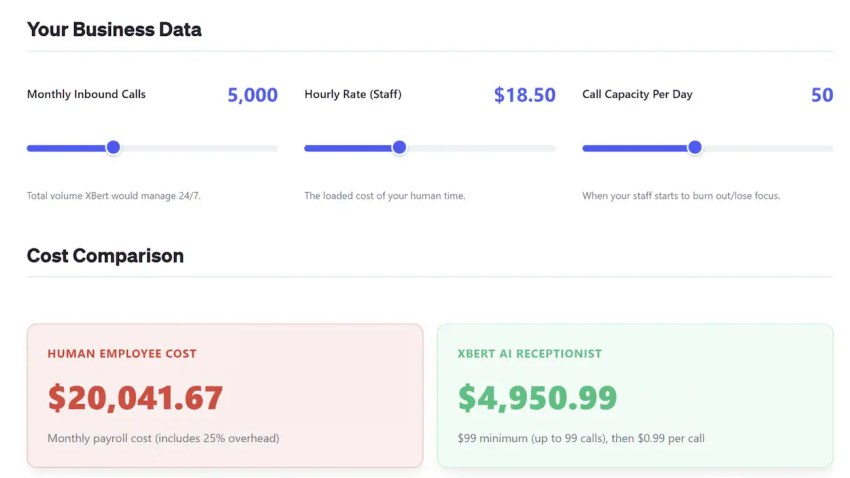
Smart escalation
If it detects an irate or upset customer or if the issue is particularly technical, the system escalates in real time with context and caller history so humans pick up exactly where the AI left off. In this scenario, you’ve asked AI to take care of the basic troubleshooting, freeing up subject-matter experts and product specialists to carry on with their day until they are genuinely needed.
When comparing AI vs. human customer service, AI agents are better in terms of efficiency. Let AI take care of the basics, and then involve humans at the right time.
Missing calls can cost you thousands.
Unanswered calls add up fast. Our free calculator reveals the revenue impact of every missed opportunity.
Deep integration
You can only ask AI to handle your tasks as well as your calls if you connect it to the systems it needs to perform these tasks. Consider integrating your AI answering system with your:
- Calendar: Google, Outlook, or specialized scheduling tools.
- CRM: Salesforce, HubSpot, or industry-specific databases.
- Help Desk: Zendesk or other ticketing platforms.
- UCaaS: Your existing Nextiva or VoIP platform.
Once integrated, it can automatically log notes, create tickets, and automate follow-ups. Once again, you’re removing the repetitive and menial tasks from a receptionist or call center agent’s day.
Continuous improvement
To ensure an always optimized customer journey, AI phone answering systems learn from transcripts, outcomes, and feedback loops to improve accuracy and reduce handle time.
AI phone systems continuously improve using call data and recording calls, extracting actionable insights from conversations to refine sales strategies, optimize scripts, and identify new market opportunities. They also log call recordings, transcriptions, and summaries in a dashboard for easy access and analysis.
Here’s an example of an AI phone answering workflow:
- A customer calls your business.
- The AI answers immediately with a natural conversational greeting.
- The system identifies the caller’s intent using natural language processing (NLP).
- The AI accesses connected calendars, CRMs, knowledge bases, or booking systems.
- It schedules appointments, answers common questions, captures customer information, or routes the caller to the correct department.
- The system automatically sends a confirmation SMS or email.
- The interaction is logged in the CRM with call notes, summaries, or customer updates.
- If the issue requires human support, the call is escalated along with the conversation history and relevant customer details.
This workflow helps businesses automate repetitive phone interactions while still allowing human agents to step in when conversations become more complex or sensitive.
AI Phone Answering Services Use Cases (By Industry)
Here are some key use cases of online virtual receptionists:
Home and field services
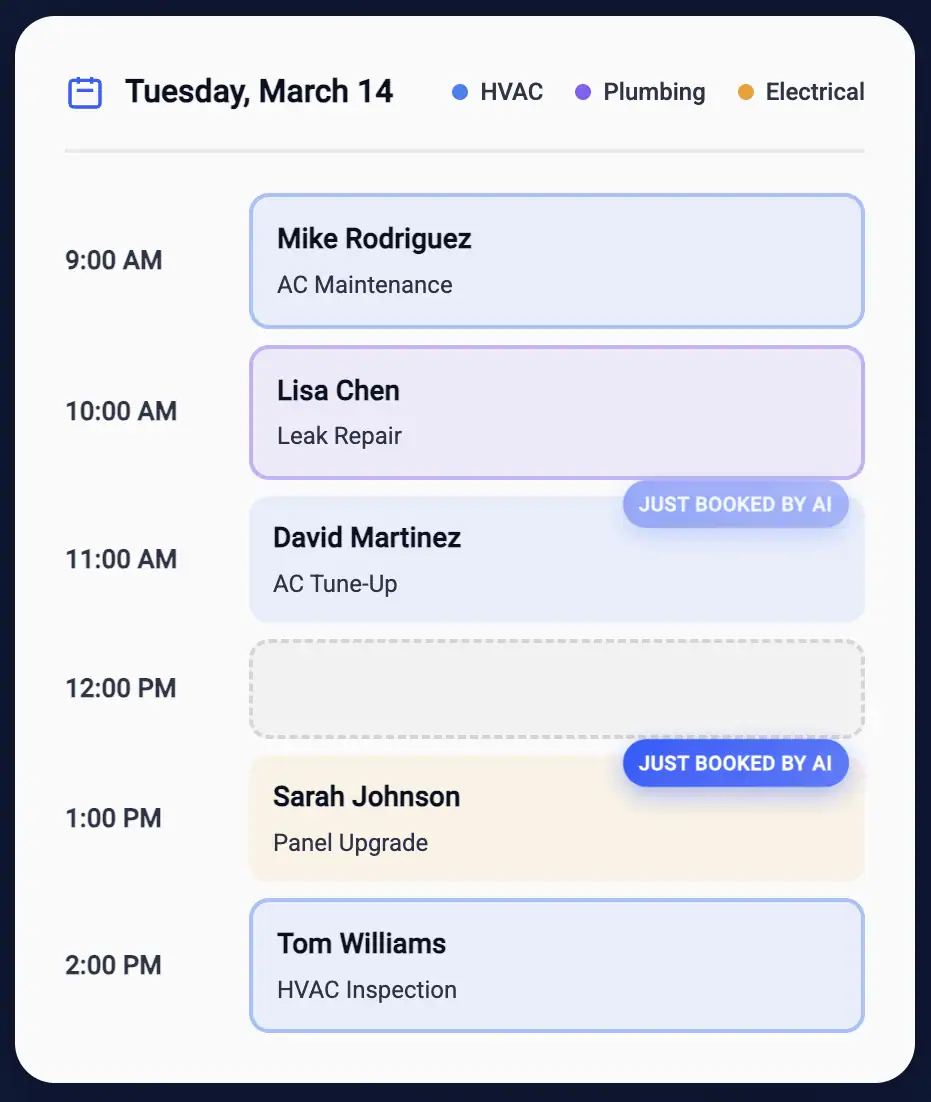
You can use AI answering systems to book new jobs, confirm window cleaning or repairs, reschedule if customers can no longer make it, and dispatch engineers after hours. This not only helps run your calendar but also reduces the chance of no-shows.
You can also screen emergencies and prioritize by ZIP code, job type, or warranty status if needed.
Pro tip from Nextiva: Pair automated booking with intelligent routing and text message reminders so crews show up with the right info the first time.
Health care and dental
Health care providers can verify office hours and insurance basics, prequalify new patients, and schedule or waitlist existing patients for appointments. This takes place without the need for human intervention or waiting for other parties to cross-reference calendars.
All the while, you continue to respect consent and privacy standards with built-in compliance and identity and verification workflows.
Pro tip from Nextiva: Use HIPAA-compliant workflows with transcripts and summaries that push to patient intake systems without extra data entry.
Law firms and professional services
For new client intake, conflict checks, and consult scheduling with attorney routing, AI answering systems take care of every step of the process. This lets you protect attorney time and ensure that they’re not the people or system doing the handoff and searching for the right person.
Pro tip from Nextiva: Qualify by case type and urgency; auto-create CRM records and route hot leads to the on-call attorney instantly with your communication software.
Restaurants and hospitality
While in-person team members are busy waiting tables and preparing food, let your AI assistant take care of:
- Reservations
- Waitlist management
- Menu questions
- Directions and opening times
- Group inquiries
Pro tip from Nextiva: Tie phone reservations to a shared calendar and send SMS confirmations to reduce no-shows.
Multilocation retail and franchises
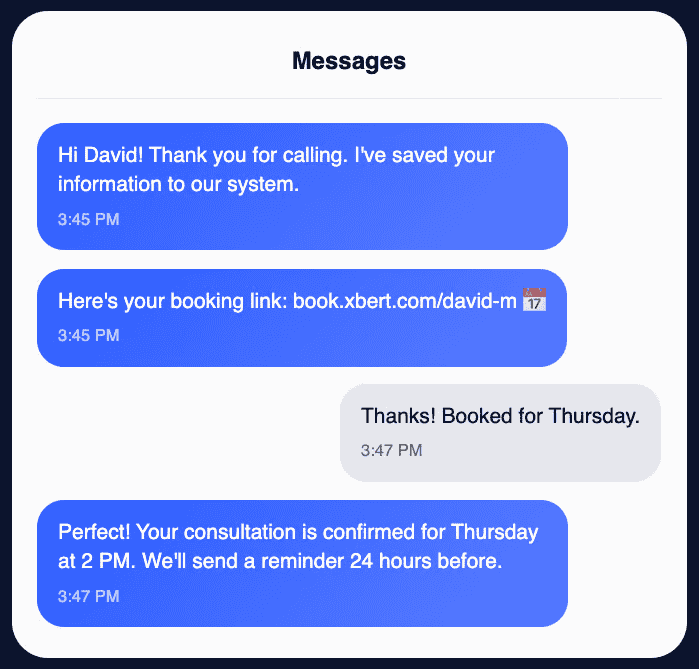
If you look after multiple locations, the local stores don’t need to field each incoming call. You can use your virtual receptionist software to respond to queries like store hours, inventory questions, service appointments, and warranty intake.
Pro tip from Nextiva: Enforce a single brand voice and capture location-level analytics to spot after-hours demand.
8 Essential Features To Look for in an AI Phone Answering System
Look for the following features in your online virtual receptionist:
1) Natural language and clarification
- Feature: Understands free-form speech, confirms details, and gracefully recovers from ambiguity.
- Benefit: Allows conversations to flow in a human-like way without the need for constant human escalation.
2) Smart scheduling
- Feature: Offers two-way calendar sync, buffer rules, resource assignment, and automated reminders.
- Benefit: Completes scheduling tasks without needing mutual availability discussions or waiting for responses from either party.
3) Lead capture and qualification
- Feature: Collects contact info, intent, budget, and timeline; scores and routes based on criteria.
- Benefit: Prepares sales personnel with all the information needed to focus on a call rather than losing time on information intake and admin.
4) Omnichannel follow-through
- Feature: Sends SMS links, directions, forms, and payment prompts; continues conversations across phone, text, and chat.
- Benefit: Creates an omnichannel customer experience so you can carry on conversations with context and without having to repeat instructions or recall information from disparate systems.
5) Real-time handoffs
- Feature: Transfers calls with full context, including reason, disposition, and caller summary.
- Benefit: Supplies humans with everything they need without having to deep-dive for information and background, making the entire process more efficient.
6) Knowledge management
- Feature: Answers store-specific FAQs with easy updates for hours, services, pricing, and promos.
- Benefit: Frees up contact center agents, receptionists, and specialized staff to spend more time on more quality and comprehensive tasks.
7) Security and compliance
- Feature: Provides role-based access, encryption, call recording, audit logs, optimized voice quality, and support for regulated workflows.
- Benefit: Gives admins and security managers everything they need to streamline the security and success of business and contact center compliance operations.
8) Analytics and summaries
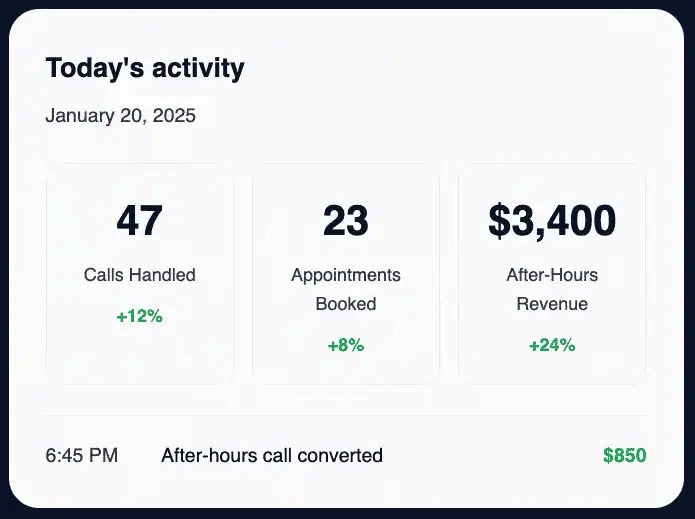
- Feature: Reports on per-location volumes, conversion, booking rate, after-hours revenue, and missed-call recovery.
- Benefit: Enables you to make business decisions based on data-backed summaries and reports without the need for complex data interpretation.
Limitations of AI Phone Answering Services
AI answering services can handle many routine calls, but they cannot replace human answering services for conversations that require judgment and empathy. Common limitations include:
- Speech-recognition errors: Noise, poor connections, names, accents, and industry terminology can affect accuracy.
- Limited judgment: AI may struggle with emotional, unusual, high-risk, or policy-sensitive conversations.
- Integration dependence: Scheduling, record updates, and workflow automation work only when the required systems are properly connected.
- Knowledge gaps: Incorrect or outdated business information can produce incomplete responses.
- Escalation failures: Poorly designed routing rules may transfer callers to the wrong person or leave them without a useful next step.
- Privacy and compliance requirements: Recording, transcription, data retention, consent, and outbound calling rules vary by location and industry.
- Usage-based costs: High call volume, long conversations, live-agent transfers, and overages can increase the monthly bill.
Run a pilot with real call scenarios before moving all inbound traffic. Test routine questions, interruptions, unclear requests, emergency language, upset callers, appointment changes, and requests the AI must refuse or escalate.
How to Test an AI Phone Answering Service
Run several test calls before directing customer traffic to the service. Check how it handles names, addresses, background noise, interruptions, unclear questions, and requests outside its knowledge base.
Next, run a limited pilot using real calls with the required permissions. This shows how the service performs with real call volume, not just prepared demonstrations. Check whether it captures information correctly, follows routing rules, and transfers complex conversations to the right person.
Natural-sounding voices are important, but voice quality should not decide your choice. The service must also understand callers, complete tasks correctly, and provide a human safety net when needed. Businesses handling sensitive or unpredictable calls may prefer platforms that combine AI with human receptionist services.
Metrics Businesses Can Improve With AI Answering Services
AI phone answering services also help businesses improve operational efficiency, customer responsiveness, and conversion-related metrics. Some of the most important KPIs are mentioned in the table below.
| Metric | How AI answering service help |
|---|---|
| Missed-call rate | Answers calls instantly 24/7 without relying on staff availability |
| Lead response time | Reduces delays by responding to callers immediately |
| Appointment booking rate | Automates scheduling and follow-up workflows |
| After-hours conversions | Captures leads and customer inquiries outside business hours |
| Call abandonment rate | Reduces hold times through faster routing and automated handling |
| Receptionist workload | Automates repetitive questions and routine call tasks |
| Customer satisfaction (CSAT) | Improves responsiveness, consistency, and availability |
| No-show rate | Sends automated reminders and confirmations |
| Average speed of answer (ASA) | Reduces wait times by handling calls immediately |
| First-call resolution (FCR) | Resolves common customer requests without transfers or callbacks |
| Call handling efficiency | Automates data collection, routing, and basic support tasks |
With these metrics, businesses can measure the operational and customer service impact of AI-powered call automation over time.

How Much Does an AI Answering Service Cost?
The cost of an AI answering service depends on call volume, included usage, integrations, phone numbers, locations, and workflow complexity. Providers may charge per call, minute, interaction, user, or location. Most AI answering platforms offer a mix of entry-level plans, enterprise packages, predictable pricing, or custom pricing depending on call volume and workflow complexity.
The only provider worth considering is not necessarily the one with the lowest starting price. Compare included calls or AI-enabled minutes monthly, overage rates, setup fees, live-agent transfers, texting charges, and integration costs. Businesses with high call volumes or advanced requirements may need to contact sales for custom pricing.
3 Best AI Phone Answering Services for 2026
The best AI phone answering service depends on the features and support your business needs. Some providers offer a standalone service, while others include AI call handling as part of a full phone system. The three options below suit different business requirements.
| Service | Best for | Starting price | Pricing model | Key strength |
|---|---|---|---|---|
| Nextiva XBert AI Receptionist | Businesses combining AI with phone, text, and chat | $99/month for 100 resolved interactions | Per resolved interaction | Unified customer communications |
| Smith.ai | Businesses that want optional human backup | Free for 25 calls; paid plans from $150/month | Per call | AI-first answering with live-agent escalation |
| Slang AI | Restaurants and hospitality groups | $399/month per location | Per location | Restaurant reservation integrations |
Plans, usage allowances, and additional charges may change. Check each provider’s pricing page for current details.
Below are the best AI answering services offering online virtual receptionists in detail:
1) Nextiva with XBert AI receptionist
Best overall for small and midsize businesses.
Nextiva’s XBert AI receptionist combines advanced voice AI with unified communications. It answers calls, books appointments, routes inquiries, and sends SMS follow-ups all in one platform. With two-way calendar sync, CRM integration, and real-time call summaries, it can reduce unanswered calls and keep AI-handled conversations documented in the platform.
When a caller needs human assistance, XBert collects the relevant information and transfers the conversation to the right employee with context. Teams can review transcripts, summaries, customer details, and performance reports from the same platform.
XBert also connects with calendars, CRMs, and business applications. These integrations support appointment scheduling, record updates, confirmations, and follow-up workflows.
Key Features:
- Unified phone, chat, and SMS system
- Automated callback scheduling service
- 24/7 coverage with smart call flows and routing
- Conversation transcripts, summaries, and performance reports
- Measurable ROI through missed-call recovery and reduced no-shows
Pricing details
The $99 monthly subscription includes up to 100 resolved calls, texts, or chats. Additional resolved interactions cost $0.99 each. The plan includes assisted onboarding, performance reports, and core AI receptionist features. Nextiva does not require a long-term contract and offers a 30-day money-back guarantee.
Pros and Cons
 Pros
Pros
Handles customer conversations across phone, text, and web chat in one platform
Qualifies leads, books appointments, sends reminders, and supports follow-up workflows
Transfers complex calls with context and provides transcripts, summaries, and reports
 Cons
Cons
Additional interactions cost extra after the monthly allowance
Advanced call flows and integrations require initial configuration
May offer more features than businesses needing basic message-taking require
Ideal for: Service businesses, franchises, and teams ready to modernize their front desk.
Why it wins: Unified phone/SMS/CRM, 24/7 coverage, and measurable ROI through missed-call recovery data.
2) Smith.ai
Best for lead qualification and human backup use cases.
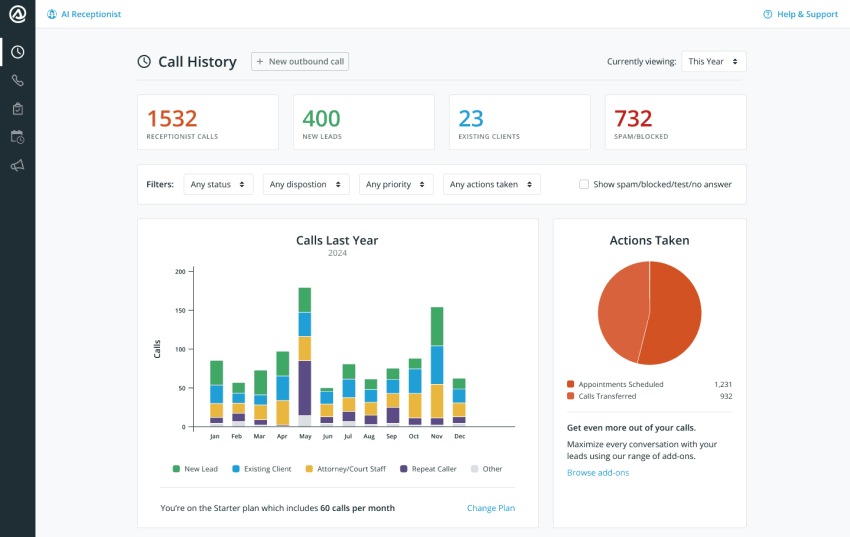
Smith.ai blends AI call handling with optional live customer support. It’s strong in lead screening, intake, and sales-focused conversations. If you wish to use an AI answering system for some queries and humans for others, there’s a hybrid option for a best-of-both-worlds approach.
The service includes spam screening, a dedicated phone number, call recordings, transcripts, summaries, and call history. It also connects with tools such as Calendly, Clio, and Zapier. Live-agent involvement is available as a per-call add-on. Businesses should include this additional charge when comparing plans.
Key Features:
- Strong lead qualification tools
- Local or toll-free phone numbers
- 24/7 AI answering with optional live-agent escalation
Pricing details
The free plan includes 25 calls per month, followed by a $3 charge for each additional call. The starting paid plan includes 75 calls, with additional calls charged separately. Live receptionist involvement also costs extra. Self-service plans are month-to-month, although Smith.ai requires 30 days’ notice for cancellation.
Pros and Cons
Pros
Combines AI answering with optional live receptionist support
Supports lead qualification, appointment scheduling, and call routing
Offers a free plan and connects with tools such as Calendly, Clio, and Zapier
Cons
Live receptionist involvement costs extra
Per-call pricing can become costly as call volume grows
The free plan has a limited monthly call allowance
Ideal for: Legal, home services, and sales teams that value human backup for complex calls.
3) Slang.ai
Best for hospitality and reservations businesses.
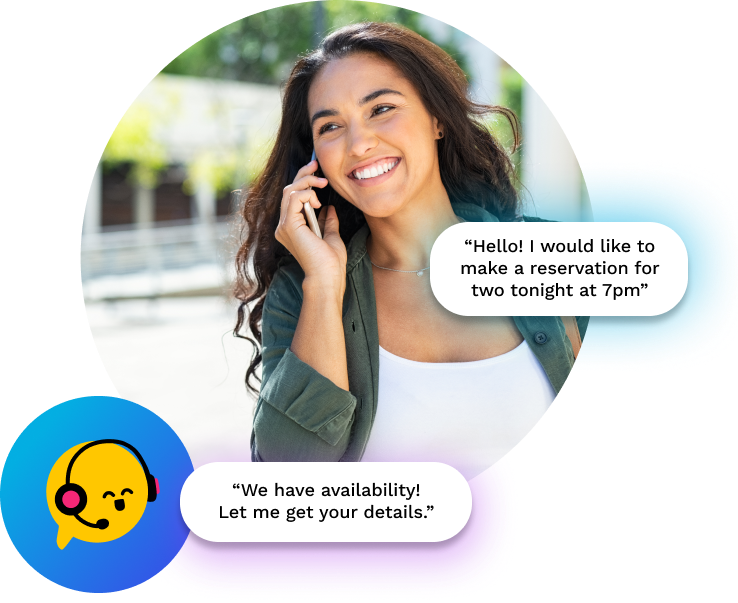
Slang.ai is tuned for restaurants and hospitality businesses. It answers customer calls within seconds, takes reservations, manages waitlists, and integrates with popular booking platforms.
Claiming to save 200+ hours per month, it’s a good option for busy restaurants that often lose potential covers due to missed calls.
Key Features:
- Friendly, natural-sounding AI voice
- Seamless reservation and menu handling
- Easy setup for multi-location venues
Pricing details
Slang AI charges per business location. Its Core plan covers reservation management, text confirmations, call recordings, summaries, and reservation integrations. The Premium plan starts at $599 per month per location and adds features such as custom branding, real-time alerts, and multi-location insights. Enterprise plans use custom pricing and may include tailored workflows, integrations, reporting, and support.
Pros and Cons
Pros
Handles restaurant reservations, menu questions, and common guest requests
Connects with leading restaurant reservation platforms
Provides text confirmations, call summaries, and reservation insights
Cons
Has limited relevance outside restaurants and hospitality
Pricing applies separately to each location
Advanced features require higher-priced plans
Ideal for: Restaurants, cafes, and event spaces managing high call volumes.
Nextiva: More Than Just a Voice Bot
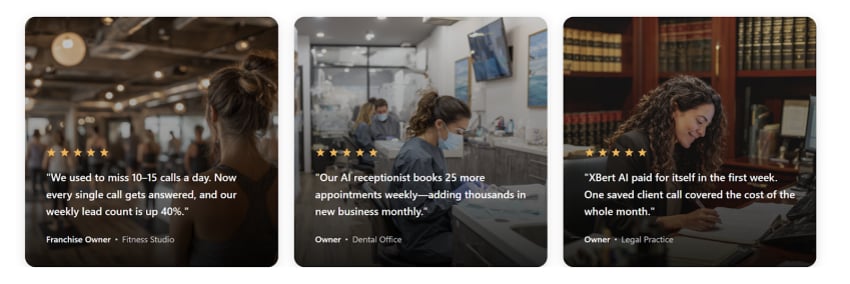
An AI phone answering system should do more than pick up the phone or take voicemails. The right solution greets callers in natural language, understands intent, books appointments, and escalates seamlessly with complete context.
We’re talking about completing the entire call and satisfying your caller’s reason for calling, without human intervention, where possible.
When integrated with your calendar and CRM, it becomes a measurable growth lever that captures missed opportunities, reduces manual work, and delivers a consistent brand voice in every customer interaction.
If you’re missing calls, you don’t know the potential loss (or lack of gain). Making one simple change could uncover revenue opportunities, improve customer satisfaction, and free up staff.
As a Quo Sona alternative, growing businesses should consider XBert AI with Nextiva’s UC platform to answer calls instantly, follow through across phone and text, and show tangible gains in booking rate, after-hours revenue, and customer satisfaction without adding headcount.
Struggling to answer every phone call? Check out XBert AI Receptionist here.
Stop losing customers to missed calls
Every missed call is a lost opportunity. XBert answers, qualifies, and routes calls when your team can’t.
AI Phone Answering Service FAQs
Most AI answering services, like Nextiva’s XBert, use high-fidelity voice synthesis that sounds incredibly natural. However, industry best practice (and evolving regulations) suggests being transparent. A simple greeting like, “Hi, I’m the AI assistant for [Business Name]. How can I help you today?” sets the right expectations while still providing a seamless experience.
AI answering services have built-in recovery logic. If the AI is confused, it’ll ask a clarifying question or offer a menu of options. If it still can’t resolve the issue, it triggers a warm handoff to a human teammate, providing them with a full transcript of what has already been discussed.
An AI phone answering service can be secure and support HIPAA-compliant workflows, but not every provider, plan, or configuration does. Review encryption, access controls, recording settings, data retention, audit logs, and subprocessors. Healthcare organizations should confirm that the provider will sign a Business Associate Agreement and that the AI service, integrations, and intended workflows fall within it.
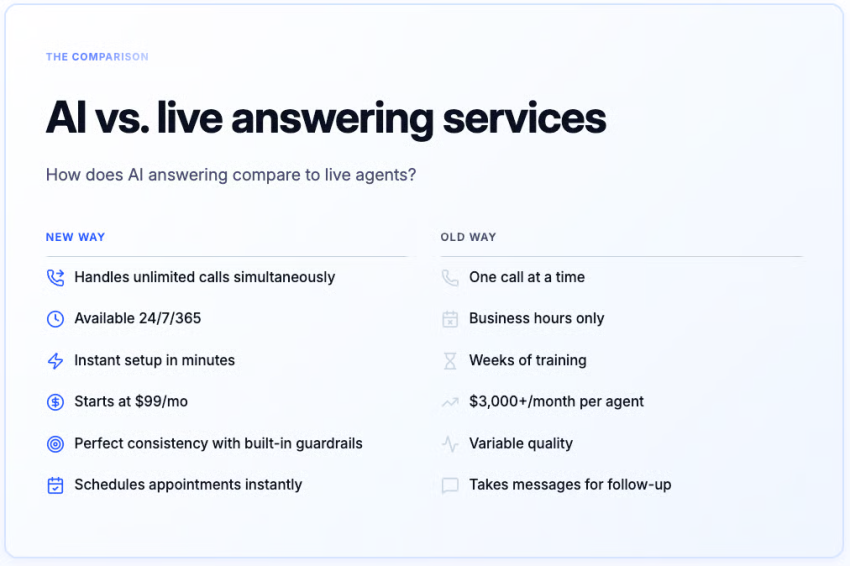
Human answering services: Typically cost between $200 and $600+ per month, often with per-call or per-minute surcharges.
AI phone answering services: Usually start between $15 and $99 per month. Because AI doesn’t need breaks, overtime, or insurance, the ROI is significantly higher, especially for businesses that receive a high volume of after-hours calls.
Yes. Modern AI phone answering services can automate both inbound and outbound communication workflows. Along with answering calls, they can send reminders, schedule callbacks, confirm appointments, run follow-up campaigns, and perform missed-call recovery outreach automatically. This helps businesses improve response times, reduce manual work, and maintain consistent customer engagement.