VoIP
 Blog
 Business Communication
 Customer Experience
 Leadership
 Marketing & Sales
 Nextiva News
 Productivity



When an unfamiliar, out-of-state phone number appears on your customer’s phone, you’re likely to get screened, or worse, end up in the depths of their voicemail. Local businesses should dial using phone numbers in the areas they serve for trustworthy, reliable contact.
Local business phone numbers solve that. With a cloud phone system, you can have a business phone number in any city without a physical office, a landline, or a lease there.
People are wary of unknown callers for good reason. U.S. consumers received more than 4 billion robocalls in October 2026 alone, about 130 million a day, according to the YouMail Robocall Index. An area code they don’t recognize gives them one more reason to ignore your call.
What Is a Local Business Phone Number?
A local business phone number is a regular 10-digit number with an area code tied to a specific city or region, such as 602 for Phoenix or 214 for Dallas. A virtual local number, often called a virtual number, looks the same to the caller, but it runs over the internet, so it isn’t tied to a phone line at a physical address.
For growing businesses, that means you choose the market, and calls ring wherever your team works.
How virtual local numbers work
A virtual phone number lives with your phone provider instead of a copper wire at one address. When someone calls it, incoming calls ring on whatever device your team uses, whether that’s a mobile app, a laptop, or a desk phone.
That opens up simple options for small businesses and remote teams. One salesperson can have numbers in three cities. A five-person service team can share one local number, so whoever is free picks up. And when someone leaves the company, the business phone number stays put instead of moving to a personal cell phone.
Local, toll-free, and vanity numbers
Local numbers use a city or regional area code and tell callers you’re nearby. Toll-free numbers start with codes like 800, 888, 877, and 866. They’re free for the caller and suggest a national business.
Vanity numbers spell a word or phrase, like 1-800-FLOWERS. They can be local or toll-free, so they’re a branding choice on top of the other two.
In this short video, Jake from our team walks through local, toll-free, vanity, and virtual numbers, and explains why many businesses start with a local number and add a toll-free or vanity number later.


Your Local Number Quick-Start Checklist
Work through these six tasks in order, from picking area codes to protecting your caller ID.
| Task | What to do | Time it takes |
|---|---|---|
| 1. Pick your area codes | Choose codes where your customers are, not where your team sits | A few minutes |
| 2. Get or port your numbers | Pick new local numbers, or move the ones customers already know | New numbers usually work within hours; porting usually takes 5 to 10 business days |
| 3. Set up call routing | Decide who answers, set business hours, and add a simple phone menu | About an hour |
| 4. Register before you text | Start business texting registration through your provider | Often 10 to 30 business days |
| 5. Protect your caller ID | Register your outbound numbers for free and follow calling best practices | Under an hour |
| 6. Use one number everywhere | Put the same local number on your website, Google Business Profile, and listings | Under an hour |
Why Local Numbers Get Answered
People answer calls they expect or recognize. A familiar area code looks like a neighbor, a local business, or the callback they asked for. An unfamiliar one looks like a stranger, and after years of robocalls, people screen strangers. That’s why local numbers matter so much for home services businesses, real estate agents, and clinics that win work by area.
More answered calls and callbacks
Local presence calling means showing a number on outgoing calls with an area code that matches the recipient. A sales rep in Denver calling a Dallas prospect shows a 214 or 469 number instead of a 303, usually through a local presence dialer.

Callbacks matter too. When someone sees a missed call from a local number and calls back, that call reaches your team directly.
Only show numbers your business owns or rents through its phone service provider. Showing a number you don’t control is caller ID spoofing, which is illegal when done to defraud or cause harm, and it damages your reputation with carriers.
Local trust and local search
Use the same local number on your website, your Google Business Profile, and your directory listings. Keeping your business name, address, and phone number consistent across the web is a long-standing local SEO best practice, and it helps customers and search engines recognize your business.
If you use separate numbers to track marketing campaigns, keep your main listing number the same everywhere, and use tracking numbers only on ads. Our caller ID reputation guide covers how to keep every number you use trusted.
A fast answer matters as much as the number
A local number gets the customer to call, but how quickly you answer decides whether you keep them. In our Customer Patience Benchmark survey of 400 consumers, people expected a reply to a call, text, or ticket within five minutes. When a business missed that window, 56% said they immediately tried another channel, and 28% walked away from the product or service entirely.
So routing, texting, and voicemail-to-text matter as much as the area code.
Local vs. Toll-Free Numbers: Which Fits Your Business?
| Local number | Toll-free number | |
|---|---|---|
| Tells callers | You’re a nearby business | You’re a national brand |
| Best for | Local sales, service areas, local search, and outbound calls | National support lines and advertising |
| Who pays for the call | The caller pays standard rates (usually free on a cell plan) | Your business pays for incoming minutes |
| Business texting | Needs 10DLC registration | Needs toll-free verification |
| Typical cost | Usually included with a business phone plan | Often an add-on or a minutes bundle |
For most growing businesses, I recommend using both. Give each market its own local number, and use local numbers for outbound calls. Then add one toll-free number for national support or ads. Keep them all on the same phone system so call routing, history, and reports stay in one place.
Nextiva includes local numbers on every plan, and toll-free business numbers are available as an add-on or included on higher plans.
How to Keep Your Phone Number From Being Flagged as Spam
A brand-new number that makes lots of calls quickly can get flagged by the spam-detection services phone carriers use. Once a phone shows “Spam Likely” above your number, your local area code stops helping.
Registration helps, but it won’t fix everything. In a First Orion case study published in September 2026, businesses that had registered their numbers with First Orion reported that their calls still go unanswered 45% of the time, on average. Three things keep a number clean: a provider that verifies your calls, good calling habits, and registering before you text.
Use a provider that verifies your calls
Phone carriers use a system called STIR/SHAKEN to confirm that a call comes from the number shown. The Federal Communications Commission (FCC) required carriers to adopt it starting in 2021, with extra time for small providers.
Adoption still isn’t complete. In an October 2026 report, U.S. PIRG Education Fund found that only 42% of phone companies have finished installing the required technology.
Make business calls from numbers your business holds through a provider that fully supports STIR/SHAKEN, so your calls carry the highest level of verification.
Follow caller ID best practices
Verification confirms a call comes from your number, but spam-detection services also watch how you call. Protect your caller ID reputation with three habits:
- Register your outbound numbers. The Free Caller Registry sends your business details to First Orion, Hiya, and TNS, three of the main call-protection companies, at no cost. It doesn’t guarantee how your calls are labeled, but it gives those services context.
- Follow calling rules. Check your lists against the National Do Not Call Registry, honor opt-out requests right away, and call during reasonable hours.
- Check your numbers regularly. Call a few phones on different carriers each month to see how your number appears. First Orion’s free business registration now includes a Watchlist that shows whether your numbers were tagged as spam on T-Mobile’s network in the past 24 hours.
Register before you text customers
If you plan to use business text messaging from a local number, register first. In the U.S., businesses that send texts from a regular 10-digit number must register through their provider with The Campaign Registry, a process called 10DLC registration. Carriers have blocked unregistered business texts since February 1, 2025.
In Nextiva, you start registration from the admin portal, and approval typically takes 10 to 30 business days. You can’t text from that number until it’s approved, so start the day you get it.
Toll-free numbers have their own verification process.
How Much Do Local Business Phone Numbers Cost?
Most small businesses don’t buy business numbers one at a time. The number usually comes with a per-user phone plan, and extras like toll-free minutes and texting registration have their own fees.
| Cost item | What to expect |
|---|---|
| Phone plan with a local number | Nextiva starts at $10 per user per month on the Go plan (billed annually), with unlimited calling in the U.S. and Canada |
| Toll-free number | An add-on on Go; the Business plan includes one toll-free number and 2,000 minutes, and CX includes three numbers and 10,000 minutes |
| Business texting | Included texts grow by plan, from 50 to 500 to unlimited messages per user per month |
| 10DLC registration | Small one-time registration fees plus a monthly campaign fee (about $10 at The Campaign Registry’s base rate), passed through by your provider |
| Hardware | Optional: mobile and desktop apps work without a desk phone |
| Number porting | Free with every Nextiva plan |
Nextiva offers volume discounts for businesses that need dozens or hundreds of numbers. Compare plans on the Nextiva pricing page.
How to Get Local Phone Numbers for Business in 4 Steps
You can usually start using a new local number in less than 10 minutes. The process with Nextiva takes four steps:
- Choose a provider. Look for local numbers in every area code you need, free porting, business texting, and mobile apps on the same plan.
- Pick a new number or move an existing one. Search for available numbers by area code, or start a port request for a number you already have.
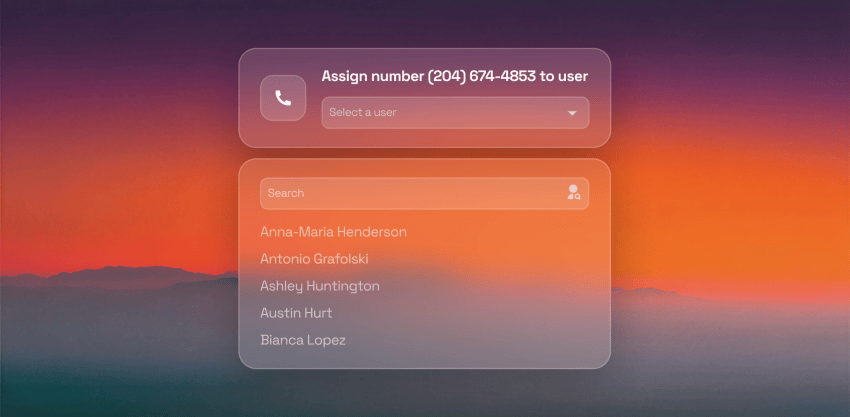
- Set up call routing. Assign numbers to people or teams, set your business hours, and set up an auto attendant, a simple phone menu, so after-hours callers reach voicemail or useful options.
- Download the apps. Install the mobile and desktop apps so your team can call and text from the business number on any device.
New to business phone service? Start with our guide to getting a business number.
Choosing an area code
Pick the area code where your customers are, not where your team sits. A Tucson customer wants to see 520, even if the person answering is in Phoenix.
Many big cities use several area codes for the same area, and any of them looks local. Manhattan uses 212, 332, 646, and 917. Chicago uses 312 and 773, with 872 covering both. Dallas uses 214, 469, 945, and 972, and Los Angeles uses 213, 323, and 738. One account can hold numbers in many area codes, each routed to the right team.
New area codes keep appearing as numbers run out. The 465 area code started serving New York City’s outer boroughs in June 2026, according to the North American Numbering Plan Administrator.
A local number can also go to work before a new location opens. Mike Priest, who owns 10 Aqua-Tots Swim Schools locations across five states, reserves a local number for each new site ahead of the grand opening. His team uses it in marketing and forwards calls to the general manager’s phone through the Nextiva app until the site is ready, according to our Aqua-Tots customer story.
Moving a number you already have
If customers already know your existing number, keep it. Porting moves the number from your old carrier to your new provider.
You’ll need a Letter of Authorization (LOA), signed by the number’s current owner, that approves the move. A recent bill or Customer Service Record (CSR) from your current carrier also helps because it shows the exact name, address, and account number on file. If those details don’t match your carrier’s records, they can reject the request, which adds time.
At Nextiva, porting typically takes 5 to 10 business days, or two to four weeks if a request is rejected and resubmitted. Keep your old service active until the move is complete, and set up call routing in your new account first so calls keep coming in the moment the number moves.
Weigh porting against getting a new phone number:
 Pros
Customers, listings, and printed materials keep working with the number people already know
Porting is free with every Nextiva plan
Calls keep flowing if you set up routing in your new account first
 Cons
Porting usually takes 5 to 10 business days
Requests get rejected when your details don’t match your carrier’s records
You need to keep your old service active until the move is complete
Features to Look For on a Local Business Line
When you compare providers, look for these features on the phone system behind your local number:
- Call routing and an auto attendant. Business-hours rules and an auto attendant route calls to the right person or a helpful message.
- Ring groups. One number rings several people at once, so a small team can cover a market without a receptionist.
- Two-way texting. Customers can text the same local number they call.
- Mobile and desktop apps. Remote staff can make business calls and texts from the business phone number instead of a personal cell phone, and call forwarding sends calls to any device.
- Voicemail transcription, call recording, and call reports. Missed calls show up as text for quick follow-up, and reports show which markets are calling.
- Field service connections. A ServiceTitan integration lets your team see jobs and appointments without leaving Nextiva.
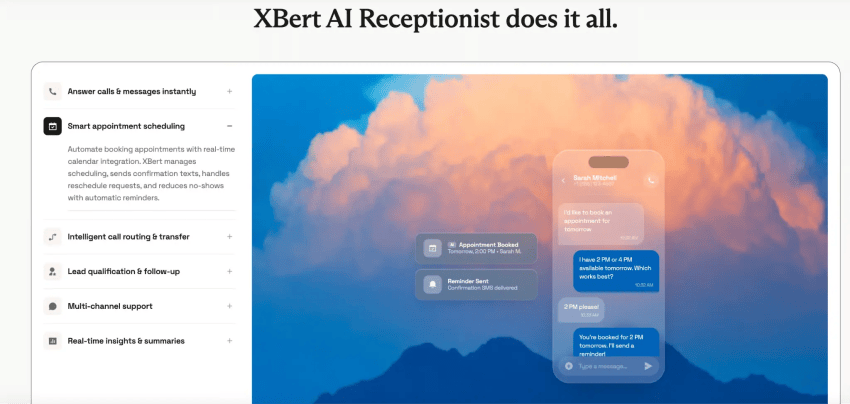
- AI call answering. An AI receptionist like Nextiva XBert can pick up your local number when your team is busy or after hours, answer common questions, and route urgent calls to a person.
Local First Arizona, a coalition of nearly 3,000 Arizona businesses, used several of these features when it switched to Nextiva in 2015. Staff relied on voicemail-to-email, extensions, and a phone menu so they could work away from their desks. The whole switch took 10 days, including porting.

“Everything was smooth. There were no headaches!”
Thomas Barr
Get a Local Number in Any Market With Nextiva
Whether you serve one city or several, a local number gives people a reason to answer, and the business phone system behind it helps you keep them.
Nextiva gives you local numbers in the area codes you need, free number porting, unlimited calling in the U.S. and Canada, business texting, and mobile and desktop apps, all backed by 99.999% uptime. Plans start at $10 per user per month, and more than 100,000 businesses trust Nextiva.
Get a local number with Nextiva and start answering calls in every market you serve.
Get a local number in every market you serve.
Local numbers in the area codes you need. Business calls and texting plans start at $10/month.
Frequently Asked Questions About Local Business Numbers
A local number usually comes included with a per-user phone plan. In late 2026, Nextiva plans start at $10 per user per month on the Go plan, billed annually, with a local number, unlimited calling in the U.S. and Canada, and free number porting. Extra numbers for new markets are priced per number, with volume discounts for larger orders. See current plans on the Nextiva pricing page.
Yes. A virtual local number works in any area code, and you don’t need an office, a lease, or a landline in that city. Calls ring on your team’s mobile app, desktop app, or desk phone wherever they work, and one account can hold numbers in many area codes. Learn how a virtual phone number works.
A local number is usually the better first choice for local sales, service areas, and outbound calls, because people are more likely to answer a familiar area code. A toll-free number works well for national support lines and advertising, but you pay for incoming minutes. Many businesses use a local number for each market plus one toll-free business number for national calls.
At Nextiva, porting typically takes 5 to 10 business days, or two to four weeks if a request is rejected and resubmitted. To avoid delays, make sure the name, address, and account number on your request match your current carrier’s records, and keep your old service active until the move is complete. Our guide to porting a number walks through each step.
Yes. U.S. carriers have blocked business texts from unregistered 10-digit numbers since February 1, 2025. Your provider submits your business for 10DLC registration with The Campaign Registry, and approval typically takes 10 to 30 business days, so start as soon as you get the number. Our 10DLC registration guide covers the steps.