

 Customer Experience
  Blog
Blog  Business Communication
  Leadership
  Marketing & Sales
  Nextiva News
  Productivity
  VoIP
VoIP 


Call centers have come a long way from rows of agents answering phone calls. Today’s teams operate more like cloud-based contact centers, supporting customers across voice, chat, email, social, and messaging—often with hybrid or distributed agents.
So what do call center trends look like in 2026? The big shifts are less about adding new channels and more about upgrading the engine underneath: AI receptionists, conversational AI, and agent assist, better-performing self-service, smarter routing, flawless omnichannel customer support, and tighter coordination between CX, operations, and security.
In the list below, we’ll break down the call center trends that matter most—plus quick tips on how to adopt each trend so you can actually improve your efficiency and productivity.
1. AI and Automation Go Mainstream
This, of course, is one of the top call center trends. AI technology: so hot right now. And rightfully so. AI and automation do wonders in call centers — for customers, employees, and businesses. AI enhances customer satisfaction by delivering quick, accurate answers to inquiries, reducing wait times, and eliminating the frustration of misrouted calls. Automated responses and processes can handle routine interactions, such as FAQs or basic troubleshooting, allowing human agents to focus on more complex and high-value tasks.
A few areas to highlight in AI call center trends include:
- Agent assist: An AI assistant that speeds up call wrap-up time and offers real-time transcription and summarization.
- First-contact resolution: Automating the initial customer interaction streamlines processes and saves valuable time.
- Task automation: Repetitive tasks like data entry or follow-up emails are managed by AI, boosting agent productivity.
- Intelligent routing: Directs customers to the most appropriate agent or department.
- Conversational AI and generative AI: Enables 24/7 customer support via AI chatbots that provide natural, human-like conversations.
- AI receptionists: A voice-based assistant that uses NLP to answer calls in a conversational manner, route inquiries, schedule appointments, and respond to FAQs in real time. Nextiva’s XBert AI is one such example.

What’s even better: AI-powered systems are more accessible to businesses of all sizes, with AI as a Service (AIaaS) vendors making it happen at affordable prices.
How to adopt this call center trend:
- Start small: Launch AI for your top 10 repetitive contact reasons and define “handoff to agent” rules for anything high-stakes.
- Train + track: Coach agents on how to validate AI outputs and monitor a weekly KPI set (containment, AHT, FCR, CSAT) to guide iteration.
2. Omnichannel Experiences Are In-Demand
Customers expect seamless, convenient support no matter where, when, or how they engage with your business. The ability to interact across multiple channels — such as phone, live chat, social media, email, or even SMS — without losing context is a key metric for customer satisfaction.
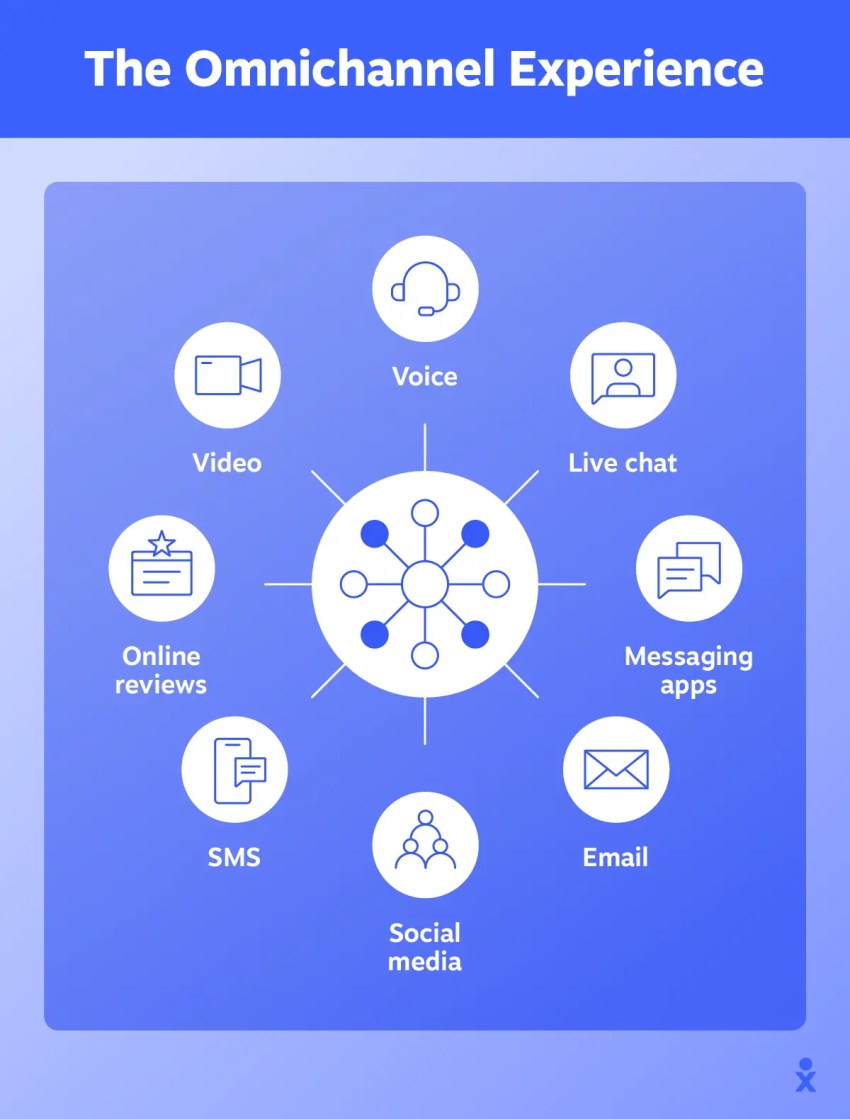
Adopting a unified customer experience management (CXM) platform makes it easier to deliver omnichannel customer service. This software consolidates interactions across channels into a single, unified view, providing agents with data, such as customer history and preferences. This allows your support agents to deliver personalized support and consistent experiences.
How to adopt this call center trend:
- Map your top 5 customer journey end-to-end (billing issue, delivery problem, password/login, cancellation, product support) and identify where customers switch channels—then fix the handoffs (clear next step, consistent messaging, no “start over” moments).
- Unify channels into one queue + one customer record by connecting voice, chat, email, SMS, and social to your CRM/helpdesk so agents see conversation history, context, and sentiment—and set routing rules based on intent, priority, and skills (not just “first available”).
3. Remote Work and Virtual Agents Are Rising
Having a remote workforce isn’t just one of our call centers trends — it’s a permanent part of the call center industry. Call centers are shifting to hybrid models, combining remote agents with Intelligent Virtual Agents (IVAs) to optimize efficiency. For businesses, remote work offers increased flexibility for agents, enhancing work-life balance and improving employee retention. It also opens up the talent pool during the hiring process.
For customers, virtual agents — powered by AI and machine learning — handle routine inquiries, delivering fast, reliable responses at any hour. This frees human agents to focus on more nuanced, complex issues requiring a human touch. This hybrid approach allows call centers to reduce operational costs while still delivering high-quality, 24/7 customer support.
How to adopt this call center trend:
- Standardize the remote agent stack (CCaaS softphone, VPN/SSO + MFA, password manager, secure endpoint management, approved headsets) and ship a “day-one setup” checklist so every agent has the same baseline.
- Operationalize remote performance with clear schedules/WFM, coaching cadences, and remote-friendly SOPs (screen-sharing for support, escalation paths, outage comms, and knowledge base usage standards).
4. Customer-Centric Strategies Are Gaining Importance
Prioritizing the customer experience is now the service standard. Taking a customer-centric approach means focusing on personalizing interactions to meet each customer’s preferences and unique needs at every touchpoint. Customized interactions—such as personalized offers, tailored support, and individualized responses—make a lasting impact, boosting customer loyalty.
Here’s how businesses can strengthen customer-centricity:
- Offer digital channels: With more customers choosing digital channels, it’s important to provide seamless support across mobile apps, websites, and social platforms.
- Offer self-service options: Empower customers to find their own solutions via knowledge bases, FAQs, and AI chatbots.
- Offer mobile-first support: Ensure your support is optimized for mobile, giving customers the flexibility to get help on the go.
How to adopt this call center trend:
- Close the feedback loop: Tag contacts by reason, collect CSAT after key interactions, review top drivers weekly, and assign owners + deadlines for fixes (policy, product, process, or training).
- Train empathy as a skill, not a vibe: Give agents 2–3 approved de-escalation frameworks, require “acknowledge + clarify + confirm” call flow, and coach using real call clips tied to outcomes (CSAT, FCR).
5. Data-Driven Insights Are Shaping Operations
Data-driven decision-making helps businesses optimize their call center. Leveraging real-time voice analytics enables call centers to gather deep insights into both customer behavior and agent performance. Analyzing historical customer interactions can uncover patterns, preferences, and pain points. These insights help businesses understand what’s working and where improvements can be made, driving better overall results.
For example, AI-powered sentiment mapping allows businesses to detect and respond to shifts in customer emotions during a call, whether they’re growing frustrated or feeling satisfied. This allows agents to make real-time adjustments based on that customer sentiment, improving the outcome of the interaction.
How to adopt this call center trend:
- Implement AI-powered reporting and analytics tools (like Nextiva analytics) to transcribe and analyze interactions across voice and digital channels, then surface themes like repeat contact reasons, sentiment shifts, and escalation triggers.
- Turn insights into experiments: Pick one metric that’s off, identify the top 1–2 drivers (by queue/issue/channel), run a 2-week change (routing, staffing, scripts, KB updates), then measure impact.
6. Self-Service Solutions Are Growing
What do customers want? Fast and convenient service. Offering self-service solutions helps businesses accomplish this. As customer expectations evolve, many now prefer to resolve issues on their own without needing to wait in a call queue for an agent.

AI-powered chatbots and virtual agents can now handle a wide range of customer inquiries — from answering basic questions to complex troubleshooting steps. These tools give customers the autonomy to find solutions independently, reducing wait times and improving satisfaction.
A few benefits of expanding self-service options include:
- Increased agent productivity: With routine tasks handled by AI, agents can focus on more complex or high-value interactions.
- Reduced operational costs: Fewer inquiries needing agent assistance means lower resource demand.
- Faster resolutions: Customers get the answers they need quickly, without sitting on hold.
How to adopt this call center trend:
- Build self-service around your top contact reasons: Publish “how-to” + troubleshooting articles, add guided flows (forms/decision trees), and make escalation to an agent simple and fast.
- Keep it current: Assign knowledge base owners and update articles weekly based on search terms, deflection gaps, and repeat contacts.
7. Security and Compliance Are Non-Negotiable
Customers understand that businesses collect their data — and trust that it’s being protected. However, data breaches are rising, ensuring call center security and compliance is more important than ever. Call centers handle large amounts of sensitive customer information, making robust security measures non-negotiable.
Advanced digital security protocols, like end-to-end encryption and firewall protection, are important to safeguard customer data against unauthorized access. In addition to these measures, voice biometrics is gaining traction as a secure method for verifying customer identities. This technology uses the unique characteristics of a customer’s voice for authentication, adding a second layer of protection.
Compliance with regulations such as GDPR and CCPA is also a priority. Ensuring that data privacy laws are upheld builds trust with customers and helps businesses avoid hefty fines.
To stay ahead of the curve, call centers should focus on:
- Regular audits to maintain compliance
- Implementing AI-powered tools to monitor for potential breaches in real time
- Training agents on best practices for data security and compliance
How to adopt this call center trend:
- Set AI and data guardrails: Define what data AI can access, mask sensitive fields (PCI/PII), log AI actions, and require human approval for high-risk actions (refunds, account changes, cancellations).
- Run security checks routinely: Quarterly access reviews, regular vulnerability scans/pen tests, and tabletop exercises for breach/outage scenarios—especially for remote endpoints and third-party integrations.
8. Employee Experience and Well-Being Are Being Prioritized
When employees are happy, those good vibes show in the service they deliver. Call centers are emphasizing the employee experience, creating a supportive, engaging work environment that boosts morale and increases agent performance and retention.
To prioritize employee well-being, call centers can offer flexible work options, ongoing training, and mental health support to create a positive work environment. Businesses can reduce turnover, boost job satisfaction, and enhance customer experiences by focusing on these areas.
Another way call centers are doing this is by using AI-powered call center burnout detection. These tools monitor patterns such as increased stress levels or decreased productivity, allowing managers to step in and provide support before burnout sets in. Businesses are investing in agent development programs that ensure employees have the tools and skills to succeed.
How to adopt this call center trend:
- Build a skills path with outcomes: Create role-based learning tracks (new hire → proficient → specialist), tie training to measurable goals (FCR, QA score), and schedule protected learning time.
- Use gamification transparently: Set team goals that reward quality (QA/CSAT) as much as speed, rotate challenges monthly, and make rules visible so it doesn’t feel arbitrary.
- Make recognition specific and timely: Recognize behaviors you want repeated (great de-escalation, perfect documentation, proactive follow-up), and pair shout-outs with meaningful rewards (schedule preference, micro-bonuses, development opportunities).
9. Emerging Technologies Are Increasingly Important
Staying innovative and keeping up with new technologies is set to reshape call centers, offering new ways to streamline operations and enhance customer experiences. IoT (Internet of Things) and connected devices are becoming more popular, enabling real-time data sharing across different systems. This gives agents the information they need to provide quicker, more accurate solutions.
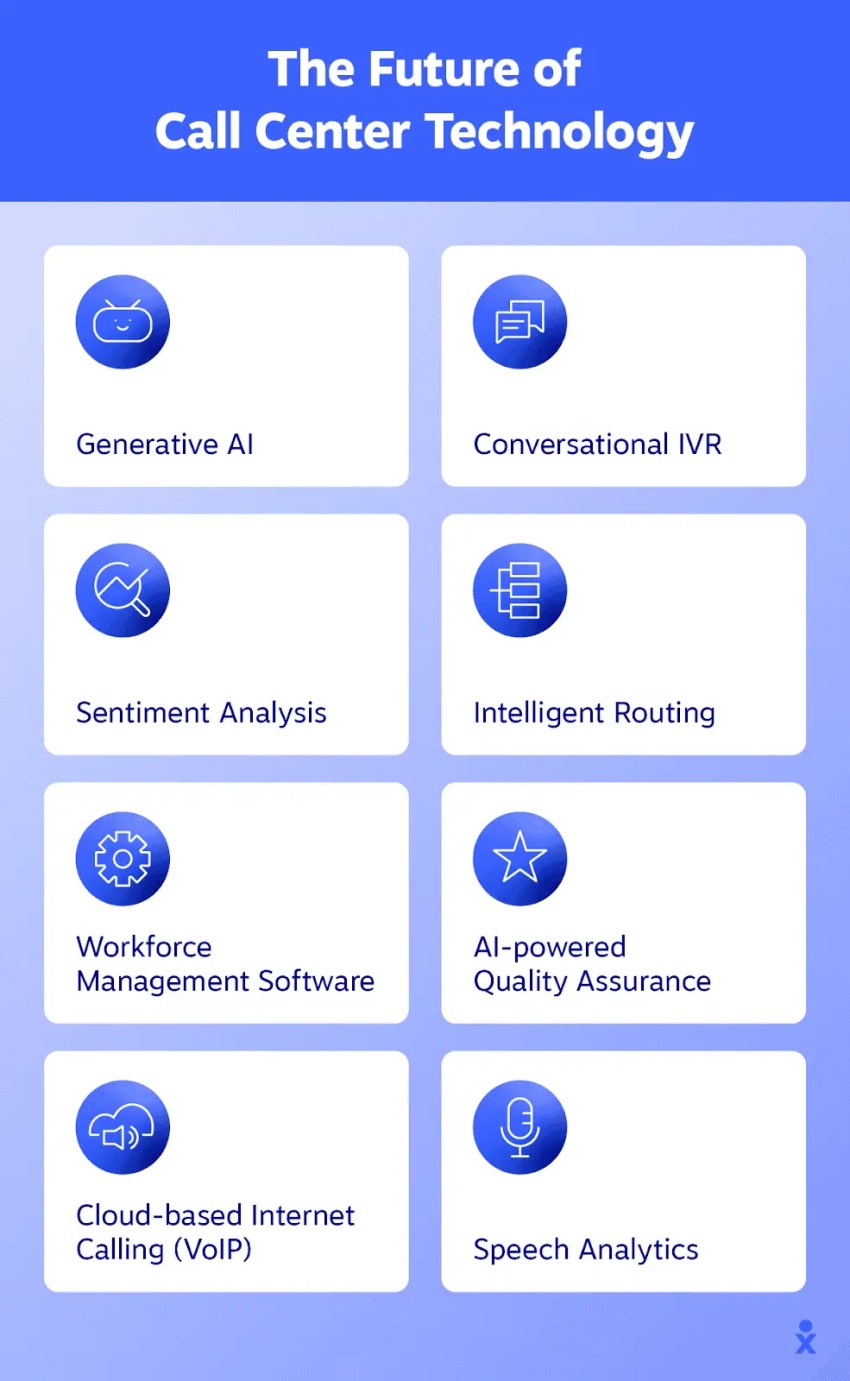
Shifting to cloud-based contact centers is another of our tech call center trends. Cloud technology offers increased scalability, allowing businesses to quickly adapt to changes in demand or business needs more easily than with physical technology. Not only does this improve flexibility, but it also supports distributed workforces, enabling teams to operate seamlessly from different locations while reducing operational costs.
How to adopt this call center trend:
- Create a “test and prove” pipeline: Pilot one new capability at a time with a small group, define success metrics, and scale only after it beats baseline performance.
- Choose SaaS that integrates cleanly: Prioritize tools with strong APIs, prebuilt CRM/helpdesk integrations, SSO, and admin controls—so you can deploy fast without creating a brittle tech stack.
10. Sustainability and Social Responsibility Are Key Focuses
Customers are looking for more than just exceptional service — they want to align with brands that prioritize sustainability and social responsibility. Call centers that adopt eco-friendly practices, such as reducing energy consumption or minimizing paper waste by shifting to digital documentation, can reduce their environmental footprint and build stronger loyalty among environmentally conscious customers.
Beyond sustainability, supporting social initiatives and engaging in community outreach programs can help strengthen your brand reputation. Whether participating in charitable events or offering resources to underserved communities, these efforts demonstrate a commitment to social responsibility that resonates with customers.
How to adopt this call center trend:
- Choose 1–2 causes that align with your customers and values and commit to a concrete annual plan—donations, volunteer hours, or pro-bono support—so it’s sustained, not just a one-off campaign.
- Operationalize it inside the contact center: Reduce waste (paperless workflows), optimize remote/hybrid policies, offer paid volunteer time, and choose vendors with credible sustainability practices where possible.
11. Quality Assurance Is Crucial for CX
Call center quality assurance (QA) remains one of the top priorities for businesses striving to deliver exceptional customer experiences. Through continuous monitoring of customer interactions, businesses can identify key areas for improvement, helping agents refine their communication skills and problem-solving abilities.
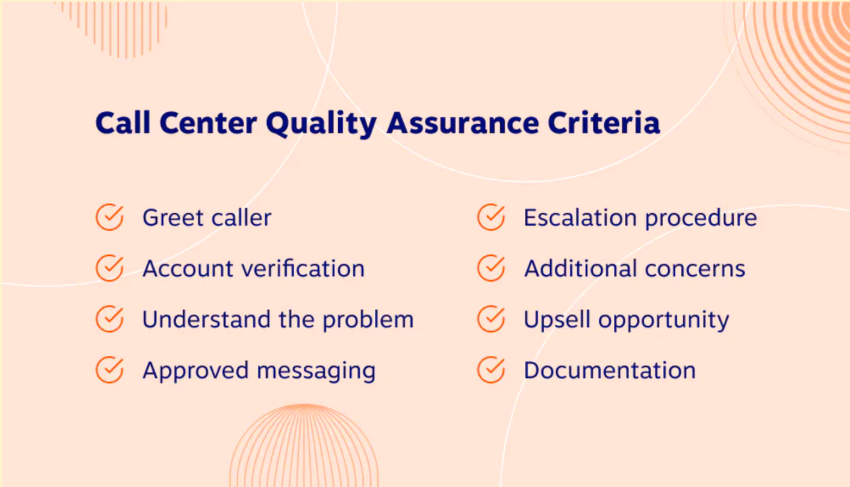
Regular call audits are a key aspect of an effective QA strategy. Analyzing call recordings enables managers to provide targeted feedback to agents, helping them improve over time. This boosts performance and also ensures customers receive consistent, top-notch service, regardless of who they speak with.
How to adopt this call center trend:
- Move from sample-based QA to targeted coverage: Use AI-powered QA tools to flag high-risk interactions (escalations, compliance language, negative sentiment), then prioritize reviews where they matter most.
- Turn QA into coaching loops: Define 5–7 scoring categories, calibrate weekly across team leads, and require a coaching action for low scores.
12. Call Center Outsourcing Is Becoming an Attractive Option
Last but not least in our list of call center trends is outsourcing. Look into call center outsourcing trends and ensure that they can handle a massive influx of calls, optimize your operations, and manage costs effectively. Partnering with a reputable outsourcing provider allows businesses to quickly scale their support operations to meet changing demand without adding headcount to your in-house customer service team.
One of the key advantages of outsourcing is flexibility. Businesses can leverage the experience and infrastructure of outsourcing partners to expand or contract their service capacity as needed, providing a seamless experience for customers even during peak times.
To ensure successful outsourcing, businesses should:
- Define clear Service Level Agreements (SLAs): Clearly outline expectations around performance, response times, and customer satisfaction.
- Choose the right outsourcing partner: Look for outsourcing providers with a proven track record in your industry and expertise to meet your needs.
- Implement ongoing monitoring and management: Regularly track the outsourcing partner’s performance to ensure they meet quality and efficiency benchmarks.
When done right, outsourcing can be a cost-effective way to maintain high service standards, increase operational agility, and focus internal resources on core business functions.
How to adopt this call center trend:
- Choose partners based on fit, not just price: Evaluate industry experience, security/compliance posture, language/coverage needs, and their ability to integrate with your CRM, KB, and QA standards.
- Prioritize effective communication, training, and expectations: Establish a shared operating cadence, provide structured onboarding with your product, policies, and brand voice, and run regular QA calibrations so outsourced agents deliver a consistent customer experience across every channel.
Embrace Innovating Call Center Trends With Nextiva
The call center trends we’ve covered provide an intelligent path to boosting business growth and improving customer service. With customer expectations at an all-time high, relying on disconnected tools just won’t cut it.
Nextiva’s AI call center solution makes it easy for businesses of all sizes to deliver fast, personalized support. Try it today and set yourself up for success today with the contact center of the future.
Top AI-Powered Contact Center Solution
Transform your customer interactions with a contact center platform that saves you time and money, reduces agent and supervisor stress, and flexibly adapts to fit your needs.