

 Customer Experience
  Blog
Blog  Business Communication
  Leadership
  Marketing & Sales
  Nextiva News
  Productivity
  VoIP
VoIP 

For most businesses, the call center is a high-stakes environment. It’s the frontline of customer experience, yet it can be plagued by long wait times, burnout, and repetitive friction.
Call center leaders are no longer asking whether they should use AI; they are asking how to use it to thrive.
According to our CX Trends Report, 92% of businesses are already using AI, but few describe their usage as mature. This gap offers a tremendous opportunity to use AI not only to automate routine tasks but also to transform call centers from reactive cost centers into proactive revenue sources.
Here’s how AI call centers are becoming all the rage, the technologies powering them, and how you can implement AI in your call center effectively.
Try the best AI answering service free for 14 days
XBert AI answers questions and captures leads. Add your 24/7 answering service in minutes.
What Is an AI Call Center?
An AI call center is a customer service operation that uses artificial intelligence to automate business communications, assist live agents, and analyze data to improve the customer experience.
In practice, an AI-based call center doesn’t replace your team. It adds as an intelligent layer to your customer service, connecting your phone system (VoIP) and CRM, and performing three main functions:
- Understanding intent: Using Natural Language Processing (NLP), it figures out why a customer is calling.
- Automating routine tasks: Handles repetitive queries (FAQs, password resets) without human intervention.
- Assisting human agents: Provides real-time answers and coaching to live agents during complex calls.

AI Call Center vs. Traditional Call Center
| Feature | Traditional Call Center | AI Call Center |
|---|---|---|
| Availability | Limited (9-5 or requires night shifts) | 24/7/365 |
| Wait times | High during peak hours | Low (AI scales instantly) |
| Routing | Linear queue | Predictive (routes based on history/sentiment) |
| Quality assurance | Manual (managers review 1-2% of calls) | Automated (100% of calls scored by AI) |
| Agent Focus | Repetitive tasks (data entry, FAQs) | High-value tasks eEmpathy, complex solving) |
| Cost Model | High (headcount-dependent) | Efficient (scalable tech costs) |
How Is AI Changing Call Center Operations?
An AI call center doesn’t replace humans with bots, but rather supports them and minimizes friction in customer support. Here’s how it changes traditional workflows:
Automates repetitive tasks
In a traditional call center, agents spend hours answering questions and performing routine tasks such as categorizing calls, summarizing notes, and resetting passwords. AI automates these workflows, using:
- Call logging: AI listens to the call and automatically updates the CRM with details from customer conversations.
- Callback scheduling: Instead of waiting on hold, customers can request a callback, which the AI schedules and assigns to the next available agent to speed up resolution times.
Offers 24/7 scalability and saves costs
Intelligent virtual agents (IVAs) handle first-level customer inquiries and support requests (e.g., regarding order status or opening hours) just as smoothly at 2:00 a.m. as at 2:00 p.m. This allows companies to instantly scale their support volume without affecting pricing or making a significant investment in hiring and training temporary staff.
Provides predictive intelligence
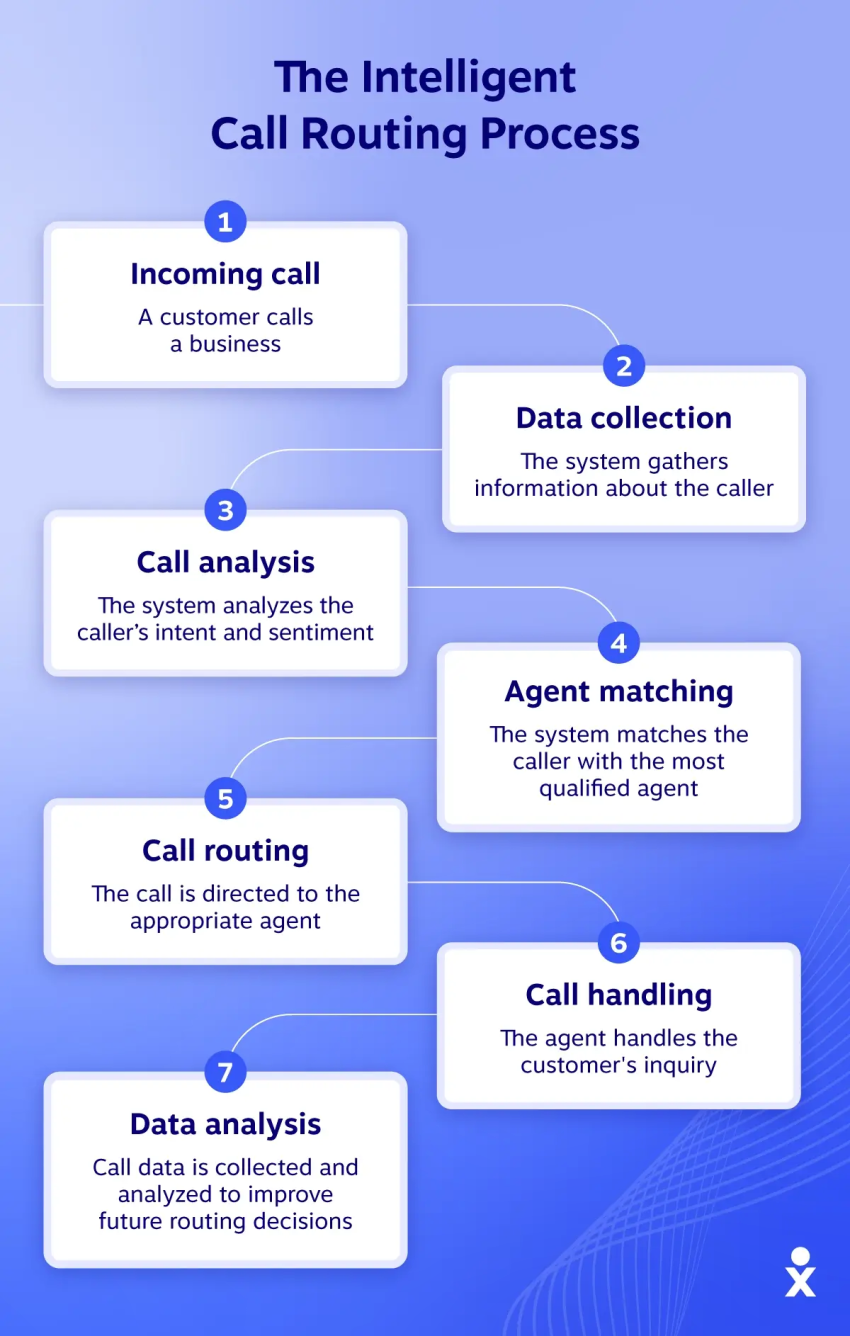
Traditional call routing leaves customers in a queue. AI-powered call routing connects them directly to the right agent who can troubleshoot issues faster. By analyzing the phone number, call history, and customer sentiment, AI call centers predict why customers are calling and connect them to the agent best suited to resolve their issue.
Key AI Technologies Powering Today’s Call Centers
The following key technologies power AI call centers:
Natural language processing (NLP) & understanding (NLU)
NLP enables the AI system not only to transcribe words but also to understand the intent. It can distinguish between “I want to cancel my appointment” and “I want to cancel my check,” ensuring that the request is routed to the correct department.
Machine learning (ML) for routing & sentiment
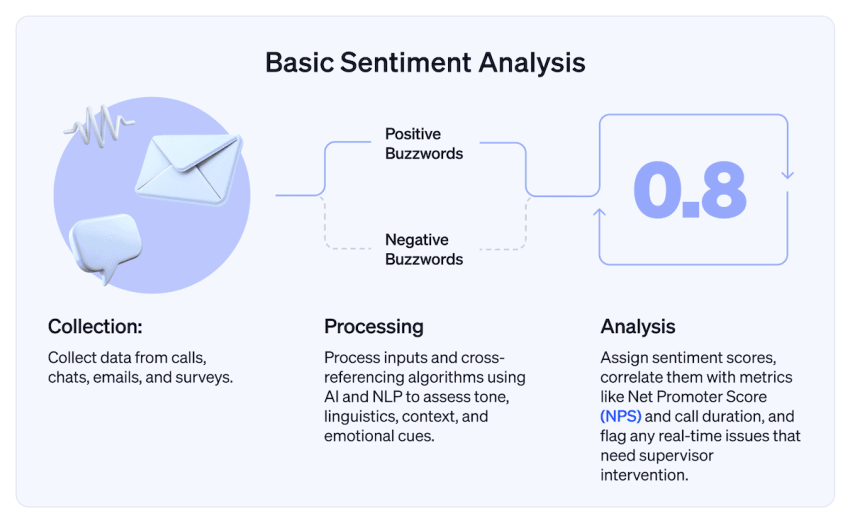
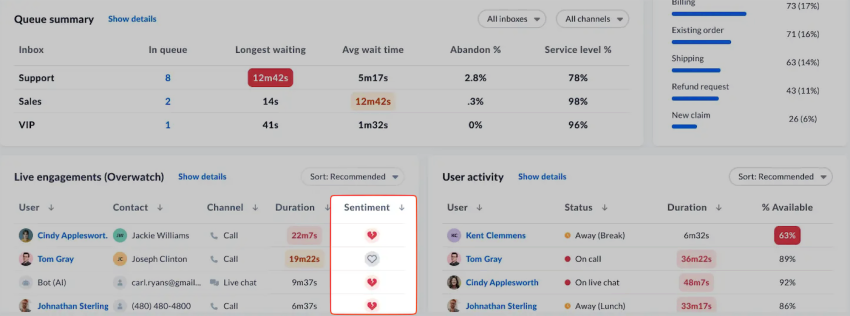
Machine learning allows the AI call center to improve over time. It analyzes past calls to identify which employees are best at closing sales and which are best at handling disgruntled customers, and routes future calls accordingly. It also monitors sentiment in real time and notifies supervisors if a conversation takes a negative turn.
Generative AI & LLMs
The latest generation of AI (such as ChatGPT) is now integrated into call centers. Generative AI supports agents by suggesting answers to complex questions in real time, instantly reading all company policy documents, and summarizing the answers for quick assistance.
Benefits of Using AI in Call Centers
Reputed businesses like Klarna and Bank of America are investing millions in AI. Why?
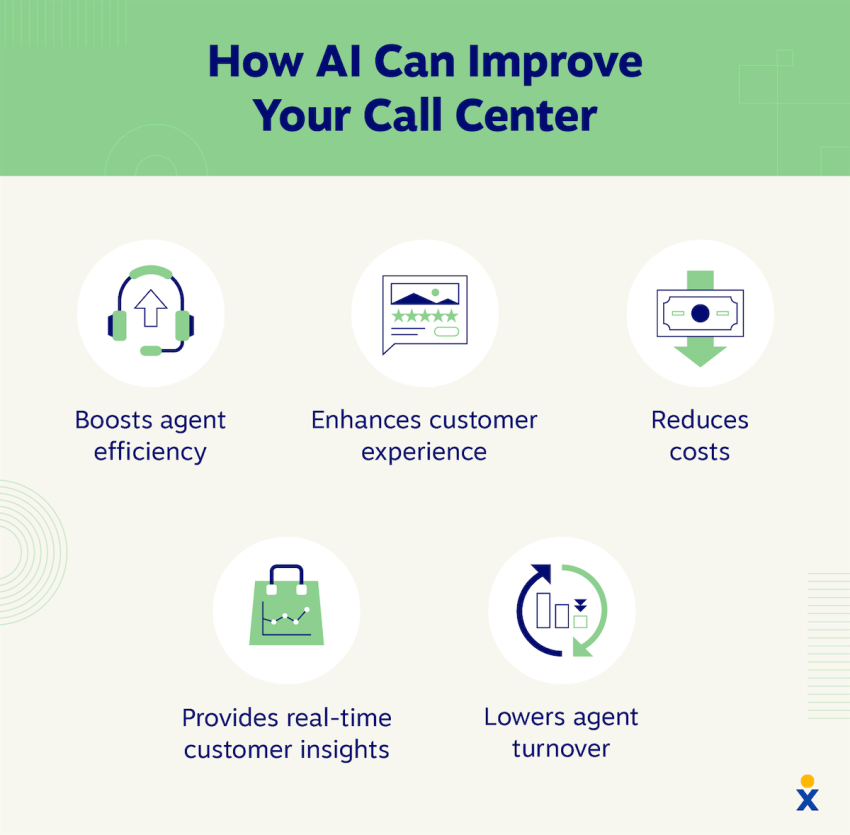
- Eliminated wait times: AI chatbots and IVAs can handle unlimited concurrent calls, so customers don’t always hear a busy signal.
- Hyper-personalization: AI pulls CRM data instantly, allowing the system to greet a caller by name and ask about their recent purchase, creating personalized experiences.
- Reduced operational costs: By automating Tier-1 support (30-50% of call volume), businesses save massive amounts on labor costs.
- Better visibility: Instead of guessing why customers are churning, AI analytics transcribes and categorizes every conversation to show key trends.
Use Cases of AI in Call Centers
Many leading companies are using AI to drive massive operational changes. Here are specific examples of how different industries are applying this technology to get real results.
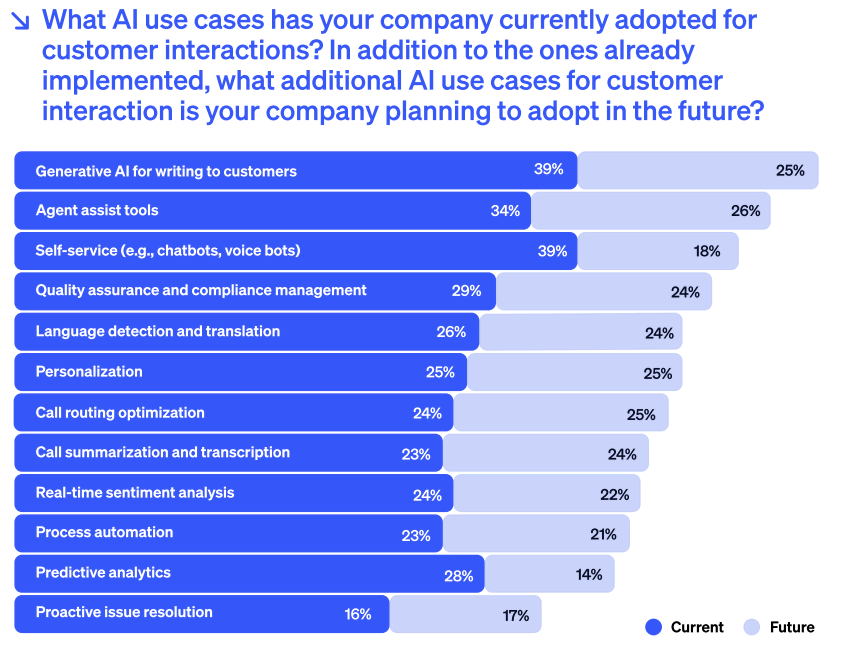
1. Finance and Fintech banking on the Klarna effect
In 2024, Klarna launched an AI assistant powered by OpenAI to handle customer service chats directly in its app. Here are the benefits realized:
- Volume: Klarna’s AI now handles two-thirds of all customer service chats (2.3 million conversations in the first month).
- Speed: The average handling time dropped from 11 minutes to under 2 minutes.
- Efficiency: AI is performing the work of 700 full-time employees, resulting in estimated annual profit increases of $40 million.
- Accuracy: Repeat inquiries decreased by 25%, meaning the AI correctly resolved the issue the first time.
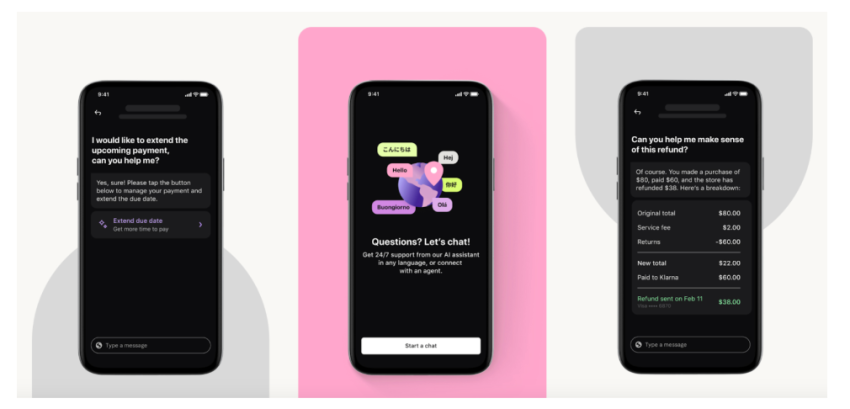
Another excellent example is Erica from Bank of America, which has already recorded over 1.5 billion interactions. It not only answers questions but also proactively notifies customers about duplicate charges or upcoming subscription renewals, preventing millions of customer service calls before they even occur.
2. Airlines and travel automating empathy during disruption
Disruptions are the enemy of airlines. JetBlue partnered with 15below to streamline passenger communication during delays and cancellations using AI-driven automation. Instead of a standard text message like “flight canceled,” the system sends personalized notifications with rebooking options and compensation information. The results:
- Customer satisfaction: Despite the stress of delays, JetBlue was able to increase its Net Promoter Score (NPS) for affected customers by over 100 points thanks to proactive and helpful communication.
- Call avoidance: By instantly providing a self-booking link, JetBlue prevented thousands of panicked calls from flooding its reservation center and improved customer engagement
3. Healthcare using predictive sentiment analysis
Emotions play a key role in healthcare. Large insurance providers use AI-powered sentiment analysis (such as Cogito), which analyzes the customer’s tone of voice in real time. If a caller sounds distressed or an employee is tired, the AI displays a warning on the employee’s screen, prompting them to speak more slowly or show more empathy.
This AI-supported coaching helps defuse tense medical billing calls, reduce escalations to supervisors, and strengthen customer trust.
4. Cedar Financial leveraging AI for outbound sales
AI-based call centers enable sales reps to spend more time with promising leads and less time dialing dead-end numbers. Instead of agents manually retrieving a static list, AI improves sales performance.
Conversational AI for sales decodes CRM data and scores and prioritizes leads based on their likelihood of conversion. The system then uses a predictive dialer to connect agents with real prospects. This increases efficiency and morale while lifting conversion rates.
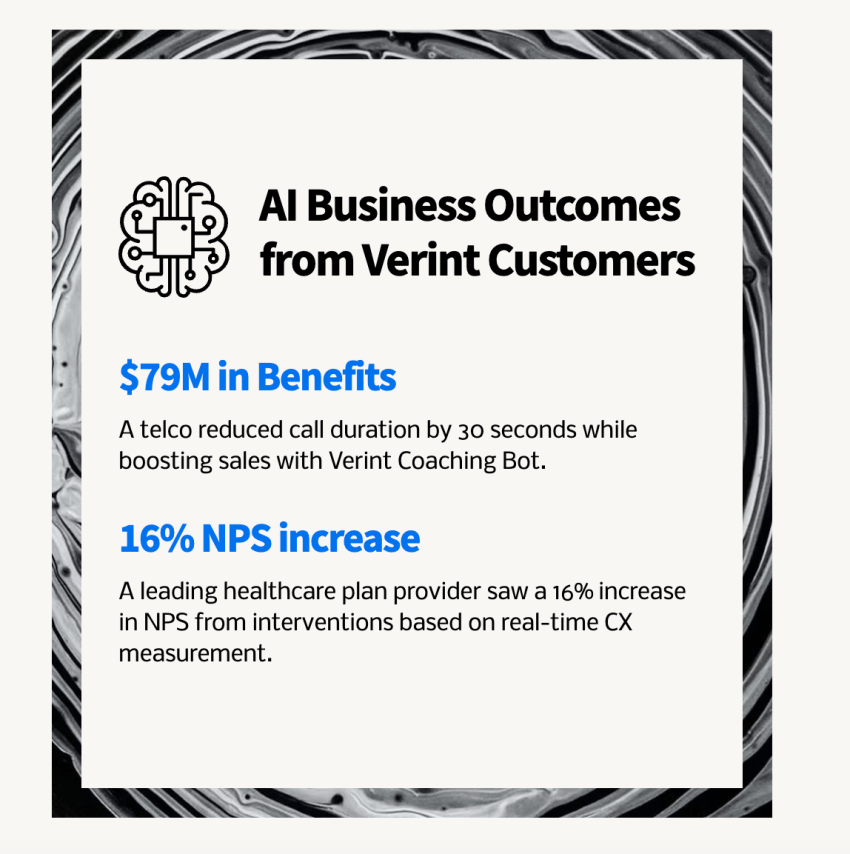
For Cedar Financial, using Nextiva increased outbound call volume through automated dialing. This increased call volume from 70 calls per day to 400, a 471% improvement. Moreover, this led to a 30% increase in agent-driven revenue.
5. NEBA increasing customer retention with AI
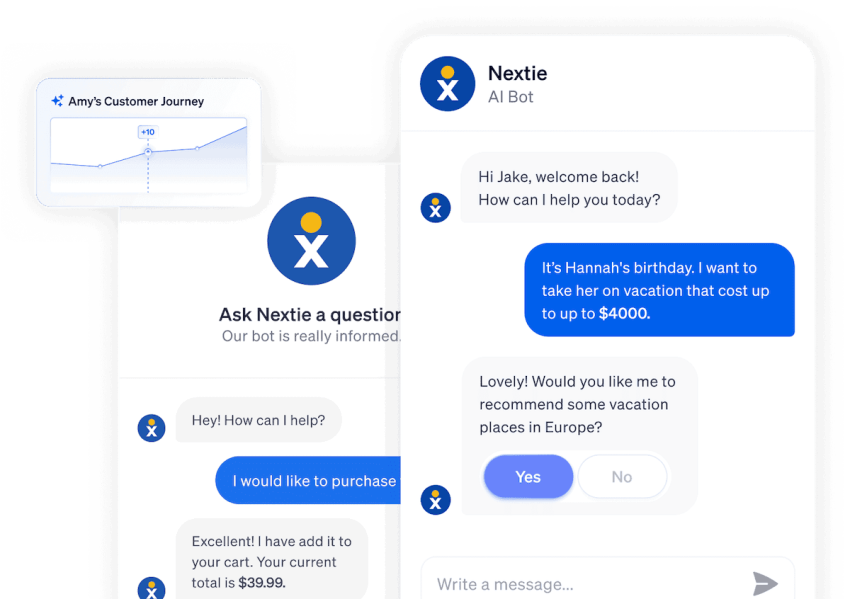
AI is also a powerful tool for customer retention. It recognizes tone of voice and word choice and conducts sentiment analysis to identify when a customer is dissatisfied or at risk of churn, even if they don’t explicitly express it. This can trigger a real-time alert to the agent or manager, allowing them to de-escalate the situation and salvage the customer relationship. Over time, this data helps you identify and proactively address the root causes of customer dissatisfaction.
National Employee Benefits Administrators (NEBA) sought to improve their members’ experience, ensure clear communication, stay connected, and quickly assist customers. Their previous system often dropped calls, leading to disconnections and frustration. After implementing Nextiva’s call center AI solutions, NEBA improved its answer ratios by 20% and reduced customer wait times, ultimately increasing member satisfaction.
How To Effectively Start and Run an AI Call Center
Building an AI call center requires a structured rollout, so you must plan each step carefully instead of switching everything on at once. A clear roadmap helps your team deploy the system with accuracy and maintain long-term stability.
Phase 1: Needs assessment and planning
Identify the problems you want AI to solve. Review your call logs and customer messages to see where delays and confusion occur. Check whether your CRM data is clean and complete, because AI tools depend on accurate history to personalize responses and recommend actions. Review your peak hours and list the three most common reasons people call, such as password resets, order updates, or billing questions. These give you the first tasks to automate.
Phase 2: Platform selection
Choose a unified customer experience platform that supports omnichannel communication instead of using several disconnected tools. A platform such as Nextiva brings voice, video, AI routing, and analytics in one system. This keeps workflows steady and reduces the risk of data gaps. Unified systems also make it easier to track performance and maintain quality standards.
Phase 3: Deployment and training
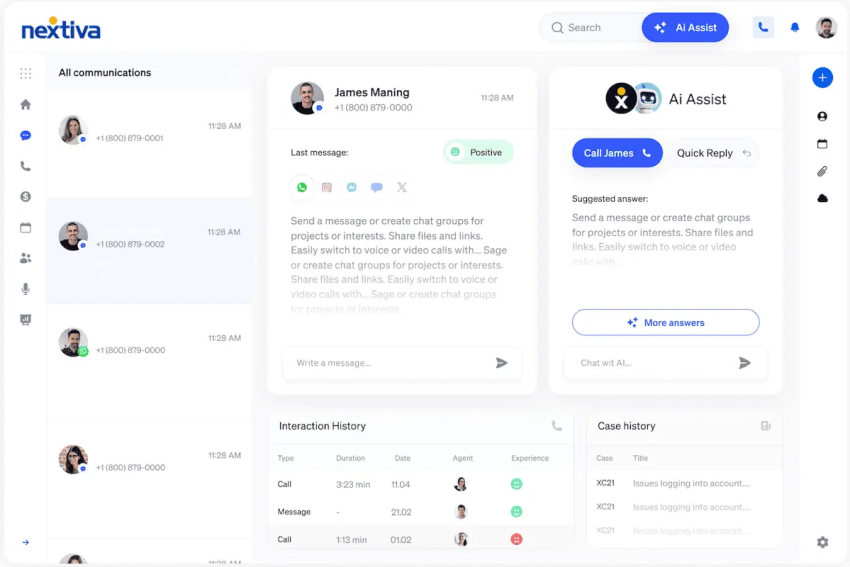
Introduce the system in a pilot program before expanding it. Start with one department, such as returns or billing, so you can observe how it performs with a small group. Train the AI with your knowledge base, FAQs, and past transcripts to help it understand your processes. Prepare your agents as well by showing them how to use agent-assist tools that surface answers, suggest next steps, and summarize conversations. Clarify that AI supports their work by reducing manual tasks.
Phase 4: Monitor and optimize
After you launch, track performance to confirm that the system improves your operations. Track your deflection rate to see how many inquiries the AI resolves without a human handoff. Monitor average handle time (AHT) as agents use AI tools to reach answers faster. Review sentiment scores to check whether customer satisfaction (CSAT) is improving. These metrics help teams refine automations, update knowledge gaps, and maintain a stable and productive AI call center.

Choosing the Right AI Call Center Software
The call center software market is highly competitive. Here are the top providers you should consider for implementing AI features in your call center.
| Vendor | Best for | Key AI features |
|---|---|---|
| Nextiva | Unified CX & reliability | AI call summaries, sentiment analysis, intelligent virtual agents, skill-based routing. |
| Genesys | Enterprise customization | Predictive engagement, workforce management. |
| Five9 | Outbound power dialing | Predictive dialing, AI-powered supervisor assist. |
| Talkdesk | Salesforce heavy teams | Deep integrations with Salesforce. |
| Dialpad | Real-time coaching | Live transcription and speech coaching. |
Hear why XBert AI is the best AI receptionist
XBert AI receptionist handles customer questions, captures leads, and books appointments. Try it free for 14 days.
Common Challenges When Implementing AI (And How to Fix Them)
Adopting AI comes with hurdles. Here are challenges you’ll come across and how to overcome them.
| Challenge | Impact on business | The solution |
|---|---|---|
| Data privacy concerns | Risk of leaking sensitive customer data. | Choose a vendor that is SOC-2 and HIPAA compliant (like Nextiva). Ensure data is encrypted at rest and in transit. |
| Robotic experience | Customers get frustrated by rigid menus and need human assistance. | Use conversational AI (NLP) rather than standard IVR menus. Allow for an easy escape hatch to a human agent. |
| Employee resistance | Agents fear that AI will take their jobs. | Think of AI as an assistant, not a replacement. Show it how to handle the tedious tasks (data entry) so you can focus on problem-solving. |
| Integration complexity | AI tools do not communicate with your CRM system. | Prioritize platforms with native integrations to Salesforce, HubSpot, and Zendesk. |
Best Practices for Implementing AI in Your Call Center
The difference between a failed AI rollout and a revenue-producing operation depends on how you implement it. Current industry standards show that a careful, controlled approach produces the strongest results. These best practices help you build a stable system and maintain customer trust.
1. Use a human-in-the-loop strategy (HITL)
Do not run your AI without supervision. Successful call centers depend on a human-in-the-loop model in which AI supports agents rather than replacing them. Configure tiered handoffs so the AI handles simple Tier-1 questions, such as FAQs or order updates, but transfers the conversation when it detects frustration or complex intent. Keywords like “cancel account” or lawsuit” should trigger an immediate handoff.
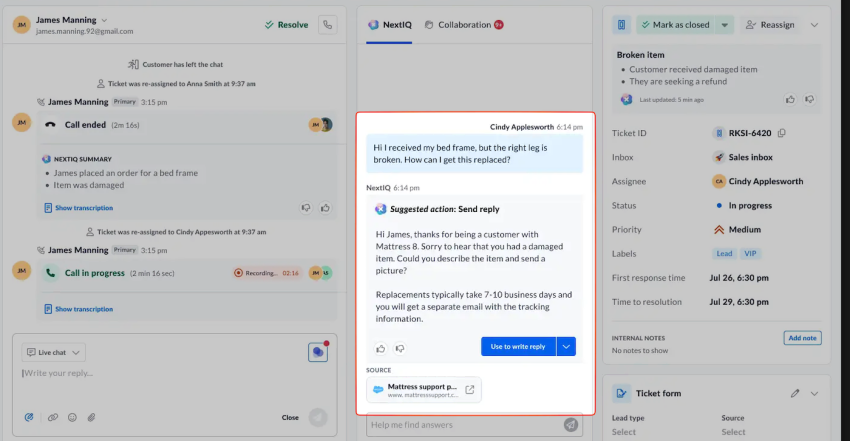
Use a co-pilot workflow to assist agents in real time. When a customer asks a question, the AI should suggest an answer on the agent’s screen. The agent reviews it, adds context, and sends the final message. This keeps the interaction accurate while preserving the human touch.
2. Start with a pilot instead of a full rollout
A gradual launch gives you better control and clarity. Begin with one channel, such as web chat or SMS, before introducing Voice AI. Text channels are easier to observe and correct, which helps you fine-tune your automations.
Next, target high-volume, low-value tasks. If a large portion of your calls ask for account balances or password resets, automate those specific intents first. Proving return on investment (ROI) with simple tasks lays the foundation for automating more complex workflows later.

👉 Ready to measure the impact? Try the ROI Calculator
3. Train your AI and your team
AI performance depends on the quality of your data. Audit your knowledge base before deployment and remove outdated or duplicate articles. Your help content should serve as a single source of truth.
Prepare your team as well. Some agents may worry about losing their roles, so explain how AI reduces repetitive work rather than replacing them. Show how agent-assist tools surface answers faster, reduce manual searches, and let them focus on higher-value calls such as sales or escalations. When agents understand the benefits, adoption improves.
4. Protect data and communicate transparently
With data leaks happening more often and customers becoming more cautious, maintaining trust has become a critical responsibility. Make sure your AI platform follows strict security standards, including encryption, access control, and data minimization. Tell customers when AI is assisting them and explain how their data is used. Clear communication builds confidence and strengthens your brand reputation.

2026 AI Call Center Trends
The possibilities of contact center AI solutions are constantly growing. While current AI systems primarily analyze data and automate tasks, the following AI technologies are improving customer care even further and are already in development.
- Generative AI in customer service: Gen AI customer service will move beyond analyzing data to creating human-like content. It can generate personalized emails, create dynamic call scripts for agents in real-time, and provide more sophisticated responses through virtual agents.
- Hyper-personalized experiences: AI will drive deeper levels of customer-specific interactions. For instance, a virtual agent could greet a customer by name, mention a recent purchase, and anticipate their needs based on recent activity.
- Proactive customer engagement: Instead of waiting for customers to reach out, AI will predict potential issues by analyzing data and trends. This allows for proactive support, such as sending helpful instructions or a support message before the customer even realizes they have a problem.

The Future of AI Call Center (2026 and Beyond)
Looking to the future, generative AI is the next big challenge. We’re moving towards hyper-personalization, where AI not only routes calls but proactively approaches customers even before they notice a problem.
The future belongs to businesses that combine the speed of AI with the empathy of human employees.
Nextiva’s AI-powered platform combines advanced routing, automation, and analytics into one easy-to-use suite.
Implement an AI call center without hassles. Try Nextiva.
Scale up with contact center AI
The best contact center has arrived. See how Nextiva delivers the best customer experience at scale.
FAQs
No, AI will not replace human skills; rather, they will augment them. Most AI-powered software is designed to automate routine tasks, freeing agents to focus on solving complex problems and building better customer relationships. This will add value to their work, not replace it.
The three most important benefits are:
Efficiency: Shorter average handling times and automated note-taking.
Scalability: 24/7 service without night shifts.
Insights: Analyzing all calls for sentiment and trends, rather than just one percent.
It doesn’t have to be challenging to implement an AI call center, as long as you have the right strategy and tools. A step-by-step approach helps, so start by defining your goals and implementing a few key features first. Choosing an AI tool that offers firm support, easy integration, and a user-friendly interface is key to a smooth, successful implementation.
In some cases, AI calling is illegal. In jurisdictions like the U.S., regulations classify AI voices as “artificial,” making unsolicited AI-powered marketing calls illegal without the recipient’s express written consent. While using AI for inbound customer service is permissible, outbound telemarketing requires strict adherence to rules on consent, disclosure, and providing opt-outs.