

 Customer Experience
  Blog
Blog  Business Communication
  Leadership
  Marketing & Sales
  Nextiva News
  Productivity
  VoIP
VoIP 

There’s no question that AI will transform customer service; it already has. 64% of business owners are convinced that AI improves customer relationships, and 85% of customer service leaders plan to pilot a customer-facing generative AI (GenAI) solution by 2026.
The shift from a customer support tool to core infrastructure is complete, with generative AI now serving as the backbone of customer service operations. In addition to ROI, implementing generative AI in customer support delivers immense business value, including cost savings, improved efficiency, and strategic advantages.
Gartner predicts that conversational AI deployments will reduce global contact center labor costs by $80 billion in 2026. For many customer service managers, however, the challenge lies not in the “why,” but in the “how.” How can they overcome the hype and achieve real ROI using generative AI in customer service? We’ll discuss that in this guide.
Where Do You Rank on the AI Maturity Curve?
Take the 5-minute assessment and get a personalized score and recommended next steps.
What is Generative AI?
Generative AI is a type of artificial intelligence that understands natural language, interprets customer intent, and generates original responses in real time. It uses context, company knowledge, and customer history to respond naturally and complete tasks.
In customer service, generative AI helps businesses provide personalized support across voice, chat, email, SMS, and social media. It can answer customer questions, maintain context throughout a conversation, retrieve relevant information, and take action without requiring customers to repeat themselves.
Modern generative AI systems combine several technologies, including:
- Large language models (LLMs)
- Natural language processing (NLP)
- Machine learning (ML)
- Retrieval-augmented generation (RAG)
- Conversational AI
While a traditional chatbot may provide a predefined answer, generative AI can understand customer intent, resolve issues, and take action in real time using the following workflow:
| Step | What happens |
|---|---|
| 1. Customer inquiry | A customer contacts support through chat, voice, email, SMS, or another channel. |
| 2. Intent detection | The AI identifies the customer’s request and reviews relevant context and conversation history. |
| 3. Information retrieval | The system pulls information from knowledge bases, CRM records, help articles, and internal documentation. |
| 4. Response generation | The LLM generates a response using verified company information and the customer’s specific situation. |
| 5. Action execution | The AI resolves the request or performs actions such as scheduling appointments, updating accounts, processing refunds, or routing inquiries. |
| 6. Human escalation | When a situation requires human touch or judgment, the AI transfers the conversation to an agent and passes along the full context. |
Why Use Generative AI in Customer Service?
Service teams face increasing contact volumes, rising operational costs, and pressure to improve customer satisfaction without continuously expanding headcount.
Generative AI helps businesses address these challenges by combining automation, personalization, and intelligence into a single customer service experience.
Meet customer expectations
Modern customers measure your support experience against the best digital experiences they encounter, whether those experiences come from your competitors or from other brands.
When you use generative AI, your business delivers instant responses 24/7, provides personalized support at scale, maintains context across channels, reduces customer effort during interactions, and offers proactive assistance before issues escalate.
It can also provide personalized recommendations based on previous purchases or customer behavior, helping businesses create more relevant customer experiences.
Improve operational efficiency
Generative AI can analyze customer intent, retrieve information, generate responses, and assist with workflows in seconds. This helps your business:
- Reduce average handle time (AHT)
- Increase first-contact resolution (FCR)
- Lower cost per interaction
- Improve agent productivity
- Scale support without proportionally increasing staffing or operating costs
Reduce repetitive work for customer support teams
Customer service agents usually spend a large portion of their day handling routine requests such as order tracking, appointment scheduling, password resets, and account updates.
Generative AI automates many of these repetitive interactions, allowing agents to focus on complex customer issues, escalations, customer retention efforts, relationship building, revenue-generating opportunities, and cases that require empathy and judgment.
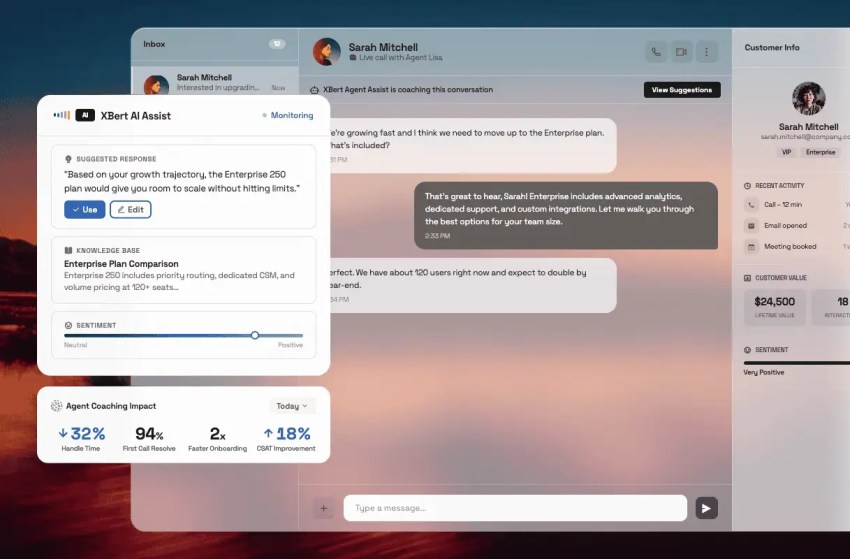
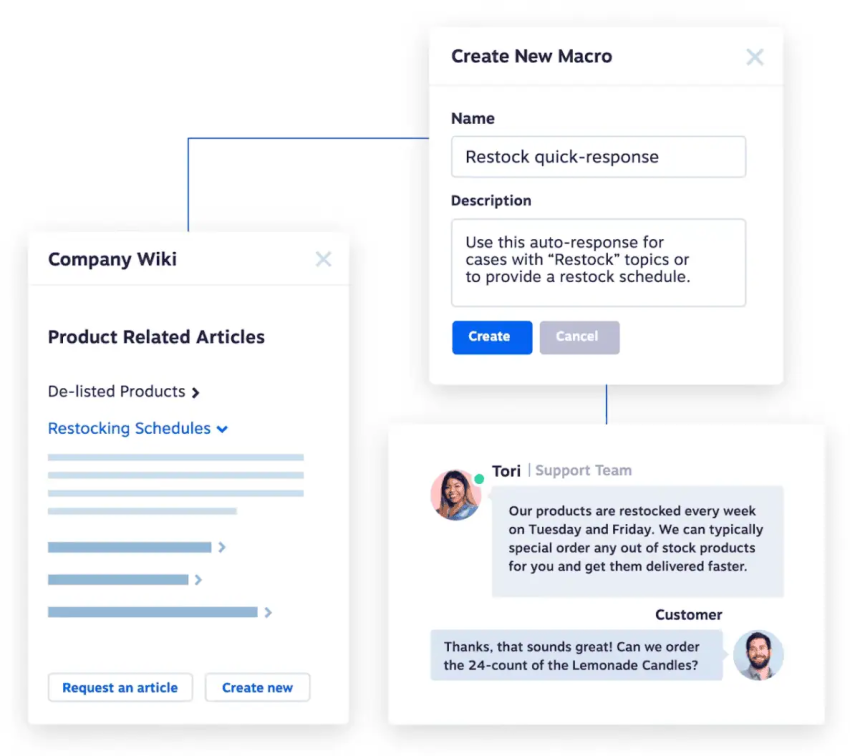
Customer support professionals benefit from AI-generated summaries and suggested responses, which enhance customer support operations by increasing productivity and improving service quality. They no longer need to switch between different tabs to find a policy or summarize a lengthy chat history. Tools like AI agent assist offer:
- Real-time suggestions: Generates suggested answers that reps can approve or edit.
- Automatic summaries: Generates summaries after calls or chats end.
- Instant knowledge access: Provides relevant documents directly during a live interaction.
Generative AI can also generate responses to common queries and provide summaries of previous complaints, supporting human agents in delivering efficient and personalized customer support.

Turn customer service into operational intelligence
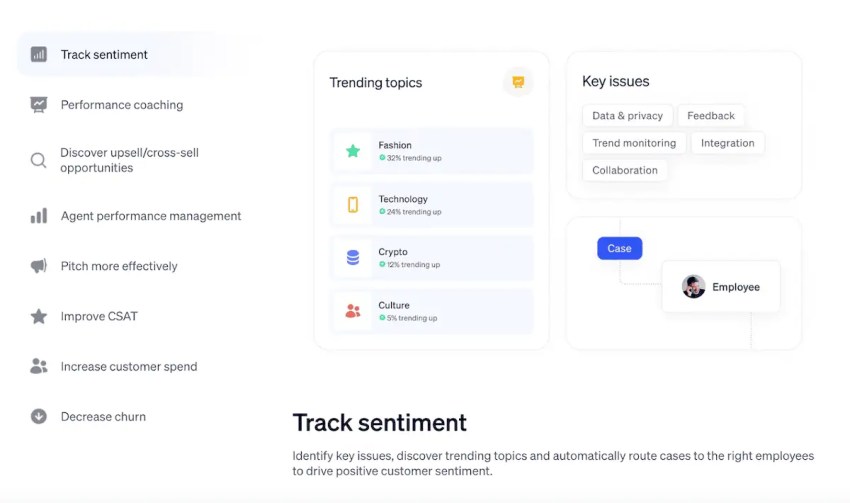
Every customer interaction contains actionable insights. Generative AI can analyze conversations at scale to identify trends, recurring issues, customer sentiment, and emerging problems. These valuable insights help organizations:
- Detect service issues earlier
- Improve products and processes
- Identify training opportunities
- Understand customer needs
- Build customer loyalty
- Make more informed business decisions
Beyond this, deploying generative AI can automate routine support workflows and intelligently route customers to the right department based on their needs, reducing transfers and helping customers reach faster resolutions.
Improve customer experiences
Support quality varies between agents, locations, and channels. Generative AI helps standardize AI responses by using approved company knowledge and workflows.
As a result, businesses can improve response consistency, reduce human error, maintain brand voice across channels, ensure policy compliance, and deliver more accurate information.
Rather than simply automating support tasks, businesses use generative AI to create faster, more personalized customer experiences and help agents focus on work that drives greater value.
Generative AI vs. Traditional AI: What’s the Difference?
To understand the impact of using generative AI in customer service, we need to look at how we’ve deviated from traditional AI.
| Feature | Traditional AI (rule-based) | Generative AI (LLM-based) |
|---|---|---|
| Logic | Fixed decision trees & IF/THEN rules with predetermined responses | Natural language processing (NLP) & context; generative AI models trained on large datasets generate context-aware responses |
| Flexibility | Struggles with typos or off-script customer queries due to reliance on predetermined responses | Handles complex, nuanced, and messy human speech |
| Learning | Manual updates required for new scenarios; limited to scripted answers | AI models self-improve through continuous learning, real-time feedback, and fine-tuning with domain-specific data |
| Tone | Robotic and repetitive | Empathetic, conversational, and personalized |
Traditional AI is the logic of classification
Traditional AI, also known as rule-based or predictive AI, works with pattern recognition. It follows a predefined decision tree and relies on predetermined responses. If a customer asks a question that corresponds to a predefined category, the system provides a scripted, predetermined answer.
These systems are excellent for structured tasks, such as forecasting call volume or routing tickets by keywords. However, this rigidity often leads to customer frustration when more customer queries fall outside scripted scenarios, as the system cannot handle nuances or adapt to unexpected questions. If a customer deviates from the predefined pattern, the system fails.
Generative AI is the logic of reasoning
Generative AI works with reasoning and context. Based on large-scale language models, it understands the intention behind a sentence. Instead of selecting from a list of predefined answers, it generates a response in real time based on company data. Generative AI models are trained and optimized using both historical data and real-time customer feedback, which enhances their performance and accuracy.
By 2026, the industry will have evolved toward retrieval-augmented generation (RAG), where AI is connected to a company’s verified knowledge base so every answer is fact-based. Effective generative AI models continuously learn from both past and ongoing customer interactions, incorporating agent input to improve over time.
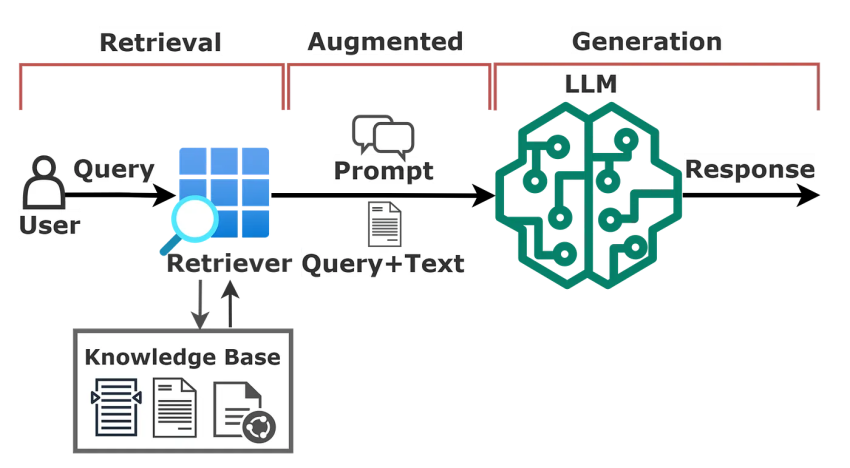
Generative AI utilizes large language models (LLMs) to understand context, interpret customer intent, and generate real-time responses. Unlike traditional AI systems that rely on predefined rules and pattern recognition, generative AI creates adaptive and personalized responses that evolve based on the conversation and available business knowledge.
How Generative AI Is Redefining Customer Service
Generative AI doesn’t just talk; it also acts, revolutionizing customer service by enabling new levels of efficiency and personalization. According to Gartner, agentic AI will become the primary filter for first-level support by 2029, resolving up to 80% of common customer service issues without human intervention.
“Agentic AI has emerged as a game-changer for customer service, paving the way for autonomous and low-effort customer experiences.” — Daniel O’Sullivan, Senior Director Analyst, Gartner
For years, customer service followed a familiar process. Customers contacted a business, waited for an available agent, explained their issue, and received assistance. Generative AI is changing that approach.
Businesses can now deliver intelligent, context-aware support across millions of interactions without depending entirely on human agents or rigid workflows.
From scripted interactions to natural conversations
Traditional customer service tools, such as IVR systems, rule-based chatbots, and static workflows, often require customers to follow predefined paths.
Generative AI allows customers to communicate naturally. Instead of navigating menus or entering specific keywords, customers can describe their issue in their own words and receive relevant, conversational responses based on the context of the interaction.
From reactive support to proactive support
Customer service has traditionally focused on responding to problems after customers encounter them.
Generative AI offers proactive support solutions by helping businesses identify patterns, anticipate customer needs, and recommend actions before issues become larger problems.
For example, AI can notify customers about delivery delays, upcoming renewals, service disruptions, or account issues before they reach out for support.
From disconnected interactions to connected customer journeys
Many customer service experiences still suffer from fragmented systems and disconnected channels.
Generative AI can maintain context across voice, chat, email, SMS, and social messaging channels. Customers no longer need to repeat information every time they switch channels or interact with a different representative. This creates a more connected customer experience.
From manual information searches to instant answers
Customer service agents often spend valuable time searching across knowledge bases, documentation, CRM systems, and internal resources to find the information they need.
Generative AI can retrieve relevant information instantly and present it within the context of the conversation. This reduces search time, improves response accuracy, and allows agents to spend more time helping customers.
From interaction management to issue resolution
Traditional automation focused primarily on routing conversations and collecting information. Generative AI focuses on helping customers reach a resolution faster.
When connected to CRM platforms, scheduling tools, billing systems, and other business applications, AI can update account information, schedule appointments, process requests, and trigger workflows without requiring multiple transfers or handoffs.
From sampled reviews to complete conversation intelligence
Managers have historically reviewed only a small percentage of customer interactions for quality assurance and trend analysis. Generative AI can analyze every conversation across every channel.
This gives businesses deeper visibility into customer sentiment, recurring issues, service gaps, emerging trends, and operational opportunities that would be difficult to uncover manually.
Generative AI improves existing customer service processes and helps businesses deliver support that is more conversational, proactive, connected, and focused on resolving customer issues.
Examples of Businesses Using Generative AI in Customer Service
Early adopters of generative AI in customer support have realized cost savings and business value, including reduced workload for human agents and improved operational efficiency. Their results offer a blueprint for how automation and quality can be reconciled.
Klarna’s Scalable Financial Services
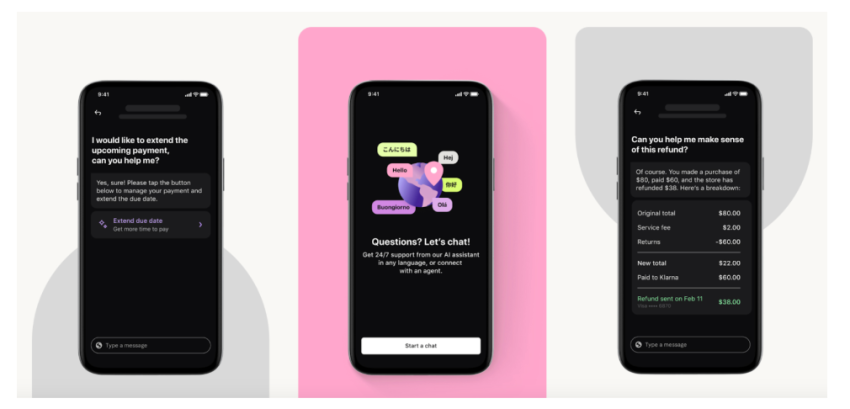
Klarna was one of the first major companies to achieve massive efficiency gains. Its AI assistant was handling over two-thirds of all customer service chats and customer calls — around 2.3 million conversations per month. This volume is equivalent to the workload of 700 full-time employees. The results included:
- An average handling time reduced from 11 to under 2 minutes.
- A projected $40 million increase in annual profit through operational savings.
- Multilingual support is a key feature, with support in 35 languages across 23 global markets.
Intercom’s Fin Agent
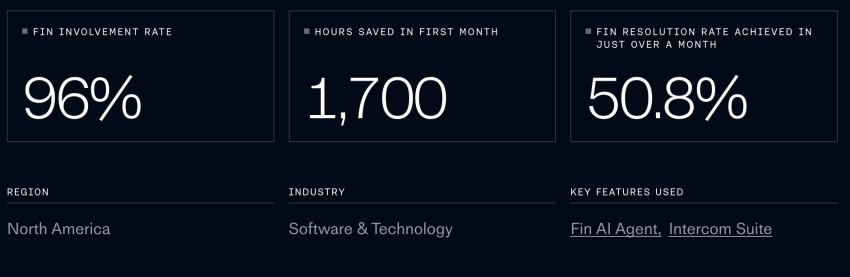
Software company Intercom has introduced an AI agent named Fin, which uses generative AI to handle complex inquiries. Unlike simple bots, Fin can perform actions such as processing refunds or updating customer data directly within internal systems. Fin provides relevant responses by understanding the context of each inquiry, helping customers receive timely and personalized support.
- Accuracy: By connecting the AI to the company’s verified customer service centers, an accuracy rate of 99.9% was achieved. Fin delivers accurate responses and accurate answers to customer inquiries.
- Workload: More than half of all customer inquiries are handled fully automatically.
- Efficiency: Anthropic reported saving over 1,700 working hours in the first month after generative AI implementation.
Industries Where Generative AI Customer Service Is Making the Most Impact
Generative AI use cases vary depending on the industry. Here’s how different industries are using GenAI in customer support:
1) Healthcare
In healthcare, generative AI closes the gap between patients and healthcare providers. Service professionals, such as nurses and administrative staff, benefit from AI-driven support that streamlines workflows and improves patient interactions.
AI systems help with symptom triage, guiding patients through their treatment needs based on clinical questions. They also help explain complex billing and insurance issues in a simple way, which has been a major obstacle to patient satisfaction in the past.
2) Financial services
Financial service providers such as banks and fintech companies are using generative AI to manage sensitive interactions with the highest level of security. Generative AI supports financial services customer service teams by automating routine inquiries, providing secure and accurate information, and reducing human agents’ workload.
AI systems can process complex claims by analyzing documents and generating initial summaries for claims adjusters. They also support personalized financial coaching by helping customers understand their spending patterns and suggesting savings goals by analyzing customer behavior.
3) Telecommunications
Across the customer support landscape for telecommunications providers, the primary use case is technical troubleshooting and network optimization. Generative AI streamlines support operations in telecommunications by automating troubleshooting and optimizing workflows, leading to faster resolution times and improved customer satisfaction.
If a customer reports a problem, AI can check the local network status in real time, guide the customer through hardware resets, and only request a technician if the automated steps fail. It can also manage complex tariff upgrades and cross-selling by determining which services actually benefit each user.

4) Hospitality and travel
In the travel industry, generative AI has turned into a virtual concierge. It can handle the entire travel process, from booking and customizing itineraries to providing real-time support during the trip. Generative AI also delivers personalized recommendations for travel, dining, and activities based on customer preferences, enhancing the overall experience with tailored suggestions. In the event of flight cancellations, the AI not only notifies travelers but also proactively suggests alternative flights, rebooks hotel stays, and handles refunds.
5) E-commerce
Retailers are using generative AI to bridge the gap between browsing and buying. AI systems act as personal shopping advisors, remembering customers’ style preferences and size information to make precise recommendations.
By accessing past interactions and purchase history, generative AI offers personalized support, ensuring that recommendations and assistance are tailored to each individual customer. In customer support, it handles the majority of order status inquiries, which constitute a big portion of all support requests.
Key Benefits of Generative AI Customer Support
Implementing a generative AI strategy offers businesses many measurable benefits:
- Significant cost reduction: AI automatically handles standard first-level support requests and repetitive tasks, helping companies achieve substantial cost savings, reducing the cost per interaction by up to 80%. This enables businesses to scale support capacity without linearly increasing the number of employees and lowers operational costs.
- Increased productivity: Employees equipped with AI tools can handle more complex cases in less time. Automatic summarization and real-time knowledge retrieval shave minutes off each interaction, resulting in lower average handling times.
- Increased employee retention: Eliminating repetitive and frustrating tasks, such as answering the same five questions daily, offers employees higher job satisfaction. Reducing repetitive tasks decreases the traditionally high turnover rates in contact centers.
- 24/7 global availability: Generative AI provides instant support across all time zones and in dozens of languages, eliminating the need for local offshore teams, ensuring consistent brand communication worldwide.

Navigating the Challenges With Generative AI
Despite the competitive advantages, customer service leaders must be aware of the following risks associated with generative AI:
The problem of hallucinations
A common problem is hallucinations, where AI is highly likely to generate incorrect information. Human oversight is essential in reviewing AI-generated responses to prevent hallucinations and reduce the risk of biased responses, ensuring accuracy and trust.
To counteract this, customer service managers must implement strict control mechanisms and systems involving human intervention to verify critical information before it reaches the customer.
The empathy gap
While artificial intelligence can simulate polite conversations, it lacks genuine human understanding. In sensitive situations, such as a significant financial loss, an AI’s attempt to show empathy can appear inappropriate. Businesses must therefore define clear criteria for when a conversation should be handed off to a human employee, as human support is crucial for handling sensitive or emotionally charged customer interactions.
Data privacy and compliance
Data privacy laws like the GDPR and various regional AI laws require businesses to be transparent about when a customer interacts with a bot. Organizations should choose AI providers that offer high-level encryption and adhere to industry-standard certifications to protect sensitive customer data.
The Future of GenAI Customer Support
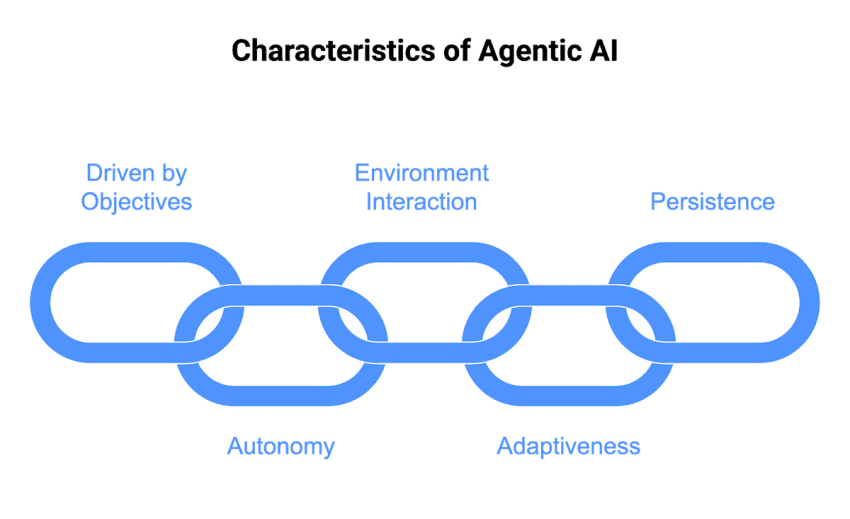
As the decade draws to a close, the focus is shifting from generative AI to agentic AI.
From drafting to acting
While generative AI excels at communication, agentic AI is designed to take action. For example, an agent assist system not only explains to the customer how to change their billing address, but also independently logs into the necessary databases, performs the update, and sends a confirmation.
Multimodal support
Customers will soon be able to film a defective product with their mobile phone camera, and AI will analyze the video in real time to diagnose the problem. This visual feature reduces the need for lengthy verbal explanations and improves the resolution rate.
Best Practices to Implement Generative AI Customer Service
How do you actually implement generative AI customer service?
Audit your data
AI is only as good as the knowledge base it’s trained on. Analyzing customer data is crucial for training and improving AI models for customer support, as it helps tailor responses, identify trends, and enhance accuracy.
Before you implement a model, ensure your FAQs, policy documents, and training materials are accurate, centralized, and formatted for quick access. If your documentation is outdated, your AI will provide incorrect answers. Customer support leaders should create a central source of information by cleaning up siloed databases and having internal experts review all automated content.

Identify pilot projects
Start with low-stakes, high-traffic channels to test the technology risk-free. Instead of rolling out a complex, voice-based AI for your most important customers, begin with a web chatbot for routine inquiries or an internal co-pilot to help your employees find information faster.
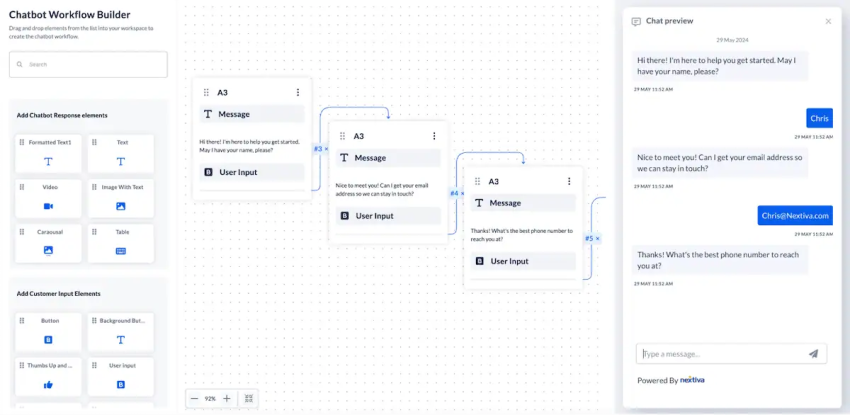
This phased approach allows you to gather real-world feedback and refine the system’s tone without impacting customer satisfaction. Focus on typical use cases like password resets, order tracking, or simple troubleshooting, where the logic is straightforward, and the resolution rate is high.
Measure new metrics
While traditional metrics like customer satisfaction (CSAT) remain important, they don’t provide the detailed information needed to optimize an AI system. You should also track the following:
- Resolution rate: Measures whether the AI actually solved the underlying problem or merely provided a seemingly relevant answer. Tracking prior interactions and analyzing the types of customer questions handled by generative AI helps measure system effectiveness and identify areas for improvement.
- AI deflection and containment: The percentage of requests resolved entirely without human intervention directly impacts your cost per interaction.
- Sentiment and frustration recovery: AI-powered analytics help you identify when a customer’s sentiment shifts from negative to positive. This indicates successful automated problem resolution or an optimally timed escalation to a human agent.
Maintain a human-in-the-loop strategy
With a balanced and strategic approach, leveraging generative AI solutions can help create a more efficient and human-centered support organization.
AI agents and AI customer service solutions work alongside human customer support agents, collaborating to handle customer service inquiries and automating routine tasks while allowing human agents to focus on sensitive customer issues that require empathy and advanced problem-solving skills.
The goal isn’t to replace your employees, but to eliminate repetitive, burnout-inducing tasks. GenAI allows your team to focus on challenging, complex tasks that require genuine empathy and advanced problem-solving skills.
Implementing these best practices requires a platform built for the generative era, which is where Nextiva’s specialized AI comes in.

How Nextiva XBert AI Receptionist Fits In
Nextiva’s XBert is a specialized AI receptionist that specifically addresses the limitations of traditional telephone menus and interactive voice response (IVR) systems. Generative AI tools like XBert are modernizing contact center operations with improved call routing and enhanced customer experiences.
Traditional IVR systems frustrate callers with long lists of numbered options, leading to high call abandonment rates. How does Nextiva’s XBert improve customer service instead?
Natural language call handling
Instead of forcing callers to press buttons, XBert allows them to speak naturally. For example, a customer can say they’re calling to reschedule an appointment for next Tuesday, and the AI understands the intent, checks the integrated calendar, and makes the update immediately.
Seamless human handoff
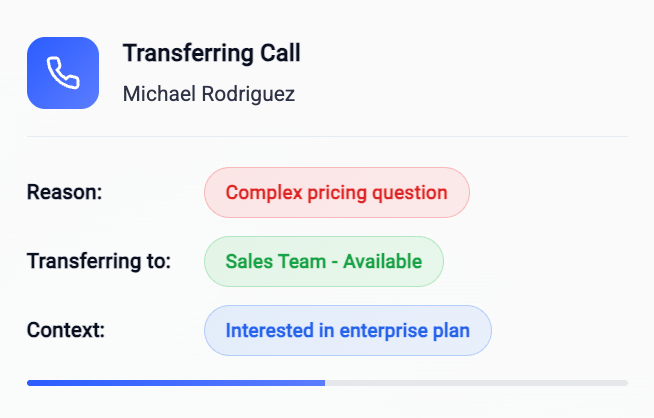
One of the most important features for managers is intelligent call routing. If a caller describes a complex problem or shows signs of frustration, XBert can transfer the call to an agent. Crucially, the agent receives a full transcript and a summary of the conversation, so the customer doesn’t have to repeat themselves.
Lead qualification and CRM integration
For sales-oriented businesses, the AI-powered receptionist acts as the first point of contact for potential customers. It can ask them about their budget, timeline, and specific needs before forwarding them to the appropriate department. XBert helps sales teams focus their time exclusively on promising prospects.
What Customer Service Leaders Should Expect Next
In 2026, the most successful brands will use GenAI not only to reduce costs but also to enhance their agents’ workflows. Automating routine processes and personalizing every interaction will help create a support organization that’s both faster and more empathetic.
The path to a mature AI system begins with a single step: reviewing your data and selecting suitable pilot projects. With Nextiva, you have the infrastructure to scale effectively and secure your company’s competitiveness in an automated world.
Nextiva’s approach bridges the gap between efficiency and personalized service. While the AI receptionist handles routing and qualifying leads, the generative AI agent assist provides employees with the necessary context to resolve complex issues instantly. This synergy ensures that customers don’t have to repeat their requests and employees never have to spend time searching for data.
Run your business instead of answering calls all day
Nextiva’s AI-powered receptionist is perfect for handling calls so you can focus on what matters most.
Frequently Asked Questions About Generative AI
Generative AI focuses on understanding questions, generating responses, and assisting customers. Agentic AI takes action on a customer’s behalf, such as updating accounts, processing refunds, scheduling appointments, or triggering workflows across business systems.
Yes. Modern generative AI platforms can connect to CRM systems, knowledge bases, and business applications through secure integrations. This allows AI to access customer history, account information, and previous interactions to provide more personalized support.
Businesses reduce hallucinations by grounding AI responses in verified company data, knowledge bases, CRM records, and internal documentation. If the system cannot find reliable information, it should escalate the request to a human agent instead of generating an unverified answer.
Businesses protect customer data through encryption, access controls, data masking, and compliance frameworks. Many AI deployments also remove or mask sensitive information before it is processed to reduce security and privacy risks.
Prompt injection is a technique that attempts to manipulate an AI system into ignoring its instructions or revealing restricted information. Organizations use security controls and AI guardrails to detect and block these attempts before they affect customer interactions.
Organizations typically track resolution rate, first-contact resolution (FCR), customer satisfaction (CSAT), average handle time (AHT), cost per resolution, escalation rate, and AI accuracy to evaluate the impact of generative AI on customer service operations.
No. Generative AI automates routine tasks and provides faster access to information, but human agents remain essential for complex issues, escalations, relationship management, and situations that require empathy or specialized expertise.
Choose a generative AI customer service platform that aligns with your business goals, customer expectations, and support requirements. Look for a solution that integrates with your CRM, help desk, knowledge base, and other business systems so it can access relevant customer data and company information.
Focus on platforms with strong security and compliance features, including encryption and support for standards such as GDPR, HIPAA, and SOC 2. Make sure the platform can seamlessly transfer conversations to human agents while preserving the full customer context.
You should also evaluate omnichannel support, reporting and analytics, customization options, scalability, and pricing transparency.