
 Customer Experience
  Blog
Blog  Business Communication
  Leadership
  Marketing & Sales
  Nextiva News
  Productivity
  VoIP
VoIP 

If your business receives inbound calls from Spanish-speaking customers — and statistically, there’s a good chance it does — then a bilingual answering service isn’t just a nice-to-have. Finding the best answering service for small business needs means finding a solution that bridges the language gap without breaking the bank. Whether you need an affordable answering service to handle evening overflow or a dedicated 24/7 call answering service, your choice directly impacts revenue.
The United States is home to an estimated 42 million people who speak Spanish at home. That means Spanish-speaking callers are a massive segment of potential customers who could be picking up the phone to call your business right now. To capture them, you need a high-quality virtual call answering service in place.
It’s also important to remember that even people who speak English well but have it as a second language prefer to communicate in their native language, especially when it comes to high-stakes or complex issues. When someone is dealing with a confusing billing dispute, a medical question, a real estate house negotiation, or a legal intake call, language barriers create both friction and risk.
Bilingual virtual receptionists — whether human, AI-powered, or a hybrid combination of both — give Spanish-speaking customers the ability to communicate in the language they’re most comfortable with. That means more accurate information, faster resolution, and a far better experience for the customer on the other end of the line.
This comprehensive guide covers what bilingual answer phone services for businesses look like, how they work, how much they cost, and the top providers on the market in 2026 based on your business’s unique needs.
Try the best AI answering service free for 14 days
XBert AI answers questions and captures leads. Add your 24/7 answering service in minutes.
What Is a Bilingual Answering Service?
A bilingual answering service handles inbound interactions in two or more languages — most commonly English and Spanish for stateside providers. However, services can also extend into SMS and web chat depending on the provider.
There are generally three operating models to be aware of:
- Human receptionist teams: Answer calls live and take messages, qualify leads, or complete intake. This traditional model uses in-house teams or call center services and works well when callers need a high-touch personal connection.
- AI-first receptionists: Answer calls and automate workflows like booking appointments, answering FAQs, and routing to departments without human intervention. These AI virtual receptionists detect the caller’s language in real time to handle common requests entirely on their own.
- Hybrid models: Typically start with advanced IVR or AI agents and then escalate calls to a human when the situation calls for it. This model is the standard for businesses that want the efficiency of automation without sacrificing quality on technical, complex, or sensitive calls.
How Much Does a Bilingual Answering Service Cost?
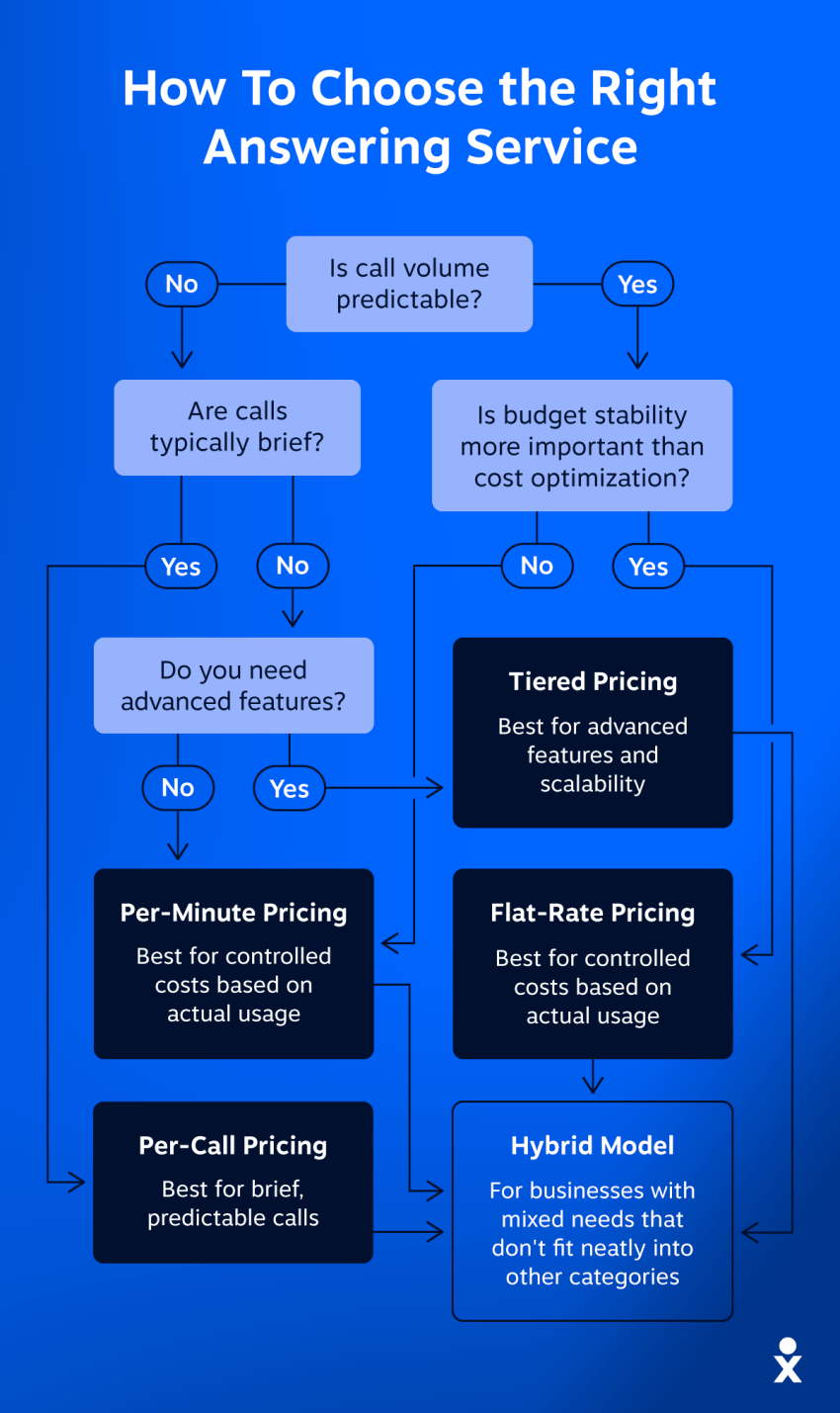
When choosing a call answering service for businesses, pricing structures dictate your long-term return on investment (ROI). Answering service costs generally fall into two distinct operational buckets:
1. Live call answering (per-minute or per-call billing)
Traditional human answering services typically charge by the receptionist minute (between $1.25 and over $3.00 per minute) or through monthly tiered call bundles (starting around $150 to $300/month for basic packages). While reliable, your costs can rise unpredictably during months with high call volume, creating a budgeting challenge for growing teams.
2. AI-powered and automated services (predictable flat SaaS tiers)
Next-generation automated platforms offer a highly cost-effective alternative. Using conversational AI, these platforms enable small businesses to handle thousands of simultaneous bilingual calls without additional physical staffing fees, overage penalties, or extra per-minute charges.
Pro tip: Curious how much missed calls are actively draining from your bottom line? Use a free digital tool like a Missed Call Cost Calculator to audit your potential revenue losses.
Core Features & Buying Criteria Beyond Message Taking
Bilingual answering services have expanded beyond basic message taking. If you’re looking to start working with a bilingual answering solution, look for a platform that consolidates these essential features under one dashboard:
- Language quality and accent robustness: Robotic fluency isn’t enough. You need natural conversation handling that accounts for regional dialects, code-switching, and cultural phrasing (e.g., distinguishing regional nuances between callers from Mexico, Puerto Rico, or Colombia).
- Scheduling and intake workflows: To convert calls into transactions, look for real-time calendar availability adjustments, automated appointment confirmation features, and multi-lingual structured intake fields.
- Smart contextual routing: Great bilingual answering preserves context. The software must capture the caller’s intent, priority tier (“new lead” vs “urgent issue”), and details before transferring, ensuring the client doesn’t have to repeat themselves to the next agent.
- Omnichannel support: Consumers expect flexibility. The best answering service platforms handle SMS text messaging, live web chat, and social media channels alongside phone calls so that Spanish-speaking customers can respond on the channel of their choice.
- Reporting and security compliance: Look for real-time analytics dashboards tracking metrics like answered interactions, appointments booked, and customer satisfaction scores. If you’re in a regulated industry, make sure the provider offers stated compliance features like HIPAA data security or legal confidentiality encryption.
The Best Bilingual Answering Services for Businesses
When comparing answering services for businesses, pay close attention to the billing methods. Services with purely human operators charge per minute, while AI-based and integrated platforms offer transparent SaaS plans with fixed prices that maximize your operational efficiency.
1. XBert by Nextiva
Best for: Complete 24/7 virtual call answering, omnichannel automation, and predictable small business value.
XBert is Nextiva’s intelligent AI companion, seamlessly integrated into a unified communications platform. Instead of functioning as a separate answering machine app, XBert acts as your company’s automated business receptionist. The solution enables natural and fluent conversations in English and Spanish via phone calls, SMS, and web chat. Regional dialects and language shifts are instantly recognized, ensuring Spanish-speaking prospects feel understood from the very first moment.
Pricing: Because XBert is deeply integrated into Nextiva’s platform, your pricing scales smoothly alongside your operational needs:
- Core Plan ($15–$30/mo): Ideal for basic setups. Offers inbound and outbound calling, business SMS, team chat, and call forwarding via a virtual receptionist with Outlook/Google Contacts integration.
- Engage Plan ($25–$40/mo): Adds expanded customer-and-team SMS capabilities, advanced live reporting, speech analytics, automated web chat tools (live and bot), and full audio/video call recording.
- Sclae ($60–$75/mo): Built for complete omnichannel communication management. Includes real-time performance dashboards, AI-powered live transcription, automatic summaries, advanced skill-and-language routing, full interaction histories, and automated web/ACD callback options.
Key features:
- 24/7 coverage across calls, SMS, and chat, ensuring leads don’t wait only to get sent to voicemail.
- Appointment scheduling with calendar integration, confirmations, reschedules, and reminders.
- Intelligent routing that collects context before transferring to the right teammate.
- Lead capture and follow-up workflows that keep the pipeline moving automatically.
- Clear pricing for SMB adoption and a money-back guarantee to reduce perceived risk.
Consideration: Because XBert is a fully automated AI platform, it doesn’t provide a pool of live human outsourced call-center agents for manual tasks. If your business model strictly requires a live third-party human to execute complex hand-holding or highly sensitive emotional triage entirely off-site, you’ll want to deploy XBert in a hybrid model alongside your own in-house team, or pair it with an outsourced answering service.

Hear why XBert AI is the best AI receptionist
XBert AI receptionist handles customer questions, captures leads, and books appointments. Try it free for 14 days.
2. Smith.ai
Best for: Detailed legal and medical lead intake via a hybrid model.
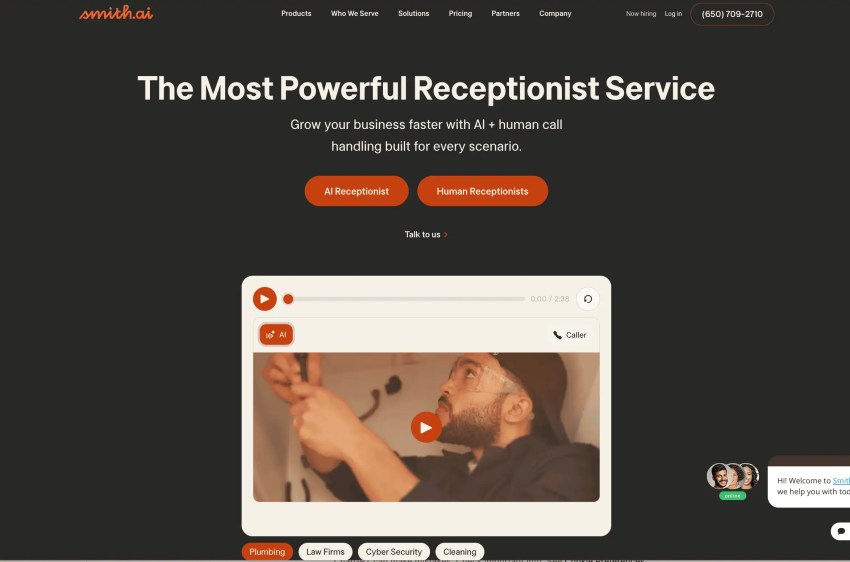
Smith.ai offers a balanced hybrid framework that pairs automated screening logic with live human receptionists, making it a strong contender for professional service firms that require thorough screening.
Pricing: Shifting away from per-minute models, Smith.ai bills on a per-call basis. Packages start around $240 to $300 per month for a set allocation of calls, working out to roughly $6 to $8 per interaction.
Key features: Live Spanish-speaking receptionists, real-time AI conversation transcripts, automated spam blocking, and custom CRM mapping.
Consideration: Per-call billing protects you from long-winded callers, but a sudden influx of short, unqualified telemarketing calls can deplete your monthly call allowance quickly.
3. Ruby
Best for: Premium, high-touch live human brand representation.
If your operational model strictly dictates that a polished, live human voice must answer every call on the first ring, Ruby is a highly polished virtual receptionist platform.
Pricing: Ruby bills strictly by receptionist minutes (counting from greeting to transfer). Entry-level small business tiers start around $360 to $400 per month and include only 50 to 100 minutes, averaging roughly $3.50 to $4.50 per minute.
Key features: 24/7 live English and Spanish answering, HIPAA-compliant messaging, customer payment processing, and managed web chat.
Consideration: This is a premium service rather than a budget-friendly option. If a bilingual customer requires a long, complex troubleshooting session, a single call can easily accumulate high operational costs.
4. PATLive
Best for: Structured, script-driven inbound call routing.
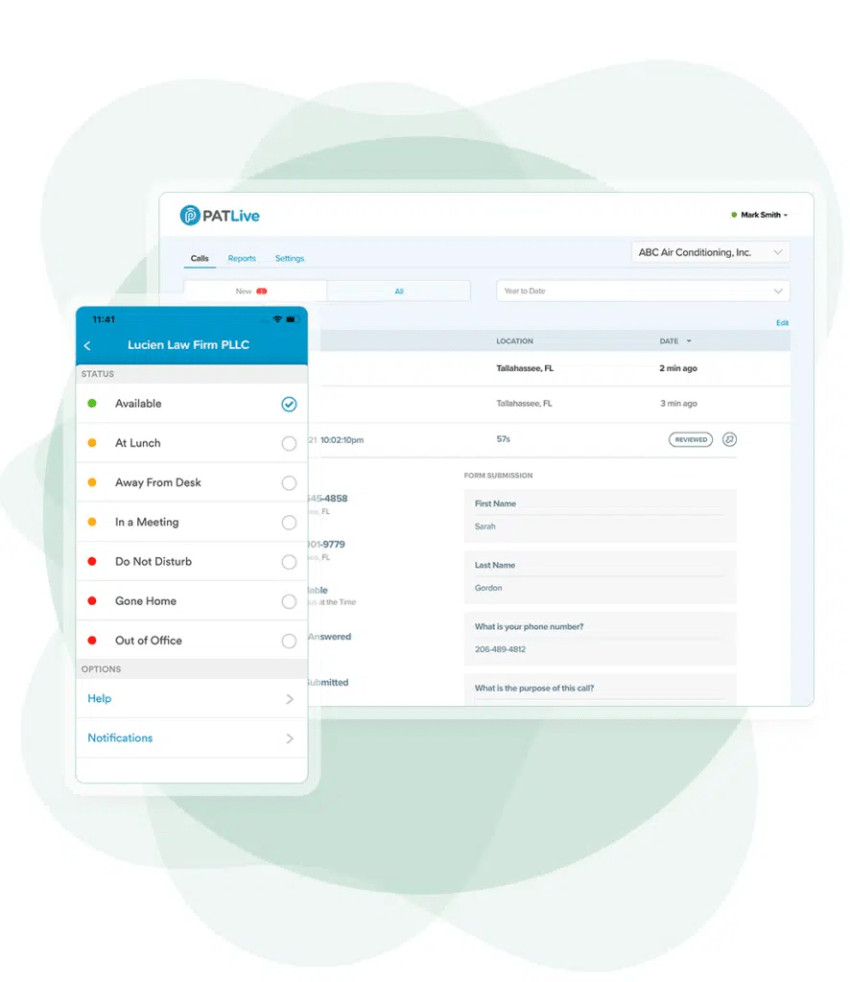
PATLive operates a large-scale, highly reliable human call center infrastructure with exceptional training standards for its live virtual receptionist pools.
Pricing: Utilizes standard tiered per-minute billing. Base plans start around $200 per month for roughly 75 to 100 minutes, with overage fees hovering near $2.25 per minute. Bilingual Spanish support is structured as a supplemental add-on.
Key features: Complex branching call scripts, 24/7 coverage, message logging, and appointment booking.
Consideration: Because it relies entirely on a physical workforce, it lacks instant AI scalability. During sudden local weather emergencies or major marketing spikes, callers may face hold times while the call center actively scrambles to adjust physical staffing levels.
5. Moneypenny
Best for: Dedicated human receptionist matching for mid-sized offices.
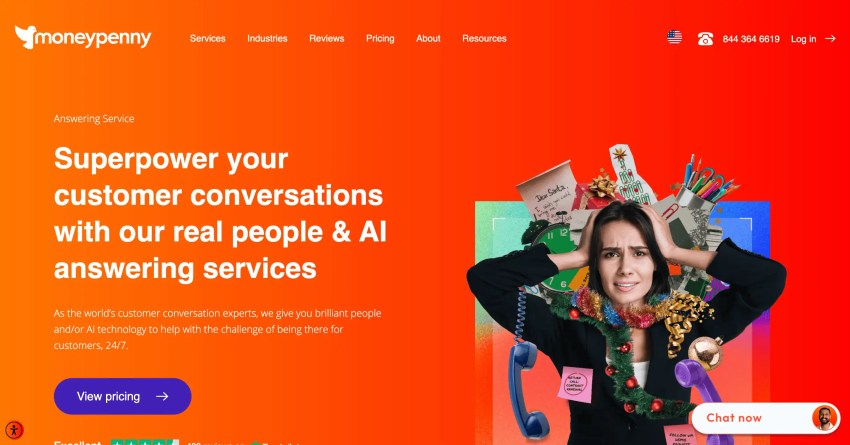
Moneypenny offers a personalized approach by matching your business with a specific, dedicated live receptionist who learns your brand’s voice and script style.
Pricing: Due to the personalized staffing element, Moneypenny does not offer static online pricing. Custom small business quotes generally begin at $300 to $400 per month, depending on call volume and routing rules.
Key features: Dedicated individual receptionist, online portal management app, customized script execution, and detailed call logs.
Consideration: When your dedicated agent is out sick, or call volume exceeds what one human can physically manage, calls are routed to a generalized backup pool. It lacks the elastic, concurrent handling capacity of an AI-driven system.
Comparison of the Top Bilingual Answering Services
To help you quickly weigh your choices based on predictable operating costs and scalability, here’s a direct comparison of the leading answering service providers:
| Provider | Billing model | Best for | Scalable? |
|---|---|---|---|
| XBert (Nextiva) | Predictable, tiered software plans | Complete front-desk Multi-channel automation | Infinite (AI-driven cloud infrastructure handles unlimited concurrent calls) |
| Smith.ai | Per-call packages | In-depth intake & lead qualification | Moderate (Hybrid model uses AI to buffer live staff capacity) |
| Ruby | Per-receptionist-minute tiers | Premium, high-touch Premium human Branding | Low (Subject to manual call-center staffing limitations) |
| PATLive | Per-minute tiers | Standardized, scripted inbound routing | Low (Prone to hold times during sudden call spikes) |
| Moneypenny | Custom corporate monthly quotes | Dedicated single-agent representation | Low (Requires manual intervention to handle overflow) |
Automate Your Bilingual Answering Service With XBert
Bilingual answering support is quickly evolving from a premium perk into a baseline customer expectation. The crucial difference for your business is whether your service simply collects names and messages or actively converts conversations into appointments, qualified leads, and immediate solutions.
If you want to eliminate language barriers and missed opportunities without complicating your operations, Nextiva’s XBert offers a comprehensive, unified solution. It consolidates your calls, texts, and chats on a single platform that syncs seamlessly with your CRM, ensuring you gain clear, actionable data and measurable business results.
Explore Nextiva’s AI-powered answering solutions today and give your small business the 24/7 availability it deserves.
Stop missing calls. Use an AI answering service.
XBert AI gives your business 24/7 coverage — handles calls, texts, and chats, books meetings, and escalates urgent calls so customers never have a bad experience.