

 Customer Experience
  Blog
Blog  Business Communication
  Leadership
  Marketing & Sales
  Nextiva News
  Productivity
  VoIP
VoIP 

When you run a small business, every ringing phone can feel urgent. It could be a new lead ready to book, an existing customer who needs help, or someone with a time-sensitive issue. But when calls go unanswered, the cost can add up quickly in missed revenue, frustrated customers, and lost trust.
That’s why many small businesses turn to answering services for extra call coverage. But not every option works the same way. Human answering services can offer empathy and a personal touch, but they may come with higher costs. AI answering services can be faster and more affordable, but they can feel cold or impersonal for callers who need genuine human connection.
In this guide, we’ll break down answering service pros and cons of both human and AI versions so you can choose the best way to handle your business calls without sacrificing customer experience.
Try the best AI answering service free for 14 days
XBert AI answers questions and captures leads. Add your 24/7 answering service in minutes.
What Is an Answering Service?
An answering service is a call-handling solution that manages each incoming call when your business can’t answer directly.
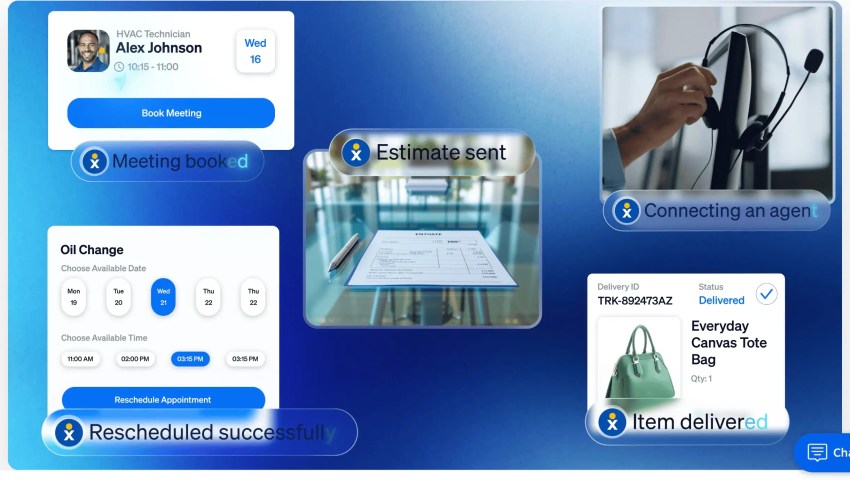
Traditionally, a telephone answering service was used to take messages after hours or during busy periods, but modern solutions can do much more. They can help businesses qualify leads, schedule appointments, route calls to the right person, answer common questions, capture customer information, and integrate with tools like CRMs, calendars, and business phone systems.
Note: In this context, an answering service may also be described as a virtual receptionist service, but it does not necessarily mean hiring a dedicated remote receptionist. Instead, it refers to a service or technology that answers calls on your business’s behalf, whether through live agents, AI agents, or a combination of both.
Most professional answering services fall into three categories:
- Human answering services: Live agents answer all calls, take messages, route callers, schedule appointments, and provide customer support based on your scripts or instructions.
- AI or automated answering service: AI-powered agents answer calls, understand caller intent, respond to common requests, collect information, route calls, and complete routine tasks without requiring a live receptionist.
- Hybrid answering services: AI handles simple or repetitive calls first, then escalates more complex, sensitive, or high-value conversations to human agents when needed.
Each model has different strengths and limitations. The right choice depends on your call volume, business hours, budget, customer expectations, and how complex your calls tend to be. Choosing the right answering service can directly affect customer satisfaction, how professional your business sounds, and how many opportunities you capture instead of miss.
Human Answering Service Pros and Cons
While some customers prefer human support, there are drawbacks to human-only support.
Pros of human answering services
Human answering services work best when calls require judgment, empathy, or nuanced conversation. For some customer interactions, there’s no substitute for the personal touch of a real person.
Common benefits include:
- Personal customer experience: Live agents can offer warmth, reassurance, and human connection in ways that automated systems simply can’t.
- Better handling of sensitive calls: Human agents are often better suited for emotional, urgent, or delicate conversations, especially in industries like healthcare, legal services, and crisis response.
- Real-time judgment: Trained agents can interpret tone, ask follow-up questions, and adapt when a caller’s needs don’t fit a standard script.
- Flexible conversations: Human agents can handle ambiguity, clarify confusing requests, and adjust their responses based on context.
- Trust-building: Speaking to a real person can make customers feel heard, especially when they’re frustrated, worried, or dealing with a high-stakes issue.
For industries like healthcare that rely on a dental answering service, legal services, home services, and crisis response, this human touch can be essential. A caller dealing with a medical concern, legal issue, or urgent service problem may need reassurance and discretion—not just a fast answer.
Cons of human answering services
Despite its strengths, a human-based phone answering service can become harder to manage at scale.
Common drawbacks include:
- High or unpredictable costs: Many live answering services charge by the minute, call volume, or after-hours coverage, which can make monthly costs harder to forecast.
Limited scalability: Sudden call spikes, seasonal demand, or emergency situations may overwhelm available agents. - Longer wait times: When agents are busy, customers may sit in a queue or be sent to voicemail.
- Inconsistent call quality: Tone, accuracy, and adherence to scripts can vary across agents, shifts, and locations.
- Staffing gaps: Nights, weekends, holidays, and peak periods can be harder to cover consistently, even with an outsourced provider.
- Less visibility and control: Depending on the provider, you may have limited access to call recordings, performance metrics, or real-time reporting.
These drawbacks can have a major impact on the customer experience during critical periods. If you have an outage, for example, and it’s impacting customers’ service level agreements, the last thing you want is for them to have extended wait times while they try to get a hold of you.
| Answering service type | Pros | Cons |
|---|---|---|
| Human answering services | Personal customer experience Better handling of sensitive calls Real-time judgment Flexible conversations Trust-building | High or unpredictable costs Limited scalability Longer wait times Inconsistent call quality Staffing gaps Less visibility and control |
| AI answering services | Instant call answering 24/7 availability High scalability Predictable pricing Consistent responses Smart call routing Multilingual support System integrations | Limited emotional intelligence Difficulty with complex requests Escalation issues Over-automation risk Context limitations Set-up and maintenance needs |
AI Answering Service Pros and Cons
Like human answering services, AI call answering services have both benefits and drawbacks.
Pros of AI answering services
AI answering services are designed for speed, consistency, and scale, which can make them useful for businesses that need reliable call coverage without adding staff.
Key advantages include:
- Instant call answering: AI agents can answer customer calls immediately, helping reduce hold times, missed calls, and voicemail dependency.
24/7 availability: AI answering services can respond after hours, on weekends, and during holidays without overtime or staffing constraints. - High scalability: They can handle large call volumes and sudden spikes without the same capacity limits as human-only teams.
- Predictable pricing: Many AI answering services use monthly, usage-based, or plan-based pricing, which can make costs easier to forecast than per-minute live answering fees.
- Consistent responses: These agents follow approved workflows, scripts, and business rules without fatigue, burnout, or shift-to-shift variation.
- Smart call routing: They can identify caller intent, collect key information, and route calls to the right person, department, or escalation path.
- Multilingual support: Some AI answering services can support multiple languages without requiring businesses to hire a specialized bilingual answering service or multilingual staff.
- System integrations: Many can connect with CRMs, calendars, phone systems, ticketing tools, or scheduling software to complete routine tasks automatically.
Cons of AI answering services
AI answering services can be powerful, but they still have limitations that matter in customer interactions.
Common drawbacks include:
- Limited emotional intelligence: AI may struggle to offer the same reassurance or emotional nuance as a trained human agent.
- Difficulty with complex requests: Sensitive, complex, or high-stakes situations may require human judgment beyond a standard workflow.
- Escalation issues: If handoff paths are unclear, customers may become frustrated when they need a person but can’t reach one quickly.
- Over-automation risk: Poorly designed workflows can make customers feel trapped in a system rather than helped by one.
- Context limitations: AI may miss subtle details, unusual circumstances, or business-specific exceptions if they are not built into its knowledge base or escalation rules.
- Setup and maintenance needs: AI answering services work best when scripts, FAQs, routing rules, and integrations are carefully configured and kept up to date.
Human vs. AI Answering Services: Which Is Better for Your Business?
The right answering service depends on the types of calls you receive, how complex those conversations are, and how much coverage you need. Human answering services are often better for sensitive, nuanced, or relationship-driven interactions. AI answering services are often better for speed, scale, consistency, and routine call handling.
For many small businesses, however, the best choice is not strictly human or AI—it’s using each where it performs best.
When to choose a human answering service
A human answering service may be the better fit if your business:
- Handles sensitive or emotional calls, such as healthcare practices, legal, financial, crisis, or urgent service requests
- Receives complex questions that do not follow predictable scripts or workflows
- Relies heavily on relationship-building, trust, discretion, or a high-touch customer experience
- Needs agents to make judgment calls based on context, tone, or caller urgency
- Serves customers who prefer speaking with a person
Human answering services are especially useful when the quality of the conversation matters more than speed.
The tradeoff is that they may cost more, be harder to scale during call spikes, and vary in quality depending on the agent, shift, or provider.
When to choose an AI answering service
An AI answering service may be the better fit if your business:
- Misses calls after hours, during lunch breaks, or when staff are busy
- Receives high volumes of repetitive calls, such as appointment requests, business hours questions, pricing inquiries, directions, or order updates
- Needs 24/7 availability without hiring additional staff
- Wants predictable call handling based on approved scripts, rules, and workflows
- Needs to scale quickly during seasonal peaks, marketing campaigns, outages, or sudden demand
- Wants call data and reporting to understand caller intent, missed opportunities, and common customer needs
AI works best when the call flow is clear and the task has a defined outcome.
It is less ideal for conversations that require deep emotional intelligence, legal or medical judgment, or complex negotiation.
When to use both
With a hybrid model, AI handles routine front-line tasks, while human agents step in for complex, sensitive, or high-value calls.
A hybrid answering service may be the best fit if your business:
- Receives both simple and complex calls
- Needs instant response times but still wants human escalation
- Wants to reduce call volume for staff without fully automating customer service
- Handles urgent requests that require triage
- Needs AI to qualify, collect, or route calls before a person takes over
- Wants better coverage without sacrificing customer experience
For many small businesses, this gives you the best of both worlds: faster response times, better coverage, lower operational strain, and a clear path to human help when it matters most.
How AI Can Solve Human Answering Service Challenges
There’s a reason our 2025 Guide to CX trends found that 81% of businesses planned to increase their AI spending. AI certainly has its constraints, but it solves many of the operational challenges that plague traditional live answering service models.
For small businesses, the biggest advantages often come down to cost control, availability, speed, consistency, and visibility.
Cost predictability
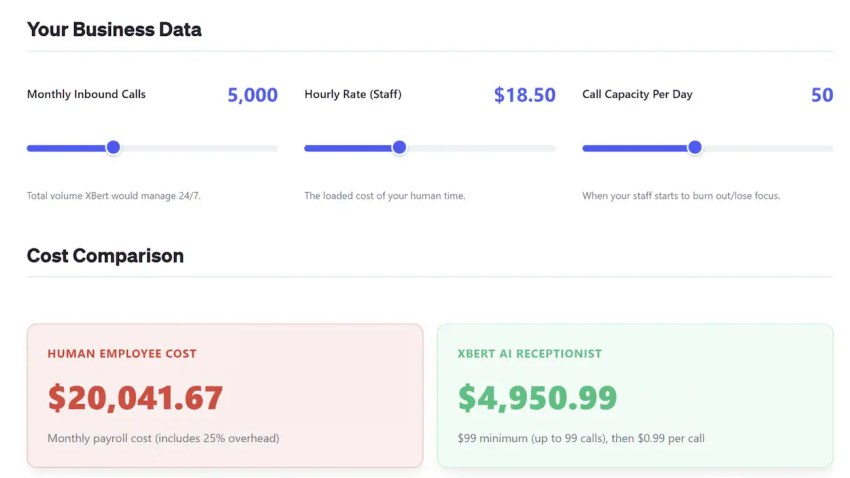
Answering service cost matters to businesses of all sizes, but it’s critical for small businesses with tight budgets. AI eliminates per-minute billing and replaces it with predictable subscription or usage-based pricing. This removes cost anxiety during peak periods and giving you a more sustainable, budget-friendly solution.
Scalability during busy periods
AI scales horizontally. Whether you’re handling 10 calls or 10,000, performance stays consistent without expensive staffing changes or last-minute scrambles to cover volume spikes. Your human agents, meanwhile, stay focused on the complex issues that actually need their attention without succumbing to burnout.
Faster response times
AI answers instantly and never gets overwhelmed. Customers don’t wait on hold or get routed to voicemail during high-volume periods, and with an always-on after-hours answering service, there’s no such thing as off business hours.
Here’s a sneak peek into how Nextiva’s XBert AI receptionist takes a phone call after hours:
Hear why XBert AI is the best AI receptionist
XBert AI receptionist handles customer questions, captures leads, and books appointments. Try it free for 14 days.
24/7 availability
Customers expect help whenever they need it, not just during business hours. AI makes round-the-clock coverage the default, not an add-on. Whether it’s a late-night inquiry, a weekend emergency, or a holiday rush, every call gets answered with the same speed and quality as any other time of day.
Consistent call handling
AI delivers the same approved information every time. There’s no going off script, skipping steps, or making fatigue-driven errors. This results in stronger customer experiences and more consistent brand perception across every customer interaction.
Reporting and visibility
Without clear reporting on answered calls, bookings, and missed opportunities, ROI is impossible to measure—plus, quality issues that affect customer satisfaction can go undetected. AI answering services provide detailed call data and real-time visibility, so you always know what’s working, what isn’t, and where to improve.
How to Choose the Right Answering Service for Your Business
Here’s what you need to keep in mind when evaluating service providers.
Call types and volume
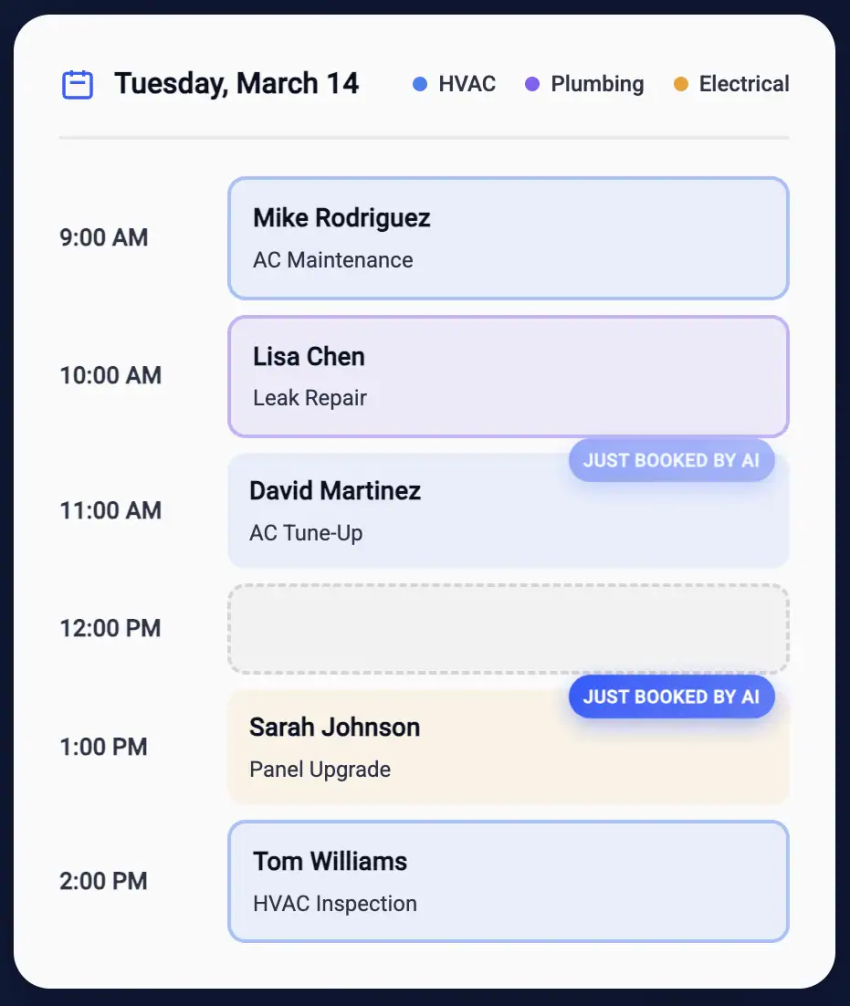
Categorize your calls: Which are routine, and which require complex, nuanced handling? AI agents can manage and modify appointments, qualify leads, and handle common customer inquiries, but complex scenarios will need human escalation, so make sure any solution you consider can support that.
You’ll also want to understand how your call volume fluctuates, since steady volumes favor flat monthly pricing while dramatic spikes can make per-minute models costly.
Integration requirements
A professional answering service needs to integrate with your tech stack, including your calendar software, CRM tools, ticketing systems, and messaging platforms. Without these integrations, your answering service will be stuck at just taking messages instead of delivering the full functionality you need.
Customization and control
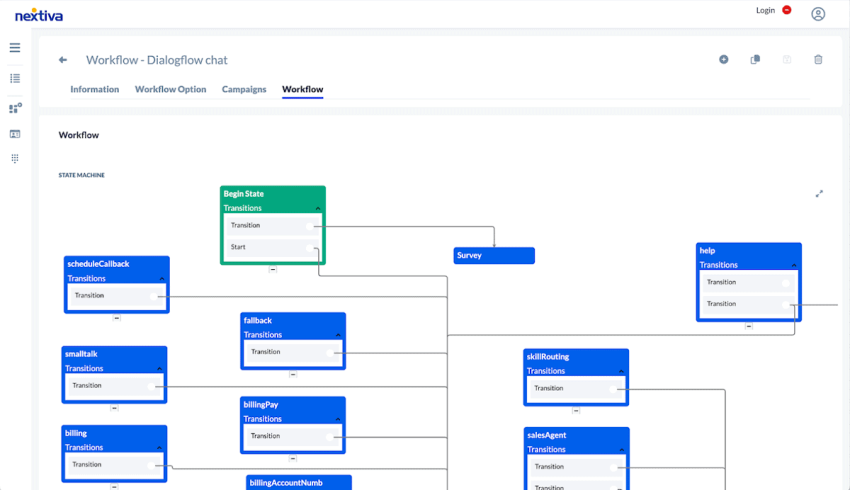
Your business is unique, so you need an answering service that can account for that. Look for platforms that allow flexible workflows rather than rigid scripts. You want your answering service to fit into your processes, not the other way around.
Budget and pricing structure
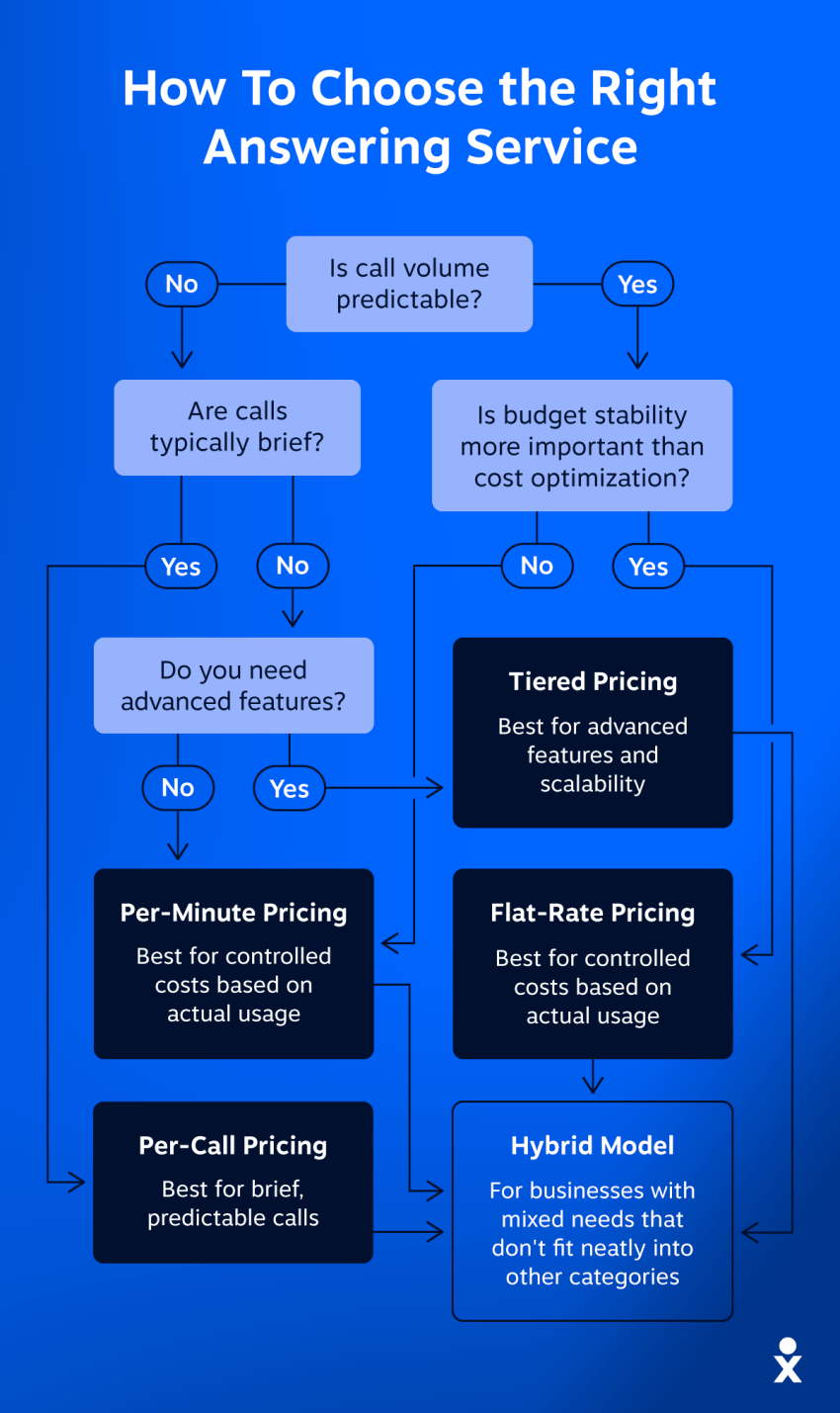
Answering service pricing varies widely, so it’s important to match the model to your usage patterns. Common structures include:
- per-minute billing
- flat monthly subscriptions
- tiered usage-based plans
Per-minute pricing can work well for low or unpredictable volumes but gets expensive fast during peak periods. Flat subscriptions offer cost predictability but may not make sense if your call volume is highly variable. Evaluate total cost of ownership, not just the base price, and factor in set-up fees, overage charges, and the cost of any integrations you’ll need.
Customer experience expectations
Your answering service is often the first voice a customer hears, so it needs to reflect your brand. Consider how your customers prefer to communicate and how much patience they’re likely to have with automated systems.
A B2B professional services firm, for example, may need the warmth and judgment of a live agent, while an answering service for ecommerce brand handling high volumes of order status calls may be well served by AI.
Remember, the right choice is the one that meets your customers where they are, not just the one that’s cheapest or easiest to deploy.
XBert: Give Your Small Business a More Reliable Way to Answer Calls
Answering services have come a long way from simple coverage and message taking. Today, the right solution is about consistency and delivering a good customer experience, regardless of when or how often your phone rings.
Human answering services offer empathy and judgment, but can struggle with cost and consistency at scale. AI answering services offer efficiency and availability, but require thoughtful setup to avoid feeling impersonal. For most businesses, the answer lies somewhere in between.
That’s the gap Nextiva’s XBert is designed to fill. Rather than locking businesses into a single model, it gives teams the flexibility to:
- Automate routine interactions instantly
- Route calls intelligently based on intent and urgency
- Escalate to humans when nuance or empathy is required
- Handle calls, texts, and live chat from one system
- Tie conversations directly to scheduling and CRM outcomes
Fewer missed calls, more consistent experiences, and a setup that can evolve as your needs change—exactly what a modern answering service should deliver.
Stop missing calls. Use an AI answering service.
XBert AI gives your business 24/7 coverage—handles calls, texts, and chats, books meetings, and escalates urgent calls so customers never have a bad experience.