
 Customer Experience
  Blog
Blog  Business Communication
  Leadership
  Marketing & Sales
  Nextiva News
  Productivity
  VoIP
VoIP 

If you’re thinking about using a professional answering service, you’ve got one of two problems today: either you’re flooded with too many incoming calls for your team to manage, or you wish to automate those routine and mundane tasks that don’t necessarily need human intervention. Or it could be both.
Read on to find out what a professional answering service can do for your business and choose from the top three options on the market.
Try the best AI answering service free for 14 days
XBert AI answers questions and captures leads. Add your 24/7 answering service in minutes.
What Is a Professional Answering Service?
A professional answering service is a platform that manages a company’s incoming calls, messages, and inquiries using trained live receptionists and modern communication tools.
Professional answering services act as an extension of your business, offering personalized customer care, lead qualification, appointment scheduling, and message routing that align with your brand voice. They can be powered by human receptionists, AI-driven virtual agents, or a mix of both, depending on the complexity of your customer interactions.
How it works
We can break down how a professional answering service works into four key steps:
- Call reception: When a customer calls, the service answers using a custom script that mirrors your business tone and office hours.
- Call handling: The agent routes, forwards, or resolves the request, whether scheduling an appointment, taking a payment, or recording a message.
- Information delivery: Interaction data gets documented and delivered instantly to the business via email, SMS, or CRM sync.
- Analytics and review: Reports summarize call volume, response times, and outcomes for performance tracking. Often, built-in AI tools can then suggest or start to take actions based on patterns and historical improvements.
Automation vs human receptionists
Traditional live receptionists rely on manual interaction. Even when using virtual receptionist services (someone who is not employed by your business but answers your calls), your team may not be fielding the calls, but it’s still a human on the other end of the phone. We may not like to admit it, but as humans, we’re all flawed.
Automated professional answering systems provide:
- Instant responses 24/7
- Scalability during peak call times
- Consistent tone and compliance
- Integrated analytics and reporting
- A cost-effective alternative to underused staff
| Feature | Automated Answering Services | Human Receptionists |
|---|---|---|
| Availability | Instant responses 24/7, no live operator downtime | Limited to staffed hours, breaks required |
| Response speed | Immediate call handling | Dependent on call volume and staffing |
| Scalability | Easily scales during peak call times | Requires additional hiring, costs, and scheduling |
| Consistency | Uniform tone and compliance every call | Can vary by individual or workload |
| Analytics & reporting | Built-in analytics and performance tracking | Manual tracking or limited reporting |
| Operational costs | Lower, predictable costs | Higher ongoing labor and training expenses |
Why Businesses Choose Professional Answering Services
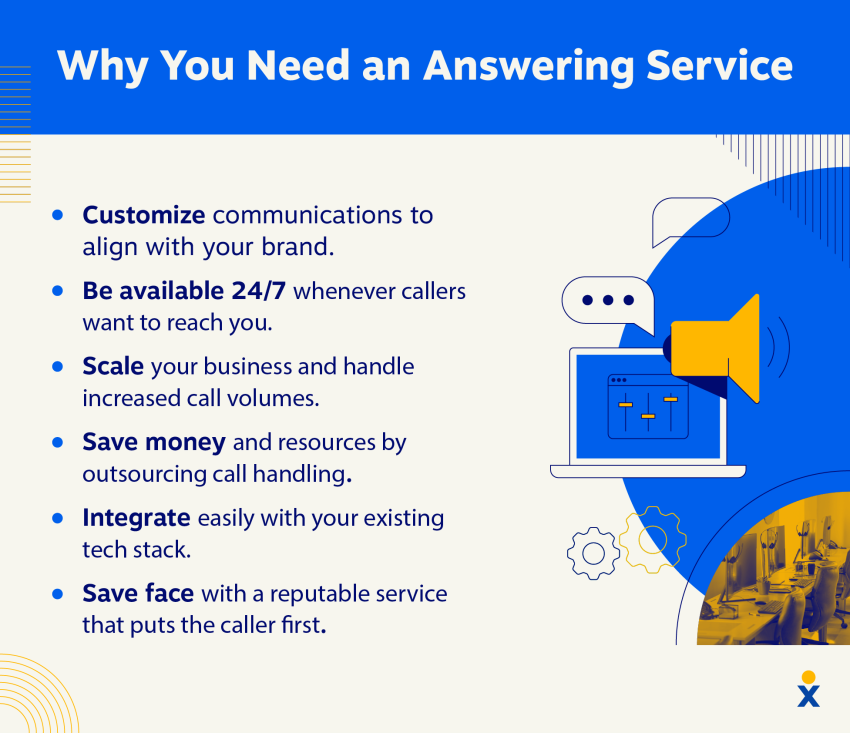
Always-on availability
Especially in the case of small businesses, having an automated front-of-house service gives you the flexibility to answer queries at any time of the day — without breaking the budget on staffing and overtime.
AI answering services operate around the clock, offering immediate responses outside standard business hours without shift scheduling or overtime costs. You can log first-line tickets, offer answers to frequently asked questions (FAQs), and escalate to your on-call engineers when needed.
Faster customer experience
If customers don’t need to speak to a contact center agent to solve their problem, don’t put them in a queue for one. Instead, automate their selection process, payment process, and menu navigation.
Automated routing connects callers to answers faster. They can self-serve through voice commands, reducing hold times and improving satisfaction.
Operational efficiency
Automation reduces repetitive tasks like checking balances, scheduling, or confirming appointments — freeing staff to handle complex issues with empathy as well as technical skills.
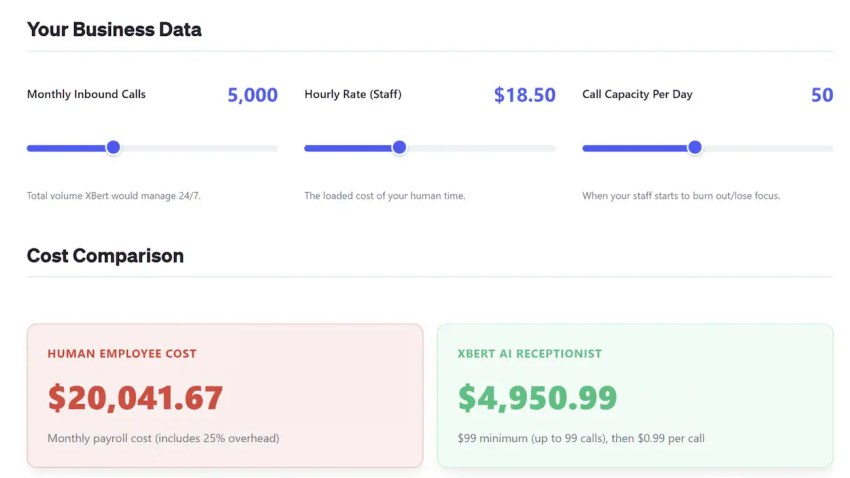
In comparison with full-time staff, the costs of an answering service tend to come in at 25% of the price of a full-time employee resource. So, if there are better things for your call center agents to be doing than routing calls and transferring clients, it’s a win-win for customers, agents, and your bank balance.
Scalability and consistency
AI systems handle thousands of calls simultaneously with consistent tone, accuracy, and brand messaging. Unlike human staff, automated systems don’t require breaks, vacations, or shift scheduling. Instead of flooding your business with idle staff ‘just in case,’ an automated service scales instantly to handle unpredictable spikes in call volume.
Data and insights
Manipulating data in Excel spreadsheets becomes a thing of the past when you use an automated live answering service. Every call (and the information and activity that happens inside it) gets processed and reported on within the same system — and can be quickly exported if you so desire.
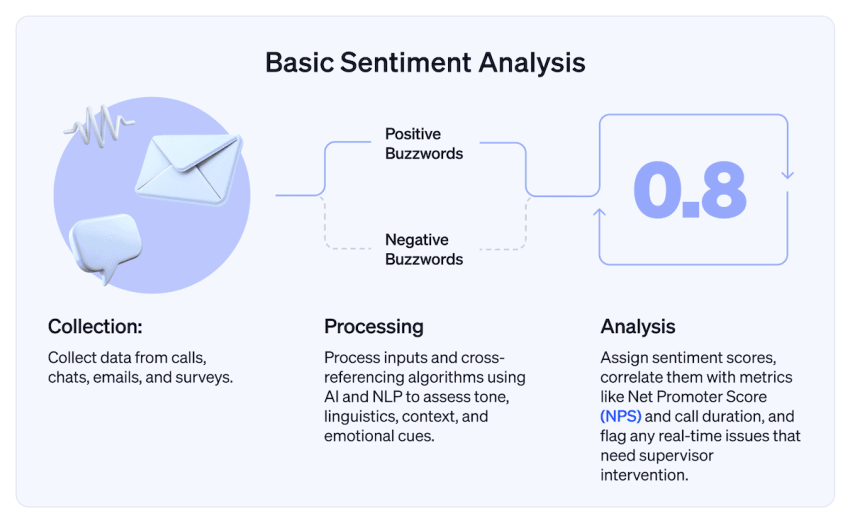
Call recordings and transcripts can be analyzed for trends, sentiment analysis, and performance metrics, feeding data back into CRM and customer experience systems.
Common Use Cases for Automated Answering
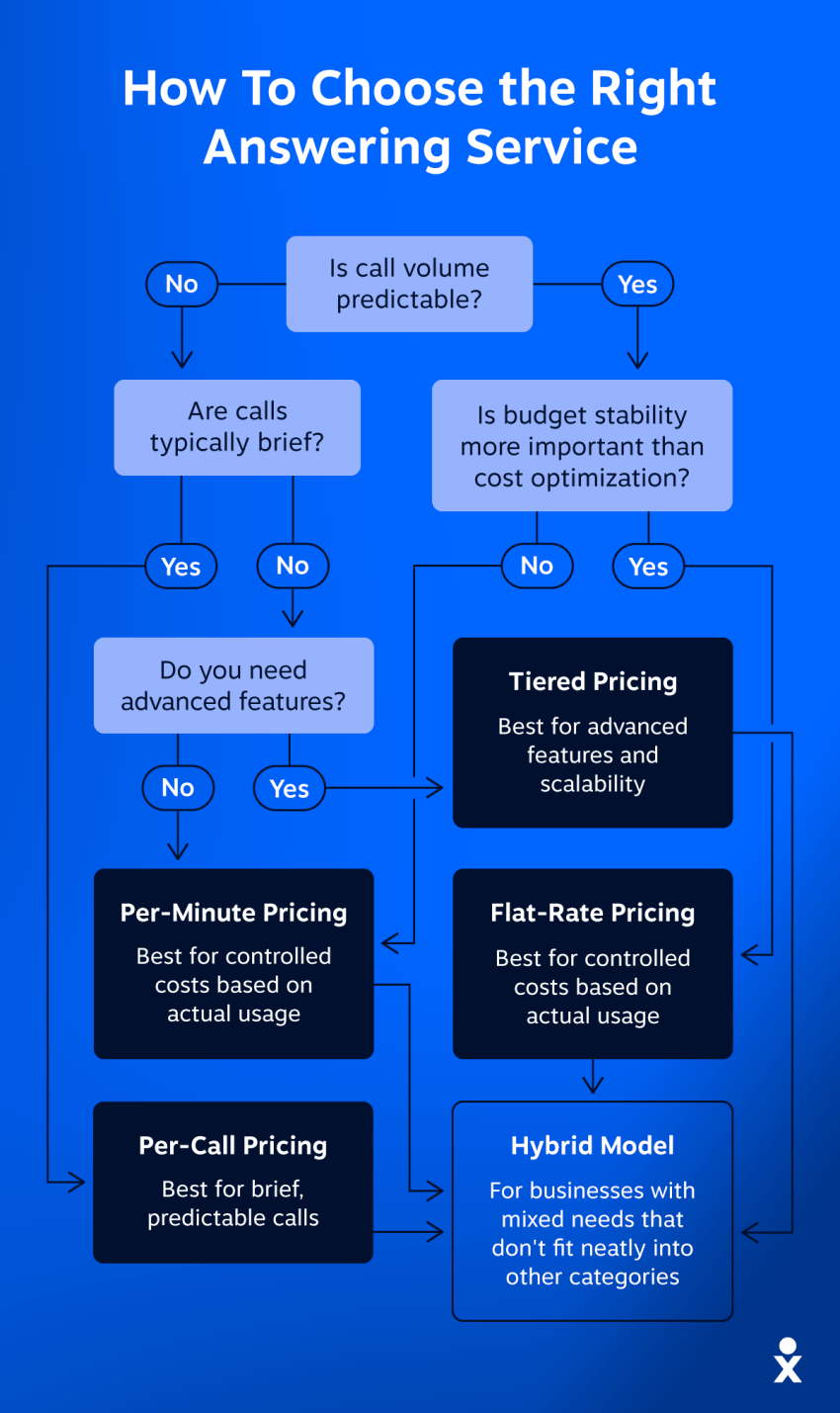
While there are no hard and fast rules on how to use a business answering service, the following use cases are often the most heavily adopted and the ones that provide the fastest return on investment.
Customer support
When you’ve got customers holding on the line for an agent, you’re giving them the chance to do several things:
- Become frustrated and start their call in an angry mood
- Research competitors who may have an appealing service
- Initiate the cancellation process online
- Leave a negative review on a comparison website
- Leave an angry voicemail in the heat of the moment
- Add to your list of missed calls
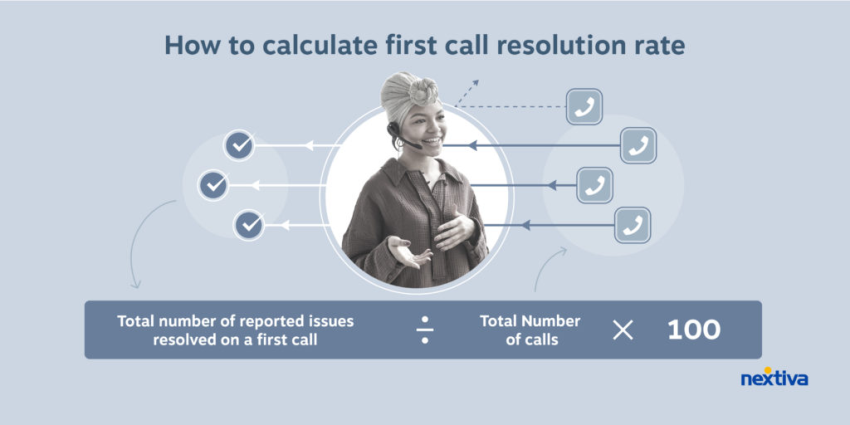
Instead of making your customers hold for a lengthy period, use an automated answering system to manage FAQs, status updates, and ticket creation. This way, callers get an auto-answer, instant routing, and, often, a first call resolution.
Integrations with helpdesks, knowledge bases, and your wider data ecosystem ensure customers receive confirmations instantly and accurately.
Pro Tip: To best prepare your AI systems for accurate and informed data, lean on agents’ years of experience to prepare and review your knowledge bases over time.
Appointment scheduling
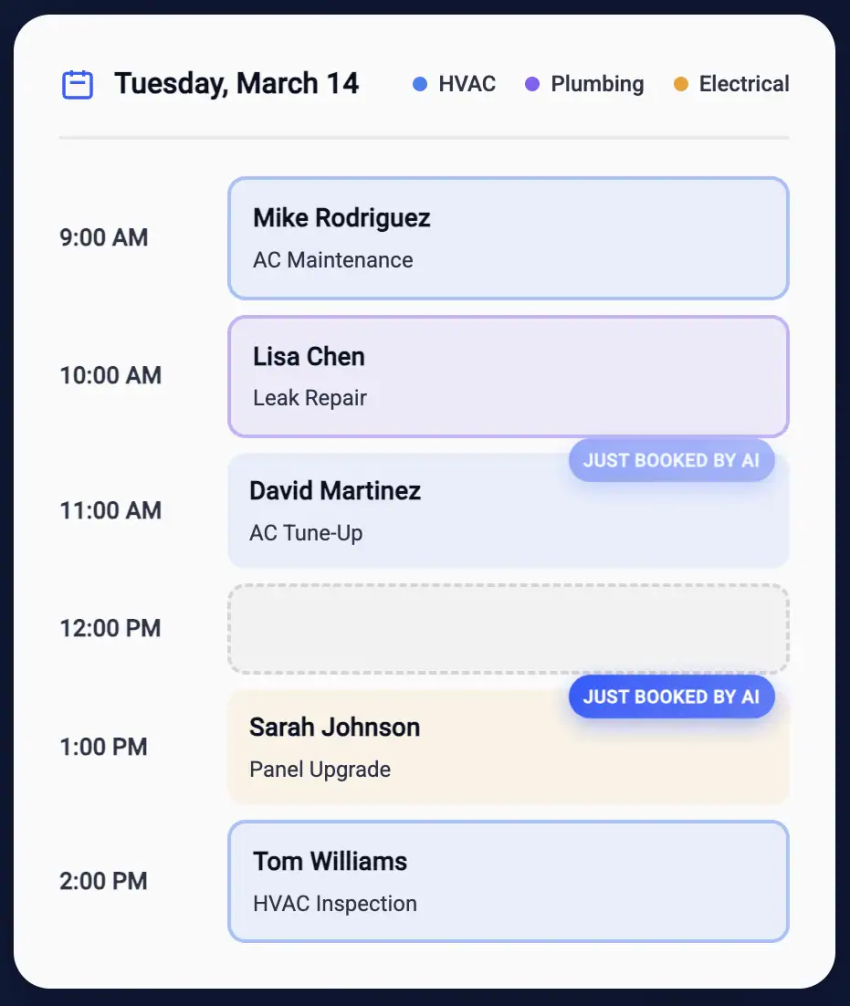
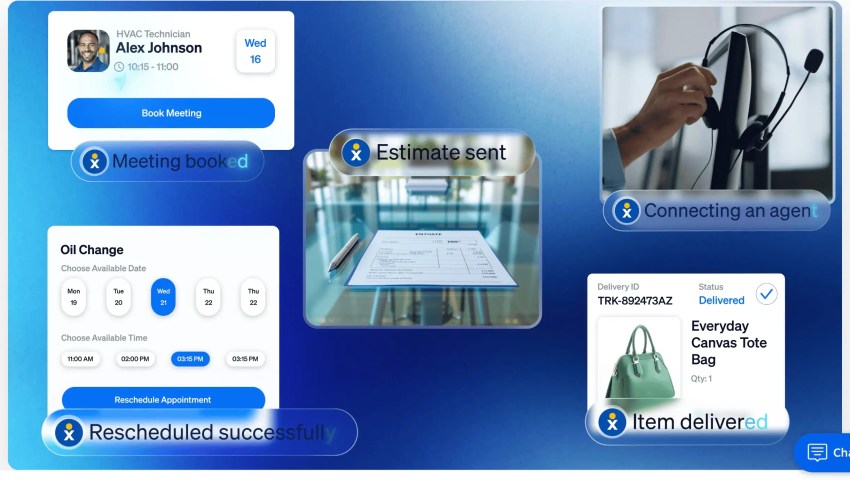
AI answering tools connect directly with booking systems to set or reschedule appointments in real time, with text or email confirmations.
When customers need to rearrange at the last minute, there’s no need for an agent to put them on hold, contact the engineer, and spend minutes trying to find a mutually convenient time. Instead, the system automatically finds the next available slot, books it, and even sends a follow-up email. It’s as simple as that.
Order management
If a customer has placed an order and they haven’t received their item (or are simply impatient), it’s an exercise of little value to you. Instead of asking paid employees to handle these types of phone calls, this is where an automated system comes into its own.
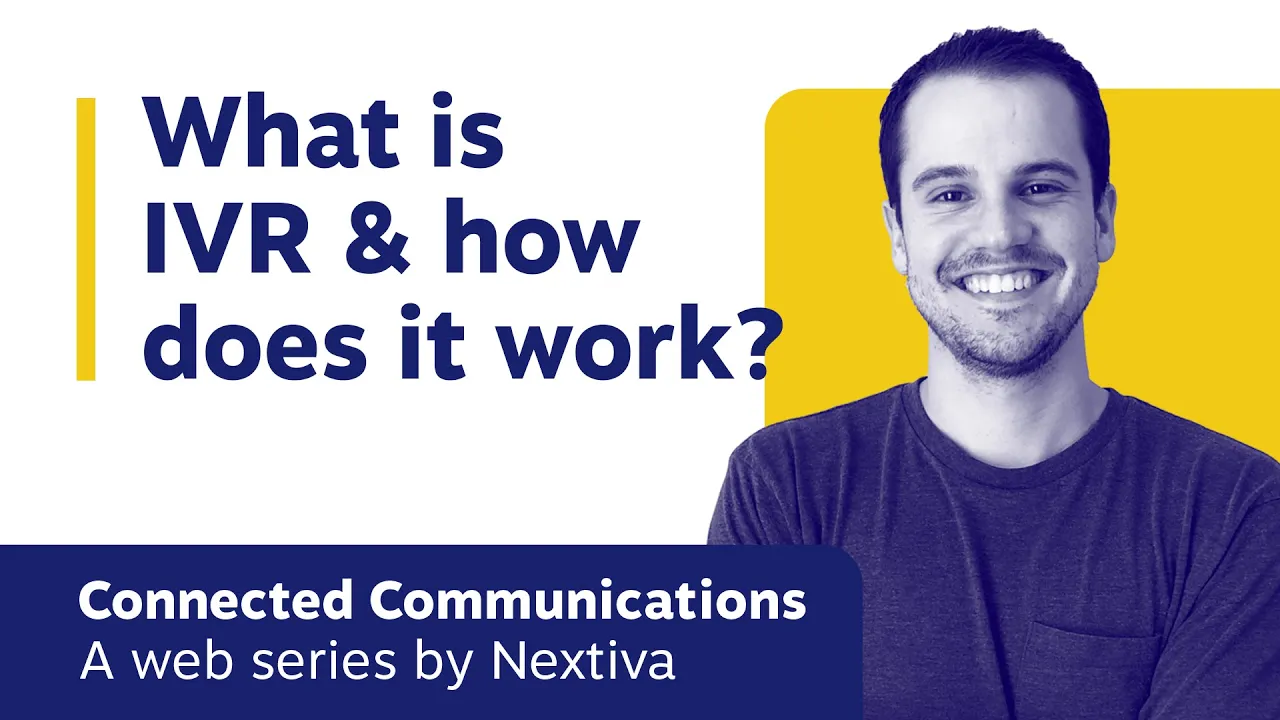
Customers can check their order status or modify bookings without talking to a live person thanks to interactive voice response systems (IVR) and CRM synchronization.
Emergency and after-hours routing
What happens if a customer experiences an unplanned emergency? Often, businesses either have nobody on standby or pay staff to sit idle just in case — a costly inefficiency. You end up paying a full salary for a scenario that might only happen once a month.
When urgent calls come in, use an automated answering system to automatically transfer callers to the right on-call employee or department — or deal with the issue if the customer sentiment deems it the right situation to do so.
Lead qualification
Want an automated lead generation program without having to lift a finger? Every time customers (or prospects) call you, they use words that signal buying intent that you may miss. After all, if a customer service rep is having a bad day, the last thing they want to do is keep someone on the phone longer than necessary.
Don’t let a bad day get in the way of a good sale.
AI receptionists gather caller information — like intent, budget, and location — and pass qualified leads directly into the sales pipelines. So, when Carol calls to report an issue with her surround sound system, she may use words like “upgrade” or “warranty” that trigger sales conversations.
Top Automated Professional Telephone Answering Services in 2026
1. Nextiva XBert AI Receptionist
Best For: Unified automation and AI-driven call handling
Nextiva’s AI-powered answering system combines advanced IVR, call routing, and real-time analytics within its Unified Customer Experience platform.
This AI receptionist uses conversational AI to understand what the customer’s immediate need is and either route or respond accordingly. Using natural language processing (NLP), audio-to-text conversion occurs. This then processes the requirement and potential to deal with the query and responds with human-like audio. All this happens in milliseconds, and it feels like a conversation with a human.
The major benefit? Zero time spent searching for information and cross-referencing documentation.
Businesses can automate greetings, route inbound calls intelligently, and automate call handling to complete the interaction. The system’s cloud-based design integrates voice, chat, and SMS — ideal for teams seeking an all-in-one communications hub.
Once an interaction concludes, call data, sentiment, and performance get analyzed and reported on for a detailed overview of customer insights.

Hear why XBert AI is the best AI receptionist
XBert AI receptionist handles customer questions, captures leads, and books appointments. Try it free for 14 days.
2. Smith.ai
Best For: Hybrid AI and human virtual receptionist support
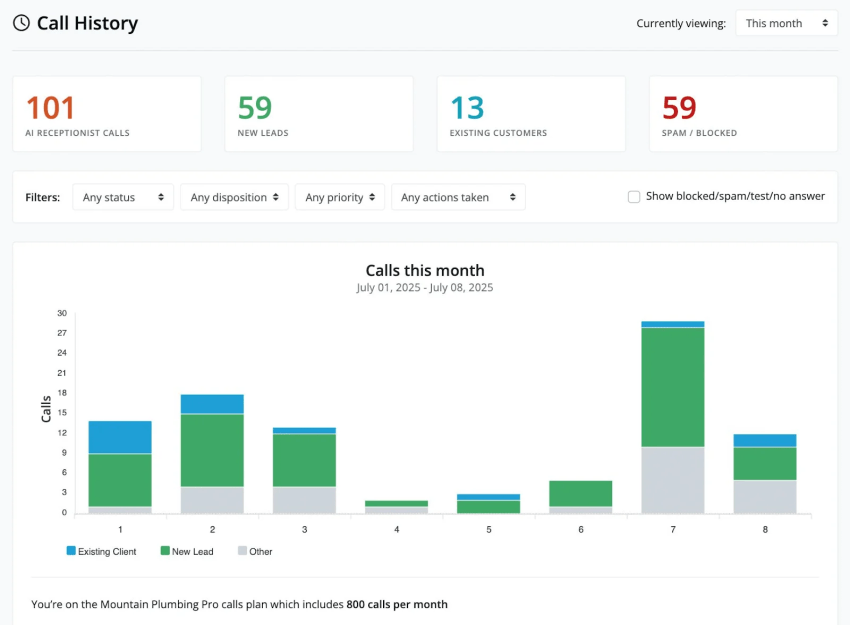
Smith.ai blends AI automation with live backup for more nuanced calls. Its AI agents handle intent recognition, lead qualification, and appointment scheduling, while live agents step in for complex requests.
Integration with CRMs like HubSpot and Clio makes it popular among legal and professional firms seeking intelligent automation with human fallback.
If you wish to use the best AI phone answering system for some queries and humans for others, there’s a hybrid option for a best-of-both-worlds approach.

3. AnswerConnect
Best For: Scalable IVR and high-volume businesses
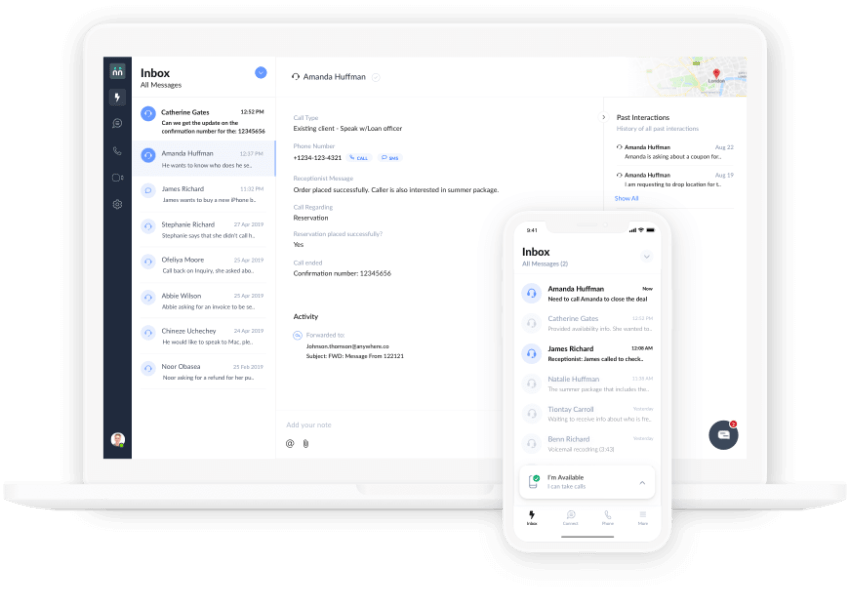
AnswerConnect offers advanced IVR technology combined with 24/7 scalability for large call volumes as a bilingual answering service. This service offers a live answering and chat tool that provides bilingual (English and Spanish) support. Its support team can help you by taking messages, routing calls, and qualifying inbound leads.
You get automated call routing, message transcription, and real-time mobile notifications for distributed and on-the-move teams. Its cloud portal provides analytics, and optional live escalation ensures coverage during critical incidents.

The Future of Phone Answering Services Is Automated
Professional answering services have transitioned from staffed call desks to intelligent, automated communication systems. If you’re not doing this yet, you can bet your competitors are.
The use cases and return on investment speak for themselves. By leveraging AI, IVR, and NLP, businesses can deliver fast, consistent, and accurate responses without increasing headcount (and the associated cost). For the price of ~25% of a basic rep’s salary, you get an always-on, zero-break-taking helpdesk, call distribution, and basic query handling machine that sounds and converses like a human.
Interested in automating your call answering service? Check out the XBert AI Receptionist here. 👇
Your AI receptionist that never misses a call.
XBert is your AI answering service that handles calls, texts, and chats 24/7. It greets customers, books appointments, and captures leads while your business grows.