
 Customer Experience
  Blog
Blog  Business Communication
  Leadership
  Marketing & Sales
  Nextiva News
  Productivity
  VoIP
VoIP 

Can you answer every call that comes into your business 24/7 without asking customers to hold in line?
If your answer is no, let us introduce you to AI answering services.
This technology can not only answer every call but also handle everyday customer interactions, implement a self-service menu, and route escalations to the most appropriate contact, all while maintaining friendly, conversational dialogue.
Try the best AI answering service free for 14 days
XBert AI answers questions and captures leads. Add your 24/7 answering service in minutes.
What Is an AI Answering Service?
An AI answering service is a virtual phone assistant that uses AI to automatically handle business calls. That means there’s no reliance on humans to field phone calls. These phone answering services operate 24/7 and can provide continuous coverage.
AI answering services incorporate artificial intelligence and natural language processing to deliver natural interaction, enabling intelligent call routing and business functions such as scheduling appointments, providing directions, and even sending confirmations via text message.
What’s more, when there’s a bad experience on a call, they don’t remember it. Instead, they move on to the next one, treating every customer equally and without bias.
An AI answering service is like a highly intelligent receptionist working in the cloud. It listens to the caller, understands their needs (even if they use colloquial language), and takes action, such as scheduling an appointment or answering a question.
Quick Answer: How Much Does an AI Answering Service Cost?
AI-powered answering services typically cost between $50 and $500 per month, depending on call volume, AI feature depth, and integration requirements — according to Nextiva customer data.
How It Works
There are four key components that power AI answering services.
Natural language understanding
The AI interprets what a caller says, understands their intent, and provides relevant responses. It goes one step further than natural language processing by understanding the customer’s needs and figuring out the best response based on sentiment, urgency, and technicality.

Machine learning
Over time, your AI answering service learns from previous calls to improve accuracy and efficiency. As it’s fed new and better data and information, it learns and improves — like a call center agent becoming more experienced and skilled over time.
Speech recognition & voice synthesis
To process information and understand the context and content of conversations, your answering service will convert speech into text for analysis.
Once interpreted (which takes milliseconds), it formulates a response and presents it in a natural, human-like voice.
System integrations
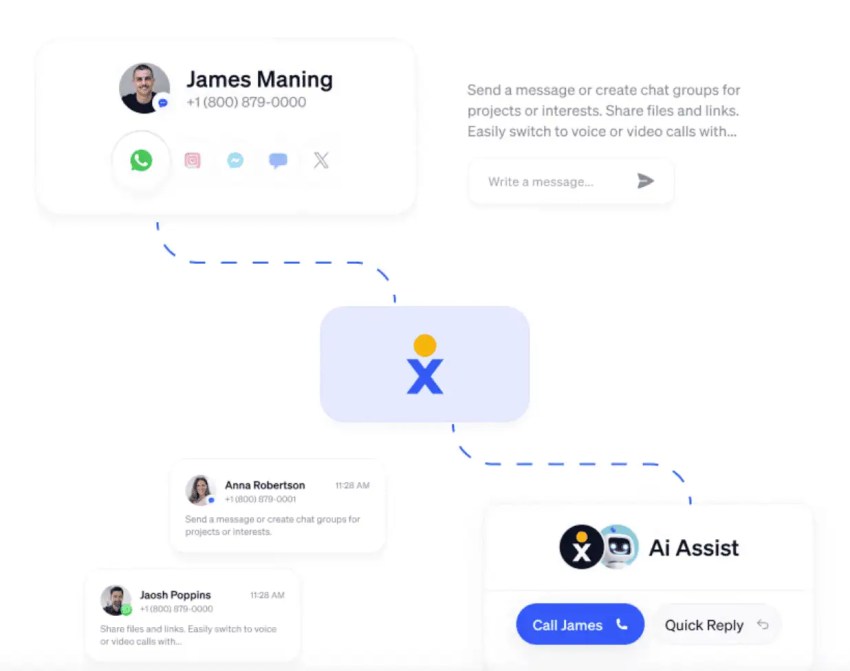
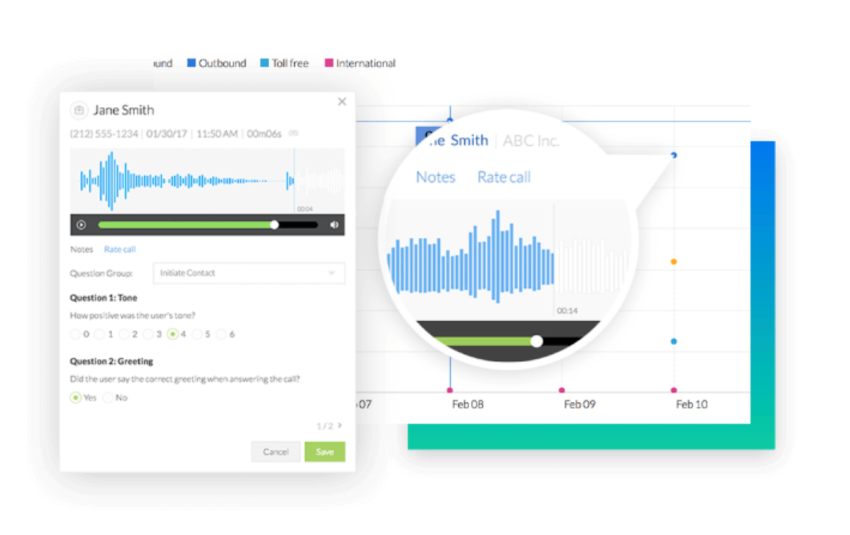
AI answering services connect with CRMs, calendars, and support tools to access customer data, book appointments, or log interactions automatically. Once connected, you create a two-way data sync and can enable triggers between booking systems, fulfillment systems, and ticketing tools.
Advantages & Benefits of an AI Answering Service
24/7 availability
AI systems don’t need breaks. Calls get answered instantly at any hour, including nights, weekends, and holidays, ensuring that no customer is left waiting or sent to voicemail.
The provider handles maintenance by maintaining and updating the underlying software and models, so you don’t need to manage patches yourself. And though the system is still subject to occasional updates or downtime like any cloud service, improvements and security fixes happen with minimal disruption.
AI-powered answering systems like Nextiva XBert® are flexible to fit your business needs. If you only want after-hours coverage, you can stick with that. But if your want 24/7 coverage, you have that available.
Hear why XBert AI is the best AI receptionist
XBert AI receptionist handles customer questions, captures leads, and books appointments. Try it free for 14 days.
Reduced costs
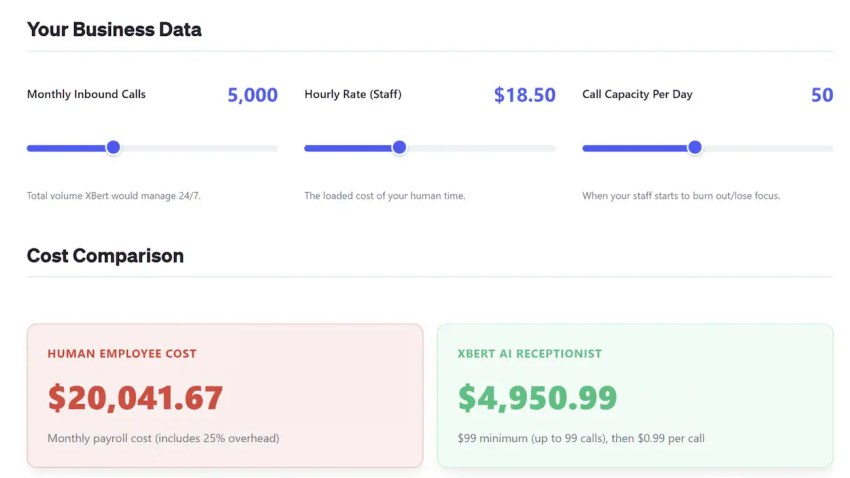
You can eliminate the high expense of hiring, training, and retaining reception staff. An AI receptionist costs a fraction of a full-time employee while maintaining consistent quality. In fact, the cost of an AI answering system comes in at around only 25% of the rate of your full-time equivalent hours.
Higher efficiency
AI handles repetitive tasks (answering frequently asked questions, capturing leads, and scheduling appointments), freeing up human staff to focus on higher-value or complex inquiries.
Think of how many times you’ve looked over and seen an employee rolling their eyes after explaining the returns policy to yet another customer today. Instead, let AI read that script and empower your employees to flex their troubleshooting muscles.
Scalable coverage
AI can handle thousands of calls simultaneously without impacting performance, making it ideal for growing businesses or seasonal spikes in call volume. If scalability is something your business is struggling with, adjust your plan to gamble on tons of new hires and let an answering system handle the grunt work instead.
Improved customer experience
If your calls get answered instantly with a consistent tone and accuracy, what do you think will happen to your customer experience metrics? Your customers will enjoy (or at least tolerate) interacting with your business a lot more.
The result? They’ll have no reason to raise a complaint, look elsewhere, or write a negative review. Instead, they’ll get what they called for, and you’ll keep them on side.
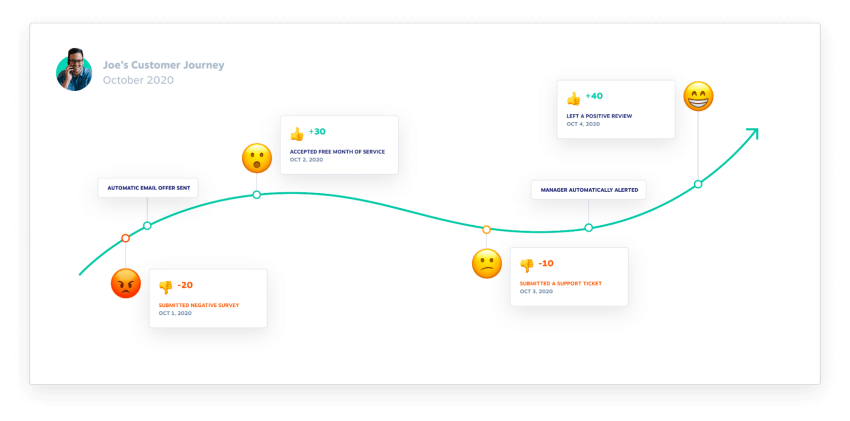
Many AI answering systems can personalize responses based on customer data, making the customer experience relevant and professional. They provide more than just quick answers — they give comprehensive responses that can take care of the entire customer journey.
Data and analytics
Once a call has been handled by your voice AI tool, call summaries, transcripts, and analytics reveal valuable insights into call volume, customer sentiment, and service gaps. This is data that can improve marketing and operations strategies, as well as inform employee training plans and product development.

Multilingual support
What is your business process for handling inbound calls from individuals who do not speak English?
- Don’t tend to their query
- Attempt a conversation in broken language
- Hunt around the office for someone who speaks the language better than you (putting the caller on hold for 10 minutes)
Advanced AI answering systems support multiple languages, improving accessibility and service for diverse audiences. You get English and Spanish as standard with most leading solutions.

Popular Use Cases for AI Answering Services
After-hours call handling
After-hours answering services keep your business available around the clock without hiring extra staff.
While you could opt for a real-time, human virtual assistant or business process outsourcing company, these come with high costs. Instead, choose a single AI solution that can take care of everything these teams would do.
Note: We aren’t suggesting you replace humans entirely. Even in the case of after-hours support, we still recommend having a specialist on call for technical or complex cases.
Lead capture and qualification
Every time your AI speaks with a customer, it automatically records caller details, qualifies potential leads, and syncs the data directly to your CRM.
This could be a returned call from an outbound call campaign. But it might also be an upsell opportunity that arises in a customer support query. Whatever it detects gets noted on your CRM, and your sales team gets a follow-up notification when they log in.

Appointment scheduling
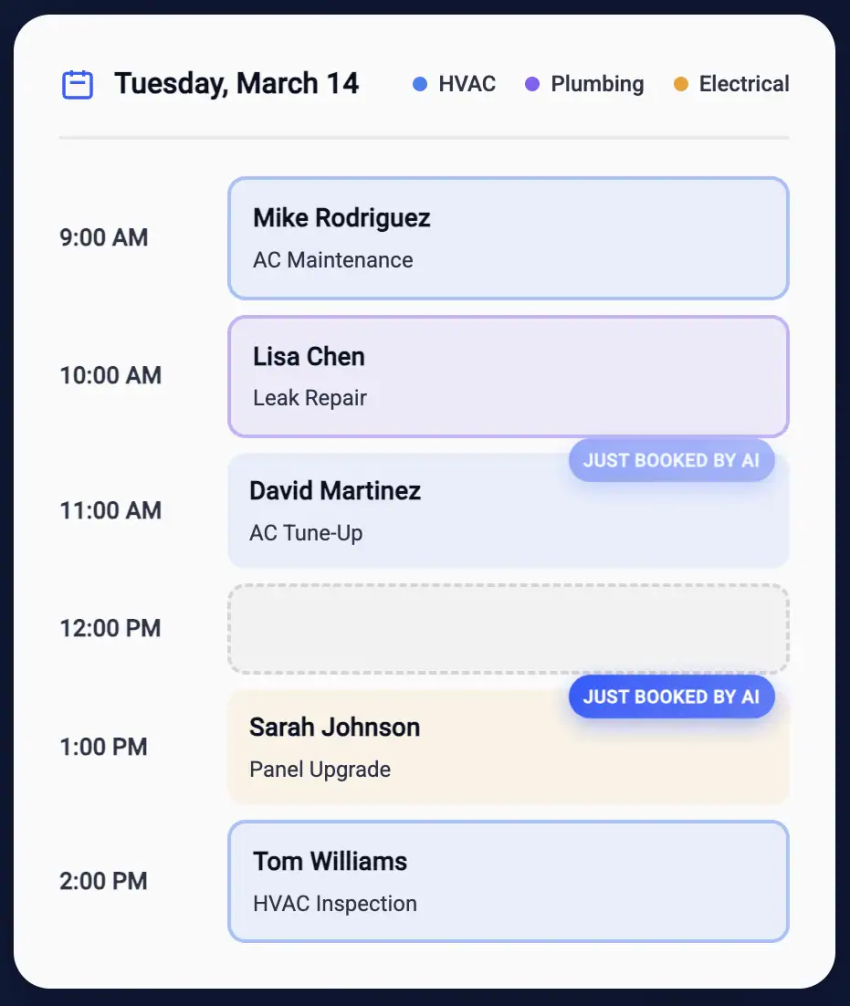
When a customer calls to book, confirm, or reschedule an appointment, there’s no need for your employees to hunt around calendars and leave messages for team members to check availability.
Instead, using integrated calendar tools, AI systems can instantly cross-reference availability and make bookings in the moment. They then relay the information to the customer over the phone and can trigger SMS or email confirmations.
Customer support
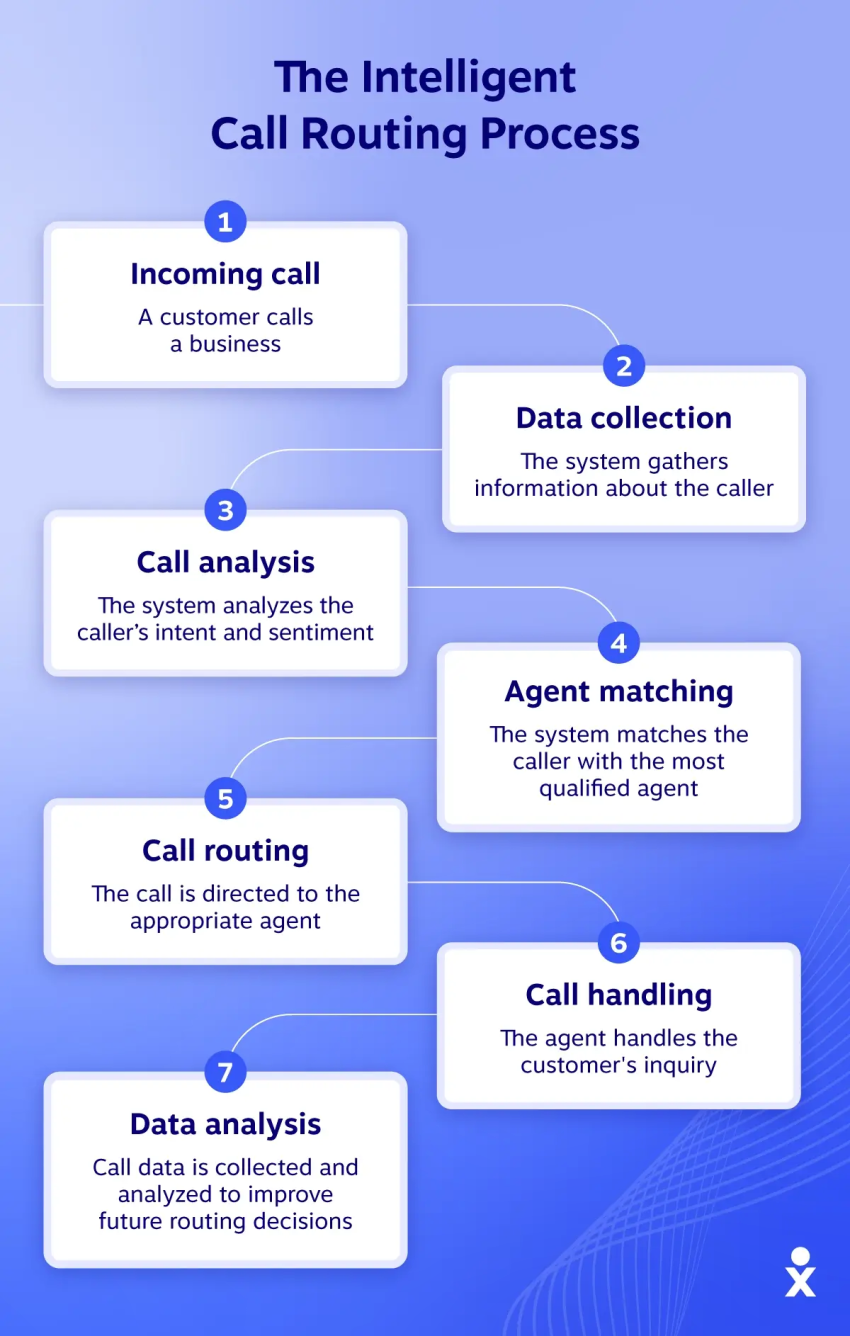
The most obvious use case for an AI phone answering service is to answer common questions and escalate complex issues to the right person. Like a smarter version of an interactive voice response system, these AI tools can judge whether they’re best suited to answer the query or hand it off to a human agent or expert resource.
Call routing
If your call answering service decides calls need to be escalated to a live agent, it will automatically transfer customers to the right department or agent with full context. Using pre-set or machine-learned specialisms, AI will find the best-matched and next available staff member to deal with a customer’s inquiry.
Limitations and Considerations
If you run a small business and have concerns over implementing AI for the first time, it’s only right to question whether you’re ready to hand over the initial call handling process to an automated system.
While virtual receptionists can handle most call scenarios, they aren’t perfect. Below, we outline the most common queries surrounding AI answering services to help you feel more comfortable.
| Category | Limitation/Consideration | What This Means for Your Business | Best Practice/Mitigation |
|---|---|---|---|
| Human touch | Limited emotional intelligence | AI can struggle with sensitive, emotional, or high-stakes conversations where empathy is required | Use a hybrid model that escalates complex or emotional calls to live agents |
| First-time implementation | Adoption can feel overwhelming for small businesses | Teams may worry about setup, training time, or integration complexity | Choose providers with guided onboarding and strong customer support |
| Accuracy | Not perfect out of the box | AI may misunderstand accents, slang, or industry-specific language early on | Continuously train the AI using FAQs, scripts, and real call data |
| Customization | Requires ongoing tuning | Without updates, responses can become outdated or off-brand | Regularly update tone, scripts, and knowledge base to match your brand voice |
| Oversight | Needs consistent monitoring | AI performance can drift without review, impacting customer experience | Monitor call transcripts and analytics to optimize accuracy and tone |
| Edge cases | Struggles with highly complex scenarios | Unusual or multi-layered requests may not be handled correctly | Create smart escalation rules to route calls to humans |
| Customer perception | Some callers prefer speaking to humans | A portion of customers may distrust or dislike AI-only interactions | Be transparent and offer an easy opt-out to a live agent |
| Data dependency | Relies heavily on quality data | Poor CRM or outdated information can lead to incorrect responses | Maintain clean, up-to-date CRM and support databases |

5 Best AI Answering Service Providers
1. Nextiva
Best for: Businesses seeking an integrated communication platform with built-in AI.
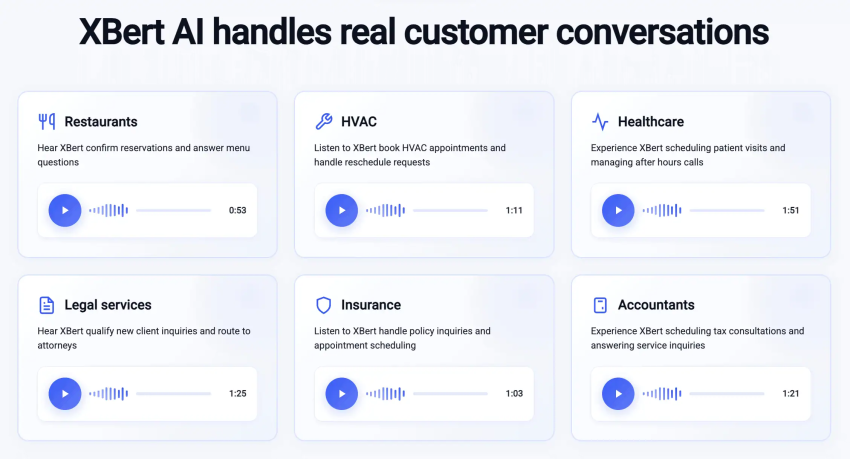
Nextiva’s XBert AI answering service provides intelligent call handling within its unified communications platform. The AI receptionist will answer all initial calls (unless you configure specific phone numbers not to be routed this way) and then decide whether to route them to experts or handle them self-service style. In practice, this means your customers will no longer hear standard phone menus but will instead receive personalized greetings and an immediate answer.
XBert AI combines conversational AI, CRM integration, and analytics into one easy-to-use solution. This way, you get everything you need to deploy, manage, and measure your incoming calls within a single platform. What’s more, everything integrates with your business phone system or contact center platform, reducing admin work and the risk of information leakage.
Key features of Nextiva XBert:
- Zero coding required with turnkey implementation
- Conversational AI that understands natural language
- Smart routing and context-based transfers to live agents
- Real-time transcription and call summaries
- Calendar and CRM integration for booking and record updates
- 24/7 coverage with customizable call flows
- Unified inbox for phone, text messages, and chat
Price: XBert AI starts at $99/month per 100 sessions, then $1.50 per session after.
2. Kore.ai
Best for: Businesses wanting a highly customizable conversational AI engine.
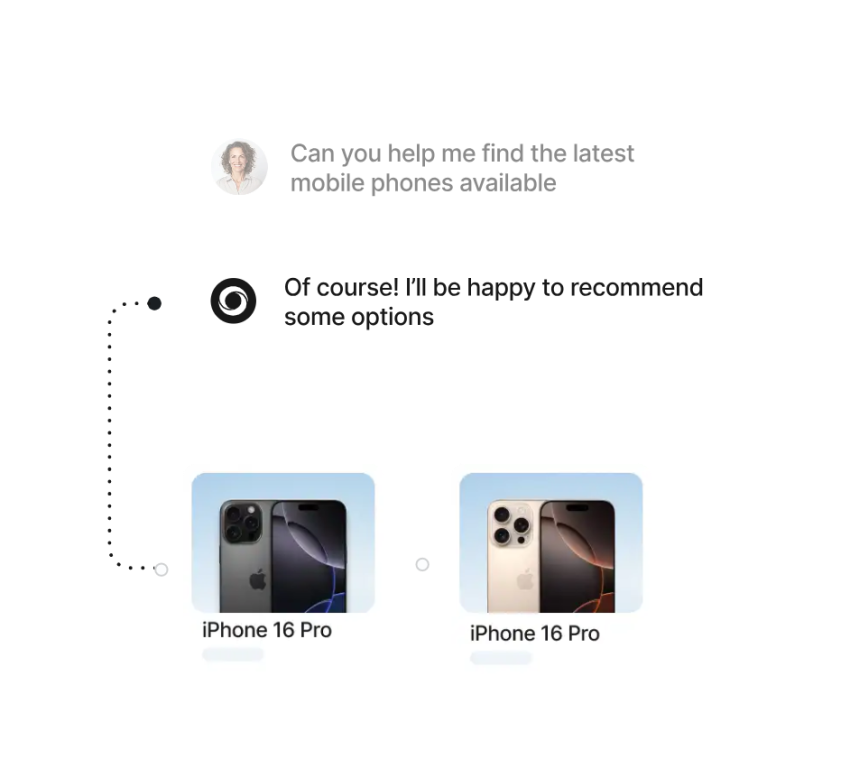
Kore.ai offers advanced AI assistants that answer calls, field chats, and move through workflows with natural language understanding. Its strengths lie in strong conversational AI and intent detection, making for a human-like experience (rather than bot-to-human).
You get the option of a no-code or low-code planner for designing your bots.
Note: There is substantial configuration needed. Less experienced admins may need training, professional services, or simply the investment of some time upfront.
This configuration is worthwhile long-term if you plan to use AI agents across voice, SMS, and web chat.
Price: $50/month for Essential Automation AI and $150/month for Advanced, billed annually.
3. Replicant
Best for: Companies that want an AI voice agent to fully replace call queues.

Replicant’s Thinking Machine handles entire conversations end-to-end, reducing the need for human receptionists. There’s no need for scripts, and you can configure call flows quickly using a drag-and-drop builder.
If your primary concern is a high-volume call environment, take the stress out of hitting your time-to-answer targets and let AI do the work upfront. When calls have been routed or handled, there’s a solid reporting suite complete with conversation intelligence analytics.
Price: Contact sales for pricing.
4. Smith.ai
Best for: Businesses that want a human and AI hybrid model.
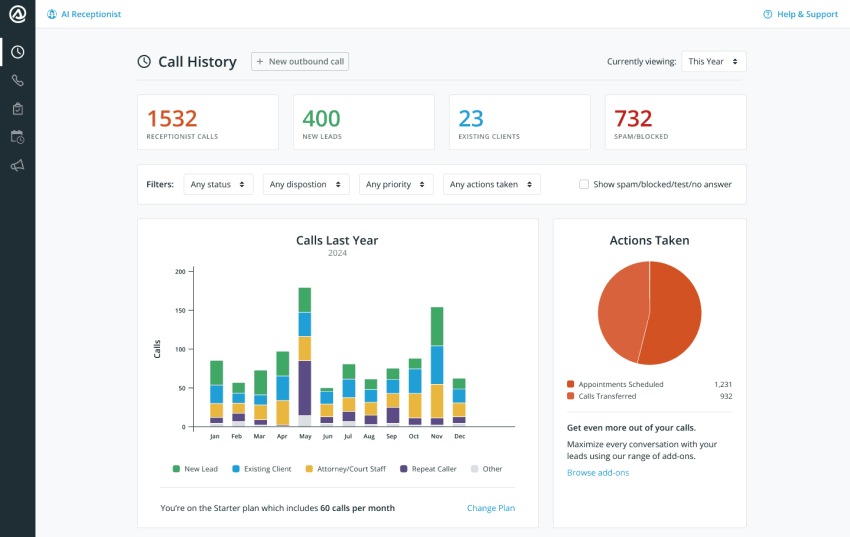
Smith.ai combines AI-powered call screening with live receptionists to deliver both automation and human empathy. The AI handles basic inquiries, while live agents take over for complex or sales-driven conversations.
It’s strong in lead screening, intake, and sales-focused conversations. The ability to overflow to real people is desirable for small businesses that don’t have the in-house resources.
Price: Starter AI Receptionist plan is $95/mo, billed monthly. The custom-built Managed AI Receptionist plan is $500/month.
5. PolyAI
Best for: Businesses prioritizing lifelike, human-sounding AI voices.
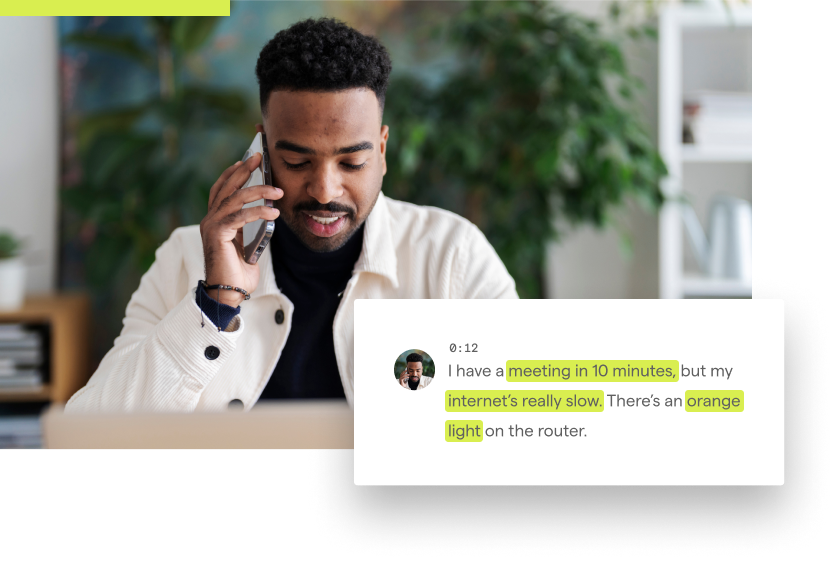
PolyAI is best known for its voice assistant technology deployed by large enterprises. It excels at handling complex, multi-turn conversations in noisy environments, though it’s typically geared toward larger contact centers rather than small business setups.
Price: Per-minute pricing; must contact sales for pricing.
Choosing the Right AI Answering Service
Use the checklist below to ensure you get exactly what you’re looking for in an AI answering service:
| Feature | What to Look For | ✓ |
|---|---|---|
| Ease of setup | Drag-and-drop editors or plug-and-play deployment | 🔲 |
| Integration capabilities | CRM, calendars, and help desk sync | 🔲 |
| Customization | Ability to train the AI on your FAQs, scripts, and brand tone | 🔲 |
| Analytics | Insights into call volume, missed calls, response quality, and sentiment | 🔲 |
| Scalability | Support for multiple departments, locations, and languages | 🔲 |
Why Nextiva Leads the Market
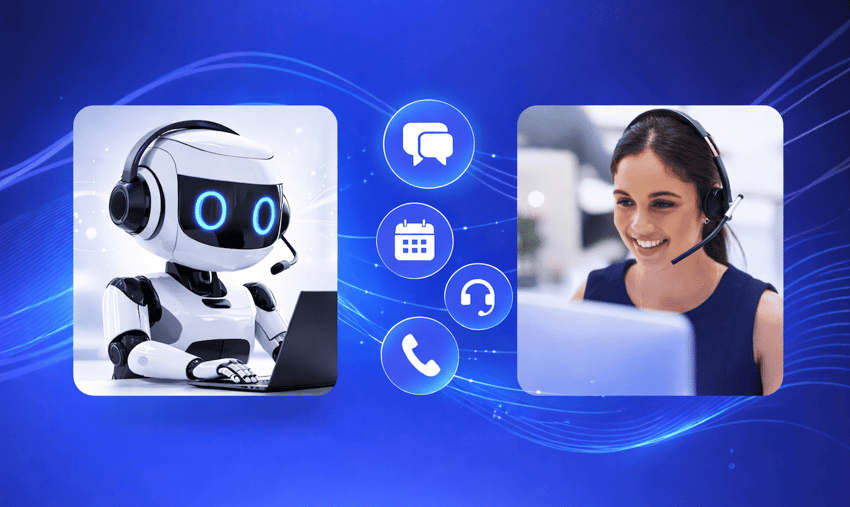
Nextiva’s AI answering technology goes beyond basic automation. We’re not talking about simply answering a call and re-routing it based on a menu press. Instead, we’re talking about looking after the complete customer journey from “hello” to “thank you.”
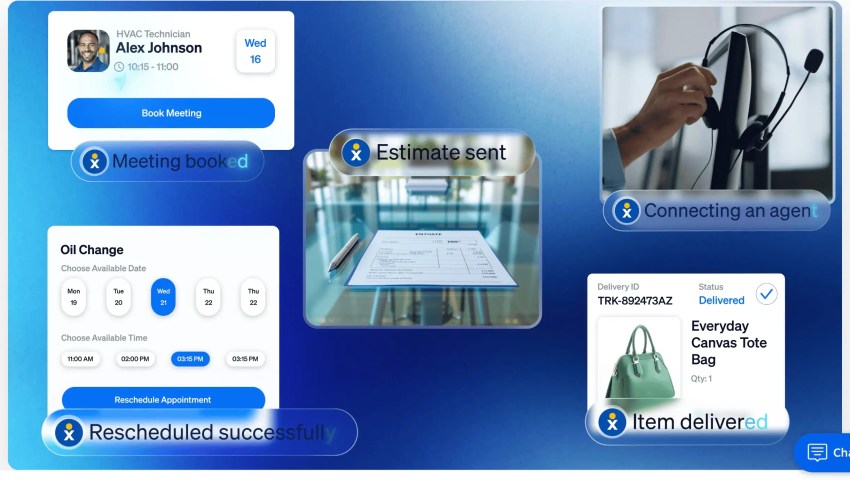
Beyond the actual service, you can benefit from live help and full onboarding if you need it. Unlike other products where you may need a full-stack dev team, you can focus on serving customers rather than comparing cloud hosting services and APIs.
Nextiva unifies voice, SMS, chat, and CRM into one platform, ensuring that every call connects, every customer is acknowledged, and every opportunity is captured. It also takes care of compliance issues like HIPAA, GDPR, and PCI-DSS.
With tools like XBert, leading businesses are already:
- Automating 90% of routine calls
- Increasing lead capture by 40%
- Reducing missed calls to zero
- Delivering a professional, on-brand experience every time
Want to flex these metrics at your next leadership meeting? Explore Nextiva’s AI Receptionist here. 👇
Stop missing calls. Start adding revenue.
XBert is the top AI answering service that handles calls, texts, and chats 24/7. Incredible value for business owners.