
 Customer Experience
  Blog
Blog  Business Communication
  Leadership
  Marketing & Sales
  Nextiva News
  Productivity
  VoIP
VoIP 

Over the past few months, I’ve spent time testing every major AI receptionist platform. This isn’t just out of curiosity or experimentation but because I kept hearing the same story from business owners: “We’re losing deals because we can’t answer the phone.”
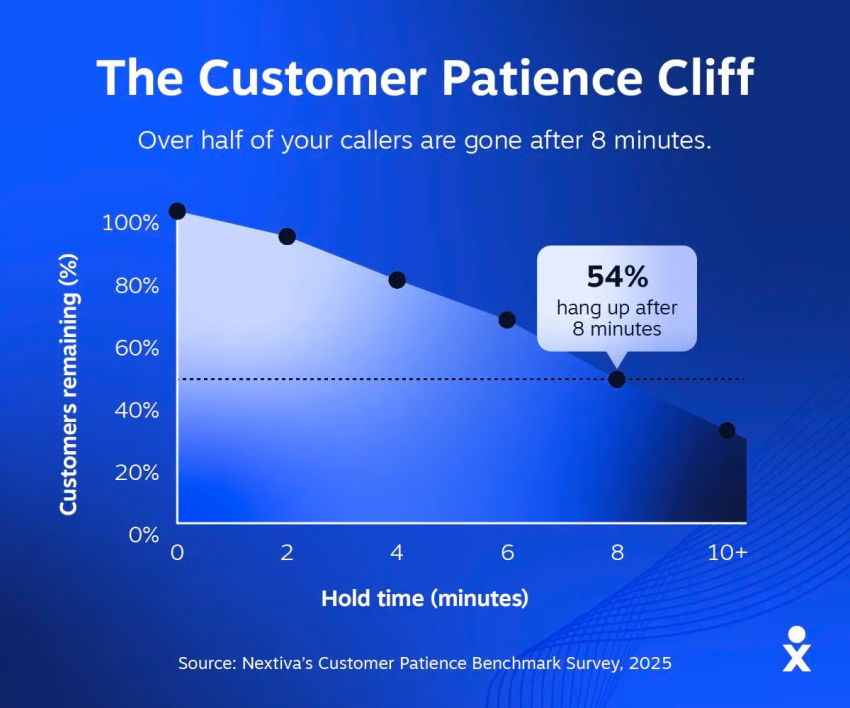
A missed call isn’t just an inconvenience — it’s a customer choosing your competitor. Poor experiences, like dealing with long wait times or a lack of 24/7 customer support, can push customers to hang up after 8 minutes and take their business elsewhere.
After-hours coverage is where a lot of businesses struggle, and traditional answering services might provide inconsistent quality and come with high costs. Then, AI virtual receptionists entered the picture, and the conversation shifted entirely.
Try the best AI answering service free for 14 days
XBert AI answers questions and captures leads. Add your 24/7 answering service in minutes.
What Is an AI Virtual Receptionist?
An AI virtual receptionist is software that answers your phones and handles messages using technologies like automatic speech recognition, natural language processing (NLP), and machine learning (ML).
These systems understand context and user intent across the entire customer interaction. When callers ask to reschedule their appointment for next Tuesday, the AI doesn’t just write down a note. In fact, the caller’s request triggers a coordinated sequence of actions.
The AI voice agent is already checking your calendar, finding an open slot, sending a confirmation, updating your CRM, and logging everything for your team to see later.
Here’s what AI virtual receptionists do:
- Answer calls and route people to the right department
- Book appointments and send confirmations automatically
- Answer FAQs in real time
- Qualify leads before they get to your sales team
- Handle incoming phone calls simultaneously
The real difference isn’t just that an AI virtual receptionist works 24/7. It’s that call number 47 gets handled with the same precision as call number one. With an AI virtual receptionist, there’s no fatigue, and operational quality remains consistent.
Is it worth it? Find out the ROI with this free AI receptionist calculator
Top 5 AI Virtual Receptionist Providers
I’ve tested each one of these platforms for weeks at a time. Here’s what you need to know when you’re deciding.
Nextiva XBert AI
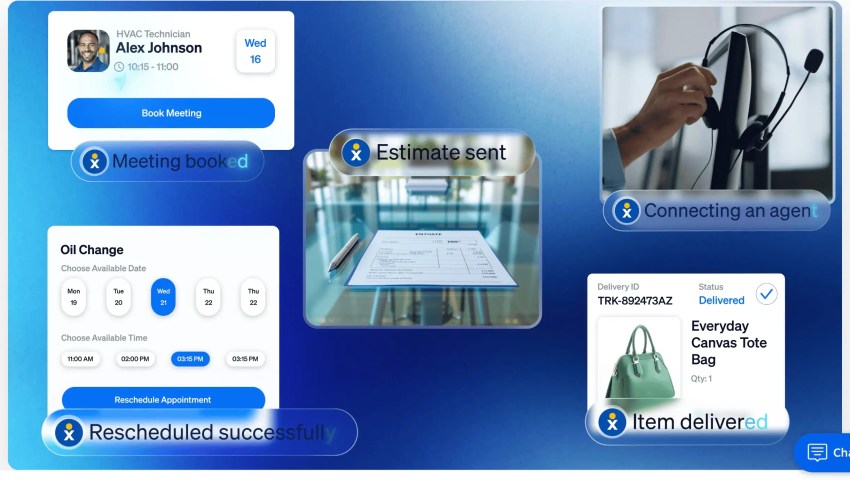
At Nextiva, we built XBert to address a clear pain point: our customers were exhausted from managing five different tools that barely talked to each other.
As an AI-powered front desk assistant, XBert handles everything from one place: voice calls, SMS and MMS, web chats, emails, and messaging apps.
Key features:
- Smart scheduling and calendar integration
- Lead qualification, follow-up, and CRM sync
- Intelligent call routing with full context
- After-hours coverage and message capture
- Unified dashboard with call transcripts and analytics
- Omnichannel support
- SMS and MMS
- Website chat
- WhatsApp/messaging apps
- Unified conversation history across channels
- Quick setup — you can go live in minutes, even quicker if you’re already using Nextiva
The omnichannel capability is essential to meeting customer expectations. A majority of consumers (69%) expect consistent interactions from businesses, with some consumers (around 60%) preferring having fewer touchpoints to get what they need.
When someone chatted yesterday about pricing, called this morning about a problem, and now they’re texting about an upgrade, your AI virtual receptionist sees all of it. That context allows you and your team to deliver effective service aligned with previous interactions.
Best for: Businesses looking for an all-in-one communications platform that combines capabilities like AI voice, CRM, and unified communications.
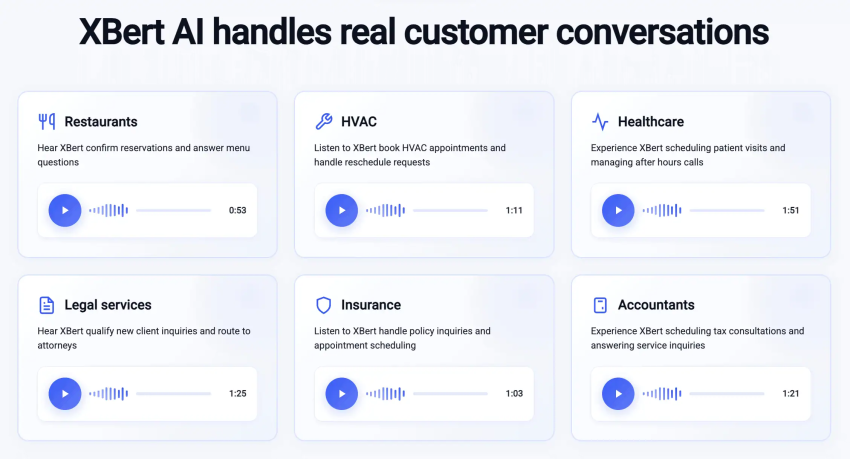
Hear why XBert AI is the best AI receptionist
XBert AI receptionist handles customer questions, captures leads, and books appointments. Try it free for 14 days.
Quo
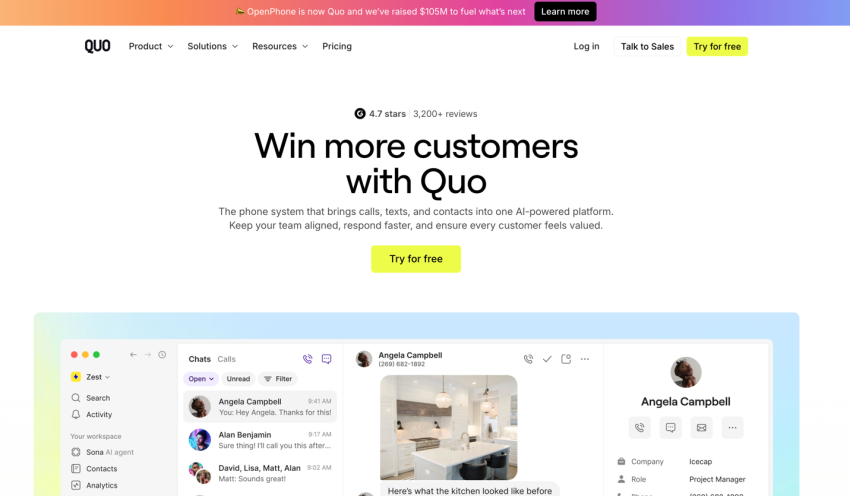
Quo (formerly OpenPhone) targets startups and small businesses by positioning itself as a modern phone system with automation and AI capabilities for call handling and voicemail transcription.
Some of the things Quo excels at include letting everyone on your team use the same business phone number and see all the calls, sharing context (warm transfers) before handoffs, and plugging it into the CRMs you’re already using.
Highlights:
- Voicemail transcripts and contact notes
- CRM integrations
- Simple setup for startups and SMBs
Best for: Small teams that want a modern call automation that works out of the box without a steep learning curve.
Zoom Virtual Agent
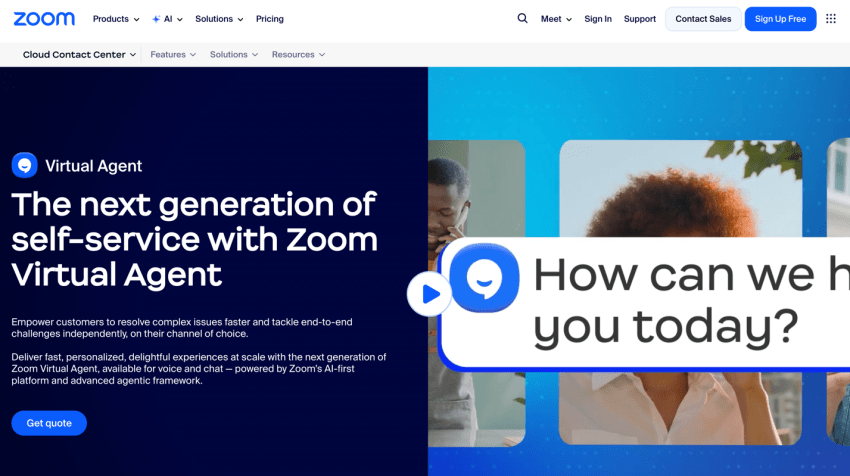
If you’re already running Zoom Phone, its Virtual Agent is designed to operate natively within that ecosystem. Everything works together because it’s all from the same company, enabling seamless integration and workflows and minimizing operational friction.
You can deploy custom virtual agents thanks to Zoom Virtual Agent’s low/no-code functionality. It also leverages an agentic AI framework, which crawls your knowledge base and FAQs, to deliver more adaptable self-service solutions to your customers.
Highlights:
- Multilanguage support
- Seamless handoffs to live agents
- Premium voice options so your AI virtual receptionist can sound like your brand
- Real-time performance tracking
Best for: Businesses already using Zoom’s ecosystem.
JustCall
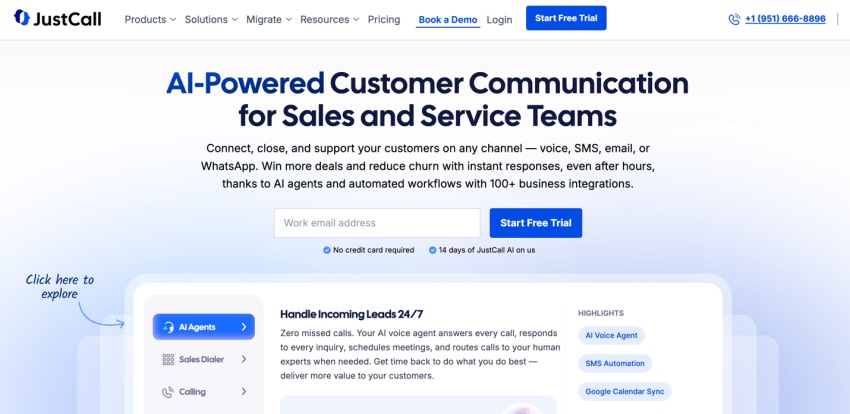
This communication platform is designed specifically for sales and support teams making hundreds of calls every day. The whole platform assumes you’re operating at volume and need automation that can keep up.
Highlights:
- 24/7 call answering and routing
- Automated follow-ups via text or WhatsApp
- Customizable or cloneable voices for brand consistency
- Deep integrations with over 100 tools like HubSpot, Salesforce, Zoho
For businesses with lower call volumes, some features may see limited use, and access to advanced or key features may require subscribing to a higher tier. Another potential downside may be call management and integration issues, factors that may lead some organizations to explore a JustCall alternative.
Best for: Fast-growing teams that need scalable call automation.
Smith.ai
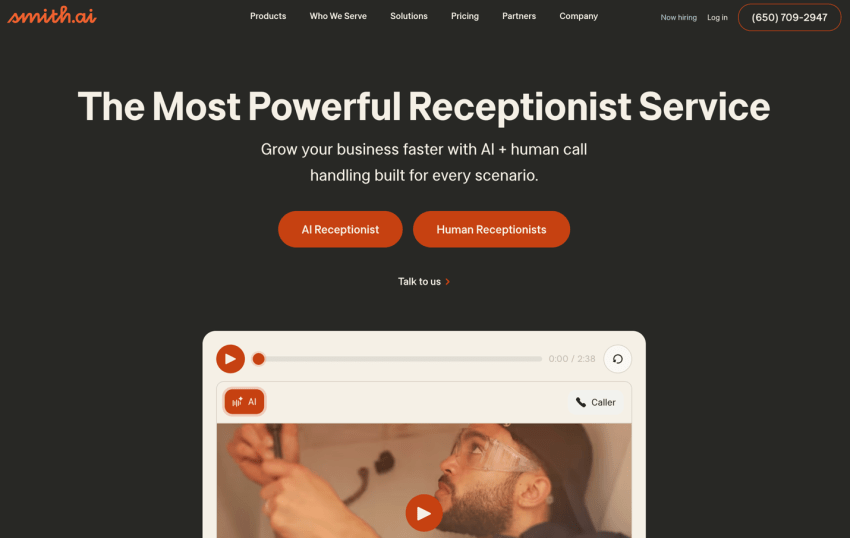
Smith.ai differentiates itself by combining AI with real human backup to create a hybrid experience. The AI handles most calls, but real people monitor and intervene during complex or sensitive situations, making it a good option for regulated or relationship-heavy industries.
While the hybrid model may present limitations for long-term scalability, it bridges trust gaps for firms that aren’t ready to go fully automated just yet. Firms with strict compliance requirements should note that Smith.ai is not Health Insurance Portability and Accountability Act (HIPAA)-compliant. Any regulatory considerations should be addressed directly with the vendor.
Highlights:
- AI-plus-human-backup model
- Lead screening and intake forms
- Bilingual (English/Spanish) support
- Over 7,000 integrations, including legal and CRM software
Best for: Professional services that require a human touch, like law firms.
How AI Virtual Receptionists Work
AI receptionists rely on NLP and ML to understand and respond to input like human speech (calls) or text. Other technologies used to enable natural, human-like exchanges include deep learning, conversational AI, and automatic speech recognition. Understanding what’s happening under the hood helps you figure out if a platform can deliver what it promises.
Call handling
When a call comes in, advanced voice recognition interprets speech. Modern systems use neural networks trained on millions of conversations, so they can understand even with accents, background noise, or people mumbling into their phone.
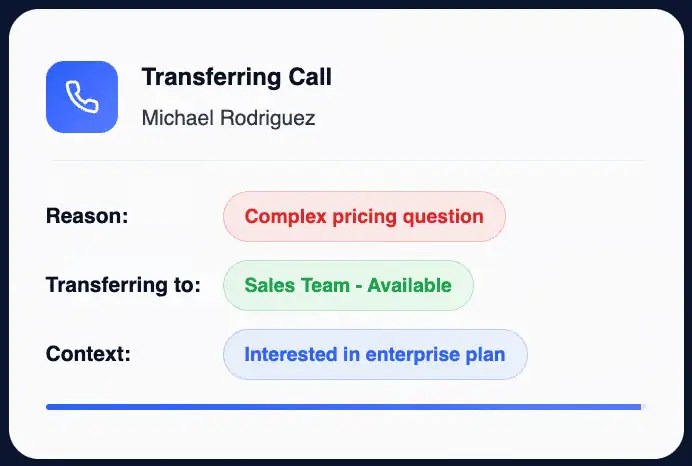
Then, the AI virtual receptionist analyzes caller intent. This goes beyond just looking at keywords and entails understanding context and history. If escalation is required, the system transfers the call with everything attached, from the transcript to customer information and suggested next steps.
Automation and integration
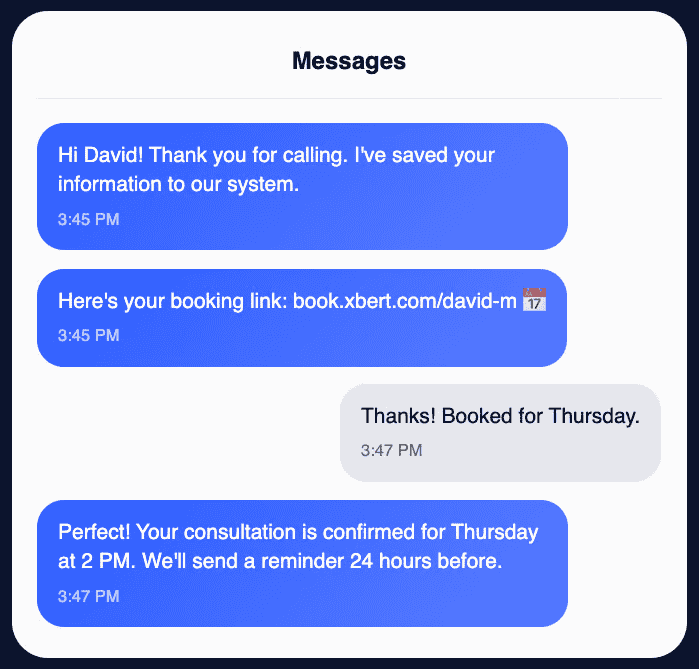
Through integrations, the AI virtual receptionist connects with platforms like Salesforce, HubSpot, Microsoft 365, and Google Workspace to streamline operations. When someone books an appointment, the AI doesn’t just add it to the calendar, but it also logs the interaction, creates tickets, automates confirmations, or checks availability.
Customization
Every business handles calls differently. Customization determines whether the AI becomes an authentic extension of your brand or remains an automated system that sounds like everyone else’s.
You can typically control greetings, tone, voice, and responses so these align with your brand. Some platforms also offer voice cloning, where the AI can sound like your CEO or company representative. That level of personalization can change how customers perceive the interaction completely. And because the voice creates a sense of familiarity, it can help build connection and trust among customers, which, in turn, can lead to more authentic interactions.
Continuous learning
As your conversational AI solution handles more calls, it becomes smarter about your specific business. It learns from past interactions, leveraging them to better understand customer intent and preferences.
Top Reasons to Use AI Virtual Receptionists
24/7 availability
Customer needs don’t adhere to business hours, and after-hours calls are often where most businesses hemorrhage opportunities.
AI virtual receptionists work around the clock without overtime or scheduling headaches, ensuring that the 2 a.m. call gets handled with the same professionalism as the noon call.
Lower costs
A full-time receptionist represents an expense of $50,000–$70,000 a year with salary, benefits, training, and everything else. AI platforms typically cost $100–$500 monthly (some options may go for under $100 per month), depending on volume, number of seats or users, and features.
We built an AI receptionist ROI calculator and found that an average business can save around $45,000 annually while still providing wider coverage. This shifts spending away from overhead and toward areas that move the business forward.
Scalability
Seasonal businesses get hit with an impossible staffing problem: you need double or triple the capacity during peak season, but can’t justify that headcount throughout the year.
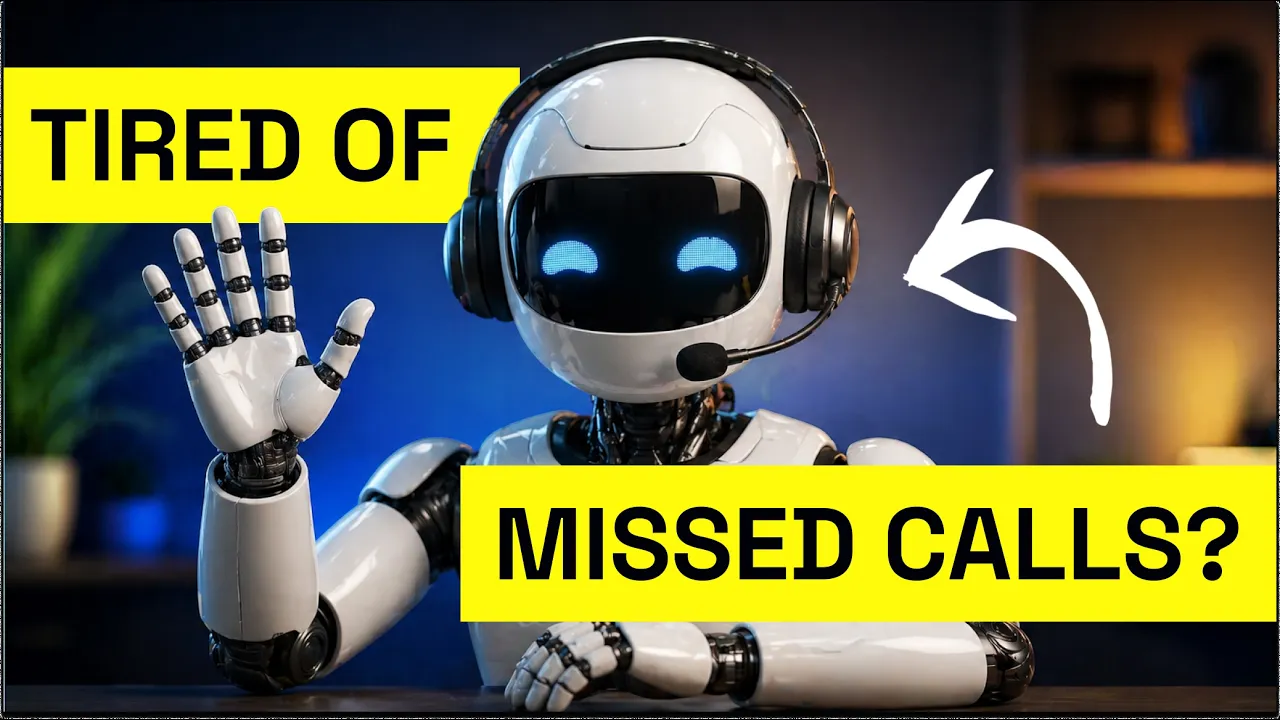
If you have a product launch, a holiday rush, or an unexpected spike, AI agents give you a solution that scales instantly. Whether it’s 50 calls a month or 5,000, the system adapts. An AI answering service also makes it easier for customers to connect with your business, giving you the capacity to interact with customers in their preferred channel or method.
Improved customer experience
Long wait times kill customer satisfaction.
We recently conducted a Customer Patience Benchmark survey and found that after eight minutes or more on hold, 54% of customers tend to hang up. What’s even more alarming is that customers can and will move on if they can’t get a prompt response or if they have a negative experience.
Missed a call? 28% of callers will abandon your brand after the first bad experience. This jumps to 42% after the second bad experience.
An AI receptionist addresses these challenges by answering immediately and intelligently routing calls to an available human receptionist. Consequently, this reduces customer hold times while preventing agent overload and providing customers with helpful responses.
Reduced admin work
High-performing teams are often weighed down by work that adds little strategic value but demands constant attention, like taking messages and booking appointments. When skilled employees spend their time doing repetitive tasks, the organization underutilizes its most valuable asset: its people.
An AI receptionist can handle repetitive tasks, such as answering FAQs, freeing your staff to focus on higher-value activities.
Consistent brand voice
When a customer calls, there’s no guarantee that the agent they spoke with this morning will be the same one who answers calls in the afternoon. What’s more, with a human receptionist, consistency depends on mood, training, and individual differences.
AI delivers consistency every time. From your brand voice to your preferred approach, these elements are applied to every interaction. You can modify the tone to match your brand personality, and it remains consistent across all calls.
Security and privacy
For regulated industries like healthcare, legal, and financial services, which handle sensitive data, data security isn’t just a best practice but a regulatory requirement with serious consequences for noncompliance, like legal action and hefty fines.
Enterprise AI answering service platforms come with features to help with compliance, such as end-to-end data encryption, tracking and managing consent, role-based access controls, and alignment with standards like HIPAA, General Data Protection Regulation (GDPR), and Service Organization Control Type 2 (SOC 2), where applicable.
Whether you’re using an enterprise-grade solution or something more basic, double-check with the vendor if their AI answering service uses cloud systems or comes with security policies like encryption. Also, check if you can configure the platform so that it meets specific conditions like your privacy policy (“Don’t ask clients for sensitive data”). This way, you can protect both your business and your customers.


The Future of AI Receptionists
AI virtual receptionists are moving toward agentic behavior: following up proactively, coordinating across systems, and executing tasks without constant prompts or manual intervention.
As voice models keep improving and multimodal AI (combining multiple data types like text, video, and audio) becomes standard, these systems will likely become better at perceiving context and be indistinguishable from humans in certain scenarios. Where this is heading is clear: AI handles routine interactions while humans focus on situations that require judgment, empathy, and creative problem-solving.
It’s important to recognize that while AI agents are capable and efficient, building authentic customer relationships and driving customer loyalty and satisfaction still require human insight.
Scale Your Communication With AI Receptionists
The businesses winning in their markets aren’t always the ones with the best product. They’re the ones who respond fastest and most reliably when customers contact them.
An AI virtual receptionist is your not-so-secret weapon to ensure that every interaction is addressed and every lead is captured, without the constraints of live reps or business hours.
Ultimately, automated receptionist systems are not about replacing people but more about building a communication infrastructure that scales with you.
Your AI receptionist that never misses a call.
XBert is your AI answering service that handles calls, texts, and chats 24/7. It greets customers, books appointments, and captures leads while your business grows.
AI-Powered Virtual Receptionist FAQs
No. They handle repetitive, high-volume interactions so human teams can focus on complex, high-value conversations. A human receptionist will still outperform AI agents when it comes to customer calls that need nuance and empathy.
Yes. Modern systems use NLP, speech synthesis, and conversational logic that feel fluid and professional.
Most small business solutions cost under $100 per month, depending on usage and features.
Yes. With calendar and CRM integrations, booking and confirmation happen without human intervention.