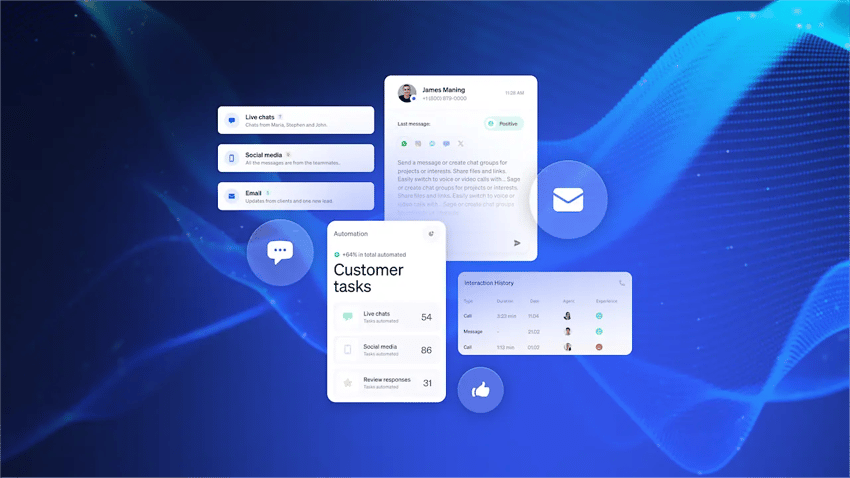

 Customer Experience
  Blog
Blog  Business Communication
  Leadership
  Marketing & Sales
  Nextiva News
  Productivity
  VoIP
VoIP 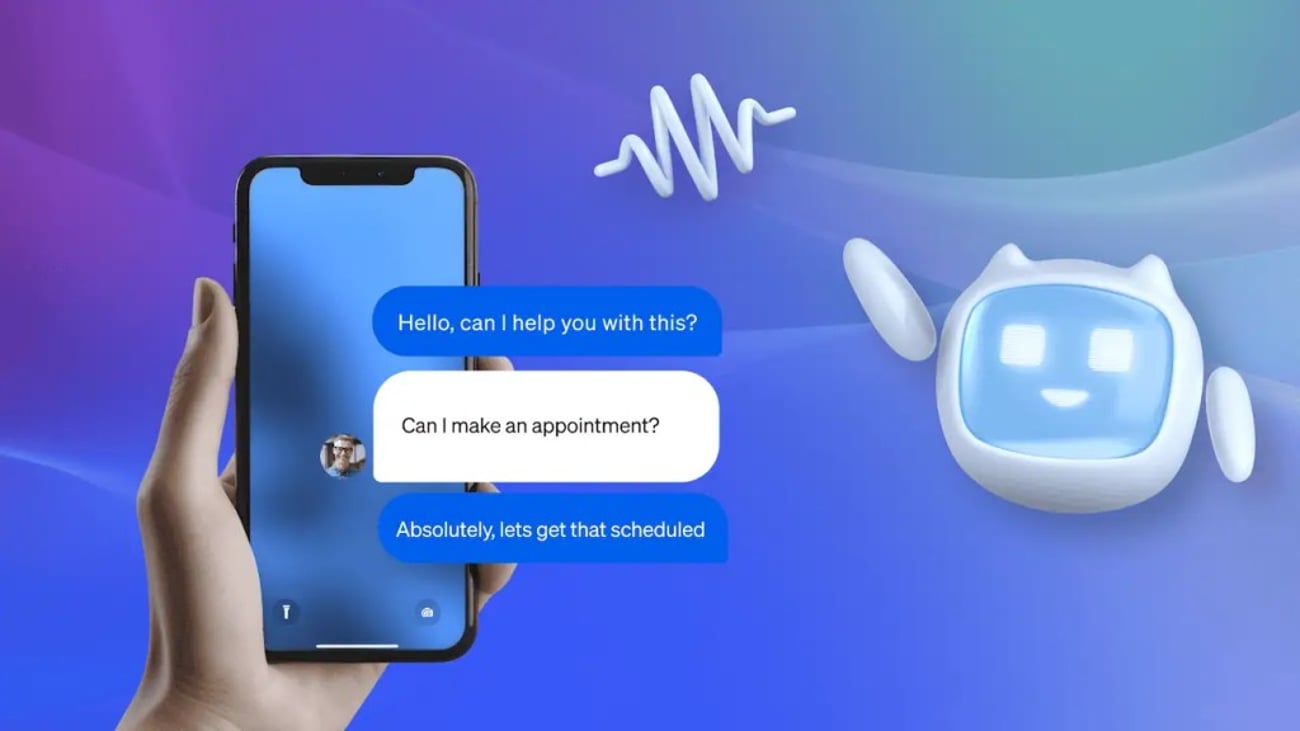

Every missed call costs money. Every long hold time erodes trust.
But many businesses still rely on voicemail, basic IVR menus, or stretched support teams to manage growing call volumes. AI voice agent services offer a more scalable alternative: They can answer calls instantly, hold natural conversations, qualify leads, book appointments, route customers, and follow up without adding more staff.
In this guide, we’ll compare the best AI agents for businesses, including what each platform does well, where it fits, and what to look for when choosing a solution for business call automation.
Best AI Voice Agent Services for Businesses
The best voice AI agents depend, of course, on how your business handles calls today and what you want to automate next. Some platforms are designed for immediate phone support, while others emphasize developer customization, workflow automation, or highly realistic synthetic voices.
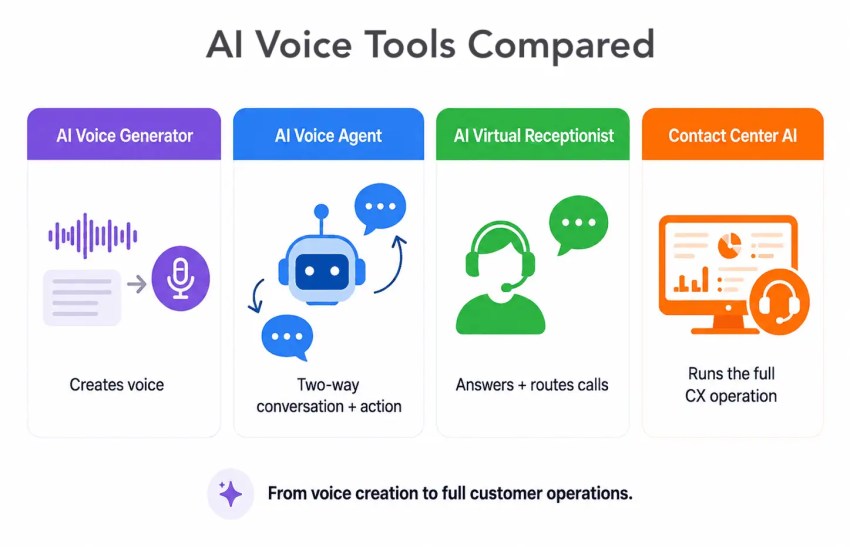
Before choosing a provider, compare each service by its ideal use case, setup requirements, integrations, pricing model, and ability to hand off complex calls to a human agent.
AI voice agent services compared
AI agents deliver a faster, more effective way to manage customer calls and appointment booking. Below are some of the top picks for AI voice agent services for businesses.
| Provider | Best use case | Type of solution | Key strength | Good fit for |
|---|---|---|---|---|
| Nextiva | Ready-to-use business call automation | Communications platform + AI receptionist | Native phone, SMS, chat, routing | SMBs and growing teams |
| Lindy | No-code sales and support workflows | AI workflow automation platform | Flexible multistep automations | Sales, ops, and support teams |
| Vapi | Developer-built voice agents | API/SDK voice AI platform | Deep customization | Engineering and product teams |
| Zeeg | AI voice + scheduling for EU/GDPR-compliant teams | AI phone agent + appointment scheduling platform | GDPR-compliant, made in Germany, complete scheduling built in | Small & medium businesses, GDPR focused |
| ElevenLabs Agents | Natural-sounding AI conversations | Conversational AI voice/chat platform | Realistic voice quality | Brands prioritizing voice experience |
| Synthflow | No-code voice automation | Voice AI builder/platform | Fast setup with business integrations | SMBs, agencies, and ops teams |
| Retell AI | Scalable phone agent automation | Voice AI platform | Testing, transfers, and scale | Support, sales, and operations teams |

1. Nextiva
Nextiva offers an AI voice agent through XBert AI Receptionist, which is built into its broader customer communications platform. Instead of acting as a standalone voice bot, XBert works alongside Nextiva’s business phone, messaging, live chat, CRM, analytics, and contact center tools.
XBert can answer calls, texts, and chats 24/7, respond to common questions, capture lead details, book appointments, send follow-ups, and route more complex conversations to the right person. Nextiva says XBert is designed to resolve routine calls and chats while routing more complex conversations to human agents.
Because XBert sits within Nextiva’s communications ecosystem, businesses can keep call context, transcripts, sentiment, summaries, customer history, and follow-up activity connected in one place. XBert is positioned as an AI receptionist for small and midsize businesses, with AI plans starting at $99 per month.
Best for
Nextiva is best for small and midsize businesses that want a voice AI agent connected to their existing customer communications, rather than a developer-first platform or standalone voice AI tool.
It’s a strong fit for teams that want to automate front-desk or call-handling tasks — such as answering common questions, booking appointments, capturing leads, sending follow-ups, and routing callers—while keeping phone, SMS, chat, customer experience, and analytics in the same platform.
XBert is especially useful for businesses that want faster deployment and less technical overhead. Teams that already use Nextiva may benefit from easier setup because the AI receptionist can work within their existing communications environment.
What to look out for
For advanced customization, users often need guidance from the support team. However, users find Nextiva’s support team highly reliable. Popular review websites support this fact.
Additionally, Nextiva is best suited for teams that want immediate automation rather than deep developer-level control. If you’re shopping for the latter, you might have to discuss your use case with the Nextiva team to find the best fit.
Nextiva is best for teams that want a turnkey automated voice solution.
See the best AI answering service in action.
Answer questions and capture leads. It takes just minutes to add a 24/7 AI answering service to your business.
2. Lindy
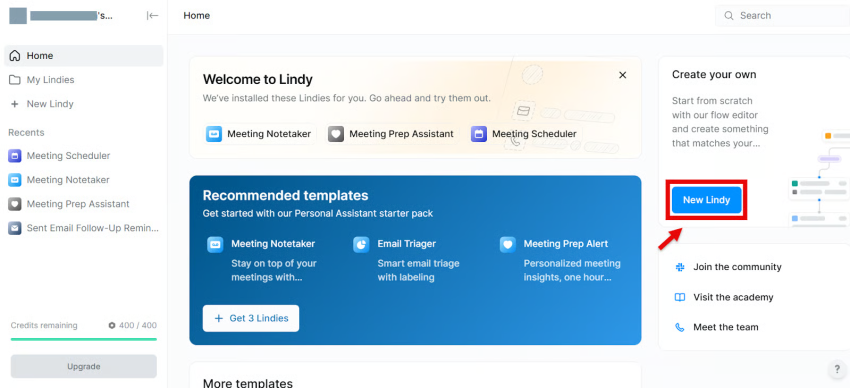
Lindy is a no-code AI agent platform for automating sales, support, scheduling, and follow-up workflows across email, calendars, CRMs, and other workplace apps. It can also be used for phone-call-related automations, but it is broader than a voice-only agent platform. It is better described as a general business automation tool with call capabilities.
Best for
Lindy is best for teams that want to build multistep automations without writing code, especially when voice calls are just one part of a larger workflow. That makes it a good fit for ops-heavy sales and support teams, but not the best fit for someone who only wants a simple AI receptionist or inbound call-answering tool.
What to look out for
Lindy is a flexible option for businesses that want AI agents to manage multistep workflows across calls, email, calendars, and CRMs. However, it may be more than some teams need if they’re only looking for a straightforward AI receptionist or call routing tool.
Businesses should also consider how much internal capacity they have to design, test, and maintain more complex workflows. Lindy is no-code, but building reliable automations still requires clear process mapping, especially for sales and support use cases with multiple conditions, handoffs, and integrations.
3. Vapi
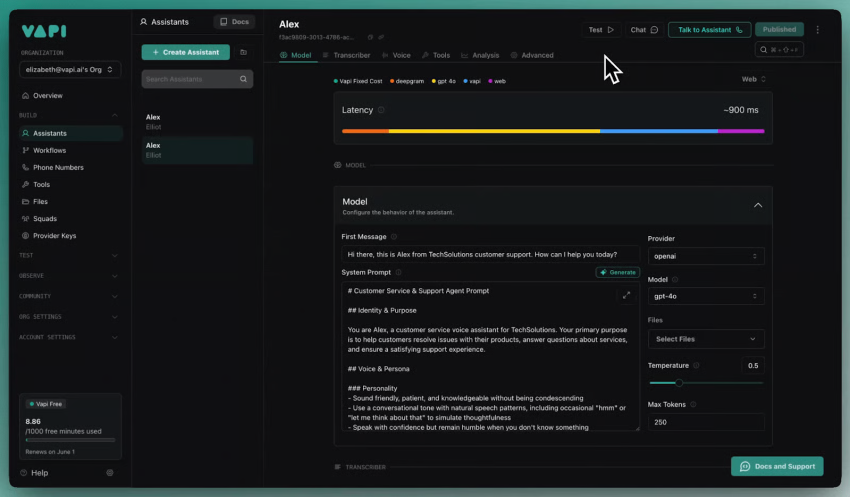
Vapi is a developer-first voice AI platform for building custom voice agents with deep technical control. It offers APIs, testing, multilingual support, telephony controls, and bring-your-own-model support for businesses that need more flexibility than a standard AI phone answering tool.
Best for
Vapi is best for product and engineering teams that want to build their own custom voice agents powered by AI into apps, workflows, or backend systems. It’s a strong fit for businesses that want technical control over prompts, call flows, model providers, integrations, testing, and scaling.
What to look out for
The main tradeoff is implementation effort. Vapi is a strong choice when you want flexibility and programmatic control, but teams without developer support may find setup, testing, integration, and optimization more demanding than with a higher-level, no-code voice tool.
4. Zeeg
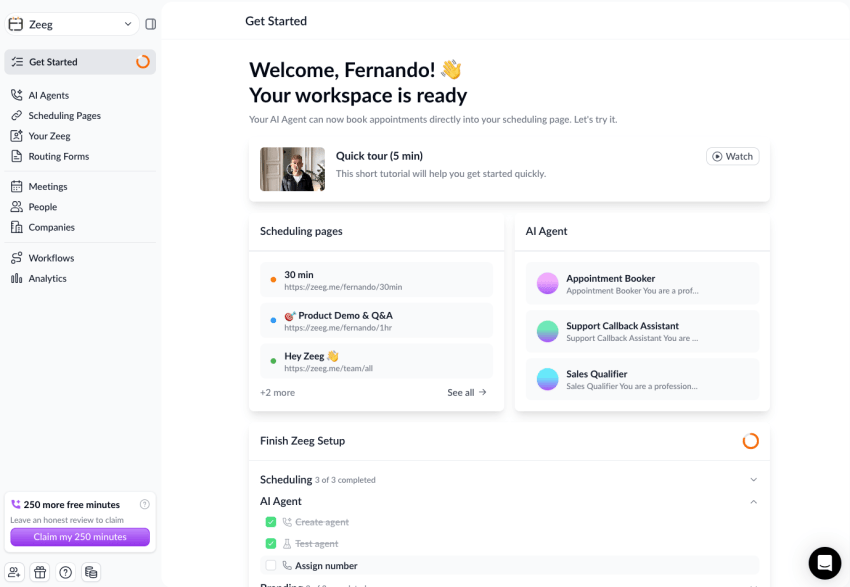
Zeeg is Europe’s AI voice agent and appointment scheduling software in one solution, built with GDPR compliance at its core rather than bolted on afterward. Instead of pairing a U.S.-based voice AI tool with a separate booking system, Zeeg combines an AI voice agent that answers and makes calls, qualifies leads, and books appointments with native scheduling — all running on infrastructure designed around European Union (EU) data protection standards.
Best for
Zeeg is best for European businesses, agencies, and teams that need an AI phone agent and scheduling software combined in a single GDPR-compliant platform. It’s a strong fit for teams for whom data residency and compliance aren’t an afterthought but a requirement, who want to avoid stitching together separate US tools for calls and calendars, and who need a complete phone agent with routing rules.
What to look out for
Zeeg’s a more recent brand, with its footprint and ecosystem more concentrated in companies that work with Europe.
5. ElevenLabs Agents
ElevenLabs Agents is a voice-first conversational AI platform for building voice and chat agents that can answer questions, complete tasks, and connect to business tools. It is especially known for hyper-realistic text-to-speech (TTS) and voice generation, and that voice quality carries over into its agent platform.
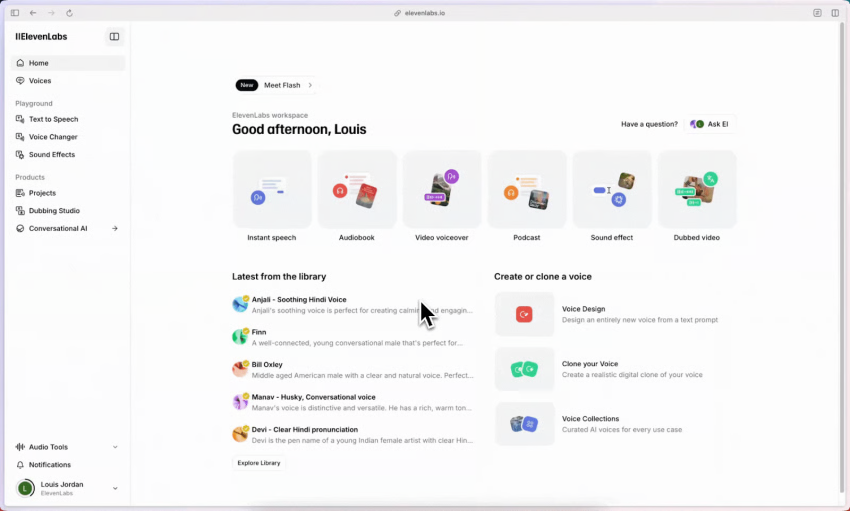
The platform supports low-latency conversations, multilingual interactions, content support, tool integrations, call transfers, and phone connectivity through Twilio or SIP trunking. It can be used for customer support, lead qualification, appointment scheduling, and other business call automation use cases, and offers support in multiple languages.
Best for
Best for businesses that want an AI-powered voice agent that sounds very natural-sounding voice. It fits brands where caller experience and tone matter, such as hospitality, luxury services, appointment-based businesses, and customer-facing teams.
What to look out for
ElevenLabs is a strong option for business call automation, but it is still an AI voice layer rather than a full native communications platform. Teams should evaluate telephony, CRM, and routing setup carefully, especially if they need a complete contact-center stack instead of a voice agent platform connected to existing systems.
6. Synthflow
Synthflow is a no-code voice AI platform for building and managing AI agents for inbound and outbound calls. It is one of the alternatives to Retell AI that supports call handling, appointment booking, lead qualification, support, voicemail detection, SMS follow-ups, and routing.
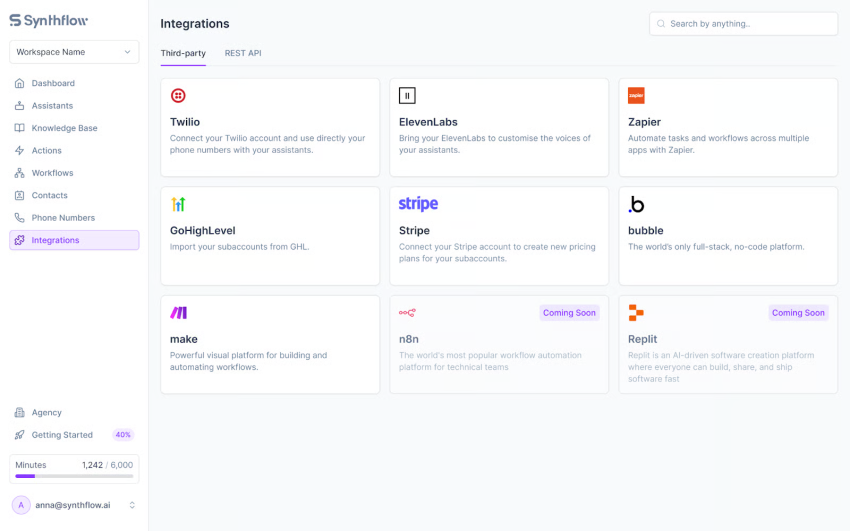
It has a visual builder, knowledge bases, analytics, human handoff, multilingual support, and integrations across CRMs, scheduling tools, automation platforms, and telephony providers.
Best for
Synthflow is best for businesses that want to launch AI voice agents without building from scratch or relying heavily on developers. It’s a strong fit for SMBs, agencies, support or sales teams, and operations teams that need to automate repetitive phone workflows quickly while still connecting calls to CRMs, calendars, ticketing tools, and follow-up systems.
It may also work well for larger teams with high call volumes that want a more structured voice automation platform instead of a fully custom, API-first build.
What to look out for
Synthflow is easier to deploy than a developer-first platform, but teams should still map their call workflows, escalation rules, integrations, and follow-up processes carefully before launch. More complex workflows still need careful planning, testing, and optimization. Teams that want full programmatic control over every layer of the voice stack may prefer a more API-first option.
7. Retell AI
Retell AI focuses on customer support and inbound call automation, with features that help businesses efficiently handle high call volumes. It supports multilingual calls, warm transfers, and high uptime, making it reliable for mission-critical operations.
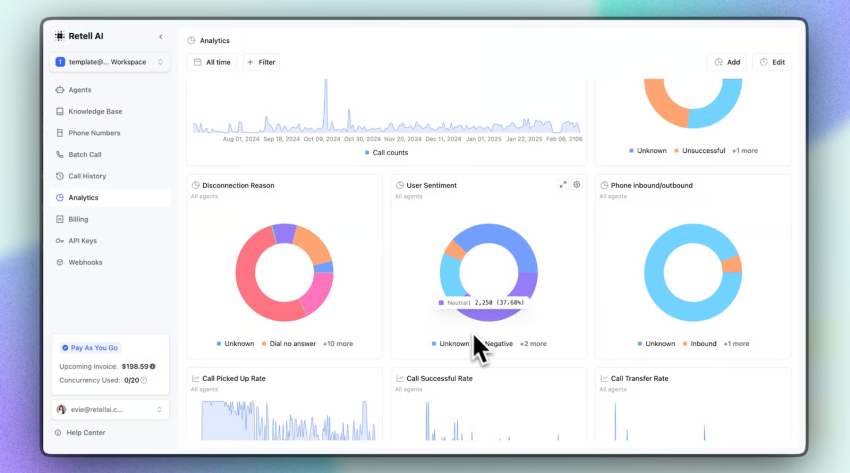
The platform also syncs with company knowledge bases to keep agents up to date without manual updates. It meets SOC 2, HIPAA, and GDPR standards, which are essential for regulated industries.
Best for
Retell AI is best for support, sales, and operations teams that need to automate a high volume of customer inquiries while keeping control over call flows, transfers, testing, and performance monitoring. It’s a strong fit for businesses that want more scalability and configurability than a simple AI receptionist, but don’t necessarily want to build every layer of the voice stack from scratch.
What to look out for
Retell is flexible, but teams should still evaluate telephony, CRM, knowledge base, and handoff setup carefully. Regulated use cases should confirm the exact compliance and support terms in their plan, and pricing can vary based on the model, telephony, knowledge bases, and add-ons they choose.
How to Choose an AI Voice Agent Service
Choosing the right AI voice agent service depends on how much control your team needs, how quickly you want to launch, and which systems the agent needs to connect with. Before comparing vendors, clarify whether you need a simple AI phone answering service, a no-code workflow builder, or a developer-first platform for custom voice experiences.
Keep in mind when deciding:
- Choose between turnkey and developer-first platforms. Turnkey tools are faster to launch and usually better for teams that want a no-code setup, while developer-first platforms give engineering teams more control over prompts, call flows, integrations, and custom logic.
- Compare phone, CRM, and calendar integrations. Make sure the platform connects cleanly to your telephony stack, CRM, and scheduling tools so calls, leads, appointments, and follow-ups can move through one workflow instead of living in separate systems.
- Look for human handoff and escalation controls. Strong voice agent platforms should support live transfer, supervisor escalation, voicemail fallback, and clear rules for when the agent should stop and hand the conversation to a person.
- Review analytics, transcripts, and call summaries. You’ll want visibility into call outcomes, dropped calls, objection patterns, conversion rates, transcript quality, and summary accuracy so you can improve prompts and workflows over time.
- Check security, privacy, and compliance requirements. Confirm whether the vendor supports your required standards, data retention policies, consent handling, and access controls, especially if you work in regulated industries or handle sensitive customer data.
- Understand pricing and setup requirements. Compare per-minute usage, telephony charges, model costs, add-ons, support tiers, and implementation effort so you understand the real total cost, not just the headline price.
- Match the platform to your internal capacity. Even no-code tools need process design, testing, and ongoing optimization, so choose a service that fits the team’s ability to manage call flows, exceptions, and agent performance tuning.
- Prioritize the workflow you actually need. If you mainly need a simple AI receptionist, pick a lightweight platform; if you need multi-step sales, support, or operations automation, choose a service that can handle routing, follow-up, and integrations across systems.
What Are AI Voice Agent Services?
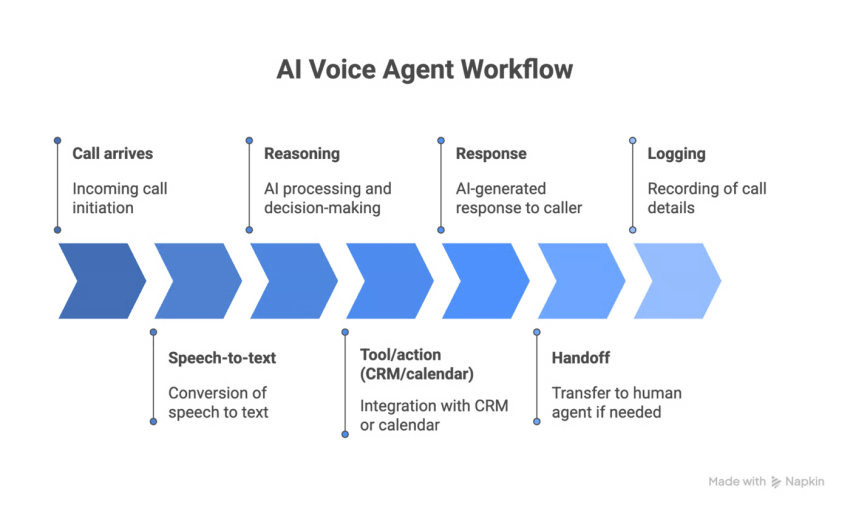
AI voice agent services are platforms or providers that help businesses automate phone calls using conversational AI. Instead of sending callers through a rigid phone menu or sending missed calls to voicemail, these services can answer calls, have natural speech recognition, respond in real time, and complete tasks like routing those calls, qualifying leads, booking appointments, updating records, or escalating issues to a human agent.
Businesses often use AI voice agents as a first line of contact for repetitive, high-volume, or time-sensitive calls. Depending on the platform, the service may include phone connectivity, workflow automation, CRM integrations, call transcripts, analytics, multilingual support, and human intervention controls.
AI voice agent services vs. traditional IVR systems
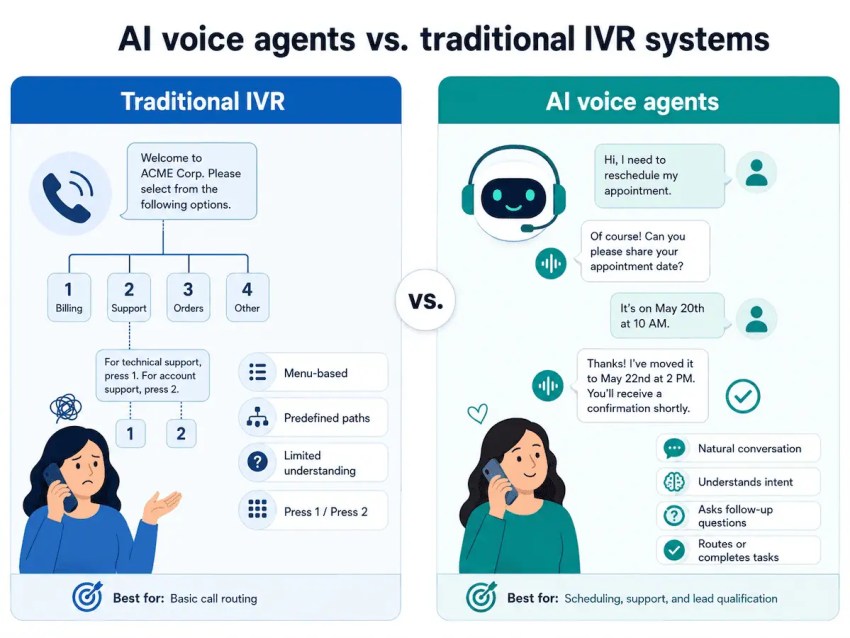
Traditional IVR systems are usually menu-based and deterministic: Callers follow preset paths by pressing numbers or saying specific commands into the phone. They’re useful for basic routing, but they can frustrate callers when the menu doesn’t match what they need.
AI voice agent services are more dynamic. They can understand different caller intents, ask follow-up questions, keep the conversation on track, and take action based on what the caller says. For example, an AI voice agent can identify whether someone wants to book an appointment, check an order, reschedule a call, or speak to a person — even if the caller doesn’t use the exact words the system expects.
The key difference is flexibility:
- IVR systems route callers through predefined options.
- Voice AI agents can hold real conversations and complete tasks across connected business systems.
Common Business Use Cases for AI Voice Agent Services
Businesses can use AI voice agents on multiple fronts.
Customer service
AI voice agents shine in customer service by removing the two biggest call-killers: long wait times and repeated questions. They’re great at answering FAQs like order status, return policies, business hours, pricing, account resets, and basic troubleshooting. This matters because customers now expect speed and always-on help.
Zendesk CX Trends 2026 reports that 74% of consumers expect customer service to be available 24/7. Voice agents can pull from a knowledge base to give consistent answers. When issues need judgment, the agent transfers with context. Callers don’t need to repeat their story, which helps ensure your handle time doesn’t drag unnecessarily.
Lead qualification
AI voice agents prevent lead leakage. The agent asks a tight set of intake questions regarding name, company, need, urgency, budget range, and location, and writes clean fields into your CRM.
It applies rules and checks as you would, so reps stop wasting time on poor-fit calls. At the same time, it lets you follow up on great-fit deals sooner by handling the casual outreach itself.
Appointment scheduling
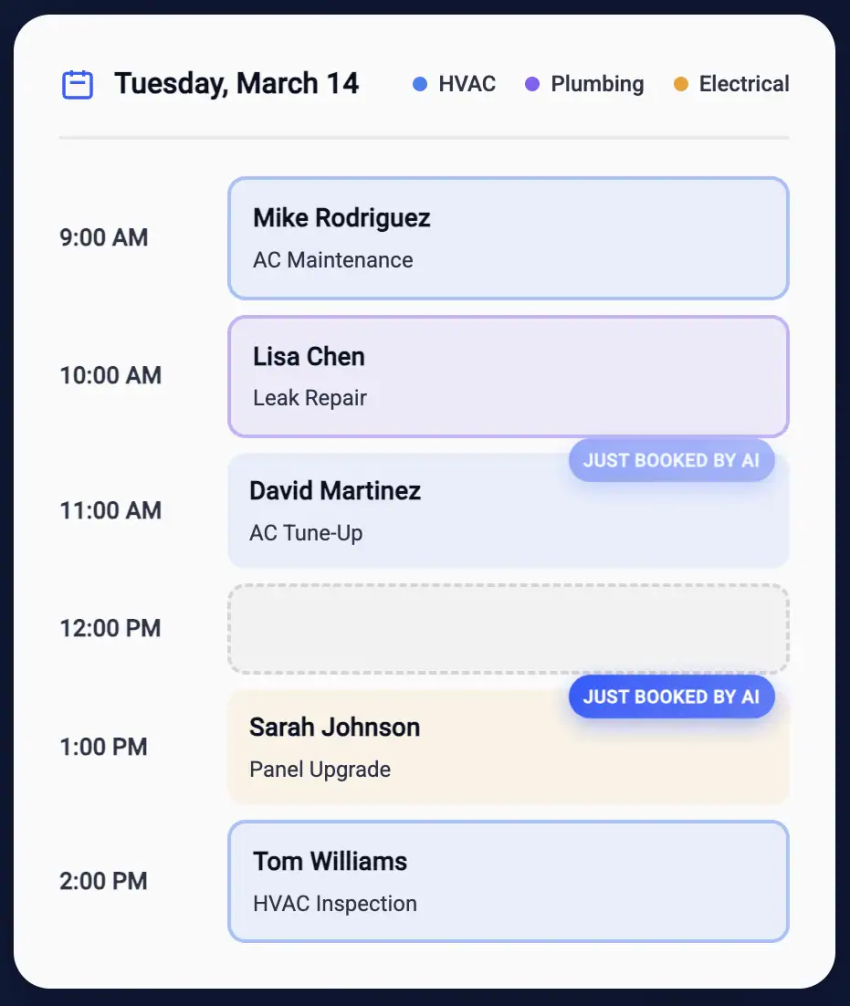
Scheduling is one of the highest-ROI use cases because it directly touches revenue and capacity. The agent offers available slots, confirms details, and updates the calendar in real time. This prevents double-booking and keeps the system accurate across staff and locations.
Outbound and follow-up automation
Outbound calls are repetitive and easy to mess up at scale. But they’re perfect for automation. You can easily step up reminders and confirmation calls using AI voice agents to stay on top of payments and renewals.
The agent will help call lapsed leads or customers, qualify interest, and route only warm conversations to a rep. During volume spikes, outbound automation keeps throughput stable without hiring in panic mode.
Which AI Voice Agent Service Is Right for Your Business?
The right AI voice agent service depends on what your business needs to automate and how much technical support you have available. Some teams need a developer-first platform for custom voice experiences. Others need a no-code workflow builder for sales and support automation. Many businesses simply need a reliable way to answer calls, route customers, book appointments, and capture follow-up details without adding more staff.
For businesses that want AI call automation built into a broader communications platform, Nextiva is a strong fit. Its AI voice agent works alongside business phone, messaging, CRM, and calendar tools, so teams can automate common conversations without building a voice system from scratch.
If your priority is dependable call handling, faster response times, and easier setup, Nextiva offers a practical path to AI voice automation. Nextiva’s XBert AI can answer real customer calls, route conversations, and help teams manage more interactions with less manual work.
Check out how it sounds! 👇
Never miss another call with XBert
XBert is your AI answering service that handles calls, texts, and chats 24/7. It greets customers, books appointments, and captures leads while your business grows.
FAQs About AI Voice Agent Services
AI voice agent services help businesses automate phone interactions using conversational AI. They can answer phone calls, understand what callers need, respond naturally, route conversations, book appointments, qualify leads, and escalate more complex issues to a human agent.
AI voice agents use speech recognition to convert spoken words into text, then use natural language understanding to identify the caller’s intent. This allows the agent to respond based on what the person actually needs, not just which menu option they select.
Yes, but the quality depends on the platform, setup, and use case. The best AI voice agents can ask follow-up questions, clarify details, respond in context, and hand off to a human when needed. They’re especially useful for structured interactions like appointment booking, lead intake, order updates, and common support questions.
Businesses with high call volumes, missed calls, repetitive questions, or after-hours inquiries tend to benefit most. AI voice agents can support AI-powered conversations across customer service, sales, scheduling, and follow-up workflows, helping teams handle more real conversations without adding staff.