

 Customer Experience
  Blog
Blog  Business Communication
  Leadership
  Marketing & Sales
  Nextiva News
  Productivity
  VoIP
VoIP 

With the pressure to start using AI, you may be overwhelmed by all the options for AI call center technology. We get it. There’s a lot out there, and they can all start to look the same after a while.
In this guide, we aim to provide a detailed overview of AI call center software, explain how we’ve moved from traditional to modern setups, and introduce the main tools, features, and benefits you can use.
Before we begin, let’s start with a promise: We promise AI isn’t all that scary. For the most part, we’re talking about sophisticated technology with clever automation that helps you do more with less, free up resources, and save a good chunk of money.
Sounds like something you could use? Let’s start with the basics.
Try the best AI answering service free for 14 days
XBert AI answers questions and captures leads. Add your 24/7 answering service in minutes.
What Is AI Call Center Technology?
An AI call center integrates AI technologies into operations to automate, assist, analyze, and optimize customer interactions across voice and digital channels.
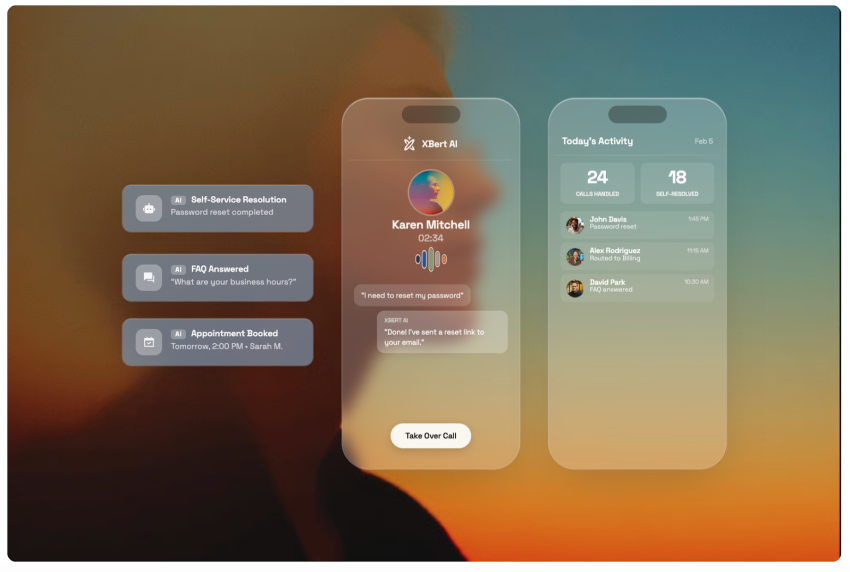
AI call center technology is made up of several core components:
- Natural language processing: Enables systems to understand customer intent, interpret conversational context, and respond appropriately in natural human language.
- Machine learning: Continuously improves performance by learning from historical interactions, identifying patterns, and refining routing, responses, and recommendations over time.
- Speech recognition: Converts spoken language into text in real time, allowing AI systems to transcribe calls, trigger workflows, and analyze conversations.
- Generative AI: Creates dynamic responses, summaries, and suggested replies for agents while powering conversational chatbots and voice assistants.
- Predictive analytics: Uses historical data and behavioral patterns to anticipate customer needs, forecast call volumes, and identify potential issues before they escalate.
- Real-time routing intelligence: Directs callers to the most appropriate agent, department, or automated system based on intent, sentiment, availability, and skill set.
When you put these technologies together, the output is these core capabilities:
- Autonomous virtual agents that resolve routine calls
- Real-time agent assistance during live conversations
- Intelligent routing based on intent and sentiment
- Automated call summaries and transcription
- Full interaction analysis across 100% of calls
The Evolution From Traditional to AI-Driven Call Centers
From static IVR to conversational self-service
Even when configured well, the traditional interactive voice response (IVR) system is flawed. When a customer contacts you, they’re usually greeted with IVR menus. Typically, these force customers through rigid menu trees with lots of options, taking minutes to even find the right agent or department.
In contrast, AI call centers use conversational IVR that allows customers to speak naturally. The system detects intent and routes or resolves calls accordingly.
Your customer states why they’re calling. The AI understands and acts on their request. There’s always the option to escalate to a human if it’s a tricky subject.
The reduced wait time and ease of interaction have a direct correlation with long-desired benefits:
- Lower abandonment rates
- Faster containment
- Reduced customer frustration
From availability-based routing to intelligent routing
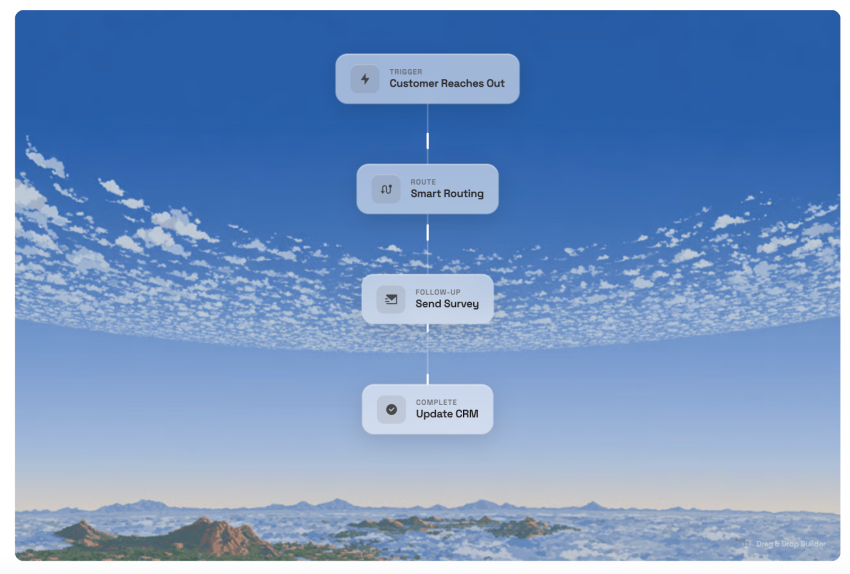
Legacy routing sends calls to the next available agent. You might have some skills-based routing involved, too, where “option 1” goes to a sales agent or “option 4” goes to a broadband support specialist.
AI routing takes that to the next level. When greeting your customer and understanding the query, it also analyzes:
- Customer intent: What is the customer’s end goal?
- Sentiment: Are they in a hurry, upset, angry, or calm?
- Past interactions: Is this their second, third, or fourth time trying to resolve this issue?
- Skill requirements: How complex is the troubleshooting needed?
- Priority level: Is this an emergency or vulnerable scenario that needs escalation?
- Language: Is a language other than English detected, and do you have an agent who is fluent?
As a direct result, these actions lead to higher first call resolution (FCR), fewer transfers, and a reduced average handle time (AHT). Both customers and call center agents will love you for this.
From manual quality assurance to AI-powered quality management
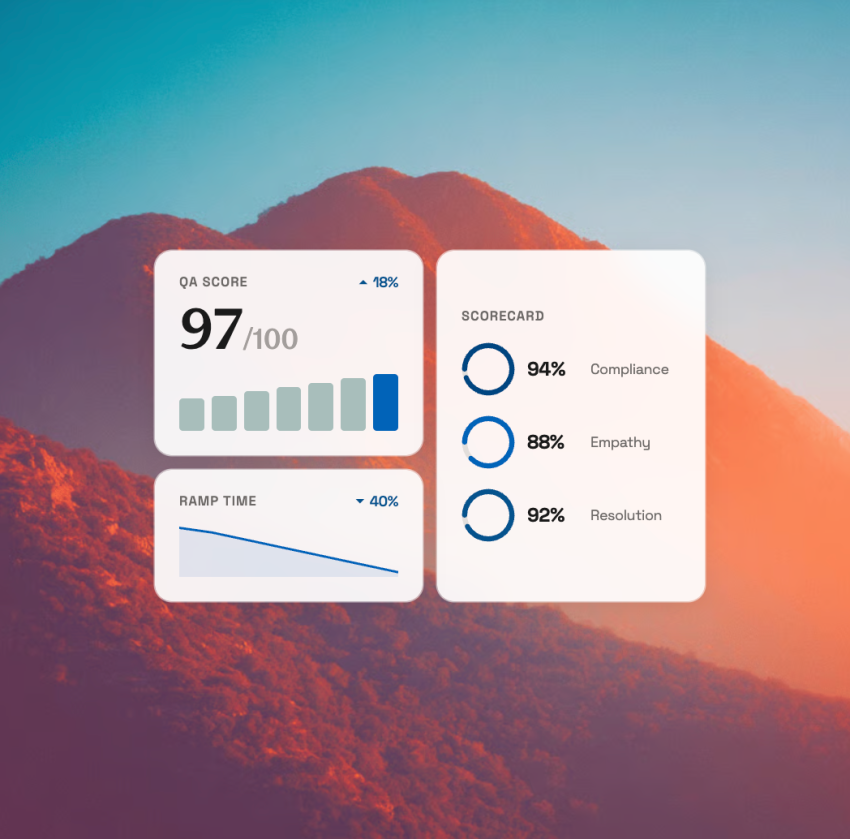
Traditional quality assurance samples a small percentage of calls and heavily relies on manual supervisor time. AI-powered quality management is the extreme opposite. It evaluates every interaction and requires zero input from team members until it identifies a problem. From there, coaches and call center managers can tailor training and reach out to customers who’ve had a bad experience.
The benefits of automated quality management are immediate:
- Consistent scoring
- Faster coaching cycles
- Immediate compliance alerts
- Full visibility into performance
From historical reporting to real-time intelligence
Traditional metrics reporting looks backward, showing you what’s already happened in CDR or Excel spreadsheet format. You must then interpret the data to work out what changes you might need in the future.
Leading call centers use AI to surface that data, making it obvious what you can change, when, and what the expected outcome will be.
You get real-time insight (and actionable advice) into:
- Emerging issues
- Customer sentiment analysis
- Churn indicators
- Call spikes
- Performance anomalies
Your call center becomes a live intelligence engine, not just a service department.
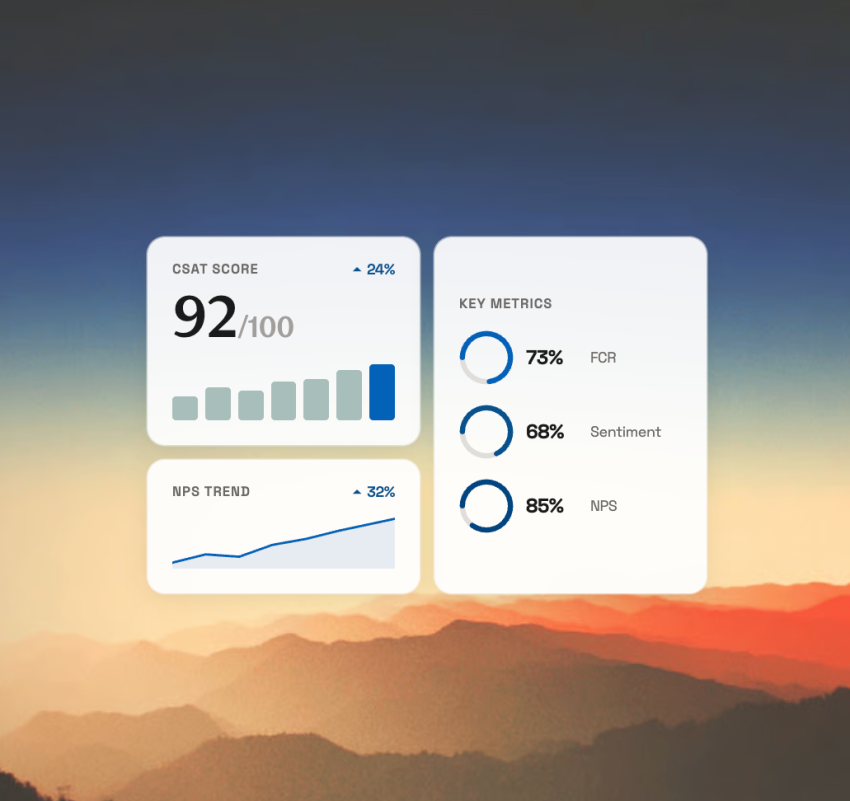
AI Call Centers vs. Traditional Call Center Technology
| Category | Traditional Call Centers | AI-Driven Call Center Technology |
|---|---|---|
| Routing Logic | Basic IVR trees and manual queue routing. Often rigid and rule-based. | Intelligent, real-time routing using predictive models that match customers to the best resource instantly. |
| QA Coverage | Manual call sampling (typically 1–5% of calls reviewed). Performance depends heavily on supervisors. | 100% interaction analysis across voice, chat, and email. Automated scoring ensures consistent standards across all customer conversations. |
| Reporting Speed | Reports generated daily, weekly, or monthly. Insights are often delayed. | Real-time dashboards with instant visibility into performance, sentiment, and compliance. |
| Personalization | Agent-dependent. Quality varies based on experience, training, and memory. | Data-driven personalization using full customer history, customer behavior insights, and predictive intent detection. |
| Scalability | Requires hiring, onboarding, and training new agents. Scaling is slow and resource-intensive. | Scales instantly with demand spikes. AI capacity expands without proportional increases in headcount. |
| Cost Structure | High fixed labor costs, ongoing training expenses, and turnover-related costs. | Lower marginal cost per interaction. Automation reduces reliance on large agent teams. |
| Availability | Business hours or limited 24/7 coverage, depending on staffing levels. | 24/7/365 availability without fatigue, absenteeism, or performance variability. |
| Performance Consistency | Quality varies widely based on individual agent performance. | Standardized excellence. AI systems apply the same best-practice logic and quality benchmarks to every interaction. |
Core Technologies Powering AI Call Centers
A typical SaaS call center comes with a range of features native to the cloud. AI call center technology takes these and supercharges them.
You’re not just getting routing and call handling software. Rather, you’re getting a full customer engagement solution that runs on autopilot when it can, highlights and proactively remedies issues, and ensures your contact center agents are maximizing their time.
Conversational AI and virtual agents
Voicebots and AI agents handle:
- FAQs
- Appointment scheduling
- Payment processing
- Status updates
- Order tracking
Voicebots and AI agents operate 24/7 and escalate only when human judgment is required. Often used for basic queries to free up human agents, these bots learn on the job (machine learning), get smarter, and can handle more complex customer inquiries over time.
Hear why XBert AI is the best AI receptionist
XBert AI receptionist handles customer questions, captures leads, and books appointments. Try it free for 14 days.
Agent Assist and AI Copilot
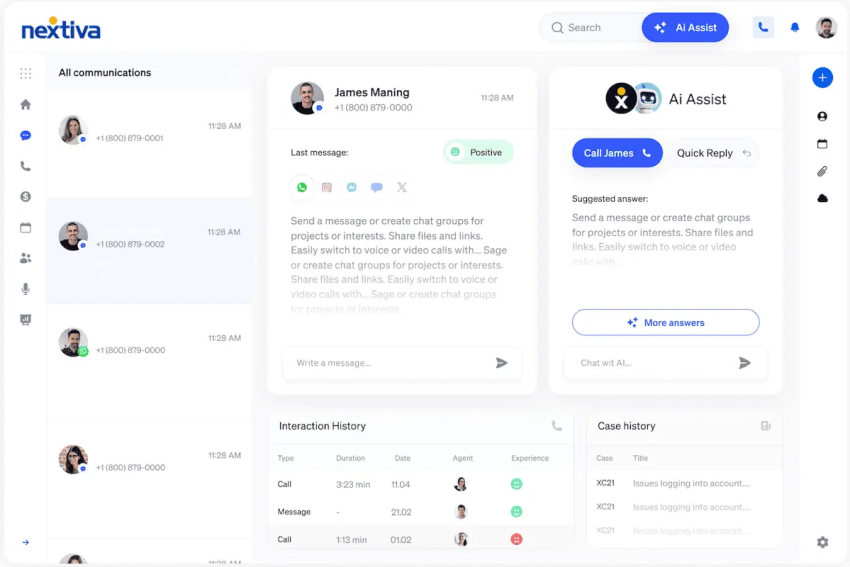
Agent Assist and Copilot technologies are built-in AI assistants that help sales and customer service reps stay on track and get unstuck during difficult conversations.
Real-time assistance includes:
- Suggested responses
- Knowledge base surfacing
- Compliance prompts
- Automatic data entry
- Call summarization
This reduces cognitive load and improves confidence, all while speeding up the process of information gathering, ensuring your customers get the right information quickly and efficiently.
Speech and sentiment analytics
AI analyzes tone, pace, interruptions, keywords, and emotional signals to identify bad calls, which triggers Agent Assist to step in with suggested responses and documentation. It also identifies good calls, which you can highlight as examples in training, and urgent calls that need escalation to a supervisor.
By analyzing every call, you benefit from:
- De-escalation support: Detects rising frustration or negative sentiment in real time and prompts agents with recommended responses to calm the conversation.
- Risk detection: Identifies compliance risks, threatening language, or sensitive situations that may require immediate intervention.
- Coaching insights: Surfaces performance patterns and examples from both strong and weak calls to support targeted agent training and development.
- Brand protection: Flags interactions that could harm customer perception, helping teams address issues quickly and maintain service standards.

Predictive analytics and workforce optimization
As AI analyzes every call during and after through different customer data points, it can forecast the following:
- Call volume spikes
- Staffing needs
- Demand trends
- Campaign impact
This improves scheduling accuracy and reduces overstaffing without the need for doing a major overhaul, hiring an external consultant, or spending weeks/months manipulating data in Excel or starting a process of trial and error.

Why bots are out, and agents are in
Previously, virtual assistants were limited to if–then logic. The industry has now shifted to agentic AI. Unlike traditional bots that simply answer questions, agentic AI (like Nextiva’s XBert) can execute complex, multistep workflows autonomously.
Traditional bot: “Your order status is: Shipped.”
Agentic AI: “I see your order hasn’t arrived. I’ve initiated a replacement, updated your shipping address, and sent a confirmation email to you now. Is there anything else?”
Moving from answering to acting has helped businesses lower containment rates for routine tasks and free human agents for high-emotion, high-value resolutions.
Business Benefits of AI Technology
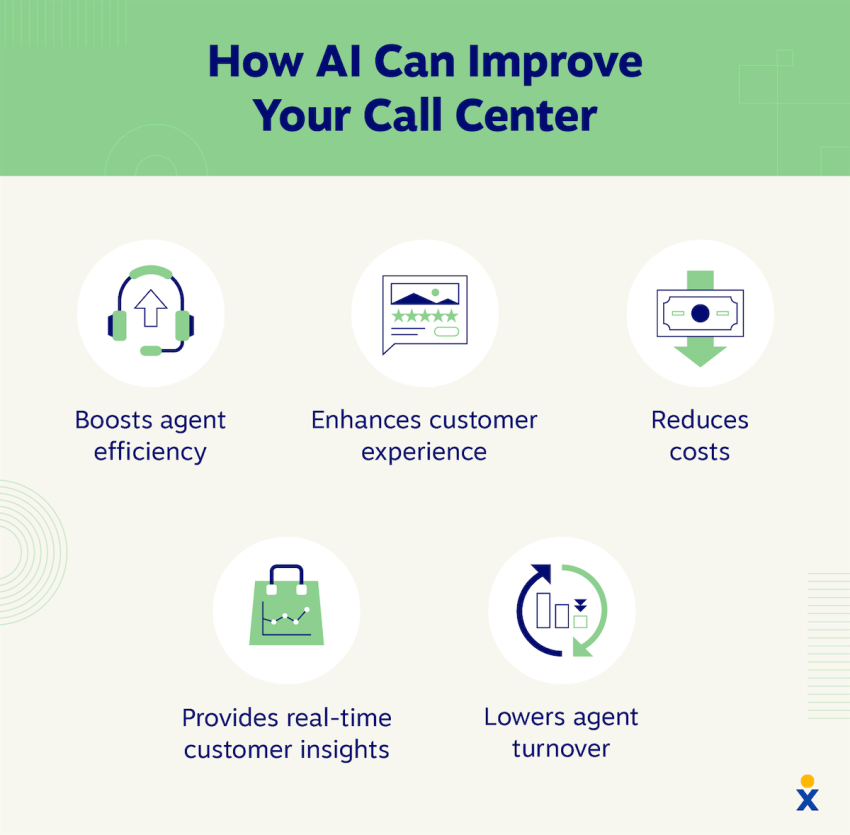
Lower cost per contact
- Automation reduces agent workload and repeat calls.
- Organizations often report significant reductions in operational costs through deflection and efficiency gains.
Improved agent productivity
- Automated summaries and real-time guidance allow agents to handle more calls without burnout.
- Productivity gains frequently exceed in modern deployments.
Higher customer satisfaction
- Better call routing and faster resolution improve CSAT consistency.
- Personalized interactions increase perceived quality.
Scalable operations without linear headcount growth
- AI allows contact centers to scale capacity without proportional increases in hiring.
- It gives automated recommendations for when centers should add new or seasonal staff.
Why Nextiva Is Built for AI-Driven Call Centers
AI embedded across the platform
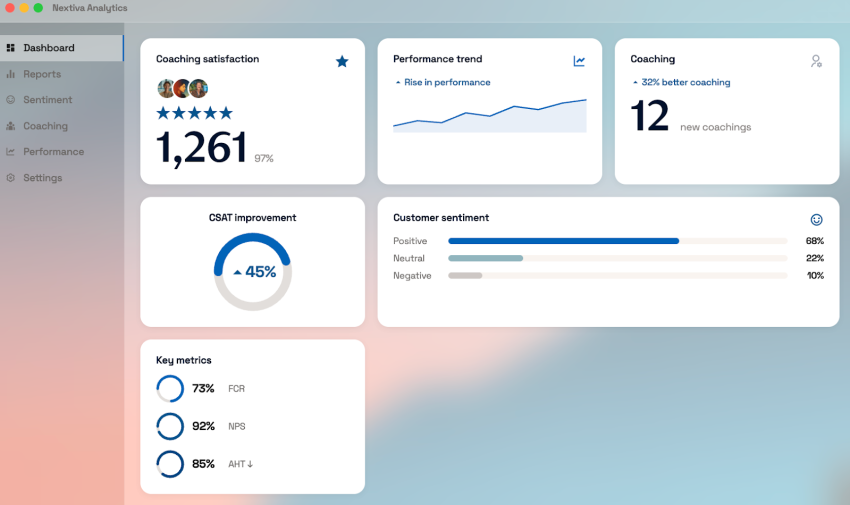
Nextiva is a full suite of contact center tools, including:
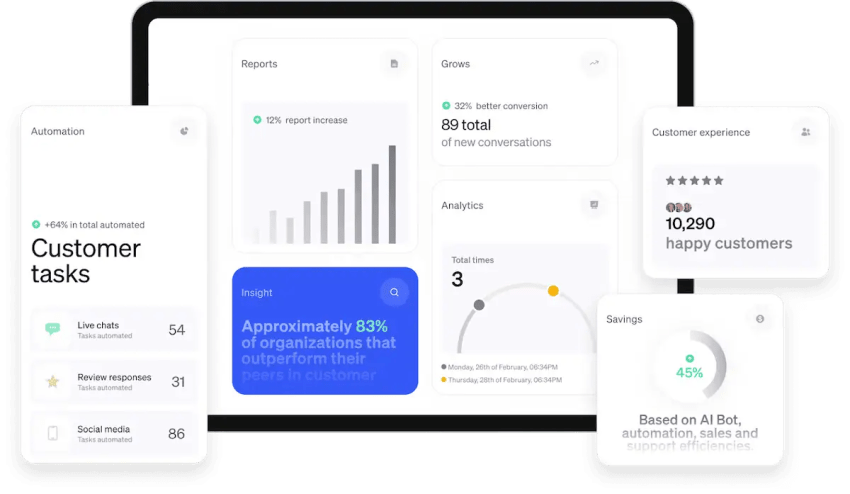
- Conversational AI: AI-powered chatbots and voice bots enable human-like automated interactions across voice, web chat, SMS messaging, and social media, with automatic escalation to live agents when needed.
- Intelligent routing: Advanced routing directs customers to the most appropriate agent based on historical context, skills, or intent.
- Real-time analytics: Call summaries, transcripts, performance insights, and dashboards help supervisors and administrators monitor and optimize customer service in real time.
- Agent assist AI tools: AI features automate call notes, create summaries, and suggest relevant responses or next steps to enhance agent effectiveness.
- AI-powered virtual assistant (XBert): XBert is an always-on AI receptionist that answers calls, texts, and chats 24/7, schedules appointments, handles FAQs, captures and qualifies leads, and routes interactions to live agents when needed.
Unlike some competing platforms, AI is built into Nextiva. This ensures every component gets complemented by AI rather than patched into place.
Unified customer context
Nextiva runs as an omnichannel contact center. This means it connects channels like voice, SMS, web chat, email, social media, and even CRM in a single platform and single agent interface.
Context follows the customer across every interaction, meaning they don’t have to repeat their reason for calling if they’ve previously used live chat or email. Agents get a holistic view of the current interaction, as well as prior transactions and supporting documentation.
Enterprise reliability
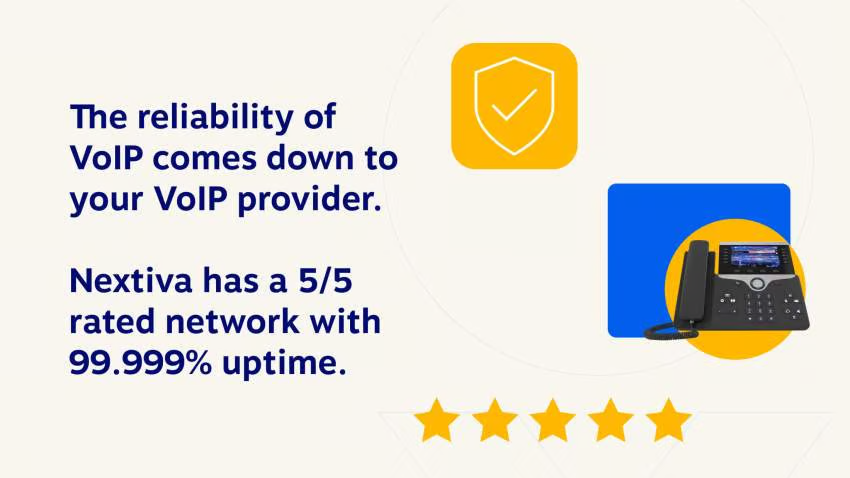
While it might feel like AI is new, the technology runs on the same enterprise core as our voice and contact center infrastructure. That means you get a high uptime, secure infrastructure, compliance readiness, and scalable architecture to support your business.
Practical, guided implementation
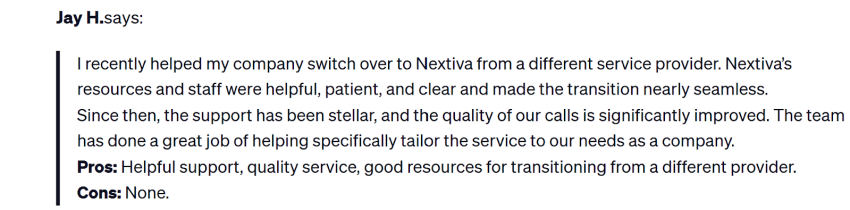
As difficult as AI adoption can be, Nextiva simplifies onboarding and ensures teams can deploy AI without months of integration complexity.
The goal shouldn’t be to implement AI; it should be to achieve better outcomes like improved FCR and AHT, to streamline the customer journey by introducing self-service, and to improve via real-time analytics.
That’s where an experienced and award-winning support team comes in handy. You don’t have to go it alone when it comes to AI call center technology.
Wrapping Up
AI solutions aren’t about replacing people. The goal must, instead, be to eliminate (or at least reduce) friction.
AI and automation remove repetitive tasks, improve routing intelligence, and transform your call center into a real-time customer intelligence engine — so humans can dedicate more time where they’re really needed.
Organizations that embrace AI-driven voice operations gain:
- Faster resolution
- Lower costs
- Higher satisfaction
- Greater scalability
- Stronger operational insight
With a unified platform that embeds AI into every layer of communication, Nextiva enables businesses to deliver intelligent, scalable, and human-centered customer experiences without complexity or compromise.
Ready to explore AI in your call center? Check out Nextiva’s AI-powered contact center here.
Your AI-Powered Contact Center
Create amazing customer experiences with enterprise contact center software. Enjoy faster resolutions and lower costs with Nextiva’s AI-powered contact center. Deploy in weeks, not months.