

 Customer Experience
  Blog
Blog  Business Communication
  Leadership
  Marketing & Sales
  Nextiva News
  Productivity
  VoIP
VoIP 

Conversational artificial intelligence (AI) improves the self-service capabilities of traditional business chatbots, virtual assistants, and voice agents.
This technology automates customer service to the extent that customers get faster responses to simple questions, reducing wait times. When the questions become more complex, the conversational AI system smoothly hands them to a human agent.
The service delivery becomes almost instantaneous, optimizing key customer service metrics, including response time, accuracy, customer satisfaction, and problem-solving efficiency.
Modern businesses also integrate conversational AI chatbots with their CRMs to draw from customer history and offer a unique solution to each customer. Overall, this helps ensure human-like interactions while customers feel supported at all times, including during peak hours or on days off.
Try the best AI answering service free for 14 days
XBert AI answers questions and captures leads. Add your 24/7 answering service in minutes.
What Is Conversational AI?
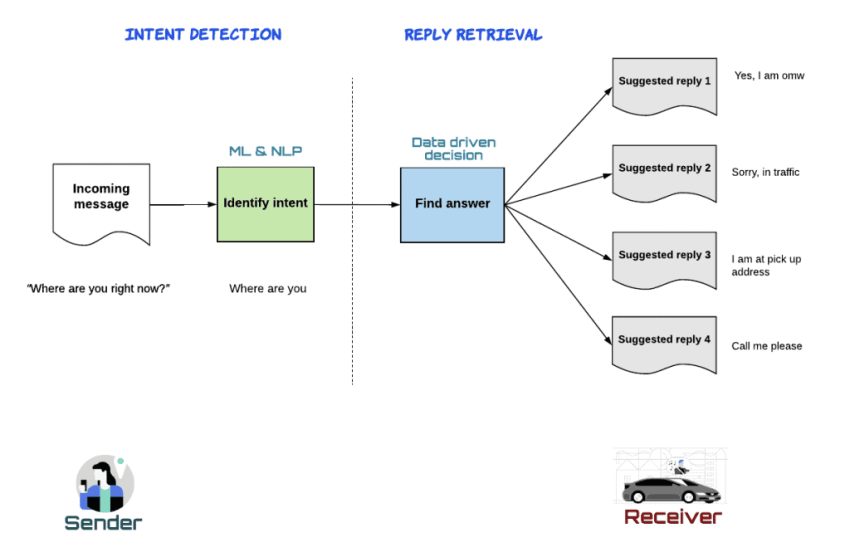
Conversational AI is software that understands and responds to human conversation via text or voice using natural language processing (NLP). The machine learning (ML) capabilities of these tools help them to improve with every interaction.
With generative AI, supervised learning, and large language models, these systems process human language, identify user intents, and continuously improve how they respond during each customer interaction.
NLP converts unstructured human language data into a format that machines can understand. It uses machine learning and natural language understanding to determine the relationship between words in a sentence. Other methods, such as part-of-speech tagging, ensure input text is understood and processed correctly.
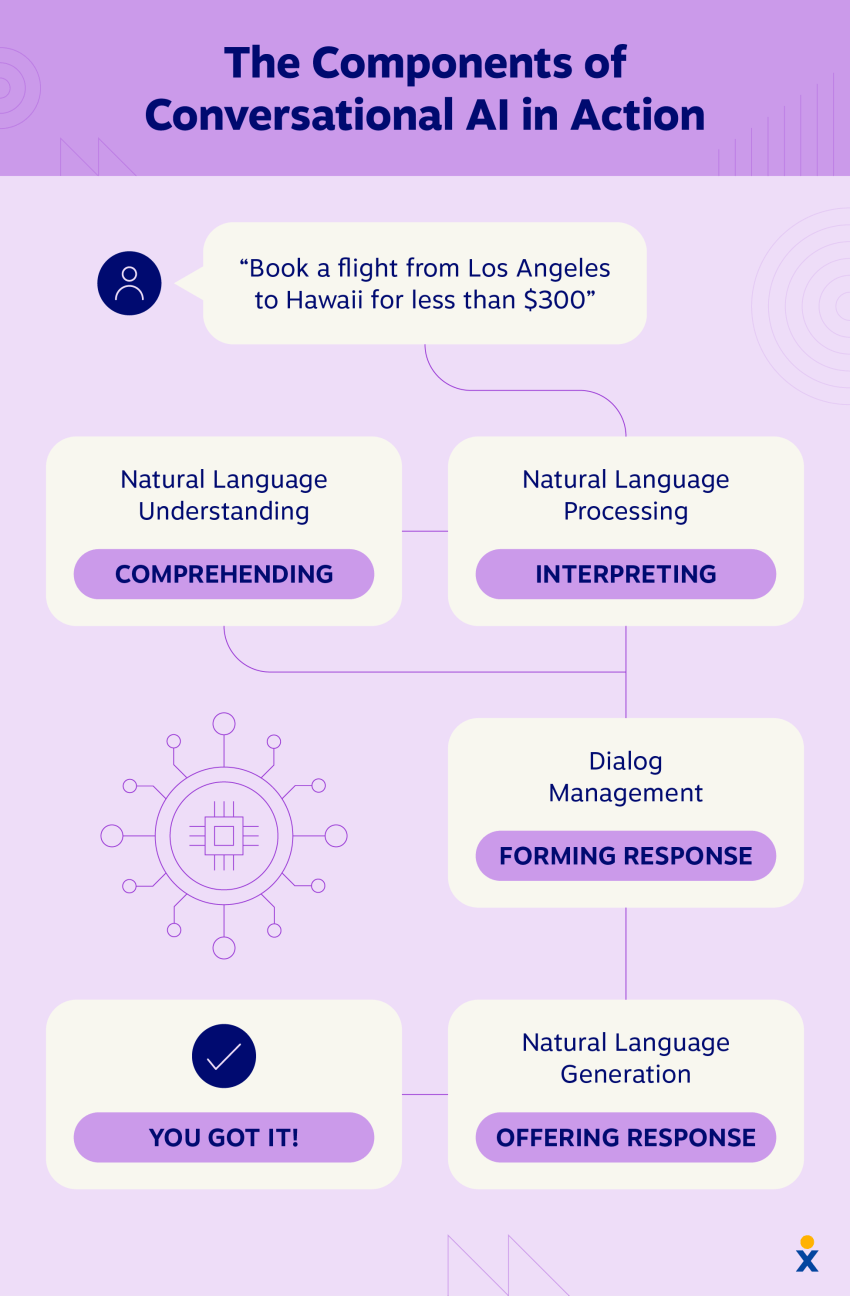
Many organizations depend on conversational AI software from leading conversational AI vendors to automate routine business processes in customer support and sales. These solutions often operate as part of a broader customer engagement suite that connects voice, chat, email, and social platforms into one comprehensive platform.
Businesses apply this contact center AI technology to intelligent virtual agents (IVAs), AI agents, and voice assistants to deliver fast and accurate responses across various channels. The automation capabilities of conversational AI solutions help contact center teams to handle high volumes of requests from customers while maintaining a seamless user experience.

Types of Conversational AI Solutions
In 2026, AI technology goes far beyond basic scripted responses. Companies organize these tools to complete specific tasks based on the role they play in a digital workforce.
AI employees (e.g., Nextiva XBert)
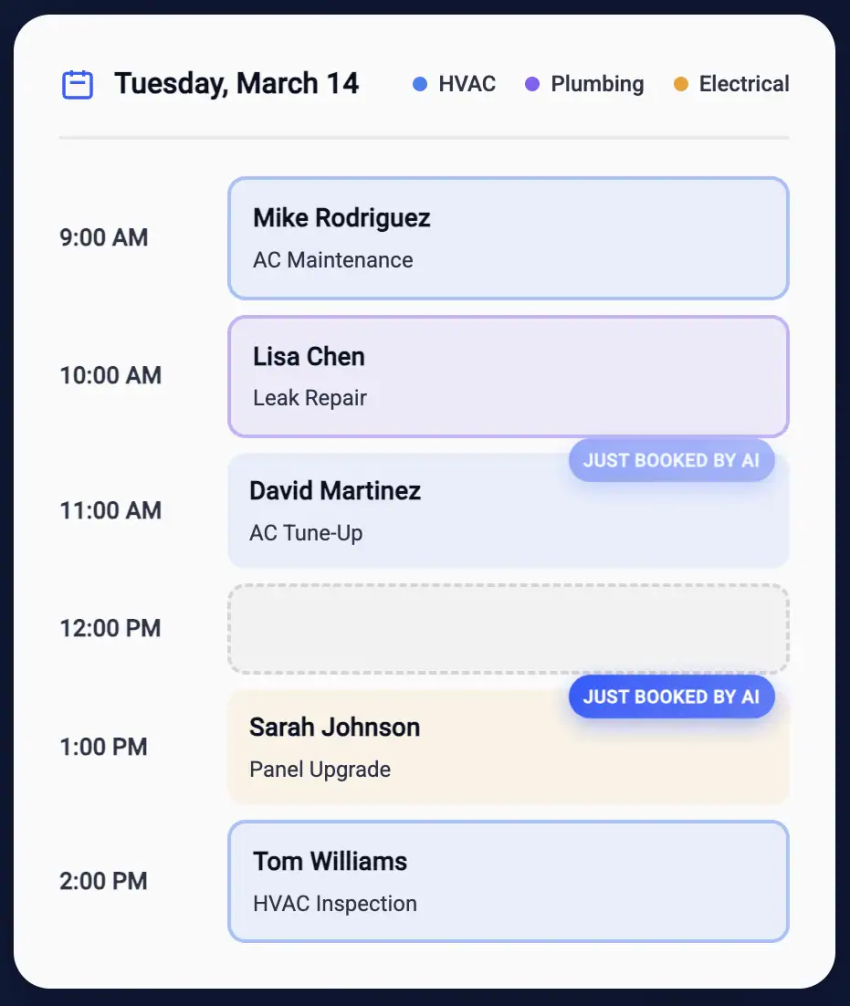
AI employees represent the most advanced form of conversational automation. These AI agents learn internal policies, workflows, FAQs, and knowledge base articles to manage customer conversations across voice, text, and email.
These AI-powered assistants manage complex business processes from start to finish while collecting intent data and other insights that help companies make data driven decisions. Many of these systems are evolving into agentic AI systems that can work independently.
Hear why XBert AI is the best AI receptionist
XBert AI receptionist handles customer questions, captures leads, and books appointments. Try it free for 14 days.
AI receptionists
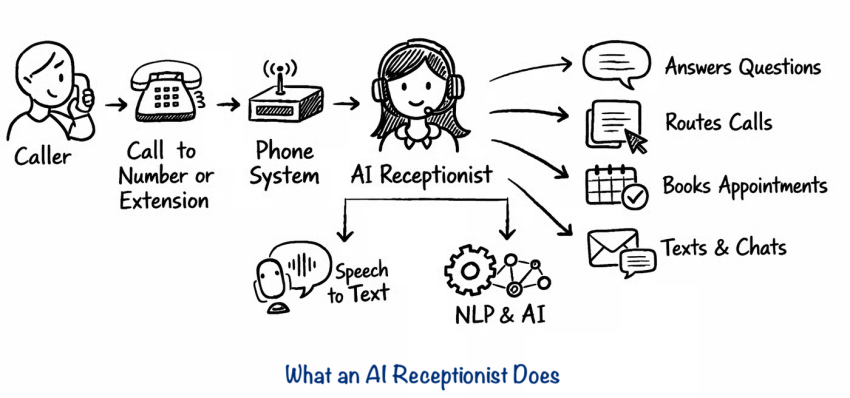
AI receptionists focus on handling inbound calls around the clock. Instead of presenting a traditional phone menu, they use natural language understanding and automatic speech recognition to speak with callers, capture lead information, schedule appointments, and route calls without requiring keypad input.
Intelligent virtual agents (IVAs)
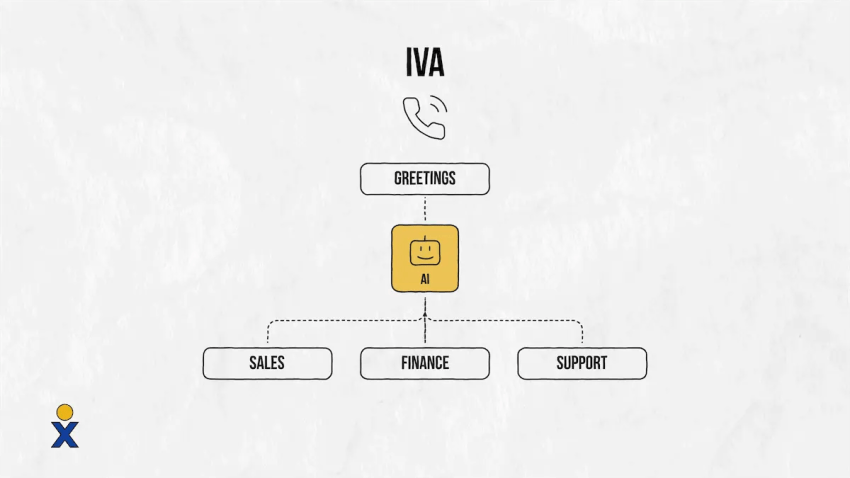
IVAs operate as task-focused digital assistants. They connect directly with CRM, billing, and internal systems so customers can complete actions such as checking account balances, updating account details, or making secure payments without human involvement.
This enables customers to resolve issues quickly while helping businesses reduce costs and increase productivity.
Agent assist systems
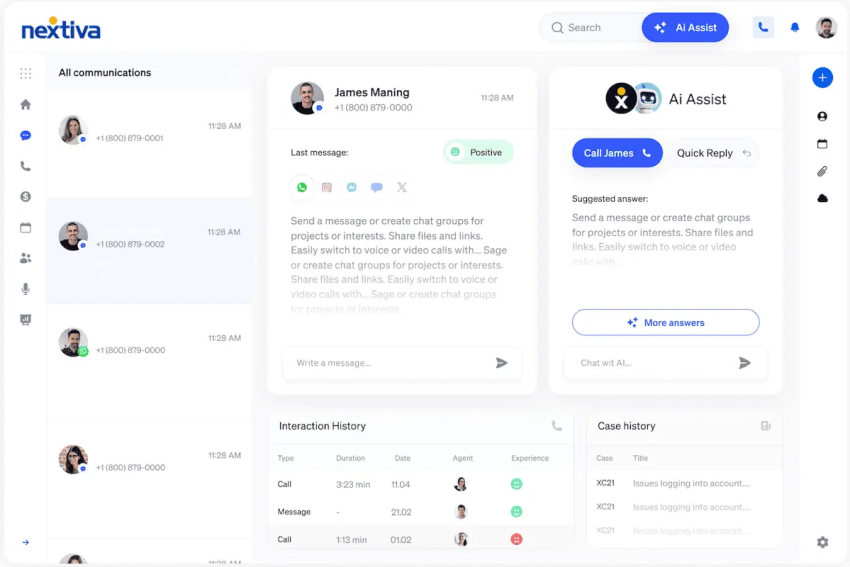
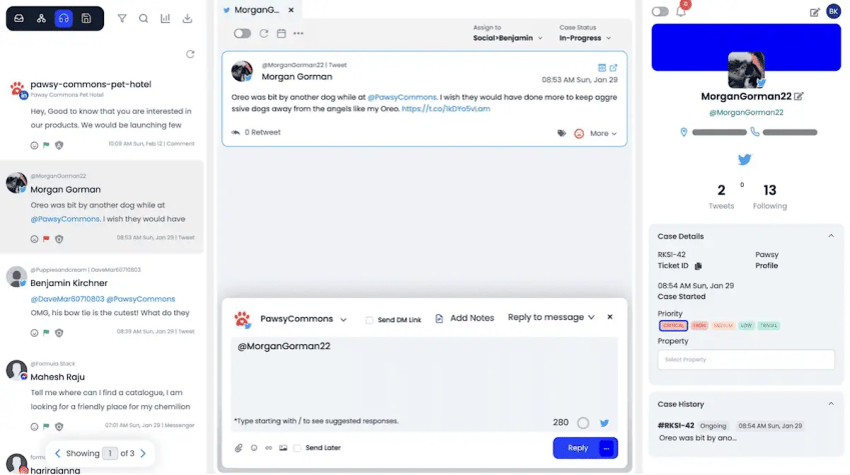
Agent assist tools support human representatives during live conversations. They transcribe calls in real time using AI and generative AI to suggest responses, surface relevant knowledge base content, and recommend the next step to help agents resolve issues more quickly.
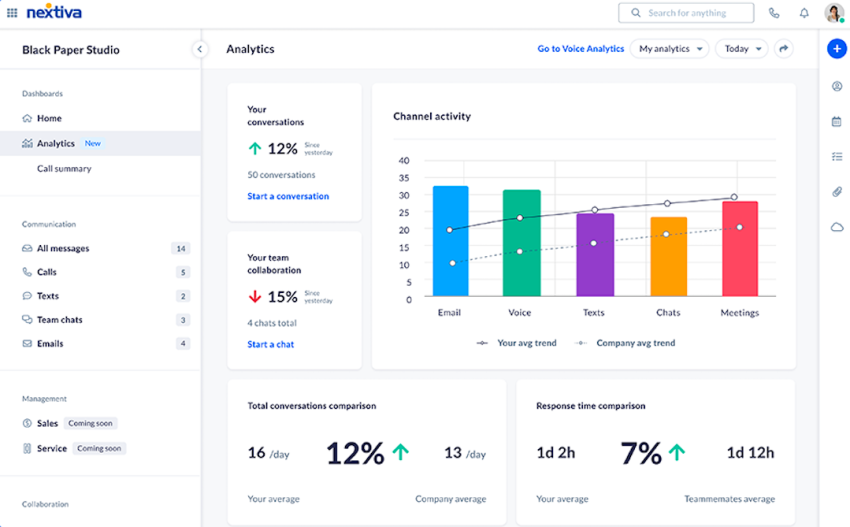
Many systems also provide an analytics dashboard that helps supervisors analyze conversations and gain deeper insights into customer needs while monitoring conversation outcomes and response quality.
Benefits of Conversational AI Solutions
These solutions expedite business in multiple ways. However, it’s not just about speed: Conversational AI also works to enhance the overall quality of the customer experience. There’s no trade-off between quality and speed; together, they help you manage customer interactions in different use cases at a much larger scale.
Here’s a detailed overview of why businesses prefer smart conversational AI technology.
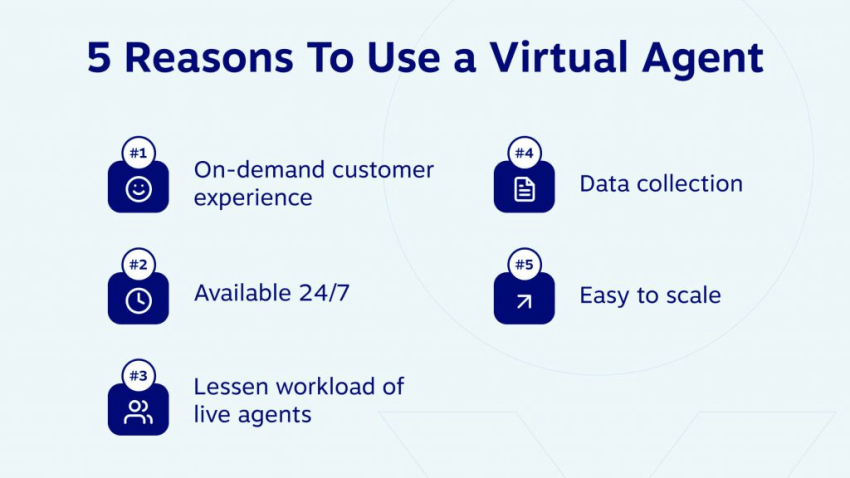
24/7 customer service
A conversational AI tool keeps the customer-facing side of your business live at all times, so your business never misses a lead or a service request. Whether it’s a simple inquiry or an automated task, the software takes care of it even when your team is offline, out of the office, resting at night, or working in different time zones.
It lets you answer frequently asked questions (FAQs) without needing an agent to contribute their expertise. By handling these questions automatically, it helps businesses in lowering costs and provides immediate responses for customers who expect fast support.

Improved personalization
Most businesses integrate conversational IVAs with their CRMs and customer data platforms to maintain conversation context. This helps the AI solution recognize a customer’s full history, including previous purchases and past support issues across channels such as SMS, web chat, and voice platforms, and mobile devices to improve customer engagement.
With this context, the AI agent can provide unique responses to customer queries, offering a more personalized experience. This saves customers from repeating what they have already conveyed and offers them an experience that’s fast and tailored to their needs.
Increased efficiency
As conversational AI solutions handle most of the simple queries that customers ask frequently, they free up time and mind space for service agents, letting them focus on complex issues that require more time to address.
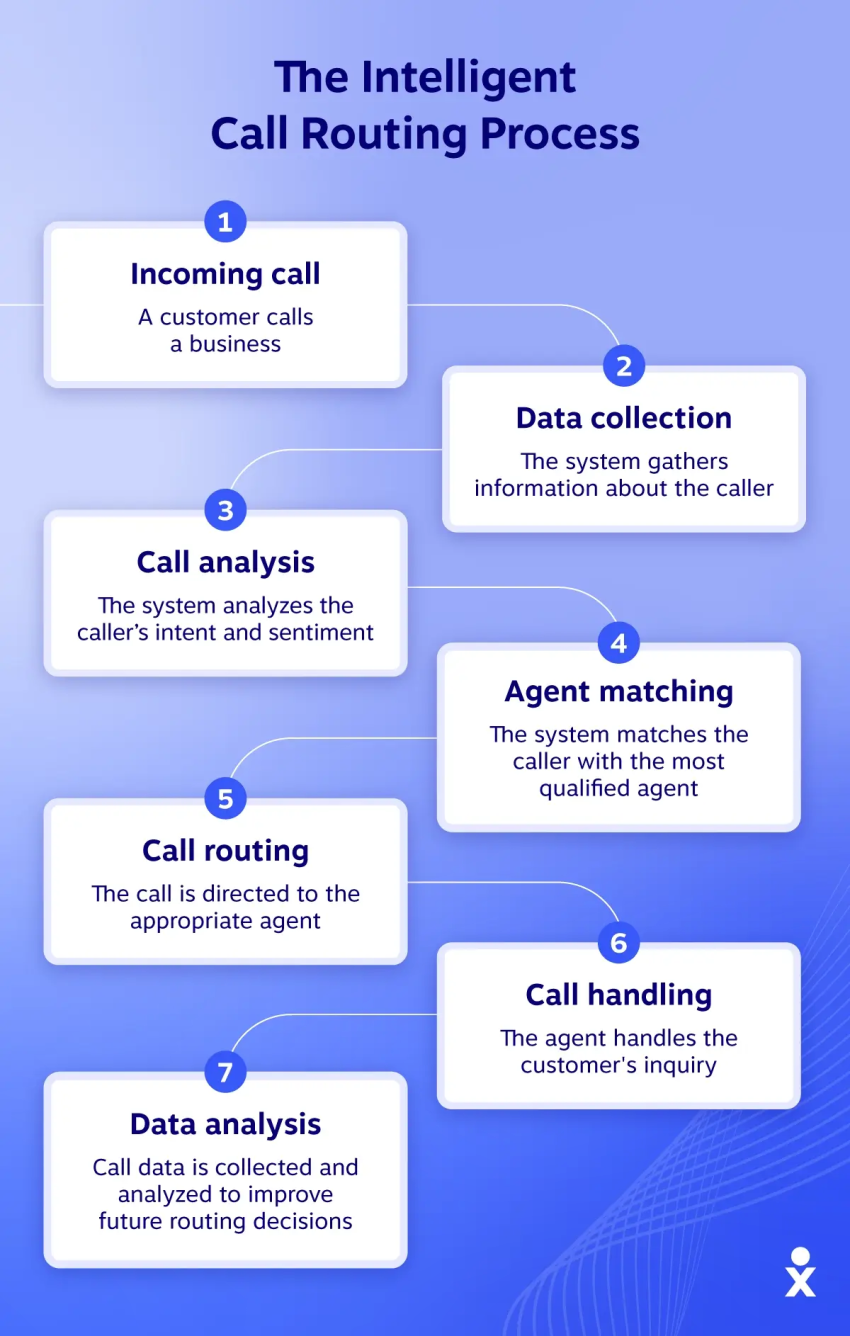
For example, automated call summaries generate notes and follow-up actions immediately after a conversation, which removes the need for agents to spend several minutes documenting each call. Intelligent routing enables the system to analyze caller intent and sentiment to route conversations to the most appropriate agent from the start.
With a reduced workload, human agents become more effective at managing complex issues that require expertise. They become more productive and resolve complex queries faster, enhancing the customer experience (CX) end-to-end. Operational efficiency improves as problems are resolved more quickly.
Smarter data collection and insights
Conversational AI applications interact with customers at scale. They capture data about inquiries in real-time, which companies can analyze to identify opportunities to optimize their customer experience (CX) strategies. Through automated transcription and sentiment analysis, businesses can solve emerging issues before they grow.
For example, if you notice a question being frequently asked on your service channel, you can identify its root cause and address it accordingly. In such cases, you can prepare an FAQ guide or use simple in-product messaging to resolve feature-related inquiries.
Related: The Newbie’s Guide to Conversational AI Chatbots
Measurable return on investment (ROI)
Conversational AI improves both productivity and revenue performance. It helps businesses respond faster to customers while also supporting growth. When companies use the best conversational AI solutions, they create scalable systems capable of supporting enterprise-scale growth without requiring large increases in staffing.
Proactive digital assistants can engage website visitors at key moments during their journey. By stepping in when a visitor hesitates or needs more information, these systems help increase conversions and drive more online sales.
Many enterprise conversational platforms also deliver a quick return on investment. They reduce operational costs through automation while improving customer retention and engagement, which allows businesses to recover their investment in a relatively short period.
Key Features of Conversational AI Solutions
When you’re seeking a conversational AI solution for your business, look for the following features to help you deliver an enjoyable CX to your users.
Contextual awareness
Contextual awareness enables you to personalize responses at various levels. Advanced contextual awareness can address queries like, “How much did I spend in New York last year?” or more complicated questions.
This personalization will provide your customers with an easy experience, making them more likely to return.
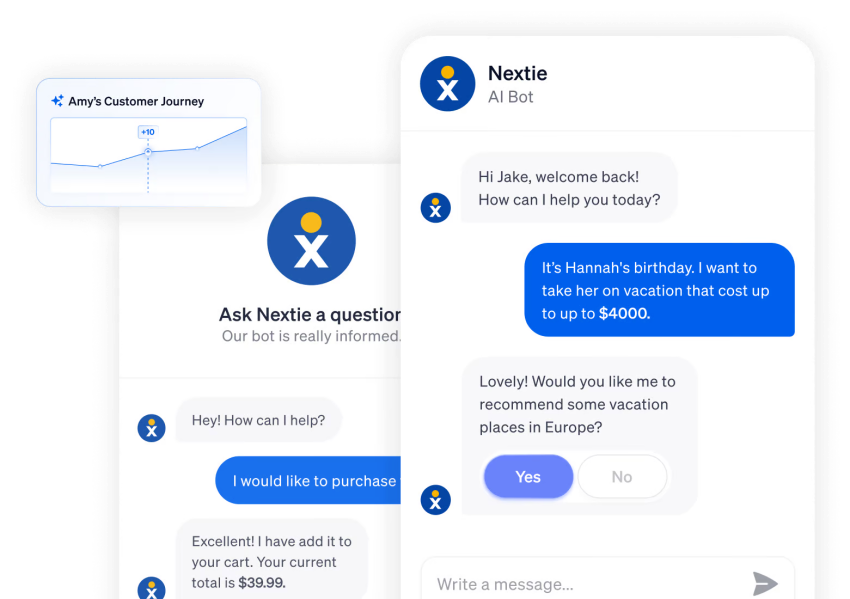
Seamless live agent takeover
Most conversational AI solutions facilitate live agent takeover to address customer queries that are too complex for the software to handle. The system can immediately assign conversations to default agents or ask a few questions to gather more context before passing conversations to relevant sales agents.
The transfer of the conversation is smooth, without recognizable delays, making the experience more seamless for customers.

Dialogue scripting
Conversational AI solutions include a conversation designer tool, such as dialogue scripting, that creates conversational flows without complex coding. These flows feel natural and guide users toward a resolution.
This helps conversational AI agents better mimic human conversation and assist customers faster.
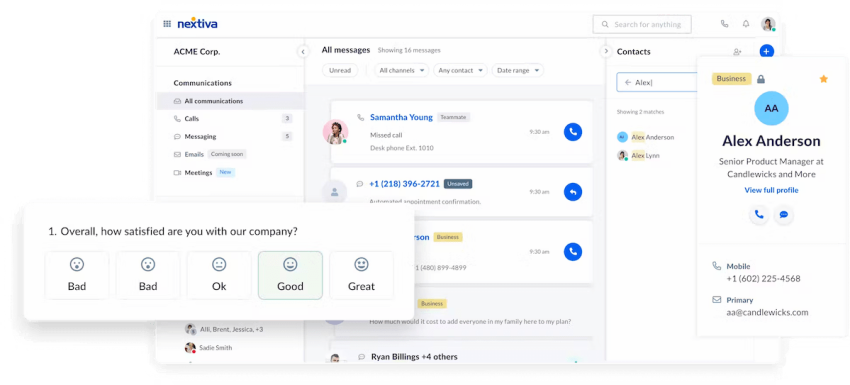
Omnichannel experience
Modern customers expect you to assist them on multiple channels. Whether they reach you through messaging apps, websites, or social media, they want a consistent experience.
Conversational AI platforms let you offer a similar experience across these apps while maintaining context from previous interactions.

Enterprise readiness
Companies expect their conversational AI solution to comply with industry regulations. They prefer solutions that maintain a level of security and data privacy when handling customer data.
This is especially crucial in the healthcare industry, where businesses must comply with the Health Insurance Portability and Accountability Act (HIPAA) regulations. When you’re seeking a solution, check if it complies with regulations and standards in your sector.
Many enterprise conversational platforms run on infrastructure such as Google Cloud to ensure security, reliability, and scalability.
Learn how chatbots boost CSAT & revenue
Watch this free on-demand webinar to learn how to scale service and drive growth with AI-powered chat.
Pros and Cons of Conversational AI Solutions
Conversational AI offers a clear path to modernization, but organizations must weigh both the immediate benefits and the long-term operational changes. Most enterprises no longer question whether to adopt AI. Instead, they focus on balancing AI’s speed and efficiency with the need for human empathy.
| Pros | Cons |
|---|---|
| Instant response: Eliminates wait times and improves CSAT. | Implementation time: Requires clean data and initial training time. |
| Drastic cost savings: Automates routine tasks for pennies. | Lack of human empathy: May struggle with highly sensitive or emotional cases. |
| Scalability: Handles 1,000+ chats simultaneously without extra staff. | Maintenance: Needs regular updates to keep knowledge bases current. |
Challenges of Using Conversational AI in CX
While conversational AI offers numerous benefits, it also presents challenges related to the customer experience.
Limited understanding of complex questions
Generative AI models might have become more advanced than they were a few years ago, but they still need to be able to effectively address complex customer questions.
Not all customer questions have objective answers. When such questions arise, conversational AI usually hands them over to a human agent who can advance the discussion.
Enterprise-grade security and privacy
Maintaining data security and privacy is crucial when dealing with your customers’ sensitive information. Your customer expects you to comply with relevant industry standards, such as:
- General Data Protection Regulation
- HIPAA
- Sarbanes-Oxley Act
- System and Organization Controls
- California Consumer Privacy Act
Even when conversational AI solutions comply with these standards, some people still speculate and have second thoughts about using AI solutions.
Maintaining user trust
It takes a village to balance automation and human touch. Depending solely on conversational AI might undermine the CX when complex questions arise in a customer’s journey. AI might also fail to give a customer enough options.
This makes the experience frustrating and limiting for your customers.
Best Practices When Using Conversational AI in CX
Teams cannot treat conversational technology in customer experience as a one-time setup. They must actively manage, monitor, and refine the system to deliver strong ROI while maintaining high customer satisfaction.
1. Clearly define goals
Avoid using a generic chatbot. They should build a solution that serves a specific business purpose.
- The specificity rule: You should determine whether the system will focus on demand generation, such as qualifying leads and booking demos, support deflection by resolving frequently asked questions, or transactional tasks like processing returns or payments.
- KPI alignment: Connect each use case to a measurable outcome. For example, track resolution rates for support interactions and meeting-booked rates for sales conversations.
2. Train on high-quality data
Use accurate knowledge sources to ensure dependable responses. The performance of conversational systems depends directly on the quality of the information they use.
- Knowledge anchoring: Connect the system directly to internal documentation such as product manuals, HR policies, and pricing sheets. This approach ensures the system delivers responses based on verified company information rather than generic sources.
- Regular data audits: Review and update knowledge sources regularly. Outdated documentation often leads to inaccurate responses and customer frustration.
3. Maintain transparency and clear human escalation paths
Your organization must protect customer trust during automated interactions.
- Clear identification: You should introduce the system as a digital assistant at the beginning of each conversation. Clear identification prevents confusion and reduces frustration when the system cannot resolve a request.
- Proactive handoffs: Monitor customer sentiment and conversation patterns. If a user repeats a question or expresses frustration, the system should immediately offer to connect the user with a live specialist.
4. Prioritize user experience
Design conversational systems that reflect the company’s brand voice and communication style.
- Brand voice alignment: If a brand emphasizes professionalism and efficiency, the system should deliver concise and direct responses. Brands that emphasize friendliness should use warmer greetings and more conversational language.
- Multimodal flexibility: Modern conversational systems should support more than text. Teams should enable voice input, voice-to-text conversion, and image uploads so customers can share information more easily, such as sending a photo of a damaged product.
5. Implement continuous conversation analysis
You should treat customer conversations as a source of insight for ongoing improvement.
- Gap analysis: Review conversations where the system failed to resolve an issue. These cases often reveal gaps in documentation or missing knowledge resources.
- Feedback loops: Allow users to rate responses with simple positive or negative feedback. They can then use this input to refine responses, tone, and workflows over time.

Common Use Cases Across Industries
Conversational artificial intelligence serves many operational needs across different industries.
- Customer support: Businesses use chatbots on websites, mobile apps, and messaging platforms to answer frequently asked questions. These bots resolve issues related to billing, shipping, technical troubleshooting, and account management.
- Healthcare assistance: Healthcare providers use it for patient intake, appointment scheduling, and medication reminders. AI assistants collect basic information before a patient speaks with a healthcare professional.
- E-commerce support: Online retailers use it to guide customers through product searches, order tracking, and return requests. These interactions reduce the burden on customer support teams.
- Financial services: Banks and financial institutions use it to assist customers with account inquiries, transaction history, and fraud alerts.
- Internal employee support: Many organizations use AI assistants internally to help employees access IT resources, HR policies, or onboarding documentation.
Real-world examples
Conversational AI solutions no longer follow a single standardized model. Businesses now depend on industry-specific systems to solve operational bottlenecks unique to their sector.
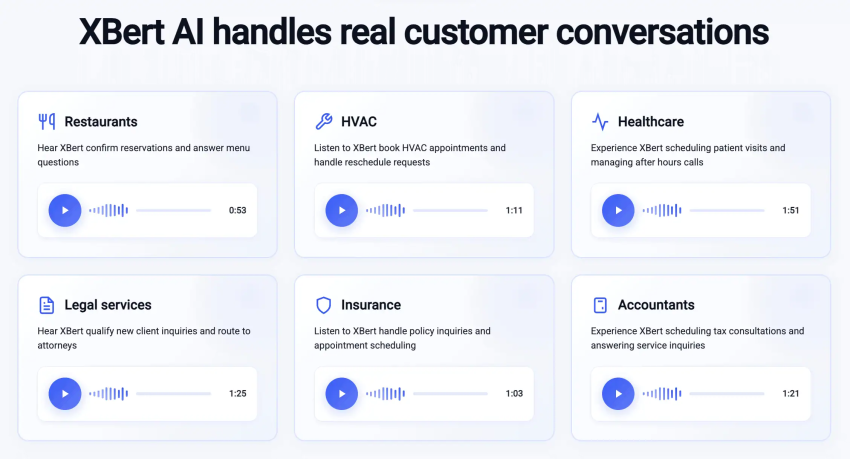
Healthcare: patient access and compliance
Healthcare providers use conversational tools designed for medical workflows so teams can manage patient communication while protecting sensitive information.
- Automated intake & EHR sync: Digital assistants collect patient history and insurance details and update records directly in platforms such as Epic or ModMed.
- HIPAA-compliant reminders: Automated voice and text reminders notify patients about upcoming appointments and medications, which helps reduce missed visits and revenue loss.
- Real-world example: Heidi Health uses conversational technology as an ambient medical scribe that transcribes consultations in real time and summarizes interactions so clinicians can focus on patient care instead of documentation.
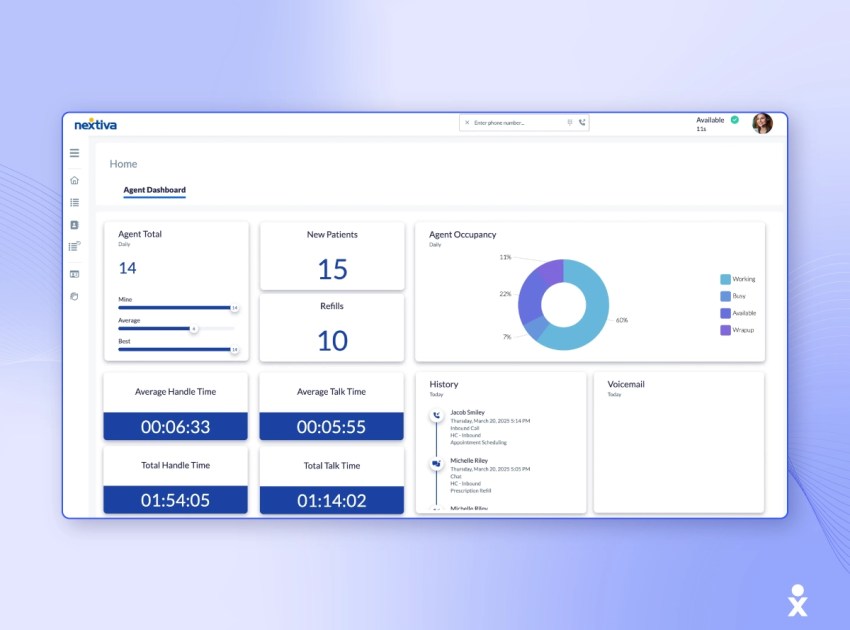
Retail: from browsers to buyers
In retail, quick engagement often determines whether a visitor becomes a customer. Conversational tools help retailers deliver personalized service at scale.
- 15-35% conversion boost: Digital sales assistants engage website visitors, answer inventory questions, and recommend products based on browsing behavior.
- Reduced cart abandonment: When shoppers hesitate during checkout, the system can answer shipping questions or offer a limited discount code through chat to recover potential lost sales.
- Real-world example: Sephora offers a virtual beauty assistant that answers questions, provides personalized skincare consultations, and guides users through integrated virtual try-ons. This conversational journey increases purchase likelihood by 3×.
SaaS & technology: solving problems in seconds
Technology companies use conversational systems to reduce support backlogs and help users resolve issues quickly.
- Instant technical troubleshooting: The system searches internal documentation and delivers step-by-step instructions or API references directly in the chat window.
- Automated ticket creation: If the issue requires human support, the system creates a detailed ticket within the platform. It includes a full summary of the conversation, so the support agent has immediate context.
- Real-world example: Autodesk uses virtual assistants to deliver 24/7 troubleshooting and training resources, while companies using Nextiva’s AI employees can resolve up to 80% of routine technical tickets without human intervention.
Logistics and transportation: predictive support
Logistics companies use conversational systems to manage delivery communication and reduce customer service workload.
- Real-time order tracking: Customers receive delivery updates through messaging channels such as WhatsApp or SMS without contacting a live agent.
- Delivery validation: The system can proactively contact customers to verify address details when it detects location or routing issues.
- Real-world example: Uber rebuilt its support chat infrastructure to dramatically scale its service operations, using automation to connect riders and drivers with quick solutions for fare disputes and navigation issues.
Industry impact
| Industry | Primary AI driver | Proven ROI | Source/study |
|---|---|---|---|
| Healthcare | Ambient medical scribes | 41-second reduction in documentation time per note | NEJM AI / UCLA Health |
| Retail | Generative AI assistants | 14% increase in issues resolved per hour | Stanford & MIT (NBER) |
| SaaS | AI-powered self-service | 40% reduction in resolution cost | Nextiva / Tata Play Study |
| Logistics | Predictive control towers | 30% reduction in operational costs | LogiNext / SQ Centre Study |
Automate More Customer Interactions With Nextiva
Nextiva’s conversational AI platform keeps your business available around the clock, so you can support customers whenever they need assistance. This is especially valuable if you serve customers across different time zones.
You can engage customers through AI-powered chatbots across voice, chat, and digital touchpoints, ensuring support remains accessible even outside normal operating hours. As automation handles routine inquiries, you naturally reduce operational strain while your agents focus on complex conversations that require human expertise.
Nextiva also enables smooth transitions between virtual agents and live representatives. Its context-aware system maintains continuity during interactions and helps you deliver personalized customer experiences. When automation reaches its limits, the system routes the conversation to a human agent without interrupting the flow of the interaction.
Nextiva gives you a powerful platform to manage conversations across multiple communication channels while supporting large volumes of requests. By combining automation, analytics, and pre-built connectors, the platform helps you streamline business processes, scale customer support operations, and improve the overall customer journey.
Related: Top Chatbot Providers: Key Features, Uses, & Campaign Ideas
Is your CX falling short?
Assess and elevate your strategy with the Gartner® CX Maturity Model report.
Frequently Asked Questions About Conversational AI
Most businesses can implement a basic FAQ bot or AI receptionist within 2-6 weeks, depending on the platform and integrations. More advanced systems that connect to CRM platforms, knowledge bases, and multiple channels typically take 6-12 weeks to implement and optimize. Timelines vary based on data preparation, integrations, and the number of supported use cases.
Conversational AI does not replace human agents. In 2026, organizations use AI to augment human teams. AI handles Tier 1 repetitive questions such as order status, account updates, or FAQs. This automation allows human agents to focus on complex issues that require empathy, judgment, and advanced problem-solving.
Yes. Many enterprises offer security-first architectures and compliance frameworks designed for regulated industries. Leading vendors support standards such as HIPAA, GDPR, and SOC 2 to protect sensitive customer and patient data. Organizations must still configure the platform correctly and follow internal security policies to remain compliant.
Conversational AI systems depend on natural language understanding (NLU) and machine learning models trained on large multilingual datasets. These models detect user intent, interpret phrasing variations, and recognize dialects or accents. Many business AI platforms support dozens or even hundreds of languages, depending on the provider and training data.