
 Customer Experience
  Blog
Blog  Business Communication
  Leadership
  Marketing & Sales
  Nextiva News
  Productivity
  VoIP
VoIP 

As contact centers push the boundaries of efficiency in customer service and call answering through the use of artificial intelligence (AI), there’s a dark underlord at play behind the curtain. AI can now clone a voice with three seconds of audio. So, how can your AI receptionist, automated answering service, or human agent detect who’s real and who’s a deepfake?
We’ve been relying on knowledge-based authentication (KBA) like:
- What’s your mother’s maiden name?
- What was the name of your first pet?
- What street did you grow up on?
- What was your first school?
But the answers to these are more commonly being guessed through trial and error, obtained through hacking, or acquired on the dark web by fraudsters.
The rising threat of deepfake voice fraud in contact centers is a genuine concern because scammers can sound exactly like the account holder you may have just spoken to. In 2019, scammers used AI voice cloning to impersonate the CEO of a German energy company’s parent firm and convinced an employee to transfer $243,000 to a fraudulent supplier account.
As a provider of business voice services to over 100,000 companies, Nextiva is uniquely positioned to have witnessed the evolution of phishing into deepfakes and to understand the vulnerability of traditional interactive voice response (IVR) systems to AI voice scammers.
Why Traditional Authentication Methods Fail Against Contact Center Fraud
Legacy authentication is simply that: legacy. You must not rely on technology designed or deployed in the 1990s to protect your business in the 2020s and beyond.
Back in the 1990s, it might have been easy to use a fake ID to con a bouncer into letting you into a bar. Their check was manual, and they didn’t have much motivation not to let you in. Today, not only are fakes better and AI-powered, but there’s more at stake. It’s not an entry to your favorite bar; it’s access to data, sensitive information, and financial loss.
Businesses of all sizes can be targeted in social engineering and account-takeover attacks. While large brands like banks are top targets, these vulnerabilities can impact all types of companies and use cases such as customer support, IT help desks, HR teams.
The failure of typical security questions (birthdays, SSNs)
Traditional security questions are no longer enough because the answers are no longer private. Birthdays, addresses, family names, and even Social Security Numbers (SSNs) are regularly exposed through data breaches, phishing attacks, and social engineering campaigns.
Fraudsters no longer need to hack their way in. In many cases, they simply buy or piece together information that already exists online. This creates a dangerous combination when paired with AI voice cloning.
How fraudsters use deepfakes to bypass voice as a password
Many call centers still treat voice as a password. If a caller sounds calm, confident, and familiar, agents naturally lower their guard. But deepfake technology changes the rules completely.
Fraudsters can now mimic tone, pacing, accent, and emotional inflection well enough to convince agents they’re speaking to a legitimate customer. And unlike old-school fraudulent calls, these attacks are interactive.
The role of social engineering in technical attacks
Modern AI systems can respond in real time, adapt to questions, and use social engineering tactics to pressure agents into bypassing security procedures. A caller may claim they are traveling overseas, have been locked out of an account, or are urgently trying to stop fraudulent activity.
The goal is always the same: create enough emotional urgency that the process gives way to trust. This is why security can no longer rely solely on what a caller knows or how they sound.
How Nextiva can help
Nextiva’s SOC 2-certified platform helps reduce this risk by bringing communication, customer data, and security controls into a centralized environment designed for modern business communications. Instead of relying on outdated IVR logic and static identity verification questions, you can build layered security strategies that are better equipped to handle AI-powered fraud.

Technical Strategies to Detect Synthetic Audio
The question evolves from “should we protect against deepfake voice fraud?” into “how do we detect synthetic audio?” Using an AI tool built into high-performance contact centers, real-time analysis can detect robotic artifacts in audio that the human ear misses.
We’re no longer relying on live agents to assume the caller is legitimate. Instead, we’re using voice biometrics for proactive defense.
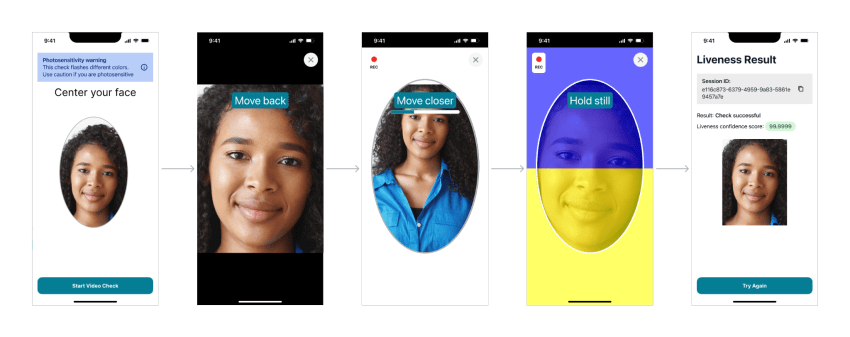
Liveness detection: Verifying a human is on the line
Liveness detection adds another layer of protection by determining whether the voice on the other end of the call belongs to a real human speaking naturally in real time.
Synthetic audio often contains subtle inconsistencies like:
- Unnatural breathing patterns
- Delayed conversational responses
- Flattened emotion
- Audio artifacts created during voice generation
While these signals are difficult for a human agent to identify during a live conversation, AI models trained on fraudulent audio patterns can detect anomalies in milliseconds. This helps contact centers move beyond passive authentication and toward active fraud prevention, identifying suspicious calls before sensitive actions are approved.
Metadata analysis and carrier-level signaling anomalies
The best fraud detection solution is one that starts before you start talking to a caller.
Modern contact center platforms can analyze metadata surrounding a call, including:
- Carrier information
- Device fingerprints
- IP addresses
- Routing behavior
- Signaling anomalies that may indicate spoofing or synthetic activity
For example, a caller may sound like a legitimate customer but originate from an unusual network path, a masked VoIP provider, or a geographic location inconsistent with historical account activity. This network-level analysis, combined with liveness detection, bolsters your protection.
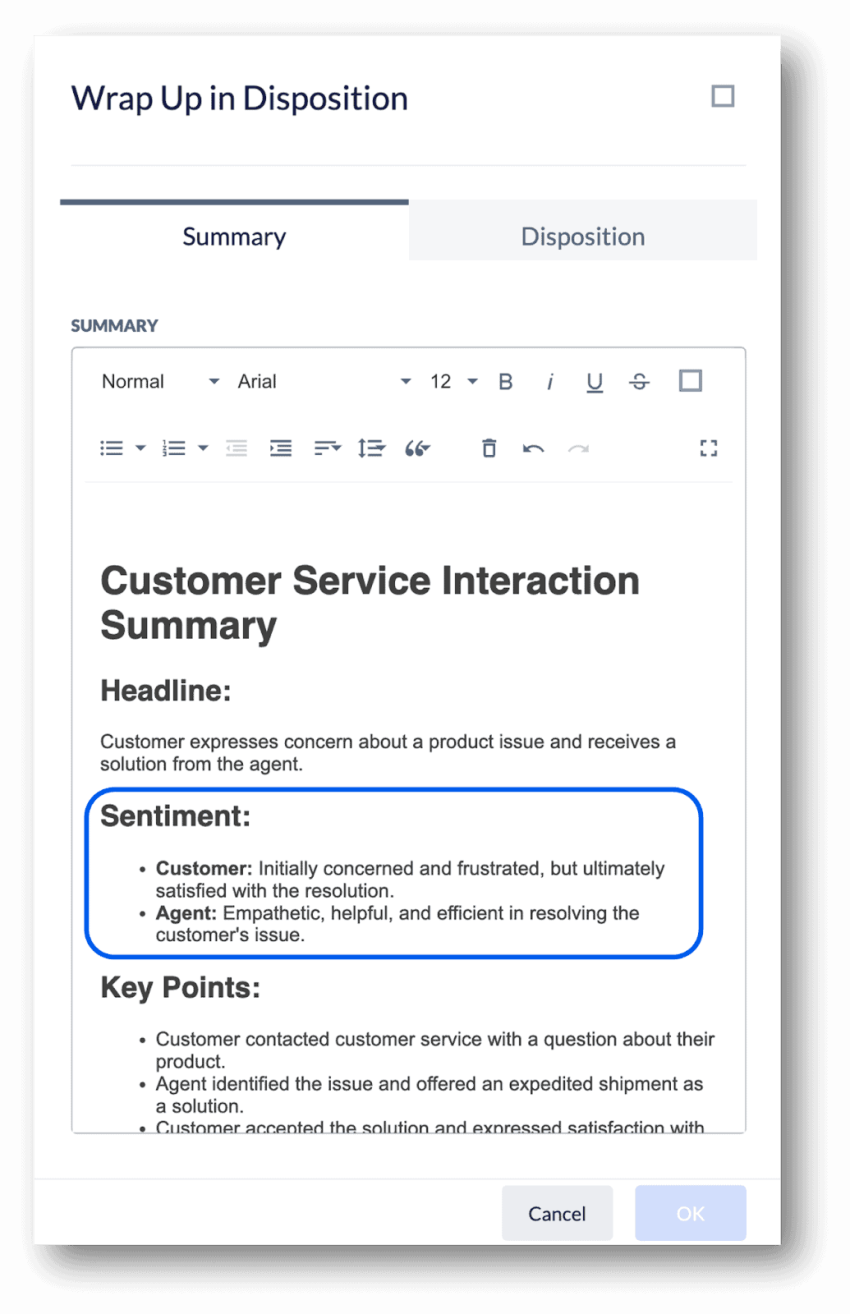
AI-powered sentiment and interaction analysis
Typical sentiment analysis use cases involve detecting whether your customer is happy or frustrated during a call. But you can also use this to identify predictable patterns associated with deepfake voice fraud, including:
- Rushing agents
- Avoiding verification steps
- Repeating rehearsed phrases
- Manipulating emotions to create urgency and confusion
Once flagged, supervisors can step in, or pre-configured workflows can take action to ensure further checks happen before a transaction gets authorized.
Common Questions About Voice Fraud Prevention
How does a modern cloud phone system differ from a legacy PBX in preventing fraud?
Legacy PBX systems often rely on outdated KBA methods that fraudsters can bypass using stolen data, social engineering, or AI-generated voices. Modern cloud communication platforms use layered security measures like behavioral analysis, network monitoring, intelligent routing, and anomaly detection to identify suspicious activity before fraud occurs.
Why is network-level security important for voice fraud?
Voice fraud prevention should begin before a call reaches an agent. Carrier-grade PSTN connectivity and network-level fraud detection tools can identify suspicious routing behavior, spoofing attempts, unusual traffic patterns, and high-risk call origins in real time, helping businesses stop attacks earlier in the process.
What is voice biometrics?
Voice biometrics uses unique vocal characteristics to help verify a caller’s identity. Enterprise contact centers increasingly combine voice biometrics with AI analysis, authentication controls, and unified communications platforms to create a layered “defense in depth” security strategy.
How can call recording help prevent future fraud?
Call recording and transcription tools help businesses analyze fraud attempts after they happen. This is particularly important for combating vishing (voice phishing), as security teams can review conversations, identify emerging social engineering tactics, and train agents to recognize suspicious behavior in future calls.
Implementing a Multi-Layered Defense Strategy
We’ve identified some tools and tactics to prevent deepfake voice fraud in your contact center. Now, let’s turn that into a genuine strategy.
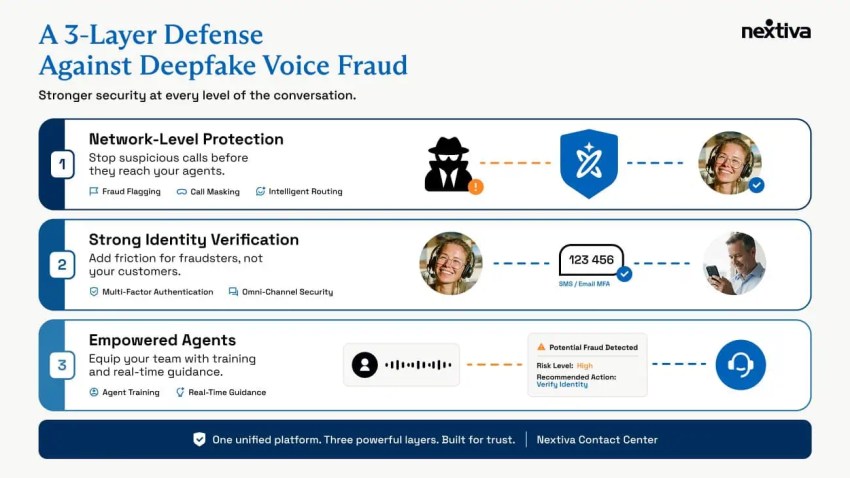
Layer 1: Network-level fraud flagging and call masking
Turn on network-level fraud monitoring to identify suspicious calls before they ever enter sensitive workflows.
Modern fraud mitigation tools can automatically flag activity like:
- Spoofed caller IDs and phone numbers
- Unusual spikes in call volume
- High-risk geographic origins
- Suspicious routing behavior
- Repeated failed verification attempts
This helps prevent fraudsters from reaching agents and reduces the likelihood of successful social engineering attacks.
Platforms like Nextiva Contact Center combine intelligent routing with real-time fraud detection to isolate suspicious activity earlier and reduce reliance on manual intervention.
Layer 2: Multi-factor authentication (SMS/email) during the call
Add multi-factor authentication (MFA) to live customer interactions to prevent attackers from bypassing voice-based verification. If a fraudster can clone a customer’s voice, traditional KBA and voice-as-a-password approaches are no longer enough.
We suggest adding the following protocols:
- One-time passwords
- Email verification links
- Device authentication
- Push notifications
Modern omnichannel contact centers allow this process to happen automatically during a live call or social media interaction and can trigger MFA workflows inside the customer journey — not just at the beginning for account access.
Layer 3: Agent training and real-time guidance
Equip agents with real-time fraud guidance so they can respond consistently during suspicious interactions.
Scammers often rely on fraud tactics like:
- Referencing recently leaked personal information
- Pretending to be locked out of an account
- Claiming there’s an urgent payment issue
- Attempting to confuse agents with excessive detail
- Pushing for account changes outside normal processes
While training your contact center agents to recognize these behaviors may help a little, opt for a contact center that enables network-level fraud flagging, omnichannel MFA, and AI-assisted agent guidance inside a unified platform.
Empowering Agents to Identify AI-Driven Scams
With all the technology in the world, there’s still a large amount of work for live agents to handle. Here’s where a fully stacked contact center solution comes in handy, taking proactive steps to protect your staff.
Nextiva’s award-winning platform allows supervisors to monitor calls and/or use AI to summarize interactions to find fraud patterns faster.
Red flags: Unnatural pauses, lack of emotion, and background noise anomalies
Using sentiment analysis and live detection, your agents can receive alerts when AI-generated voice calls are potentially happening.
An on-screen alert to either the agent or their supervisor appears when:
- Callers are particularly forceful
- They call back quickly and can’t pass verification
- There are pauses for an AI bot to process a clever answer
- The humanlike voice lacks emotion and is overly forward
- The background noise sounds forced or AI-generated
With these alerts in place, agents and built-in workflows can trigger supervisors to take over calls or choose to enforce further authentication.
Enforcing strict no-bypass security protocols
In some cases, especially in high-security industries like financial institutions and healthcare, opt for absolutely no wiggle room on security.
Implement some (or all) of the following:
- Requiring MFA before sensitive account changes
- Preventing agents from manually overriding failed authentication
- Blocking transactions until verification is complete
- Escalating suspicious calls to supervisors automatically
- Restricting access to sensitive customer data during high-risk interactions
Using AI to provide agents with the next best action during suspicious calls
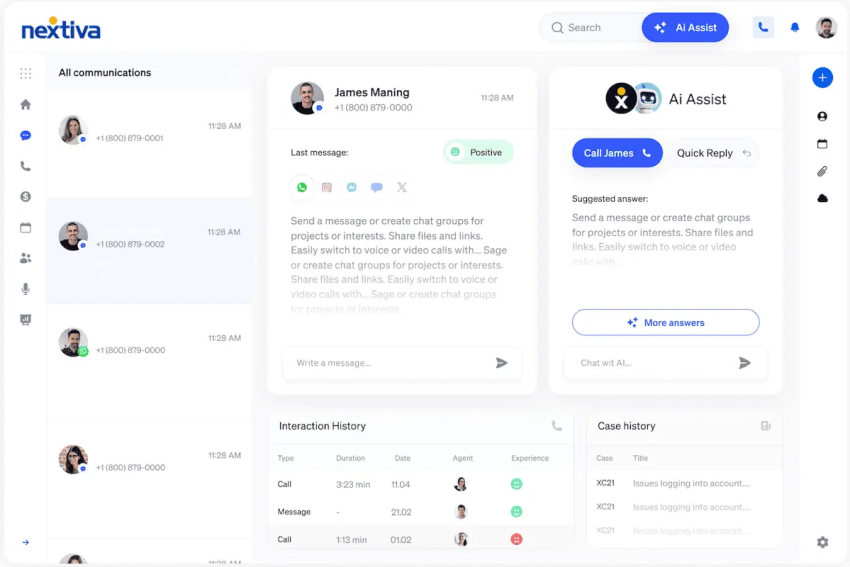
Nextiva’s AI Agent Assist tool gives agents on-screen prompts to not only guide tricky conversations but also flag when your business is at risk from deepfake voice fraud. It may pop up, asking you to complete further verification steps to complete a transaction, or offering a script to enforce additional security.
Future-Proofing Your Center Against Evolving AI Threats
What we are aware of today may continue to evolve into more sophisticated attacks. Ensuring your business is secure not only from current voice fraud but also from potential future threats should be top of mind for contact center leaders and infosec personnel.
The businesses that stay protected won’t be the ones with the most tools. They’ll be the ones with the strongest security foundations.
Move to a Zero Trust model for voice communications
Stop treating a caller ID or a familiar voice as proof of identity. Rather than assuming phone calls are trustworthy until proven otherwise, Zero Trust architecture assumes every interaction could be fraudulent until verification is complete. This helps businesses reduce the risk of AI-generated impersonation attacks that rely on sounding legitimate during live conversations.
Consider the following when receiving a call:
- Requiring verification for every sensitive request
- Enforcing MFA across voice and digital channels
- Limiting agents’ ability to bypass authentication controls
- Restricting access to sensitive personal data based on risk level
- Automatically escalating suspicious interactions
This approach shifts security away from assumptions and toward continuous verification.
Adopt continuous monitoring and split-recording tools for AI audits
Turn on continuous monitoring to identify suspicious behavior patterns across every customer interaction. AI-powered fraud is rarely isolated to a single call. Attackers often test systems repeatedly, probe verification workflows, and target multiple agents while looking for weaknesses.
Monitor for signals like:
- Repeated authentication failures
- High-risk call patterns
- Unusual account access behavior
- Escalation requests
- Rapid spikes in suspicious activity
Split-recording and AI auditing tools help security teams separate, review, and analyze interactions involving sensitive customer information without exposing unnecessary data internally.
Strengthen HIPAA and PCI-DSS compliance in the AI era
Review compliance policies now instead of waiting for AI-related breaches to expose security gaps later.
Modern contact centers must protect sensitive customer information while meeting regulatory requirements like:
- HIPAA
- PCI-DSS
- Data retention policies
- Privacy and access controls
Prioritize platforms with built-in compliance and data protection capabilities instead of relying on disconnected third-party tools.
Nextiva’s HIPAA-compliant communications infrastructure and data loss prevention controls help you reduce risk by securing customer interactions, limiting unnecessary data exposure, and centralizing security management inside one unified platform.
Prevent Deepfake Fraud With a Platform Built for Cloud Contact Centers
Deepfake voice fraud is not a future problem; it’s already happening. You only have to look as far as Mark Read, CEO of WPP, the world’s largest advertising company. His voice was faked during an attempted scam targeting company employees and executives to hand over money during a call.
Preventing this requires more than a standalone fraud tool layered onto outdated infrastructure. You need a secure communications platform that integrates voice, authentication, routing, monitoring, compliance, and customer data into a single system of record.
Your first steps should be:
- Starting with carrier-grade PSTN connectivity: Spot spoofed caller IDs, suspicious routing, and repeated failed authentication.
- Consolidating siloed systems into one security platform: Reduce tool sprawl to close the security gaps that attackers rely on.
- Deploying faster and adapting faster: Deploy Nextiva solutions quickly with implementation timelines that may stretch beyond 24 weeks with legacy infrastructure and disconnected vendors.
AI-powered fraud is evolving quickly. Your contact center security should evolve faster.
Ready to modernize contact center security and reduce exposure to deepfake voice fraud? See how Nextiva helps businesses unify communications, strengthen authentication, and detect suspicious activity earlier across every customer interaction.
Your AI-Powered Contact Center
Create amazing, secure customer experiences with AI-powered contact center software. Scalable contact center platform built for omnichannel customer conversations.