

 Customer Experience
  Blog
Blog  Business Communication
  Leadership
  Marketing & Sales
  Nextiva News
  Productivity
  VoIP
VoIP 

Five years ago, calling a business meant pressing 1 for billing and 2 for support, and potentially still spending time listening to bad hold music. Today, the system asks what you need in plain language and handles it. This shift from keypresses to conversation is the most consequential change in customer service infrastructure since the call center moved to the cloud, and it happened fast.
Voice is still the most expensive and emotionally loaded service channel a business runs, which is why getting it right matters more than any chatbot rollout. The data proves this point. Fortune Business Insights valued the broader conversational AI market at $14.79 billion in 2025, growing to $82.46 billion by 2034 at a 21% CAGR.
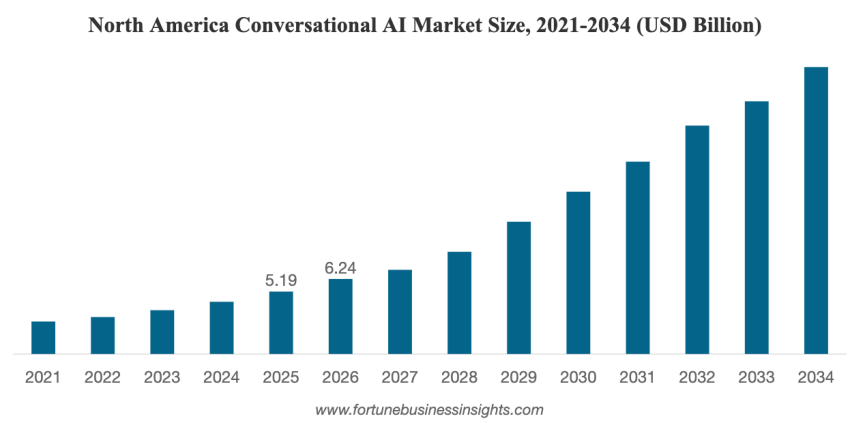
The segment for voice AI agents is smaller but growing faster. While there’s other data out there with slightly different metrics, most industry estimates agree that the market will be growing significantly and fast over the next decade.
This means that AI voice agents are no longer an experiment, and businesses of all sizes now have both an opportunity and a bit of a requirement to level up if they want to stay competitive. While this technology is growing rapidly, the good news is that if you’re just getting started, it’s okay.
In this post, we’re going to give you everything you need to know about current and expected voice AI trends, including how AI agents are changing the game. That way, you can get started with the right solutions and strategies, jumping straight into the deep end.
Try the best AI answering service free for 14 days
XBert AI answers questions and captures leads. Add your 24/7 answering service in minutes.
Shifting From Static Phone Menus to Natural Business Conversations
Have you ever been on the caller’s end of an interactive voice response (IVR), stressed while trying to figure out if you need to press 1 for customer support or press 2 for claims help when calling your insurance company? That voice assistant doesn’t feel so helpful.
If so, you can understand why asking callers to guess which menu branch fits their problem isn’t always ideal, especially if they can’t get to the specialist they need quickly. This scenario is common with small business VoIP systems and large enterprise customer service lines alike, and it’s detrimental for the customer experience.
Replacing rigid menus with AI agents that can understand a real sentence and route the call based on nuance is an upgrade that pays for itself on experience alone. Nothing beats saving your customers the pain of yelling “I want to speak to a human” into the phone, after all.
The benefits of moving past rigid keypress rules with AI voice agents
Modern voice AI uses speech recognition and intent detection to do the following:
- Process a full spoken phrase.
- Score the caller’s intent.
- Match it to a resource.
- Transfer with context already attached.
The caller only needs to describe their problem once in their own words, and they can land in the right place without navigating a decision tree. The difference could be eight seconds of menu navigation versus one spoken sentence, and every extra menu layer is a place to lose the customer. This is significant, since the typical abandonment rate for call centers runs up to 8%, but IVR-specific abandonment can easily be higher.
Speed matters, too. In normal conversation, the gap between one person finishing and the other starting to talk is roughly 200 to 300 milliseconds. When a voice AI takes noticeably longer than that to respond, the caller knows they’re talking to a machine. If they try to interrupt, a slow system talks over them instead of stopping to listen. Production voice AI systems now target that same sub-second response window.
As AI voice agents have rapidly advanced, several key differences stand out between these conversational AI tools and traditional legacy IVR. Here are some of the key differences:
| Dimension | Legacy IVR | Conversational voice AI |
|---|---|---|
| Caller input | Keypad presses, preset menus | Natural speech, own words |
| Routing basis | Fixed decision tree | Detected intent |
| CSAT on switch | Baseline | +18 to 25 points, according to our internal data |
| Response speed | Menu latency, dead air | Sub-second, sub-300 ms baseline |
| What it does | Routes the call | Books, updates CRM, and takes payment in-call |
These differences highlight the core of what Nextiva’s contact center solution can offer customers. Menu trees become conversational routing. If the customer needs a human agent, the AI software can send them to the right person with a transcript and context included. That means the caller doesn’t have to repeat everything when they reach a new agent, which saves time and frustration for everyone involved.
Increased Autonomous Action via Agentic AI Solutions
Think about the last time you called a business to reschedule something. You probably explained what you needed, got transferred, explained it again, and then waited while someone clicked around in a calendar. That entire sequence is what agentic voice AI eliminates.
This approach is different from a standard conversational AI bot that you’re likely already familiar with. A conversational bot retrieves an answer, while an agentic system executes the action in question. It books the appointment, updates the record, takes the payment, and provides confirmation, all in the same call without any human intervention.
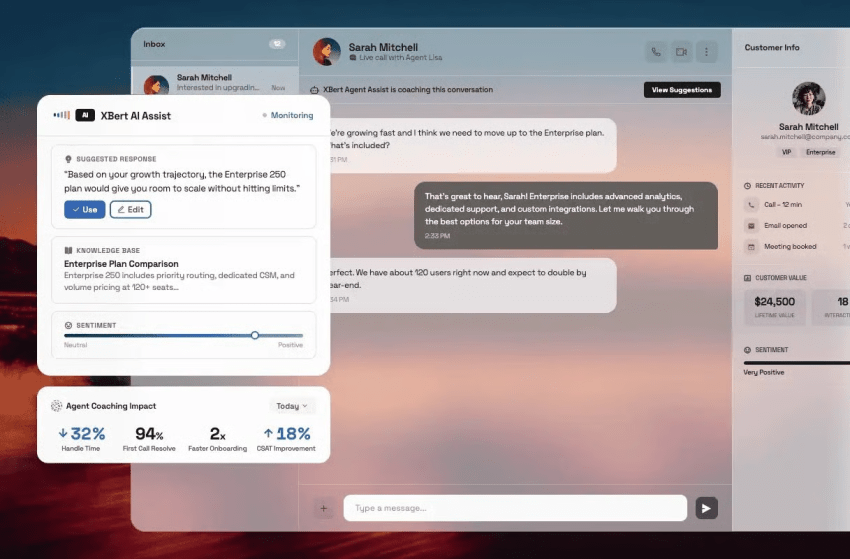
The end-to-end automation of complex workflows
Here’s what a single rescheduling call looks like when there’s no human in the loop:
- The caller asks to move their appointment.
- The system verifies who they are.
- The system pulls up live calendar availability, moves the booking, and updates the CRM.
- The caller gets a text confirmation before they hang up.
What makes the process possible is real-time integration with CRMs, calendars, and payment portals. The action happens live on the call rather than landing in a queue for someone to finish later. These actions can include:
- Appointment rescheduling
- Order status lookups
- Balance checks
- Callback scheduling
- Payment processing
If you’re in healthcare, real estate, or retail, you probably recognize these as the calls that take up most of your front desk’s time. They’re high-volume and routine, exactly the kind of calls that voice AI handles best.
XBert is Nextiva’s AI employee built for this process. It answers calls, books appointments, resolves routine tickets, and routes the rest with full context. It costs $99 per month for 100 conversations, with no long-term contract.
Hear why XBert AI is the best AI receptionist
XBert AI receptionist handles customer questions, captures leads, and books appointments. Try it free for 14 days.
Complete Omnichannel Continuity and Full Customer Context
The data shows that customers don’t like repeating themselves during customer service interactions, and 60% will only repeat themselves once before they abandon the call altogether.
If you have an expansive or disjointed system, that might mean the customer is explaining themselves over a WhatsApp message, then again to an IVR, and then again to a screening agent, and then once more to the right person. That’s too much no matter what, but the issue compounds when customers must explain lengthy problems, access order or account numbers, or go over something that has any frustration or emotion tied to it.
That reset-to-zero experience is what happens when voice AI isn’t connected to the rest of your channels. A voice agent that can’t see the chat transcript from 10 minutes ago is just another silo. An appropriate AI system can detect urgency, satisfaction, and emotions like frustration in real time, allowing it to pivot how they handle the call.
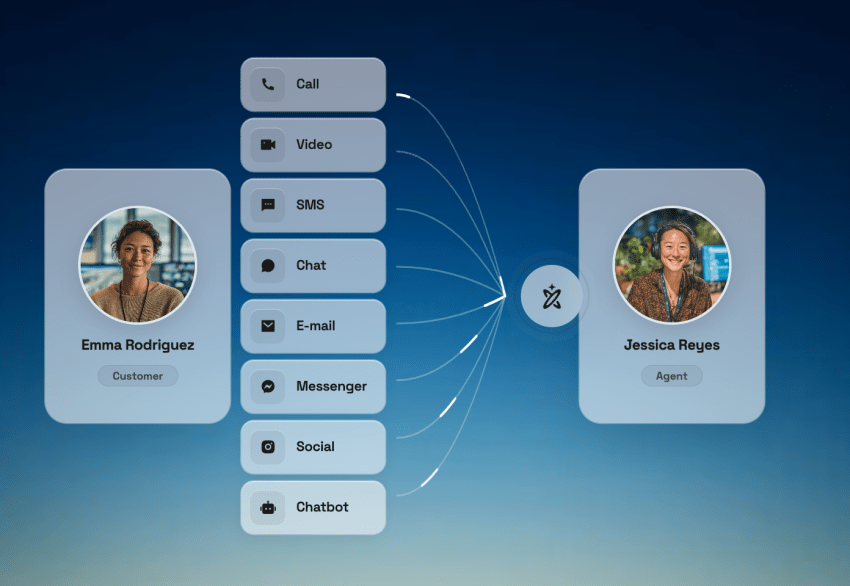
Real-time information syncing between channels
What “synced” actually means in practice is that a single conversation ID follows the customer across channels. When someone moves from chat to a phone call, the voice agent already knows what they tried, what failed, and what the customer was promised.
The payoff is real, because both you and the customer see faster resolutions because nobody’s re-explaining. This means fewer frustrated customers and a single profile that every channel writes to.
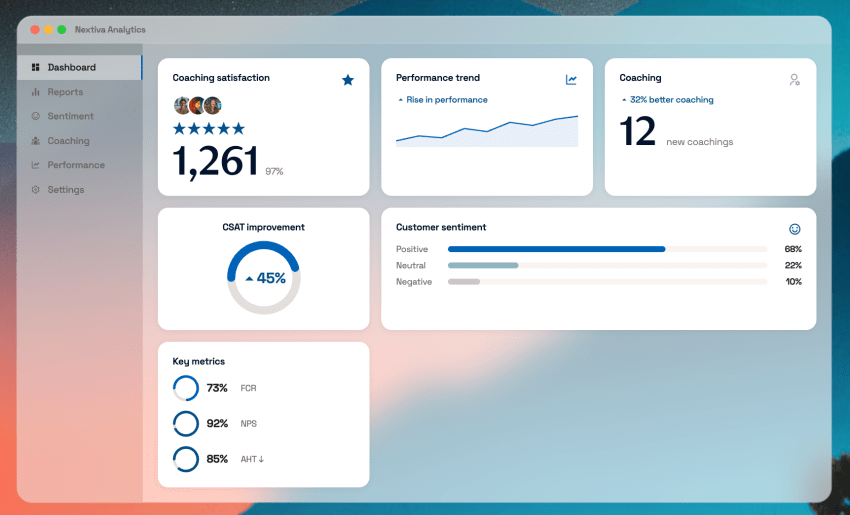
When your tools don’t talk to each other, the cost shows up in longer handling times and lower customer satisfaction scores. Nextiva’s unified, omnichannel contact center platform keeps history synced across phone, SMS, chat, and email so the agent, whether human or AI, always opens with the full story.
Secure Interactions With Smart Voice Verification
If you’ve ever called your bank and spent two minutes confirming your mother’s maiden name, the last four digits of your SSN, and the street you grew up on before anyone would even look at your account, you know the problem. Manual verification is slow, annoying, and ironically not entirely ironclad since most of those answers are findable online.
Still, the moment a voice agent can move money or pull up account data, identity verification becomes the most important thing it does. Identity verification is one area where you can uniquely offer voice AI support to reduce friction in the customer experience.
Protecting data without customer friction
Voice biometrics solve this problem by confirming identity in seconds based on how someone speaks, without the interrogation. That tradeoff matters most in healthcare, legal, and financial services, where privacy rules are strict but callers still expect to get in and out quickly.
The system needs to learn what you sound like before it can verify you. Enrollment typically happens during a customer’s first call after they opt in. Amazon Connect’s Voice ID, for example, captures about 30 seconds of natural speech during a normal conversation to build a voiceprint, a mathematical model of the caller’s pitch, cadence, rhythm, and resonance. No special passphrase is needed.
On subsequent calls, roughly 10 seconds of natural conversation is enough to match the caller’s voice against their stored voiceprint. The customer talks normally, and the system runs the comparison in the background. If it matches, the agent or AI can proceed without the caller answering any security questions.
A risk of AI voice technology: The deepfake problem
There’s a pretty big downside to AI-driven voice technology. While in theory it offers new security options, there are also massive risks. AI voice cloning can now create a convincing synthetic voice from just a few seconds of audio, and that changes the risk picture for voice biometrics significantly.
A BioCatch survey found that 91% of U.S. banks are rethinking voice biometric authentication due to AI cloning risks. In 2024, a finance employee at Arup Engineering was tricked into transferring $25 million during a live video call with AI-generated executive voices. The risk is getting higher: Sumsub’s 2025–2026 data found that deepfake-enabled fraud attempts surged by 180% globally in 2025.
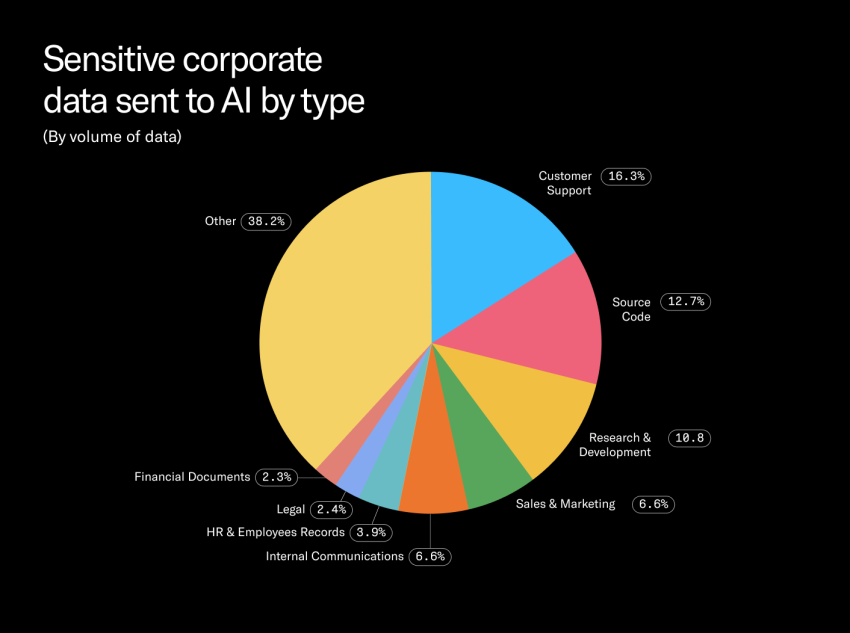
The practical takeaway is that voiceprint matching alone isn’t enough anymore. Production systems now layer liveness detection on top to verify that the audio is coming from a live human speaking in real time, not from a clone or a recording played through the phone. Any vendor selling voice biometrics without liveness detection is selling 2023 technology against a 2026 threat.
For any enterprise deployment, PCI DSS-compliant payment capture and HIPAA-safe information handling remain non-negotiable. Nextiva is HIPAA-compliant, SOC 2 certified, and PCI DSS compliant, with sensitive data masked and handled securely during live interactions. This development is a trend to watch, as security is a top priority for many of our customers.
Measurable Business Returns on Voice Automation
If you want to make a budget case for AI voice automation, the math works out. Market Intelo puts an AI-handled interaction at $0.08 to $0.15, while a human-handled call runs $6 to $12. When you’re handling thousands of calls a month, that gap adds up to real money incredibly fast.
Gartner projected in 2022 that conversational AI would reduce labor costs in contact centers by $80 billion by 2026, which assumed the automation of only 10% of interactions. Production deployments are now routinely exceeding that threshold.
But projections only go so far, and real results are more convincing. Some of our clients have already seen exceptional success.
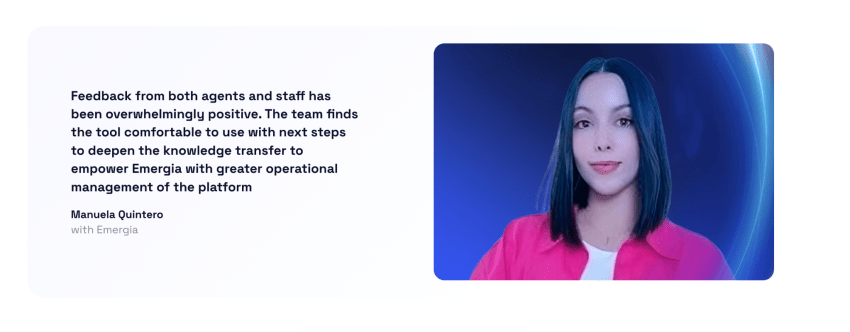
Emergia, a multinational BPO, moved to Nextiva Contact Center and saw voice channel efficiency climb a whopping 154%. The handled monthly voice interactions went from 32,478 to 82,680, and the effective contact rate improved from 25.63% to 35.85%. Those numbers came from an operation handling tens of thousands of calls a month, showing the potential for return for other businesses.
Reduce Your Operating Costs While Keeping Callers Happy
The concern many teams have is that automating calls means replacing people. In practice, it’s more like clearing the routine calls off your agents’ plates so they can spend their time on the ones where judgment, tone, and empathy change the outcome.
Your best agents really shouldn’t be spending their day reading order statuses, because it’s a waste of their talent and likely means it will take them longer to get to the complex calls that need them. AI models with natural language processing and access to your knowledge base can handle those. Your human agents should be handling the high-stakes billing dispute that’s complicated, frustrating, and at risk of costing you a customer if it isn’t handled correctly.
That’s the rare win-win that’s actually happening right now for businesses and call centers. Margins go up because routine calls cost less thanks to AI voice solutions, and satisfaction goes up because the calls that need a human get one who has the time and energy to help.
If you haven’t started with AI voice yet, it’s not too late. The best AI voice agent services like XBert are relatively easy to set up and train. You just need to give them access to the right tools (like your CRM or calendar schedule) and give them the training knowledge they need to help customers and know when to escalate.
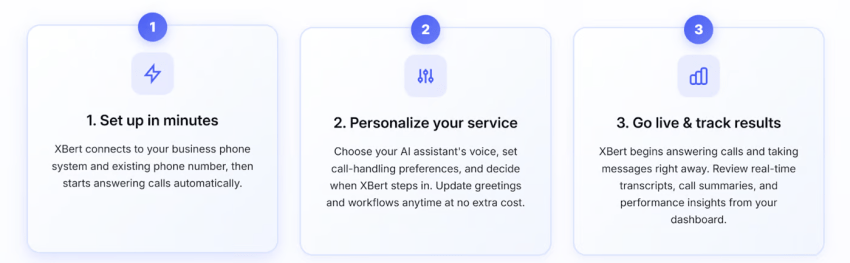
These trends in AI voice are accessible for businesses of all sizes, which means your competitive advantage can be customer service, and the solution is ready now. Learn more about Nextiva’s XBert today.
Eliminate busywork with the XBert AI assistant.
XBert answers calls, handles chats, books appointments, and resolves issues — all on its own. An AI employee trained on your business, so your team can focus on what actually moves the needle.