

 Customer Experience
  Blog
Blog  Business Communication
  Leadership
  Marketing & Sales
  Nextiva News
  Productivity
  VoIP
VoIP 

In a profession built on trust and timing, a missed call isn’t just a lost opportunity. Oftentimes, it’s a breach of expectation. Law firms operate in a world where responsiveness directly affects reputation and revenue. A potential client may reach out during a time of need, or a long-term client may have an urgent update. Either way, law firms need to be reachable at any given time.
Modern business operations rely heavily on robust communication systems, with data from Statista showing that more and more companies worldwide are increasing their investments to transform digitally. Picking the right telephony solution is crucial to success. However, many firms still depend on outdated call routing or in-house reception systems that can’t keep pace with modern demands.
That’s why law firm answering services have become a strategic infrastructure. These services now combine 24/7 availability, legal intake expertise, and customer relationship management (CRM) integration. They make every client touchpoint feel personal and professional, even when the main office is offline.
In this guide, we’ll explore what a modern law firm answering service is, how it works, and how firms can use tools like Nextiva to unify responsiveness, security, and client experience in one intelligent platform.
What Is a Law Firm Answering Service?
A law firm answering service acts as a 24/7 front desk. In many ways, it’s the modern equivalent of a receptionist, but think of it as one that’s always on call, never needs paid time off, and can scale up or down based on demand. Answering services powered by artificial intelligence can be equipped with smart responses to address urgent needs.
In practical terms, leveraging an answering service for your business provides you with trained virtual receptionists who answer both inbound and outbound calls (and often chats). They can qualify calls, complete intake, and schedule consultations.
When callers are screened using a clear intake script, the answering service can efficiently decide whether to live transfer to a lawyer, escalate high-priority calls, or schedule a consultation for later. These factors are crucial to business growth because:
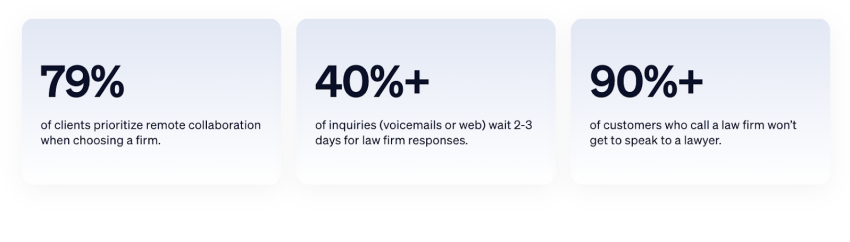
- 24/7 availability matters more than ever. According to a 2025 industry audit by Legal Navigator, over 35% of calls to U.S. law firms go unanswered, even during regular business hours. This means a large portion of potential clients never have the chance to discuss their case, indicating numerous missed opportunities.
- Call abandonment often results in losing a client. When callers hit voicemail or an unanswered line, many dial another firm immediately. This is treated as silent abandonment, which multiplies the cost of missed leads and undermines marketing and outreach efforts.
- Answering services help legal teams stay focused on core work. By outsourcing call intake and initial triage, lawyers avoid interruptions and can focus on billable work rather than administrative overhead. Plus, automatic appointment scheduling keeps you on track with your clients.
When done right, a law firm answering service transforms your front desk into a reliable, always-on client acquisition machine. It also saves on costs because you get to operate without the overhead of in-house receptionists or on-call staff.
Try the best AI answering service free for 14 days
XBert AI answers questions and captures leads. Add your 24/7 answering service in minutes.
How Answering Services Work
Answering services depend on a system. Here are three pairs that work together to ensure client service works as smoothly as possible:
Coverage and routing
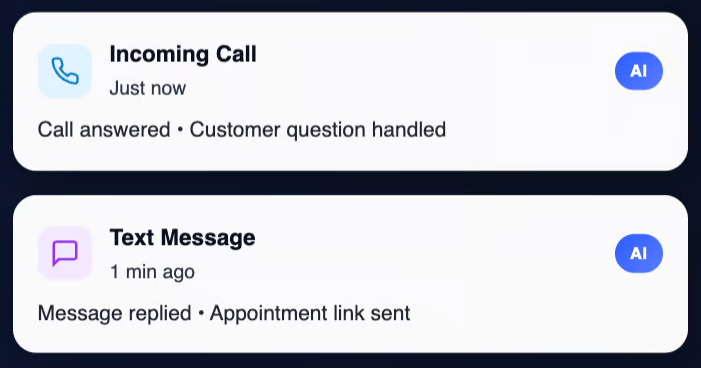
A good law firm call answering service delivers true 24/7 coverage by being available to potential clients on weekends, holidays, and late nights, in addition to regular workdays. Specialized services handle after-hours volume, overflow calls during peak times, and emergency routing, all defined by rules you set.
If there’s something urgent, like an accident, an arrest, or a similarly time-sensitive legal issue, a call to your firm’s phone number may be tagged for live transfer. Lower-priority calls, on the other hand, fall back to voicemail or are scheduled for callback.
Legal intake and scripting
At the heart of a law firm’s answering service is a structured, compliant intake. Receptionists use custom scripts tailored to practice areas, complete with empathy cues and necessary compliance disclaimers. These scripts help collect essential data while maintaining professionalism and consistency.
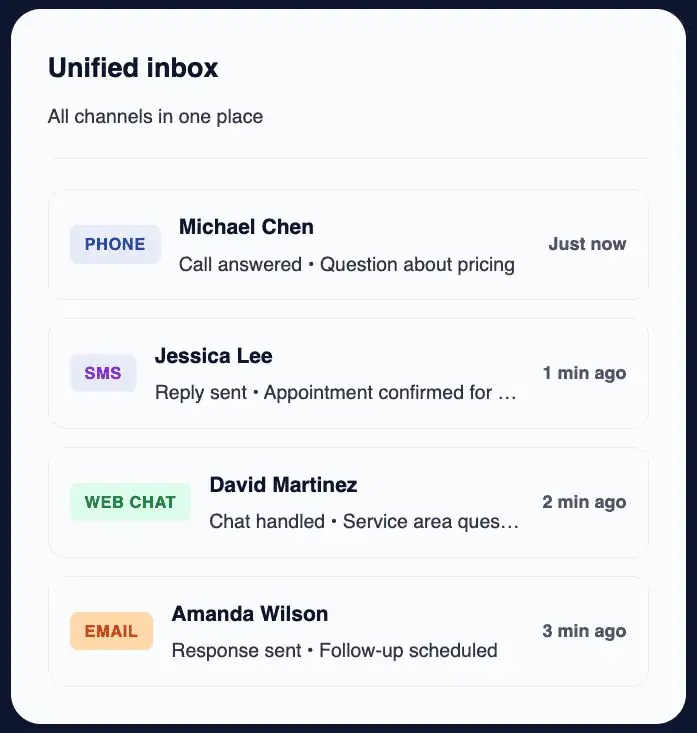
Once intake is complete, the captured information is synced directly into the firm’s CRM or practice management system (or delivered via secure transfer). This handoff eliminates manual transcription, reduces entry errors, and preserves data integrity, so your attorneys can start with the full context rather than playing catch-up.
Scheduling and reminders
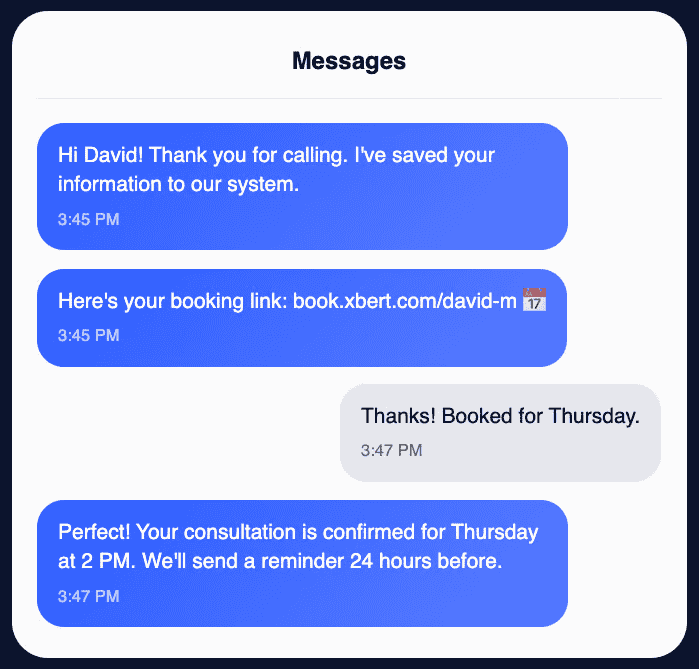
Answering services can also book consultations immediately when the caller is ready. Through calendar integrations, virtual receptionists can schedule appointments, sync across platforms, and send automated confirmations and SMS reminders to clients. For leads that don’t convert immediately, follow-up sequences (email or SMS) help keep your firm top of mind.
Benefits for Law Firms
Now, let’s take a look at how an answering service can benefit law firms.
Intake that converts
Speed and tone can make or break client retention. Fast, consistent responses reduce hang-ups and prevent call fatigue among prospective clients who are often contacting multiple firms in urgent situations.
Answering services trained to understand the legal context and empathy ensure that high-value cases are prioritized. By building clear paths for priority calls, they help firms capture clients who would otherwise move to the next competitor. Firms using modern intake tools, according to Clio, see over 50% more leads than those relying on manual or voicemail-based call handling, especially when they have a full-time answering service.
Productivity and cost control
A virtual receptionist service frees up attorneys and paralegals from screening calls, fielding frequently asked questions, or scheduling consults. Outsourced services convert this fixed overhead into usage-based coverage, scaling with call volume rather than payroll. Instead of hiring temporary staff, firms can tap a virtual answering pool that flexes instantly with demand.
Consistency and compliance
Every call handled through a centralized platform by virtual receptionists follows standardized scripts and tone guidelines, protecting your brand voice and client experience. Recordings and searchable transcripts enable quality assurance, coaching, and compliance reviews while providing proof in the event of disputes or ethics audits.
Hear why XBert AI is the best AI receptionist
XBert AI receptionist handles customer questions, captures leads, and books appointments. Try it free for 14 days.
Key Features to Prioritize
When evaluating providers, the best law firm answering services should include:
- Legal-specific training: Receptionists trained for sensitive practice areas (personal injury, family, criminal, immigration) use compliant language and empathetic phrasing.
- Bilingual support: English- and Spanish-speaking receptionists remain the benchmark for accessibility in the United States. Spanish-speaking callers should experience the same clarity and professionalism as English-speaking clients.
- CRM and case management integrations: Look for seamless syncing with Clio, MyCase, PracticePanther, or Lawmatics. This reduces manual data entry and ensures real-time visibility into client records.
- Omnichannel intake: Calls, SMS, and live chat, all managed from a single queue, help unify the client’s experience and prevent channel fragmentation.
- Security and transcription features: Encrypted call recordings, searchable transcripts, and AI-generated summaries support quality monitoring and compliance.
- Outbound follow-up: The best providers return voicemails, follow up on online form fills, and reach out to no-shows to keep your intake pipeline moving.
Compliance, Privacy, and Ethics
For law firms, trust starts with how sensitive information is handled from the first phone call. That’s why any answering service supporting legal practices must meet the same ethical and compliance standards that lawyers uphold daily.
Data handling
With client confidentiality, sensitive information, and legal ethics on the line, how a firm’s answering service partner handles data is non-negotiable. At a minimum, a trustworthy provider should support role-based permissions (so only authorized staff can access sensitive details), maintain audit logs for every action, and enforce retention rules in line with your firm’s compliance requirements.
Firms should confirm that personally identifiable information is protected by encryption, that there are clear policies for data residency and deletion, and that the vendor is ready to sign whatever agreements you need.
Conflicts and boundaries
Using an answering service doesn’t (and mustn’t) blur the line between administrative tasks or intake and legal advice. A reliable service ensures that receptionists gather only basic facts for scheduling and conflicts, never offering legal counsel. Their scripts should clearly state disclaimers. For example, “I’m not an attorney; this is only intake. A lawyer will review your details and call you back if we can help.”
Use Cases by Practice Area
Personal injury
Late-night accidents don’t wait until morning to be resolved. These types of issues benefit the most from a 24/7 call service because they’re often the most urgent.
Because the value per case can be very high, missing just one call can cost more than the monthly fee for an AI-powered answering service. Using a trained intake team ensures you capture more leads, qualify them effectively, and schedule consultations promptly, rather than letting prospects drift away after hitting voicemail.
Criminal defense
According to research by Clio, 68% of clients expect their lawyer to be reachable outside standard business hours. Criminal cases are highly sensitive and typically high-stakes, which often means being available outside office hours. In these areas, a live human response can make the difference between retaining a client and losing them. Potential clients in crisis expect immediate reassurance, not voicemail or a delayed callback.
Immigration
Immigration clients may also reach out at unpredictable hours with time-sensitive questions. Bilingual intake, document guidance, and scheduling across time zones help immigration clients navigate complex processes. For such practices, ready availability signals empathy and commitment. Legal answering service providers list family law and immigration among the verticals where 24/7 availability and intake specialization matter most.
Family law
Family law clients often call outside the usual business hours. For instance, after a tense custody dispute, late-night emergencies, or during emotional times, clients may seek counsel.
With trained legal virtual receptionists using custom scripts built for sensitivity and confidentiality, the intake process remains professional and empathetic. Receptionists collect necessary details (such as case type, urgency, contact information, and potential child-safety or domestic-violence flags) while offering reassurance.
Estate planning and business law
In estate planning and business law practices, client workflows often center around scheduled appointments, document exchanges, and follow-ups instead of one-off phone calls. For these workflows, an answering service adds value by handling consultation scheduling, reminders, and pre-appointment coordination.
Live Receptionists vs. In-House Receptionists
Live receptionists and in-house receptionists offer different benefits. Here’s how to pick the best call center option for your business:
When in-house makes sense
Keeping reception in-house works best when your law office relies heavily on physical presence and a stable, predictable call volume during standard business hours. For example, if you routinely manage walk-in clients, document handoffs, or in-person appointments, an on-site receptionist ensures a consistent, personal experience.
When outsourcing makes sense
Outsourced or virtual reception comes into its own when your firm faces high variability in call volume, multi-location coverage, or round-the-clock expectations. Some of the strongest use cases include after-hours, weekends, or holiday availability.

Why Law Offices Choose Nextiva
For a law firm, every call is a potential client, and every missed call is a lost opportunity. That’s why so many firms turn to Nextiva: to make sure they’re always available, professional, responsive, and ready to schedule appointments no matter the hour.
With Nextiva, you get 24/7 coverage — every channel, all in one place, to meet your law firm’s communication needs. Nextiva’s cloud-native platform unifies phone, SMS, chat, and more, so your team doesn’t juggle multiple systems. With built-in AI automation and skills-based routing, Nextiva helps ensure calls are directed to the right team member fast.
Another plus is that Nextiva is scalable and budget-friendly, making it a cost-effective communication solutions for law firms. It offers transparent pricing, and you avoid the overhead of physical reception desks, staffing, and hardware.
By combining live reception reliability, cloud flexibility, and intelligent automation, Nextiva gives law offices the peace of mind that every potential new client gets answered, and no opportunity slips through the cracks.

“We used to miss 10–15 calls a day. Now every single call gets answered, and our weekly lead count is up 40%.”
— Franchise owner
Your AI receptionist that never misses a call.
XBert is your AI answering service that handles calls, texts, and chats 24/7. It greets customers, books appointments, and captures leads while your business grows.