
 Customer Experience
  Blog
Blog  Business Communication
  Leadership
  Marketing & Sales
  Nextiva News
  Productivity
  VoIP
VoIP 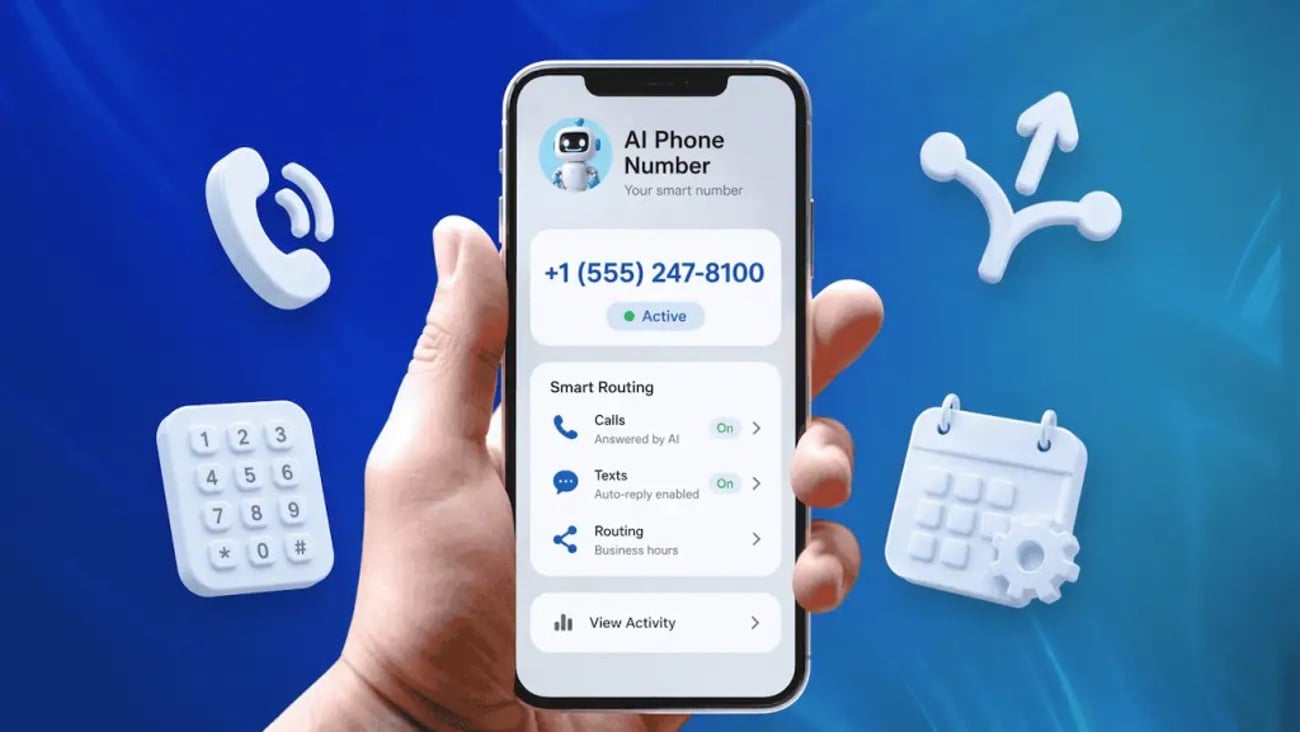

You’re on a job site or in back-to-back meetings. Your phone rings. You can’t answer, and it goes to voicemail. By the time you call back, the customer’s already booked elsewhere. A few missed calls a week can mean thousands in lost revenue.
I’ve seen this happen across legal, healthcare, and home services. It’s a pattern that quietly drains revenue. You could potentially lose anywhere between $25 and $700 per call, and, according to our estimates, you can lose up to 30% of your return on investment (ROI) from poor call handling.
Now imagine every call is answered instantly by a conversational AI agent. It responds naturally and takes action, from booking appointments to routing calls with context.
That’s what an AI phone number does. In this guide, I’ll break down what an AI phone number is, how it works, where it delivers the most value, and how to set one up.
Try the best AI answering service free for 14 days
XBert AI answers questions and captures leads. Add your 24/7 answering service in minutes.
What Is an AI Phone Number?
An AI phone number is a cloud-based virtual phone number connected to an AI agent. It can handle inbound calls, SMS, and web chats using conversational AI, including natural language processing (NLP), automatic speech recognition, and machine learning.
Instead of calls going to voicemail, an AI phone agent immediately answers, greets the caller, understands what they need, and takes action by booking appointments, answering questions, capturing leads, or routing calls.
A traditional business phone number is passive. It rings and waits for someone to answer. An AI phone number engages callers as effectively as a 24/7 receptionist.
For example, let’s say a patient calls a clinic at 6:45 p.m. to reschedule their appointment. Without an AI phone number, nobody answers, the customer may or may not leave a voicemail, and the office plays phone tag the next morning. With an AI phone number, the AI answers immediately, reschedules the appointment, and sends a confirmation to the customer.
Unlike menu-based auto-attendants, conversational AI enables real back-and-forth exchanges. A caller can say “Move my Thursday appointment,” and the AI handles it, streamlining your workflows and creating a better user experience.
AI phone numbers run over Voice over Internet Protocol. There’s no physical phone line or geographic limitation. You can use local, toll-free, or vanity numbers in any area code. Speech recognition converts spoken words to text, NLP parses intent, and text-to-speech delivers a natural response. Every call trains the model, improving accuracy over time.

My take: It’s not just a virtual number.
Many people ask me, “Jack, isn’t that just Google Voice with a fancy name?” No. A virtual number is simply a line that routes a call from point A to point B. An AI phone number is a virtual number with built-in intelligence.
This intelligence (natural language understanding) allows the system to distinguish between a caller who says, “I’m interested in your services,” and a caller who says, “I have an emergency.” The first case triggers a lead generation process; in the second, the AI immediately escalates the call to a human agent. That’s the difference between a tool and a human agent.

AI Phone Number vs. Traditional Business Phone Number
Having managed business phone systems that relied on voicemail and basic auto-attendants, I’ve noticed that the gap between them and AI-powered ones is massive.
| Feature | Traditional Business Number | AI Phone Number |
|---|---|---|
| Call handling | Phone goes to voicemail if unanswered | AI answers immediately, 24/7 |
| After-hours coverage | Voicemail or answering service | Full conversational AI; same quality as business hours |
| Appointment scheduling | Requires a human to check the calendar | AI books, reschedules, and confirms in real time |
| Lead capture | Caller leaves a message (maybe) | AI qualifies leads, captures details, and logs to CRM |
| SMS/text handling | Manual or not supported | AI responds to texts automatically |
| Call routing | Basic forwarding rules | Intent-based; AI routes to the right person with context |
| Scalability | Add lines and staff | Handles unlimited simultaneous calls |
| Learning and improvement | Static; same experience every call | Improves with every interaction via machine learning |
| Cost | $25–$50 or more per month per line + receptionist salary | $99 per month for AI handling (e.g., XBert) |
| Set-up time | Days to weeks | Minutes to hours |
A few key differences stand out. A full-time receptionist costs $35,000–$55,000/year. Per data from the Bureau of Labor Statistics, the median pay for receptionists in 2024 was $37,230/year. Nextiva’s XBert AI starts at $99 per month and works 24/7.
Traditional lines also handle one call at a time. AI phone numbers handle unlimited simultaneous conversations, reducing waiting times.
Best Use Cases for AI Phone Numbers
I’ve worked with enough businesses at this point to know that the difference between an AI phone number as a novelty and an AI phone number as a revenue driver comes down to one thing: matching the right use case to the right problem. Here’s where I consistently see the biggest returns.
| Use Case | How the AI Handles It | Business Impact |
|---|---|---|
| After-hours call handling | AI answers calls outside business hours with full conversational capability | No missed leads, consistent customer experience 24/7 |
| Appointment scheduling | AI checks the calendar, books or reschedules, and sends confirmation via text | Reduced no-shows, lower admin workload |
| Lead qualification | AI asks qualifying questions, captures details, scores leads, and routes to sales | Faster pipeline, higher conversion |
| Customer support/FAQ | AI answers common questions using a business knowledge base | Fewer repetitive calls to staff |
| Call routing and transfer | AI identifies intent and routes to the right person with full context | Fewer transfers, faster resolution |
| Missed call recovery | AI calls back or texts missed callers automatically | Recovered revenue from lost opportunities |
| Appointment reminders | AI sends automated call/text reminders before scheduled appointments | Fewer no-shows, better utilization |
| Multi-location management | Separate AI numbers per location with a centralized dashboard | Consistent experience across all sites |
After-hours and overflow call handling
Many small businesses lose high-intent leads after hours because nobody’s there to take the call. An AI answering service for small businesses closes that gap.
For example, say a dental office closes at 5 p.m. A patient calls at 7 p.m. to schedule a cleaning. The AI answers, checks availability, books the appointment, and sends a confirmation instantly. During peak hours, it also handles overflow, so no caller gets missed or sent to voicemail.
Appointment scheduling and management
Scheduling sounds simple until you’re doing it 40 times a day. Phone tag, double bookings, and no-shows from unconfirmed appointments all add up.
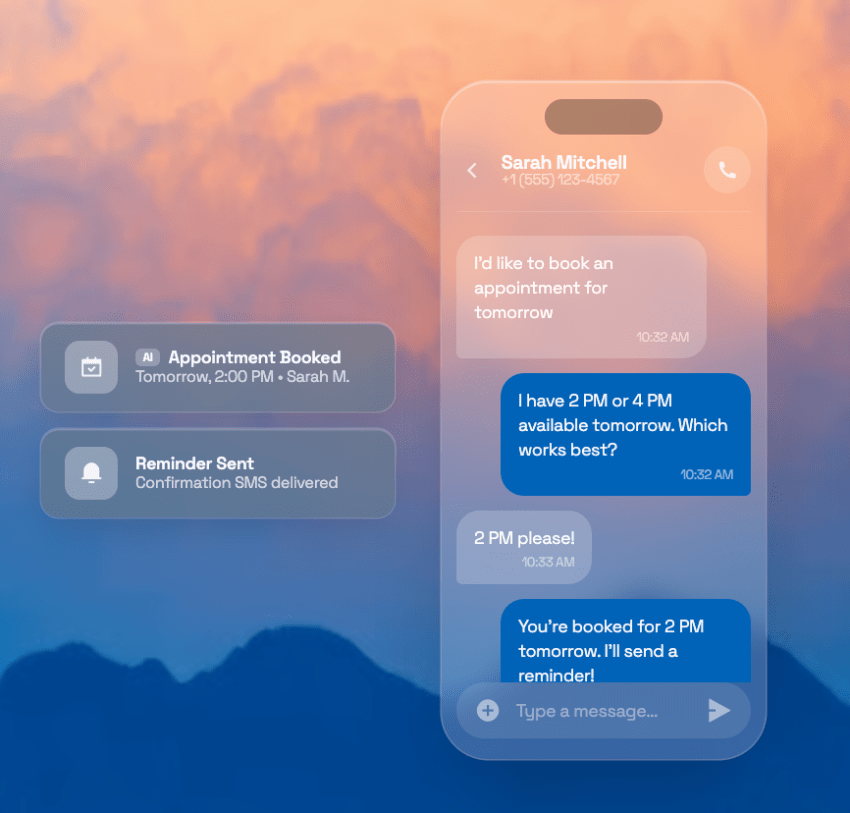
An AI phone agent checks real-time availability, books or reschedules instantly, and sends confirmation texts without any back-and-forth. This is particularly effective in healthcare, legal, home services, and any business where appointment volume is high and no-shows are expensive.
Lead qualification and capture
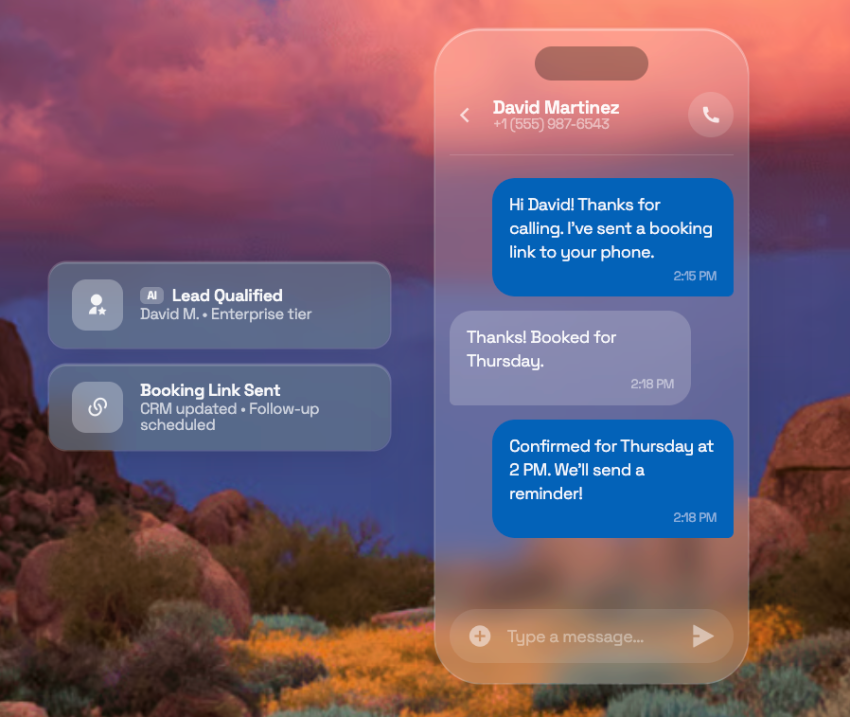
Missed or rushed calls often turn hot leads into lost opportunities. An AI phone agent solves this at the source. It asks the right qualifying questions (budget, timeline, scope), captures contact details, and routes the best prospects to the right rep.
Every call becomes a structured lead record in your customer relationship management (CRM) software automatically, eliminating manual data entry.
Customer support and FAQ handling
Teams often answer the same five questions repeatedly (e.g., hours, pricing, service areas, directions, appointment availability), taking time away from higher-value work.
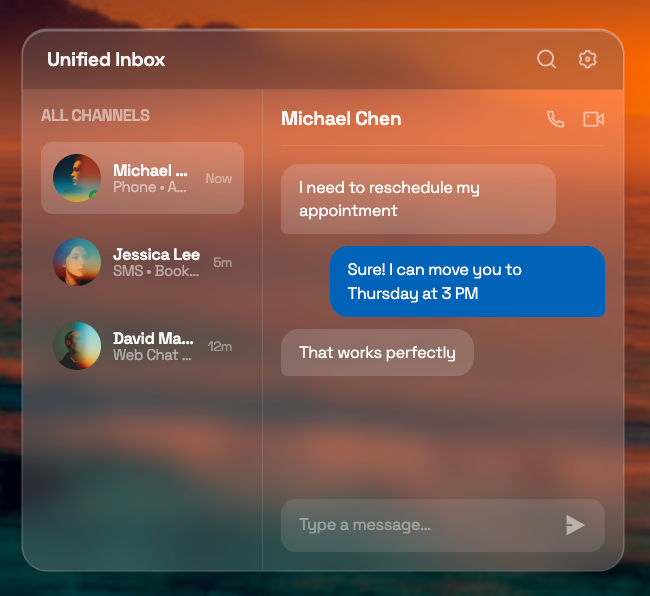
An AI assistant handles inquiries using your knowledge base, freeing your team for more important tasks.
Missed call recovery
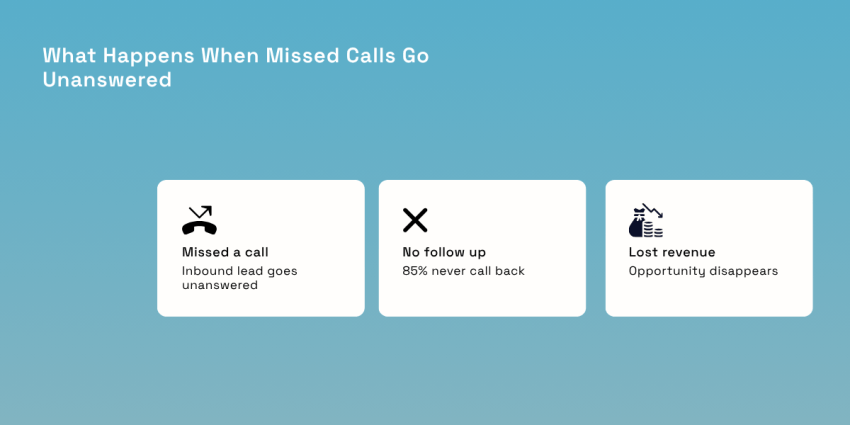
When calls go unanswered, an AI phone number can automatically follow up via text or callback, keeping the conversation going before the prospect moves on.
85% of callers who don’t get an answer won’t call again. Our missed calls calculator helps you see how much revenue you could potentially lose due to unanswered calls. For businesses where a single new client can be worth hundreds or thousands of dollars, an automated follow-up helps protect your revenue.
How to Get an AI Phone Number
The first time I helped a business set up an AI-powered virtual phone number, I expected it to take days. It took an afternoon. The process is straightforward.
Step 1: Choose your provider and plan
Pick a provider that builds AI phone capabilities into a full communications platform, not a standalone bot you’ll need to manually connect to your phone system, calendar, and CRM.
Look for strong conversational AI, native CRM and calendar integration, SMS support, flexible call routing, real-time analytics, and transparent pricing.
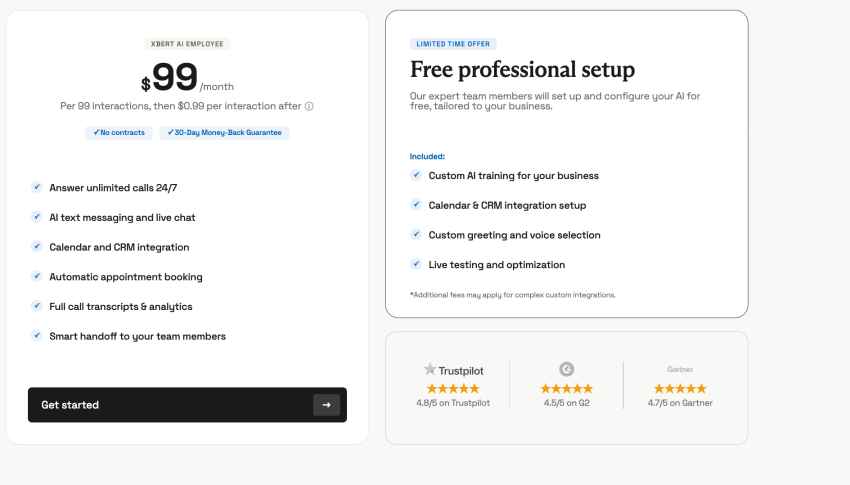
Nextiva’s XBert AI Receptionist checks all of those boxes at $99 per month, which covers a dedicated AI phone number, appointment scheduling, lead qualification, FAQ handling, call routing, real-time transcripts, and assisted onboarding.
Hear why XBert AI is the best AI receptionist
XBert AI receptionist handles customer questions, captures leads, and books appointments. Try it free for 14 days.
Step 2: Select your phone number
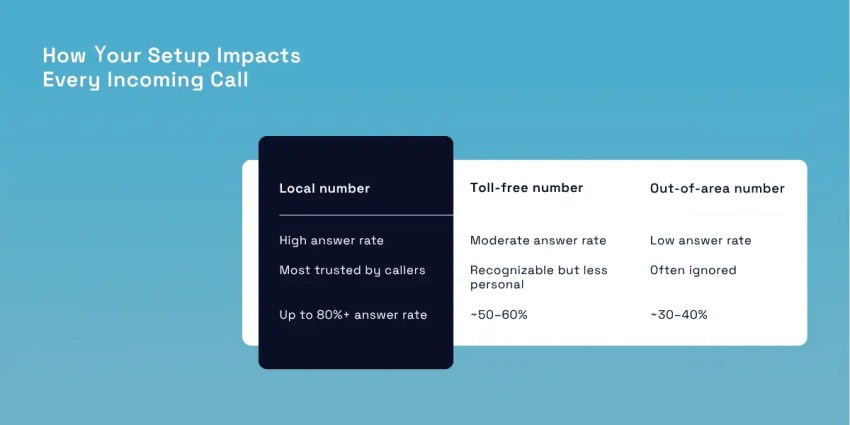
Go local where possible. Calls from local numbers get answered at significantly higher rates than toll-free or out-of-area numbers. Toll-free works better for national reach.
Already have a number? Most providers, including Nextiva, support number porting. You transfer your existing number to the platform, and it gets added to AI capabilities.
Step 3: Train your AI agent
Give the AI key business info about your services, hours, pricing, policies, FAQs, and how to handle the most common call types. The more specific you are, the better it performs.
XBert scans your website automatically to pull accurate business information from day one.
Define your escalation rules, such as when the AI should handle a call vs. route calls to a human.
Step 4: Connect your systems
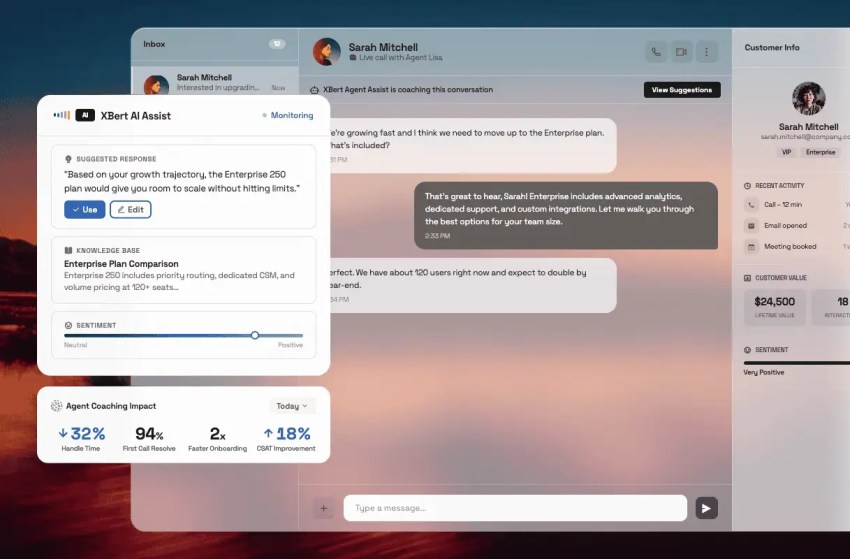
CRM integration, like with Salesforce, HubSpot, and Zoho, means every call is logged, every lead captured, and every contact record updated automatically. Calendar sync with Google Calendar or Outlook enables real-time booking.
For ticketing systems, email marketing, or project management, Zapier and native application programming interface integrations cover most of the gaps without requiring a developer.
Step 5: Test and go live
Run test calls for common scenarios like appointment requests, pricing questions, call transfers, and a few edge cases you know come up regularly. Review transcripts and adjust responses, tighten your escalation rules, and fill any knowledge base gaps.
The whole process, from account setup to live calls, typically takes a few hours. If needed, Nextiva’s onboarding team can handle the full setup at no additional cost.
Tips for Getting the Most Out of Your AI Phone Number
Getting an AI phone number live is the easy part. Getting it to perform consistently, in the form of high containment rates, faster response times, and satisfied callers, can be challenging.
Here’s what I’ve learned works.
1. Start with your highest-volume scenarios
Identify the top three to five reasons people call, like appointment requests, pricing questions, directions, hours, or order status, and automate those first.
Don’t try to automate everything at once or build a fully automated phone system from scratch in week one. Focus on calls that are high volume, highly repetitive, and easy for an AI phone agent to handle well.
2. Match the AI voice and tone to your brand
A personal injury law firm and a kids’ birthday party venue shouldn’t have the same AI voice. Most platforms, including Nextiva, let you customize greetings, tone, and response behavior without touching a single line of code. An AI voice that feels consistent with your brand builds trust quickly.
3. Always provide a path to a human
This is the one I see skipped most often, and it’s usually the source of the worst caller experiences. When a caller has a request the AI can’t resolve, they need a clear, immediate way to reach a person.
Make that handoff seamless. The AI should transfer with full context so the caller doesn’t have to repeat themselves.
4. Use a local area code
Customers are far more likely to answer phone calls from local area codes than out-of-area or toll-free numbers. For businesses operating across multiple locations, set up separate local AI phone numbers per location to maintain your community presence.
5. Review transcripts and optimize regularly
In the first month, review transcripts weekly. Look for patterns, such as questions the AI hasn’t been trained to handle, escalations that shouldn’t need to happen, or phrasings it consistently misinterprets.
Refining based on real calls accelerates the AI’s learning curve and raises your containment rate, or the percentage of calls fully resolved without a human transfer.
6. Track the metrics that matter
You don’t need to monitor everything. Focus on calls answered vs. missed, containment rate, appointment conversion rate, lead capture rate, and average handle time.
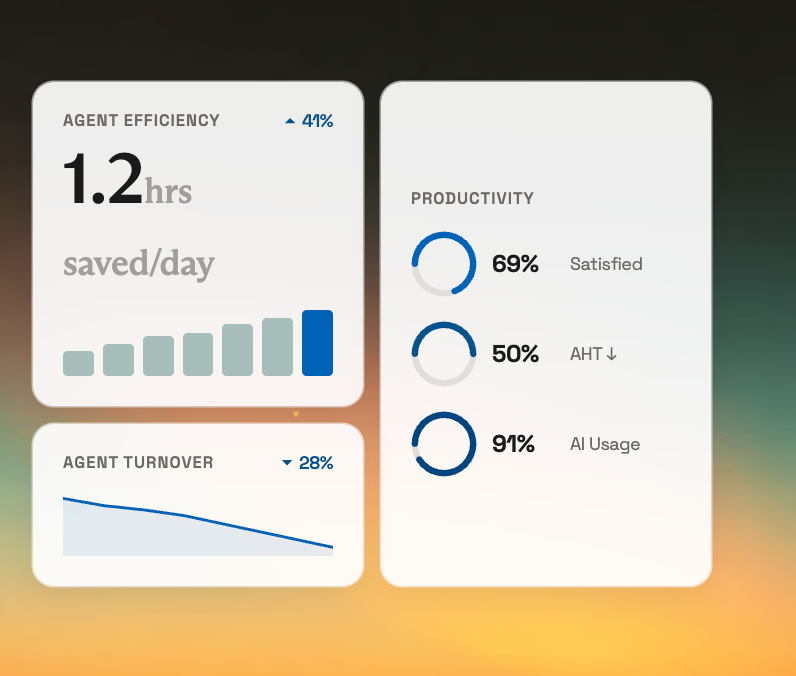
Nextiva’s real-time dashboard surfaces these metrics alongside call transcripts and summaries for easy ROI tracking and optimization.
How Nextiva Powers AI Phone Numbers for Businesses
Nextiva’s XBert AI Receptionist gives your business a dedicated AI phone number that answers calls, handles SMS, and manages web chats 24/7, with no busy signals or wait times. It learns from your website automatically, answering accurately from day one.
You customize the AI’s greeting, routing rules, voice, and response behavior through a simple dashboard. Two-way calendar sync with Google Calendar and Outlook lets the AI book and confirm appointments during live calls.
CRM integrations with Salesforce, HubSpot, Zoho, and other platforms ensure every call is logged and every lead is captured. Pricing starts at $99 per month for up to 100 resolutions, assisted onboarding, and full analytics. Visit the Nextiva pricing page for full details.
Unlike standalone AI tools, Nextiva is a full communications platform, combining your business phone, SMS, video, team messaging, and contact center in one system. For regulated industries, Nextiva is PCI DSS compliant, HIPAA compliant, and SOC 2 certified, with a proven uptime service level agreement.
Stop Letting Missed Calls Cost You Business
A business phone number used to be a passive line. Calls were either answered or lost based on timing. In 2026, that model leaves money on the table every day.
An AI phone number transforms your business line into an always-on agent that answers every call and captures every lead. I’ve seen this across industries, from solo practitioners to multi-location operations, and the pattern is consistent: fewer missed calls, more booked appointments, a team that can focus on work that matters, and better customer experiences.
Ready to stop losing calls to voicemail?
Nextiva’s XBert AI Receptionist answers calls, books appointments, qualifies leads, and handles customer inquiries 24/7, starting at $99 per month. Request a demo today and see what it can do for your business.
Your AI receptionist that never misses a call, text or chat.
XBert AI greets customers, books appointments, and captures leads while your business grows. It understands intent, responds naturally, and resolves issues on its own.
Frequently Asked Questions About AI Phone Numbers
It’s a virtual phone number powered by AI that answers calls, responds to messages, and handles customer interactions automatically.
When someone calls, the AI phone agent answers. Speech recognition transcribes what the caller says, and NLP processes intent. Text-to-speech helps it deliver a natural response, with the system drawing on your knowledge base and integrating with your calendar and CRM to act in real time.
Pricing varies. Nextiva’s XBert starts at $99 per month for up to 100 resolutions. Compare that to a full-time receptionist ($35,000–$55,000 per year), and the cost case is straightforward.
Yes. Most providers, including Nextiva, support number porting. You keep the same number but with AI capabilities layered on top.
These include any business that depends on calls for appointments, leads, or customer support, such as healthcare, legal, real estate, salons, and home services.
No. It works alongside it, helping streamline routine interactions and transferring complex calls to your team with full context.
It usually takes just a few hours. Nextiva’s onboarding team handles configuration at no additional cost.