
 Customer Experience
  Blog
Blog  Business Communication
  Leadership
  Marketing & Sales
  Nextiva News
  Productivity
  VoIP
VoIP 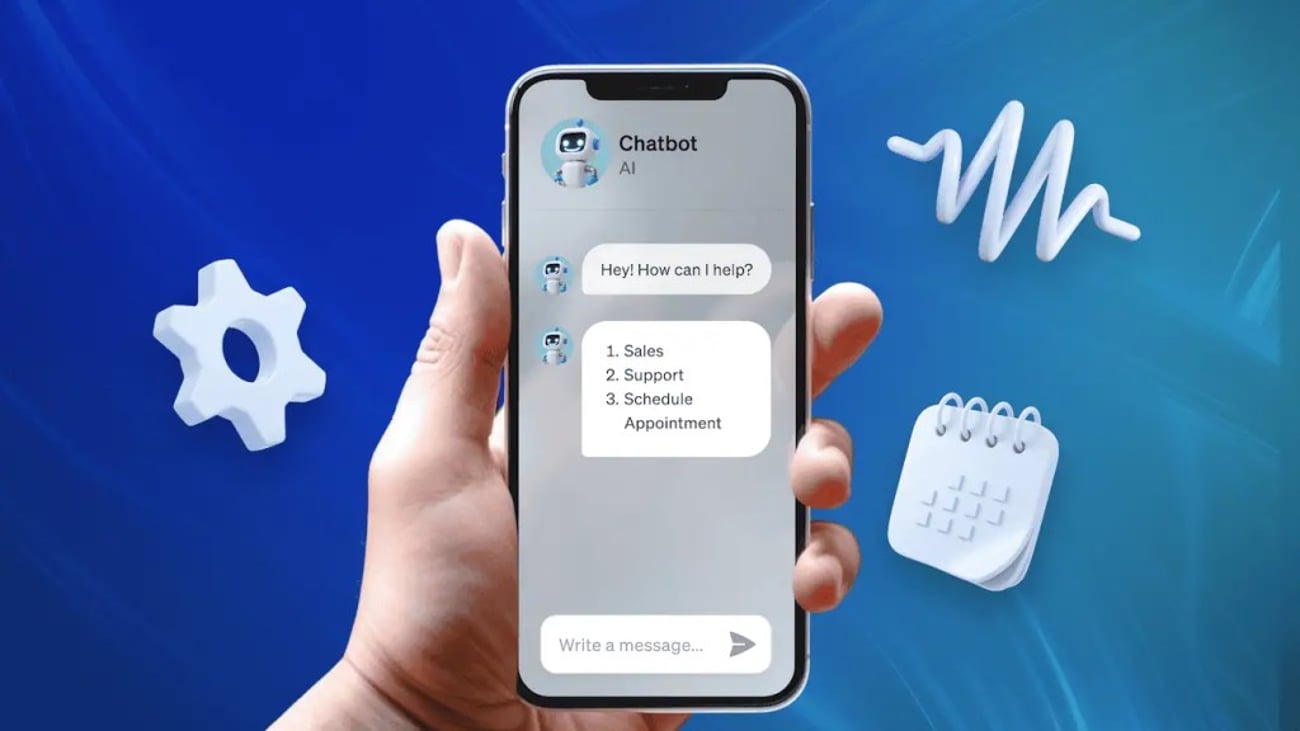

While it feels like everyone is trying to force AI into every corner of their business, the AI phone system is one area where I’m seeing it flourish.
In fact, the return on investment is so vast that if you aren’t empowering your inbound calling with AI, it’s like using a rotary dialer in a smartphone world. Sure, traditional systems were the cornerstone of business communication for decades, but they were built to route calls, not resolve customer needs.
That model doesn’t work anymore. As customer expectations shifted toward instant responses and 24/7 availability, phone systems have evolved. They couldn’t just stand alone for voice traffic; they had to start adding intelligence.
In this guide, I’ll walk you through what an AI phone system is, how it differs from the VoIP tools you’re likely using, and why I believe it’s the most critical upgrade for your ops stack.
Try the best AI answering service free for 14 days
XBert AI answers questions and captures leads. Add your 24/7 answering service in minutes.
What Is an AI Phone System?
An AI phone system is a cloud-based business phone system enhanced with artificial intelligence across calling, routing, analytics, and automation. It goes beyond VoIP by using AI to understand conversations, act on caller intent, and support follow-through.
A traditional routing system (think auto attendant) connects calls; an AI phone system actively participates in them. It uses intelligence to answer calls, understand intent, automate actions, and surface insights. You can program it to be used for both navigational and conversational purposes.

Why this matters now: I see a lot of buyers confusing AI phone assistants with full AI phone systems.
An assistant is a single feature, like a bot that answers calls. An AI phone system is the entire infrastructure — routing, recording, analytics, and voice — working together.
When a caller dials your number, the system is there to handle the call the moment it connects. There is no upper limit to the volume it can handle. Unlike old-school interactive voice response (IVR), where customers get stuck in loops, AI uses natural language to guide them to the best resolution — whether that’s an automated answer or a routed call to your best specialist.
Benefits of using an AI phone system
Here are some key benefits that you get out of using an AI phone system:
Resource planning
The biggest win I see for business owners is always-on availability without the nightmare of shift planning. Workforce management becomes a lot easier when you have a resource that doesn’t need a break, sleep, or overtime pay. Every call gets answered, regardless of seasonal spikes or time of day.
Happier customers
Fast response times and zero abandonment rates correlate directly with revenue. Whether the AI solves the problem entirely or simply routes the call to the right department faster, the customer feels heard instantly, which improves the overall customer journey.
Personalization
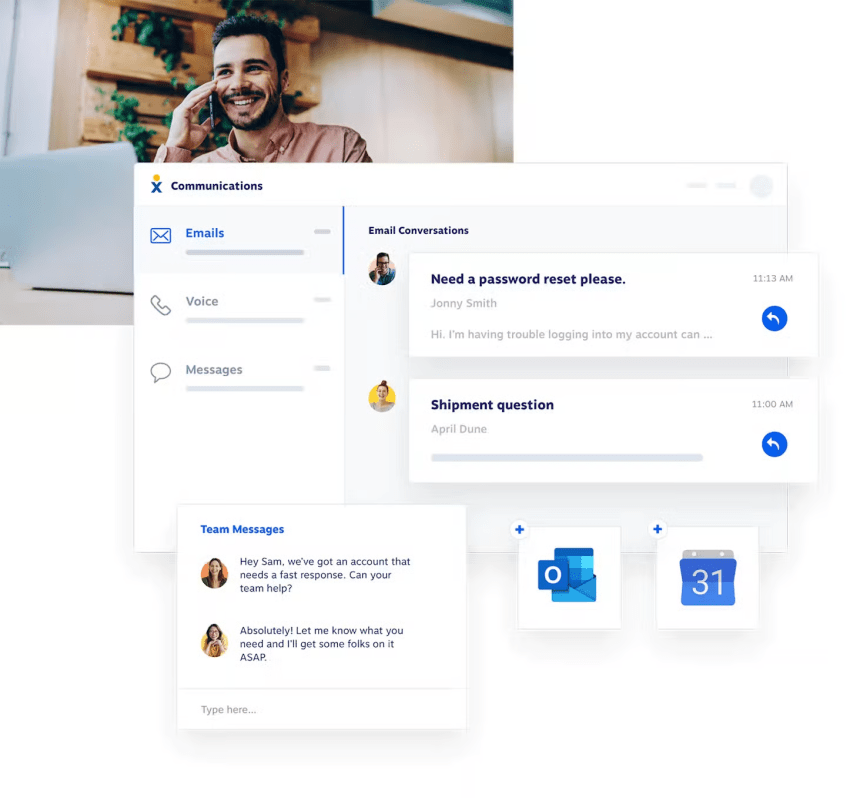
I’m a huge believer in the idea that context closes deals. Integrated customer service tools provide a consistent experience by populating relevant customer history onto the agent’s screen. The AI can identify repeat callers and personalize greetings. For example: “Hi John, are you calling about the ticket you opened yesterday?”
Documentation and analytics
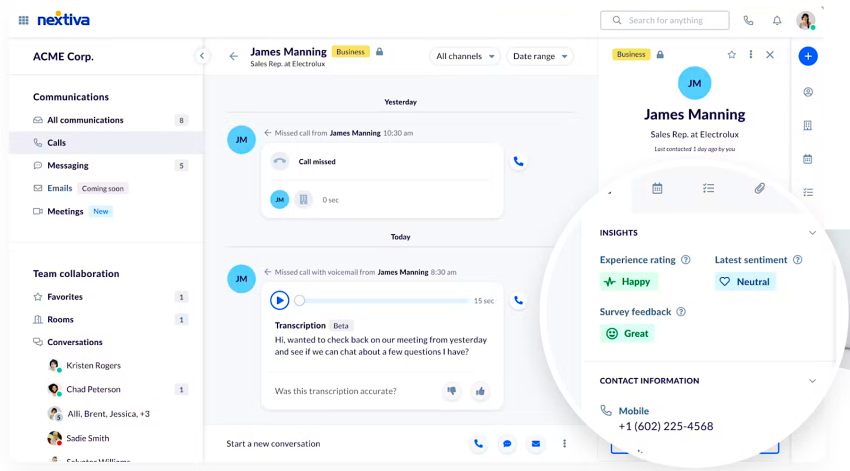
Behind the scenes, you’re getting automatic documentation. Beyond basic call logs, you get sentiment analysis – AI that interprets how customers feel (frustrated, happy, urgent). This turns raw audio data into actionable business intelligence without you needing to run manual spreadsheets.
Scalability
As call volume grows when your business expands — or during unplanned busy periods — there’s no need to fret, panic, and hire new or temporary staff. Instead, your automated receptionist simply handles more calls. With no need to configure any settings or hire new staff, as long as your internet is sufficient, you can keep answering as many calls as you need.
How AI Phone Systems Differ From Traditional Phone Systems
Traditional phone systems – even the virtual phone systems many of you use – focus on dialing, forwarding, and voicemail. AI phone systems focus on resolution, automation, and insight.
I like to say we’re no longer talking about features; we’re talking about empowering outcomes.
Instead of static menus, AI systems use natural language conversation. Instead of manual follow-up, AI systems log data, trigger actions, and summarize calls.
| Feature/Capability | Traditional Phone System | AI Phone System |
|---|---|---|
| Core Technology | Analog or basic digital lines; focus on connectivity. | Cloud-based platform enhanced with NLU, ML, and automation. |
| Primary Focus | Dialing, forwarding, voicemail. | Resolution, automation, actionable insight. |
| Call Handling | Static menus (Press 1, Press 2). | Dynamic routing driven by caller intent. |
| Interaction | Rigid. Callers must follow rules. | Natural. Callers speak normally; the system understands context. |
| Automation | Minimal. Actions are manual. | Automated summaries, follow-ups, and workflow triggers. |
| Analytics | Basic logs (duration, caller ID). | Sentiment analysis, topic trends, and performance scoring. |
| Cost Efficiency | High reliance on human agents. | Lower cost per call via automation. |
Core Components of an AI Phone System
An AI phone system is not just a bot. It is a stack of technologies working together to handle the full lifecycle of a call:
- Cloud telephony for inbound and outbound calls: Handles all business calls via the cloud, eliminating on-premises hardware while making it easy to scale and manage call volume.
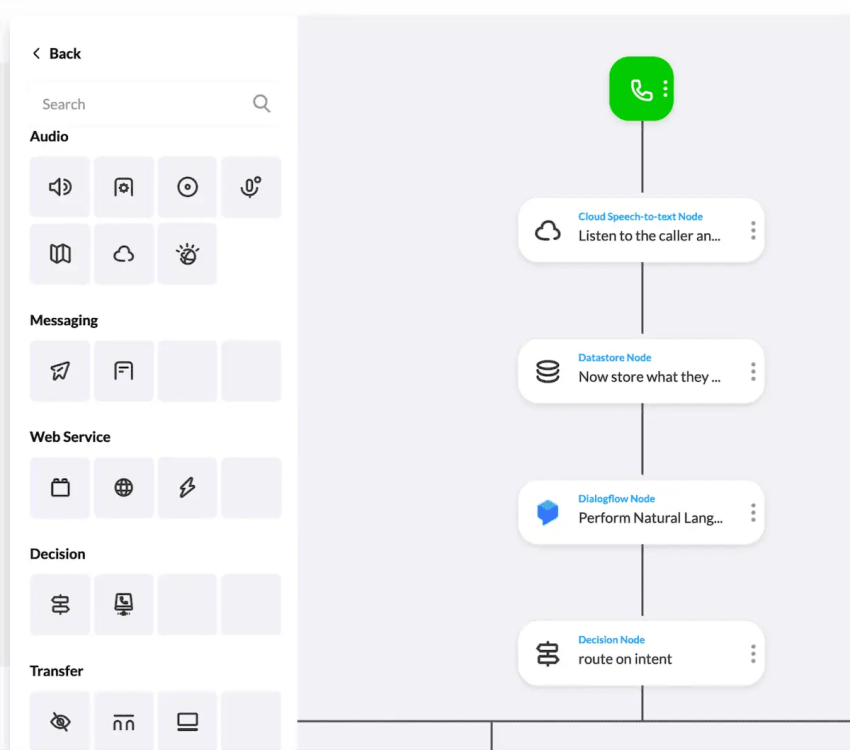
- Speech-to-text for real-time transcription: Converts conversations into text automatically so calls are documented, searchable, and ready for analysis.
- Natural language understanding to detect intent: Interprets what callers mean (not just what they say) to route or resolve calls accurately.
- Conversational AI to generate responses: Powers human-like conversations that adapt based on urgency, sentiment, and complexity.
- Workflow logic to route, schedule, or escalate calls: Determines next steps automatically, whether that’s routing to a specialist, booking time, or escalating an issue.
- Integrations with CRMs, calendars, and ticketing systems: Connects call activity with customer data to keep records up to date and interactions consistent.
- Reporting and analytics to measure performance: Turns call data into insights on volume, outcomes, sentiment, and efficiency.
Where AI Assistants Fit Inside an AI Phone System
It’s important to distinguish the tool from the toolbox. AI phone assistants (like XBert) are one capability within the broader system.
When you subscribe to a full AI-powered phone system, you get all the standard PBX features (routing, recording, conferencing), but the AI assistant acts as your first line of communication. It handles the high-volume, low-complexity tasks – greeting callers, answering FAQs, verifying identity – freeing up your human staff for the emotive or technical issues where they add the most value. In a unified system, your AI voice agent isn’t a siloed bot; it’s connected to your routing and records. This means that every interaction is documented automatically.
For example, Nextiva XBert operates inside our complete phone platform. It’s an automated, customer-facing front-of-house that scales infinitely while benefiting from the security and reliability of a carrier-grade cloud network.
Hear why XBert AI is the best AI receptionist
XBert AI receptionist handles customer questions, captures leads, and books appointments. Try it free for 14 days.
Common Business Use Cases for AI Phone Systems
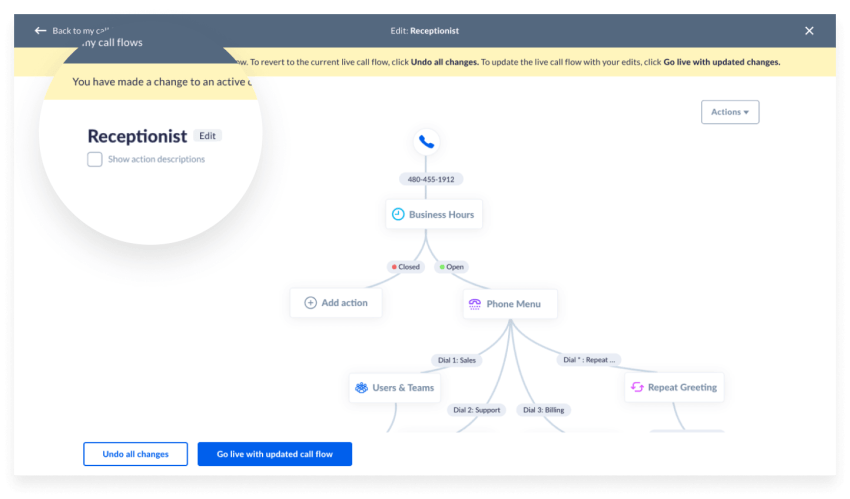
You can use the AI phone assistant functionality as a type of AI receptionist. This means you handle front desk inquiries without hiring reception staff or asking different personnel to handle calls that may not be relevant to them. Here are some examples of how you can use AI phone systems:
- Virtual receptionist: Handle all front-desk inquiries without hiring reception staff.
- After-hours coverage: Capture leads and support tickets at 2 a.m. without outsourcing to a call center.
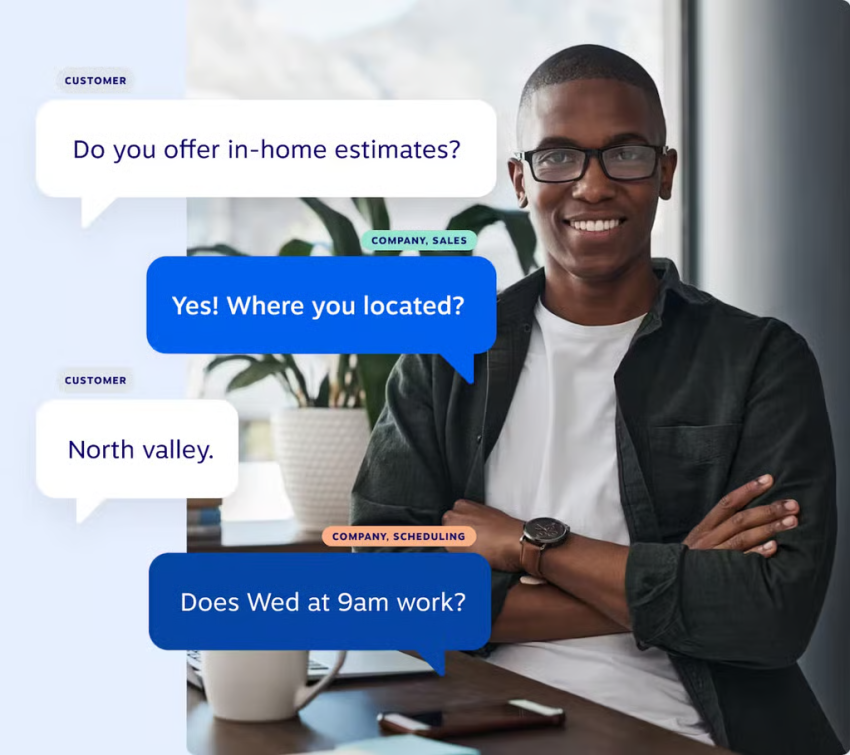
- Smart scheduling: Let the AI book appointments directly into your calendar, eliminating phone tags.
- Lead qualification: Ask qualifying questions about the budget or timeline, for example, before routing the call to a sales rep.
- Overflow handling: Answer calls immediately when your lines are busy, so no customer hits voicemail.
- Agent Assist: Provide real-time whisper prompts to agents in the contact center, suggesting answers or flagging compliance risks during live calls.

What to Look for When Evaluating an AI Phone System
Use this evaluation checklist when comparing providers of AI phone systems (or any phone systems).
Core capabilities
Start with the fundamentals; without these, advanced features won’t matter.
- Cloud-based calling with built-in scalability (not just call forwarding)
- AI-powered call routing and natural language understanding
- Real-time call transcription and sentiment analysis
- Conversational AI capable of handling entire interactions
- Integrated analytics dashboard with actionable insights
Integration and automation
Your AI phone system should not be isolated; ensure it is integrated with your existing system architecture.
- Native integrations with CRM, ticketing, and calendar tools
- Automated call summaries and workflow triggers
- Unified interaction management across voice, SMS text messaging, and voicemail
- API access and easy-to-deploy workflows for booking an appointment or lead qualification
Reliability and usability
High uptime is non-negotiable when your revenue depends on customer calls.
- Proven system uptime and strong security credentials
- MoS scoring for call quality
- Transparent pricing tied to usage or outcomes (not just minutes)
- Vendor-provided onboarding, documentation, and ongoing customer support

Value and future-readiness
Buy a system that grows with you, not one that you quickly outgrow.
- AI features that adapt as call volume and complexity grow
- Automation options that reduce cost per call and improve customer satisfaction
- Consistent experiences across multiple locations or departments
- Clear roadmaps for future AI enhancements and product updates
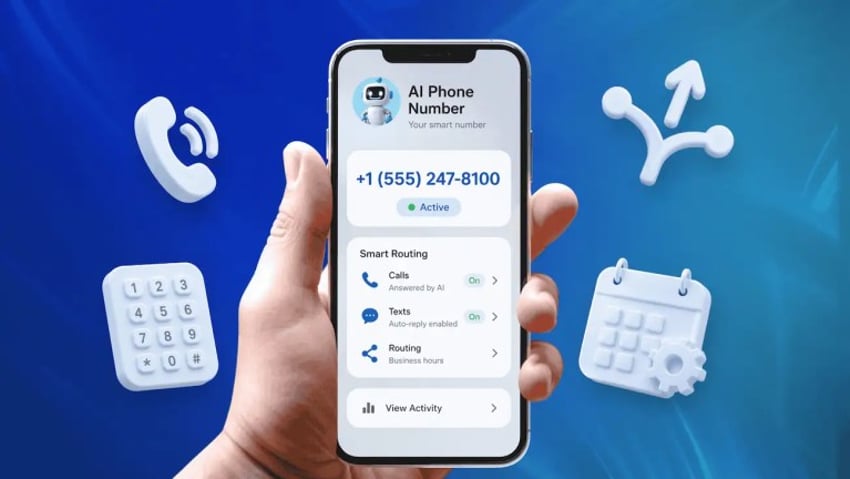
Minimize Your Missed Calls With Nextiva’s XBert
An AI phone system is a business decision, not just a technology upgrade.
The value comes from fewer missed calls, faster resolution, and better visibility into your operations. Instead of piecing together separate tools for calling and AI, you get genuine digital transformation in one platform.
If you want AI to improve your calling without adding operational overhead, a unified AI phone system like Nextiva is the right model.
We didn’t just bolt AI onto an old system. We embedded it. Xbert directly integrates into the Nextiva platform. It enhances the system by handling live customer conversations while the platform manages everything around it — routing, recording, and analytics.
Thinking about incorporating AI into your business phone system? Check out our XBert AI core bundle. 👇
AI Receptionist & business phone line for $99/month.
An AI receptionist that answers and routes callers instantly—plus handles scheduling, follow-ups, and everyday tasks for you. Porting included, so you keep your existing phone numbers.