

 Customer Experience
  Blog
Blog  Business Communication
  Leadership
  Marketing & Sales
  Nextiva News
  Productivity
  VoIP
VoIP 

Every outbound sales leader faces the same dilemma: do you push for maximum volume, or do you prioritize the quality of the conversation?
It’s a constant trade-off. Push too hard for speed, and you risk burned-out agents and frustrated customers who hear dead air when they answer. Slow down too much for quality, and your pipeline dries up because you aren’t making enough connects.
This is exactly where the choice between predictive and progressive dialers comes into play.
While both tools automate outbound dialing, they represent opposite philosophies. Predictive dialers are built for raw speed and scale, keeping agents talking every second. Progressive dialers are built for control and context, ensuring that when a customer answers, an agent is ready and waiting.
Choosing the wrong dialer type can negatively impact your compliance metrics or severely limit your revenue growth. This guide compares predictive and progressive dialers to help you choose the right outbound dialer for your business model.
What Are Outbound Dialers?
Before comparing the different types, it’s important to understand the technology powering predictive and progressive dialers.
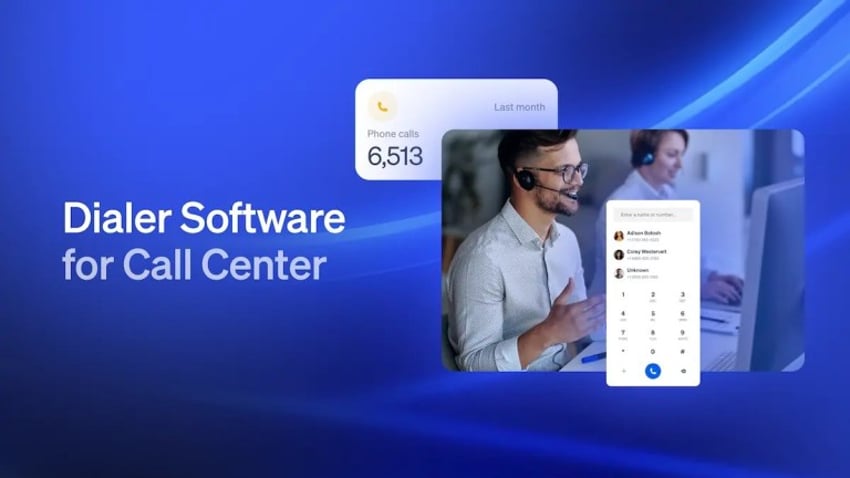
An outbound dialer is software that automates calling from a list. It eliminates manual tasks like typing numbers, listening to ringtones, and dealing with voicemails. Outbound dialers automatically detect live answers, route them instantly to agents, and significantly reduce idle time while boosting agent productivity.
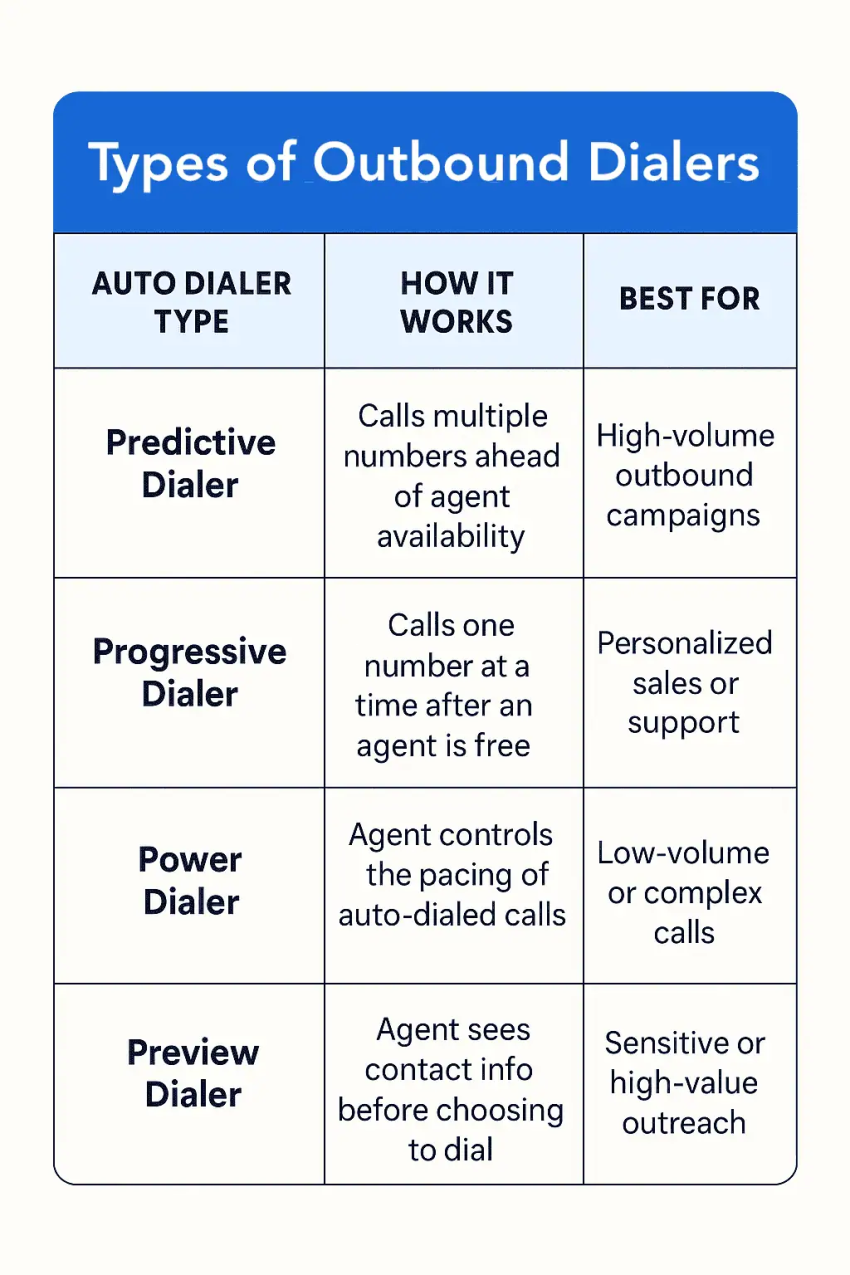
Although they share this core function, outbound dialers come in several versions — predictive, progressive, power, and preview — each designed for specific workflows.
Most outbound dialers include four core capabilities:
- List management: Prioritizes leads directly from your CRM.
- Dialing logic: Algorithms determine when to place the next call.
- Intelligent routing: Connects live calls to the best available agent.
- Call analytics: Tracks talk time, connection rates, and abandonment.
Predictive vs. Progressive Dialer at a Glance
The difference between predictive vs. progressive dialers basically comes down to risk vs. reward.
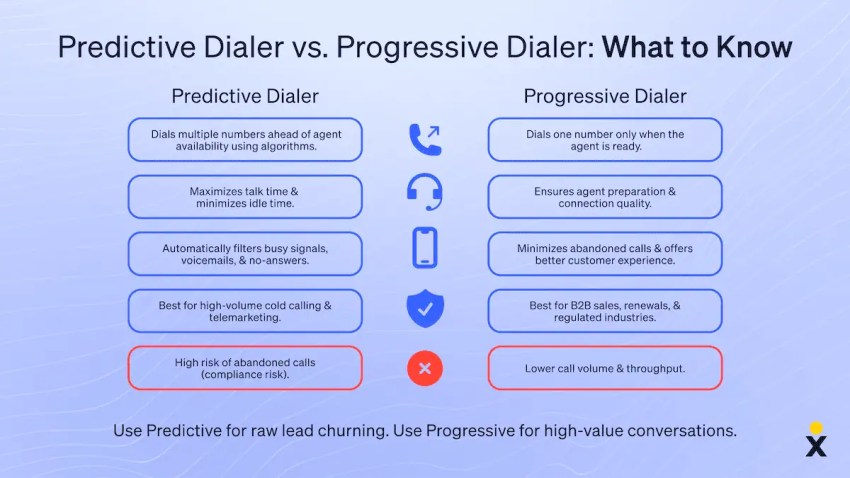
Predictive dialers use algorithms to dial multiple numbers per available agent. The system predicts when an agent will finish their current call and starts dialing the next batch before the agent is available. Research on telephony system behavior shows that using predictive logic can increase the utilization rate from about 40 minutes to 57 minutes per hour.
However, if the algorithm misses, a customer answers with no agent available, which can lead to an abandoned call.
Progressive dialers prioritize the agent-customer connection. They only make one call per agent and only dial when the agent is actually ready. The result is fewer dropped calls and agents who are optimally prepared with better customer context. Progressive dialers handle a lower overall call volume than predictive models.
| Feature | Predictive dialer | Progressive dialer |
|---|---|---|
| Key purpose | Speed. Maximize talk time at all costs. | Quality. Ensure an agent is always ready. |
| Dialing logic | Dials multiple numbers per agent in advance. | Dials one number per agent when ready. |
| Abandonment risk | High. Calls may drop if no agent is free. | Zero/low. Agents are reserved before dialing. |
| Ideal for | High-volume cold calling, collections, and surveys. | B2B sales, renewals, and high-value account management. |
| Compliance | Requires strict monitoring (e.g., FTC 3% limit). | Naturally compliant; safer for regulated industries. |
Beyond progressive vs. predictive dialer, call centers can choose from several other dialer software options.
Deep Dive: What Is a Predictive Dialer?
A predictive dialer is an outbound dialer designed to scale. Its job is to keep every available agent in constant conversation and drive the highest possible number of calls per hour. Unlike simpler dialing systems, it does not wait for an agent to finish a call before starting the next one.
This approach powers high-call-volume environments such as telemarketing floors and large sales teams running aggressive outbound programs.
How predictive dialers work
Predictive dialers place multiple calls simultaneously. Behind the scenes, a mathematical algorithm analyzes historical data (like average handle time, pick-up rates, and time of day) to predict exactly when an agent will become free.
Based on this prediction, it dials the next set of numbers before the agent ends their current call. The goal is to have a new live customer on the line the exact second the agent becomes available.
Best use cases for predictive dialers
Predictive dialers are commonly used in cold calling programs that work through large lead lists. Think of collections and payment reminder teams that follow structured scripts, and market research or survey operations where scripts are almost similar.
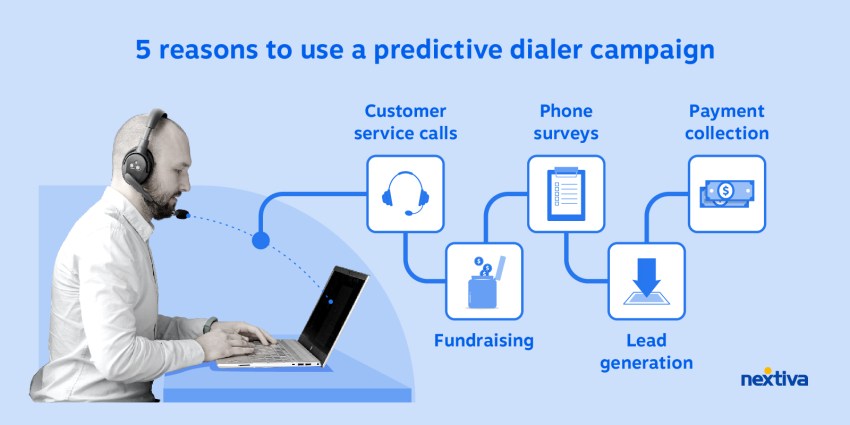
They also suit large outbound sales teams with standardized workflows and tightly controlled messaging. The expectation is to maximize the number of live connections per day rather than tailor every conversation in real time.
Advantages of predictive dialers
The biggest strength of predictive dialing is efficiency at scale. It delivers:
- Maximized agent talk time: Reps spend more time speaking and less time waiting between calls.
- Much higher call volume: The number of calls per hour can increase dramatically compared to manual dialing or power dialers.
- Lower idle time: The system continuously feeds the next live call as soon as an agent becomes free.
- Automatic filtering: Busy signals, voicemail, and no-answers are screened out before reaching agents, improving agent efficiency and connection rates.
Disadvantages of predictive dialers
The same speed that makes predictive dialers powerful also introduces risk. Key trade-offs include:
- Higher call abandonment rates: When the system miscalculates agent availability, customers may hear silence or experience a delayed connection.
- Potential customer frustration: Being connected only to be placed on hold hurts the customer experience and brand perception.
- Compliance exposure: Regulations such as TCPA and local abandoned call limits place strict controls on how many dropped calls a call center generates. Predictive dialing requires careful tuning and monitoring.
- Agent fatigue: The fast and continuous pacing leaves little recovery time between calls.
What Is a Progressive Dialer?
A progressive dialer automates the dialing process, but it only places one call per available agent. It makes the next call only when an available agent is ready, ensuring every live answer connects to a human immediately.
This makes progressive dialing a natural step up from manual dialing. It removes the friction of typing phone numbers and waiting through busy signals or voicemail, without introducing the risk of overcalling that comes with predictive systems.
How progressive dialers work
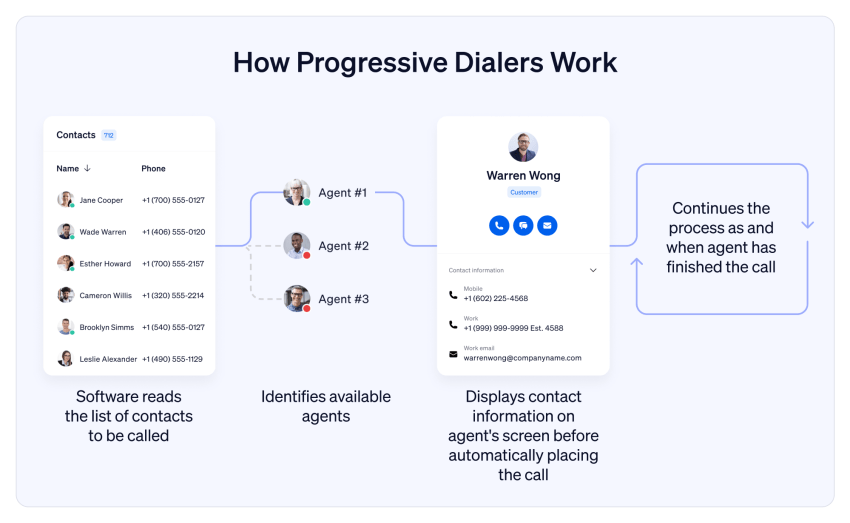
In a progressive model, the system waits until an agent has finished their current call and signaled their readiness. Only then does it dial the next number on the list — typically only one line at a time.
While the phone is ringing, the agent sees the customer’s CRM record, purchase history, and notes on their screen. As soon as the customer answers, the agent is already on the line, without any delay.
Best use cases for progressive dialers
Progressive dialers perform best when conversation quality matters more than raw call volume. They’re great for:
- Personalized sales conversations: Reps get to focus on context and personalized messaging.
- High-value B2B outreach: Agents receive fewer calls, but they can spend longer interacting with customers when the stakes are high.
- Customer follow-ups and renewals: In account management and expansion workflows, where you’re likely speaking to a current customer.
- Regulated industries: Healthcare and any environment with strict TCPA or local compliance requirements.
- Smaller to mid-sized outbound teams: Groups that value control and consistent call quality over aggressive scaling.
In these scenarios, trust, timing, and agent readiness matter more than maximizing the number of dials per hour. Progressive dialers are typically used when the goal is retention, sales, or ensuring customer satisfaction.
Advantages of progressive dialers
The biggest strength of progressive dialing is its reliability in outbound calling functionality.
- Zero abandonment and compliance: Since it never over-dials, you avoid dropped calls and stay safe in regulated industries (e.g., healthcare and finance).
- Better experience: Customers connect instantly to a live agent, building trust rather than frustration.
- Sustainable pace: The controlled workflow reduces agent burnout compared to the high-pressure environment of predictive dialing.
Disadvantages of progressive dialers
The biggest trade-off is scale.
- Lower volume: These dialers lack the raw throughput needed for mass lead generation campaigns.
- Idle time: If connection rates are low, agents spend more time waiting for the system to cycle through numbers.
- Limited prep: Unlike preview dialers, agents typically have a fixed, short window to review account details before the call connects.
How to Choose the Right Dialer for Your Business
The choice of a dialer is less about tech and more about intent. Determine what your business must achieve today and what it must protect tomorrow.
1. Define the primary objective
Consider what success looks like for your outbound program. If your priority is to push call volume and maximize agent talk time, predictive dialing is built for this. On the other hand, if your focus is on trust and low abandonment, progressive dialing offers greater control and safety.
2. Size your team and call volume
Dialing strategy should scale with operations. Large outbound teams running high-call-volume campaigns can justify the speed of predictive systems. But smaller or mid-sized teams handling high-value accounts often benefit from the steadier pace of progressive dialing.
The more calls there are, the more valuable automation and throughput become. The higher the value of each call, the more costly a poor connection becomes.
3. Protect agent well-being
Pace impacts performance over time. Although continuous conversations increase agent productivity, they also increase fatigue.
In contrast, a progressive workflow respects the human rhythm, giving agents some space to prepare, recover, and manage call quality. Lower burnout often translates into better customer interactions and lower turnover.
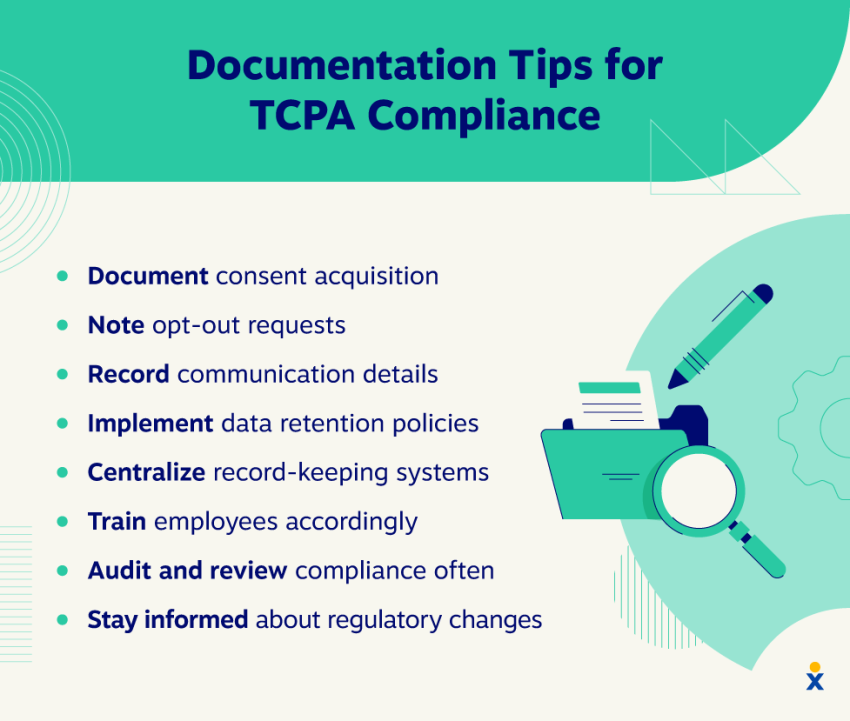
4. Weigh compliance and risk exposure
Regulation changes the equation. Industries governed by TCPA, healthcare, or financial regulations must tightly control abandoned calls and dropped connections. Progressive dialing carries much less compliance risk due to near-zero call abandonment and more predictable routing.
For regulated sectors, risk tolerance should guide the choice as much as efficiency.
5. Match the dialer to call complexity
Short, scripted, and repeatable calls cannot be treated the same as consultative sales calls or sensitive follow-up. If you’re repeating the same script over and over and playing a volume game, predictive dialing brings efficiency.
However, choose a progressive dialer if you don’t want your high-stakes connects to start with a long pause, with the customer waiting for you to connect.
6. Plan for change
Business needs evolve. Campaigns shift. Teams scale. Choose a call center platform that allows you to seamlessly switch between predictive and progressive modes.
This flexibility lets you optimize for high call volume when needed and pivot to high-quality, compliance-first workflows when your customer experience strategy matures.
Top 3 Dialer Solutions Offering Predictive and Progressive Dialing Modes
The right dialer is characterized by how well it can support different dialing strategies that change as your outbound activities evolve. A team that currently needs high speed may require more control in the future.
The following providers offer three different approaches to predictive and progressive dialing.
1. Nextiva
Best for: Growing teams that need one platform to balance sales efficiency, compliance, and CX without locking into a single dialing mode.
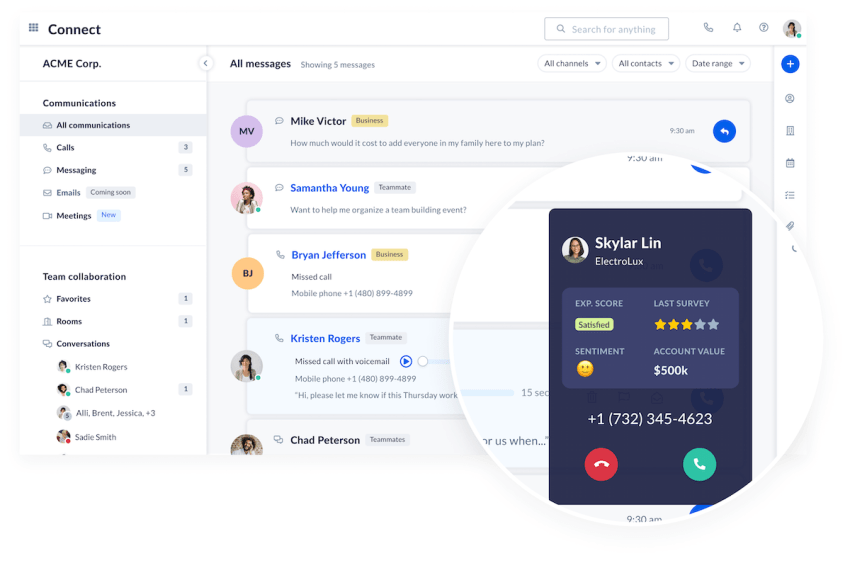
Nextiva offers both predictive and progressive dialing within a single contact center platform. This means teams run high-call-volume campaigns and quality-focused outreach without switching tools or rebuilding workflows.
Explore Nextiva.
Its strength lies in flexibility.
- Sales leaders get to push speed when running cold outreach, and then shift to progressive dialing for renewals, follow-ups, or regulated conversations.
- Compliance teams benefit from built-in controls that help manage abandonment rates and TCPA exposure.
- Operations teams benefit from AI-assisted dialing optimization, which continuously tunes pacing, routing, and agent availability based on real-time metrics.
Nextiva also integrates tightly with CRM and customer experience systems, which keep context, call history, and follow-ups in one place. That makes it easier to support personalized interactions even when call volume scales.
2. Convoso
Best for: Sales, telemarketing, and collections teams that prioritize volume, speed, and aggressive outreach.
Convoso is built with high-volume outbound in mind. Its core strength is predictive dialing, supported by advanced algorithms that aim to maximize connection rates and minimize agent idle time.
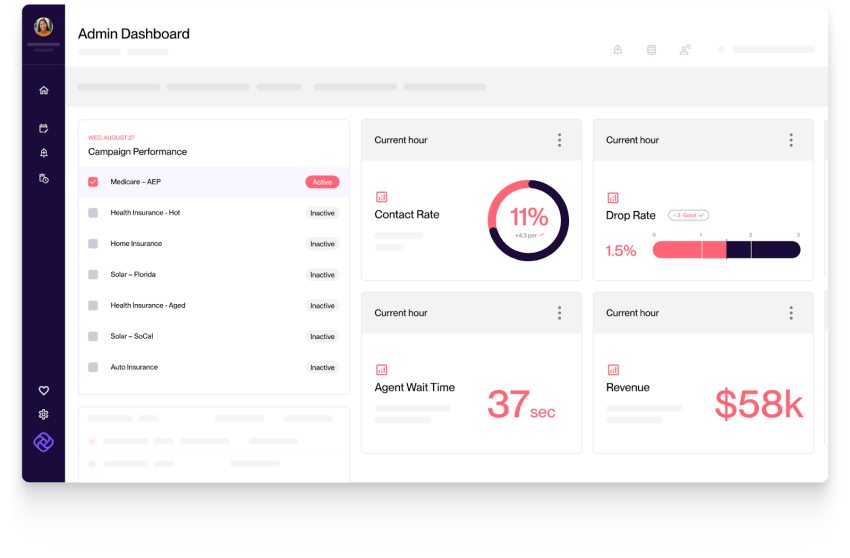
The platform focuses on campaign optimization. Managers get to fine-tune pacing, call ratios, and routing logic to squeeze more live conversations out of every hour. This makes it a strong choice for environments where throughput is the primary KPI and conversations are short, structured, and repeatable.
Convoso is less about flexible pacing and more about pushing scale as far as possible.
3. CloudTalk
Best for: SMBs and mid-market teams running relationship-driven outreach and international sales, where simplicity and call quality matter.
CloudTalk sits on the other end of the spectrum. It emphasizes progressive and power dialing, giving teams automation without sacrificing control. Calls are placed in a more deliberate, agent-ready sequence, which supports better preparation and smoother customer interactions.
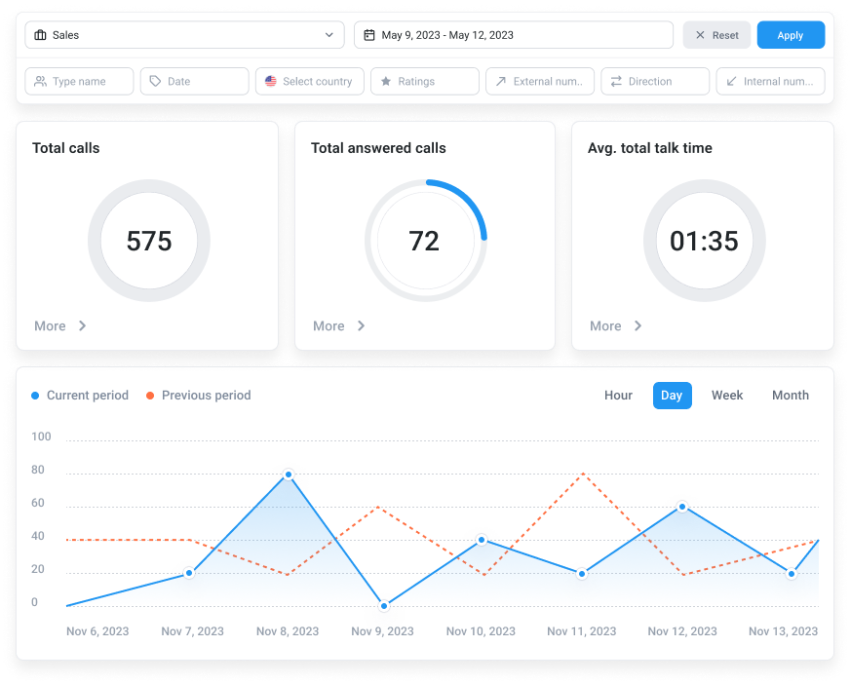
The platform is known for fast setup and a clean balance between automation and human control. Agents can move quickly through call lists, while the system avoids overcalling and keeps abandonment risk low.
Whatever Dialer You Need, Nextiva Has You Covered
Progressive vs predictive dialers serve different goals. One is built for speed and scale, the other for control and customer experience.
- Need to churn through 50,000 cold leads? Go for predictive.
- Need to close 50 high-value deals? Go for progressive.
Modern outbound teams don’t limit themselves to a single approach. They choose the appropriate dialing mode for each campaign and adapt it flexibly to business developments.
With Nextiva, you can run high-volume, high-efficiency campaigns using predictive dialing. Then, for regulated calls and particularly valuable conversations, you can switch to progressive dialing without having to change any systems or workflows.
The same CRM context, compliance controls, routing, and analytics are available in both modes. This flexibility gives you a competitive edge as your business grows and keeps you compliant and strategic, no matter how the market shifts.
Try Nextiva. It doesn’t limit you. It adapts as your growth strategy evolves.
Top AI-Powered Contact Center Solution
Transform your customer interactions with a contact center platform that saves you time and money, reduces agent and supervisor stress, and flexibly adapts to fit your needs.