
 VoIP
VoIP  Blog
Blog  Business Communication
  Customer Experience
  Leadership
  Marketing & Sales
  Nextiva News
  Productivity

Your phone system shouldn’t be something you work around. If you’re dealing with dropped call quality or a feature gap that competitors don’t have, net2phone may no longer be the right fit. Here are the five best alternatives to consider in 2026, with real tradeoffs and a clear look at what each platform is actually built for.
Why Businesses Are Moving Away From net2phone in 2026
Net2phone is a subsidiary of IDT Corporation, whose primary growth engines are now a fintech point-of-sale network and a digital money transfer service. In 2022, IDT had plans to spin off net2phone’s cloud communications segment, but postponed the IPO due to market conditions. It remains a division of a conglomerate where cloud communications compete internally for investment against higher-growth business lines.
That’s not a verdict on the product, but it does matter for how fast the product develops. The vendors competing most aggressively on AI features, such as Nextiva and Dialpad, are either pure-play communication platforms or fully focused on UCaaS.
When 81% of enterprise CX leaders were planning to deploy AI in their contact centers in 2025, according to a Ryan Strategic Advisory survey of 819 executives, the pace of that development is a legitimate factor in the decision.
Common net2phone pain points
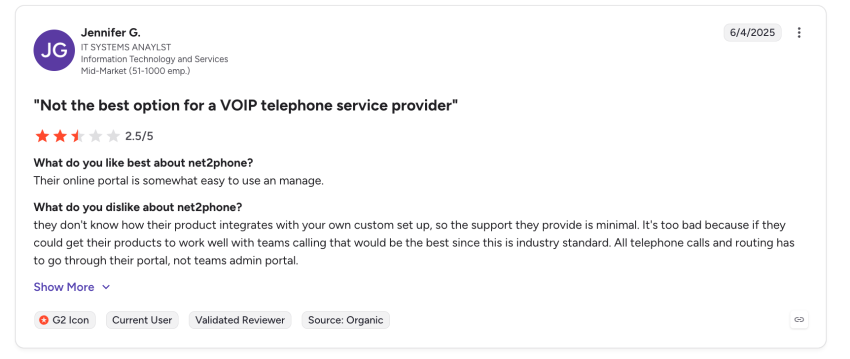
User reviews on Capterra and G2 cluster around a few consistent issues. A verified Capterra reviewer described a system that was “clunky, difficult to customize,” and required ongoing support intervention for basic configuration. Others cite issues with reporting, app stability, and limited tech and post-sale support.
Net2phone’s G2 profile shows its user base skews heavily toward small businesses, and small teams are often the ones hit hardest by a platform that demands technical patience to manage.
The shift toward AI-powered communication
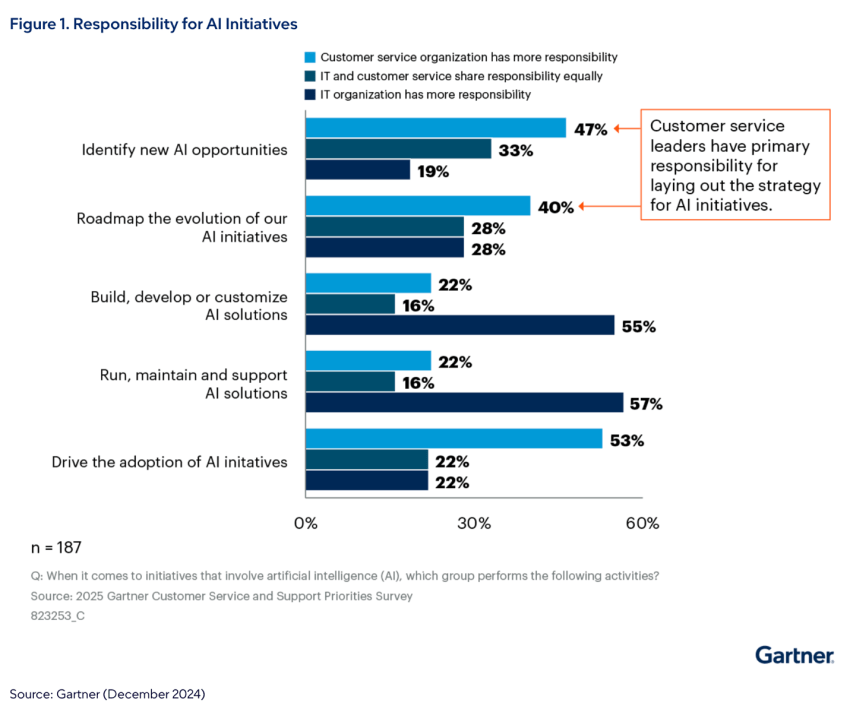
There are roughly 36.2 million small businesses in the U.S., according to the SBA’s February 2026 data, and most of them need more than a dial tone. According to a Gartner survey of 187 customer service leaders, 85% planned to test or evaluate conversational AI solutions in 2025.
Legacy architectures without these capabilities tend to fall short on features and create siloed data that undermines the customer experience your team is trying to deliver. Nextiva’s own research backs this up, with 81% of CX leaders saying their customer experience would improve if they could consolidate all conversations into a single system of record.
Cost vs. value analysis
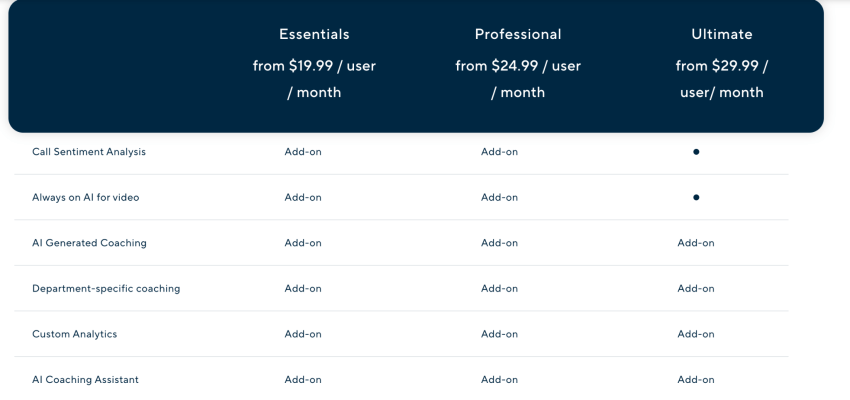
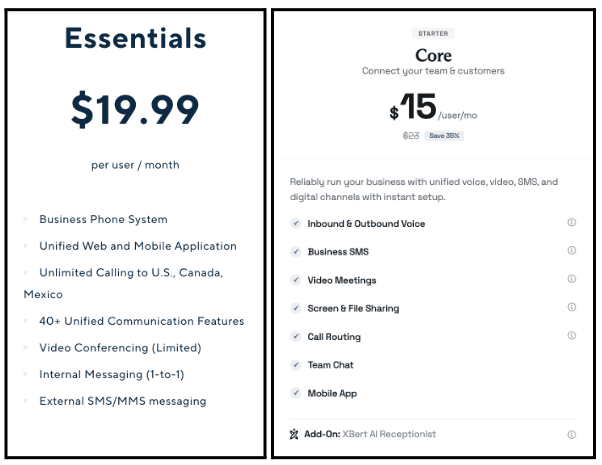
Net2phone’s Essentials plan starts at $19.99 per user per month on annual billing. That covers unlimited domestic calling (U.S., Canada, Mexico), basic messaging, limited video conferencing, and over 50 unified communication features. For teams with straightforward calling needs and no immediate need for automation, the price is fair for this level of functionality.
The tension emerges when you add up what you’re paying separately for the features that modern alternatives bundle in, such as call recording, advanced analytics, CRM sync, and AI-driven call handling. At that point, the math often favors a platform that’s built around all of those capabilities from the start and offers better value for money.
Top 5 net2phone Alternatives to Consider for Your Team
Here’s a quick comparison followed by a deeper look at each option.
According to Nextiva research, 95% of companies use multiple tools to manage customer experience, with 13% of them using more than 10 tools. Nextiva unifies voice, video, and SMS on one platform. That consolidation matters because 76% of customers expect a response within five minutes, a threshold that requires the smart routing found in these top alternatives.
| Provider | Starting Price | Best For | Uptime SLA | AI Features |
|---|---|---|---|---|
| Nextiva | $15 per user per month* | SMBs needing reliability | Strives for 99.999% | XBert AI receptionist (add-on) |
| Dialpad | $15 per user per month* | AI-first teams, sales orgs | 99.9% | Built-in on all plans |
| 8×8 | Pricing not posted on website as of writing | Global teams, unlimited calling within 48 countries | 99.999% | AI self-service |
| Ooma Office | $19.95 per user per month | Very small teams, no contract necessary | 99.999% | Ooma AI for Ooma Office (AI transcriptions, answering service, and more) |
| RingCentral | $20 per user per month* | Enterprises, 500+ pre-built integrations | 99.999% | AI Receptionist (add-on), AI virtual assistant |
* Note that annual billing is required for the lowest advertised rate.
1. Nextiva: The leader in reliability and support
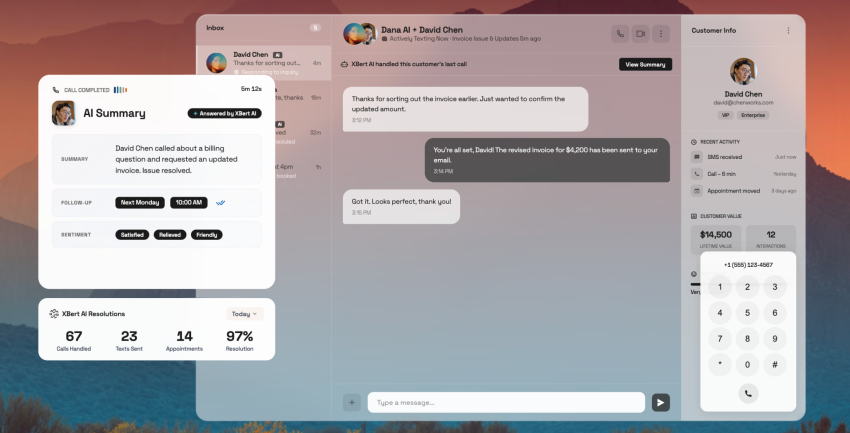
Nextiva’s business phone service is the strongest all-around option for small to midsized businesses that need consistent uptime and want human customer support available when something goes wrong.
The platform runs on eight geographically distributed, carrier-grade data centers that strive for 99.999% uptime. More than 100,000 businesses and over a million users depend on it. The Trustpilot rating of 4.6 out of 5 from over 8,000 reviews reflects a consistently positive experience, compared to RingCentral’s 1.8 from over 1,800 reviews.
Pricing starts at $15 per user per month on the Core plan (annual billing), covering unlimited U.S. and Canada calling, free number porting, business SMS, video meetings, team chat, and mobile apps. The Engage plan at $25 per user per month adds a shared SMS inbox, a toll-free number, live chat and chatbot, and advanced reporting.
Nextiva also lets you customize features such as call forwarding and caller ID text. Integrations include Zoho, HubSpot, Shopify, and Pipedrive, among others.
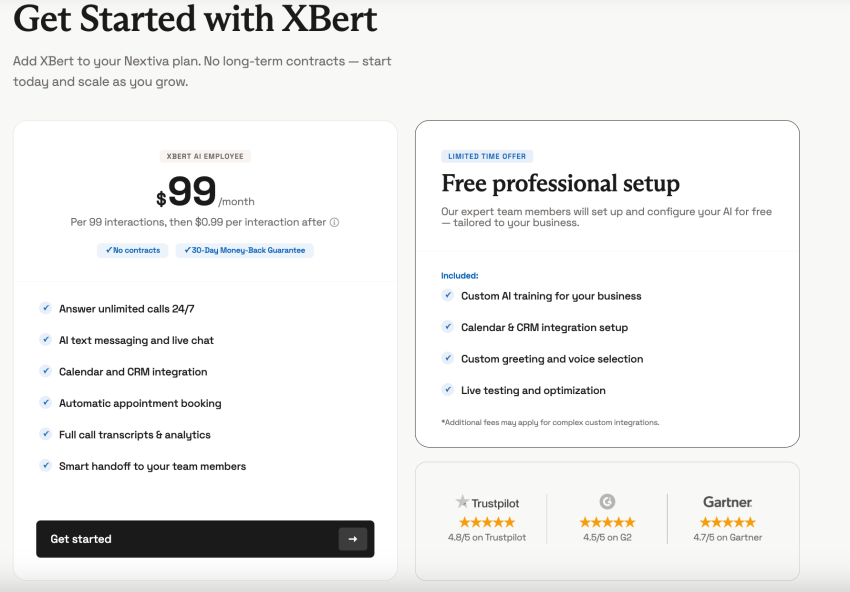
The standout add-on is XBert, Nextiva’s AI receptionist. At $99 per month for 100 conversations, XBert handles inbound calls, SMS, and web chat around the clock, books appointments, and syncs to your CRM without engineering support. For businesses already on Nextiva, it extends coverage without adding headcount, making it a scalable option.
For a detailed comparison, the Nextiva vs. RingCentral breakdown is a useful starting point, especially if you’re planning to evaluate RingCentral vs. net2phone later on. For teams looking for other communication solutions, Nextiva also offers cloud-based call center solutions.
2. Dialpad: The AI-first alternative
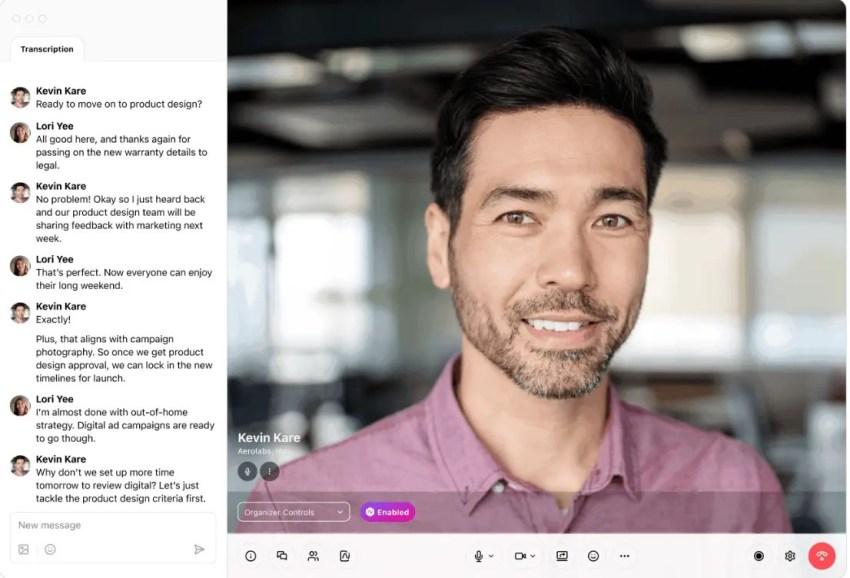
Dialpad’s core advantage is that AI isn’t an add-on. Real-time call transcriptions, real-time analytics and reporting, HIPAA/BAA compliance, and call recording are included on every plan, starting at $15 per user per month on the Standard tier. For teams that review call recordings for coaching or where reps benefit from live guidance during calls, the built-in Dialpad AI tools are a genuine differentiator. Its pricing also competes directly with net2phone, which tacks AI onto its Essentials plan as add-ons.
The Standard plan is limited to one office location and three ring groups. Multisite businesses and teams with structured inbound queues need to step up to the Pro plan at $25 per user, which also unlocks CRM integrations with Salesforce, HubSpot, Microsoft Teams (with set-up fees), and Zendesk.
3. 8×8: The global solution
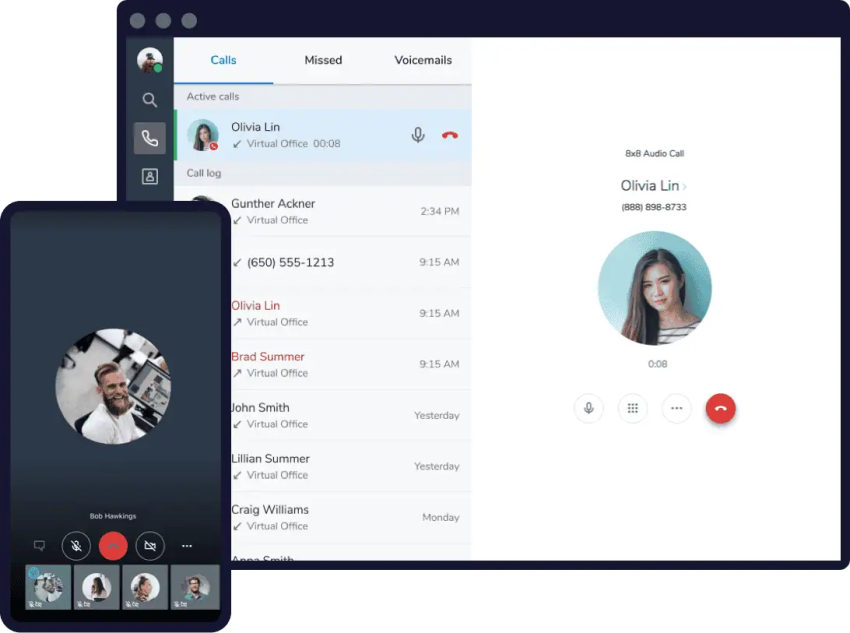
8×8’s top-tier plan includes unlimited calling (for cloud PSTN) to 48 countries, which is its defining feature for businesses with international operations. The X2 plan covers 14 countries; the X4 to X8 plans extend that to 48. Pricing requires a direct quote, though a Nextiva guide on 8×8 places the entry point around $24 per user per month. 8×8 also carries an end-to-end 99.999% uptime SLA.
4. Ooma: Simple for very small teams
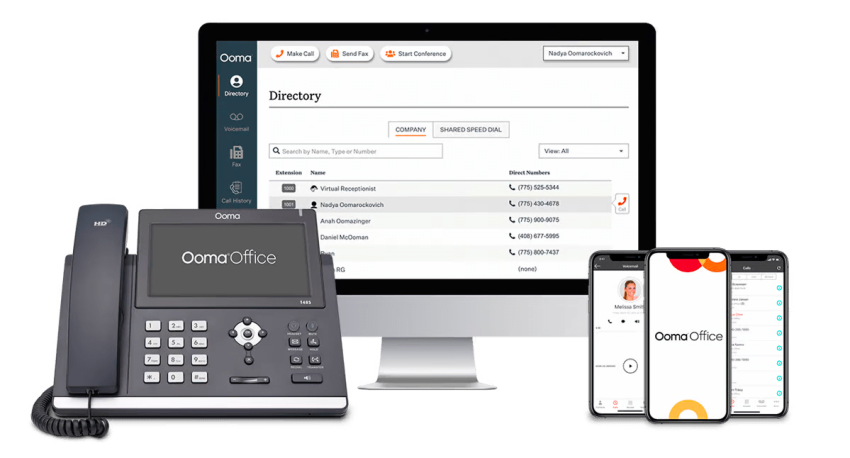
Ooma Office is the most accessible option on this list because setup doesn’t require IT expertise. Known for its ease of use, there’s also no long-term contract required. The base plan at $19.95 per user per month covers 100+ standard features, including a virtual auto attendant, call parking, a user management portal, and unlimited U.S., Canada, Puerto Rico, and Mexico calling. It also offers documentation for call queues.
The Pro plan at $24.95 per user per month adds video conferencing for up to 25 participants, analytics, and voicemail transcription. Pro Plus at $29.95 per user per month extends video to 100 participants and adds CRM integrations.
Ooma has no built-in team messaging at the base tier, limited entry-level integrations, and no built-in AI capabilities (AI features are add-ons). Teams with growth plans or that need call analytics and advanced routing will likely outgrow it within a year or two, or they may need to switch to higher-tier plans with advanced features.
5. RingCentral: The enterprise heavyweight
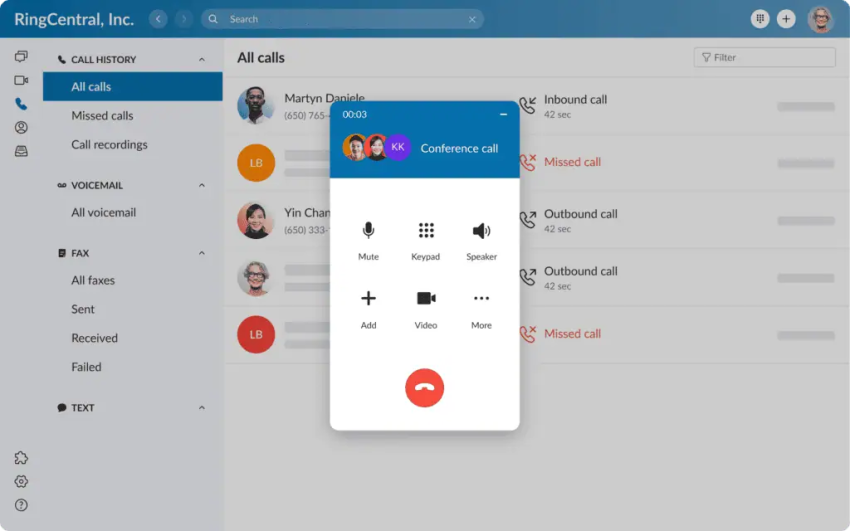
RingCentral’s RingEX suits organizations that need a deep integration library and international reach. More than 500 integrations and support for over 100 countries make it a strong fit for complex workflows and distributed global teams with international calling needs.
The Core plan at $20 per user per month includes unlimited domestic calling, on-demand call recording, HD video meetings for up to 200 participants, and AI transcription. The Advanced plan at $25 per user adds 1,000 toll-free minutes, CRM integrations, stronger analytics, and more AI features. Watch out for the Core plan’s SMS cap, though. At 25 messages per user per month, it likely won’t last long for customer-facing teams.
RingCentral’s Trustpilot score of 1.8 from over 1,800 reviews includes a significant volume of complaints about billing surprises and cancellation difficulties.
Essential Features to Prioritize in a New Phone System
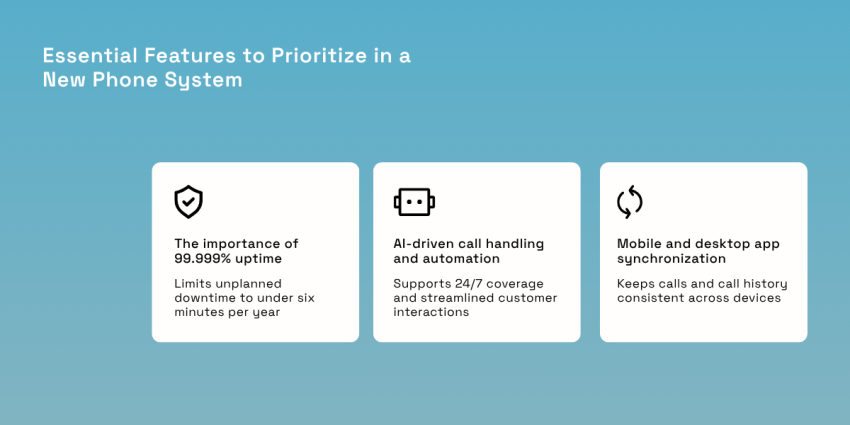
The importance of 99.999% uptime
The industry benchmark for enterprise-grade VoIP service uptime reliability is 99.999%, which limits unplanned downtime to under six minutes per year. Providers that advertise 99.9% allow nearly nine hours of annual downtime, which is a meaningful gap when your phone is the primary channel customers use to reach you.
Look for geographically distributed data centers with automatic failover instead of just a headline percentage, as this helps prevent downtime. Nextiva’s network uses eight points of presence with 24/7/365 monitoring.
AI-driven call handling and automation
Nextiva’s 2025 State of Customer Experience report, based on 1,000+ CX decision-makers, found that 86% of firms using multiple tools report siloed customer data as a direct consequence. The gap between what an omnichannel communication platform promises and what a collection of disconnected tools delivers shows up in resolution times and repeat-caller frustration.
Nextiva’s XBert AI receptionist features include 24/7 front-desk coverage, such as answering calls and handling web chats without a human in the loop. At $99 per month for 100 conversations, XBert is positioned as up to 20 times more affordable than a full-time human receptionist and helps streamline call management.
Nextiva handles over 1 billion customer interactions annually across its platform. That scale matters when you’re evaluating reliability, and it pairs with a clear customer behavior signal. 75% of customers prefer a callback if wait times exceed five minutes, with 76% expecting a response within five minutes or less.
Mobile and desktop app synchronization
Look for apps that stay in sync across devices, support calling from a business number on a personal phone without exposing the personal number, and maintain full call history regardless of device.
The practical test is: Can your team switch from a desk phone to their laptop midcall without losing context? Nextiva’s unified app for mobile, desktop, and browser does exactly that.
The Process of Switching Your Business Phone Provider
Switching feels more disruptive than it usually is. Most of the risk lives in two places: losing phone numbers and disrupting live call routing. Both are manageable with a service provider that handles the process for you. Nextiva provides free professional setup and number porting support, and it deploys in as little as five weeks, compared to 24 or more weeks for legacy on-premises migrations.
Preparing your data for migration
Before migrating, gather your current billing statement. You’ll need the exact account details for your number porting request. Audit which desk phones are SIP-compatible and reconfigurable, and list every tool currently connected to your phone system (CRM, helpdesk, calendar).
For healthcare and legal businesses, confirm HIPAA compliance and SOC 2 Type II certification with your new provider before signing. Nextiva carries both.
How number porting works in 2026
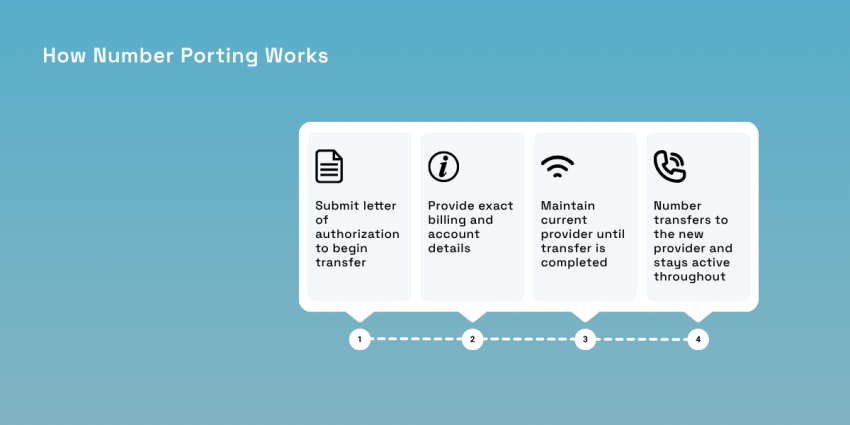
Porting a phone number means transferring it from net2phone to your new provider while keeping the number intact. You submit a Letter of Authorization (LOA), provide your current account information, and keep your net2phone service active until the transfer completes. The timeline is typically five to 10 business days for U.S. numbers. Your number stays active throughout the process.
The most common cause of delays is documentation errors. If the account name or billing address on your LOA doesn’t exactly match net2phone’s records, the request will be rejected, and you’ll need to resubmit.
For more on how VoIP calling works and what the transition looks like technically, Nextiva’s guide covers the basics.
Regarding business continuity during migration, 56% of customers will switch to a different channel if a response is too slow, according to Nextiva research. A disrupted phone system during migration frustrates callers and drives them to channels your team may not be prepared to handle. Timing migration correctly and confirming backup call routing is in place on cutover day protects the revenue your phone system is supposed to support.
Training your team on the new platform
Most modern VoIP platforms are intuitive enough that a one-hour walkthrough covers what most users need day to day. The areas that typically take longer are admin configuration and CRM integration setup, both of which Nextiva’s onboarding team handles. For businesses moving from net2phone with existing hardware, ask about desk phone provisioning and compatibility before go-live day.
Comparing the Costs of net2phone vs. Competitors
Monthly fees vs. total cost of ownership
The headline per-user price is only part of the picture. You also have to consider the hidden costs of business phone systems. Here’s how the VoIP pricing comparison for 2026 looks for a 10-person team on each provider’s base annual plan, before regulatory fees and add-ons:
| Provider | Entry Price (Annual) | Annual Cost (10 Users) | Contract Required |
|---|---|---|---|
| net2phone Essentials | $19.99 per user per month | ~$2,398 | Yes (term agreement) |
| Nextiva Core | $15 per user per month | ~$1,800 | Yes (12-month) |
| Dialpad Standard | $15 per user per month | ~$1,800 | Yes |
| Ooma Office Essentials | $19.95 per user per month | ~$2,394 | None |
| RingCentral Core | $20 per user per month | ~$2,400 | Yes |
* Annual billing rates. Excludes regulatory surcharges, E911 fees, add-ons, and implementation. Request a direct quote for your specific team size.
Net2phone’s implementation costs for business deployments can run from hundreds to thousands of dollars, depending on complexity. RingCentral’s compliance and regulatory fees typically add as much as 30% above the quoted per-user rate on actual invoices. Those are the kinds of hidden costs of business phone systems that don’t show up in the comparison table.
Included features vs. paid add-ons
Net2phone’s Essentials plan excludes custom analytics and CRM integrations. Nextiva pricing plans start at $15 per user on Core for the fundamentals, with call recording and analytics available on the Engage tier at $25 per user. The Engage tier also includes a toll-free number and 500 SMS messages, which offset costs you’d otherwise pay separately.
Dialpad stands out here as real-time transcriptions, real-time analytics, and reporting are included on the $15 Standard plan, not locked behind an upgrade. For teams where call intelligence is a core workflow, that’s worth a direct comparison before defaulting to a platform that charges extra for the same features.
The ROI of better customer experience
Nextiva’s 2025 survey of over 1,000 CX leaders, conducted with Dimensional Research, found that 79% of corporate leaders now view CX as a crucial revenue driver instead of a cost center, and 67% said it’s easier to get budget approval for CX investments compared to previous years.
Separately, Nextiva’s research found that customer service teams use an average of 6.3 tools just for customer interactions, and eight in 10 CX leaders say their operations would improve if customer data were consolidated into a single system of record.
Every tool in the stack is a monthly cost and a potential failure point. A platform that consolidates voice, video, SMS, and AI in one place reduces both. For teams evaluating the full cost picture, Nextiva’s AI Receptionist offers solid value at $99 per month vs. the cost of staffing after hours or overflow call coverage.
Making the Switch Based on Your Business Needs
If net2phone has become something your team works around, the alternatives here each solve a different part of that problem. For instance, Dialpad is a good option for AI-first teams, while 8×8 is for teams looking for global calling volume. Ooma is great for its no-contract simplicity, while RingCentral’s enterprise integration depth is impressive.
For most small to mid-sized businesses, Nextiva’s combination of proven uptime, 24/7 human support, and a clear upgrade path, from basic phone service to AI-powered front-desk automation, makes it the most complete starting point. The Core plan at $15 per user per month handles the fundamentals, while XBert handles the rest.
Get in touch today to get a free demo and discover how Nextiva’s communication solutions help streamline business communication.
A New Dawn in Customer Experience
Every customer experience starts with a conversation. Bring calls, messages, customer interactions, and AI together in one platform.
FAQs
It’s less painful than most businesses expect. Modern providers, including Nextiva, handle number porting with guided setup, and the transfer process typically takes five to 10 business days for U.S. numbers, requiring no downtime if correctly handled.
Start with uptime reliability (look for 99.999%, not 99.9%), 24/7 support availability, and a clear pricing structure without hidden fees. From there, evaluate based on your specific needs. Nextiva has a 4.6 out of 5 rating on Trustpilot from over 8,000 reviews and has a consistently high ranking among VoIP providers on G2.
Net2phone uses standard SIP protocols and covers the basics well, but its interface draws consistent criticism for being clunky and hard to customize for more complex setups. Nextiva’s platform is designed around a unified app for mobile, desktop, and browser that stays in sync, offering seamless integration.
Not universally. Dialpad includes real-time transcription, sentiment analysis, and call summaries on every plan at no extra cost. Nextiva offers XBert as an add-on for $99 per month. If call intelligence is a priority, Dialpad or Nextiva’s XBert are the most direct options at their respective price points.
A unified communication platform combines voice, video, chat, SMS, and collaboration tools in one cloud-based system with a centralized dashboard. The practical benefit is that customer context doesn’t disappear between channels. If a customer calls, then texts, then opens a chat, your team sees the full history without switching apps. For customer-facing teams, that continuity translates to faster resolution times and fewer repeat explanations from frustrated customers.