

 Customer Experience
  Blog
Blog  Business Communication
  Leadership
  Marketing & Sales
  Nextiva News
  Productivity
  VoIP
VoIP 

Customer experience (CX) platform purchases often underdeliver. It’s not because the technology isn’t sophisticated enough, but because the selection process is optimized for the wrong outcomes.
Teams chase feature lists instead of scalability (future-proofing) and operational impact. They prioritize channel coverage over context retention, and they buy platforms that promise transformation but deliver fragmentation instead.
The right customer experience software doesn’t just add channels, automate tasks, or generate more data. It removes friction and helps your team surface customer insights that drive informed decisions and focus on interactions that build customer loyalty.
In this article, we’ll explore how to choose a CX platform that improves CX, from determining what better CX means for your business to evaluating a platform beyond the basic demo.
Choosing a CX Platform
A CX platform is the operational system your team uses to manage customer interactions across every touchpoint while maintaining service continuity. This infrastructure ensures that when a customer moves from chat to phone to email, the context moves with them.
The high cost of getting it wrong
The failure pattern in CX selection is predictable. Teams chase feature lists instead of operational impact. They buy platforms that promise transformation but deliver fragmentation instead, forcing agents to toggle between three different tabs just to answer one simple question.
The stakes are massive. According to the 2025 Zendesk CX Trends Report, companies that successfully unify their data and AI report 33% higher customer acquisition rates and 49% higher cross-sell revenue compared to those stuck on legacy tools.
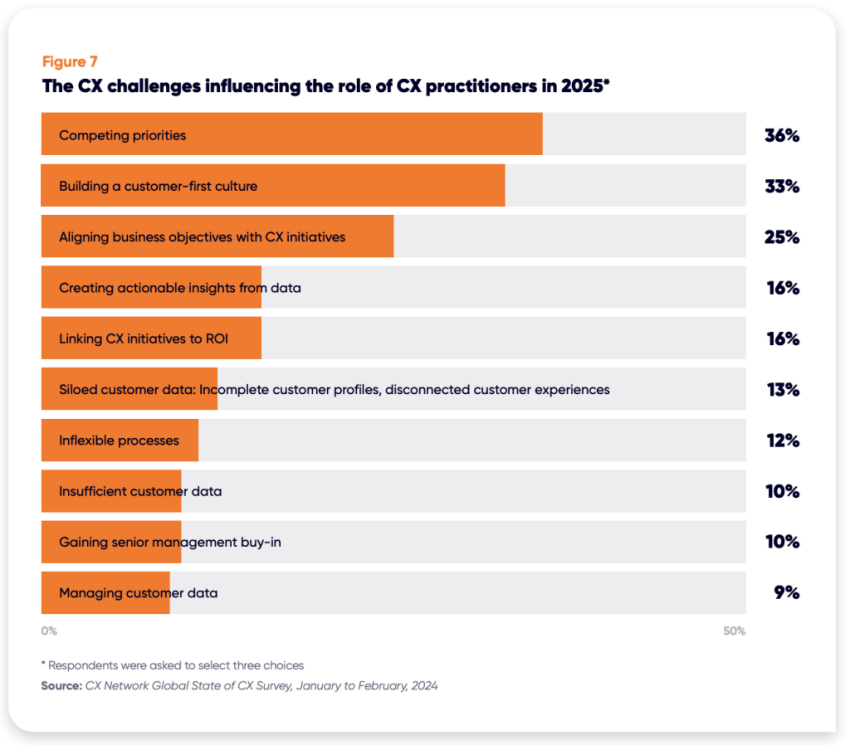
The challenge? Demonstrating return on investment remains the biggest obstacle for nearly 40% of CX leaders, followed by building a customer-first culture (33%), linking CX to the bottom line (25%), and creating actionable insights from data (16%).
How to get it right
The core job of a CX platform is deceptively simple: keep the customer journey coherent regardless of how many teams touch it.
Before you evaluate vendors, move beyond abstract goals like delighting customers. You need to define success in specific, measurable terms. If a platform cannot demonstrably improve key CX metrics like first response time, resolution efficiency, or customer retention, its feature list is irrelevant.
Your goal isn’t just to buy software; it’s to remove the friction that’s currently costing you revenue.
Map where you’re losing customers today. Run a diagnostic before you talk to any vendor. Identify where your current experience fractures:
- Which channels matter to your customer base? Phone support might dominate for enterprise support, while SMS and chat might drive volume for consumer-facing businesses. Don’t build for hypothetical channels. Instead, build for where your customers are stuck right now.
- Where do customers consistently get stuck? Long hold times, missed callbacks, slow email response cycles, bouncing between teams who don’t have context — these pain points reveal your operational gaps more clearly than any feature comparison chart.
- Where does context evaporate? When moving from chat to phone, from support to billing, or from one shift to the next, you can lose information. If your team can’t see the full interaction history in real time, or if they frequently resort to context switching, you’re forcing customers to narrate their stories time and again.
- When does demand spike beyond your ability to respond? After-hours requests, lunch-hour volume, weekend inquiries, post-campaign surges, and seasonal peaks all affect capacity. If you can’t route intelligently or queue effectively during these periods, you’re bleeding revenue and customer retention.
This reality check defines your requirements and exposes whether your current challenges stem from tooling limitations or process gaps.

CX Capabilities That Matter the Most
The market is saturated with platforms claiming to be comprehensive, AI-powered, and cloud-based. But what actually matters when you’re managing thousands of customer interactions weekly?
As per Nextiva’s 2025 CX Trends Report, 96% of respondents say their leadership team sees CX as a key driver of business outcomes, and 67% find it easier to get approval for CX investments today. With the spotlight finally on CX, the right platform choice is more critical than ever.
A true omnichannel experience
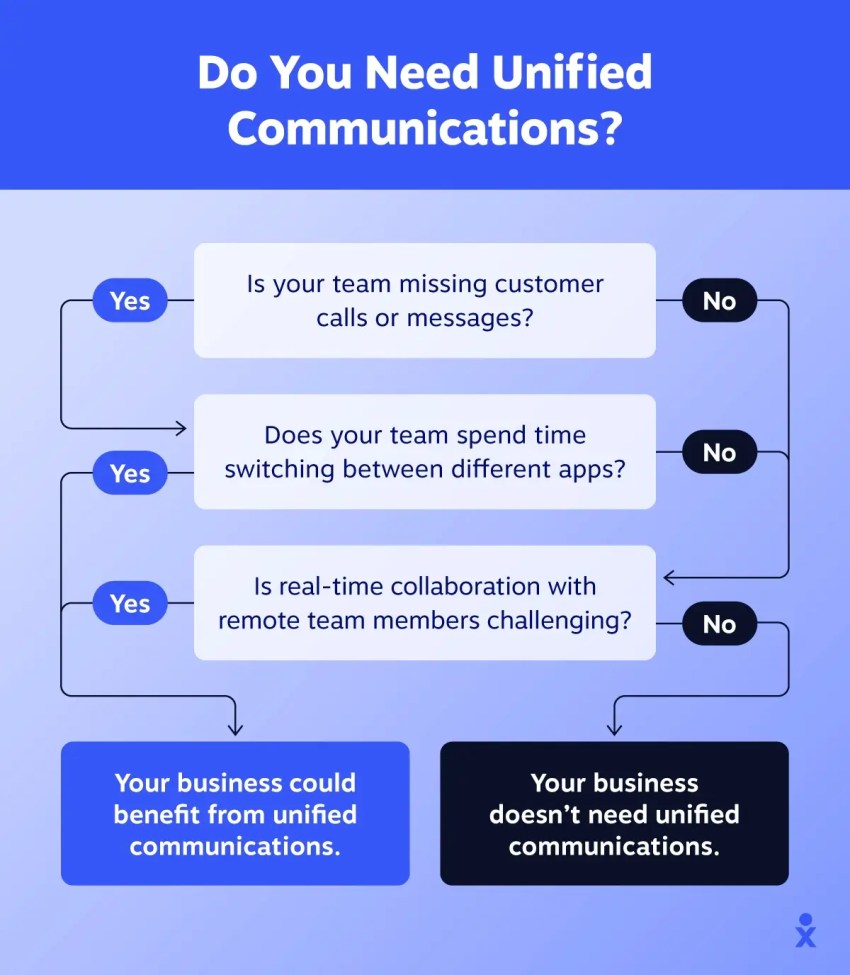
You don’t want multiple channels managed by separate tools with periodic syncs. You need a unified workspace where voice, SMS, email, chat, and social media interactions flow into a single queue, maintaining thread continuity when customers switch channels mid-conversation.
The market has moved past the omnichannel checkbox exercise. Customers don’t care that you offer as many as seven channels if moving between them means they’ll have to retell their story.
Customer service research shows that people now use an average of nine different channels to engage with one company, yet only 7% of contact centers offering multiple service channels have achieved seamless transitions between them. Your team doesn’t need another dashboard to monitor if it can’t surface customer sentiment or actionable insights that will help them change how they respond in the moment.
If your agents are manually copying information between systems, or if customers find it difficult to move between channels, then the omnichannel promise is nothing more than marketing.
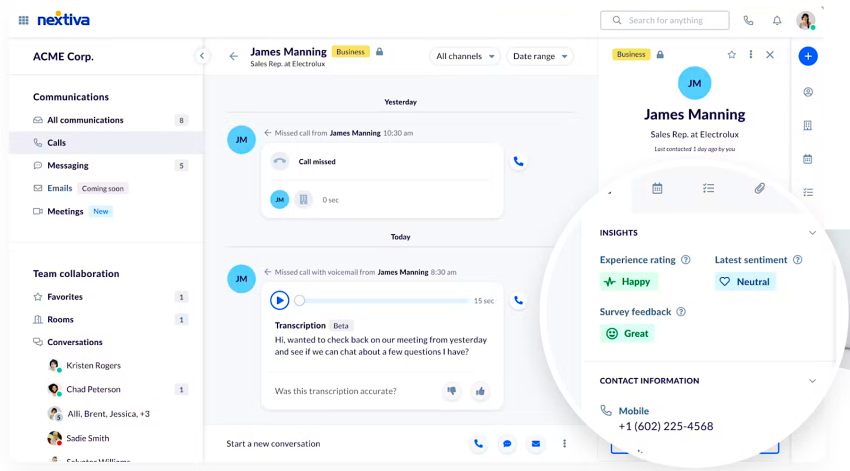
Clean handoffs matter as much as channel coverage. Teams taking over an issue should inherit the complete context — not just conversation transcripts — to deliver exceptional customer experiences.
A unified customer view
Customer data fragmentation kills resolution speed.
Your platform should tie all touchpoints to a single customer record and surface the essentials instantly: identity verification, account status, purchase history, prior cases and their outcomes, open issues, billing state, and contract terms.
This unified view is increasingly critical, as 86% of companies with multiple CX tools report having siloed data, and 70% of marketing leaders struggle with disconnected customer data, preventing them from reaching ideal segments.
The solution isn’t dumping more information on-screen but intelligent summarization. An agent handling a billing inquiry shouldn’t need to scroll through 47 prior interactions. They need to see details like previous billing disputes, the payment method on file, any outstanding credits, and whether this customer has threatened to churn in the past 90 days.
If the platform can’t reliably match customer identity across channels, you’ll likely end up creating duplicate records (and chaos). Duplicate records mean your customer insights are fractured, your reporting is inaccurate, and customers get inconsistent responses depending on which record the agent pulls up.
Routing and queueing that prevent bottlenecks
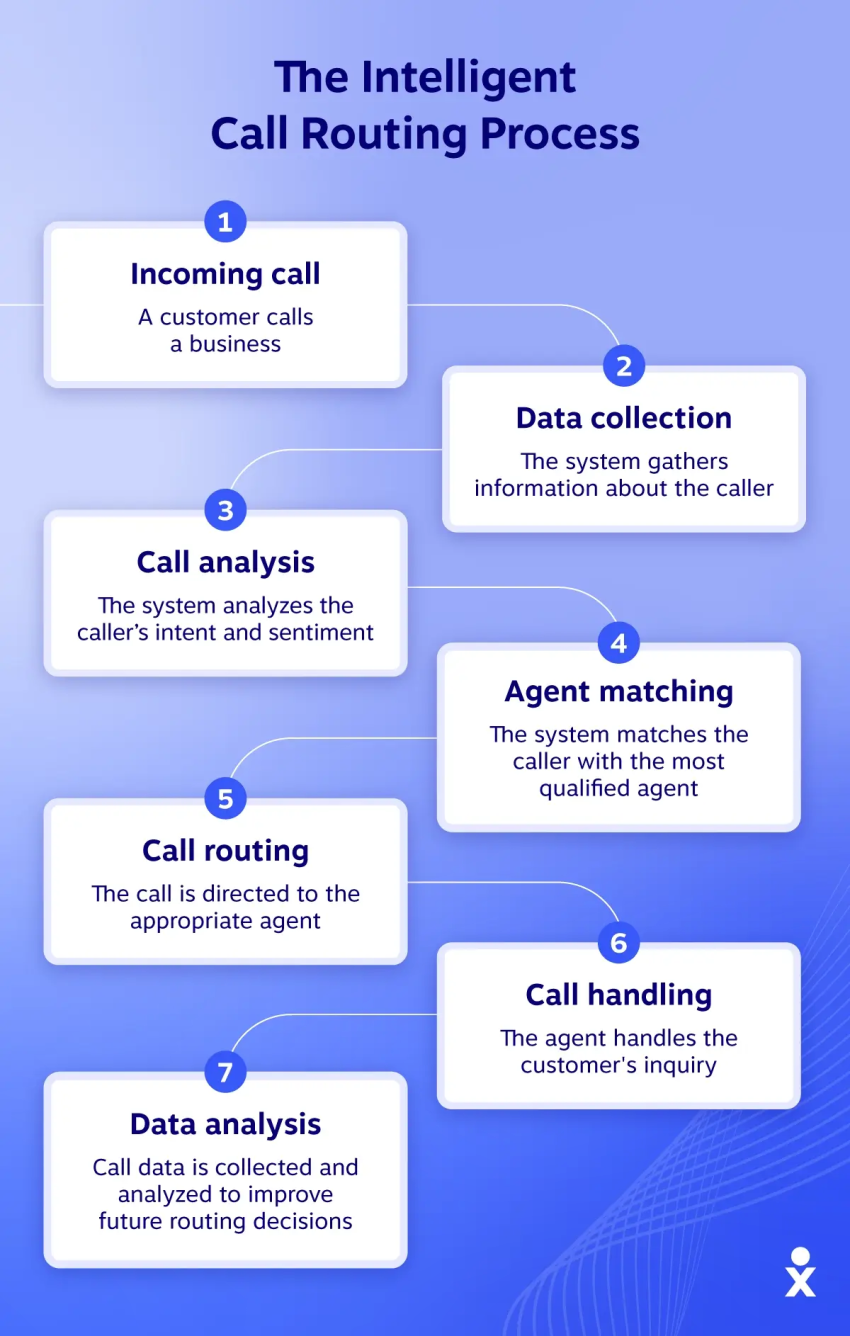
Skills-based routing matches customers to the right team on first contact. Time-based routing ensures inquiries don’t sit unattended when specific teams are offline. Priority routing escalates high-value accounts or urgent issues, while callback options help reduce abandonment during peak periods.
If you’re voice-heavy, intelligent routing is nonnegotiable. Customers who’ve been on hold for eight minutes and then get transferred to the wrong department don’t come back, so your contact center platform should prevent that scenario through intelligent call distribution and real-time queue visibility.
For digital channels, routing determines whether customers get stuck in endless chatbot loops or quickly get human support when AI can’t resolve their issue.
Automation that removes busywork
The best automation runs quietly in the background, eliminating work your team shouldn’t be doing manually.
Auto-tagging categorizes inquiries so reporting reflects reality. Suggested replies surface knowledge base articles or common responses, accelerating handle time. Auto follow-ups ensure customers get status updates without agents manually setting reminders.
Workflow triggers update your customer relationship management (CRM), billing, or inventory platforms when specific conditions are met, eliminating double entry and keeping systems of record synchronized.
AI-powered automation should enhance service rather than replace human judgment.
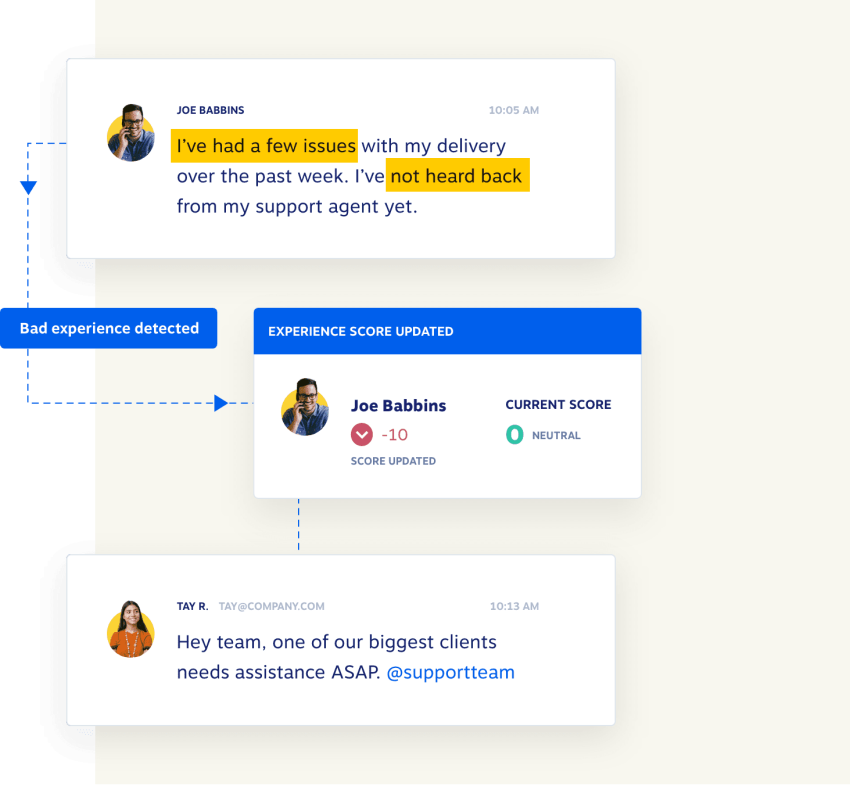
Chatbots that handle FAQs and tier-zero inquiries free agents for more complex problem-solving. Sentiment analysis flags frustrated customers for priority escalation, while predictive routing directs inquiries to the agent most likely to resolve them based on historical patterns.
The numbers validate this approach: 79% of service agents feel AI copilots improve their jobs, largely because automation frees them from routine tasks. Companies implementing AI in their CX strategies see a 25% increase in customer satisfaction.
But automation without guardrails only ends up creating dead ends. Every automated interaction needs a clear path to human support. Additionally, every implementation needs monitoring to ensure the technology is streamlining processes rather than introducing new customer pain points.
Reliable and actionable reporting
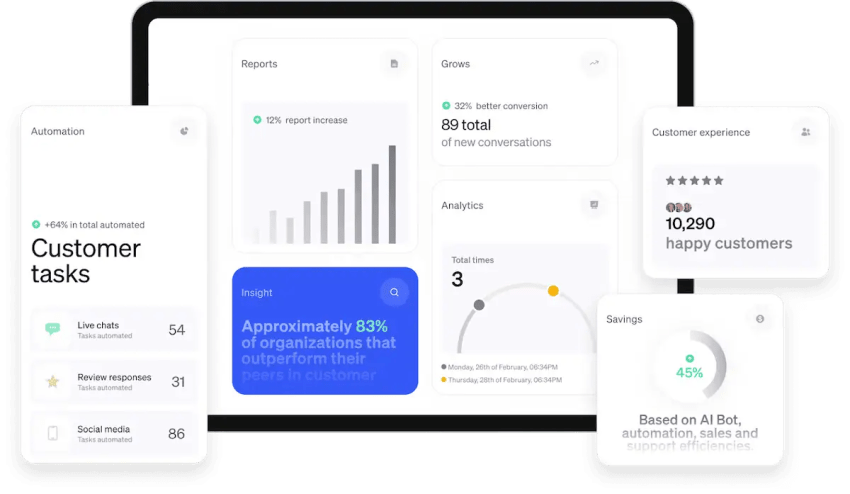
Your CX platform should surface the KPIs that inform operational adjustments:
- Volume by channel and time of day
- Top contact drivers
- Average first response time
- Average resolution time
- First-contact resolution rate
- Deflection and containment metrics for AI-powered or self-service channels
- Staffing adequacy versus demand
Currently, 95% of companies have invested in multiple tools for CX, with 13% using 10 or more tools. However, 81% of brands say CX would be significantly better if they could consolidate all conversations into one system of record. Fragmented tools create fragmented insights.
But raw metrics aren’t enough. You need analytics. Is resolution time improving or degrading? Why are customers leaving, and what can you do about it? Are customers increasingly frustrated with specific workflows?
A good CX platform should also enable cohort analysis. How do customer interactions differ over time? These customer insights reveal where to invest in improving the experience and where current processes already work well.
Integrations that fit your stack
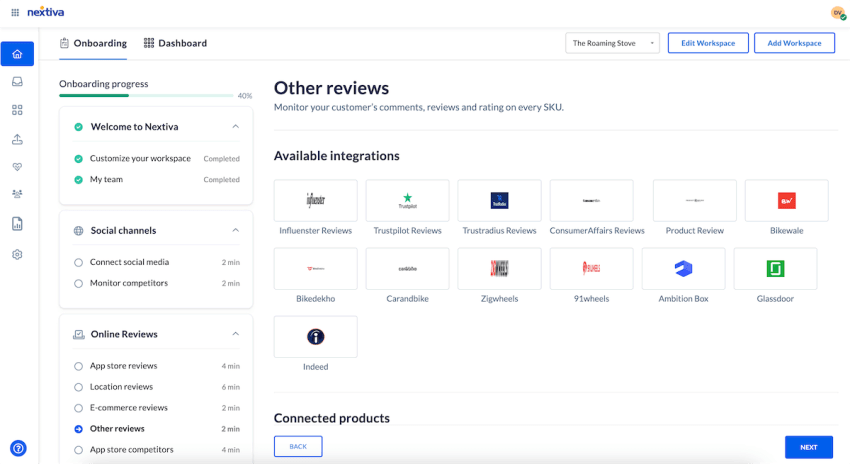
Your CX platform needs to exchange data cleanly with tools like your CRM platform, order management system, billing platform, and marketing automation software. You also have to factor in how a CX platform fits your teams and existing processes.
Around 31% of CX leaders cite integration with existing tools as one of their top three implementation challenges. If integrations are fragile or require constant maintenance, you’ll end up spending more time troubleshooting data syncs rather than improving customer engagement.
Prebuilt connectors to Salesforce, Zendesk, HubSpot, and other commonly used platforms help reduce implementation risks, but you also need flexibility for custom integrations via an application programming interface (API). As your stack evolves, the platform should adapt without requiring a complete rebuild.
Security and access controls
If you handle payments, healthcare data, or operate in regulated industries, your platform needs to support regulatory compliance (e.g., General Data Protection Regulation or GDPR), data residency requirements, role-based access controls, audit trails, and encryption standards appropriate to your risk profile.
Even outside regulated sectors, security gaps create liability. Your CX platform should enforce least-privilege access by default. Agents see what they need for their role, while managers have broader visibility. Meanwhile, admins can control system configuration, and compliance teams can pull audit logs without IT intervention.
Cloud-based platforms offer advantages for scalability and updates, but you need clarity on where data is stored, how backups are managed, and what happens if the vendor experiences downtime.

How to Evaluate a Platform (Beyond a Basic Demo)
Most buying processes optimize for the wrong signal. Teams sit through scripted demos, compare pricing tiers, and score vendors on feature counts. Then they’re surprised when the chosen platform underdelivers in production.
Here’s how to choose a CX platform beyond basic assessments.
Build a simple scorecard
Keep your evaluation criteria focused. Score each vendor on capabilities that drive your desired outcomes, such as:
- Omnichannel workflow quality and the ability for customers to genuinely move between channels without friction
- Unified customer view and identity-matching accuracy
- Routing, queuing, and call handling strength (if voice matters)
- Automation depth and ease of configuration
- Reporting and analytics usefulness
- Integration ecosystem and API quality
- Agent usability and administrative overhead
- Vendor reliability and support quality
Prioritize these categories based on your priorities and goals. If you’re voice-heavy, routing sophistication might carry 25% of the total score. If you’re primarily digital, integration quality might dominate. The scorecard prevents you from overvaluing flashy key features that don’t map to your operational reality and CX strategy.
Run a real pilot
Demos show you what’s possible under ideal conditions with clean data and simple use cases. Pilots show you what happens when real customer interactions flow through the system.
Pick one high-volume workflow to test and measure impact, such as a common support issue type, appointment scheduling and reminders, order status inquiries, or after-hours coverage. Baseline your current metrics for that specific workflow:
- Average response time
- Resolution time
- Customer satisfaction score
- Missed contacts or abandonment rate
- Estimated cost per contact
- First-contact resolution rate
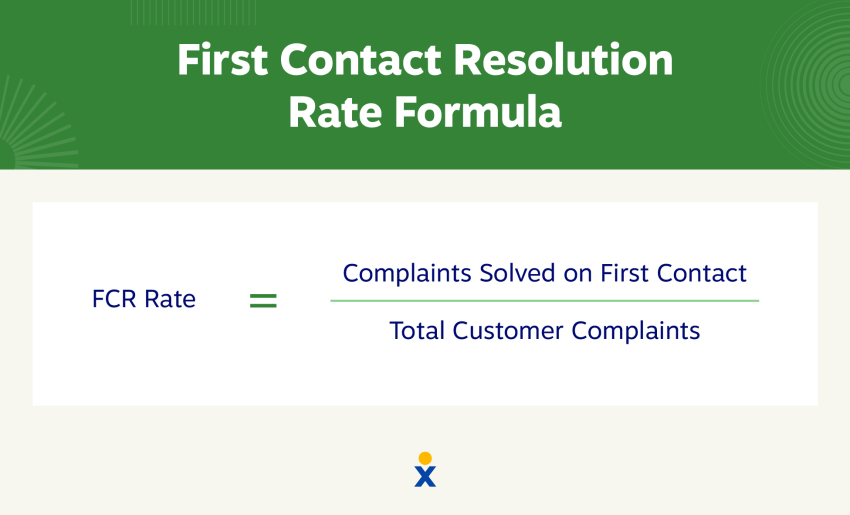
Run the workflow through the pilot platform for 30 to 60 days, and then measure the same key metrics. The differences help reveal whether the platform delivers operational improvement.
It also helps to pay attention to what your team reports. Are agents finding the interface user-friendly? Are workflows reducing manual steps or introducing new complexity? Is the automation helping or creating edge cases that require more intervention?
Watch for hidden costs
Platform subscription fees are just the starting point. Real costs include implementation and onboarding services, integration development, data migration and cleanup, training and change management, ongoing administrative time to maintain workflows, and add-ons for AI capabilities, advanced analytics tools, additional channels, or user seats.
Ask vendors for transparent pricing models that account for your expected growth. Some providers charge per agent or via platform tiers with feature gates. Understand how costs scale as your customer base and support volume expand.
Why Businesses Choose Nextiva as Their Vendor
Some vendors will sell you a vision and then leave you to figure out execution. The pattern looks like this: impressive demos, aggressive sales cycles, weak implementation support, and a customer success team that disappears once the contract is signed.
Nextiva’s approach differs because it came from the communications infrastructure side of the market. It built carrier-grade voice networks before designing CX platforms. That foundation means that reliability isn’t an afterthought but is engineered into the architecture of its CX solutions.
If your business is voice-heavy or you’re trying to unify voice, SMS, and digital conversations into a coherent experience, Nextiva is purpose-built for that challenge. You get a platform where voice and digital channels are native, equally capable, and designed to hand off context seamlessly.
For growing businesses, scalability matters. You don’t want to outgrow your CX platform after 18 months and face another migration. Nextiva scales from small teams to enterprise contact center operations without forcing you into different product tiers that require re-implementation.
Nextiva helps organizations move beyond platforms that overpromise and underdeliver, providing technology that eliminates friction and measures success with key metrics like customer retention, resolution efficiency, and team productivity.
Create an amazing sales and service CX.
Say goodbye to siloed conversations and hello to a unified experience. Engage on every channel with Nextiva’s platform for the best CX.