Customer Experience
 Blog
 Business Communication
 Leadership
 Marketing & Sales
 Nextiva News
 Productivity
 VoIP
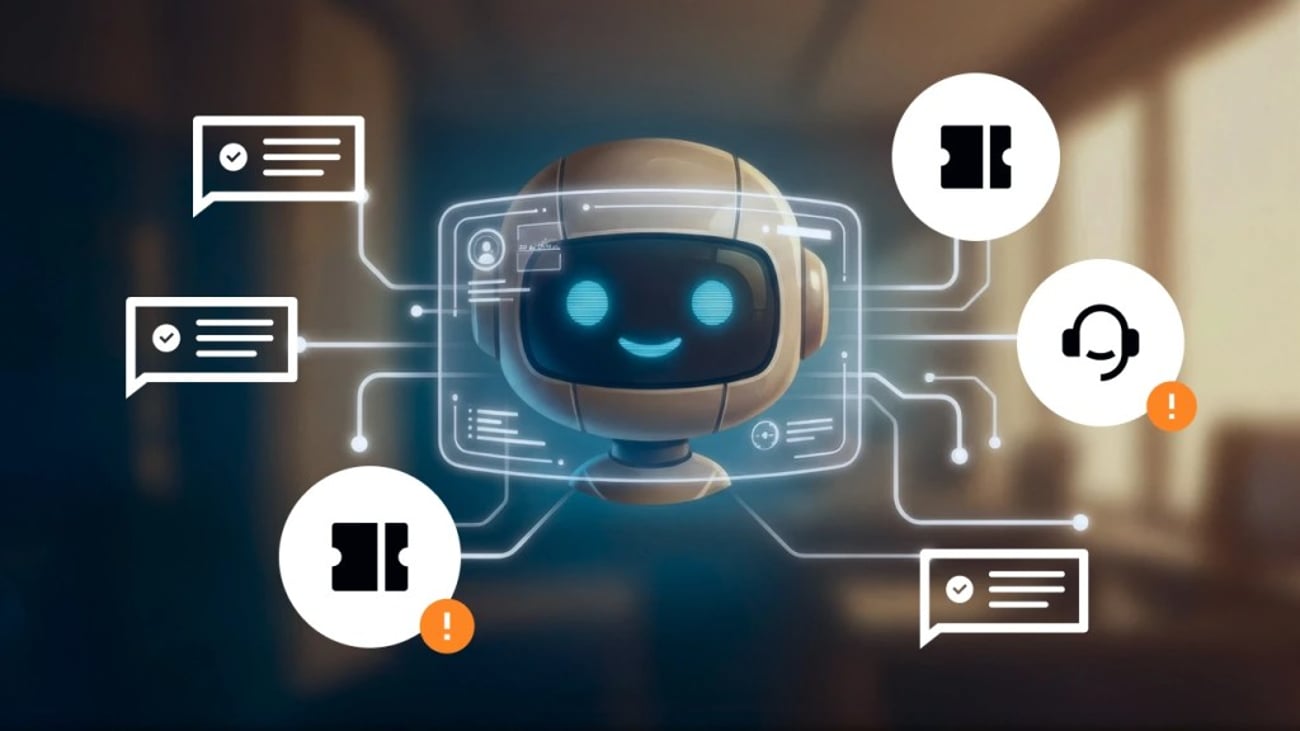

Here’s a truth many contact center managers have been fighting for a while: AI deflection is about routing customer demands to whichever path solves them fastest, not containing customers. Whether through self-service, agent assist, or a human agent, customers want their issue solved as fast as possible.
For years, many businesses measured what have become dirty words: call deflection and containment. This meant tracking how many customers never reached a live agent. A high deflection rate rarely meant customers were happy; often, it just meant the call deflection dashboard looked good.
So what’s the real goal? A strong AI deflection strategy should define which requests automated systems can handle and when to escalate to a live agent, so you know customers are actually getting what they need.
What Is AI Deflection?
The old definition: keeping customers away from agents
The traditional deflection strategy was all about cutting live agent volume. As live agents are the most expensive part of running a customer support operation, keeping them free for complex or emotional queries makes sense.
When agents were busy with other callers, the alternative was to keep customers in a queue or offer a callback. Then came the idea of deflecting calls to a self-service, knowledge base-type bot. Surely this was a win-win for customers, agents, and your bottom line.
In reality, businesses kept customers away from agents because their teams were busy—not because it was the right thing to do, but because those bots could handle the queries.
Many programs still boil their AI deflection rate down to a basic formula: AI-handled contacts divided by total contacts.
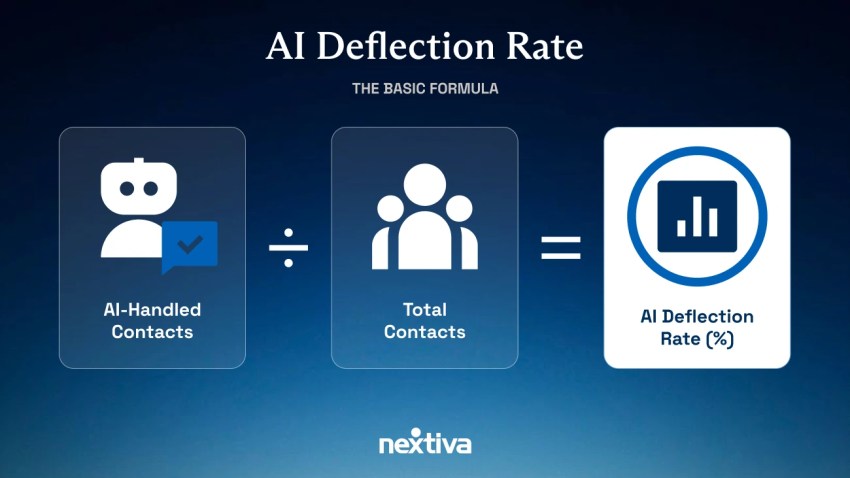
Right or wrong, that’s one of the most common AI deflection rate measures. It treats every self-service interaction the same, whether it solves someone’s problem or not.
Contact center leaders tracked containment and call deflection rates as if either measure proved customer satisfaction. As a result, vendors happily sold self-service software on containment percentages alone. Promises of high containment rates generally benefit CCaaS vendors.
The trouble is that industry benchmarks for a good AI deflection rate get repeated so often that people stop asking what’s behind them. A high deflection rate by itself says nothing about whether customers actually got the help they needed.
This phenomenon has pushed buyers, especially small businesses without a dedicated customer experience team, to judge self-service options on the wrong criteria. And it created a flawed incentive: Teams optimized bot scripts to avoid transferring customer calls rather than helping customers gain value.
None of this makes call deflection a bad metric to track; it’s just incomplete on its own. A rising deflection rate should never be celebrated without checking what actually happened for customers. It’s tracking the method without considering the outcome.
It’s like applying the Average Speed of Answer (ASA) call center metric to a customer retention queue vs. a password reset department. They have entirely different call scenarios, outcomes, and experiences. ASA still matters, but the specific numbers mean different things to these contact center operators.
2027 AI Customer Service Playbook
Get the AI customer service framework, the ROI, and a 90-day plan to put in front of your team.
The new AI deflection definition: routing customers to the right resolution path
A revised approach, forged through monitoring customer outcomes, treats AI deflection as a routing decision rather than a barrier.
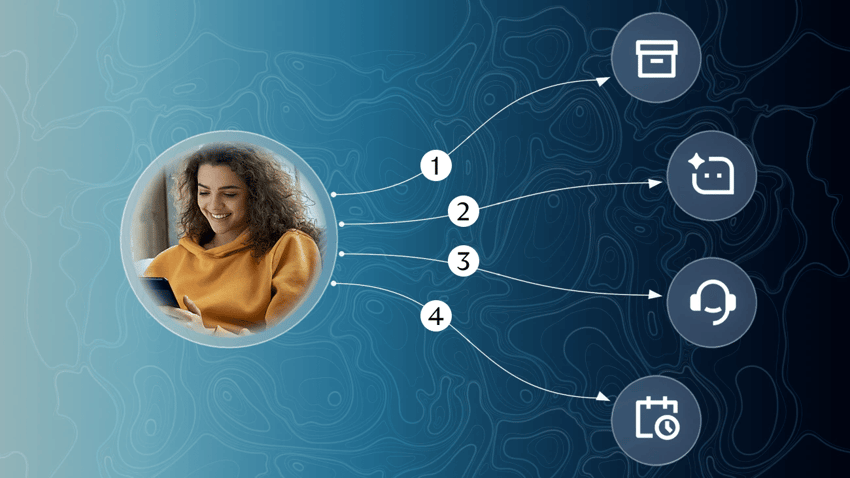
Now we must match each request with whichever resolution path fits it best:
- Self-service for the easy stuff
- A guided workflow for multistep issues
- Agent assist for complicated live conversations
- A live human agent for high-stakes moments
And customers notice the difference right away.
Success here isn’t about how many customers a bot deflected from agents. It’s about pairing deflection rate with true resolution rate, checking the knowledge base and self-serve content against what customers actually needed, and using direct resolution to confirm whether an issue was actually fixed instead of assuming a closed ticket means it was.
A deflection rate isn’t an honest number until you check it against verified resolution and repeat contacts. The best AI deflection programs are risk-based, not rule-based. They ask for clarification when something’s unclear, avoid making someone re-contact days later about the same thing, and only escalate to a person when it’s genuinely necessary.
An earlier 2024 Gartner survey found that only 14% of customer service issues get fully resolved through self-service, even though most people try it first. That gap between attempted self-service and achieving resolution is exactly why resolution rate deserves as much attention as call deflection rate. Customers rarely feel served just because your deflection number looks good.
Why Traditional Deflection Got a Bad Reputation
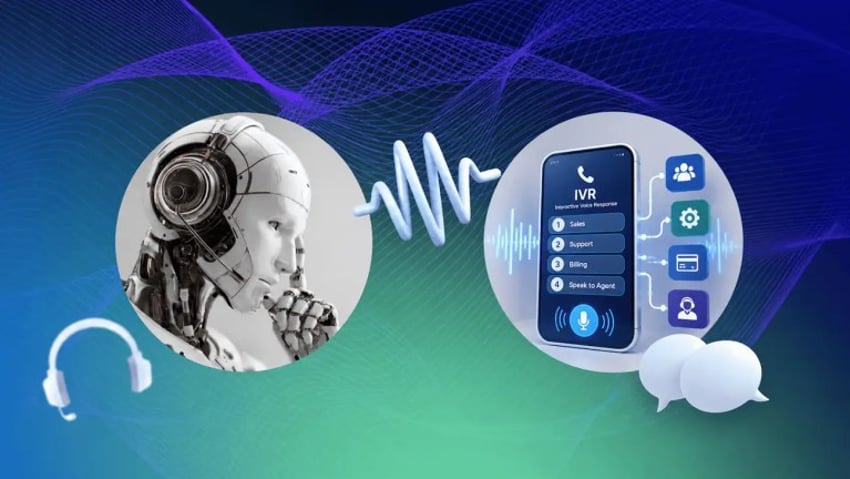
Call deflection got a bad name because we’ve been using it wrong for decades. Long queues, dead-end self-service, and IVR loops aren’t what customers want — not even close. Measuring deflection rates went wrong in three ways:
- Measured avoided calls instead of solved problems: Traditional deflection focused on keeping customers away from agents rather than resolving their issues. Call volumes fell, but repeat contacts, complaints, and customer churn often increased because the underlying problem remained.
- Treated self-service as the destination: Customers don’t mind using self-service when it works. What frustrates them is being trapped in chatbot loops, outdated knowledge bases, or rigid call flows with no simple way to reach a person.
- Optimized contact center metrics ahead of customer outcomes: A deflected interaction isn’t the same as a resolved interaction. First-contact resolution, customer effort, and repeat contact rates are much better indicators of whether your AI strategy is actually helping customers.
Define the Objectives Before You Deploy
A well-defined deflection strategy usually exists to:
- Prevent inaccurate or unsafe guidance, like a bot answering a question it can’t verify.
- Protect confidential account and payment information from exposure and phishing.
- Avoid spreading misinformation about pricing, products, or policies.
- Stay within legal and regulatory requirements instead of making them up.
- Maintain brand trust and customer experience since one bad call can shape the future.
- Keep AI within its intended scope so it doesn’t handle issues it wasn’t designed for.
Writing these down keeps the system consistent as you add new use cases. It also keeps self-service content accurate and protects customer experience as the deflection strategy expands. These quickly become the pillars of your AI deflection system and strategy.
Match Automation to the Level of Risk
Sorting requests into risk tiers instead of “the bot can answer this or it can’t” helps a team spot common failure modes early.
Use the table below to match queries that fall into those risk levels to the types of responses you can automate.
| Risk level | Example requests | System response |
|---|---|---|
| Low | Order status, general FAQs, policy lookups, appointment scheduling | Full self-service resolution |
| Medium | Billing disputes, plan changes, technical troubleshooting, account settings | Answer what it can verify, make it easy to reach a person |
| High | Payment or personal data changes, suspected fraud, or at-risk customers | Decline to act alone, route to a human agent, explain why |
This structure is what makes the self-service spectrum below enforceable, turning high deflection and low risk into rules instead of abstractions.
Set Clear Deflection Triggers
Well-defined triggers name the exact conditions that should cause a system to stop, qualify its answer, or hand off to a person:
- Missing data: Verified, current data that the system doesn’t have.
- Regulated advice: Professional advice the organization isn’t licensed to give.
- Confidential information: Negotiated pricing or another customer’s account details.
- Authority exceeded: An action outside the system’s authority.
- Suspected fraud: Signs of identity fraud or social engineering.
- Manipulation attempt: An effort to make the system override its own instructions.
Naming these triggers explicitly lets a small team test the system consistently and explain its behavior when asked. Everybody knows what’s getting handled by self-service and what’s getting pushed through to live agents.
The Better AI Deflection Model
AI deflection works best as a spectrum rather than a single switch. Sorting customers into the right tier and using AI agents where it makes sense is what separates a mature deflection strategy from a sloppy attempt at call deflection.
A rising deflection rate should always come with a rising resolution rate — not instead of one. A good AI deflection model has four tiers:
- Autonomous resolution: Let AI handle routine, low-risk requests like order status, password resets, and business hours. Resolve these interactions end to end without human involvement, using trusted business data rather than generic answers.
- Guided automation: Use AI to complete multistep workflows while keeping people involved where oversight or approval is needed. This approach speeds up common processes without removing accountability.
- Agent assistance: Keep your agents in control while AI provides customer context, surfaces knowledge, and recommends next steps. This won’t reduce contact volume, but it improves productivity and shortens handling times.
- Human-led support: Reserve complex, high-risk, or emotionally sensitive conversations for your people. AI can assist behind the scenes, but customers should be able to reach a person quickly when empathy or judgment matters most.
Across every tier, measure success by customer outcomes, not deflection alone. Customers don’t care how many calls you avoided. They care whether you solved their problem.
Patterns That Keep Deflection Helpful
A flat “I can’t help with that” just closes the door on customers looking for a real answer. It doesn’t prove helpful or support your long-term key performance indicators.
Better systems lean on a response pattern that looks like this:
- Explain: Briefly state why the full request can’t be handled directly.
- Redirect: Offer an alternative channel, like “I can’t approve a refund over the limit, but I can connect you with a specialist.”
- Clarify: Ask a question before assuming the worst on an ambiguous request.
- Narrow the scope: Answer the safe part of a mixed request, then route to a human.
- Escalate: Hand off with full context so the customer doesn’t have to start over.
Human Support Still Matters
Automation works best by taking repetitive work off an agent’s plate — not by blocking customers from reaching a person. Customers are more forgiving of a human who makes a judgment call than of a system that gives incorrect answers with total confidence.
Harvard Business School Working Knowledge covered research showing AI-supported agents responded faster and with more empathy. That finding supports treating AI as a copilot for an agent rather than a replacement.
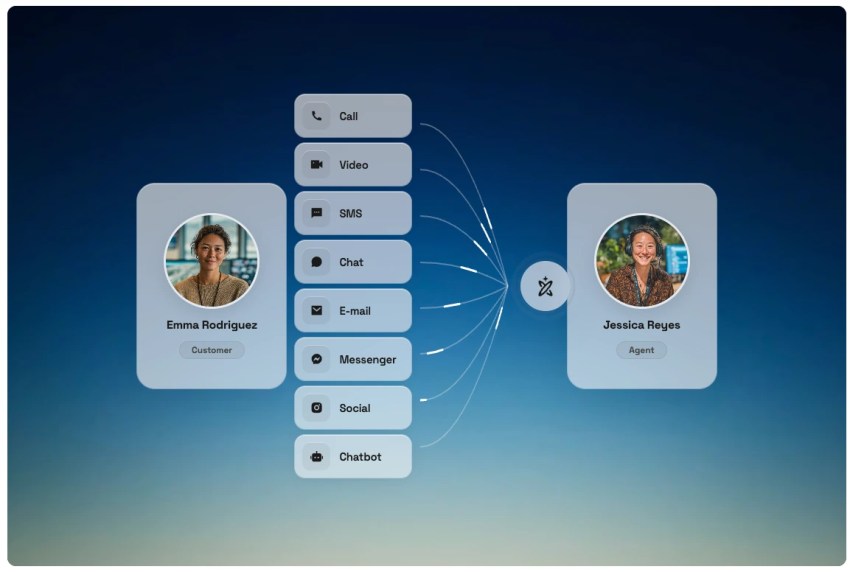
The best use of AI agents in live support is giving your team tools to deliver better service across every channel. This looks like faster account history access and fewer manual lookups. Typical tasks that take humans time because they have to access systems and press keys. An AI system can complete these tasks in milliseconds, letting your human reps focus on what they do best.
Virtual assistants and live agents work best together. Nextiva’s contact center platform helps teams, even lean support staff, manage calls, messages, virtual assistants, and customer conversations across digital channels in one place, giving agents more context when they respond to customer inquiries.
Escalation Paths and Governance
Some situations should never be left to AI agents alone:
- Suspected fraud
- Financial hardship
- Safety concerns
- Anything that permanently changes an account
In these cases, if the call has somehow slipped into an automated response scenario, it must be escalated to a human agent or supervisor. When the handoff happens, it should carry what the customer already asked for and what the backend systems show, with enough detail that nobody has to contact you again about the same issue. Only information relevant to the customer’s issue needs to carry over, and access to backend systems should transfer only when needed.


Contact Center Metrics That Matter
It’s hard moving away from legacy metrics. They’ve always been there, and they’ve stood the test of time. Containment, however, has got to go. Use these instead.
Resolution metrics
Resolution rate, not raw call deflection or deflection rate, is the number worth watching across your whole customer base. Teams that measure resolution catch problems that a pure AI deflection rate would hide.
- First-contact resolution: Issues solved in a single interaction.
- Repeat contact rate: How often the same issues come back a second time.
- Escalation quality: Whether handoffs to a human agent carry full context.
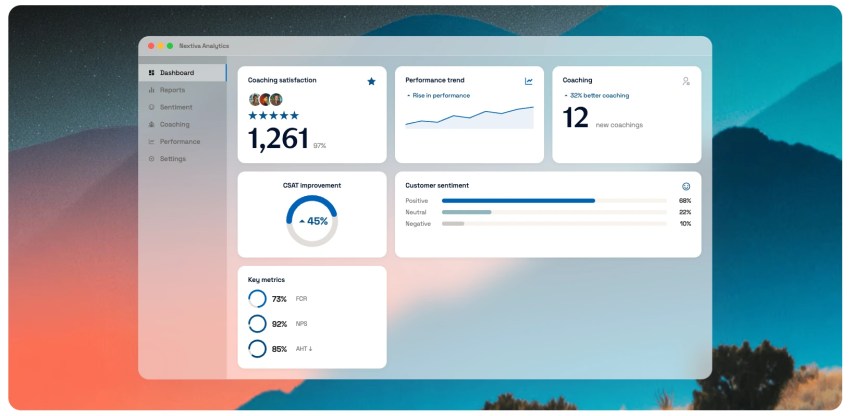
Proactive notifications about shipping delays or billing changes can lower repeat contact rates before customers even reach out, reducing re-contact and protecting resolution rates.
It’s worth building a simple habit here: Measure resolution every month, not just deflection.
Detection accuracy metrics
A high AI deflection rate means very little if your AI is making the wrong decisions. Measuring detection accuracy helps you understand whether your AI resolves issues, escalates the right ones, and protects the customer experience.
- False-positive rate: Requests that AI unnecessarily declines even though it could have handled them safely. This creates unnecessary friction and reduces confidence in self-service.
- False-negative rate: Requests that AI attempts to handle but should have escalated to a person. These mistakes carry the greatest risk because they can lead to poor outcomes or compliance issues.
- Repeat attempts after a decline: Situations where customers immediately rephrase or resubmit the same request after AI says no. A rising number often signals that your AI is being too cautious or failing to understand customer intent.
A high deflection rate alongside a rising false-negative rate is a warning sign that AI is handling conversations it shouldn’t. The best AI deflection strategies balance automation with good judgment, ensuring customers receive the right level of support every time.
Experience metrics
Deflection only creates value if customers feel they’ve been resolved quickly and with minimal effort. Experience metrics show whether your AI is improving the journey or simply moving customers from one channel to another:
- Customer effort score: Measures how easy it was for customers to resolve their issue. Lower effort often predicts loyalty better than faster handling times.
- Satisfaction after a deflected interaction: Tracks customer satisfaction (CSAT) specifically for AI and self-service interactions rather than relying on overall CSAT scores.
- Successful redirection rate: Measures how often customers sent to another channel, team, or agent resolve their issue without unnecessary friction.
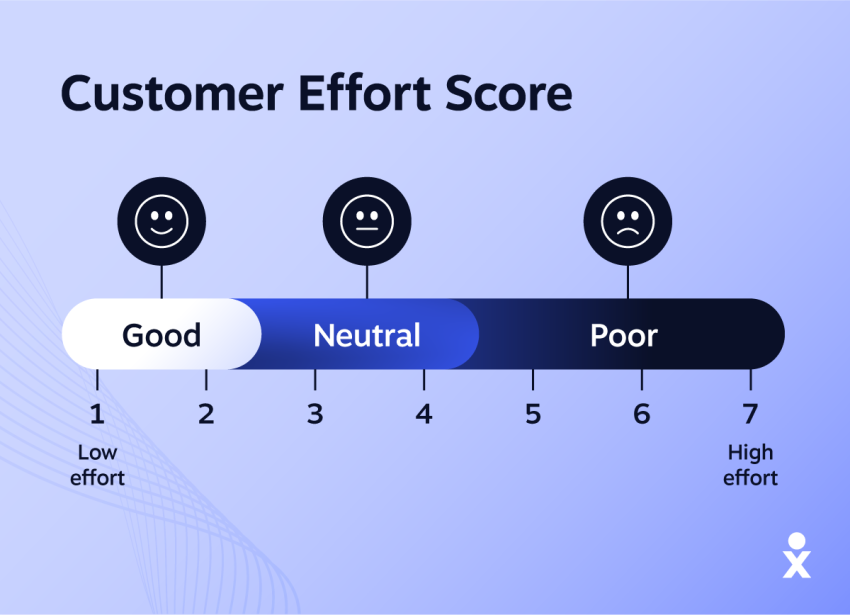
Most customers are happy to use self-service if it gets the job done. What they won’t tolerate is being sent in circles or having to abandon their search because the experience is too difficult. That’s why experience metrics should sit alongside deflection metrics. They reveal whether customers are finding answers or simply giving up.

Operational metrics
Strong AI deflection strategies don’t just improve customer outcomes. They make your support operation more efficient so agents can spend less time on repetitive work and more time where they add the greatest value:
- Agent productivity: Measures how much time your agents spend resolving complex issues versus handling repetitive requests that AI could automate.
- Cost per resolved interaction: Tracks the cost of solving customer problems, not simply reducing contact volumes. Lower costs only matter if resolution rates remain high.
- Policy violation incidents: Monitors interactions where AI crossed internal policies or attempted actions it shouldn’t have taken. These incidents highlight opportunities to strengthen guardrails and reduce operational risk.
To estimate the business value of AI deflection before you build, multiply your monthly contact volume by the share of interactions eligible for AI, your expected AI resolution rate, and your average cost per live interaction, then multiply by 12 for a yearly figure. Using the resolution rate rather than the deflection rate keeps the estimate honest.
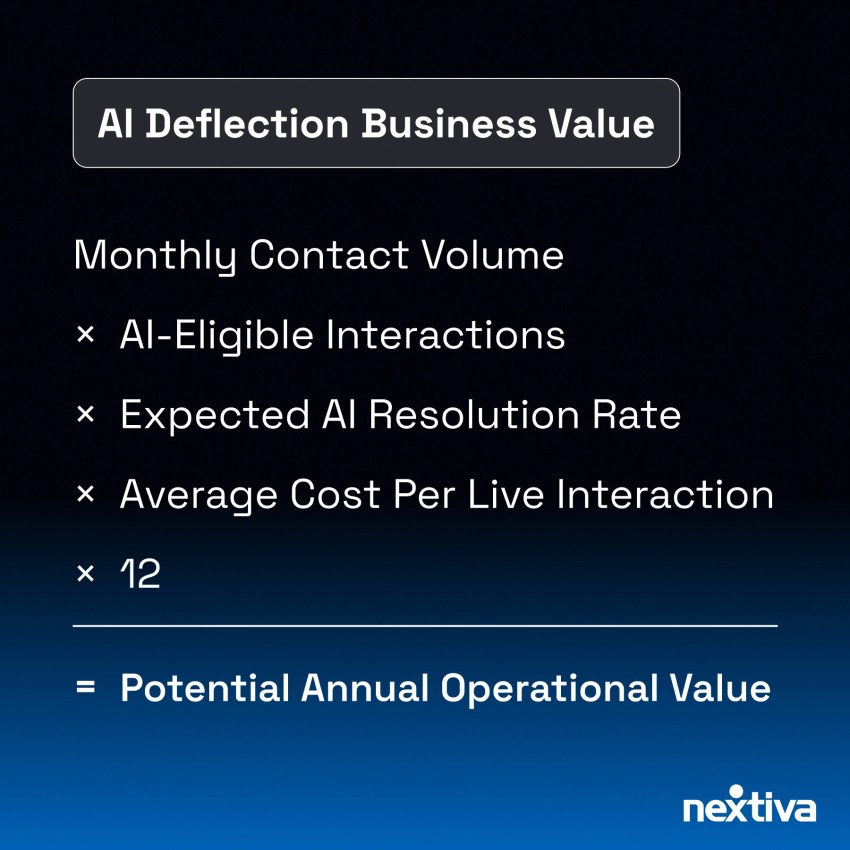
Looking at these metrics together gives you a much clearer picture of how your support operation is performing. Review them alongside your channel mix and resolution rate each month to spot trends early, optimize AI performance, and ensure automation keeps delivering value for both your customers and your team.
Put Your AI Voice Agents to the Test
As every good product or engineering team knows, breaking what you’re building is the most fun part. But it’s also vital to your AI deflection program’s longevity and success.
Build a library of test scenarios, as even well-trained AI voice agents need regular testing:
- Safe requests: Answered fully and immediately.
- Borderline requests: Near a risk threshold.
- Ambiguous requests: Those that should prompt a clarifying question.
- Requests that should be declined: Confirming that the system explains and redirects.
- Manipulation attempts: Where a customer tries to talk the system into an exception.
- Social engineering attempts: Like someone posing as an account holder.
Run this library on a regular schedule, not just once before launch. For the continued safety and optimization of your contact center, conduct some or all of these tests monthly, quarterly, or yearly, depending on your call volumes.
Here’s a deeper look at how attackers could exploit AI-powered phone agents, especially in this emerging industry.

Move Beyond Containment With Nextiva NEXT
AI deflection isn’t about hiding a human agent behind a chatbot or maximizing deflection rate to look good on a dashboard. Well, it has been for the last 10 to 20 years. But that changes now.
A winning deflection strategy is risk-based:
- Automate the routine.
- Assist the complex.
- Protect the moments where human care matters most.
One platform that enables this without a multi-quarter implementation is Nextiva NEXT platform. It’s the perfect blend of contact center performance and unified communications convenience, with AI (NextIQ) applied at the right points to deploy a truly unified customer experience. The single pane of glass for CX is finally here and within reach for every small and medium-sized business.
Looking ahead to 2027
There’s a lot of detail about what to do and what not to do about call deflection. If you take nothing else away from this guide, make sure it’s these five key items:
- Use a risk taxonomy: A tiered structure beats a binary filter.
- Set specific triggers: Clear conditions beat vague judgment calls.
- Design response patterns: Explain, redirect, clarify, narrow scope, and escalate.
- Pair deflection with resolution: A deflection rate is only honest once checked against verified resolution and repeat contact rate.
- Don’t confuse activity with progress: A busy call deflection program can still leave customers frustrated if nobody checks resolution against deflection rate.
Measuring success by whether the customer’s problem actually got resolved, not by call deflection alone, is what separates AI deflection done right from containment dressed up as innovation.
Get the 2027 AI Customer Service Playbook
Sharpen your AI customer support strategy with a 90-day plan for elevating customer outcomes.
FAQs About AI Deflection
AI deflection is routing each customer request to the path that resolves it fastest, whether that’s self-service, a guided workflow, agent assist, or a live agent. The older definition counted how many customers never reached a person. A modern program measures whether the issue actually got fixed, using tools like AI agents for routine requests and people for high-stakes ones.
The basic formula is AI-handled contacts divided by total contacts. On its own, that number treats every self-service interaction the same, whether it solved the problem. Compare it with verified resolution and repeat contact rate, and track first-call resolution alongside it.
Containment counts customers kept away from a live agent. AI deflection, done well, routes customers to whichever path resolves their issue, including a human when needed. A contained interaction can still leave the problem unsolved, which is why resolution and customer effort are better measures.
Escalate when the system lacks verified data, the request needs regulated advice or confidential information, the action exceeds its authority, or signs of fraud or manipulation appear. Suspected fraud, financial hardship, safety concerns, and permanent account changes should always reach a person, ideally through a contact center platform that passes the full context.