
 Customer Experience
  Blog
Blog  Business Communication
  Leadership
  Marketing & Sales
  Nextiva News
  Productivity
  VoIP
VoIP 

It’s 2 p.m. on Tuesday, and your three-person team is fully booked. Two reps are on active calls, and one is in a client meeting. So what happens when the phone rings, and then it rings again? By the time anyone is free, four calls have gone to voicemail. One was a new lead from a Google Ads campaign you’re spending $3,000 per month on.
What happened is they called your competitor instead.
That led to an ad spend of $85 and potentially thousands in lifetime value lost because nobody picked up. The other three? What if they were golden customers, urgent queries, or even worse, complaints?
Overflow answering services ensure every inbound call gets answered, even when your team is at capacity. This guide covers what overflow answering is, the key benefits, how to evaluate providers, the best solutions on the market, and the specific questions to ask before signing a contract.
Try the best AI answering service free for 14 days
XBert AI answers questions and captures leads. Add your 24/7 answering service in minutes.
What Is an Overflow Answering Service?
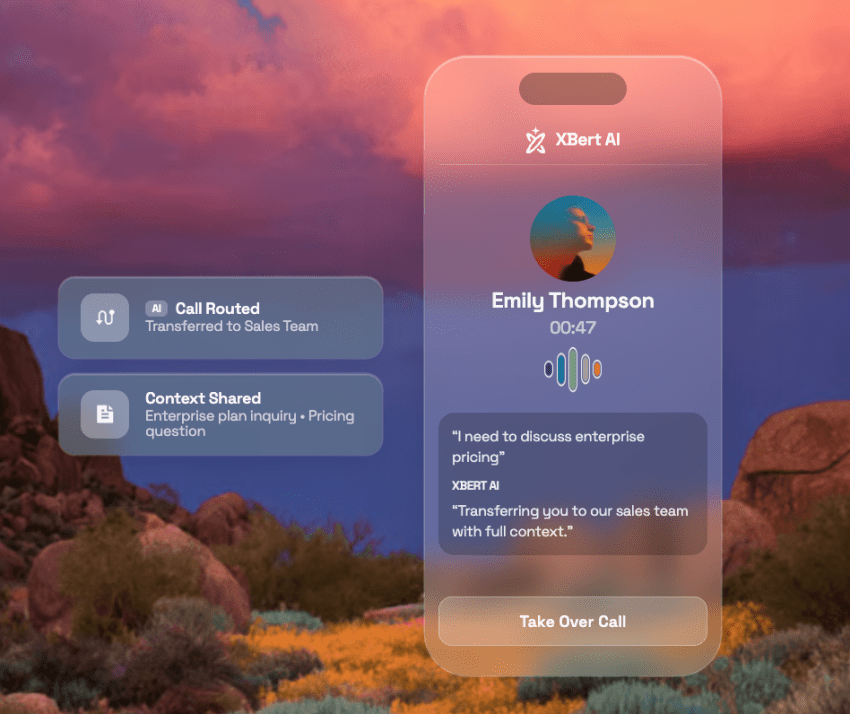
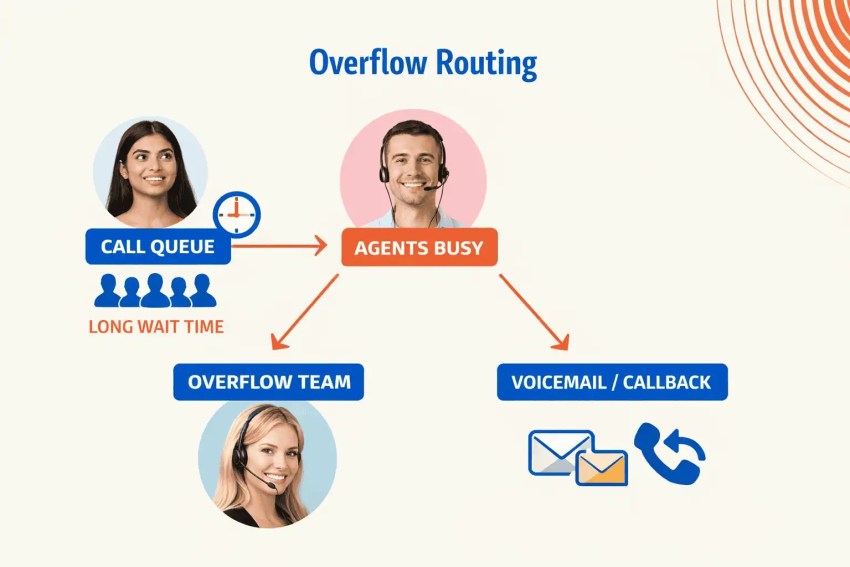
An overflow answering service is a call handling solution that activates when your primary team can’t answer incoming calls. Instead of sending callers to voicemail or giving a busy signal, overflow services route excess calls to a secondary resource. This could be another pool of live agents, an AI receptionist, or a hybrid of both. They answer calls on your behalf, following your scripts, protocols, and brand voice.
- When overflow kicks in: Overflow gets triggered by specific conditions, including all lines busy, ring-no-answer after a set number of seconds, queue length exceeding a threshold, or calls received outside business hours.
- Who answers: Calls may get handled by outsourced live agents, an AI-powered virtual receptionist, or a combination. AI-powered systems use natural language processing (NLP) to hold real conversations, not just route callers through menus.
- What they do: Overflow agents or AI systems can take messages, answer FAQs, qualify leads, schedule appointments, process orders, dispatch service requests, and escalate urgent calls to designated team members.
- How it connects: Most overflow services integrate with your existing phone system or VoIP platform. Call forwarding automatically starts when conditions are met.
- Overflow vs. after-hours: After-hours answering handles calls when your business is closed. Overflow handles calls when you’re open but overwhelmed. Many businesses need both, and the best solutions provide coverage across both scenarios.
Example: You’re a plumbing company with two office staff, and you get 15 calls during a Monday morning rush. But your phones can only handle five calls at a time. The other 10 hit your overflow service and get answered live: no missed calls, more happy customers, and no missed leads.
Why Businesses Need Overflow Call Answering Services
Having managed teams where call volume was unpredictable, the gap between “we answer most calls” and “we answer every call” is where revenue hides. While providing a quick, high-quality customer experience is vital, the financial side is often where the wheels come off. If your contact center becomes a cost center, there’s a real issue.
Let’s take a look at the business case(s) for overflow coverage.
The real cost of missed calls
Studies consistently show that 67% or more of callers who reach voicemail don’t leave a message. Instead, they call a competitor, and you lose the business.
For high-intent industries such as legal, healthcare, home services, and real estate, a single missed call can cost hundreds or thousands of dollars in lost revenue. Marketing spend is wasted when paid leads call, and no one picks up.
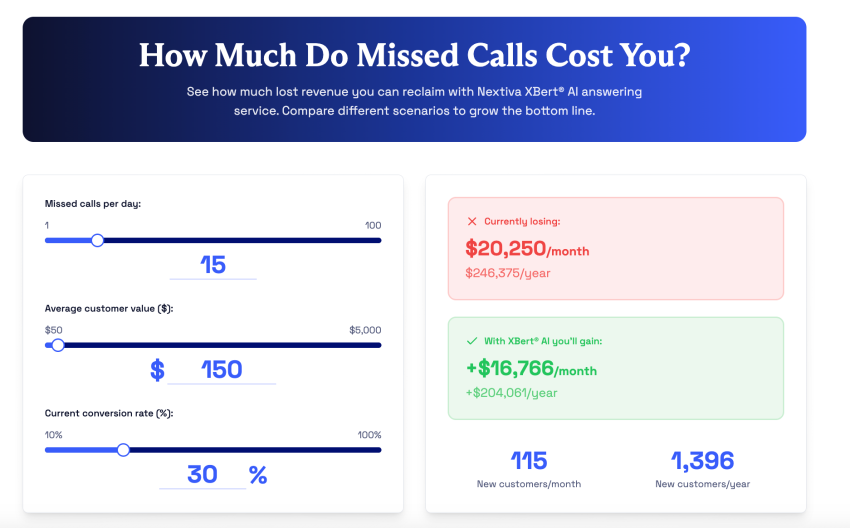
💸 Want to know how much missed calls are costing your business?
Try our free missed call calculator here.
Peak hours and volume spikes
Every business has predictable and unpredictable surges: Monday mornings, seasonal peaks, post-campaign spikes, weather events, product launches, or service outages.
Staffing for peak volume means overstaffing for the rest of the day. Overflow answering gives you surge capacity without permanent headcount.
Customer experience and retention
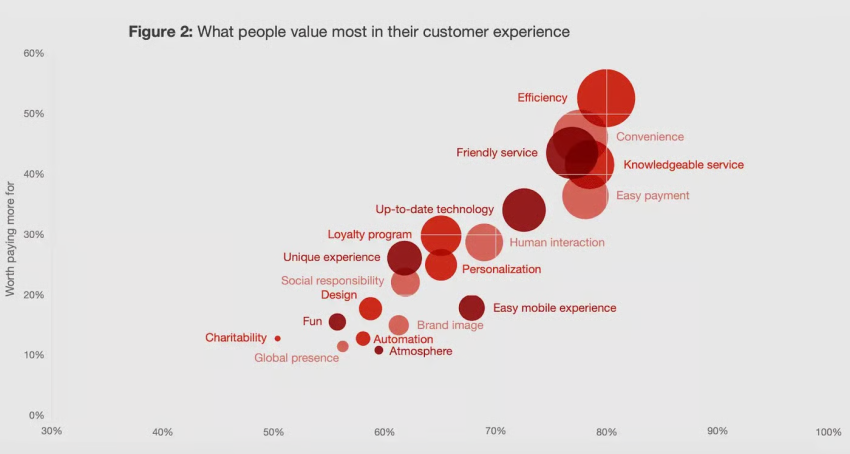
Unsurprisingly, long hold times and unanswered calls are the top drivers of customer frustration and churn. Continuous research shows that the significant majority of consumers will switch to a competitor after just one poor service experience. An unanswered call is the ultimate poor experience.
Overflow answering ensures callers reach a live voice immediately.
Staffing constraints and budget realities
Hiring, training, and retaining full-time, in-house reception or call center staff is expensive. Most small to mid-size businesses can’t justify headcount to cover occasional surges.
Overflow answering converts a fixed staffing cost into a variable, usage-based cost. You pay for coverage when you need it, not when you don’t.
Find out how much you can save with this free AI Receptionist ROI calculator. 👇
How Much Do Missed Calls Cost You?
See how much lost revenue you can reclaim with Nextiva XBert® AI answering service. Compare different scenarios to grow the bottom line.
Key Benefits of an Overflow Answering Service
No unmissed calls
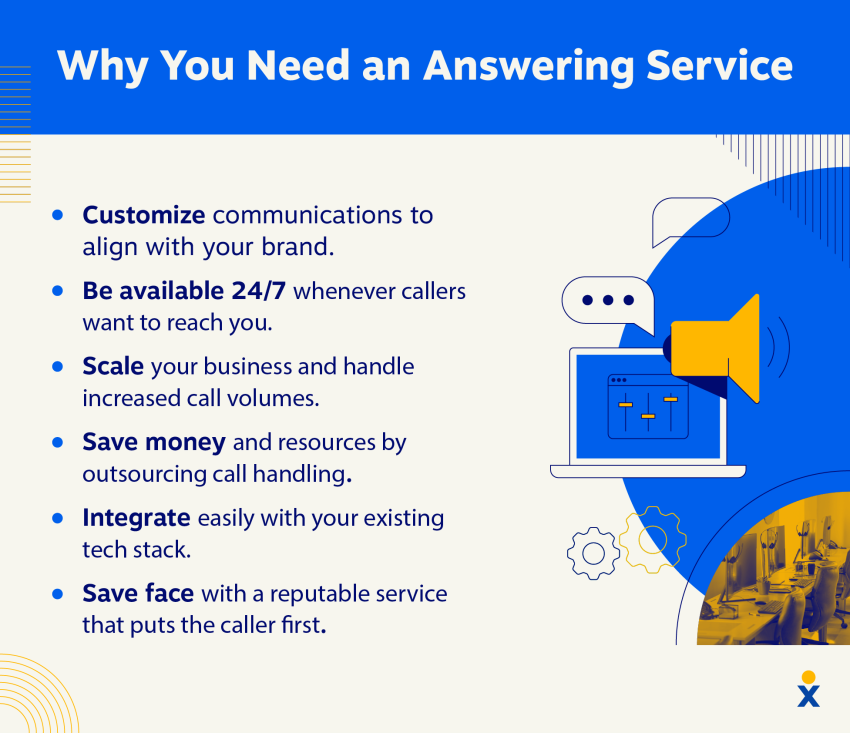
Every inbound call gets answered live, regardless of how busy you are, with no message taking, no busy signals, and no abandoned callers. You protect ROI by capturing leads generated by marketing campaigns at the point of highest intent.
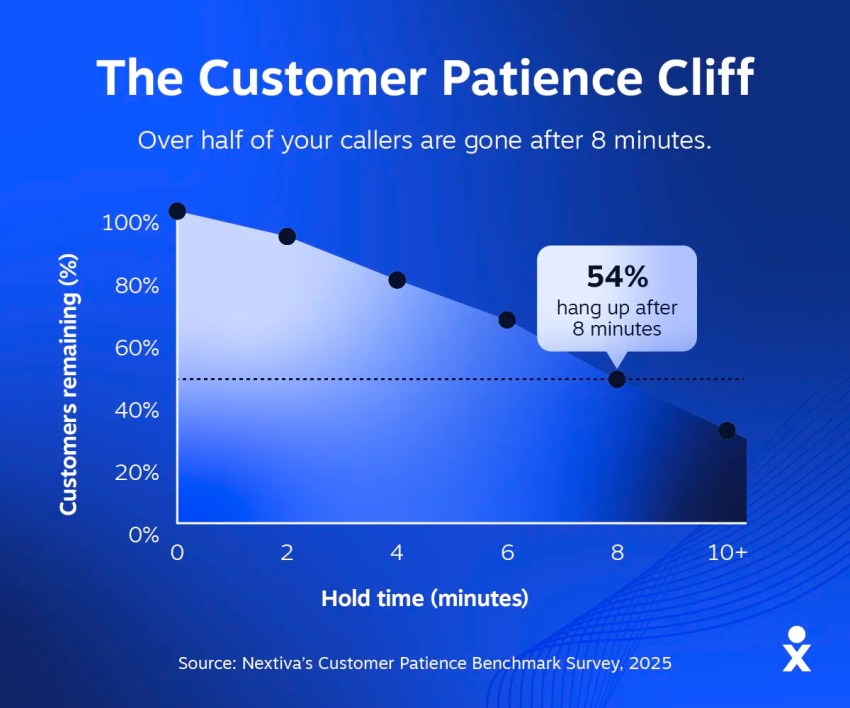
Reduced hold times and abandonment
You eliminate the queue backup that causes callers to hang up. Phone calls get routed to available overflow agents or AI, keeping wait times near zero. Low abandonment rates translate directly to more conversations, more conversions, and higher customer satisfaction scores.
Consistent caller experience
Well-configured overflow services answer in your company’s name, follow your scripts, and maintain your brand voice. Callers can’t tell they’re speaking with an external resource. For AI tools, you can choose to let customers know they’re speaking with a service, not a human.
Natural-language conversations resolve issues or capture information without rigid menus or scripted responses.
Scalability without headcount
You can scale call capacity up or down instantly based on demand, with no hiring, no training, and no overhead. It’s ideal for seasonal businesses, fast-growing companies, or any organization with variable call volume.
Cost efficiency
Pay-per-use pricing means you only pay for overflow minutes or conversations when you need them. This represents a fraction of the cost of a full-time receptionist or additional staff.
Overflow solutions reduce costs further by handling routine inquiries without any human involvement.
Better data and insights
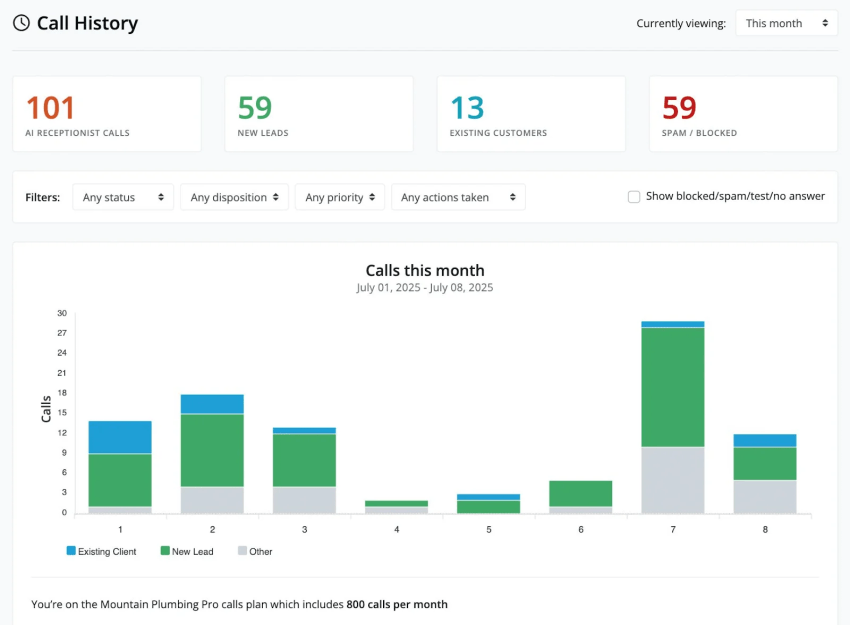
Modern overflow services log every call, generate transcripts, capture caller details, and feed data into your CRM or analytics dashboard. Get insight into call volume patterns, peak hours, common inquiries, and conversion rates with no more guessing what you’ve missed when calls go to voicemail.
Hear why XBert AI is the best AI receptionist
XBert AI receptionist handles customer questions, captures leads, and books appointments. Try it free for 14 days.
Types of Overflow Answering Services
Choose from a pool of live, outsourced agents, totally AI-powered agents, or a mix of the two. The table below covers the key differences between each type of overflow answering service available.
| Feature | Live Agent Overflow | AI-Powered Overflow | Hybrid (AI + Live) |
|---|---|---|---|
| How it works | Calls routed to outsourced human agents | AI receptionist answers using NLP | AI handles routine calls; humans handle complex ones |
| Availability | 24/7 (staffing dependent) | 24/7 (always on) | 24/7 (always on) |
| Personalization | Script-based | CRM-aware, context-driven | CRM-aware with human empathy |
| Scalability | Limited by agent pool | Unlimited concurrent calls | AI scales; agents flex |
| Cost model | Per minute or per call | Flat rate or per conversation | Blended pricing |
| Best for | Complex or sensitive calls | Routine inquiries, lead capture, scheduling | Businesses needing both depth and efficiency |
| Set-up time | Days to weeks | Minutes to hours | Hours to days |
Live agent overflow
Agents from an outsourced center answer overflow calls following your scripts and protocols. They provide a human touch and can handle nuanced, emotionally sensitive, or complex interactions.
Limitations include:
- Reduced cost-effectiveness due to higher per-minute fees
- Quality variability between agents
- Limited scalability during extreme surges
- Setup that requires training agents on your business
AI-powered overflow
An AI receptionist or virtual agent answers overflow calls using natural language processing technology. It can greet callers, answer FAQs, capture leads, book appointments, and route complex issues — all in a conversational, humanlike interaction.
Advantages include:
- Unlimited concurrent call capacity
- Instant setup, consistent quality
- Lower cost per call
- Continuous learning that improves over time
Limitations of AI-powered agents may include not handling highly emotional or ambiguous situations as well as a trained human agent.
Hybrid (AI plus live agent)
AI handles routine overflow calls and escalates complex or sensitive calls to a live agent with full context. This model gives businesses the cost efficiency and scalability of AI with the empathy and judgment of human agents for high-stakes interactions.
Top Overflow Answering Service Providers in 2026
1. Nextiva (Best overall for AI-powered overflow)
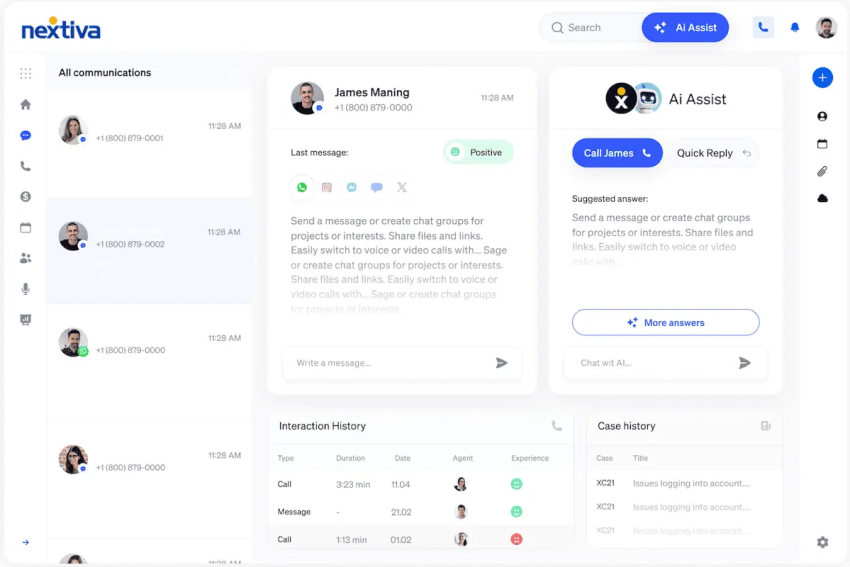
Nextiva combines AI-powered overflow answering with a full unified communications and contact center platform.
You get voice, SMS, chat, video, and CRM integration in a single pane of glass. Instead of bolting on a separate answering service, overflow intelligence is built into your platform.
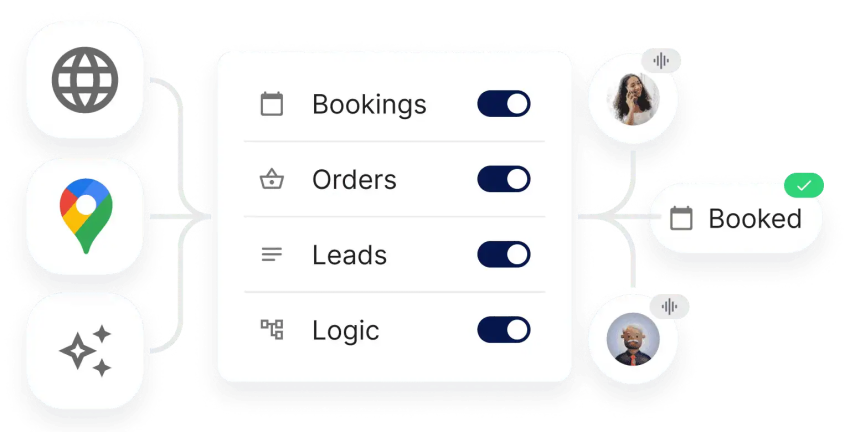
- XBert AI receptionist: XBert answers overflow calls 24/7 using natural language AI. It greets callers, answers common questions, qualifies leads, books appointments, and routes complex inquiries to live agents with full context.
- Built-in call routing and overflow: Nextiva’s call center platform includes configurable overflow routing. You can set time thresholds, number of rings triggers, and fallback actions so your business calls get automatically routed when your team is at capacity.
- Unified platform: Use the NextivaONE app for voice, video, SMS, and team messaging. Then use the contact center mobile app for AI-powered customer conversations across every channel. You reduce vendor sprawl while improving customer service.
- Contact center capabilities: Apply intelligent call routing, agent assist, workforce engagement, real-time analytics, and omnichannel queue management.
- Scalability: Whether you’re a solo practitioner or an enterprise contact center, there are no line caps, no geographic restrictions, and high uptime.
- Pricing: TheBusiness Phone Core plan starts at $15 per user per month, the Engage plan starts at $25 per user per month, the Scale plan starts at $75 per month, and XBert AI Receptionist starts at $99 per month, all billed annually. Contact Center pricing is available on request.
- Best for: Businesses of any size that want AI-powered overflow answering built into a unified communications platform, not a separate vendor relationship to manage.
2. Smith.ai (Best hybrid AI plus live receptionist)
Smith.ai offers a hybrid model combining AI overflow call handling with North America-based live receptionists.
AI screens and qualifies calls, then your live answering service steps in for complex conversations.
- Key features: Lead screening and intake, appointment scheduling, bilingual support (English and Spanish), CRM integrations with Salesforce, HubSpot, Clio, and others, along with custom call scripts and warm transfers. Additional fees may apply for some features.
- Pricing: Human-first answering starts at $300 per month for 30 calls. Per-call pricing (currently $11.50 per call) applies after the included volume. AI-first answering starts at $95 per month for around two calls per day. Setup fees may apply.
- Limitations: There’s a higher per-call cost compared to AI-only solutions. It’s not a full phone system or UCaaS platform (you still need a separate business phone provider). Pricing can scale quickly for high-volume businesses.
- Best for: Law firms, professional services, and businesses that need human judgment for intake or sensitive conversations but want AI efficiency for routine calls.
3. Goodcall (Best AI-only overflow for small teams)
Goodcall is an AI-powered phone agent that answers calls, handles inquiries, and captures leads using conversational AI.
It’s designed for small businesses that want always-on coverage without live agents.
- Key features: AI call answering, automated lead capture, appointment scheduling, call summaries, and SMS follow-ups. Goodcall constantly highlights its strong integration with Google, among other CRM tools and scheduling platforms.
- Pricing: Starts at approximately $79 per month for the Starter plan. Higher tiers include the Growth and Scale plans.
- Limitations: There are limited advanced call routing features. Goodcall isn’t a full unified communications platform, so larger businesses may struggle when scaling and introducing new, disparate tools.
- Best for: Very small businesses that want affordable AI overflow coverage without the complexity of a full contact center platform.
4. Slang.ai (Best for restaurants and hospitality)
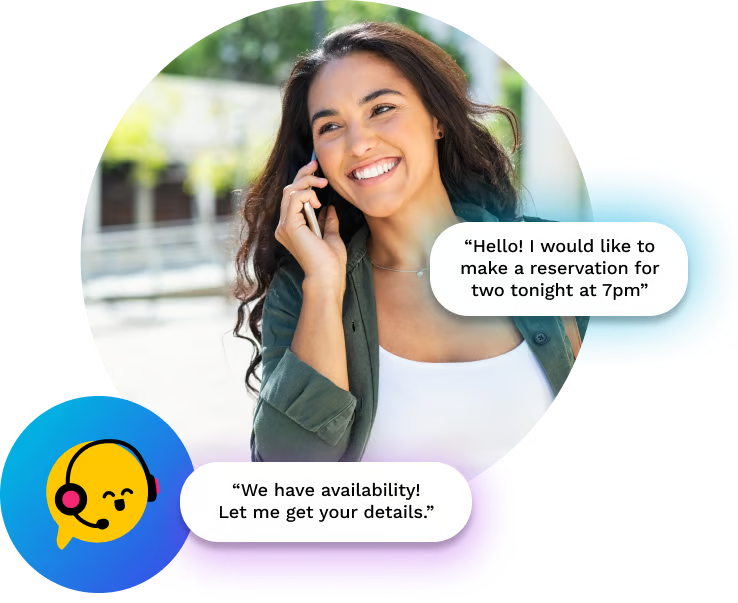
Slang.ai is an AI-powered virtual phone agent purpose-built for restaurants, hotels, and hospitality businesses. It answers calls, handles reservations, answers menu and hours questions, and reduces front-of-house phone burden.
- Key features: Hospitality-specific functionality like AI reservation handling and customizable responses for menus, hours, and specials. You also get a real-time analytics dashboard and integration with reservation platforms.
- Pricing: The Core plan is $399 per month, and the Premium plan is $599 per month. The Enterprise plan has custom pricing based on business size and call volume.
- Limitations: As Slang.ai is designed for the hospitality industry, it’s not compatible with general business use. Slang is not a UCaaS or contact center platform, so you must add a new service to your existing setup.
- Best for: Restaurants, hotel front desks, and hospitality businesses with high call volumes.
5. Phonely.ai (Best for healthcare and appointment-heavy businesses)
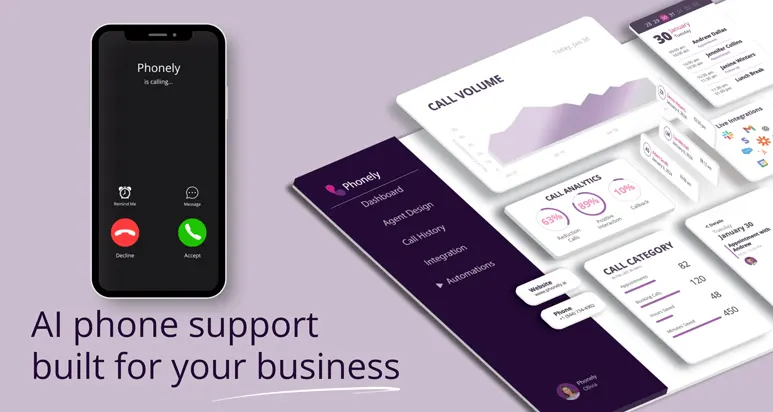
Phonely.ai is an AI receptionist for healthcare providers, dental practices, and other appointment-driven businesses.
It handles patient calls, schedules, and reschedules appointments, and provides pre-visit information.
- Key features: HIPAA-compliant call handling, AI-powered appointment scheduling, patient intake, insurance verification support, and EHR/EMR integrations.
- Pricing: Free plans are available with 100 free minutes or 50 calls (whichever comes first). The Starter plan is $33 per month for 250 minutes or 100 calls, and the Professional plan is $99 per month for 750 minutes or 300 calls. Custom pricing is available for larger businesses.
- Limitations: Phonely.ai’s focus on healthcare and government organizations offers limited applicability for general business use. It’s not a full unified communications platform and therefore needs to be overlayed on top of existing infrastructure.
- Best for: Medical practices, dental offices, and healthcare organizations that need HIPAA-compliant AI for appointment scheduling.
Overflow Answering Providers: Side-By-Side Comparison
Want to review the best overflow answering service providers? We made this side-by-side comparison to help you shortlist your favorite two in line with your business requirements.
I have also called out some key takeaways below the table.
| Feature | Nextiva | Smith.ai | Goodcall | Slang.ai | Phonely.ai |
|---|---|---|---|---|---|
| Overflow model | AI and live agent escalation | Hybrid (AI and live) | AI-only | AI-only | AI-only |
| Starting price | $99 per month (XBert AI) | ~$300 per month | $79 per month | ~$399 per month | Free (50 calls or 100 minutes) |
| 24/7 coverage | Yes | Yes | Yes | Yes | Yes |
| Lead qualification | Yes | Yes | Yes | Limited | Limited |
| Appointment scheduling | Yes | Yes | Yes | Yes (reservations) | Yes |
| CRM integration | Native and Salesforce, HubSpot | Salesforce, HubSpot, Clio | Google, CRM tools | Reservation platforms | EHR/EMR systems |
| Full UCaaS platform | Yes (NextivaONE) | No | No | No | No |
| Contact center | Yes | No | No | No | No |
| Uptime SLA | Strives for 99.999% | Not published | Not published | Not published | Not published |
| Omnichannel (SMS, Chat) | Yes | Chat add-on | SMS follow-ups | No | No |
Key takeaways when evaluating overflow answering services
- Nextiva is the only provider on this list that delivers AI-powered overflow answering within a full unified communications and contact center platform. Every other option requires a separate business phone system and a standalone phone answering service.
- Smith.ai offers the strongest hybrid model with live human agents, but at a significantly higher per-call cost and without a built-in phone or UCaaS platform.
- Goodcall is the most affordable AI-only option. But it lacks advanced routing, contact center features, and live agent escalation.
- Slang.ai and Phonely.ai serve specific verticals well but are not general-purpose overflow solutions.
- Only Nextiva strives for 99.999% uptime.
Questions to Ask Before Choosing an Overflow Answering Service
When you’ve shortlisted your final two or three providers, choosing the best one comes down to your niche requirements, budget constraints, and your gut feeling when interviewing them.
Below, we’ve prepared some templated questions for you to use and alter as you see fit.
Pricing and cost structure
- How are you billed — per minute, per call, per conversation, or flat rate?
- What counts as a call or conversation?
- Are there setup fees, minimum commitments, or long-term contracts?
- What happens when you exceed your included volume?
- What is the overage rate?
- Are after-hours and weekend calls billed at a different rate?
Coverage and availability
- Is the service truly 24/7/365, or are there coverage gaps on holidays or overnight?
- How quickly does overflow activate when your lines are busy?
- Is the trigger configurable (ring count, queue length, time in queue)?
- Can you set different overflow rules for business hours, after hours, weekends, and holidays?
Caller experience and quality
- Will callers know they’re speaking with an overflow service, or is the experience branded to your business?
- Can you customize scripts, greetings, and call handling protocols?
- If AI-powered, how does the system handle accents, background noise, and complex phrasing?
- Can it escalate to a human without friction?
- What quality assurance processes are in place?
Integration and data
- Does the service integrate with your existing phone system, CRM, scheduling tool, and helpdesk?
- How are call details, messages, and leads delivered?
- Do you get access to call recordings, transcripts, and analytics?
- Can the overflow service push data into existing workflows automatically?
Scalability and flexibility
- Can the service scale to handle sudden surges?
- What is the maximum concurrent call capacity?
- Can you adjust the plan or coverage up or down without penalty?
- Is the service limited to voice, or does it support SMS, chat, and other channels?
Security and compliance
- Is the service HIPAA-compliant, PCI-DSS certified, and SOC 2 audited?
- How is caller data stored, encrypted, and retained?
- Who has access?
- What data residency and privacy protections are in place?
To make your life easier, Nextiva checks every box. From enterprise-grade security and configurable overflow triggers to CRM integration, full analytics, and flexible plans, you can get set up quickly without committing to a long-term contract.

How Nextiva Powers Overflow Answering for Modern Businesses
If you’re looking for an all-in-one solution that combines all your communication channels with an overflow service that ensures you never miss a call, here’s how Nextiva can help.
XBert AI receptionist
XBert handles overflow calls 24/7 using conversational AI. It answers calls in your brand’s voice, qualifies leads, books appointments, captures caller details, and routes complex inquiries to your team with full context.
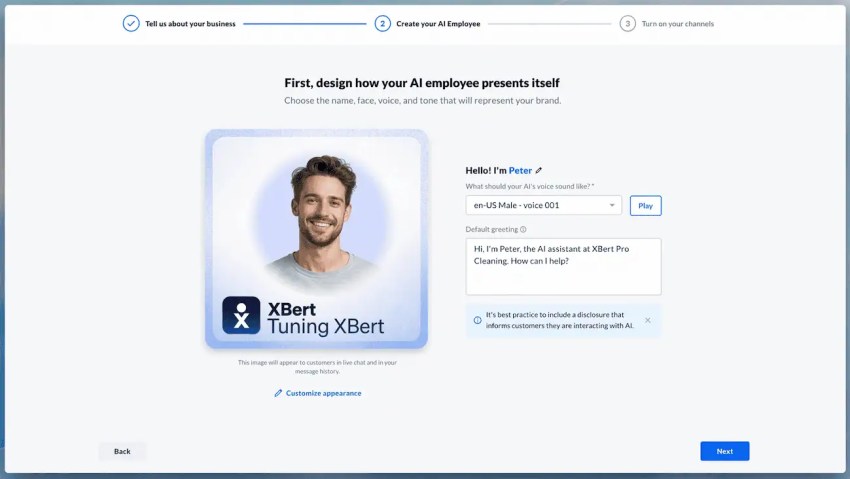
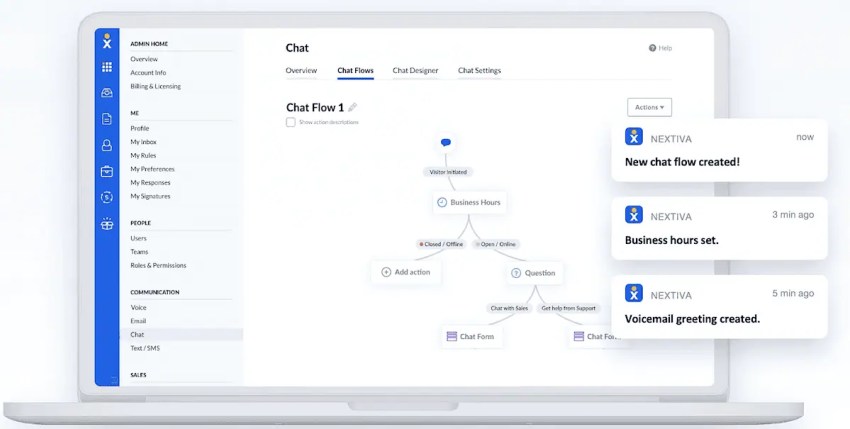
Configurable overflow routing
Nextiva’s call center platform lets you define overflow triggers (ring-no-answer time, queue length, time-of-day rules) so calls get routed automatically to XBert, a secondary queue, or an external number when your team is at capacity.
Unified platform
Nextiva unifies voice, SMS, chat, video, social media, and CRM integration in a single system. You can reach overflow callers who need follow-up via SMS, email, or callback, all from the same platform.
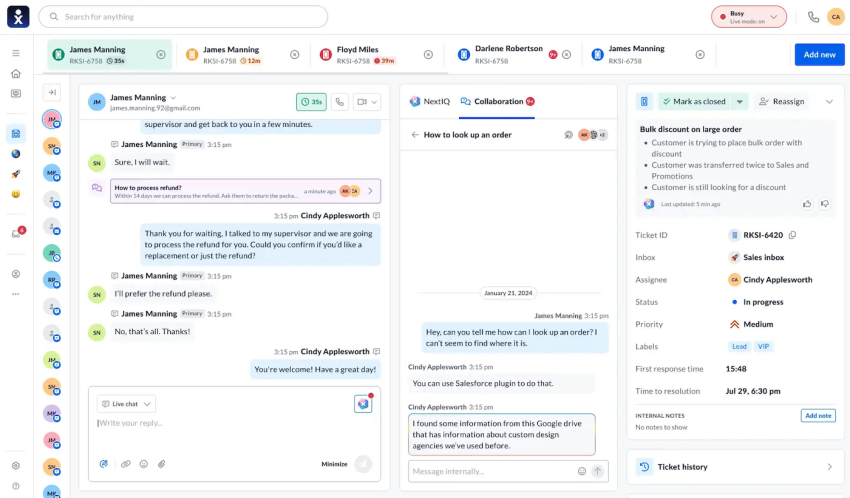
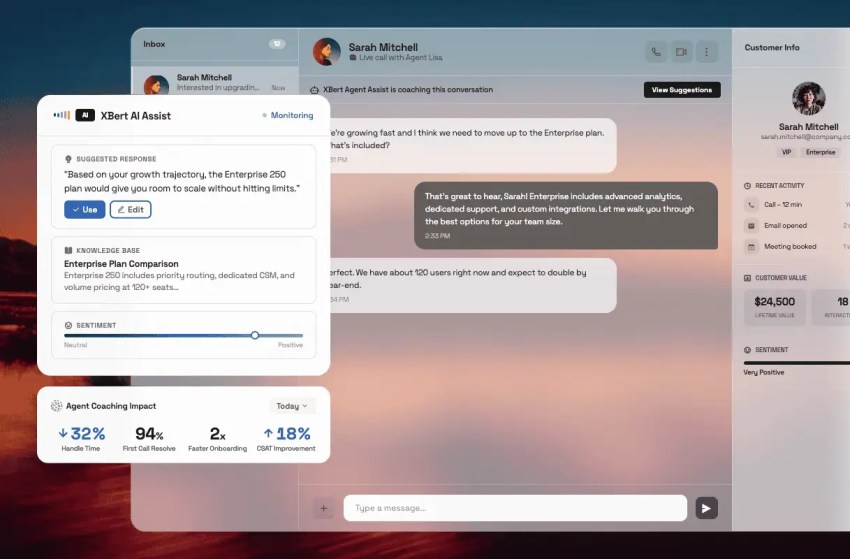
Agent Assist and contact center
For businesses with dedicated support teams, Nextiva’s contact center includes intelligent call routing, real-time agent assist, workforce engagement management, and omnichannel queue management.
Analytics and reporting
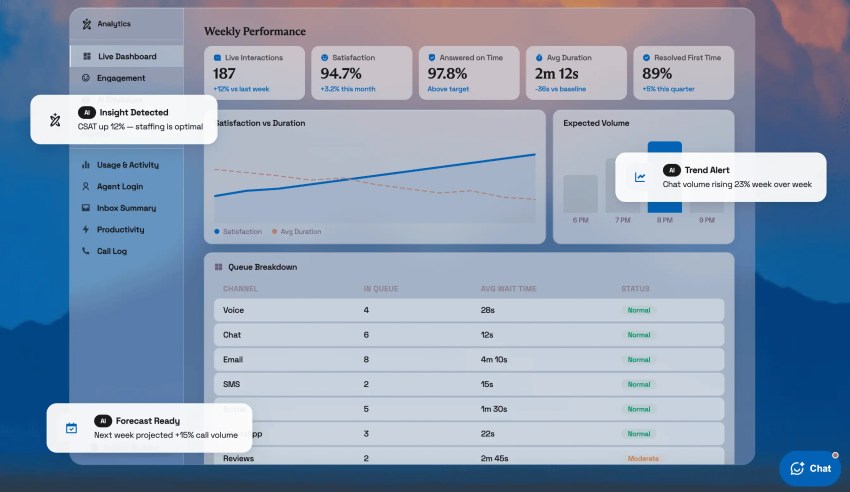
Track overflow call volume, resolution rates, lead capture, appointment bookings, and caller satisfaction in a single dashboard. Identify peak hours, common inquiries, and coverage gaps with data instead of guessing.
Enterprise-grade reliability
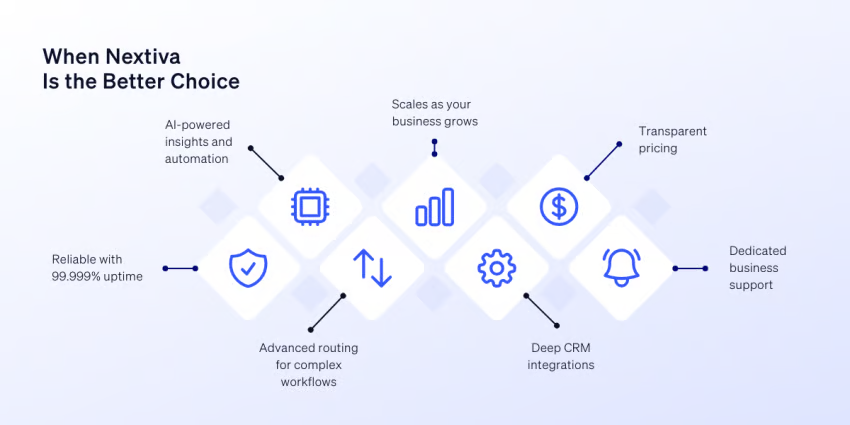
Nextiva offers high uptime, is HIPAA compliant, and SOC 2 certified. As the answering service is built on the same infrastructure as the unified comms and contact center platforms, it’s designed for businesses that can’t afford to miss a call.
Every Unanswered Call Is a Missed Opportunity
A lost lead, a frustrated customer, or a revenue gap that grows invisibly — these are common problems real contact centers face every day. Overflow answering services exist to close that gap.
In 2026, we’re at the inflection point where AI-powered solutions make it possible to answer every call without adding headcount or managing a separate vendor relationship. AI is no longer a possibility but a very real (and powerful) help when it comes to defining customer experience.
The question is no longer “Is AI ready?” but “Which AI solution best fits my business?”
Having evaluated overflow solutions across multiple business environments, the most effective approach isn’t bolting on a standalone answering service. Rather, it’s building overflow intelligence into your communications platform.
That is what Nextiva delivers. You get AI-powered overflow, configurable routing, unified communications, and contact center capabilities in a single system.
Nextiva’s XBert AI receptionist starts at $99 per month and handles overflow calls 24/7. It answers questions, books appointments, and routes complex inquiries to your team.
See how Nextiva can help you never miss a call — talk to an expert today.
XBert is the best AI receptionist for small businesses
Greet customers, book appointments, and capture leads 24/7.