
 Customer Experience
  Blog
Blog  Business Communication
  Leadership
  Marketing & Sales
  Nextiva News
  Productivity
  VoIP
VoIP 

Phone calls remain one of the primary ways patients contact healthcare providers for appointments, prescription refills, billing questions, and urgent concerns. These conversations often involve protected health information (PHI), including names, dates of birth, insurance details, and medical information.
Any system that answers, records, routes, or stores those calls must align with HIPAA requirements. Yet many organizations still rely on voicemail, manual forwarding, or basic answering services that do not meet healthcare compliance requirements.
A HIPAA-compliant answering system helps standardize call handling while supporting the administrative, technical, and physical safeguards required under federal law.
Try the best AI answering service free for 14 days
XBert AI answers questions and captures leads. Add your 24/7 answering service in minutes.
What Is a HIPAA-Compliant Answering System?
A HIPAA-compliant answering system is software that automates the handling of inbound patient calls while protecting PHI as required by the HIPAA Privacy Rule and Security Rule.
Operationally, it answers calls, captures messages, routes requests, and stores call data while applying administrative, technical, and physical safeguards to protect PHI. The system’s role is primarily to provide communication management and to replace voicemail, basic interactive voice response (IVR), and manual after-hours coverage. It is not meant to give out diagnoses, triage decisions, or clinical guidance.
I often describe these systems as digital front desks rather than call centers. They take on the repetitive, time-sensitive interactions so medical professionals can focus on follow-up and patient care without sacrificing compliance.
Why You Need a HIPAA-Compliant Answering Service
A common misconception is that any answering service becomes HIPAA compliant simply by signing a BAA. In reality, vendor oversight is one of the most frequent sources of HIPAA noncompliance exposure.
The threat landscape has shifted. Hackers are no longer just attacking hospitals; they are targeting the software ecosystems that healthcare organizations rely on.
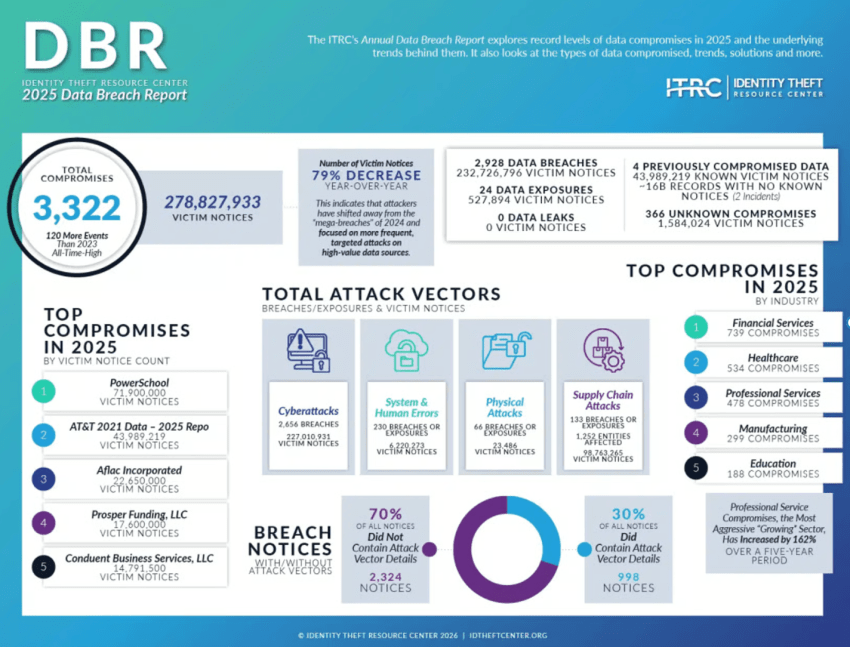
- Targeted attacks: The 2025 ITRC Data Breach Report noted a record 3,322 data compromises in the U.S. While mega-breaches are down, precise, automated attacks on high-value data repositories — like answering service databases — are at an all-time high.
- The shadow AI threat: A new risk identified in the 2026 Horizon Report is shadow AI. This occurs when staff use non-compliant, consumer-grade AI tools for transcription or call summarization. A compliant answering system eliminates this risk by providing these tools within a secure, encrypted environment.
The cost of non-compliance
The U.S. Department of Health and Human Services (HHS) adjusts HIPAA penalties for inflation annually. As of January 2026, the financial stakes for a data breach or improper call handling have reached new highs.
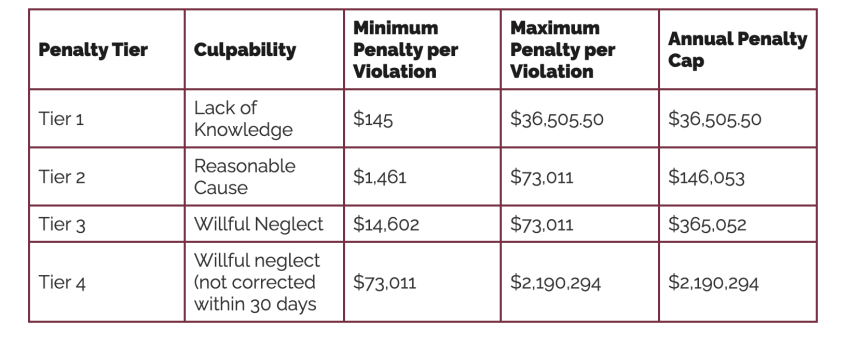
Even unintentional mistakes — categorized as “Lack of Knowledge” — now carry heavy burdens and can trigger fines starting at $145 per record, while cases of willful neglect that go uncorrected now face a maximum annual penalty cap of $2,190,294.
The HIPAA Journal provides an overview of the current HIPAA penalty structure, which is divided into four tiers. Tier 4 penalties are for violations due to willful neglect.
Source: HIPAA Journal
In 2025 alone, the Office for Civil Rights (OCR) intensified its Risk Analysis Initiative, specifically targeting vendors and business associates that fail to conduct thorough security audits. This highlights that a signed BAA is only the first step; the technical architecture of your answering system must be provably secure.
Federal guidance from the U.S. Department of Health and Human Services (HHS) makes it clear that covered entities are responsible for ensuring their business associates actually implement appropriate safeguards.
Real-world risk emerges in these situations:
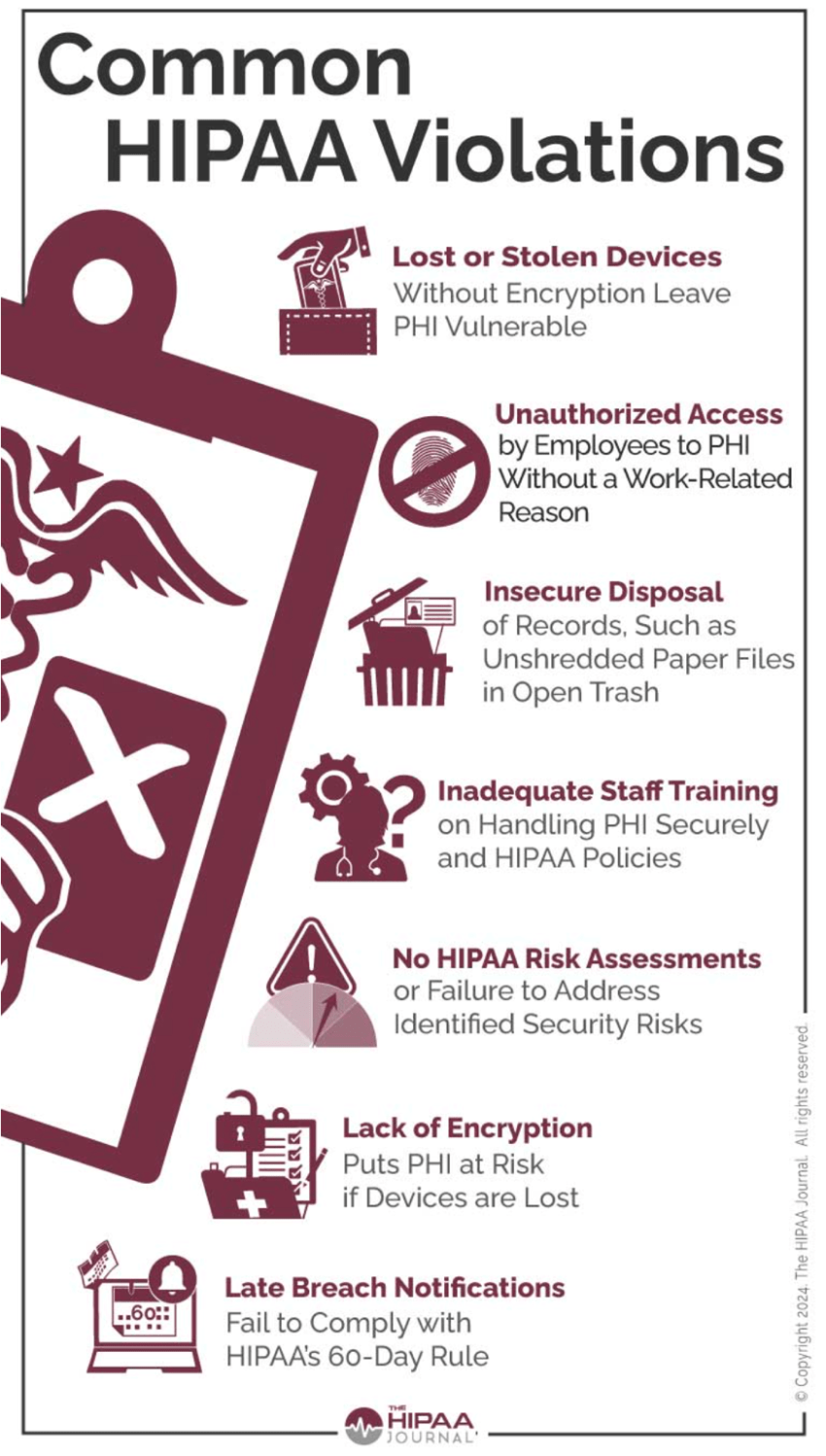
- Calls forwarded to personal phones risk moving PHI to unmanaged devices.
- Voicemails stored on consumer cloud platforms lack healthcare-grade privacy and security controls.
- Messages sent via email or text without encryption create exposure during transmission.
A properly implemented, HIPAA-compliant system is designed to:
- Answer incoming calls consistently during business hours and after hours
- Capture call intent without collecting unnecessary PHI
- Route calls or messages based on schedules, roles, and urgency
- Store call records, messages, and transcripts securely
- Provide controlled, role-based access for staff
Healthcare organizations adopt these systems as replacements for voicemail, basic IVR menus, or manual call forwarding. Those legacy tools were not built with healthcare compliance in mind. They often lack encryption, granular access controls, and audit logs, all of which are critical during compliance reviews and incident response.
Key Benefits of HIPAA-Compliant Answering Systems
The transition to a compliant, AI-driven answering system offers healthcare practices many benefits, including:
- Elimination of burnout: Removes the human fatigue risk, ensuring adherence to security protocols without tired staff making errors.
- Cost reduction: AI-driven receptionists are roughly cheaper than human-staffed answering services.
- Scalability: Intelligent systems handle multiple calls simultaneously with zero wait times, even during peak seasons.
- Patient experience: Using zero-retention APIs ensures patient data is never used to train public AI models, building long-term loyalty and a better patient experience.
HIPAA Compliance Requirements for Answering Software
The HIPAA Journal recently reported that U.S. data compromises hit a new record in 2025. The number of incidents rose 4% from the total in 2024, per data from the Identity Theft Resource Center (ITRC).
As these data breaches become more frequent, they’re creating breach fatigue, a phenomenon where affected parties do nothing after receiving a data breach notice. Based on an ITRC poll, 48.3% of respondents said they had breach fatigue from getting so many notices; 46.1% said they felt helpless and as if they couldn’t do anything about the breach; 41.6% took no action because they thought the notifications weren’t serious enough to necessitate a response, and 36% didn’t do anything because they thought the notices were a scam.
HIPAA compliance isn’t established by intent or marketing language. Instead, it depends on a system’s architecture, technical configuration, and ongoing governance. Additionally, safeguards must be applied in three areas: physical, administrative, and technical. These compliance measures are not optional for covered entities, such as healthcare providers, clearinghouses, and health plans, and their business associates.
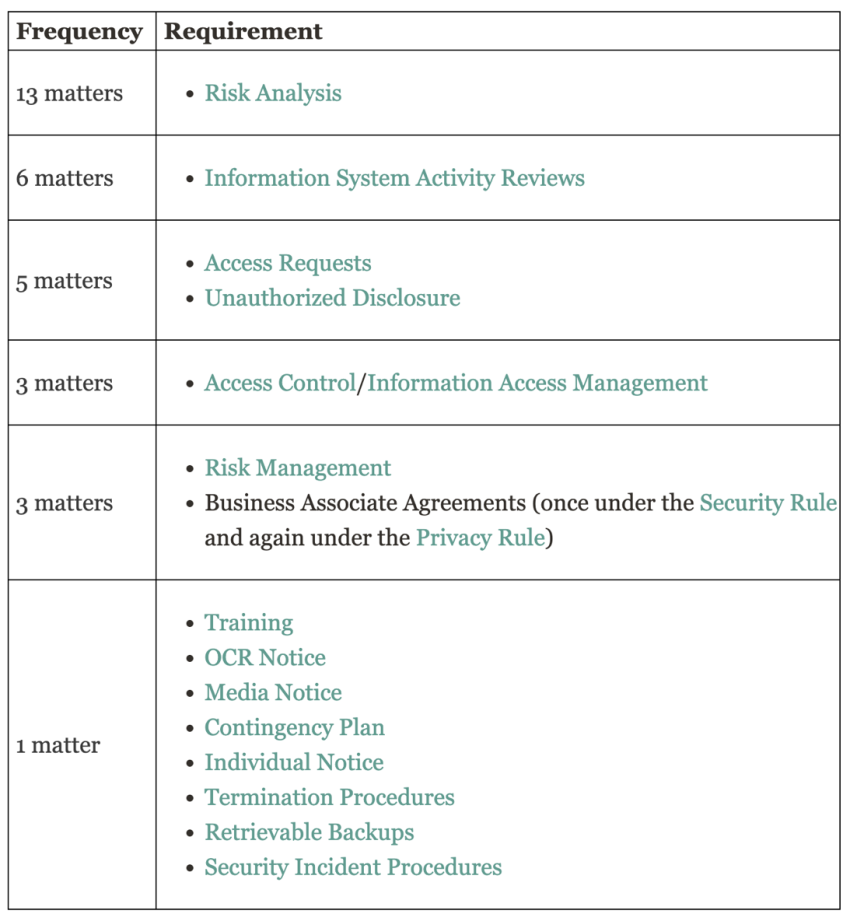
Data on resolution agreements from the HHS in a March 2025 report by the law firm Shook, Hardy & Bacon shows that violations frequently stem from:
- Inadequate risk analysis
- Information system activity reviews
- Weak access controls
- Unauthorized disclosure
- Delayed or incomplete breach response
Key Features of Compliant Services
When I evaluate answering software for healthcare use, I look for alignment with HIPAA’s safeguard requirements. The following areas consistently determine whether a system holds up under scrutiny.
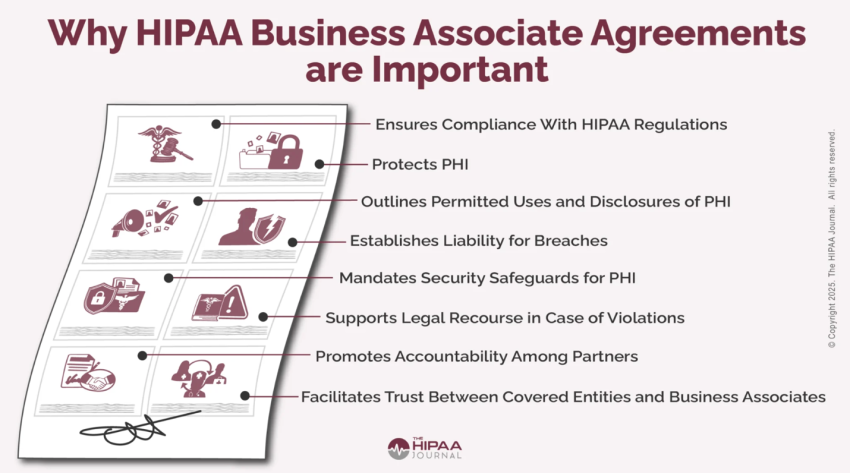
Business Associate Agreement (BAA)
Any vendor that creates, receives, maintains, or transmits PHI on behalf of a healthcare organization qualifies as a business associate under HIPAA, per the HHS. That designation carries a non-negotiable requirement that the vendor must sign a BAA. This obligation is defined by HHS and enforced by the Office for Civil Rights (OCR).
Without a BAA, legal liability can remain with the healthcare organization regardless of vendor assurances. The substance of the BAA is equally important and requires that healthcare organizations confirm permitted and prohibited uses of PHI, breach notification timelines, subcontractor obligations, and provisions for data return or destruction upon termination.
Encryption and secure storage
HIPAA’s Security Rule requires reasonable safeguards to protect electronic PHI (ePHI). In modern answering systems, encryption is a core expectation. Systems should encrypt call recordings, voicemails, transcripts, and message logs both in transit (during transmission to staff or systems) and at rest (while stored in databases or archives).
If data is stored in plain text or in a format accessible through consumer-grade tools, your compliance risk increases quickly. This is particularly important for answering systems that generate transcripts or summaries. Those files often contain more sensitive details than teams expect.
Secure message delivery
Standard email and SMS are not HIPAA-compliant by default. A compliant answering system must use secure delivery mechanisms, which typically include encrypted web portals, controlled mobile or desktop applications, and secure API-based integrations.
Access controls and audit trails
HIPAA regulations require healthcare organizations to limit PHI access based on roles and responsibilities. Answering software should support role-based permissions, strong authentication, and detailed audit logs. Auditability matters during both routine compliance reviews and incident response. If an organization cannot demonstrate who accessed information and when it was accessed, investigations become far more difficult.
Data ownership and retention policies
Healthcare organizations must understand where patient data is stored, how long it is retained, and how it can be deleted when required. Clear documentation in this area is often a sign that a platform has been designed for healthcare compliance rather than adapted later.
988 and crisis routing logic
In 2026, answering systems must handle more than just refill requests. Compliant systems must have specific routing logic for the 988 Suicide & Crisis Lifeline or urgent clinical escalations so they don’t get trapped in a non-clinical AI loop.
How a HIPAA-Compliant Answering Service Works
Compliance is fundamental for companies operating in the healthcare industry. As compliance requirements become more complex, health service providers and healthcare professionals are finding it harder to keep up with these requirements, which impacts their performance and the strategic value they can offer.
According to the 2025 PwC Global Compliance Survey, nine out of 10 respondents reported that their organization’s compliance requirements over the past three years have become more complex. Moreover, only 12% of companies in the health industry consider themselves to be compliance leaders.
Although implementation differs, compliant medical answering services generally follow a similar operational flow.
A patient calls your practice after hours requesting a prescription refill. Instead of reaching voicemail or an unanswered line, their call is answered immediately. This not only improves patient communication but also reduces hold times, which is important given how quickly callers disengage when placed on hold. As a result, call abandonment is limited.
The system then identifies the purpose of the call through guided prompts or structured natural language input. The goal is to capture intent and not gather the patient’s clinical history, which means that obtaining unnecessary medical details is intentionally avoided.
Natural language processing captures intent without requiring patients to navigate complex phone trees. Behind the scenes, voice data is encrypted during transmission. Transcription occurs in a HIPAA-compliant environment, and the resulting text is stored securely in an encrypted database with restricted access.
An answering service also automatically handles routine calls about office hours, appointment scheduling, or refill requests. Additionally, a centralized system securely captures and stores messages requiring staff follow-up.
The service routes urgent calls based on predefined rules. It delivers notifications through secure channels rather than personal devices or unsecured messaging to further protect sensitive patient information. A good system employs AES-256 encryption — the industry standard — along with AES-128 or AES-192 encryption when needed.
Staff can review messages and call summaries through a controlled interface, creating a single source of truth for patient communication and reducing errors as well as reliance on fragmented tools.
Automated Answering Software vs. Live Answering Services
Healthcare organizations often weigh automated answering software against traditional live answering services. Both models can operate within HIPAA guidelines, but they introduce very different operational and compliance trade-offs.
Automated answering software
Automated answering software functions more like an IT infrastructure. It answers calls instantly, handles multiple callers at once, and applies the same rules every time. It also centralizes reporting, transcripts, and analytics. Pricing is generally more predictable, and the software enforces compliance controls at the system level rather than relying on individual agent behavior.
Live answering services
A live answering service relies on trained agents. It is a great option if you want to add a human touch, but it may also be more prone to human error. These call center services can be effective for low call volumes or highly nuanced interactions, but staffing needs increase in direct proportion to call volume. Pricing typically increases on a per-minute or per-call basis, and consistency depends on training quality, turnover, and supervision.
From a compliance and risk management standpoint, healthcare automation reduces variability and the risk of human error. Human-based services can meet HIPAA requirements, but they require ongoing oversight to ensure agents follow secure workflows consistently. As organizations grow, maintaining that consistency can become more complex.
Common Healthcare Use Cases for Automated Answering Software
HIPAA-compliant answering software delivers the most value when applied to non-clinical communication. Common use cases include:
- Appointment scheduling and confirmations, helping reduce hold times and no-shows
- After-hours call coverage, ensuring patients can reach a secure system at any time
- Prescription refill requests, allowing secure capture and routing for staff review
- General FAQs and office information, such as hours, directions, and billing contacts
- Secure message capture, supporting timely follow-up
- Urgent call routing, based on predefined criteria or intent, to on-call staff
It is important to understand that these systems are not a replacement for clinical judgment or medical advice. Their role is to manage communication so medical professionals can focus on patient care while maintaining patient privacy.
Top HIPAA-Compliant Answering Services
Healthcare organizations evaluate answering services based on factors like internal resources, technical capacity, operational structure, and operational goals. Below is a realistic comparison based on platform capabilities.
1) Nextiva
Nextiva has evolved XBert from a basic assistant into a full agentic AI receptionist. This isn’t just an automated menu but an AI employee that manages the digital front desk with a human-like voice and 100% compliance.
You get:
- Instant deployment: XBert can now be trained to automatically learn from your practice’s website, FAQs, and business details.
- Unified safeguards: Unlike standalone tools, XBert is part of Nextiva’s larger HIPAA-compliant unified communications platform. This means your voice calls, SMS, and AI summaries all live under a single BAA and a single set of encryption standards (AES-256).
- Predictable ROI: A software-based AI receptionist is roughly 10–20x cheaper than a human-staffed answering service, while providing high reliability that prevents call abandonment.
Hear why XBert AI is the best AI receptionist
XBert AI receptionist handles customer questions, captures leads, and books appointments. Try it free for 14 days.
2) OhMD
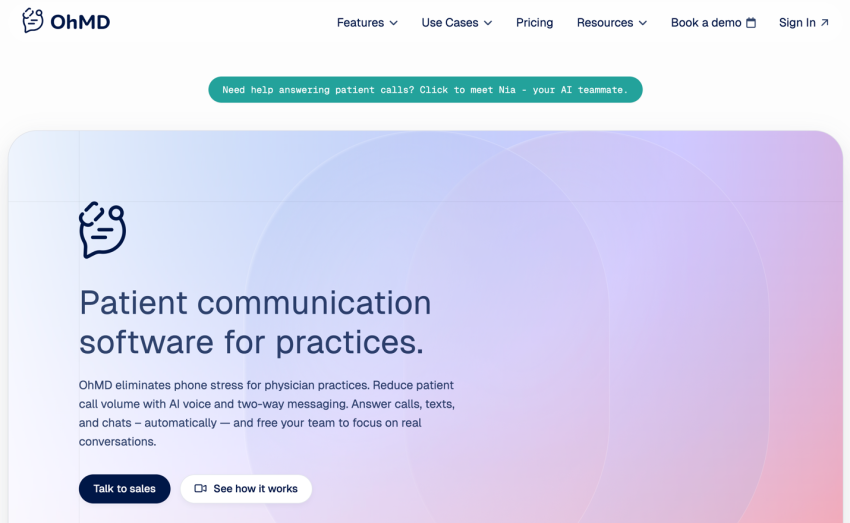
OhMD excels at secure messaging and automating voicemail-to-text workflows. It’s commonly used to reduce phone tag and missed calls and improve follow-up, particularly in practices that rely on asynchronous communication.
Its strength is documentation and follow-up rather than real-time call answering. While it integrates with major EHRs like AdvancedMD, Veradigm, and athenahealth, it does not function as a full conversational answering system.
For organizations looking to supplement existing phone systems rather than replace them, OhMD can be a useful addition.
3) Twilio
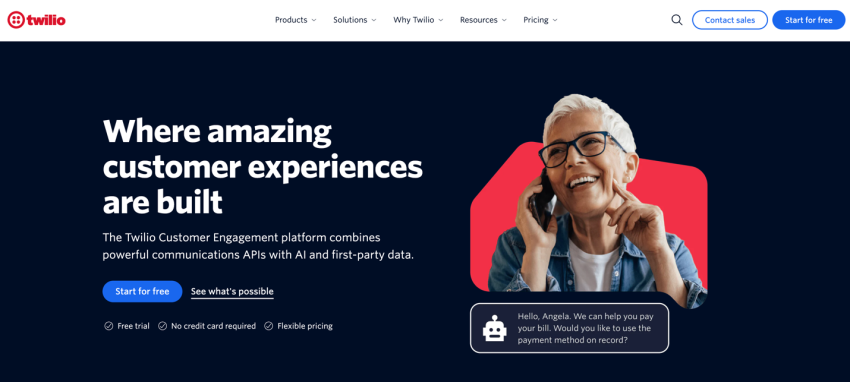
Twilio offers HIPAA-eligible APIs with BAA support. It provides flexibility but requires internal engineering and compliance oversight, making it more appropriate for organizations building custom solutions like custom IVRs and voice automation.
Organizations are responsible for designing secure data flows, configuring encryption, implementing access controls, and maintaining documentation, which makes this model ideal for healthcare systems with dedicated development and security teams.
For smaller organizations, because Twilio follows a pay-as-you-go model, the total cost may exceed turnkey platforms once you factor in development, maintenance, and compliance resources. Twilio offers a range of pricing models depending on the specific capabilities you’re looking for.
4) Vonage
Vonage provides programmable call-handling capabilities and HIPAA-compliant infrastructure. Like Twilio, it is API-driven and is not healthcare-specific software out of the box.
It offers flexibility but at the cost of complexity. This approach might make sense for large organizations with specific integration requirements, but it can often be excessive for SMB and mid-market healthcare teams.
How to Evaluate HIPAA-Compliant Answering Software
When evaluating a HIPAA-compliant medical answering service, I recommend focusing on operational fit rather than feature checklists.
When vetting a system today, move past the basic “Are you HIPAA compliant?” and ask:
- Does your AI use zero-retention APIs? Make sure the AI doesn’t use your patient data to train its public models.
- Is 988 routing built in? Does the system have logic to immediately escalate calls related to the 988 Suicide & Crisis Lifeline?
- How do you handle shadow AI? Does the system provide its own secure transcription to prevent staff from using unmanaged tools?
- What is your breach notification timeline? Modern BAAs should specify a no-unreasonable-delay clause, typically within 60 days.
- Is your infrastructure SOC 2 Type II certified? This is the standard for verifying that a vendor’s security claims are actually audited.
Total cost of ownership matters more than monthly fees, so it’s equally important to consider the costs and cost savings associated with implementation, training, administration, missed-call impact, and compliance risk reduction.
Modern Healthcare Companies Choose XBert
Healthcare organizations are rethinking patient communication. The shift away from staffing-heavy models toward software infrastructure addresses compliance by design.
XBert functions as an always-on digital front desk that centralizes voice, messaging, transcripts, and analytics in one HIPAA-compliant platform. There’s no need to stitch together separate phone systems, answering services, and reporting tools, each with its own security standards and BAAs. Per our 2025 CX Trends Report, we found that companies typically use 6.5 tools for customer support, and 86% of respondents said that using multiple tools creates data silos.
When a call requires human involvement, XBert escalates it with full context. Routine inquiries receive immediate responses, creating a balance that saves time without sacrificing patient experience.
Many services marketed as HIPAA answering services still rely heavily on human agents. These hybrid models introduce variability that increases with staffing. Software platforms reduce that variability and improve scalability.
With the right system, you can improve patient experience, reduce missed calls, and strengthen compliance while minimizing risks of hidden exposure.
Your AI receptionist that never misses a call.
XBert is your AI answering service that handles calls, texts, and chats 24/7. It greets customers, books appointments, and captures leads while your business grows.