

 Customer Experience
  Blog
Blog  Business Communication
  Leadership
  Marketing & Sales
  Nextiva News
  Productivity
  VoIP
VoIP 

Does the prospect of AI answering your calls sound daunting? In reality, it’s a time-saving, productivity-enabling system that can benefit your business if you handle large call volumes, suffer mass missed calls, or have disgruntled call center agents who are fed up with the same old run-rate inquiries.
Phone calls are important to your business, as there’s usually a higher intent or urgency than a text or social media message. So it pays (literally) to make sure you don’t miss them and don’t keep your customers or prospects waiting.
However, introducing AI or any new tool to your business comes with change. In this case, proving that change is for the better is the barrier between benefiting from powerful AI call answering and persisting with poor metrics and unhappy customers.
Adding AI tools to a small business becomes a much easier decision when you can see tangible metrics, clear benefits, and obvious use cases. That’s precisely what we’re going to explore in this guide.
Try the best AI answering service free for 14 days
XBert AI answers questions and captures leads. Add your 24/7 answering service in minutes.
Why Phone Calls Still Drive the Most Revenue
Calls represent high purchase intent
Despite the plethora of available communication channels, we still rely on the phone when we need to do things quickly. Even as a last resort, customers are confident that someone will answer the phone — unlike sending an email and knowing there will be a significant wait time.

This includes scenarios like:
- Emergency service needs
- Time-sensitive appointments
- Pricing inquiries
- Immediate availability checks
Voice calls convert at a significantly higher rate than digital channels because there’s less friction. When a customer calls a contact center agent, the agent has all their information on hand and can help with their inquiry without moving them to another queue or putting them on hold.
The real cost of missed calls
What happens when you miss a call? It could be a new customer, a renewal, or an unaddressed compliance issue that results in a fine. With every missed call, there’s an associated cost. This fluctuates from company to company, but let’s set the scene:
- A plumbing company missing 10 calls per day
- A dental practice missing after-hours appointment requests
- A law firm losing intake calls during lunch
While the monetary value differs in each case, there’s a clear pattern: Missed calls translate directly into lost revenue.
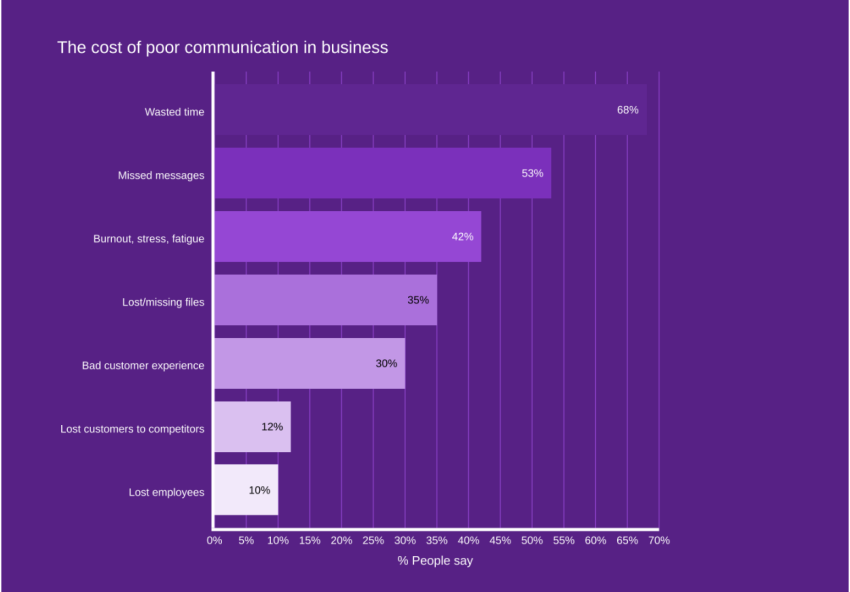
Furthermore, response delays reduce conversion probability, and customers rarely leave detailed voicemails, so you must call them back and start the conversation again. What’s more, they’re likely frustrated that they couldn’t get through to you the first time, so it’s not an enjoyable or productive conversation.
While missed call leakage is often invisible on P&L statements, it’s deeply felt in growth stagnation. The cost of missed calls could be the difference between hitting your monthly sales target, balancing your books over a busy holiday period, or even securing that new hire you’re desperate for.
In comparison, the cost of an answering service is insignificant. You pay a few dollars per month and ensure all your calls get answered — reducing leakage and ensuring growth.
How Much Do Missed Calls Cost You?
See how much lost revenue you can reclaim with Nextiva XBert® AI answering service. Compare different scenarios to grow the bottom line.
What Is an AI Call Answering Service?
An AI call answering service, also known as an AI receptionist, is a conversational voice system that answers business phone calls in real time, understands natural speech, and completes business tasks. When connected to your internal systems and apps, it can book appointments, capture leads, answer FAQs, and intelligently route calls.
By opting for an AI phone answering service, you move away from IVR keypad menus, scripted bots, and reliance on voicemail if nobody is available. Instead of using basic auto attendants and call forwarding to overflow answering service routing to other departments, you get a humanlike attendant that adapts and learns on the go.
Using technology called natural language understanding (or natural language processing), the AI system understands the caller’s input using speech recognition, works out the required response (routing, answering a question, escalating the issue, asking further questions, etc.), and responds using voice synthesis.
The result is a conversation that’s much like talking to a human receptionist — but without having to wait for someone to answer the phone. What’s more, when an output is required (e.g., booking an appointment or sending an invoice), automated workflows happen in the background, actioning tasks immediately.
How AI Call Answering Works
There are four main processes to understand when it comes to implementing AI call answering:
1. Natural language understanding
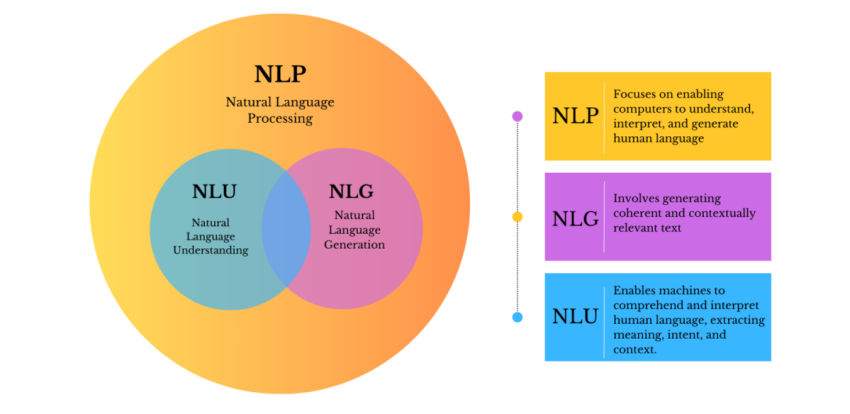
The AI agent interprets:
- Caller intent
- Keywords
- Context
- Urgency signals
Once processed (in real time), it determines whether the caller wants to:
- Schedule
- Ask a question
- Reschedule
- Speak with a human
- Report an emergency
- Any other outcome
The next step is responding in a humanlike, conversational manner (unlike menu navigation or bots of yesteryear, which sound robotic and are clunky to use).
2. Conversational voice generation
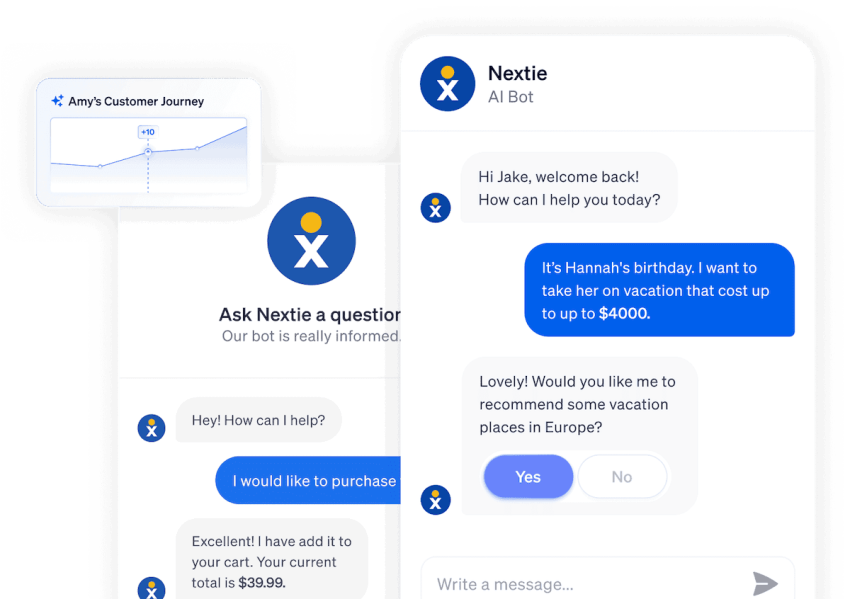
The top conversational AI voice systems:
- Sound natural
- Adapt pacing and tone
- Avoid robotic repetition
- Deliver branded greetings
The realism of the voice interaction ensures there’s no friction and that customers don’t feel uncomfortable or unconfident when interacting with your automated system. While the goal isn’t to fool customers into thinking they’re talking to a live phone agent, the experience should be the same (or better, in some cases).
3. Task execution and automation
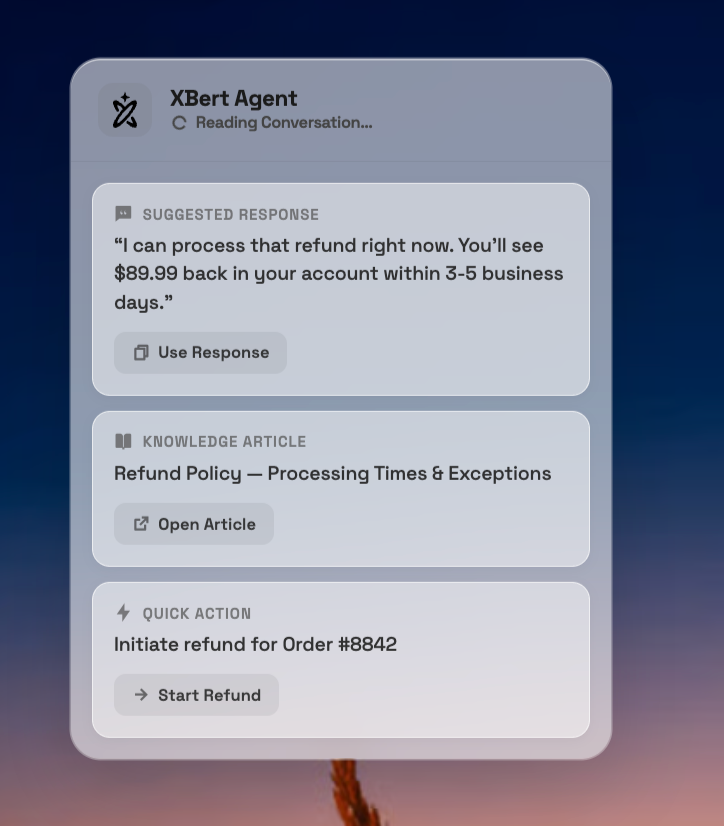
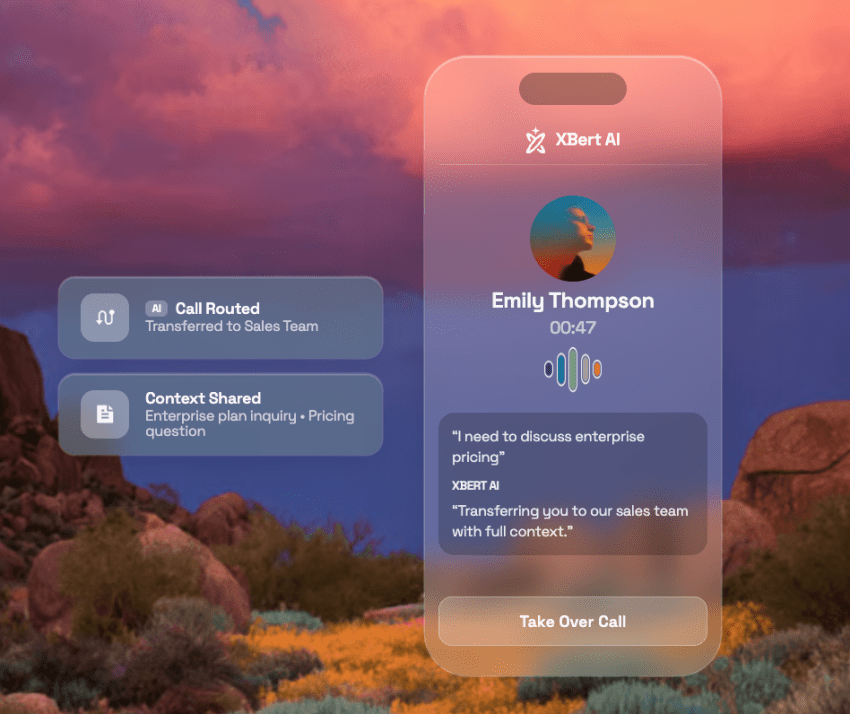
When connected to your internal systems, AI-powered answering services not only answer calls; they can also complete follow-up tasks like:
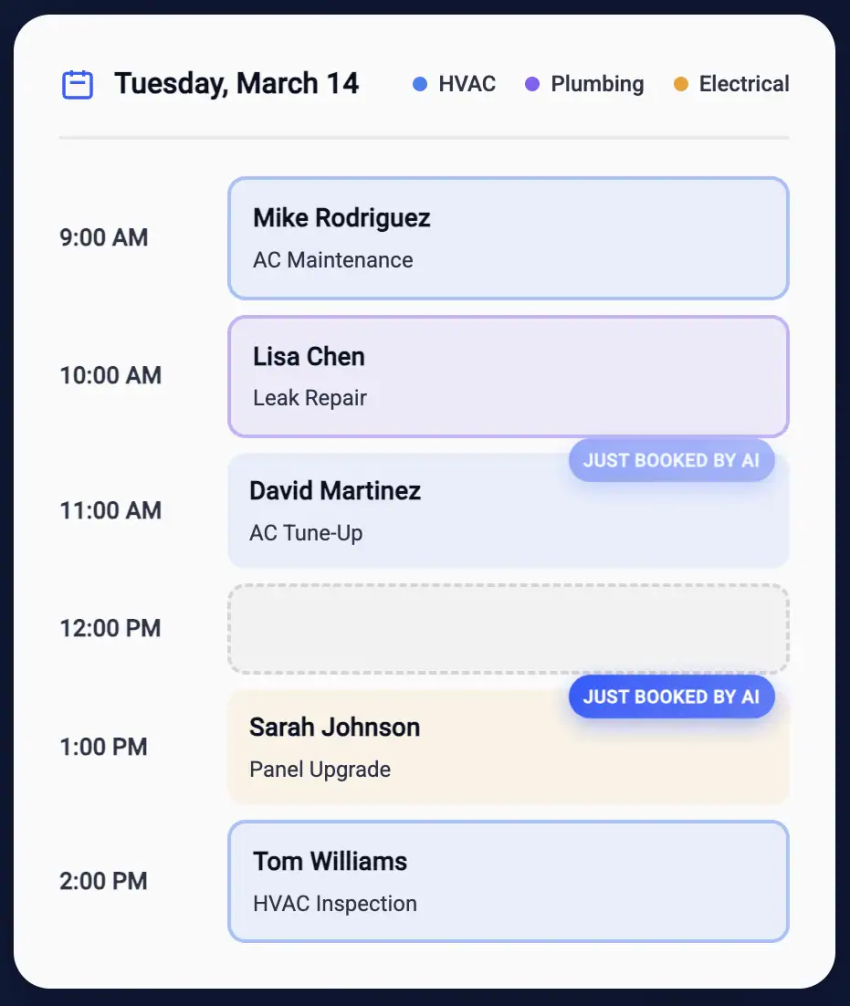
- Checking calendar availability in real time
- Booking appointments directly
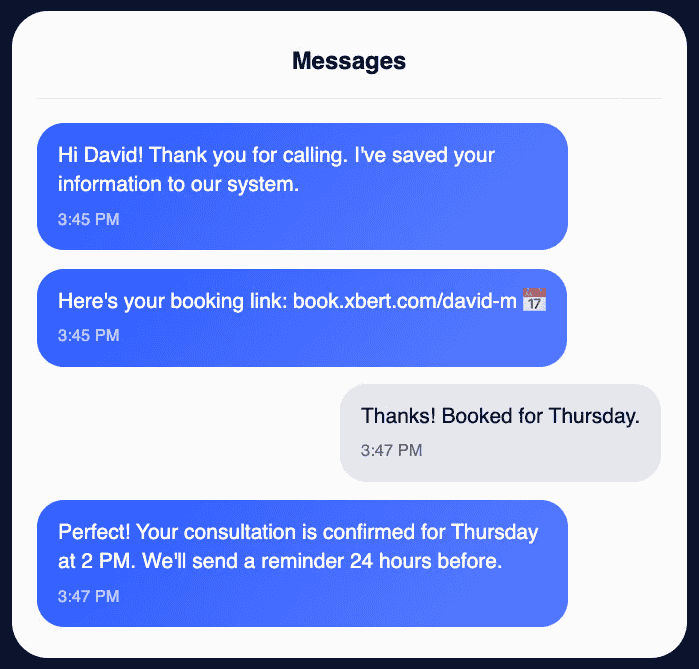
- Sending confirmation texts
- Triggering CRM entries
- Creating support tickets
- Escalating customer calls with context
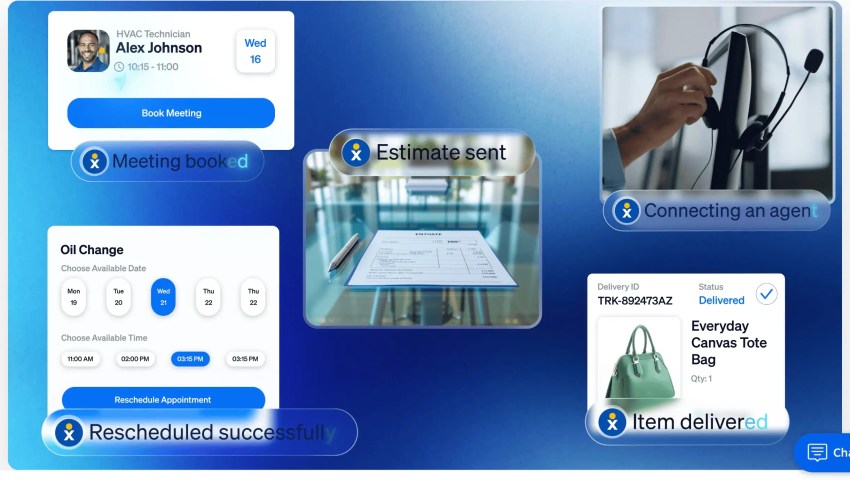
It’s this secondary, follow-up aspect of the answering service that’s the real differentiator when comparing an auto attendant to a virtual receptionist. You’re not just answering and routing calls; you’re dealing with the query at hand and improving response times, first call resolution, and customer satisfaction all in one go.
4. Intelligent escalation
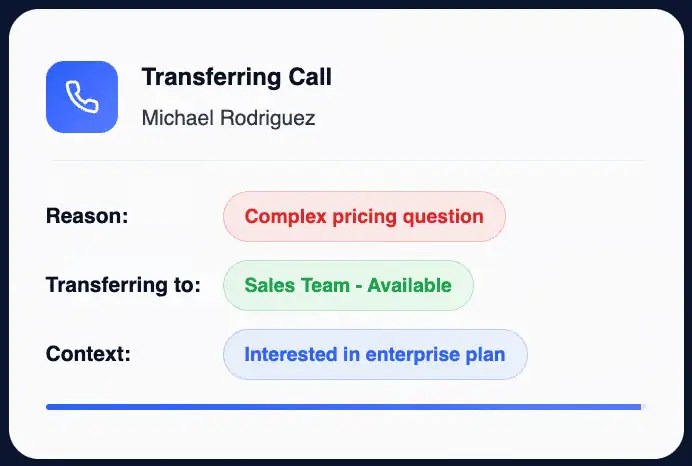
AI should know when to step aside. By using sentiment analysis, picking up on urgency, and understanding when calls need complex, human troubleshooting, your answering service can call in help from a qualified human.
- Call transfers include captured context.
- There’s no need for customers to repeat information.
- The handoff to team members is smooth.
Hear why XBert AI is the best AI receptionist
XBert AI receptionist handles customer questions, captures leads, and books appointments. Try it free for 14 days.
AI Call Answering vs. Voicemail
It’s important to understand the differences between letting calls go to a voicemail system versus having an AI call answering solution handle them.
| Category | Voicemail | AI Call Answering |
|---|---|---|
| Speed of Response | The caller waits for someone to call back. Response may take hours or days. | Immediate pickup. Real-time customer interaction. No waiting, no delay. |
| First Impression | Often signals the business is unavailable. | Always available. 24/7 live conversational experience. |
| Caller Experience | Caller frustration increases. Many customers hang up without leaving a message. | Full conversation that feels natural and responsive. |
| Message Quality | Incomplete messages. Missing names, return phone numbers, or details. | Structured lead capture with verified name, phone number, reason for call, and urgency. |
| Conversion Impact | Lost conversion due to delay or no message left. | Real-time booking and immediate next steps increase conversion probability. |
| Revenue Protection | Missed calls translate into invisible revenue leakage. | Captures high-intent callers at the moment they’re ready to buy. |
| Data Capture | No structured data capture. Manual follow-up required. | Automated CRM entries, customer support tickets, and lead categorization. |
| After-Hours Handling | Static recording only. | Books appointments, answers FAQs, routes emergencies, and escalates intelligently. |
| Follow-Up | Dependent on staff remembering to return calls. | Automated follow-up via text message, confirmation texts, and reminders. |
| Scalability | One message at a time. | Handles unlimited concurrent calls without hold times. |
| Escalation | No context when the call is returned. | Intelligent escalation with captured context — no repeating information. |
AI Call Answering vs. Human Answering Services
While we’re not advocating replacing all your human agents, we must point out the clear benefits where AI call answering services can take over and free up resources.
| Category | Human Answering Services | AI Call Answering |
|---|---|---|
| Response Speed | Fast when staffed, but may involve hold times during peak hours. | Instant response every time. No hold queues. |
| Availability | Dependent on staffing schedules. Night/weekend gaps possible. | 24/7 coverage with no downtime. |
| Scalability | Limited by available agents. Surge calls increase costs. | Handles unlimited simultaneous calls instantly. |
| Pricing Model | Per-minute pricing. Costs rise with call volume. | Predictable subscription pricing. |
| Consistency | Inconsistent agent quality. Varies by shift and turnover. | Consistent tone, messaging, and process with every call. |
| Empathy and Emotional Intelligence | Strong in nuanced or emotionally sensitive situations. | Effective but less natural in deeply emotional cases. |
| Operational Stability | Staffing turnover impacts performance. Training required. | No staffing constraints. No turnover risk. |
| Peak Call Handling | Risk of overflow, long wait times, or missed calls. | No busy signals. No overflow. |
| Setup Requirements | Minimal technical setup. Human training required. | Requires proper setup and workflow configuration. |
| Escalation | Human judgment determines transfer decisions. | Needs clearly defined escalation paths for optimal performance. |
Core Capabilities to Evaluate
As a small business looking for an answering service, make sure you check off the following features in your AI solution.
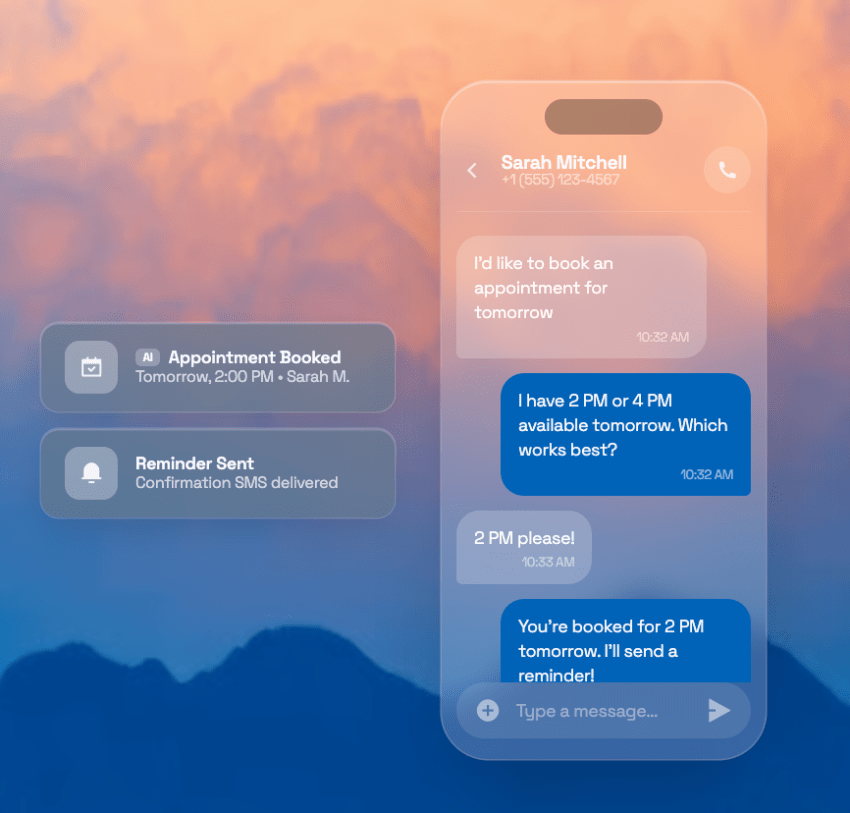
Real-time calendar integration
- Direct booking: Enables callers to secure appointments immediately, increasing conversion and customer satisfaction.
- Rescheduling: Lets customers easily modify appointments without staff intervention, improving convenience and reducing no-shows.
- Automated confirmations: Sends instant confirmation messages to callers, reinforcing trust and reducing confusion.
- Reminder texts: Reduces missed appointments and improves attendance rates with automated, timely reminders.
CRM and workflow automation
- Automatic lead logging: Records caller details and inquiry context automatically, saving staff time and improving sales team efficiency.
- Follow-up triggers: Initiates personalized follow-up actions based on call outcomes, boosting conversions and customer engagement.
- Campaign tracking: Links incoming calls to marketing campaigns, helping measure ROI and optimize marketing efforts.
Multi-location and multi-department routing
- Franchise support: Provides centralized AI management for multi-location businesses, improving consistency across branches.
- Location-based logic: Directs callers to the nearest or most relevant office automatically, enhancing customer experience.
- Department prioritization: Ensures urgent inquiries reach the correct department the first time, minimizing delays and lost revenue.
After-hours revenue tracking
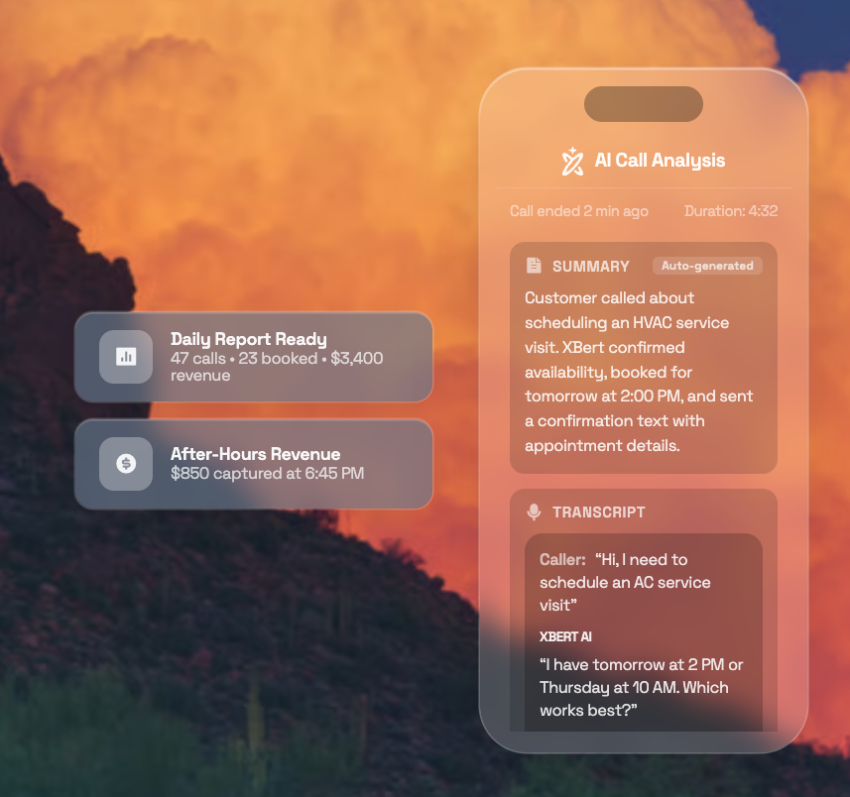
- Quantifiable ROI from AI coverage: Tracks revenue generated through AI-handled calls, showing clear business impact.
- Analytics, dashboards, and reporting: Provides call summaries and detailed insights into call performance, including trends, peak times, and workflow efficiency.
Analytics and reporting
- Call transcripts: Records conversations for quality assurance, training, and auditing purposes.
- Booking rates: Monitors how many calls convert to appointments, helping optimize strategies.
- Escalation frequency: Tracks calls that require human handoff, improving staffing and workflow decisions.
- Peak call times: Identifies high-volume periods, helping businesses allocate resources and maximize responsiveness.
Industry-Specific Use Cases
Home services
- Emergency intake: Quickly captures urgent service requests to ensure fast response and customer/patient satisfaction.
- After-hours bookings: Secures appointments outside regular hours, preventing missed revenue opportunities.
- Dispatch coordination: Routes calls efficiently to field teams, improving response times and operational efficiency.
Healthcare and dental
- Appointment scheduling: Books patient visits instantly, reducing administrative workload and no-shows.
- Insurance FAQs: Provides accurate insurance information, helping patients prepare and reducing confusion.
- After-hours coverage: Handles patient inquiries when offices are closed, ensuring continuous care and engagement.
Legal
- Client intake qualification: Screens and gathers essential client information to streamline intake and prioritize urgent cases.
- Consultation scheduling: Books consultations in real time, reducing delays and improving client experience.
- Case routing: Directs calls to the appropriate attorney or department, ensuring swift handling of legal matters.
Restaurants
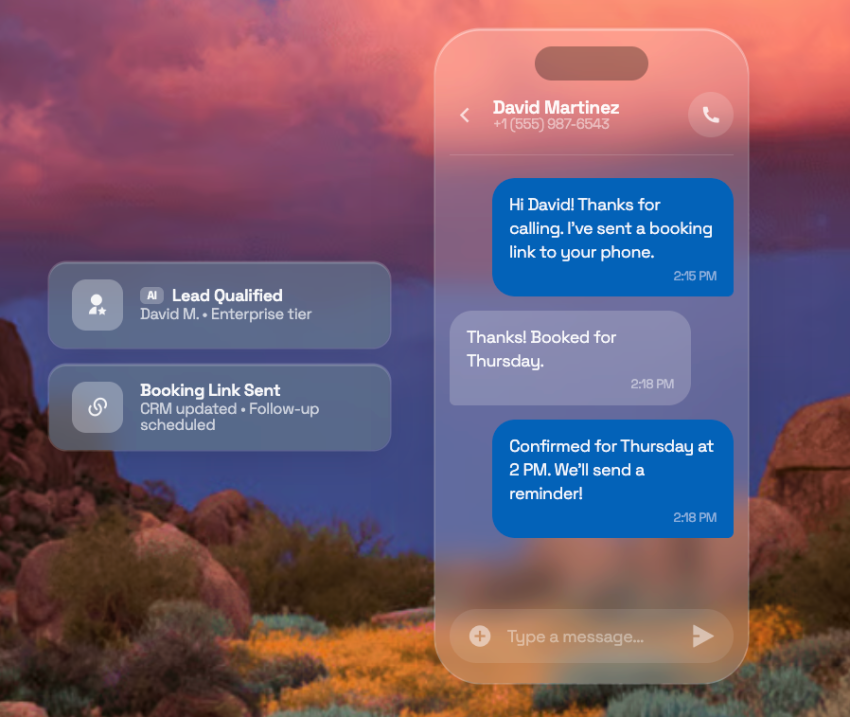
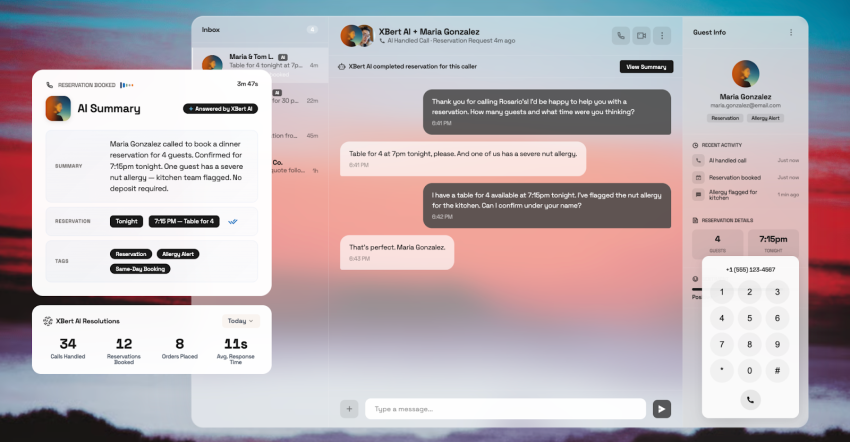
- Reservation management: Takes bookings instantly, preventing overbooking and improving customer experience.
- Menu questions: Provides accurate menu details to callers, reducing staff interruptions.
- Event inquiries: Handles questions about catering and events, supporting revenue opportunities.
Property management
- Maintenance requests: Captures tenant repair needs and routes them for prompt resolution.
- Leasing inquiries: Provides details on available units and schedules tours efficiently.
- Tenant support: Handles general tenant questions, improving satisfaction and retention.
Why Nextiva Leads in AI Call Answering
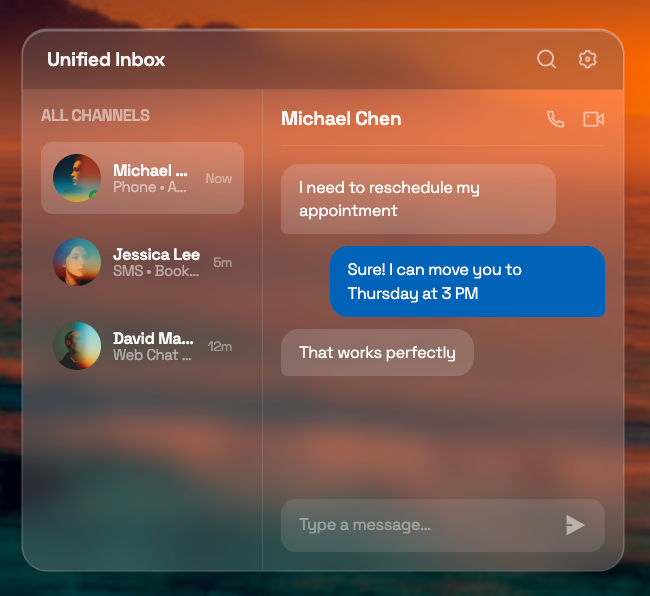
Nextiva XBert is an AI answering tool that’s integrated with Nextiva’s award-winning, highly resilient, unified communications platform. That means you get the best of both worlds: an AI call answering service to automate call answering and handling, and a single phone system with voice, SMS, chat, and CRM integration.
So, as well as introducing modern, genuinely transformative technology, you avoid suffering from vendor sprawl and significant admin uplift.
Nextiva’s AI (XBert) specializes in:
- Protecting revenue
- Eliminating missed calls
- Automating routine calls and tasks
- Scaling without extra staffing overhead
AI call answering is not about replacing your team; it’s about ensuring your business never stops responding. With Nextiva, every call connects, every opportunity is captured, and every customer receives immediate attention.
AI receptionist that never misses a call, text or chat.
XBert AI greets customers, books appointments, and captures leads while your business grows.