
 Customer Experience
  Blog
Blog  Business Communication
  Leadership
  Marketing & Sales
  Nextiva News
  Productivity
  VoIP
VoIP 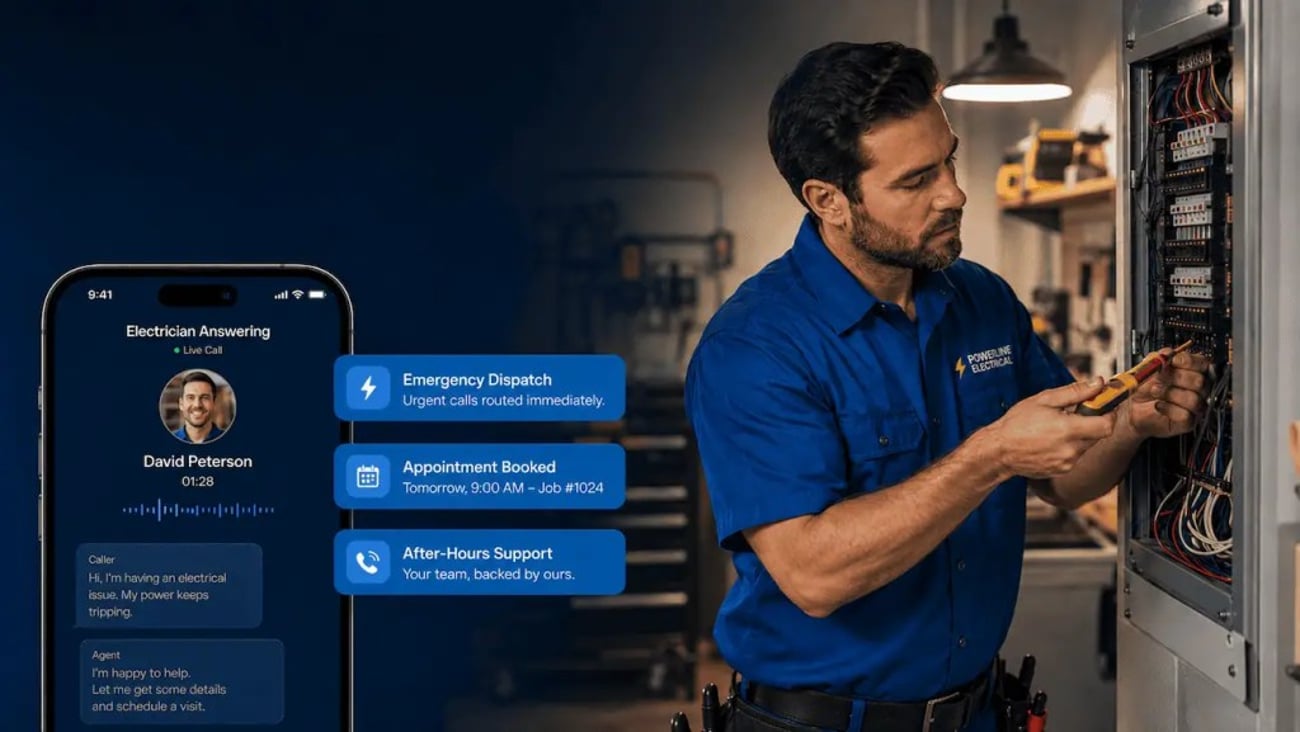

Picture an electrician getting a call in the middle of a job. They can’t safely reach for the phone while working inside a live panel or balancing halfway up a ladder. OSHA requires strict precautions around energized equipment and ladder work. Reaching for a phone in either situation introduces an avoidable distraction.
Instead, the call goes to voicemail. Meanwhile, the homeowner experiencing a power outage, a burning smell, or an urgent electrical issue keeps scrolling through the search results until another electrician answers. In a trade where response speed can decide who wins the job, every missed call risks becoming lost business.
The market leaves little room for slow follow-up. Published summaries of IBISWorld’s 2026 industry research estimate that in 2026, U.S. electrical contractors will generate $370.9 billion in revenue across roughly 262,000 businesses. That scale creates plenty of demand, but it also means potential clients have no shortage of alternatives when a call goes unanswered.
Buzz Franchise Brands demonstrates this pressure in practice. Across more than 250 home-service territories, many owners manage fieldwork and office calls through the NextivaONE app.
Independent electricians face the same strain while handling electrical work, crews, service calls, and client inquiries. A reliable answering service for electricians supports job-site safety and lead capture, while an electrician answering service manages routine and emergency calls through live agents or AI receptionists.
Try the best AI answering service free for 14 days
XBert AI answers questions and captures leads. Add your 24/7 answering service in minutes.
Why Missed Calls Are Costing Your Electrical Business
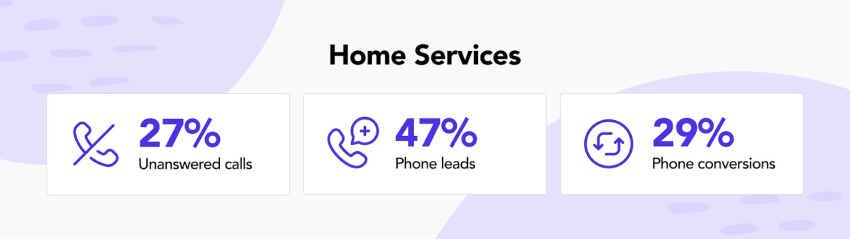
Home service businesses miss about 27% of inbound calls, according to Invoca data cited by Housecall Pro. A leak like that can become expensive fast. CallJolt estimates that one missed electrician call can be worth $600 to $1,800.
Run the numbers against your call volume:
Weekly missed calls × estimated job value × 52 = annual revenue at risk
Take, for example, three missed calls per week, each valued at $1,000. That calculation represents up to $156,000 in potential annual revenue at risk. That isn’t a guaranteed loss figure, but it shows why every lead that slips through to voicemail deserves attention.
When residential callers reach out, they may be under significant stress and often won’t wait long. A homeowner facing a power outage or another urgent electrical issue may simply hire the electrician who responds fastest. Nextiva similarly notes that unanswered home-service calls frequently become jobs for the first provider that responds.
A professional answering service for small businesses (in this case, electricians) keeps call handling separate from electrical work. It can answer calls, capture leads, organize messages, and route urgent calls to the right person while the field team stays focused on the job. Nextiva’s small-business answering service and home-services communication platform are designed to keep customer calls organized so no requests slip through.
What to Look for in an Electrician Answering Service
A reliable answering service for electricians has to do more than take messages. It should answer urgent calls quickly, identify electrical issues, book routine work, and route emergencies according to your rules. It also needs to connect with the software your team already uses; otherwise, your office staff will still spend time re-entering every appointment.
24/7 emergency coverage and fast answers
You can’t confine electrical problems to office hours. A burning smell, sparking outlet, hot breaker panel, or sudden power outage can happen overnight or during a weekend. Your answering service needs to respond immediately and determine whether the caller needs emergency dispatch or a standard appointment.
CallJolt reports that 35% to 45% of home-service calls arrive outside regular business hours, while 25% to 30% arrive on weekends. Its customer-response research also mentions that 79% of customers expect a call to be answered within five rings.
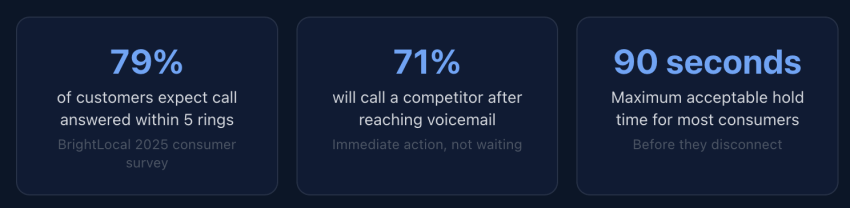
Those figures make answer speed a practical buying criterion. A homeowner facing an active hazard won’t patiently wait through several transfers or leave a detailed voicemail. They’ll call another electrical business that provides a quick response.
Look for an answering service that can:
- Answer calls immediately: Coverage should include evenings, weekends, holidays, and busy periods.
- Identify urgent requests: Operators or AI should recognize phrases involving smoke, heat, sparks, or total power loss.
- Follow your escalation rules: Emergency calls should reach the on-call electrician or backup contact without delay.
- Handle overflow calls: The service should manage multiple incoming calls during storms or peak times.
- Share complete context: The technician should receive the caller’s details, address, issue, and call summary.
Nextiva’s after-hours answering service guide explains how emergency keywords can trigger contact with designated on-call personnel. This type of routing keeps urgent calls moving without waking the team for every routine inquiry.
Direct field service management (FSM) integration
FSM integration should be a requirement rather than a bonus. A captured message still leaves work for the front desk. Someone has to call the customer back, confirm availability, enter the address, and create the job.
A connected electrician answering service can check the calendar and schedule appointments during the first conversation. Integrations with ServiceTitan, Housecall Pro, or Jobber also allow the service to store customer information, select the correct job type, and send the booking directly to dispatch.
Nextiva’s home services solution works with ServiceTitan, Jobber, Housecall Pro, and other business tools. Its ServiceTitan integration can book service calls, retrieve job types, find customer accounts, and add notes without manual data entry.
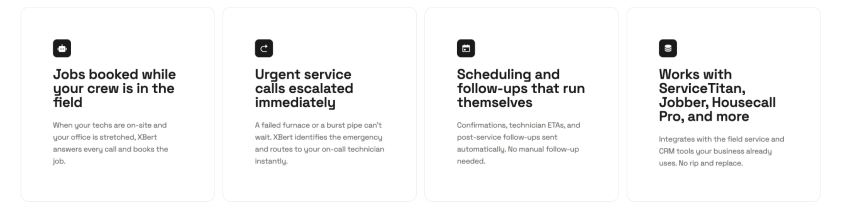
Before signing a contract, ask the provider to demonstrate the complete workflow. The test should begin with an incoming call and end with a correctly scheduled job in your system. A calendar connection that only creates a generic event may not provide enough information for dispatch.
Bilingual call handling
Bilingual support helps electrical contractors serve customers who are more comfortable discussing a problem in Spanish. This becomes especially important during an emergency, when misunderstandings about smoke, exposed wiring, or a hot panel can create safety risks.
Nextiva notes that an estimated 42 million U.S. residents speak Spanish at home. Its guide explains how bilingual answering services and AI systems can handle calls in English and Spanish, including appointment booking, lead qualification, and routing.
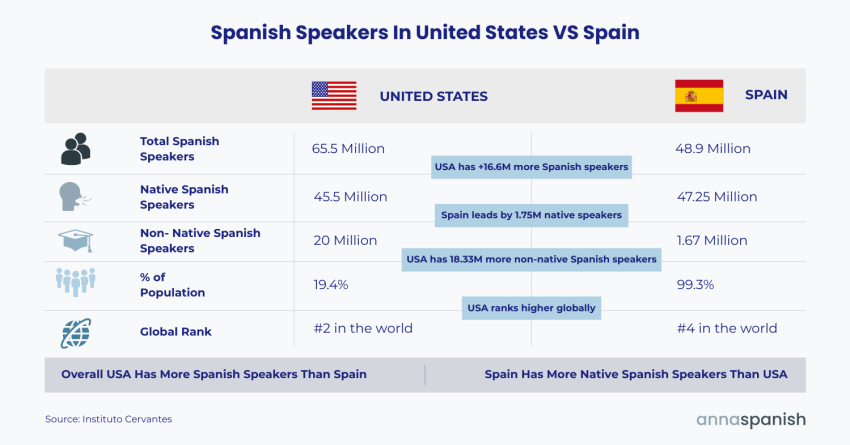
Ask whether bilingual support is available around the clock or only during staffed hours. Some live answering services charge an add-on fee, while others route Spanish-speaking callers to a smaller agent pool. The experience should be fast and natural in both Spanish and English.
Calendar rules that reflect field operations
Calendar access alone won’t prevent scheduling problems. The answering service also needs rules for technician availability, service zones, travel time, job length, and emergency capacity.
Without those controls, the system might send one truck across the city for two back-to-back appointments or book electrical work that requires a technician with different qualifications. A well-configured calendar should account for:
- Service territories and ZIP codes
- Technician skills and certifications
- Estimated appointment duration
- Travel buffers between jobs
- Reserved space for emergency service calls
- Limits on same-day and after-hours bookings
These rules turn call answering into dependable business operations. They prevent double-booking while giving callers an accurate appointment instead of a promise the dispatch team later has to change.
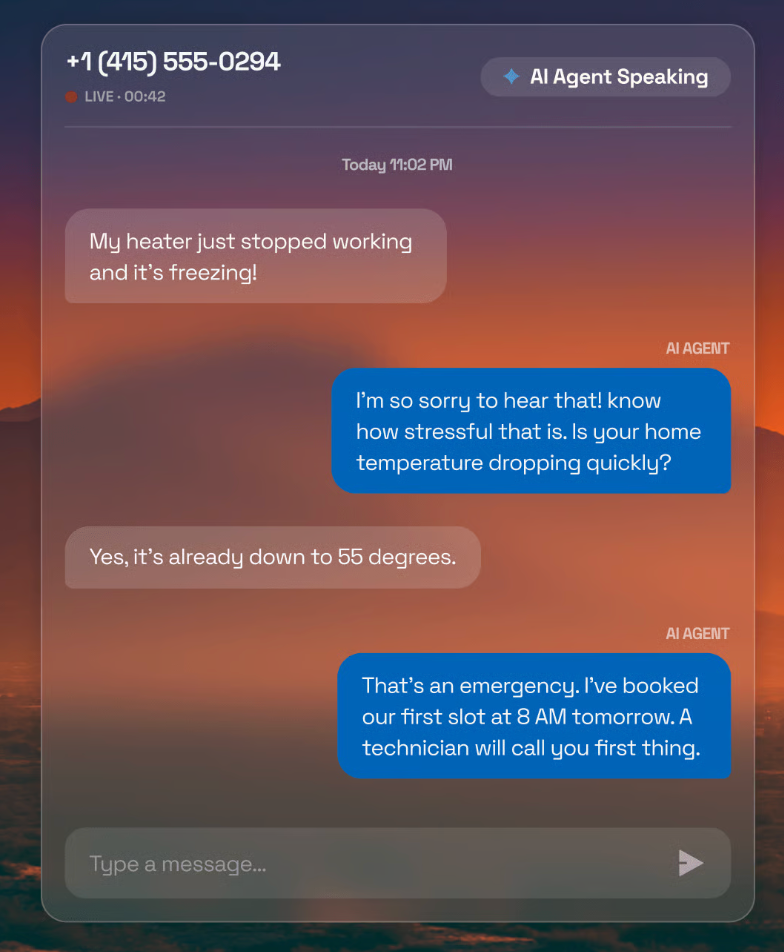
The right professional answering service should fit the way your electrical business already works. Prioritize 24/7 coverage, fast emergency routing, bilingual support, direct FSM integration, and scheduling rules that reflect what your field team can realistically deliver.
How Emergency Dispatching Protocols Protect Your Reputation
Poor triage creates two expensive problems: A technician gets woken at 2 a.m. for a routine request, or a real electrical hazard reaches voicemail. A clear verification matrix prevents both situations by separating emergencies from standard service calls.
| Level | Examples | Response |
|---|---|---|
| Level 1: Emergency | Sparking or smoking outlets, a hot breaker panel, burning smells, or total power loss | Route to the on-call technician immediately. If there’s no answer within five to 10 minutes, escalate to a backup or the owner. |
| Level 2: Routine | Broken switches, fixture installations, outlet upgrades, or electric vehicle charger quotes | Collect the details and book an appointment during regular business hours. |
The electrical contractor defines the keywords, thresholds, and escalation order based on the company’s procedures. This makes emergency dispatch configurable rather than a black box.
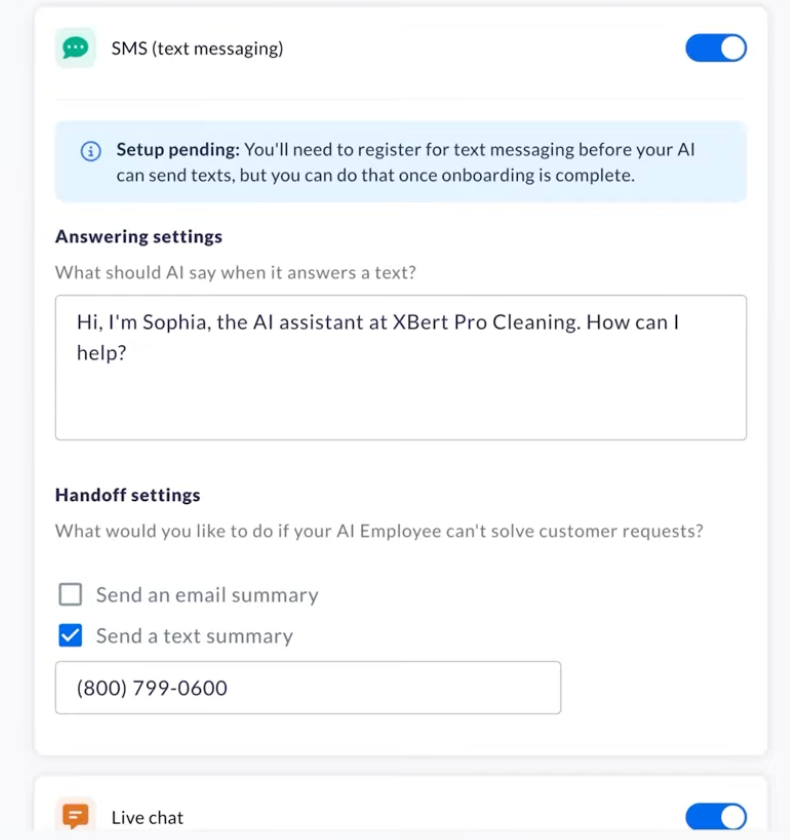
Nextiva’s visual call flow builder lets owners set these rules directly. You can route urgent calls to the primary technician, send unanswered requests to a backup, and direct routine work into the scheduling queue.
Comparing Live Receptionists Versus AI Answering Systems
A live answering service and an AI receptionist solve the same core problem of keeping customer calls from reaching voicemail. Their strengths differ, so the right choice depends on call complexity, volume, budget, and the level of human judgment required.
Live agents bring empathy to sensitive conversations and can adapt when a caller’s situation doesn’t fit a script. However, performance depends on staffing levels. Callers may still enter a queue during busy periods, and agents can occasionally mishear an address, phone number, or technical detail.
AI receptionists answer instantly, operate around the clock, and handle multiple calls at once. They can also capture caller information consistently, answer FAQs, and book appointments directly into a connected calendar. Nextiva’s XBert starts at $99 per month and can be 10-20 times cheaper than hiring a human receptionist, although actual savings depend on usage and staffing costs.
| Factor | Live receptionist | AI receptionist |
|---|---|---|
| Availability | Staffed hours, can queue | 24/7, answers instantly |
| Cost | Per minute, higher | Flat, up to about 90% less than staffing |
| Concurrent calls | Limited by the number of available agents | Can handle multiple calls simultaneously |
| Accuracy | Strong judgment, but transcription errors can occur | Consistent capture and calendar sync |
| Emergency calls | Live judgment during complex calls | Follows predefined triggers and escalation rules |
| Customer experience | Best for empathy and unusual situations | Best for routine, high-volume requests |
| Best for | Empathy, complex intake | Greeting, FAQs, booking, after-hours |
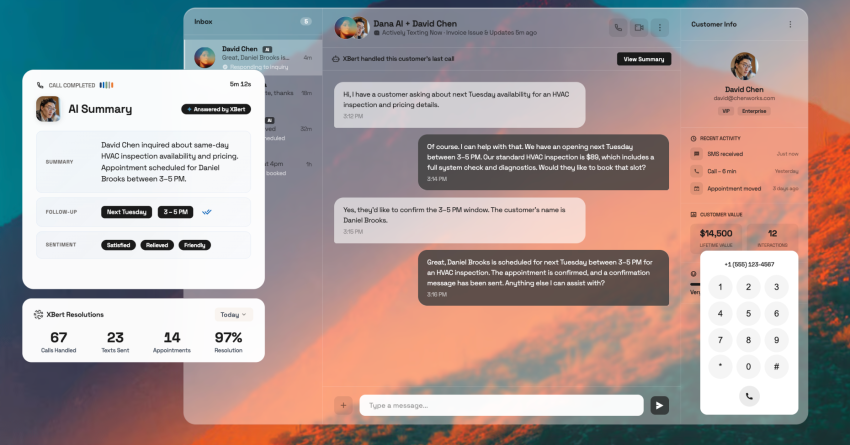
Nextiva XBert supports this setup by booking appointments through connected calendars and transferring complex calls with the full conversation attached. The receiving team member gets the caller’s context instead of having to ask them to start again.
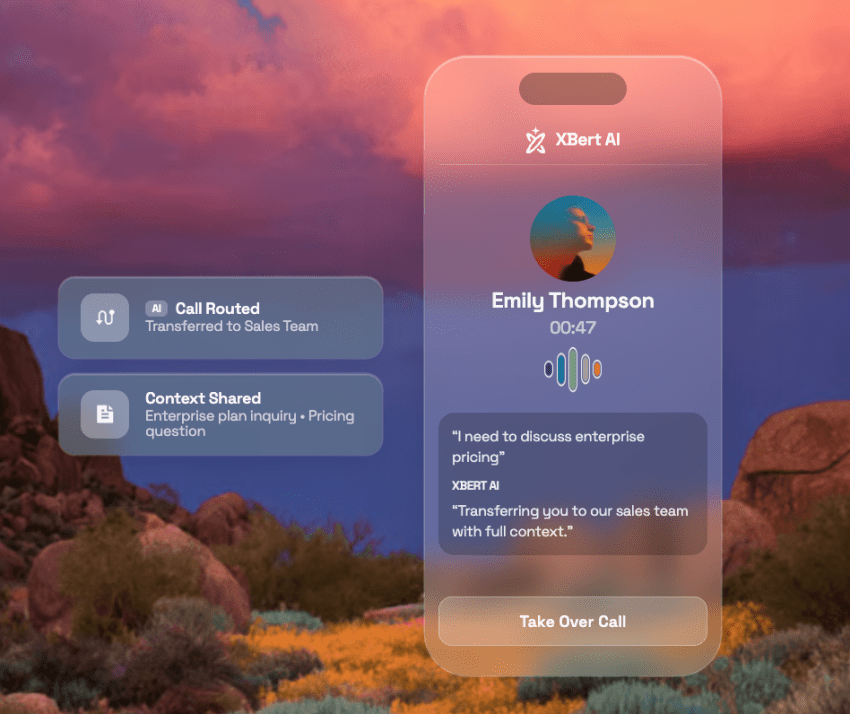
That division of work keeps costs controlled without removing the human element. The AI handles repeatable call answering, while people remain responsible for emergencies and conversations where empathy matters most.
Hear why XBert AI is the best AI receptionist
XBert AI receptionist handles customer questions, captures leads, and books appointments. Try it free for 14 days.
Choosing the Right Phone Solution for Your Trade
The best AI answering service for electricians should recover more revenue than it costs. You can estimate the return with a simple formula:
Revenue from captured jobs − monthly service fee = estimated monthly ROI
Use your own close rate and average job value. If your average panel replacement brings in $15,000, saving one qualified lead from voicemail could cover months of call answering. Smaller service calls add up too, especially when the system captures several missed calls during evenings, weekends, or busy periods.
Review your phone records before choosing a service. Count unanswered calls, estimate how many were potential clients, and calculate what those jobs may have been worth. Nextiva recommends comparing your average customer value with the monthly fee rather than choosing a plan on price alone. Its answering service cost guide also suggests tracking call volume, call length, seasonal spikes, and overage charges.
The phone system should also reduce tool sprawl. When voice, text, scheduling, and customer information sit in separate platforms, someone has to copy messages between them. Details get lost, appointments are entered twice, and dispatch may work from outdated information.
A unified system keeps the conversation connected. The receptionist or AI can answer the call, send a text, book the job, and route the request without relying on a phone line, a separate booking tool, or handwritten notes.
Nextiva’s Business Voice platform brings calling, texting, voicemail, and routing into one system. Its Call Flow Builder supports visual, time-based routing around business hours, while the home-services platform can route callers according to on-call schedules and service areas.
For an electrical business, the call flow might work like this:
- During business hours: Send routine service calls to scheduling or the office team.
- After hours: Route new inquiries to the answering service or AI receptionist.
- By location: Direct callers to the correct branch or service zone.
- Level 1 emergency: Contact the on-call technician, then escalate to a backup or owner.
- Level 2 request: Collect the details and book the next appropriate appointment.
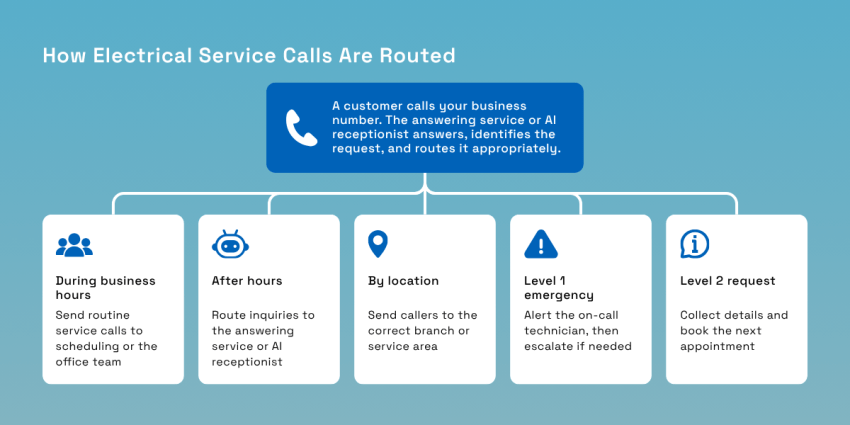
Test every path before launch, including unanswered transfers and calls outside your service area. The workflow should never leave an emergency caller at a dead end. For companies that want live team routing alongside automation, Nextiva’s small-business phone service combines business VoIP, SMS, and intelligent call routing.
Answer Every Call, Even From the Top of a Ladder
Missed calls create lost business in a crowded electrical industry. But answering the phone while handling wiring, working on a hot panel, or standing on a ladder isn’t a safe solution.
A dependable phone answering system handles the call while the electrician stays focused on the job. It should recognize the difference between a Level 1 hazard and a routine quote, route urgent requests to the right person, and book standard electrical services into the field service platform.
Before going live:
- Build your emergency verification matrix.
- Define response times and escalation thresholds.
- Connect the service to your calendar or FSM.
- Test call routing during normal and after-hours scenarios.
- Choose live, AI, or hybrid coverage based on call volume and complexity.
A live answering service may suit sensitive or complicated customer calls. AI works well for greetings, FAQs, lead capture, appointment scheduling, and overflow calls. Many electrical contractors will get the strongest coverage from a hybrid setup, where automation handles routine demand, and humans take emergency dispatches.
Nextiva’s XBert answers calls, texts, and chats 24/7, captures customer information, books appointments, and transfers complex conversations with context. The contractor controls the greeting, voice, qualifying questions, guardrails, and routing rules.
XBert currently starts at $99 per month for 100 conversations, with each additional conversation billed at $1.50. That structure avoids traditional per-minute billing, although contractors should still estimate monthly volume before choosing a plan.
Every call should end with a clear next step, even when you’re busy. See XBert in action and build an answering workflow around the electrical calls your business can’t afford to miss.
Stop missing calls. Use the best AI answering service.
XBert AI gives your business 24/7 coverage—handles calls, texts, and chats, books meetings, and escalates urgent calls so customers never have a bad experience.