

 Customer Experience
  Blog
Blog  Business Communication
  Leadership
  Marketing & Sales
  Nextiva News
  Productivity
  VoIP
VoIP 

When work scales, it creates noise. Success depends on how well you delegate the increasing workload. But as AI capabilities grow, the decision of how to delegate — by hiring more humans or automating workflows with AI — has become more complex.
For growing businesses, the phone is usually the first thing to break. Missed calls pile up, voicemails go ignored, and your team gets distracted by repetitive questions.
This forces a critical choice: Should your human talent be tied up routing calls, or should it focus on high-value conversations?
The goal isn’t just automation; it’s optimization. With 79% of businesses viewing CX as a revenue driver, the challenge is finding the right balance between the speed of AI receptionists and the empathy of a human agent. Getting this mix wrong is expensive. This guide breaks down the trade-offs to help you choose the solution that fits your growth stage.
Try the best AI answering service free for 14 days
XBert AI answers questions and captures leads. Add your 24/7 answering service in minutes.
AI Receptionist vs. Human Receptionist: At a Glance
Here’s a quick overview of AI receptionists vs. human receptionists:
| Feature | AI Receptionist | Human Receptionist |
|---|---|---|
| Key strength | Speed, scale, and consistency at zero wait time. | Empathy, judgment, and trust in real conversations. |
| Availability | 24/7, including nights, weekends, and holidays. | Limited to working hours and shifts. |
| Call volume | Handles unlimited calls at once. | Handles one call at a time. |
| CX focus | Fast and process-driven. | Warm and relationship-driven. |
| Decision making | Follows workflows and data from connected systems. | Uses context, emotion, and common sense. |
| Best for | High-volume routing, scheduling, FAQs, and after-hours coverage. | Sensitive issues, complex requests, high-value sales, or support. |
| Scalability | Instant and software-driven. | Linear and hiring-dependent. |
| Cost | Predictable, low cost per interaction. | High and recurring cost per headcount. |
From a cost perspective, AI receptionists are significantly less expensive than hiring, training, and retaining a full-time employee or team (even a virtual one).
Compare the cost difference in onboarding an AI receptionist vs. a human receptionist and strategically optimize your cost savings. 👇
Try our AI receptionist ROI calculator.
See how much your business could save with the XBert® AI Receptionist ROI Calculator. Just enter your call volume and staffing costs to find out how quickly an AI assistant can pay for itself and start freeing up your time.
What Is an AI Receptionist?
An AI receptionist is a virtual, voice- or chat-based assistant that answers, routes, and resolves customer inquiries automatically, without human intervention. Simply put, it does what a human receptionist does, only faster, around the clock, and on scale, creating added value to your human employees’ daily work.
An AI receptionist typically manages:
- Call answering and greetings
- Intent detection and routing
- Information look-up through connected systems
- Appointment scheduling
- After-hours answering
- Conversation logging
You can perform some of these tasks with a traditional IVR menu. But AI receptionists hold conversations more naturally using natural language processing (NLP) and machine learning.
IVR requires callers to adapt to machines. AI systems adapt to callers. They listen and respond as a trained human agent. Most importantly, AI tools are fast, consistent, and scalable.
More than 30% of CX leaders are already integrating AI into their workflows or will do so soon. It’s therefore worthwhile to try out AI receptionists and embrace the future of an improved customer service experience. That doesn’t mean replacing your human receptionists with AI. Instead, it means using AI to augment and support your team’s work.
What Is a Human Receptionist?
A human receptionist is a real person who represents the first point of contact for a company. This can be by phone, in person, or online.
A human receptionist’s responsibilities go beyond simply answering the phone and include:
- Transferring callers to the correct department, employee, or extension.
- Greeting visitors and notifying the appropriate staff member.
- Scheduling meetings and confirming appointments.
- Answering frequently asked questions and handling simple requests without escalating them to the appropriate department.
- Creating a friendly and professional first impression that reflects the company’s values and culture.
Human receptionists are especially valuable where judgment, empathy, and sensitivity are required. Unlike AI-powered receptionists, humans can recognize emotions and handle sensitive situations with empathy. They respond flexibly to process disruptions or unclear information.
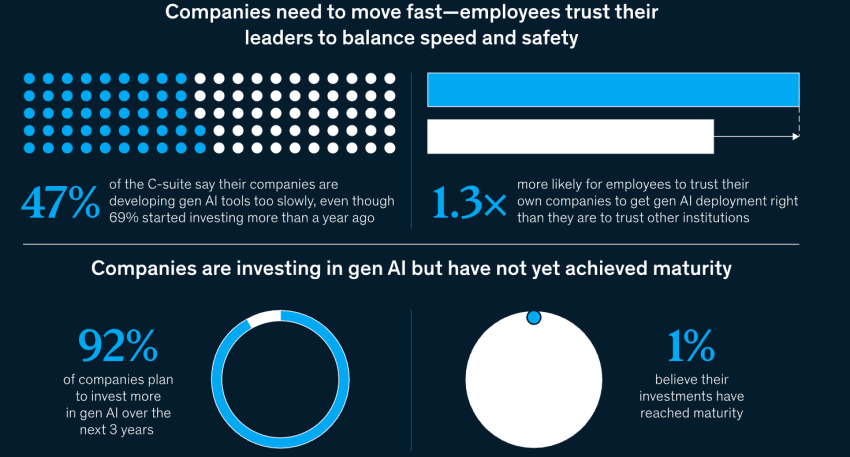
For growing companies, both aspects are equally important. Statistics show that while 92% of companies use AI-powered workflows, only 1% consider them mature. This indicates implementation challenges that require human intervention to unlock the true potential of AI.
AI vs. Human Receptionist: How It Handles Common Tasks
In practice, AI is ideal where speed and consistency are important, while human involvement is essential when trust and judgment determine the outcome.
Call answering and first response
An AI receptionist answers instantly, collects details, resolves FAQs, or routes correctly, significantly reducing wait times.
Human receptionists build rapport and defuse tension but may miss calls when they’re busy.
Best practice: Let AI handle the first response to guarantee pickup, and then route to humans only if the issue is complex — especially since 90% of customers consider immediate response important in customer service.
Scheduling and rescheduling
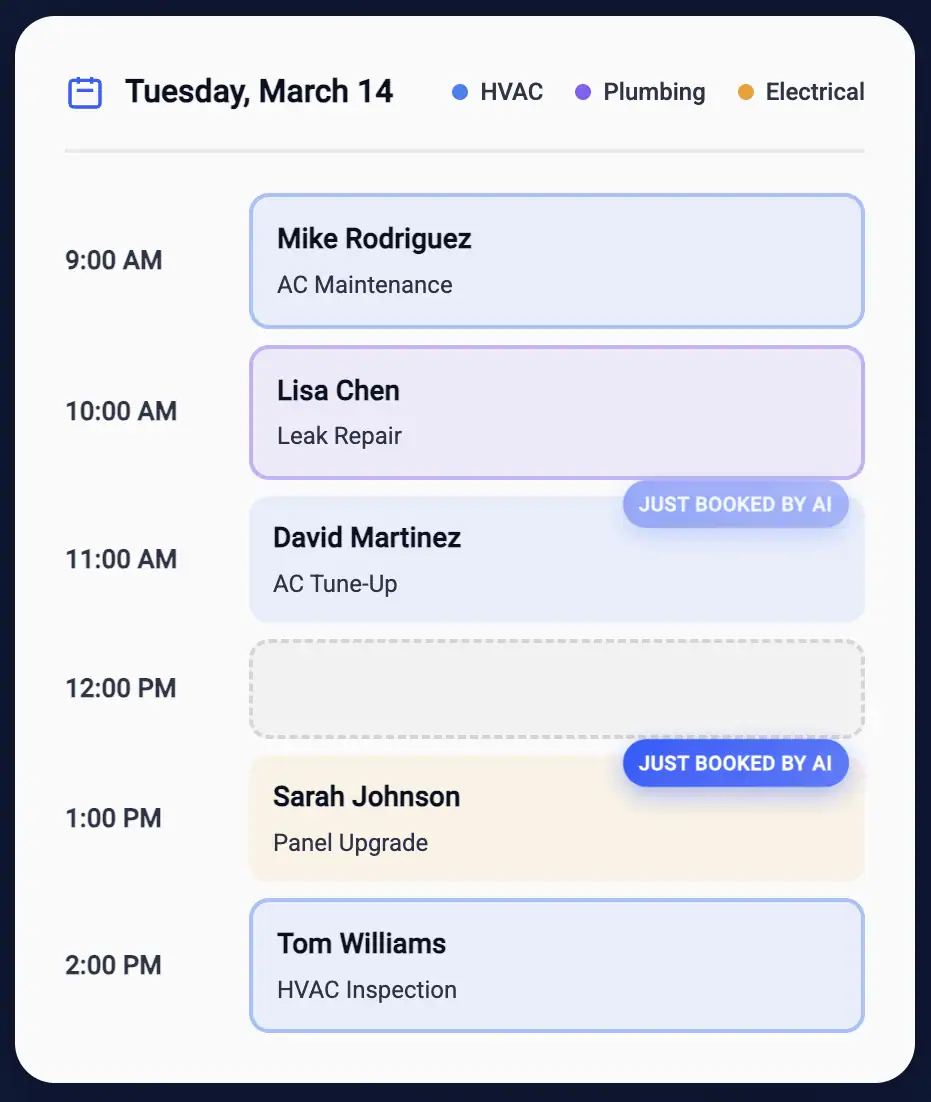
AI answering services can book appointments automatically by syncing with your calendar. They send confirmations and handle reschedules without human intervention.
Human receptionists are great for tackling urgent or important queries, but they work more slowly and are prone to double-booking errors when there’s a large influx of customers.
Best practice: Let AI automate standard scheduling. This will free up your employees to focus on handling cases that require thorough assessment.
Lead capture and qualification
AI captures every caller, asks standardized questions to determine their needs, and immediately logs the data in the CRM system. It always asks about the budget and timeline, so your sales team receives fully qualified leads rather than just a list of names and numbers.
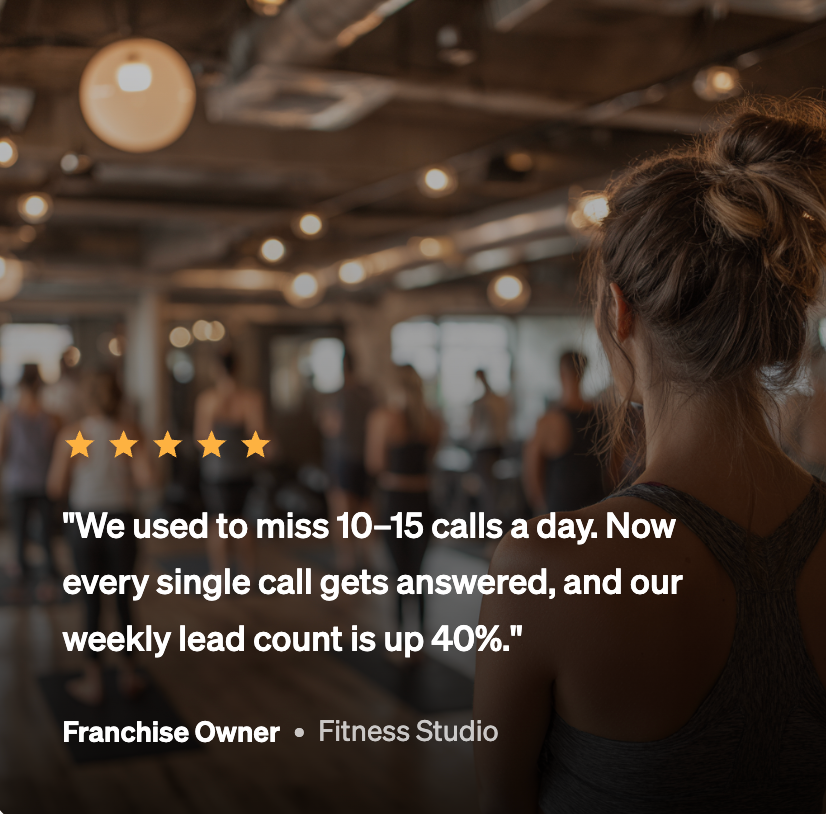
Best practice: Use AI for the initial qualification stage to filter out irrelevant information. Pass qualified leads on to employees to close the deal. A fitness studio franchise owner leveraged Nextiva’s XBert AI to increase the weekly lead count by 40%.
Handling complex questions
AI receptionists work best when they have access to a defined knowledge base and clear handover procedures.
Human employees are better suited to handling nuances, exceptions, and conversations tailored to individual cases.
Best practice: Design the reception and support process so that AI handles all standardized tasks, while human reps handle all tasks requiring deeper understanding.
Peak times and overflow
AI answering systems scale instantly. They can handle 100 simultaneous calls just as easily as one.
Human agents are physically limited. With 10 callers and one operator, nine people are left waiting.
Best practice: Use AI as a safety net during periods of high call volume. Plan your team around average call volume, not extreme peaks.

AI Receptionist vs. Virtual Receptionist: Pros and Cons
Below are some pros and cons of using an AI voice agent vs. a virtual receptionist service (or a virtual assistant):
AI receptionist: Pros and cons
| Area | Pros | Cons |
|---|---|---|
| Availability | Answers calls instantly, including during after-hours and holidays. | Requires upfront setup of business hours, rules, and escalation paths |
| Efficiency | Handles repetitive questions without tying up human staff. | Can feel generic or robotic if the flows are poorly designed. |
| Scheduling | Books appointments automatically and reduces back-and-forth. | Needs careful tuning to handle complex or exception-based scheduling. |
| Lead Capture | Captures lead details consistently and never skips steps. | Depends on well-structured forms and prompts to avoid incomplete data. |
| Call Routing | Routes calls with context, making handoffs to agents smoother. | Needs clear “when to hand off” thresholds to protect the customer experience. |
| Insights and Reporting | Delivers measurable data such as transcripts, summaries, and outcomes. | Requires ongoing optimization to ensure insights stay accurate and useful. |
| Emotional Handling | Can follow empathy scripts and tone guidelines at scale. | Struggles with emotional nuance if not explicitly designed for sensitive scenarios. |
| Scalability | Scales instantly during call spikes without adding headcount. | Performance quality depends heavily on configuration and continuous tuning. |
Human receptionist: Pros and cons
| Area | Pros | Cons |
|---|---|---|
| Emotional Intelligence | Understands tone, urgency, and context with natural empathy. | Reactions vary based on mood, stress, and experience. |
| Brand Experience | Ideal for high-touch and sensitive conversations. | Inconsistent experience across different agents and shifts. |
| Flexibility | Can handle exceptions, special requests, and policy gray areas. | Decisions may lack standardization and repeatability. |
| Relationship Building | Builds rapport and recognizes repeat callers. | Relationships break when staff leave or rotate. |
| Availability | Offers a warm, human interaction during working hours. | Coverage gaps due to breaks, sick days, vacations, and after-hours. |
| Scalability | Performs well with steady call volumes. | Cannot scale instantly during call spikes or peak seasons. |
| Operational Effort | Adds a personal layer to front-desk communication. | Hiring, training, and retention create ongoing management overhead. |
Should You Choose an AI or Human Receptionist?
Growth forces a decision — not between humans and technology, but about who should bear the brunt of the work. As call volumes increase, combining human and AI skills becomes essential, as neither can handle it alone.
Choose an AI receptionist if:
You’re scaling your business and need an automated receptionist to handle a high call volume. You’ll benefit from:
- Reduced missed calls and voicemails: Automated systems answer calls instantly and reliably.
- After-hours calls: When customers call at night, on weekends, or from other time zones, AI stays active, freeing up your team.
- Repeat calls: AI delivers consistent experiences, including fast appointment scheduling and continuous lead capture. AI receptionists book, confirm, log, and qualify calls without skipping steps or forgetting details.
Hear why XBert AI is the best AI receptionist
XBert AI receptionist handles customer questions, captures leads, and books appointments. Try it free for 14 days.
Choose a human receptionist if:
You need human intelligence to read between the lines and respond flexibly when the conversation deviates from the planned flow. Scenarios requiring human contact include:
- Handling emotional, sensitive, or complex calls: Some conversations require empathy more than efficiency.
- Growing customer relationships: Trust is key in the initial stages of growing a customer relationship. It is built through tone of voice, pauses, and judgment.
- Managing exceptions, negotiations, or special treatment: When the answer is “it depends,” human logic is key to success.
- Providing personalized brand experience: If you want your first impression to be warm rather than automated, human contact is the best way to achieve it.
Choosing a hybrid approach
The hybrid model is what most modern teams currently use. AI handles call volume, while humans convey the importance of the calls.
If you want constant availability, but you still need human support for escalations, it’s best to use both AI and human receptionists together. This will increase customer satisfaction while improving speed and resolution rate — all without overwhelming your staff during peak call periods.
Need a few best practices for a hybrid workflow?
- Define clear responsibilities: Configure your AI receptionist to handle transactional tasks (appointment scheduling, FAQs, and payment processing) and immediately escalate customer-facing tasks (complaints, VIP clients, and complex sales) to human agents.
- Enable warm handoffs: Ensure your AI systems relay the context (caller’s name, issue, and summary) to the human agent. Nothing frustrates customers more than having to repeat information they just provided to a bot.
- Always offer an exit option: Don’t let callers get stuck in an AI loop. If the AI fails to understand the issue twice, or if the customer asks for a human agent, immediately transfer them to an agent or a priority voicemail service.
- Regularly review call logs: Treat your Nextiva AI employee like a new receptionist. Review call logs weekly to identify areas where the AI is struggling and refine its knowledge base to improve accuracy in the future.

Hybrid or Virtual? Nextiva Has You Covered
When you scale, gaps appear in the form of missed calls, unanswered texts, and lost focus.
An AI receptionist helps close these gaps, but it doesn’t replace the human touch — it protects it. AI automates the routine volume so your human reps have the time and energy to focus on the conversations that actually move the needle, like closing deals or solving complex problems.
That is where Nextiva can help. Its AI receptionist, XBert, acts as the first line of defense, answering, routing, and scheduling automatically. This ensures that when a call reaches a human agent, it’s a call worth taking.
Ready to upgrade your front desk? Try Nextiva XBert and build a workflow where AI and humans play to their strengths. 👇
Your AI receptionist that never misses a call.
XBert is your AI answering service that handles calls, texts, and chats 24/7. It greets customers, books appointments, and captures leads while your business grows.