

 Customer Experience
  Blog
Blog  Business Communication
  Leadership
  Marketing & Sales
  Nextiva News
  Productivity
  VoIP
VoIP 
Customer service has become a major driver of loyalty, retention, and long-term business growth. Research shows that companies that prioritize customer experience (CX) generate 4% to 8% higher revenue than their competitors. Consumers are also 88% more likely to make another purchase after a positive service experience, while 86% are willing to pay more for a better overall experience.
Even leadership is starting to recognize its impact on profit margins. The Nextiva CX Trends report shows 67% of companies saying their C-level executives now have a clear understanding of how customer experience contributes to business outcomes.
This article brings together more than 120 customer service statistics for 2026, organized into the categories business leaders care about most: financial impact, customer expectations, support channels, agent performance, and AI adoption. It combines proprietary findings from the Nextiva CX Trends Report with the latest research from other leading industry sources so you can benchmark your customer service strategy against the latest data.
Key Customer Service Statistics for 2026: What the Numbers Show
Customer experience (CX) is becoming a core business priority rather than merely a support function. Most companies say they value CX because they can directly see its revenue impact, and many now recognize that it requires shared responsibility across teams.
Customers, meanwhile, expect a balanced mix of AI and human support at least for now. This means bringing conversations, channels, and teams together so you can deliver personalized CX experiences.
Financial Impact of Customer Service
Customer service has become a measurable driver of revenue, customer loyalty, and long-term business growth. The following statistics show why organisations that invest in customer experience consistently outperform those that don’t.
- Companies that prioritize customer experience generate 4%–8% higher revenue than competitors. (Bain & Company)
- 89% of customers are more likely to make another purchase after a positive customer service experience. (Salesforce, 2025)
- 72% of customers are willing to pay more for a better customer experience. (Qualtrics XM Institute, 2025)
- 32% of customers switch brands after one poor customer service experience. (PwC)
- 79% of companies now view customer experience as a revenue driver rather than a cost centre. (Nextiva CX Trends Report, 2025)
What these statistics mean for your business
Customer service is not just an operational expense. The quality of the service you deliver directly influences your revenue growth, customer retention, customer lifetime value, and even your ability to command premium pricing. When you invest in better customer experiences, you’re more likely to increase repeat purchases, reduce churn, and generate measurable returns from your customer experience initiatives.
Key takeaways
- Treat customer service as a revenue-generating function, not just a support cost.
- Measure how customer experience affects your retention, repeat purchases, and revenue.
- Invest in initiatives that strengthen loyalty and reduce customer churn.
- Regularly evaluate the ROI of your customer service improvements.
Customer Expectations and Pain Points
Customers expect fast, effortless, and personalized support. Delays, disconnected conversations, and poor service quickly erase trust and encourage customers to switch brands.
- 63% of customer support teams say customer expectations have increased most around response speed. (Intercom Customer Service Trends Report 2024)
- 69% of consumers expect consistent interactions across departments. (Salesforce, 2024)
- 80% of customers still expect access to a human representative when needed. (Zendesk, 2025)
- 64% of consumers prefer buying from companies that tailor experiences to their specific needs. (Qualtrics 2025)
What these statistics mean for your business
Customers expect every interaction with your business to be fast, connected, and effortless. To meet those expectations, you require responsive agents, shared customer data, cross-functional collaboration, and clear escalation paths so customers don’t have to repeat themselves or struggle to reach the right person.
Key takeaways:
- Reduce response and resolution times across every support channel.
- Give every support team access to complete customer history.
- Connect front-office and back-office teams around shared customer data.
- Make it easy for customers to reach a human representative when needed.
Customer Service Investment and Organizational Readiness
AI is changing customer service, but customers still value human support for complex issues. The most successful organisations use AI to improve operations while keeping people at the centre of the customer experience.
- 47% of companies say their positive view of CX comes from being able to clearly track the revenue impact of their CX investments. (Nextiva)
- 66% of businesses said they planned to invest more in CX technology in recent years. (Verint)
- 85% say their organization needs more shared responsibility for the customer experience, with 73% now including back-office teams in their CX technology decisions. (Nextiva)
- 45% of businesses, on the other hand, say they’ve only made minor investments in AI. 36% find employee resistance to be a main reason for this. (Nextiva)
What these statistics mean for your business
To maximise the return on your CX investments, you need clear ways to measure business impact, involve every team that influences the customer journey, and prepare employees to adopt new tools successfully. If your business combines technology with strong organisational alignment, it is better positioned to improve customer satisfaction, operational performance, and long-term growth.
Key takeaways
- Measure the business impact of your customer experience investments.
- Build shared ownership of customer experience across every department.
- Invest in employee training and change management alongside new technology.
- Prioritise AI and CX investments that improve both customer outcomes and operational performance.
The State of Customer Service & Sky-High Expectations
The modern customer is more informed, less patient, and far more demanding than even a few years ago. Customers now want fast replies (often under five minutes), personalized interactions, and omnichannel customer support. But most importantly, they want conversations that feel human.
- 78% of customer service reps agree that customer expectations are higher than they’ve ever been. (HubSpot)
- 54% of consumers say fast responses are a must when choosing a brand, and 55% say they’ll stop doing business with a company if wait times are too long on any channel. (Freshworks)
- Yet, on the other end, 86% of agents say they’ve used tech that’s too slow to keep up with customer expectations. (Freshworks)
- Similarly, 74% of CRM leaders say constant tool-switching slows down ticket resolution and hurts overall efficiency. (HubSpot)
- 74% of U.S. customers reported having a bad service experience in 2022 — an 8% increase over 2021. (WSJ)
- Overall satisfaction has taken a slight hit, with the American Customer Satisfaction Index dipping to 76.9 in late 2025. (ACSI)
- Younger adults report the highest satisfaction (73%), and satisfaction drops with age. This could either mean older consumers have higher expectations or are more frustrated with modern CX approaches. (YouGov)
- Beyond just service, customers are more skeptical in general. They lost over $10 billion to fraud in 2023, making them more wary of unsolicited messages from businesses. (FTC)
- A key expectation is personalization, with 73% of customers expecting brands to provide personalized experiences as technology advances. (Salesforce)
- At the same time, only 47% of business leaders say their customer service experiences are highly personalized. (HubSpot)
- The technology is shifting, too. 75% of service leaders said they plan to move to a cloud contact center to better meet customer needs. (Deloitte)
- On that note, 67% of CX leaders say it’s a lot easier to get approval for CX investments today. (Nextiva)

What these statistics mean for your business
Customer expectations are rising faster than many businesses can adapt. If your teams depend on disconnected systems, outdated tools, or inefficient workflows, you’ll struggle to deliver the speed and personalization customers need. Modernizing your customer service operation is becoming a competitive necessity rather than an optional upgrade.
Key takeaways:
- Remove operational bottlenecks that slow your support teams down.
- Consolidate customer information into a single workspace.
- Personalize interactions using customer data and AI.
- Regularly benchmark your service performance against changing customer expectations.
The ROI of Great Customer Service: How the Numbers Stack Up
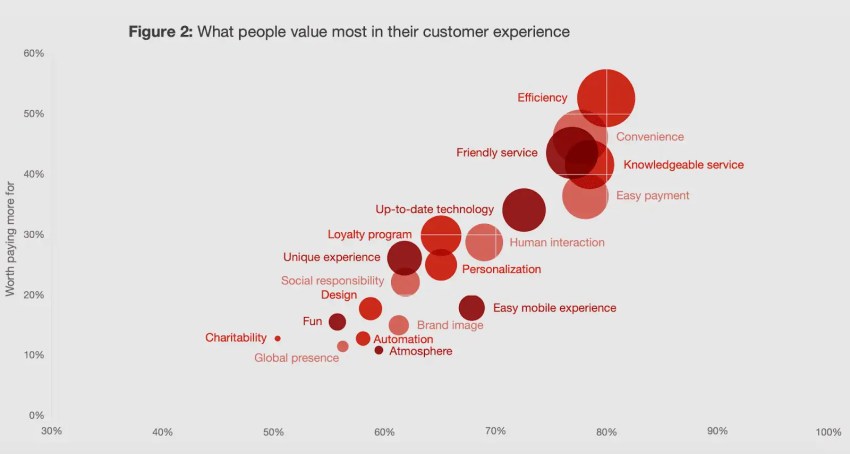
Good customer service brings more than satisfied customers. It directly drives growth. Customers who feel valued remain loyal to you, even when you make mistakes.
And if you want to track ROI, you can track metrics like Customer Satisfaction Score (CSAT), Net Promoter Score (NPS), Customer Effort Score (CES), and First Contact Resolution (FCR), or use platforms like Nextiva that come with built-in analytics. They automatically show you exactly how faster responses, fewer transfers, and better conversations translate into higher retention, more revenue, and happier customers.
- The top metrics that business leaders track for CX are CSAT (31%), retention (31%), and response time (29%). (HubSpot)
- 88% of customers are more likely to make another purchase after a great service experience. (Salesforce)
- Similarly, consumers are 2.9× more likely to trust a brand after a 5-star experience compared to a 1- or 2-star one. (Qualtrics)
- That loyalty is based on understanding. 63% of customers expect service agents to know their unique needs and expectations before a conversation even starts. (Salesforce)
- A core part of that experience is empathy, which 68% of customers now expect brands to demonstrate in every interaction. (Salesforce)
- This positive feeling translates directly into advocacy. After a great service experience, customers are 5.1 times more likely to recommend your brand. (Qualtrics)
- In fact, 85% of customers say they’d buy from a company again after a good experience, and 66% would recommend it to friends and family. (Verint)
- The main factors in a review for consumers are: 1. Star rating; 2. Legitimacy; 3. Recency; 4. Sentiment; and 5. Quantity. (BrightLocal)
- Don’t be afraid to ask for reviews. 60% of customers have posted a business review when prompted by a brand in the last year. (BrightLocal)
- Engaging with feedback pays off, as 9 in 10 U.S. consumers say they are more likely to use a business that responds to all their online reviews. (BrightLocal)
What these statistics mean for your business
Great customer service creates long-term business value. When your customers receive exceptional support, they’re more likely to spend more, stay loyal, recommend your business, and leave positive reviews that influence future buyers. Tracking both customer satisfaction and business outcomes helps you demonstrate the return on your customer experience investments.
Key takeaways:
- Track customer satisfaction alongside retention and revenue.
- Encourage satisfied customers to leave reviews.
- Use customer feedback to improve your products and support processes.
- Measure how customer service contributes to your business growth.

The High Cost of Poor Customer Service
The flip side, however, is that while good customer service strengthens your brand, a single bad interaction can cause serious damage. The cost is not only a lost sale, but also a damaged reputation that can take years to repair.
Through digital channels like social media and instant reviews, the voice of a dissatisfied customer can reach thousands, and the financial consequences are devastating.
- Globally, businesses lose an estimated $3.7 trillion annually due to poor customer experiences. (Qualtrics)
- The three main reasons for poor customer service are having to repeatedly call a company (63%), not getting an immediate answer (43%), and not being able to contact a brand via the customer’s preferred channel (39%). (Verint)
- Bad CX takes a real toll on customers: 56% said it wasted their time (often 1–2 days), 43% lost money (about $1,261 on average), and 31% said it caused emotional stress. (CCMC)
- 13% of customers have also threatened legal action, and 8% have threatened to contact the media. (CCMC)
- This also means customer frustration is quite high, with 63% of people who had an issue saying they felt angry about the experience. (CCMC)
- The damage isn’t just theoretical, as 65% customers have walked away from a brand for good because of poor service experiences. (Khoros)
- Not just that, 70% also say they’d switch to a brand’s competitor after a poor customer service experience. (Verint)
- Customers are getting more aggressive as well. 43% said they raised their voice, up from 35% in 2015, and the share of people seeking revenge has tripled from 2020 to 2023. (CCMC)
- 32% of people shared their biggest complaint on social media in 2023 — more than twice as many as in 2020. (CCMC)
- Negative reviews have a huge impact. 38% of customers will ignore a business with fewer than four stars. (BrightLocal)
- Not just reviews — review summaries also matter. 18% of consumers say they make decisions just from reading the summary. (BrightLocal)
- Similarly, customers are more likely to buy from your brand if you reply to all reviews (89%) or at least just the negative ones (55%). (BrightLocal)
- But that’s easier said than done. About 21% of brands struggle to keep up with rising customer expectations, and 22% say they have a hard time even understanding what those expectations are. (HubSpot)

What these statistics mean for your business
Poor customer service costs you sales, increases customer churn, damages your reputation, generates negative reviews, and makes acquiring new customers more expensive. Addressing recurring issues early helps protect both your revenue and your brand.
Key takeaways:
- Resolve recurring issues before they become churn drivers.
- Respond quickly to complaints and public reviews.
- Reduce customer effort by improving first-contact resolution.
- Track complaints, churn, and online reputation together.
How Customers Want to Connect: Channels and Preferences
Customer service used to be simple: a phone number and maybe an email address. Today, customers want to reach you everywhere, including live chat, social media, and self-service portals.
Consumers expect a connected and omnichannel experience, no matter how they engage with you. This omnichannel world brings with it many challenges, as different demographics have increasingly higher expectations.
Phone and human support still matter
- Older adults overwhelmingly prefer the phone, with 50% of them naming it as their top channel. (YouGov)
- Businesses know this. Despite the focus on digital, 23% of businesses still planned to increase their spending on phone support. (Nextiva)
- 39% of customers say they prefer contacting companies via phone, and 66% had spoken to a brand on the phone in 2023. (Verint)
- In fact, the phone is also the primary complaint channel for most customers, at 50%. (CCMC)
Messaging apps and live chat lead the pack
- In 2024, 61% of customers said they prefer contacting brands via digital channels. It was 45% in 2023. (Verint)
- Not just that, 52% customers are more likely to stay loyal to companies that offer live chat, and 29% have told friends and family about positive live chat experiences. (Kayako)
- 79% of businesses also say implementing live chat has resulted in an improvement in sales and revenue, not to mention customer loyalty. (Kayako)
- And businesses are taking notice, as 40% of them plan to invest in live chat, 29% in SMS, and 27% in in-app messaging in 2025. (Nextiva)
Self-service and AI chatbots are closing gaps
- 52% of people say the biggest benefit to using self-service chatbots is that they save time and lead to faster resolution times. (Verint)
- Brands are also doubling down, with 57% already adopting or planning to adopt chatbots and voice bots in 2025 and beyond. (Nextiva)
- But this is not without its challenges — 68% of customers have had a bad chatbot experience in the past. Top reasons included chatbots not being able to answer questions or understand what a customer needed. (Verint)
Social media support is now customer-facing PR
- 21% of customers have spoken about a poor customer support experience on social media. (Qualtrics)
- In 2023, customers posted about their product or service experiences on social media an average of 41 times a year. They also viewed other people’s reviews, posts, and ratings an average of 69 times a year. This is almost double the numbers from 2020. (CCMC)
- Here’s how consumers use social media to find business reviews (BrightLocal):
- YouTube: 34%
- Instagram: 31%
- TikTok: 20%
- Reddit: 20%
- X: 13%
- Threads: 7%
- This also means more than half (56%) of businesses plan to invest in social media for customer engagement in 2025 and beyond. (Nextiva)
Omnichannel support is the new standard
- The modern customer journey is complex. People now use an average of nine different channels to engage with a single company. (Salesforce)
- 95% of companies have invested in multiple tools for CX. 13% of them use 10+ tools. (Nextiva)
- However, 81% of brands say the customer experience would be a lot better if they could consolidate all conversations into one system of record, or omnichannel platform. (Nextiva)
- 25% of brands have also implemented an omnichannel routing engine. 4 in 5 brands have also implemented channel steering strategies, with 36% of them having successfully deflected calls to other channels. (Deloitte)
What these statistics mean for your business
Customers like to move between phone, chat, email, messaging apps, and social media without losing context. If your conversations remain connected across every channel, you can resolve issues faster, reduce customer effort, and deliver a better support experience.
Key takeaways:
- Offer support on the channels your customers use most.
- Maintain phone support for complex or sensitive conversations.
- Connect every customer interaction across your communication channels.
- Use channel performance data to guide future investments.
Social Media & Customer Service
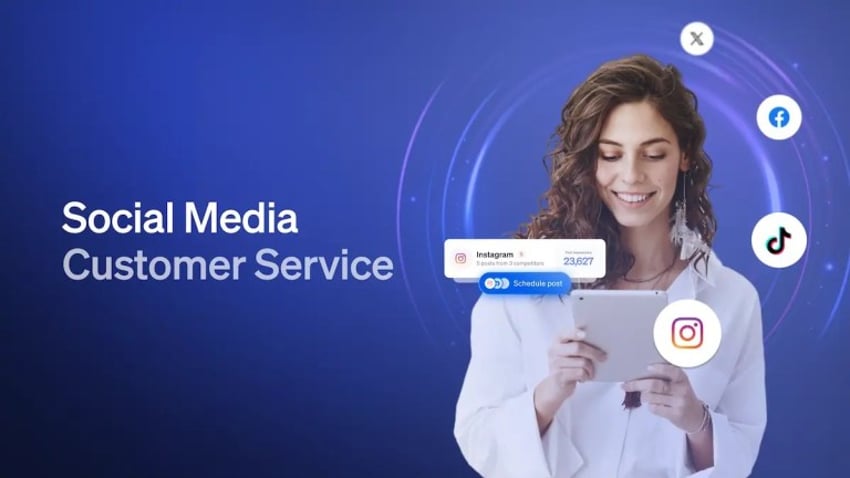
Social media is a public, high-risk customer service channel in which one viral complaint can cause more damage than a hundred phone calls.
Customers expect brands to be present, responsive, and effective on social media platforms, where every interaction becomes a public performance. The risks are high, but so are the rewards for brands doing it right.
- A massive 70% of customers report having used social media for customer service purposes at least once. (Sprout Social)
- And with Bluesky growing in popularity, the majority of users want brands to use the decentralized social platform for customer service and support. (Sprout Social)
- When customers contact a brand on social media, 76% expect a response within 24 hours. (Sprout Social Index)
- However, the unofficial gold standard is much faster. Between 39% and 43% of customers define a “good” response time on social media as being under three hours. (NapoleonCat)
- Despite this, the average brand response time on social media platforms is still around five hours. (NapoleonCat)
- The stakes are high for reviews. 93% of customers say online reviews influence their purchasing decisions. (Yelp)
- Video is also emerging as a service channel. 1 in 3 Gen Z consumers have used TikTok to learn about or purchase a product, and they often use the comments section to ask service-related questions. (Adweek)
- The cost of a social media interaction can be significantly lower than a call center interaction — sometimes as low as $1 per interaction compared to over $6 for a voice call. (Qualtrics)
- 76% of customers notice when companies prioritize customer support, and 51% specifically appreciate it when a brand responds to inquiries on social media. (Sprout Social)

What these statistics mean for your business
Every interaction on social media is responsible for how people see your brand. Fast responses, proactive engagement, and effective review management help build trust, while unanswered complaints remain visible to potential customers long after the original issue.
Key takeaways:
- Respond quickly to customer questions on social platforms.
- Monitor brand mentions and online reviews regularly.
- Resolve complaints publicly when appropriate and continue sensitive conversations privately.
- Use social conversations to identify recurring customer issues.

AI and Self-Service Adoption
Customers increasingly want to solve straightforward issues without waiting for an agent. Knowledge bases, customer portals, AI agents, and chatbots give them immediate access to answers while reducing the number of routine requests reaching support teams.
This shift does not mean customers want every interaction automated. They expect self-service to resolve simple issues quickly and provide a clear path to human support when the problem becomes complex, sensitive, or difficult to explain.
- 78% of customers prefer a self-service option when one is available. (HubSpot State of Service Report, 2024)
- 78% of service leaders believe their customers are willing to resolve problems independently. (HubSpot State of Service Report, 2024)
- 68% of customer support leaders plan to focus more on giving customers better tools to solve issues independently. (HubSpot State of Service data, 2024)
- 64% of service leaders planned to increase their investment in customer self-service. (HubSpot State of Service Report, 2024)
- 83% of CX leaders expect AI to increase customer self-service interactions fivefold. (Zendesk Benchmark data, 2026)
- 81% of consumers believe AI has become a standard part of modern customer service. (Zendesk CX Trends Report, 2026)
- 74% of consumers now expect customer service to be available around the clock, while 88% expect faster responses than they did one year ago. (Zendesk CX Trends Report, 2026)
- 51% of consumers prefer interacting with a bot when they need immediate service. (Zendesk CX Trends Report, 2026)
- 75% of consumers support service agents using AI to draft responses. (Zendesk CX Trends Report, 2026)
- AI will autonomously resolve 80% of common customer service issues without human intervention, leading to a 30% reduction in operational costs (Gartner, Inc.)
What these statistics mean for your business
Customers value self-service because it removes queues and gives them control over when and how they find answers. Businesses value it because routine enquiries can be resolved without adding more pressure to support teams.
The best approach combines a searchable knowledge base, AI-guided answers, account-based self-service tools, and simple escalation to a human agent. This gives customers more independence without trapping them in an automated interaction.
Key takeaways:
- Build self-service around the questions customers ask most frequently.
- Connect AI agents to accurate and regularly updated knowledge content.
- Measure self-service resolution, abandonment, escalation, and customer satisfaction.
- Make the transition from self-service to human support quick and clear.
- Use failed searches and unresolved chatbot conversations to find gaps in your knowledge base.
The Rise of AI & Automation in Support
Today, AI is the biggest driver of automated customer service. It promises efficiency, instant responses, and personalized experiences on a scale humans could never achieve. But AI isn’t a cure-all.
If poorly implemented, it leads to customer frustration. The smartest companies aren’t using AI to replace their employees, but to support and empower them.
- The strategic importance is clear: 84% of business leaders believe automation is now an essential part of any successful customer experience strategy. (Verint)
- By the end of 2025, over 80% of businesses will have implemented some form of chatbot automation for customer interactions. (Gartner)
- In fact, 1 in 6 contact centers have already deployed generative AI capabilities in their call centers. (Deloitte)
- 69% of CX leaders also say their company has a plan to “ethically deploy” AI. (Genesys)
- The primary driver is speed, as fast response times are the single biggest influence on customer satisfaction (CSAT) scores. (Freshworks)
- Other benefits of generative AI in CX include improved customer effort scores (57%), higher agent productivity (56%), and more deflection to self-service (47%). (Deloitte)
- 76% of brands are using AI to personalize customer experience while 72% are using it to understand pain points in the customer journey. (Genesys)
- The goal is AI-driven personalization at scale. Netflix’s recommendation engine, which influences 80% of content watched, is a prime example of AI delivering a personalized experience that would be impossible for humans alone. (Invoca)
- But it’s not all good news. Frustration with bots is so common that 3 in 5 customers admit to having had a bad experience with customer service chatbots. (Verint)
- This is where the “hybrid model” comes in. The most effective use of AI is to assist human agents. AI-powered tools that suggest real-time answers for agents can reduce issue resolution time by up to 30%. (AWS)
- This is also why 51% of brands prefer “autopilot” tools that allow humans to oversee AI interactions, and 44% are choosing agent-assist tools. (Nextiva)
- Nearly half of employees expressed a desire for more formal training and believe it’s the best way to encourage AI adoption. However, more than a fifth reported receiving minimal or no support. (McKinsey)
- Looking ahead, 57% of service professionals believe automated voice assistants will become a top channel for customer communication. (Salesforce)
- But chatbots are only one part of the picture. CX teams are using AI for other purposes like customer journey management (23%), sentiment analysis (22%), agent coaching (22%), and even empathy analysis (20%). (Genesys)
- 72% also believe AI will initiate proactive customer service in the future. (Genesys)
- Still, the return on investment can be a journey. Only 26% of companies in the early stages of AI adoption report seeing “high value” from their efforts, highlighting the importance of a clear strategy. (Nextiva)
- 89% of respondents also say positive customer service interactions require a balance between automation, AI, and the human touch. (Nextiva)
- When you look at the future, 24% of customers expect AI to match human capabilities in the next five years, and 25% expect that to happen in the next 10 years. (Salesforce)
- 40% of customers say AI raises the bar for the overall level of customer experience. (Salesforce)
- 26% are even ready to share personal info with AI agents if they believe it could better anticipate their needs. (Salesforce)


Generative AI and real-time personalization
One aspect that customer service reps are really doubling down on with AI is real-time personalization. Instead of using generic replies or rigid scripts, reps are leaning on generative AI to predict intent, tailor responses, and adjust messaging based on customer feedback analysis, sentiment, and context.
According to Nextiva’s 2025 CX Trends report:
- 39% of companies already use generative AI to write to customers (and another 25% plan to in the future).
- 25% are using AI-driven personalization today (and 25% more plan to adopt it).
- 24% are also using real-time sentiment analysis to better respond to customer needs.
When automation fails: balancing tech with the human touch
Customer service automation can speed things up, but it can’t replace humans — especially when issues get emotional, complex, or high-stakes. In Nextiva’s 2025 CX Trends Report, 98% of leaders say smooth AI-to-human transitions are essential, yet 90% admit they struggle to make those handoffs work.
A big reason: disconnected systems and messy data. When AI tools don’t have access to accurate, up-to-date customer information, they give inconsistent answers, fail to recognize intent, or make customers repeat details they already shared. This is also why 51% of the companies we surveyed are choosing “autopilot” models to handle the busywork while still keeping a human in the loop to monitor, correct, and step in when needed. This hybrid approach acknowledges the limits of AI while preserving the speed customers expect.
What these statistics mean for your business
AI is becoming an essential part of customer service, but customers still expect human support for more complex situations. The highest-performing organizations use AI to improve speed, productivity, and service quality while allowing agents to focus on conversations that require empathy and critical thinking.
Key takeaways:
- Use AI to automate repetitive tasks and provide agent assistance.
- Make AI-to-human handoffs fast and seamless.
- Train employees alongside AI implementation.
- Measure AI success using customer satisfaction and resolution metrics.
The Human Side: Empowering Support Teams for Better CX
Agent well-being is becoming just as important as customer satisfaction. Support teams are stretched thin, and companies are realizing that burnout leads directly to poor experiences. The future is as much AI-powered service as it is AI-supported employees.
Brands are investing heavily in upskilling and smarter tools so agents can feel supported and deliver consistently better customer care.
- 87% of call center workers report being highly stressed, and over half say they feel emotionally drained. (Freshworks)
- But, on the other hand, companies that invest in agent career growth hit 23% more of their strategic goals than those that only plan to. (Deloitte)
- This means hiring and retention are a top priority for most companies, and brands plan to invest 24%–39% of their budget here. (Nextiva)
- 33% of companies are planning to invest more in employee upskilling in 2025 and beyond. (Nextiva)
- In fact, 53% of brands have already made significant investments in training employees to use AI effectively. (Nextiva)
- Similarly, 44% of businesses rate AI agent support as a great way to help agents give the best possible support experience. (Nextiva)
What these statistics mean for your business
Great customer experiences begin with engaged and well-supported employees. Investing in training, AI-assisted tools, and career development improves both agent performance and customer satisfaction while reducing burnout. Investing in your people is just as important as investing in new technology.
Key takeaways:
- Invest in continuous learning and coaching.
- Use AI to support agents rather than increase workloads.
- Monitor employee engagement alongside customer metrics.
- Give agents the tools and customer context they need to succeed.

Customer Service Trends & Predictions 2026
Customer service is changing at an ever-increasing pace. The coming years won’t be about a single technology, but rather how data, AI, and a more human-centric approach work together to create more proactive, empathetic, and integrated experiences. Here are the key trends shaping the future of customer support.
Proactive and predictive support powered by AI
The future of great service is solving problems before the customer knows there is one. Instead of waiting for a complaint, businesses are using AI and data to anticipate needs. Imagine a carrier automatically rerouting your delayed package and notifying you of a solution, or your streaming service reporting a billing error and fixing it before your card is charged.
Proactive customer service transforms support from a reactive function to a proactive value driver.

Immersive and visual support with AR
For complex or technical issues, text messages and phone calls are often insufficient. Augmented reality (AR) will become an important support tool, especially in the hardware, electronics, and assembly industries. A customer can point their phone’s camera at a product, and the support agent can “draw” instructions on the screen, circle the correct button, or display a 3D animation of the solution in real time, reducing resolution time and customer frustration.
The rise of emotionally-aware AI
The next challenge for AI is emotional intelligence. Future virtual agents will be able to recognize human emotions such as frustration, urgency, or satisfaction based on the tone or wording of a chat message. Customer sentiment analysis will allow bots to respond more empathetically, automatically adjust their approach, or — most importantly — identify the perfect moment to escalate a conversation to a human agent who can establish a genuine emotional connection.

The empowered “super agent” with AI copilots
As AI handles simple, repetitive requests, the human agent’s role will evolve. They will become “super agents,” highly skilled problem solvers who exclusively handle the most complex, sensitive, and high-value customer interactions.
AI-copilots and agent assists will provide agents with instant information and context to support them and allow them to focus on critical thinking and building customer relationships. This will make the agent’s work more rewarding and valuable than ever.
Unified customer data becomes non-negotiable
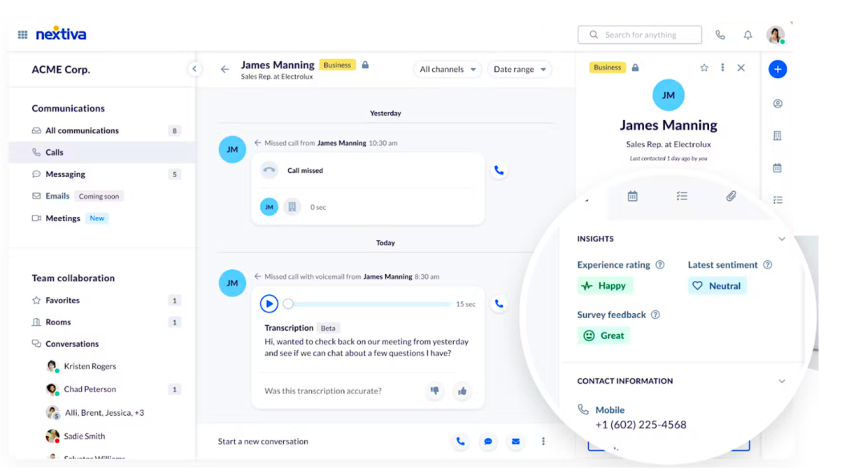
The omnichannel concept will be a centralized, unified customer data profile. The silos between marketing, sales, and customer support will finally be eliminated. Every employee will have a complete overview of the customer history — previous purchases, support tickets, marketing interactions, and personal preferences — in one place. Customers will no longer have to repeat themselves, and personalization will be effortless and intuitive.
Radical transparency and customer-led communities
Brands will build trust through radical transparency, meaning openly admitting mistakes, publishing how they respond to customer feedback, and actively building user communities on forums like Reddit. Instead of just a personal support ticket, customers can find answers from other experienced users in brand-sponsored forums and third-party review sites like G2, Gartner, Trustpilot, and Capterra.
This is why review and reputation management are becoming core responsibilities for CX teams. Modern customer service platforms like Nextiva now include built-in tools to manage reviews, respond faster, and pull that feedback directly into a unified inbox. That way, customer sentiment, issues, and public reputation all live in one place.


Gen AI-driven proactive outreach
AI is pushing CX beyond reactive support and into true anticipation. Instead of waiting for a ticket, brands are using predictive signals to spot problems early, reach out first, and — in some cases — resolve issues without the customer ever noticing.
According to a report by Genesys, 72% of CX leaders believe AI will eventually power all proactive outreach, and 59% expect it to directly increase customer loyalty and lifetime value.
This is because AI can detect behavior patterns, identify friction, predict needs, and trigger tailored outreach at the right moment and in the right channel.
What these statistics mean for your business
Customer service will continue to become more proactive, data-driven, and AI-assisted. Your business should combine predictive technology, unified customer data, and skilled human agents to be better positioned and to improve customer loyalty, operational efficiency, and long-term growth.
Key takeaways:
- Invest in proactive customer service capabilities powered by AI.
- Build a unified customer view across every department.
- Continue adopting AI while maintaining human support.
- Regularly review customer service metrics and strategy to adapt to changing expectations.

Customer data privacy and security statistics
AI and connected customer service platforms depend on large amounts of customer data. While these technologies can improve speed and personalization, customers also expect businesses to protect their information and clearly explain how it is used.
- 83% of customer experience leaders say data protection and cybersecurity are top priorities in their customer service strategies. (Zendesk Benchmark data 2026)
- Only 28% of customer experience leaders say their teams have advanced knowledge of data privacy best practices. (Zendesk Benchmark data)
- 60% of consumers believe businesses are falling short when it comes to data security. (Zendesk Benchmark data)
- 70% of consumers won’t purchase from a company they believe has weak security measures. (Zendesk Benchmark data)
What these statistics mean for your business
Customer trust depends on how well you protect personal information, not just how quickly you resolve issues. As your business adopts AI and connects more customer data, strong security practices and transparent data handling become essential for maintaining customer confidence and reducing business risk. A data breach or unclear privacy practice can damage customer confidence and influence purchasing decisions.
Key takeaways:
- Make data protection part of your customer service strategy.
- Train support teams on privacy and security best practices.
- Clearly explain how customer information is collected and used.
- Review the security of every AI tool and customer service platform.
Turn Conversations into Connections that Drive Loyalty
The takeaway from these customer service statistics is simple: every interaction is a chance to build (or lose) trust. As expectations rise, the brands that win are the ones that respond faster, personalize smarter, and most importantly, support their teams.
And if you’re ready to simplify that entire journey, Nextiva brings calls, messages, video, CRM, and AI-powered insights together in one platform. This means better agent productivity, better response metrics, and better customer satisfaction rates.
The customer experience platform customers love.
See how Nextiva’s unified customer experience platform helps you put these insights into action and build the loyal customer base your business deserves.