
 Productivity
  Blog
Blog  Business Communication
  Customer Experience
  Leadership
  Marketing & Sales
  Nextiva News
  VoIP
VoIP 

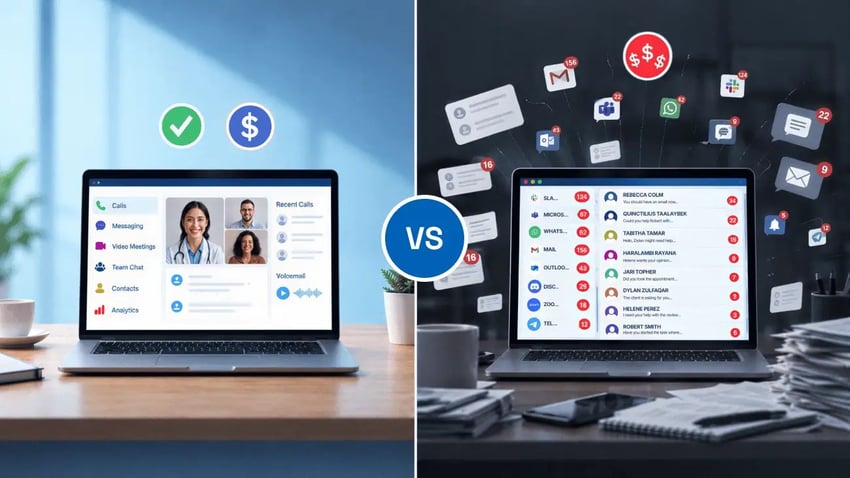
Microsoft’s Work Trend Index says that 48% of employees and 52% of leaders describe their workday as chaotic and fragmented. The same researchers clocked people getting interrupted roughly every two minutes during core hours. I’ve lived there for more than a decade. The employee communication tools I bought to connect my reps often shredded the one thing I couldn’t buy back: focus.
Before every purchase, I had to rebuild the same evaluation framework. This guide is that framework, written down so you don’t have to redo the work.
I’ll cover what these communication platforms do, the criteria I use to shortlist the best internal communication tools, and the five internal communication software picks worth your calendar time in 2026.
What Is an Employee Communication Tool?
An employee communication tool is software that helps your organization share information, collaborate, and engage team members across communication channels. It covers instant messaging, video calls, voice and business phone, company-wide announcements, file sharing, and employee feedback, ideally in a setup where those channels don’t feel like three separate jobs.
The category matters because business communication sets the ceiling on almost everything else. When a rep can’t find a product answer, they can’t close the deal. When an ops lead can’t push company updates in under a business day, the whole organization lags.
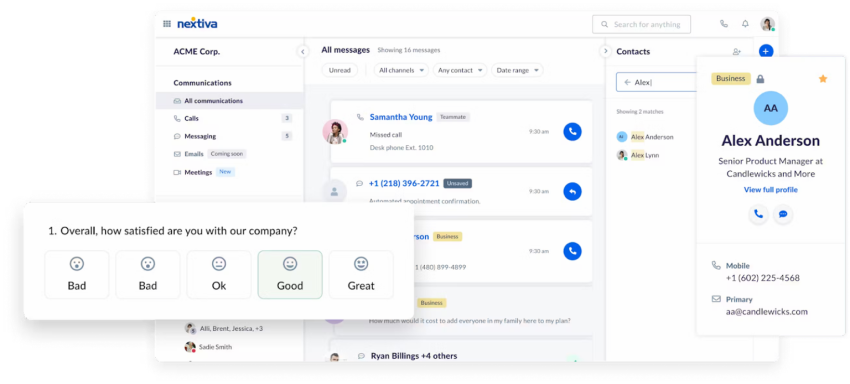
The best workplace communications platforms handle both synchronous and asynchronous work on the same rail and streamline workflows that used to live in four separate apps for remote teams and on-site staff alike.
A quick clarification on what one isn’t — an employee communication tool is not a project management board like Trello, a CRM, or an HRIS. It handles conversations, meetings, and broadcasts, not task management or customer records. Healthy ones integrate with systems of record so cleanly that users stop noticing the seams.
Why Communication Tool Sprawl Is the Real Problem
Asana’s Anatomy of Work survey of 9,615 knowledge workers found that directors and leaders use 10 different apps a day and burn 3.6 hours a week on unnecessary meetings.
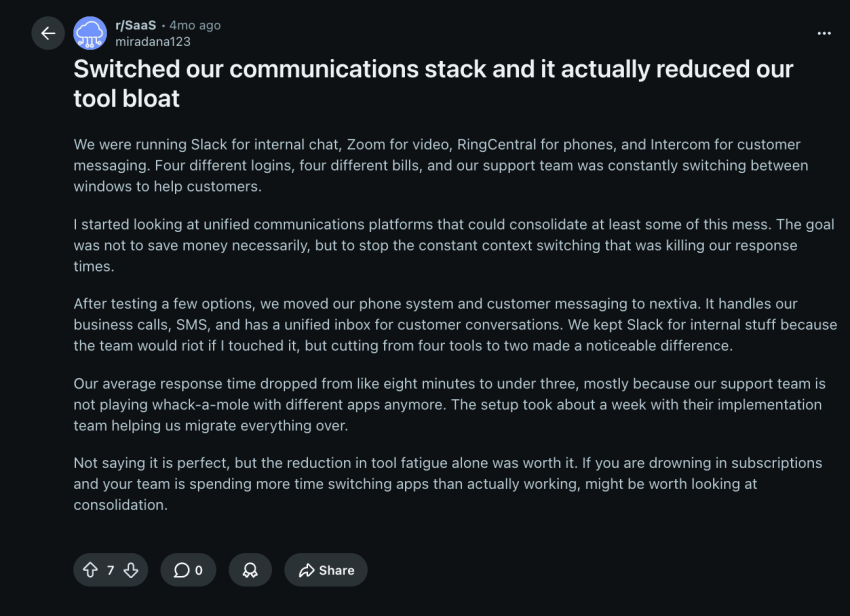
The toggling tax compounds fast. The channel everyone is supposed to use is slowly losing trust. I keep coming back to a recent r/SaaS thread where an operator consolidated their stack and saw internal response times drop from eight minutes to under three:
Employee engagement tracks the same curve. Gallup’s meta-analysis of almost 184,000 business units found that teams in the top engagement quartile deliver 23% higher profitability than those in the bottom quartile. Communication is the single largest driver of engagement across that dataset, with clear downstream effects on retention.
If you just add another app to the stack, nothing improves. You need fewer communication channels that do more, anchored on a real unified communications system.
The Criteria I Use to Shortlist Tools
Most RFP templates for this category read the same way: a 30-row feature matrix nobody actually scores. You should be able to separate the noise from what helps you pick the right tools. The questions below shed light on what matters.
Can it handle the conversation?
The conversation layer is where most buyers start and where most platforms fake depth. Three things have to work together.
Instant messaging needs channel structure plus threads, because without channels, your main feed turns into a river, and without threads, one side question buries three decisions. Video conferencing has to support more than 50 participants with clean screen sharing, recording, and conversational AI handling meeting notes, since nobody takes them by hand. Voice needs to be real VoIP across the desktop, mobile app, and desk phone, not a browser softphone pretending to be a phone system.
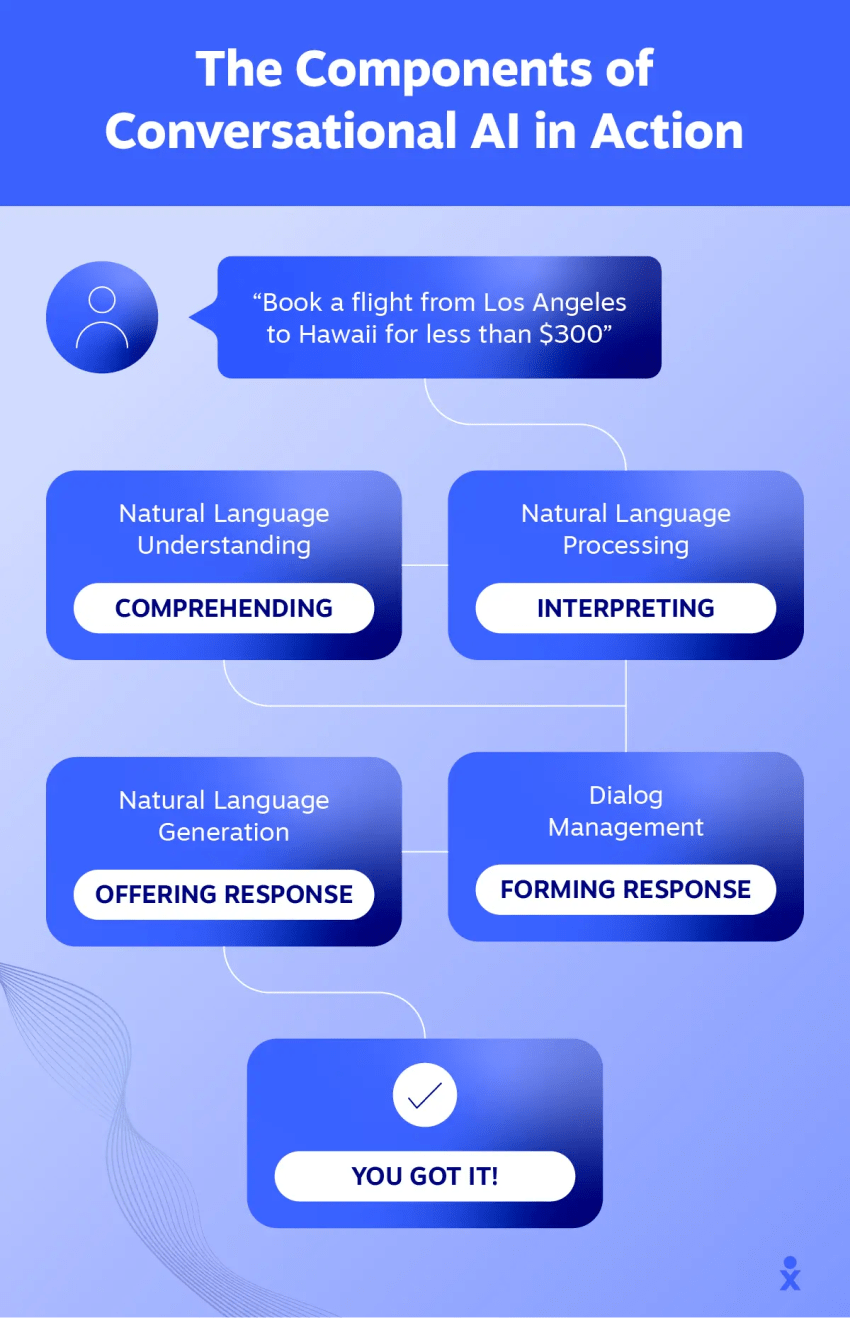
The line most buyers miss is the one between an employee tool and a customer tool. If the same app handles both the internal huddle and customer escalation, your reps stop context-switching mid-conversation.
Can it reach everyone, not just desk workers?
Boston Consulting Group estimates the global deskless workforce at up to 80% of all workers, roughly 2.7 billion people. If your platform can’t reach a nurse, a driver, a store associate, or a field tech on the device in their pocket, you aren’t running an employee communication system. You’re running a desk-only one and pretending otherwise.
You need full mobile parity with the desktop, push notifications that fire on iOS, SSO onboarding via SMS or QR for people without corporate email, and offline-tolerant updates that sync once the device comes back online. The same filter applies to company-wide broadcasts.
Leadership updates should route to teams, departments, locations, or shifts, not blast every employee every time. Read receipts and engagement dashboards should show that the message was seen, not just sent.
Can it keep the plumbing out of the way?
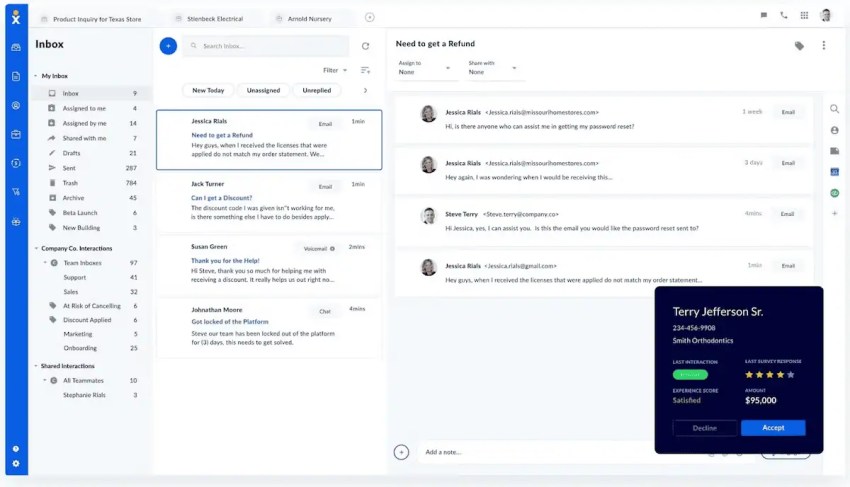
A communication platform that can’t plug into your CRM, HRIS, and project management tool is a platform that creates work. Look for native integrations with Salesforce, BambooHR, Asana, Jira, Google Drive, OneDrive, SharePoint, Outlook, Google Workspace, and whatever else owns your data.
Look for workflow automation that can trigger an onboarding message when a hire is created in BambooHR or route an urgent ticket alert into a specific channel. Look for open APIs, because the last 10% of your workflows never ship out of the box.
File sharing belongs in this bucket, too. You need drag-and-drop inside any conversation, previews so nobody downloads to skim, and real co-editing on docs without bouncing to separate collaboration tools.
Can it keep the legal team calm?
Security is the part of the evaluation that buyers ignore until procurement drops a 40-page encryption questionnaire on the table. The short list is simple: end-to-end encryption, SSO, MFA, role-based permissions, and the compliance certifications your industry demands.
Look into HIPAA for healthcare, SOC 2 for SaaS, PCI-DSS for payments, and GDPR for anyone dealing with European users. Add admin controls, audit logs, retention policies, and legal hold for the moments HR or counsel need them.
A platform that can’t produce an audit log under pressure is one you’ll replace after the first real incident.

Can you see what’s working?
Most companies buy these tools, deploy them, and never look at who uses what. Adoption dashboards close that gap with message engagement, meeting participation, and platform usage by team.
Lightweight pulse surveys and automated sentiment tracking on chat or recordings tell you whether the app is doing what you bought it for. Channel diagnostics reveal where team communication still breaks down. Without any of that, you’re flying blind into every renewal cycle.
5 Employee Communication Tools Worth Your Time in 2026
I judged each of these the way I’d judge them if I were signing the contract myself. I looked into how they handle both internal comms and customer communication.
Most importantly, I looked through what real users say after the honeymoon period ends. For businesses considering alternatives to net2phone, Nextiva sits at the top because it covers the widest surface area on a single bill. The others have specific cases where they win.
1. Nextiva: Best all-in-one communications platform
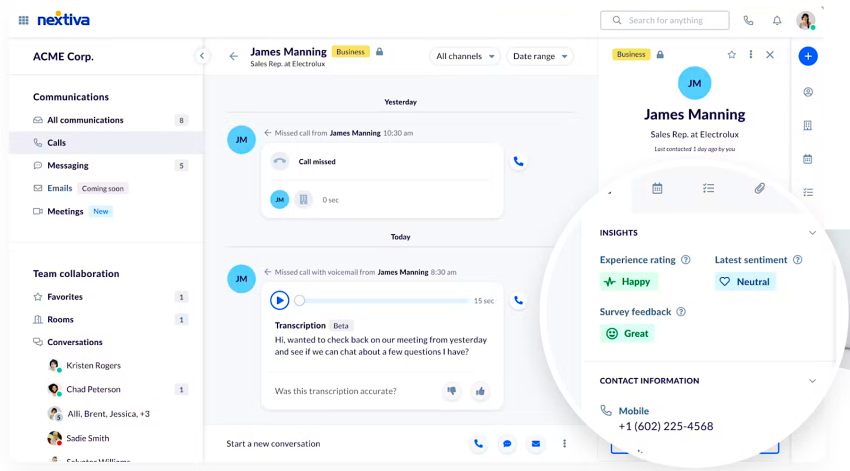
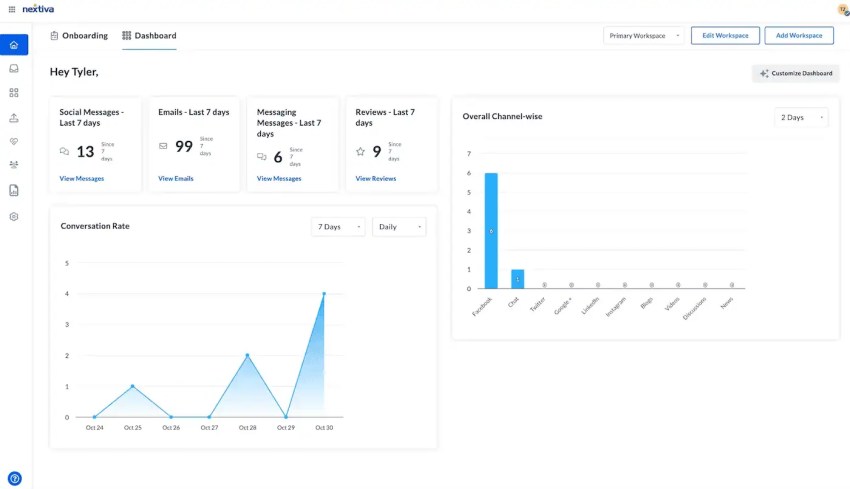
Nextiva is the platform I’d shortlist first for any organization that wants to manage employee and customer communication in a single app. The NextivaONE client brings voice, video, team messaging, SMS, and file sharing into a single workspace that works the same way across your desktop, mobile app, and desk phone. Your sales reps, service agents, and back-office teams stop juggling four logins to do one job.
While my job may influence my perspective, the points below reflect broader insights beyond my personal opinions to help you match the platform to your communication needs.
On annual billing:
- Core: $15 per user per month. Covers inbound and outbound voice, business SMS (100 texts per user per month), video meetings, screen sharing and file sharing, call routing, team chat, and the mobile app.
- Engage: $25 per user per month. Adds up to 2,000 toll-free minutes per user, advanced reporting, an inbound call center, and live chat with a chatbot.
- Scale: $75 per user per month. Rounds out the full CX stack with advanced analytics, AI summarization, workforce engagement management, and blended inbound and outbound calling. The Nextiva pricing explainer walks through the math by use case.
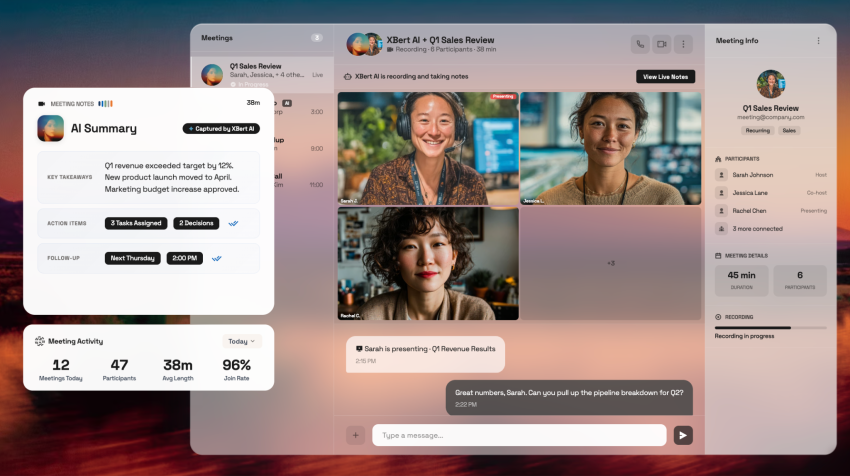
Key features include AI meeting summaries, voicemail transcription, smart call routing, and real-time analytics dashboards. Striving for 99.999% uptime works out to under five and a quarter minutes of downtime per year. It’s HIPAA compliant and SOC 2 certified with enterprise-grade encryption and admin controls.
The structural edge lies in the bridge between team collaboration and customer conversations. A customer success manager looking up an account doesn’t switch apps to call the customer back.
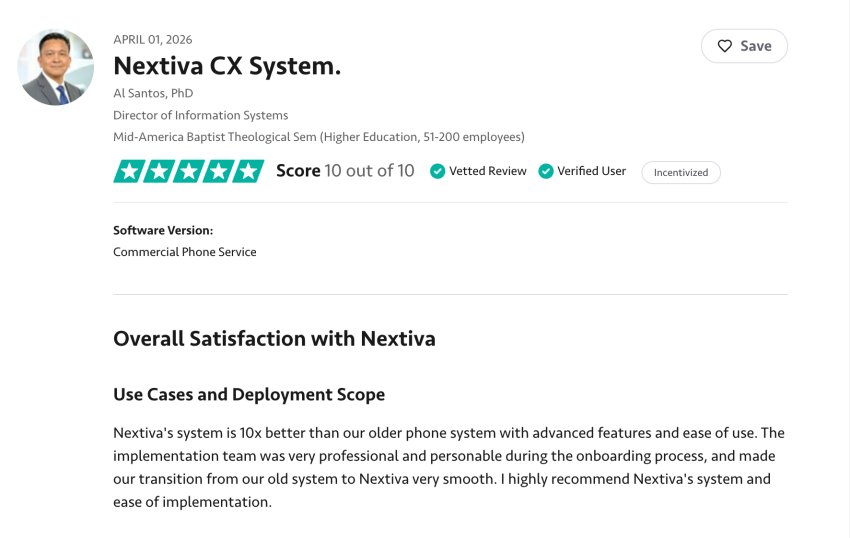
Nextiva users find it easy to implement and sometimes offer a comparative perspective, describing Nextiva as 10x better than their old system.
Best for: Mid-market and growing organizations that want voice, video, chat, and SMS on one bill, with a clean path into enterprise UC as they scale. Nextiva is especially strong for teams running customer-facing operations alongside internal collaboration.
2. Slack: Best for channel-based team messaging
Slack sets the bar for channel-based team messaging. The interface is intuitive, the integrations run deep, and the tooling around threads, search, and the Workflow Builder is mature in a way competitors haven’t matched. If your team members live in messaging tools, Slack feels native.
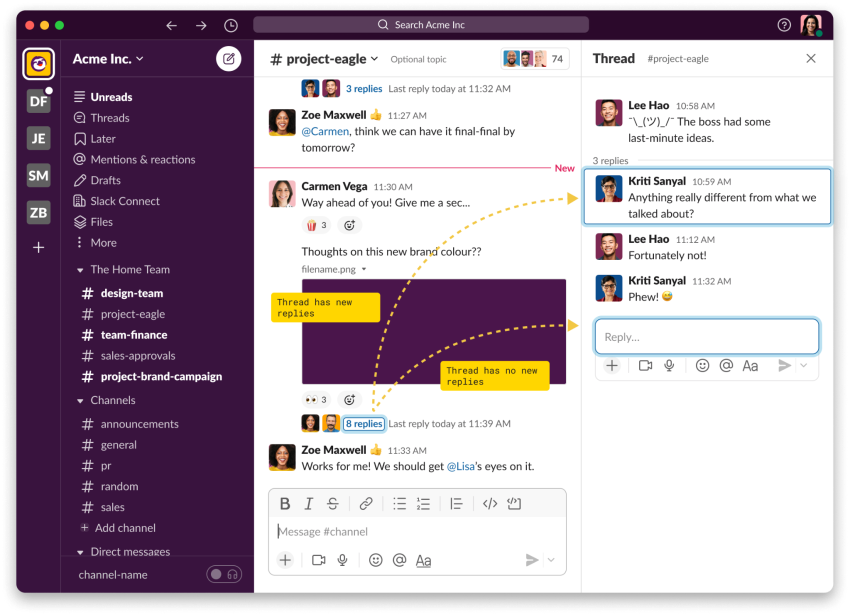
The free plan caps message history at 90 days. Pro is $8.75 per user per month, Business+ is $15 per user per month on annual billing, and Enterprise+ is a custom quote per current Slack pricing. Slack AI for search and summaries is bundled on higher tiers.
Reviewers like the integrations that come with Slack, and many appreciate the app’s intuitiveness for day-to-day teamwork.
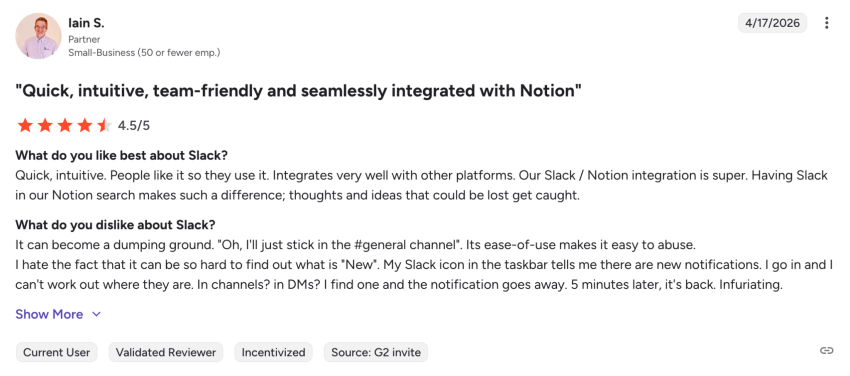
The bigger question is where Slack ends.
It doesn’t include real VoIP business phone, customer-facing call center features, or full video conferencing beyond Huddles. The 2,600-plus app marketplace is impressive, and Slack Connect is genuinely useful for cross-organizational channels with vendors. If your organization also needs voice, video, and customer interactions, you’ll end up running two or three additional communication platforms alongside it. That’s the sprawl problem this guide exists to solve.
Best for: Tech-forward teams, developer-heavy organizations, and any company comfortable layering communication apps on top of a separate phone and video stack.
3. Microsoft Teams: Best for Microsoft 365 organizations
If your company already runs on Microsoft 365, Microsoft Teams is the path of least resistance. It folds chat, video calls, calling, and document collaboration into the Office ecosystem, giving finance a familiar single-vendor story. Outlook, SharePoint, and OneDrive sit one click away.
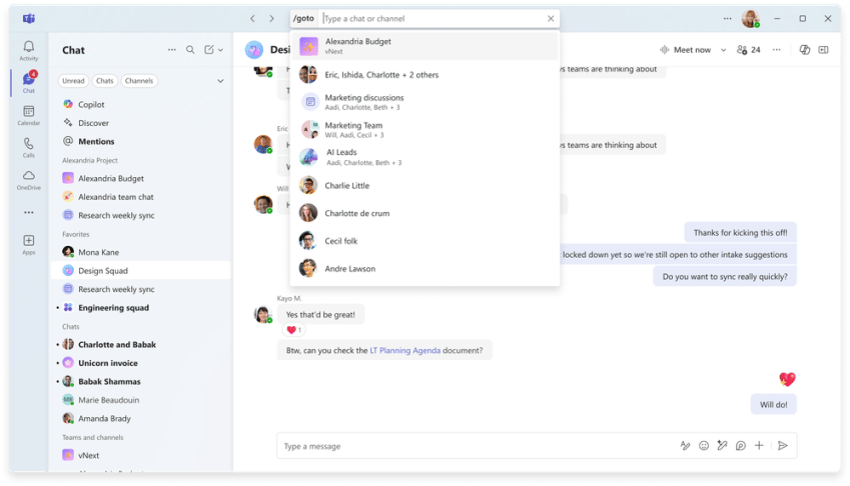
On pricing, a free plan exists for individuals, and Teams Essentials runs $4 per user per month. Microsoft 365 Business Basic at $6 per month bundles Teams with SharePoint, OneDrive, and the web Office apps. Teams Phone, the PSTN calling add-on, is priced separately.
Native co-authoring is where Teams shines. Edit a Word doc, jump into a meeting, and pull the file into a channel, all without leaving the workspace. Copilot handles meeting summaries, action item extraction, and intelligent search across files and conversations. Town halls and webinars scale cleanly to thousands of attendees.
However, users also report performance issues and lag.
The broader friction is architectural. Teams Phone ships as a separate add-on rather than a standard inclusion. Performance can lag on very large file volumes, and companies outside the Microsoft 365 ecosystem don’t extract enough bundle value to offset the learning curve.
Best for: Companies already deeply invested in Microsoft 365 that want a single-vendor story across productivity and communication.
4. Zoom Workplace: Best for video-first communication
Zoom extended its core video product into a broader collaboration suite called Zoom Workplace that bundles Zoom Phone, Team Chat, whiteboards, and email/calendar. The meeting reliability that turned Zoom into a verb still anchors the product, and it lands on most shortlists of video-first platforms alongside Google Meet.
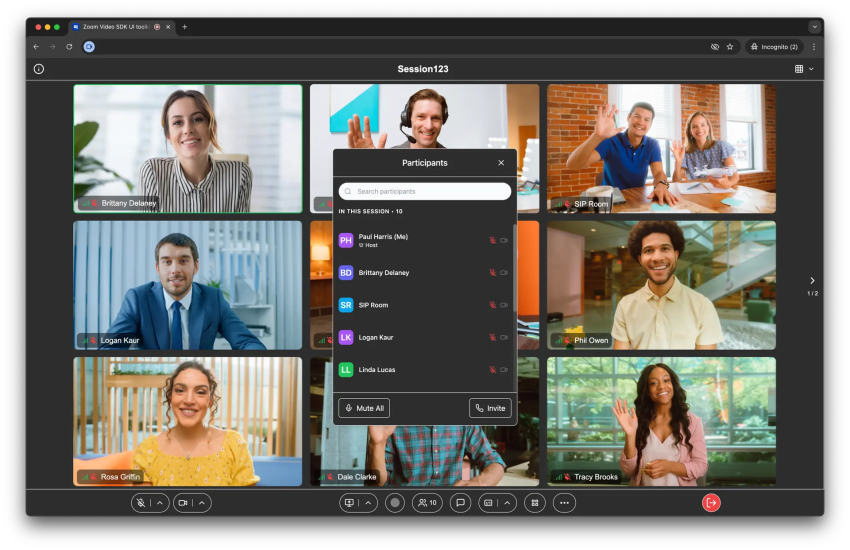
The Basic plan is free, with a 40-minute group-meeting cap. Pro runs $14.16 per user per month, and Business is $18.33 per month. Zoom Phone is a separate add-on starting at around $10 per user per month for metered usage.
AI Companion is the feature that users name first when asked. The bundle story is more mixed.
Zoom Phone is sold as an add-on rather than part of a bundle, and business SMS requires additional licensing. The platform reads more like a collection of integrated add-ons than a natively unified system, which is why teams already on Slack or Outlook tend to keep those platforms.
Best for: Organizations that prioritize video meetings, want to extend an existing Zoom investment, and accept they’ll likely still run supplemental apps for chat and phone.
5. Workvivo: Best for employee engagement and company culture
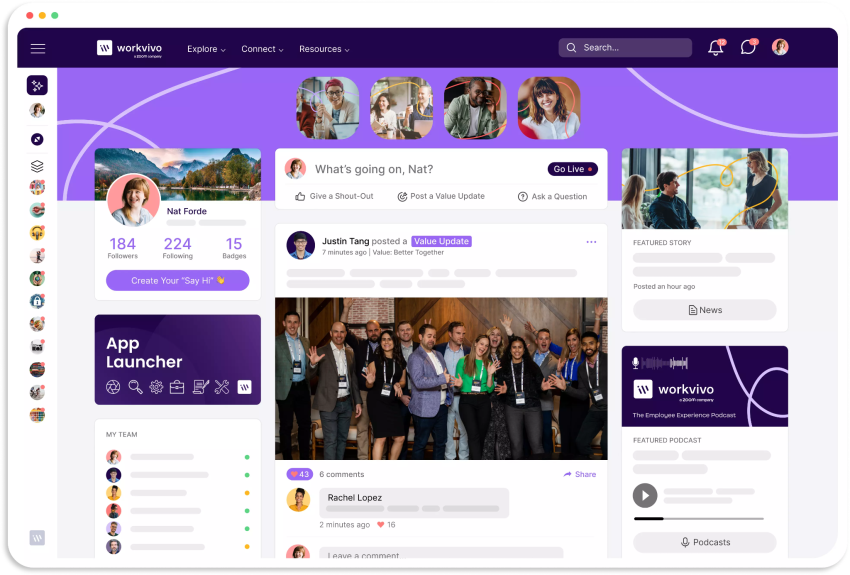
Workvivo, now part of Zoom, is a different kind of tool. It’s built around social-style engagement rather than transactional communication. Think news feed, shout-outs, pulse surveys, employee recognition, and culture moments. The goal is to be the employee app that every worker, including frontline workers, opens every day. That’s a different goal from most platforms in this guide.
Pricing isn’t public. Workvivo runs on a custom quote model scoped by organization size and desired modules.
The mobile-first news feed is where Workvivo shines. It borrows patterns from social networks and social media feeds to drive knowledge sharing and company news across the workforce. However, the search functionality has some challenges, and notifications can get overwhelming if not managed carefully. For teams investing in broader knowledge management, Workvivo pairs well with a dedicated knowledge base tool rather than replacing one.
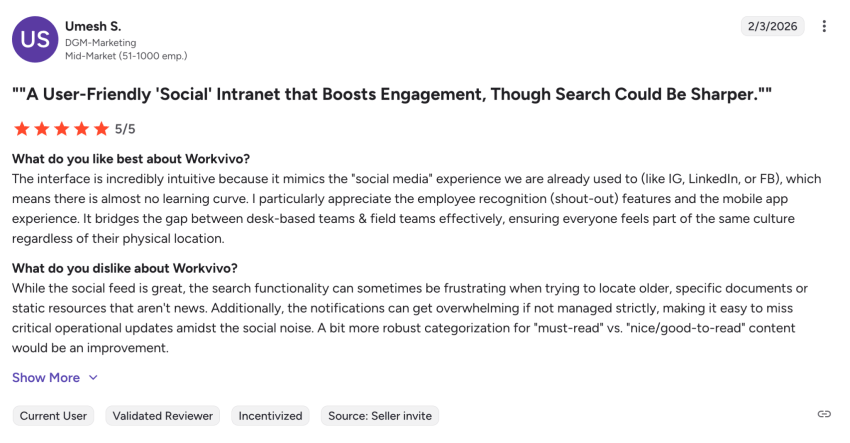
One thing to understand up front: Workvivo isn’t a replacement for a unified communications system. It doesn’t include VoIP, video conferencing, or a business phone. Most organizations pair it with a real UC platform rather than swap one for the other.
Best for: Large organizations focused on employee engagement, company culture, and community-building, especially those with sizable deskless workers or frontline workforces. Treat Workvivo as a complement to an internal communication platform like Nextiva, not a replacement.
Employee Communication Tools: A Side-By-Side Comparison
The six-column comparison in most buying guides gets unreadable on mobile. I split it into two stacked four-column tables. Pricing reflects current public listings. Features reflect each vendor’s standard plan unless noted.
Table 1: Nextiva, Slack, Microsoft Teams
| Feature | Nextiva | Slack | Microsoft Teams |
|---|---|---|---|
| Starting price | $15 per user per month | Free; $8.75 per user per month Pro | Free; $4 per user per month Essentials |
| Team chat | Included | Core feature | Included |
| Video conferencing | Included on all plans | Huddles only | Included |
| Business phone (VoIP) | Included on all plans | Not included | Add-on (Teams Phone) |
| Business SMS | Included | Not included | Not native |
| Mobile app | Full-featured (NextivaONE) | Full-featured | Full-featured |
| AI features | Summaries, transcription, routing | Slack AI (paid add-on) | Copilot (paid add-on) |
| Uptime SLA | 99.999% | 99.99% | 99.99% (financials) |
| Security and compliance | HIPAA, SOC 2, PCI-DSS | SOC 2, HIPAA (Enterprise) | SOC 2, HIPAA, GDPR |
| 24/7 support | Phone, chat, email | Email (paid plans) | Phone and web (paid) |
Table 2: Nextiva, Zoom Workplace, Workvivo
| Feature | Nextiva | Zoom Workplace | Workvivo |
|---|---|---|---|
| Starting price | $15 per user per month | Free; $14.16 per user per month (Pro) | Custom quote |
| Team chat | Included | Included | News feed only |
| Video conferencing | Included on all plans | Core feature | Not included |
| Business phone (VoIP) | Included on all plans | Add-on (Zoom Phone) | Not included |
| Business SMS | Included | Add-on | Not included |
| Mobile app | Full-featured (NextivaONE) | Full-featured | Full-featured |
| AI features | Summaries, transcription, routing | AI Companion | AI summaries |
| Uptime SLA | 99.999% | 99.99% | Not published |
| Security and compliance | HIPAA, SOC 2, PCI-DSS | SOC 2, HIPAA (add-on) | SOC 2, GDPR |
| 24/7 support | Phone, chat, email | Phone, chat (paid) | Email, chat |
Nextiva is the only platform here that bundles voice, video, chat, and SMS on every plan with no add-ons. Slack and Workvivo are point solutions, strong at one job each but not replacements for a unified stack. Microsoft Teams works beautifully inside the Microsoft 365 and SharePoint ecosystem, but gets friction-heavy outside it. Zoom leads on video, but phone and SMS still ship as separate licenses.
For a deeper read on the bundle economics, our UCaaS benefits breakdown and the broader enterprise communications guide go further.
How to Implement an Employee Communication Tool
Picking the right tools is the easy half. The hard part is getting 500 people to use them. Seven patterns separate rollouts that work from rollouts that quietly perish in week four.
1. Start with an honest audit
Before you buy anything, map the current stack — every internal channel, including email, chat, video, phone, intranet, announcement tool, file sharing, and the mystery app that finance insists on keeping. Next to each one, write down who uses it and how often. Then survey your people about what frustrates them most about the company’s communication.
You’ll surface two to four apps that do the same job, one app nobody opens, and a set of frustrations you didn’t know existed. That map is your business case.
2. Write down what you need
Most buying processes jump to feature checklists before anyone agrees on the goal. Your internal communication strategy starts with the non-negotiable channels first: real-time chat, video meetings, voice calling, broadcasts, and mobile coverage for the frontline, if you have any.
Then list the must-have integrations with HRIS, CRM, task management, and compliance. Then translate the goals into numbers. For example:
- Cut the stack from N apps to M.
- Drop urgent response times by half.
The numbers matter because when renewal comes, someone will ask what the tool delivered.
3. Consolidate before you add
Every new app raises context switching, your security surface, and your IT overhead. Before you add a tool, ask what it’s replacing.
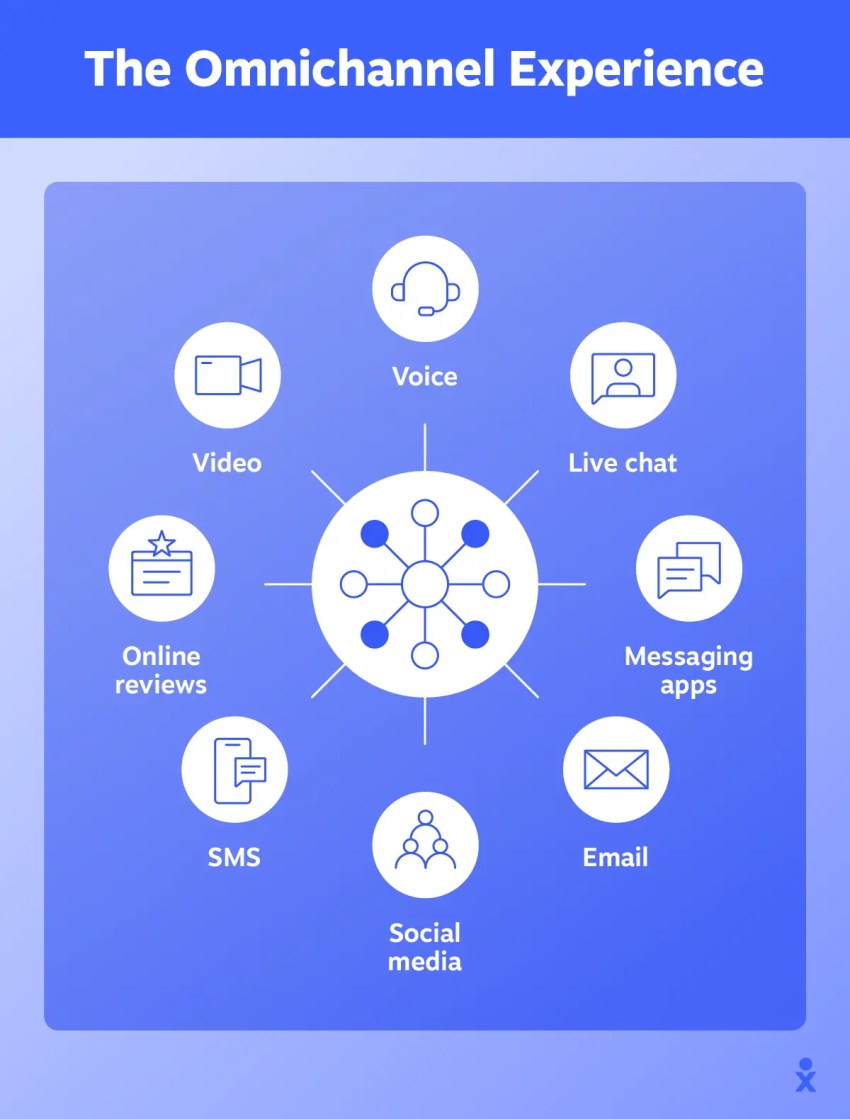
A unified platform that bundles chat, video, phone, and SMS usually beats layering separate business communication tools in terms of cost and operational overhead once you run the math. A $15-per-user-per-month unified plan will often come in under an $8 chat, $13 video, and $10 phone stack, leaving you with one vendor to manage instead of three.
4. Pilot with a group that mirrors the organization
Don’t pilot with your most tech-forward 20 people. Pilot with a cross-section: different roles, departments, locations, remote teams, on-site staff, and frontline workers, if you have them. Set KPIs before the pilot starts.
Collect structured feedback at 30 and 60 days. The pilot is where you catch the integration gap or the mobile notification bug that would torch a company-wide launch.
5. Invest in onboarding like it’s a product launch
This is where most rollouts quietly fail.
Name a communication champion in each department to model best practices and answer questions live. Give them a one-page channel guide template that outlines when to use chat, email, video, or a face-to-face phone call. Schedule live training and record it.
Most modern platforms are up and running in under an hour, but habit change takes longer. Training isn’t a one-time launch event. It’s a quarterly drumbeat.
6. Set norms before they set themselves
If you don’t define channel naming, archival policy, and who can post to all staff, your users will invent conventions you’ll spend the next year unwinding. Set response time expectations by channel upfront.
Review and refresh the guidelines quarterly as usage patterns evolve. Treat the rulebook as a living knowledge base, not a one-time document.
7. Measure what engagement actually feels like
Track the obvious operational metrics: daily active users, message volume by channel, meeting frequency, and feature adoption. Then run quarterly employee feedback surveys that ask whether the tool is improving how communication feels, not just how it functions.
The first set of metrics tells you the tool is being used. The second set tells you it’s working.
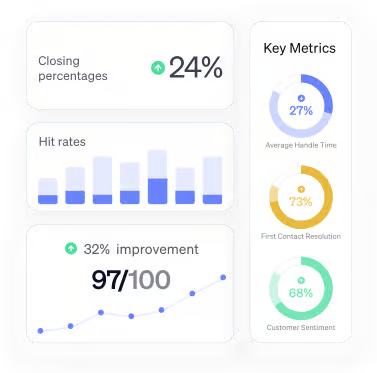
Use analytics to identify underused features, drive targeted enablement, and benchmark against modern corporate communication standards annually. This is where effective internal communication stops being a theory and starts showing up in retention data and everyday employee experience.
Nextiva’s One System Beats Five
When you’re solving a fragmented experience for your staff, the instinct to add another tool is wrong. The fix is fewer apps, deeper integration, and one source of truth for conversations. Of the platforms in this guide, Nextiva brings employee and customer communication into a single system.
Voice, video, team chat, SMS, and CRM context, all in one app, on any device, backed by proven uptime and 24/7 support — Nextiva fits teams running internal communication initiatives alongside customer-facing work, with room for optimization as your organization scales.
If your team is buried under five communication apps, swap them for one.
Collaborate with your team from anywhere.
Transform the way your teams connect. Spend time on essential work and bring all conversations,
files, and context into one, easy-to-use app.
Frequently Asked Questions About Employee Communication Tools
/Employee communication tools are software platforms that help organizations share information, collaborate, and engage with a workforce across channels: chat, video, voice, broadcasts, file sharing, and feedback. Some are point solutions focused on a single channel. Others are workplace communication platforms built on a multi-channel system that covers every channel through a single app.
For most small businesses, the best tool is the one that covers voice, video, chat, and SMS without forcing you to buy three separate subscriptions. Nextiva’s Core plan at $15 per user per month covers that full surface area on a single bill. If your team is technical and chat-heavy, Slack works as a starting point, but you’ll still need a separate small business VoIP system for phone calls.
They reduce friction, surface important information faster, and make it easier for employees to feel connected to leadership and each other. Gallup’s research links high engagement to 23% higher profitability and meaningfully lower turnover. The mechanism is straightforward: when people can find answers, hear from leaders, and contribute without fighting their tools, they stay engaged. That compounds into a better employee experience over time.
Cover the areas laid out earlier in this guide: messaging, video, voice, broadcasts, mobile, file sharing, integrations, security and compliance, and analytics. If your workforce includes deskless workers or frontline staff, weigh mobile parity and offline tolerance heavily when you shortlist.
A team chat app like Slack handles messaging well and ships with deep integrations. A unified communications platform handles chat, voice, video, SMS, and customer interactions on the same rail, with CRM context wired in natively. The chat app is a point solution. The UC platform is the system of record for how a company talks.
Start with the audit step in this guide. List every channel, count overlapping use cases, and rank by usage. Then evaluate a unified platform that can accommodate three- or four-point solutions. Set one hard rule: no new tool gets added unless one is retired.
Yes, but only if you choose it. Boston Consulting Group estimates that up to 80% of the global workforce is deskless. Tools like Workvivo and the NextivaONE mobile app are designed for that audience. Anything desk-only leaves your largest worker segment out of the conversation entirely.
For a vendor-led, unified platform, expect 30 to 60 days for a pilot and 60 to 120 days for a full company rollout, depending on size and integration depth. The slowest parts are SSO setup, CRM and HRIS integration, and change management for nontechnical teams.