

 Customer Experience
  Blog
Blog  Business Communication
  Leadership
  Marketing & Sales
  Nextiva News
  Productivity
  VoIP
VoIP 


Nobody likes waiting on hold, and for expanding businesses, long wait times directly affect revenue. As your business grows, call volumes increase. Without the budget or infrastructure to manage the surge, customer experience and brand reputation suffer.
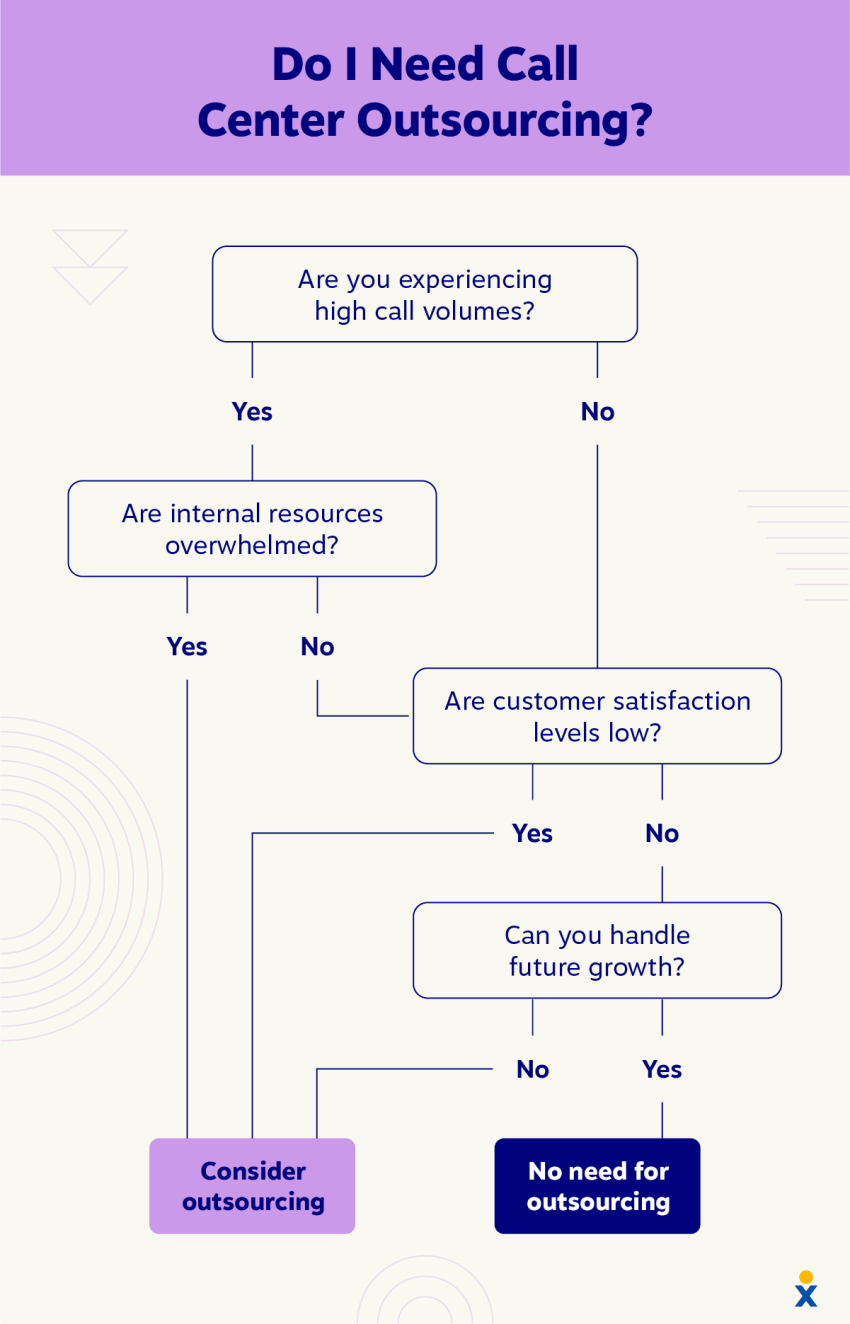
Call center outsourcing offers a strategic solution. It eliminates the overhead of building an in-house team while giving you immediate access to trained specialists. Whether you run a small business or a large enterprise, this guide helps you determine the right approach to meet customer needs and manage operational costs.
What Is Call Center Outsourcing?
Call center outsourcing, or contact center outsourcing, is the practice of hiring an external company to handle customer service, technical support, or phone-based communication functions on behalf of a business.
While traditional outsourcing focused strictly on phone calls, modern providers now manage omnichannel communications, including email, live chat, social media, and SMS. Instead of managing an in-house call center yourself, the specialized service provider you hire takes responsibility for managing all these customer interactions.
This approach allows companies to focus on their core business functions while ensuring that customer service is handled by professionals with years of experience. It eliminates the burden of staffing and training, ensuring expert support without the internal overhead.
It is a strategy on the rise. Grand View Research projects the global market will reach $163 billion by 2030, growing 9.8% annually as businesses look to reduce overhead. Of course, to see these results, it’s important to choose the right partner and establish clear expectations to maintain high-quality service levels.
How Does Call Center Outsourcing Work?
Think of an outsourced call center as an extension of your company, working alongside your internal team rather than replacing it. By adding experienced reinforcements, you build a partnership that supports your goals and delivers a scalable call center solution.
Here’s how it works:
- Identify which call center services you need, such as an inbound call center, help desk, or order processing support.
- Find a call center outsourcing company that offers those services, often as flexible, on-demand offerings.
- Agree on terms, services, performance metrics, service level agreements (SLAs), and pricing.
- Share product, service, and company information with the outsourcing provider so they can properly train their call center agents.
- Integrate your company’s call center software and CRM with its systems to streamline call center operations.
- Launch the partnership for added call center support.
- Monitor call center metrics and KPIs to evaluate scalability and performance.
- Review results to determine success and identify areas of improvement, often documented through a formal case study.
The Pros of Call Center Outsourcing
Businesses can benefit from contact center outsourcing in several ways. Here are a few common pros.
Cost savings
One of the primary advantages of call center outsourcing is the significant reduction in operational costs. By outsourcing, businesses can eliminate call center costs associated with office rent, equipment, and employee salaries and benefits.
Additionally, offshoring to countries such as the Philippines, India, and other major outsourcing destinations, where labor costs are lower, further decreases expenses. The outsourcing provider also hires and trains personnel, freeing up the company’s resources for other critical activities.
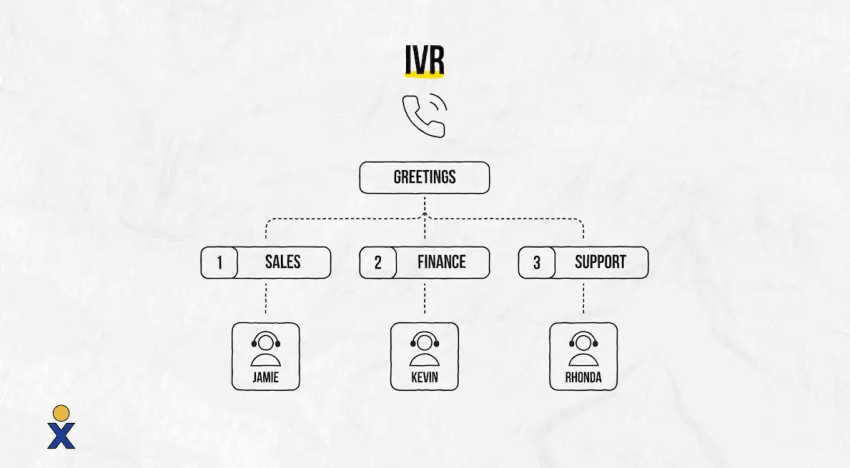
| Did you know? An interactive voice response (IVR) system helps call center operators direct calls to the best agents and can provide self-service options for repetitive tasks. |
Increased efficiency and productivity
Call center outsourcing enhances efficiency and productivity by providing access to a larger talent pool of skilled call center agents, enabling faster call handling and resolution for callers. Dedicated teams focus solely on customer service, improving engagement, and increasing customer retention.
Real-time monitoring of call analytics and metrics helps optimize agent performance, while around-the-clock availability ensures 24/7 customer support without needing local overnight shifts. Outsourcing also allows businesses to effectively manage seasonal spikes in call volume, ensuring consistent customer service during peak times.
| Did you know? Workforce management tools provide accurate staffing forecasting that helps businesses optimize agent performance and maximize resources for shift coverage. |
Improved customer experiences
Call center outsourcing improves customer experiences by delivering faster resolutions through trained, specialized support teams. Providers combine skilled agents with automation tools to resolve issues quickly, ensuring customer needs are addressed without delay.
Outsourcing also enables businesses to offer multilingual, round-the-clock support across time zones, making it easier to serve international customers. Stronger support experiences increase customer satisfaction, improve retention, and build long-term customer loyalty.
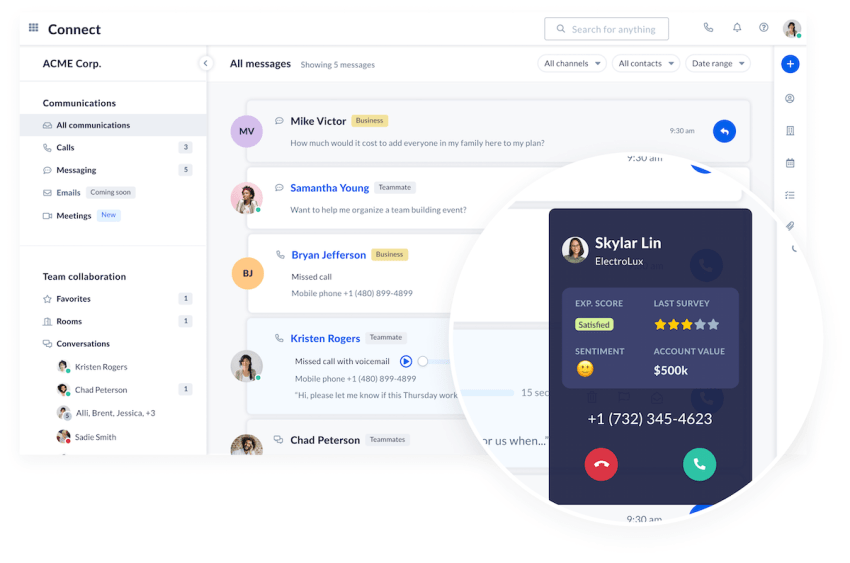
| Did you know? Contact center software unifies communication across all channels and devices, providing multi-channel conversational history, skills-based routing, and a simplified agent interface. |
Related: Breaking Down the Operations Side of Call Centers
The Cons of Call Center Outsourcing
While outsourcing your call center can offer significant benefits, knowing the potential drawbacks is essential. Challenges can arise if not carefully managed.
Potential quality control issues
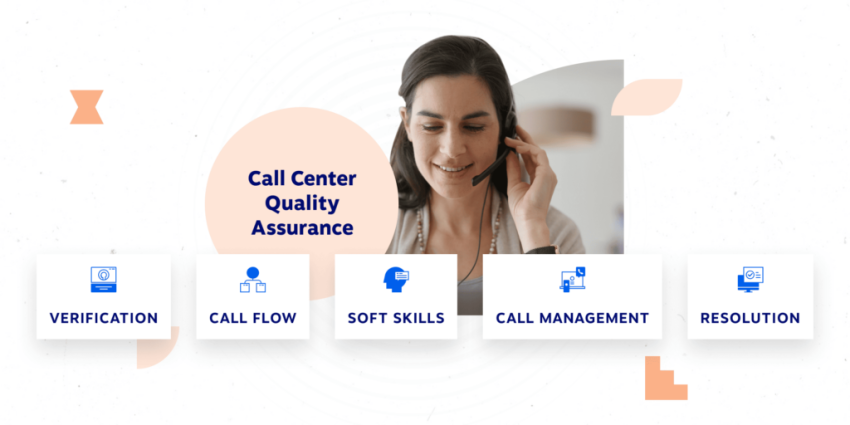
Maintaining consistent quality standards can be challenging when working with an external team. Language barriers, cultural differences, and varying levels of agent training or processes across global outsourcing solutions can impact customer satisfaction. Effective quality monitoring and performance metrics are crucial to mitigate these contact center outsourcing issues.
| Pro tip: Reduce quality control issues by following call center quality assurance best practices, such as offering call recording and evaluation tools, real-time reporting, and performance monitoring to ensure consistent service delivery and enable targeted coaching. |
Collaboration concerns
Building a strong collaborative relationship with an outsourced call center is vital for success. Miscommunication, differing time zones, and challenges in knowledge transfer can hinder efficiency and problem-solving. Clear collaboration channels and regular check-ins are essential for effective business communication.
| Pro tip: Unify your in-house and outsourced call center teams by integrating team collaboration tools that streamline communications, facilitate engagement, and provide a centralized knowledge base for consistent information access. |
Lack of expertise and in-depth knowledge
While outsourcing providers offer skilled agents, they might not understand your business, products, or services as well as an in-house team would. This can lead to longer resolution times and decreased customer satisfaction. Providing call center coaching and ongoing support can help bridge this knowledge gap.
| Pro tip: Streamline onboarding by providing outsourced call center teams with easily accessible resources, such as agent training documents and modules, a robust knowledge base, and integrated CRM software that eliminates data silos. |
Types of Services You Can Outsource
Contact center outsourcing offers a wide range of services tailored to meet diverse business needs. Here are some of the key services you can outsource.
- Customer service: Outsourcing customer service ensures that your customers receive prompt and professional support, improving satisfaction and loyalty. Skilled agents handle inquiries, customer complaints, and other issues efficiently, providing a seamless customer experience.
- IT support: Outsourcing IT support provides access to technical expertise, ensuring that technical issues are resolved efficiently. This allows your in-house team to focus on core activities while maintaining high IT performance and security levels.
- Lead generation: By outsourcing lead generation, businesses can efficiently identify and cultivate potential customers. Professional agents use targeted strategies to gather qualified leads, driving sales growth and business development.
- Telemarketing and sales: Outsourced telemarketing and sales teams can effectively reach out to potential customers, increasing sales opportunities. These agents are trained to engage prospects, promote products, and close deals, boosting your revenue.
- Social media monitoring and engagement: Outsourcing social media management, monitoring, and engagement helps businesses maintain a strong online presence. Dedicated teams monitor social channels, respond to customer inquiries, and engage with audiences, enhancing brand visibility and reputation.
These services are just a few of the many things businesses can outsource.
Learn how Snap Marketing migrated its on-prem IT tech stack and scaled its BPO in the cloud.
Read case study →
Common Call Center Outsourcing Pricing Models
Before signing a contract, understand how outsourcing providers price their services. Different pricing models match specific operational needs, whether you’re scaling an inbound call center, managing order processing, supporting healthcare services, or building long-term operations.
Most call centers use one of the following models, each designed to suit different operational needs.
1. Hourly rate (dedicated agents)
You pay a fixed hourly rate for each agent, regardless of call volume. Agents work exclusively for your brand, which makes this model ideal for maintaining a uniform tone, training standards, and service quality across all interactions. It suits businesses with steady call volumes that require consistent brand representation.
2. Per-minute billing (shared agents)
You are billed only for the time agents spend actively handling calls or completing after-call work. Agents typically rotate between multiple clients, allowing providers to maximize utilization and keep costs lower. This model works well for businesses with low or unpredictable call volumes that want to avoid paying for idle time.
3. Monthly flat rate (FTE pricing)
You pay a fixed monthly fee per agent that includes salary, benefits, equipment, and management. This structure offers strong cost predictability and closely resembles hiring full-time employees without internal overhead. This is well-suited for long-term partnerships that require stable, dedicated teams and predictable billing.
4. Per-transaction / per-ticket pricing
Instead of paying for time, you pay a flat fee for each resolved ticket, email, or chat interaction. This encourages productivity and faster resolution while keeping costs tied directly to output. This model fits digital support channels such as email, live chat, and SMS, where task duration is generally consistent.
5. Hybrid model (base + incentive)
This approach combines a base hourly or flat rate with performance-based incentives linked to outcomes such as customer satisfaction scores (CSAT), conversions, or upsells. It aligns provider performance with business goals. This model is best for sales-driven or complex support roles where both parties share risk and reward.
6. Cost-plus model
You pay the agent’s actual salary plus a fixed fee or percentage to cover management, infrastructure, and profit. This structure provides full transparency into staffing costs and margins. This model is commonly used by large enterprises or companies building sizeable offshore teams that require cost visibility.
7. Pay-for-performance
You pay only when specific results are achieved, such as leads generated, appointments booked, or sales closed. While this minimizes upfront risk, providers often charge higher rates per outcome to offset performance risk. This model is most effective for outbound sales campaigns and lead generation initiatives.
Examples of Call Center Outsourcing Companies
Choosing the right call center outsourcing partner is crucial for your business’s success. Here are a few examples of well-known companies specializing in call center outsourcing services and software.
- Nextiva: Nextiva provides the communications technology for call center Business Process Outsourcing (BPO) providers. With its reliable, cost-effective, and flexible cloud-based Contact Center as a Service (CCaaS), outsourcing companies can provide remote teams with multiple disparate tools in one centralized platform.
- TeleDirect: With a strong global presence, TeleDirect specializes in call center services such as customer care, sales, and technical support outsourcing. They offer various services, including inbound and outbound call center outsourcing, email management, and social media support.
- Helpware: Focusing on providing customer support solutions, Helpware offers a combination of human agents and AI technology. Their services include technical support, customer service, and sales support, with a strong emphasis on delivering exceptional customer experiences.
Choosing the right third-party vendor to handle your outsourcing needs depends on your business needs and resources. Compare the companies, read customer reviews, and connect with them to determine if they’re the right fit.
Related: Call Center for Insurance Agencies: Must-Have Features
Enhance Your Contact Center With Nextiva’s AI-Powered Solution
With Nextiva, businesses of all sizes can enjoy the benefits of call center outsourcing with our all-in-one, AI-powered contact center software.
Our platform’s easy setup and flexible deployment of powerful AI features allow businesses to start quickly and expand capabilities as customer and business needs evolve:
- Omnichannel support enables customers to connect via voice, email, chat, SMS, or social media, ensuring seamless communication across all touchpoints.
- AI-driven tools like auto-transcription and intelligent virtual assistants reduce costs and improve service quality.
- Workforce optimization features help accurately forecast and staff shifts, ensuring optimal agent performance and customer satisfaction.
Try Nextiva and start boosting agent efficiency, enhancing CX, and saving money today.
A top AI-powered contact center.
All conversations in one platform. Empowering agents. Satisfying customers. Trusted by 100K+ businesses.
Call Center Outsourcing FAQs
Check out these frequently asked questions about call center outsourcing for some extra information and insights.
The cost of call center outsourcing varies based on several factors, including the location of the call center, the number of agents required, the services needed, and the contract length. Outsourcing can lead to cost savings compared to managing an in-house call center.
The difference between inbound and outbound calls is that customers initiate inbound calls, such as customer support or sales inquiries. Outbound calls are initiated by the call center, often for sales, market research, or appointment scheduling purposes.
There are a few different models for call center outsourcing, each with its own focus, price range, and pros and cons. Here are the most common types:
Onshore outsourcing: This model involves contracting a call center within your own country. It often provides the quickest response times and cultural alignment but can be more expensive than other options.
Nearshore outsourcing: This model utilizes call centers in nearby countries, often offering a balance of cost-effectiveness and cultural proximity.
Offshore outsourcing: This involves outsourcing to countries far from your own, typically offering significant cost savings but potentially longer response times and language barriers.
Work-from-home agents: This model employs agents who work remotely from their homes. It can be cost-effective but requires robust technology and management systems.
The setup timelines depend on complexity, but most outsourced call centers go live within two to six weeks. This period typically covers contract finalization, system integration, and agent training. Basic answering services can launch in under a week, while more complex, enterprise-level support operations may require one to two months.
Reputable outsourcing providers follow strict security standards, including SOC 2 Type II, HIPAA, and PCI-DSS compliance. Before signing a contract, always request proof of security certifications and review the provider’s data protection protocols.