
 Productivity
  Blog
Blog  Business Communication
  Customer Experience
  Leadership
  Marketing & Sales
  Nextiva News
  VoIP
VoIP 

It happens all the time. A contact center manager will review their team’s monthly dashboard and see the metrics they dreaded. Average handle times (AHTs) are increasing, CSAT scores are falling, and two more agents have announced their two-week notice.
The team isn’t short on tools and has worked hard to implement processes. The agents themselves are good, but they’re checked out, and it’s starting to impact customer experience (CX).
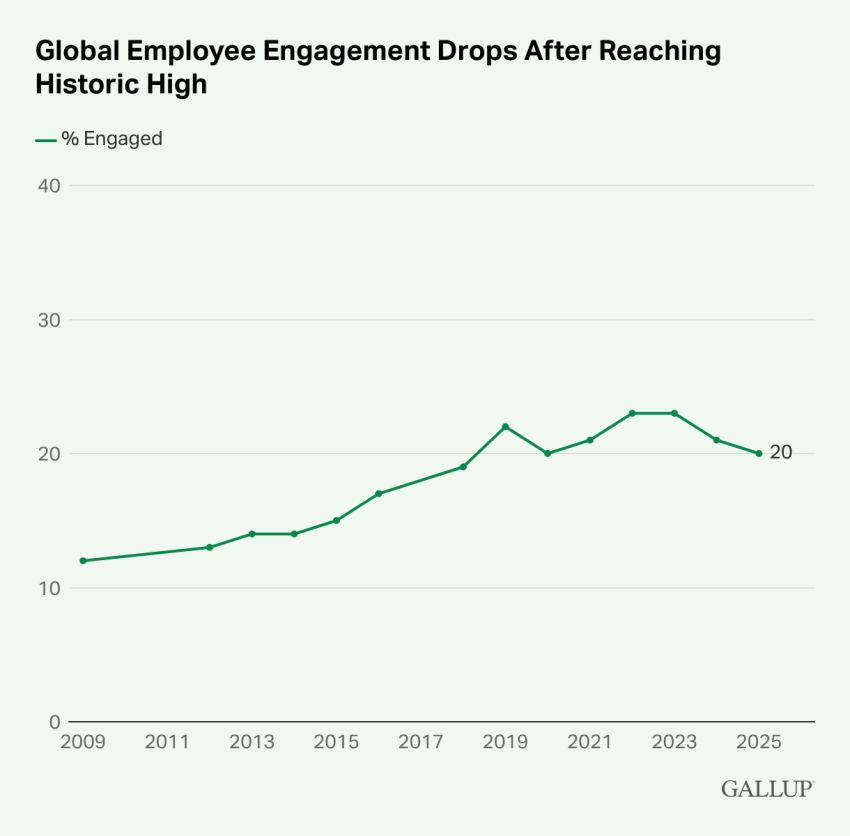
I can’t tell you how many times I’ve seen this. It’s a universal business challenge, with Gallup’s 2026 report finding that global employee engagement fell to 20% in 2025, costing the world economy $10 trillion in lost productivity. That said, this challenge is most severe in customer-facing roles, where employee experience matters, since disengagement can quickly trickle down to the customer.
This is why workforce engagement and optimization are so critical. In this post, I’m going to share everything you need to know about workforce engagement management (WEM), including what it is, best practices, and the tools that will help you get it right so you can retain both your employees and your customers.
What Is Workforce Engagement?
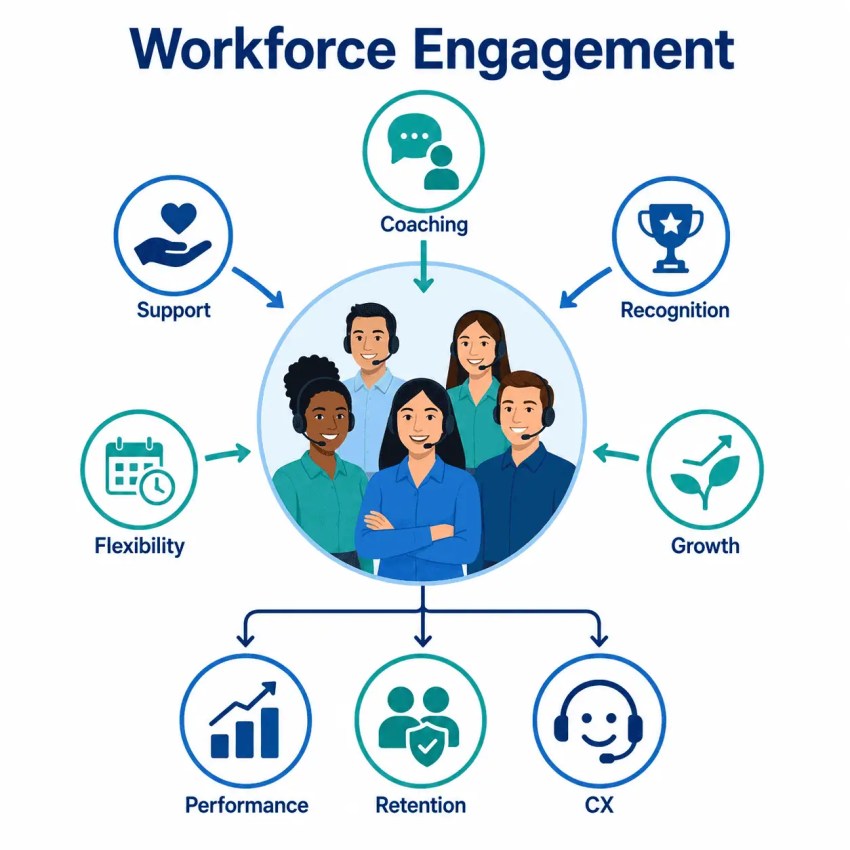
Workforce engagement is the level of commitment, enthusiasm, and emotional connection employees have toward their work, their team, and the organization’s mission.
This goes beyond job satisfaction, where employees are satisfied with their jobs in exchange for the paycheck they receive. In theory, those content employees could still be doing the bare minimum. Engaged employees, meanwhile, take ownership of outcomes, are more productive, and typically look for ways to improve their performance.
A combination of factors drives workforce engagement, but some of the most essential include:
- Clarity of role expectations: Employees need to know exactly what’s expected of them and how their work contributes to broader goals.
- Quality of management: Managers who coach, recognize, and develop their teams drive higher engagement than those who simply supervise.
- A sense of purpose: Employees who understand why their work matters are more invested in doing it well.
WEM is a strategic and ideally tech-enabled approach to measuring, monitoring, and improving engagement. It encompasses quality management, performance coaching, workforce scheduling, and potentially gamification. It can help influence and shape employees who are all-in.
The importance of workforce engagement in contact centers
In contact centers, workforce engagement is particularly critical because agents are the frontline of CX. Disengaged agents can quickly lead to longer handle times, lower first-call resolution rates, higher escalation rates, and worse CSAT scores.
Imagine what this looks like. An agent struggling with burnout is on their eleventh call of the day, and someone is yelling at them about a return policy they have no control over. While they know they could try to find a solution (such as waiving the policy as a one-time courtesy), they just do not want to deal with it. So instead of handling it, they say, “Sorry, that’s the policy, can I help with anything else?” or they escalate it to someone else to deal with.
Neither option will improve your CSAT score.
Workforce Engagement Statistics: Why It Matters
Having managed customer-facing teams, I can tell you that the difference between an engaged and disengaged workforce isn’t abstract. It ultimately shows up in every metric that matters, and the data backs that up.
The global engagement crisis
The numbers here are sobering.
As we’ve already noted, global employee engagement fell to 20% in 2025, its lowest level since 2020, according to Gallup’s 2026 State of the Global Workplace report. This means 80% of the world’s workforce is not fully engaged.
In the U.S. and Canada, engagement sits at approximately 31%. This is higher than the global average, which is good, but it still means that nearly 70% of workers are not engaged.
And to compound the issue, manager engagement dropped from 30% to 27% in 2024, then fell further to 22% in 2025. This is critical, as managers account for up to 70% of the variance in team engagement. When managers check out, their teams follow.
The business impact of workforce engagement
Workforce engagement can have clear and direct business impacts. A 2024 report from Gallup found:
- Highly engaged teams are 23% more profitable than those with low engagement.
- Engaged teams show 18% greater productivity and significantly lower absenteeism.
- Highly engaged teams have 21% lower turnover, even in high-turnover industries, which is a critical call center metric.
The takeaway here is clear: Engaged teams will boost productivity and directly impact your company’s profitability.
Workforce engagement in contact centers
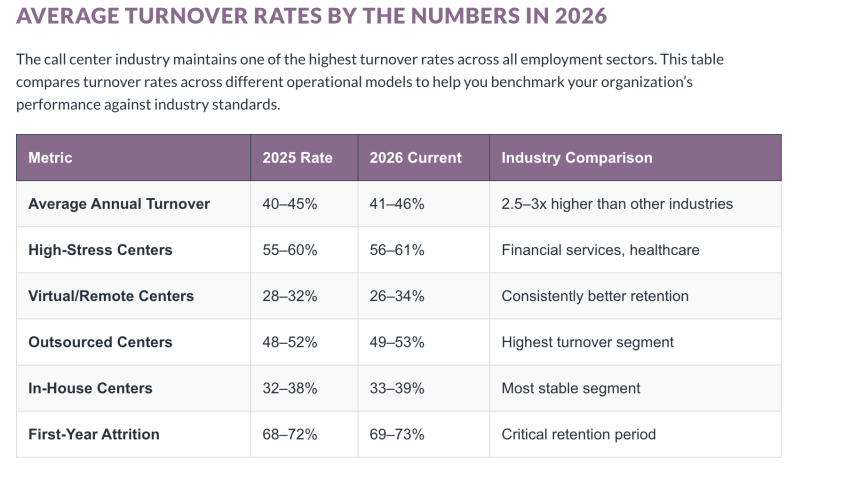
Contact centers face some of the highest turnover rates across all industries. Annual attrition can exceed up to 45%, and in some organizations it’s even higher.
The reasons are predictable. Agents who feel unsupported, under-recognized, or lack the right tools and training are significantly more likely to disengage and leave. They deal with frustrated customers all day, and if the organization isn’t investing in their experience, they burn out fast.
The flip side is equally clear. Engaged agents deliver faster first-call resolutions, shorter handle times, and higher CSAT scores. They stay longer, perform better, and create better CXs. This means fewer hiring, onboarding, and training costs, and your employees can grow over time.
Best Practices to Improve Workforce Engagement
Statistics make the case for investing in workforce engagement, so now let’s talk about what works. These are the practices I’ve seen change customer-facing teams, and they should be an important part of your call center workforce optimization (WFO) efforts.
1. Invest in manager development
Managers are one of the most important factors in effectively managing frontline teams in contact center workforce management (WFM). If your managers are disengaged, your agents likely will be, too.

This is because unmotivated leaders may not proactively invest in their teams and only do the bare minimum to get through the workday. This can lead to a lack of support for a positive work environment and the necessary professional development of team members. They also tend to be less concerned about whether their team is mentally absent and simply going through the motions.
Make sure that you’re providing regular manager training that includes the following:
- Offering professional development opportunities for managers so that they can see a potential path upward.
- Training that helps managers learn to coach employees beyond basic supervision, including regular one-on-one check-ins, constructive feedback, and career development conversations.
- Giving managers access to real-time performance data and analytics so they can play an active role in intervening with employee performance and potential disengagement.
2. Set clear expectations and provide role clarity
An older Gallup study found that more than half of employees globally lack clear expectations at work. Unclear roles breed frustration, inefficiency, and disengagement.
This sounds basic, but most organizations get it wrong. They assume employees know what’s expected because it was covered during onboarding. But expectations shift, priorities change, and without regular reinforcement, agents are left guessing.
Define specific, measurable KPIs for every role. In call center operations, this means aligning agents around clear engagement metrics like first-call resolution, AHT, CSAT, and adherence.
More importantly, ensure agents understand how their work connects to broader business goals. “Handle calls faster” is a directive that may prompt them to rush customers off calls to improve their performance metrics. “Faster resolution means happier customers and less escalation for the team” is the context that drives engagement.
But they’ll also need instructions like “Handle calls as efficiently as possible using these tactics, but make sure that we’re not rushing customers and that we’re resolving their issue fully. Here’s what that looks like.”
3. Recognize and reward employee contributions
Employees who feel undervalued are far more likely to disengage and leave. This one is straightforward, but most organizations still underinvest in recognition.
Recognition doesn’t have to be expensive, but it does need to be both genuine and timely. A sincere “great job handling that difficult customer” matters in a call center WFM.
Implement structured recognition programs, including:
- Public shout-outs
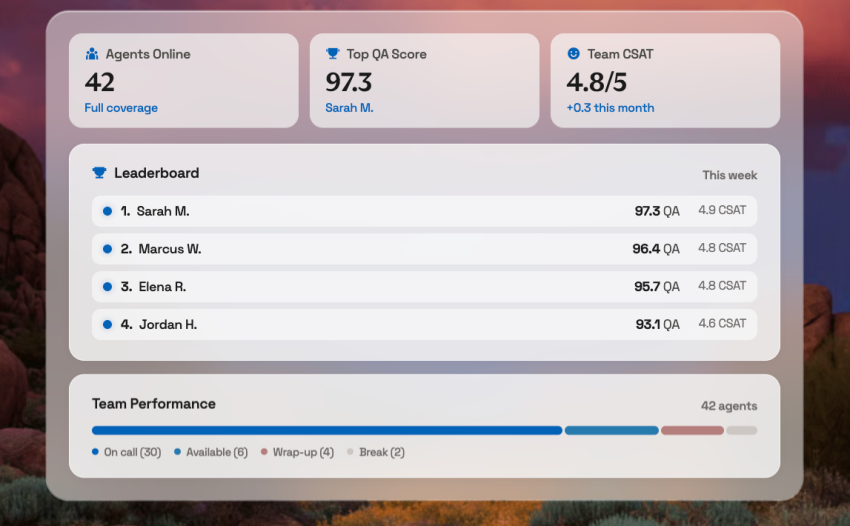
- Leaderboards
- Gamification
- Bonuses for performance milestones
- Peer-to-peer recognition
In contact centers, gamification tools that track quality scores, adherence, and resolution rates can make performance visible and rewarding. Nextiva’s WEM platform includes built-in gamification and leaderboards for this purpose.
The key is consistency and making sure that your efforts are embedded in how your team operates.
4. Equip your team with the right tech
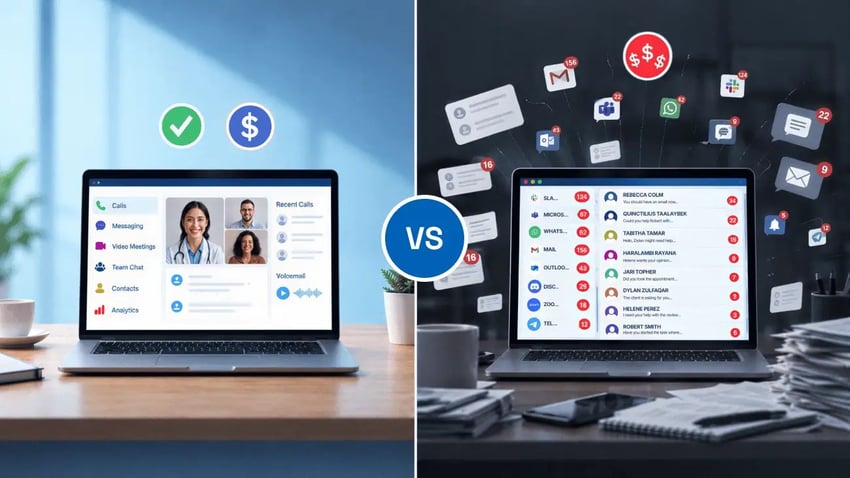
Agents forced to toggle between five different systems to resolve a single customer issue burn out faster. Tool fragmentation is a leading driver of agent frustration, and it’s entirely within your control to fix.
Consolidate communications, contact center, and workforce engagement tools into a unified platform. Nextiva combines UCaaS, CCaaS, and WEM in a single ecosystem. This means that your agents have a single interface to manage all of their customer-facing communications, and managers have only one dashboard to focus on.
Call center AI is now part of the tech conversation. AI-powered tools like real-time AI Agent Assist, automated quality scoring, and intelligent scheduling reduce manual workload and let agents focus on helping customers with complex issues.
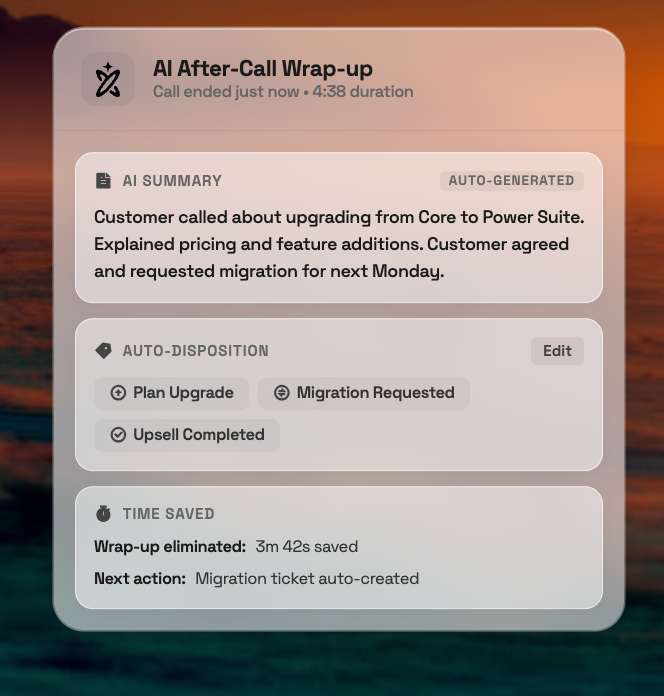
When agents spend less time fighting their tools and get the tech-based assistance they need to help customers effectively, they have more energy for the work itself.
5. Prioritize scheduling flexibility and work-life balance
You can’t build trust or engagement if people don’t feel like you care about employee well-being.
In my experience, rigid scheduling is one of the top complaints in contact center environments. Agents have lives outside of work, and organizations that ignore that reality pay for it in staff turnover.
Offering shift flexibility, self-service shift swaps, and fair scheduling practices significantly improves engagement and retention. Agents who feel they have some control over their schedule are more likely to stay and become more productive.
Remote and hybrid work models also show higher engagement levels. Gallup’s 2026 data show that hybrid employees report 34% engagement, the highest among all work arrangements. If your contact center can support remote work, the data suggests you should do so. If you’re unsure, you can always send employee surveys to find out what your team cares about most.
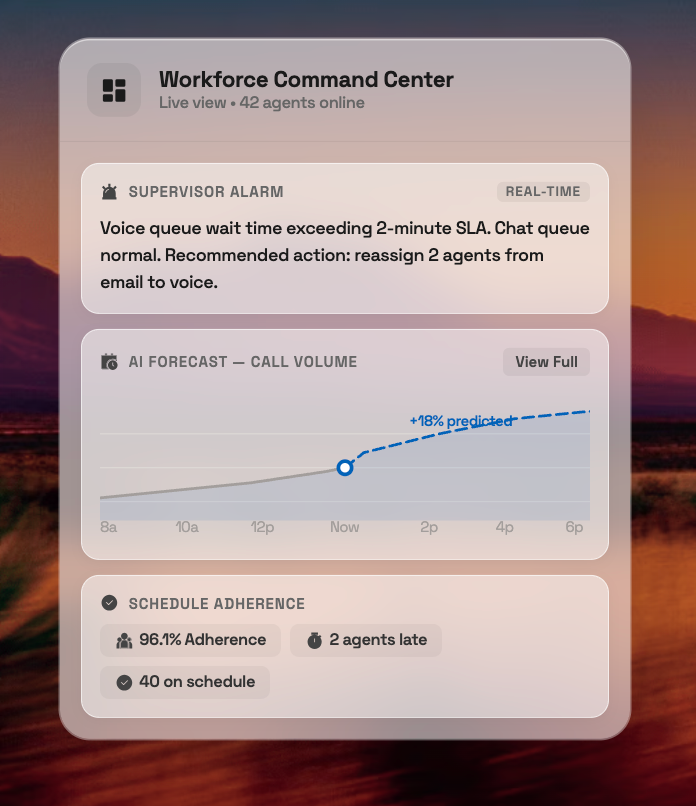
You can also use AI-powered WFM to forecast demand accurately and build schedules that balance operational needs with agent preferences. You can cover your queues and still give agents scheduling flexibility. It’s not either/or.
6. Create feedback loops and act on them
Want to successfully implement WFO in your contact center? You need to understand what your employees care about most.
Collect regular feedback through employee surveys, anonymous channels, and post-interaction agent sentiment tools. Don’t wait for annual surveys, because engagement shifts in real time, and your feedback mechanisms need to as a result. That way, you can adapt your engagement programs and performance management efforts in real-time, too.
But here’s the part most organizations miss: The key is acting on feedback. Employees who see their input lead to tangible changes are significantly more engaged than those who feel their voices go unheard. If you ask for feedback and do nothing with it, you’ve made engagement worse.
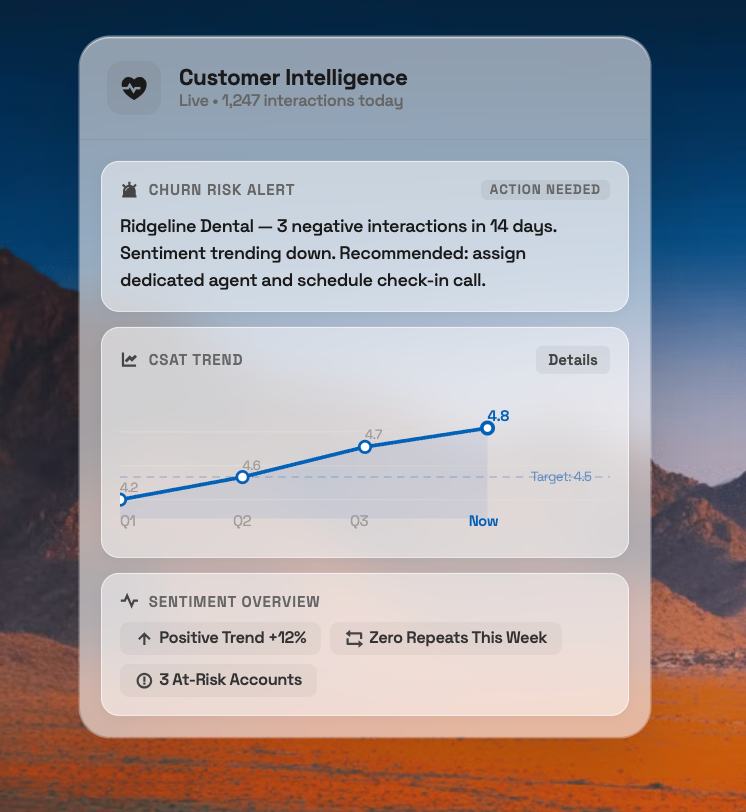
Use customer analytics and performance analytics to correlate agent feedback with performance data. If agents report that a specific workflow is frustrating, verify it with handle time and escalation data. Then fix it. Close the loop by telling agents what changed as a result of their feedback.
7. Invest in ongoing career training and professional development
Provide continuous coaching and skill development that goes beyond basic onboarding training. Agents who see a clear career path are far more likely to stay and engage.
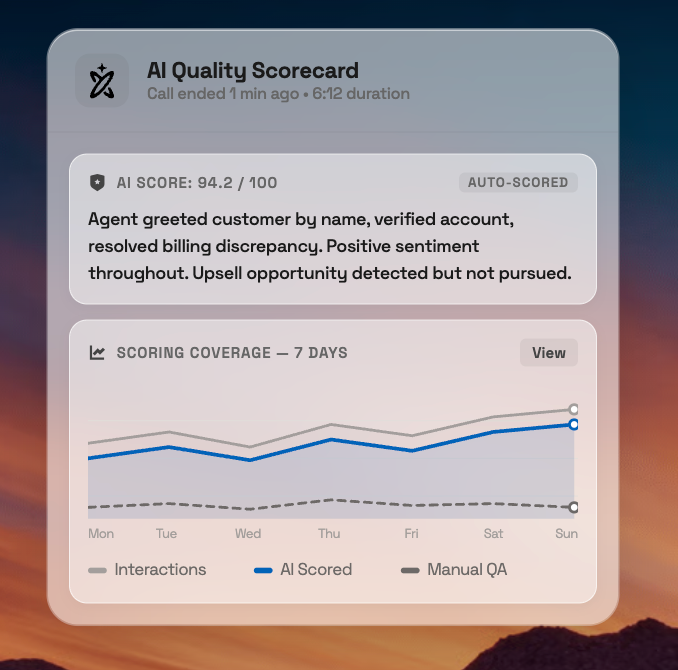
Leverage AI-scored quality evaluations to identify specific coaching opportunities for each agent. Nextiva’s WEM platform uses AI to score 100% of interactions and flag targeted coaching moments. Instead of generic training, agents receive development that’s relevant to their performance gaps.
Professional development opportunities are linked directly to long-term retention. While 45% of employees cite advancement as the top reason they stay, nearly 70% say they would commit to an employer long-term if the company prioritized upskilling.
If agents don’t see a future in your organization, they’ll find one somewhere else.
How Nextiva Powers Workforce Engagement
Workforce engagement requires more than just good intentions and vague company goals. You need the right infrastructure to make it possible.
Nextiva’s WEM solution is built natively into the same platform that powers your contact center, communications, and CRM.
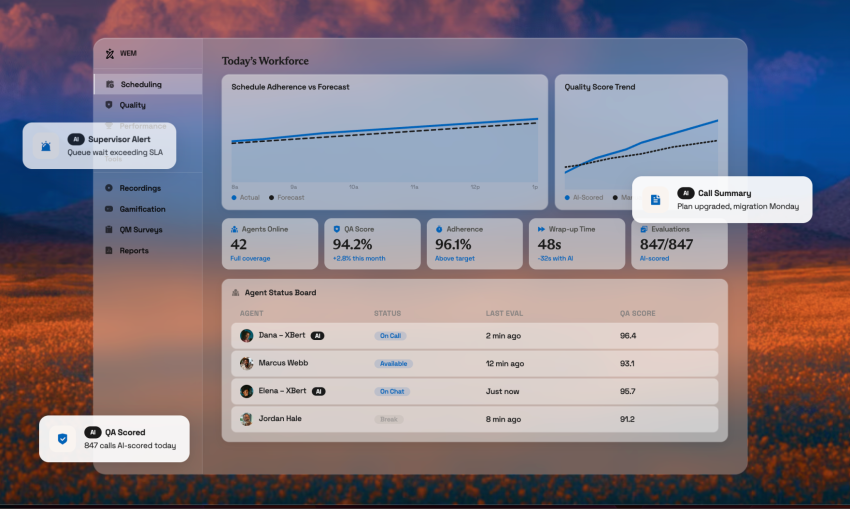
Here’s what this means for call centers:
- AI-powered quality management scores 100% of interactions (e.g., calls, chats, and emails) against your quality criteria. Supervisors no longer sample up to 3% of calls and hope they’re representative because they get complete visibility into agent performance.
- Gamification and leaderboards make performance visible and rewarding. Agents can self-review their recordings for growth opportunities, and supervisors can deliver targeted coaching based on AI-flagged opportunities.
- AI-powered forecasting and scheduling predict demand across every channel and build optimized schedules that balance coverage with agent preferences. Real-time adherence tracking and supervisory alarms fire the moment a queue breaches SLA.
- Security and compliance are built in. Every interaction is recorded, transcribed, and secured, and sensitive data is auto-redacted. The platform meets SOC 2 Type II, HIPAA, and GDPR compliance standards.
- Nextiva’s AI employee, XBert, handles routine interactions while WEM optimizes how human agents are scheduled and coached. Your team works smarter, not harder.
All of this runs on Nextiva’s platform, which strives for 99.999% uptime with a single unified dashboard for supervisors, managers, and agents, making it an ideal contact center solution.
WEM vs. WFM vs. WFO
These three terms — WEM (Workforce Engagement Management), WFM (Workforce Management), and WFO (Workforce Optimization) — get confused constantly. Here’s how they differ:
| WEM | WFM | WFO | |
|---|---|---|---|
| Focus | Holistic employee experience and engagement | Scheduling, staffing, and compliance | Performance efficiency and productivity |
| Scope | Broadest — includes WFM and WFO | Narrowest — operational logistics | Mid-range — performance-focused |
| Key components | Quality management, coaching, gamification, analytics, and scheduling | Forecasting, scheduling, and adherence tracking | Training, performance metrics, and process improvement |
| Primary goal | Improve engagement, employee retention, and CX | Right agents, right time, and right cost | Maximize agent efficiency and output |
| AI applications | AI quality scoring, sentiment analysis, and coaching insights | AI-powered demand forecasting and auto-scheduling | AI-driven performance analytics and workflow optimization |
| Business outcomes | Higher retention, better CX, and stronger culture | Lower labor costs and adequate coverage | Improved KPIs and reduced waste |
Here are the key takeaways:
- WEM is the broadest strategy. It encompasses both WFM and WFO while adding the employee experience, coaching, and cultural dimensions that drive long-term engagement.
- WFM is essential but narrow. It ensures you have the right number of agents at the right time, but it doesn’t address whether those agents are engaged, coached, or satisfied. WFM tools are essential for making this possible.
- WFO improves agents’ efficiency. But without addressing engagement, efficiency gains are temporary. Burned-out agents quit regardless of how optimized their schedules are.
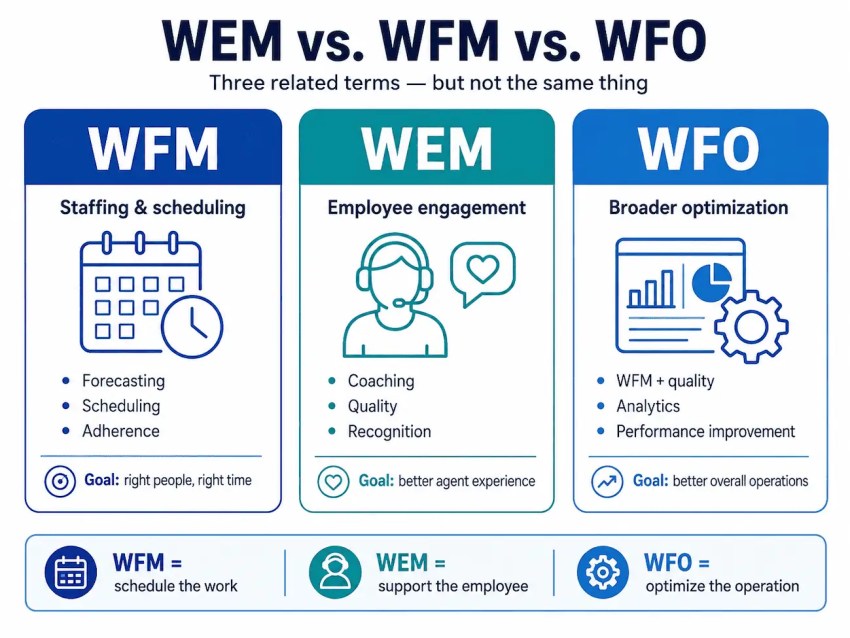
Modern platforms like Nextiva unify all three on a single platform, so organizations don’t have to choose between scheduling, performance, and engagement because they’re getting all three.
Make Workforce Engagement Your Winning Business Strategy With Nextiva
Contact center WFM should never be an afterthought, because it’s a measurable and valuable business strategy that directly impacts every metric that matters. And with so many businesses striving to increase productivity, retention, customer satisfaction, and profitability, this is a clear way to get those business results.
With global engagement at its lowest point in five years and the cost of disengagement measured in trillions, the organizations that invest in engagement now will likely outperform those that don’t.
Having built and led customer-facing teams, I can tell you that the difference between an engaged and disengaged workforce is not subtle. Engaged agents resolve issues faster, stay longer, and create the kind of unified CX that builds loyalty. Disengaged agents cost you twice: once in lost productivity, and again when you have to replace them.
Nextiva’s WEM platform gives you the tools to turn engagement from a goal into an operational reality. AI-powered quality management, intelligent scheduling, gamification, and coaching, all unified in a single platform.
See how Nextiva can help you build a more engaged, productive workforce. Check out our WEM solutions today.
Workforce engagement management done right.
Your team, amplified by AI. Every call scored, every shift optimized, every agent coached. No bolt-ons required. Visibility, retention, and efficiency in one platform.
Frequently Asked Questions About Workforce Engagement
Engaged teams are 23% more profitable, 18% more productive, and have significantly lower turnover. In contact centers, engaged agents deliver faster resolutions, higher CSAT scores, and better CXs. That’s a big impact on any business.
The terms workforce engagement and employee engagement are often used interchangeably, but are slightly different. Workforce engagement typically refers to engagement strategy at an organizational or operational level, while employee engagement focuses on the individual. In practice, they describe the same core concept.
WFM focuses narrowly on scheduling, staffing, and adherence. WEM, meanwhile, is broader. It encompasses WFM, but it also accounts for quality management, coaching, recognition, and employee experience initiatives.
Some of the most important drivers of workforce engagement include quality of management, role clarity, recognition, career development opportunities, access to the right tools, scheduling flexibility, and meaningful work that creates a sense of purpose.
Common workforce engagement measurement methods include pulse surveys, employee Net Promoter Scores, turnover and absenteeism rates, quality scores, and sentiment analysis from agent feedback tools. This can help you track your employee needs and the impact of your employee engagement strategies.
Contact center AI enables the following:
– Scores 100% of interactions (compared to a small sample quality assurance)
– Identifies coaching opportunities automatically
– Predicts scheduling needs
– Provides real-time agent assist
These key features can reduce manual workload and create more targeted development opportunities. For example, if an agent is struggling and no one can figure out why, you’ll end up with disengaged employees. But the ability to find training opportunities can improve their engagement and their performance.