

 Customer Experience
  Blog
Blog  Business Communication
  Leadership
  Marketing & Sales
  Nextiva News
  Productivity
  VoIP
VoIP 

Although Freshdesk has its strengths, our comparison of top Freshdesk alternatives can help you deliver an exceptional customer experience (CX) that puts your business ahead of competitors, builds loyal customers, and creates brand champions (just ask Zappos).
As you search for the right customer experience software for your business, you might come across Freshdesk in a few roundups. At Nextiva, we like to be transparent in our reviews. So, is Freshdesk a good customer support software? For some businesses, it is. Are there better options out there? Yes.
In 2026, good enough support no longer meets expectations. Businesses are moving beyond ticket-only systems and adopting platforms that bring voice, digital channels, and AI together in one place.
Whether you’re a scaling company looking for your first CX solution or a heavy hitter looking to make a switch, our guide to Freshdesk alternatives has the information you need to choose what’s best for your business.
Why Freshdesk Alternatives Are More Important in 2026
Many businesses have already moved away from outdated tools, shifting the focus to why switching matters now. Customer support drives revenue, retention, and brand perception. In 2026, businesses expect their customer service platform to:
- Resolve issues faster with advanced AI capabilities
- Deliver real-time customer insights
- Offer multichannel support across touchpoints
- Support omnichannel communication
- Scale without unpredictable costs
Companies are shifting toward unified platforms that bring data, automation, and customer communication into a single system. This approach reduces tool sprawl and improves agent productivity.
Basic help desks can’t meet these expectations. Better platforms go beyond essential features. They boost customer satisfaction, reduce churn, speed up response times, and drive measurable business results.
Why Consider a Freshdesk Alternative
Before making a purchase, 89% of consumers read online reviews. If you’ve been to the review sites, like G2, Trustpilot, or Gartner, we’re sure you found the same issues with Freshdesk popping up again and again, as we did:
- Poor customer service: Several reviewers mentioned issues with Freshdesk’s customer support processes, including slow response times, unhelpful solutions, and a lack of product knowledge.
- Reliability and outages: Recent 2026 reviews on Trustpilot report major data center failures and multi-day outages that leave businesses unable to communicate with customers.
- Limited or missing features: While the basic plan is affordable, reviewers found it lacked features needed for scaling businesses, and upgrading plans can become expensive. Customization options were also seen as limited.
- The AI paywall: Reviewers note that while the base plan is affordable, key 2026 features, such as Freddy AI Copilot and agentic workflows, sit behind costly add-ons or require top-tier enterprise plans.
- Billing issues: Some reviewers reported problems with Freshdesk’s billing practices, such as difficulty getting refunds or downgrading plans and hidden fees for features advertised as included.
- Integration problems: Some reviewers had trouble integrating Freshdesk with other tools and services, experiencing weak integration capabilities, glitches, and data synchronization issues.
- Difficult setup: Reviewers described a complex setup process that wasn’t as intuitive as advertised, with a steep learning curve.
- Technical and IT issues: A few reviewers mentioned experiencing technical problems with Freshdesk, such as outages and portal login issues.
- Basic reporting: Reviews mention Freshdesk has basic reporting and requires extensive rework to be usable.
Many businesses also struggle to collect customer feedback effectively, limiting visibility into real feedback trends and insights.
Top Freshdesk Features People Like
Although this list of Freshdesk alternatives stands out, Freshdesk does have some helpful features and capabilities. These include:
- Ticket management: Freshdesk offers a centralized workspace for handling support requests across channels such as emails, calls, faxes, and other channels.
- Intuitive agent interface: Users say Freshdesk has a clear and easy-to-use interface that simplifies navigating and managing customer inquiries.
- Automation: Some reviews say that automation features that streamline repetitive tasks, like ticket routing, are useful.
However, these features often fall short for teams that need advanced automation, deeper insights into agent performance, and a more complete view of the customer journey tracking process.
Freshdesk vs Top Alternatives: Comparison
| CX Software | Best For | Features | Starting Price (Billed Annually) |
|---|---|---|---|
| Nextiva | Best overall customer experience software | Unified workspace Real-time insights Pre-built AI and automation | $15 per user per month |
| Hiver | Best for customer support teams using Gmail | Shared inboxes AI Agents Omnichannel support Workflow automation | $25 per user per month |
| Front | Collaboration-focused businesses | Automation capabilities Integrations Pre-built and customizable reports | $19 per month per seat |
| Zoho Desk | Businesses with high customization needs | AI and automation tools Customization options Ticket management capabilities | $7 per month per user |
| Zendesk | Starting Price (Billed Annually) | Omnichannel workspace Reporting and analytics Integrations marketplace | $55 per agent per month |
| Intercom | AI-powered support | Fin AI tool Centralized view Ticketing system | $29 per month per seat |
| HubSpot Service Hub | Marketing and sales CRM | Integrations across platforms Shared inbox Customer portal | $15 per month per seat |
| Help Scout | Growing businesses | Shared inbox Live chat widget Help desk reporting and analytics tools | $22 per month per user |
| Salesforce Service Cloud | Salesforce CRM users | Multichannel support AI-powered chatbots Collaboration tools | $25 per month per user |
| LiveAgent | Live chat support | Live chat Call center functionality 24/7 technical support | $9 per month per agent |
| HappyFox | Project management | Ticketing system Knowledge base Customizable | $19 per month per seat |
11 Best Freshdesk Alternatives and Competitors
Now, let’s explore a few Freshdesk alternatives. Each Freshdesk competitor section includes a brief software overview, features, pricing tiers, and pros and cons.
1. Nextiva
Best overall customer experience software
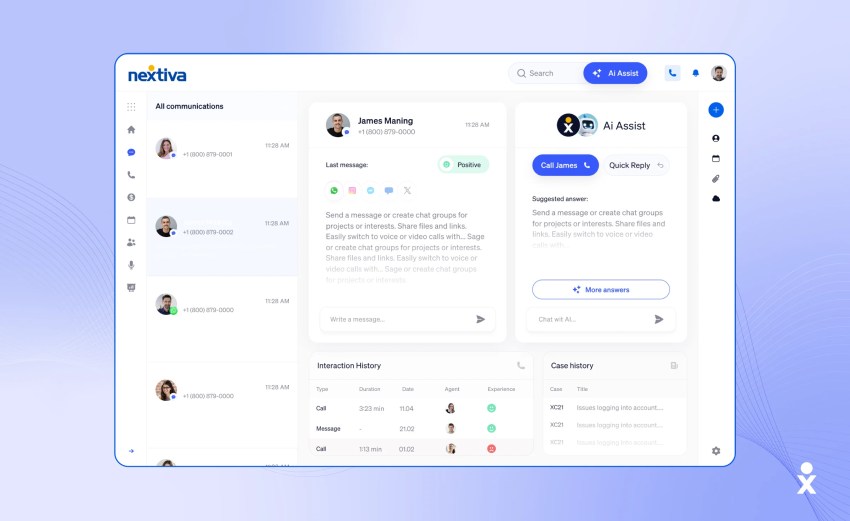
Nextiva is one of the strongest Freshdesk alternatives with its AI-powered, Unified Customer Experience Management platform. It is a customer service platform designed to unify communication, automation, and data into a single system. It’s flexible, offers extensive customization, and adapts easily to customer needs.
Our cloud-based communications solution offers a user-friendly interface, improves customer engagement, boosts customer satisfaction (CSAT), strengthens external customer support, enables more personalized customer interactions, and fosters team collaboration with the right tools.
Here’s how it works: Nextiva brings all channels into a unified inbox, giving agents a complete customer context across phone calls, chat, and social media. Whether the customer connects via voice, video, live chat, text, or email, agents have the right customer data in one place to provide personalized support.
Plus, with AI-powered automation and self-service features like advanced IVR, AI agents, and chatbots, you’ll get real-time support without delays, lower costs, and more efficient operations.
Nextiva’s Scale plan now includes AI-powered transcription and summarization as standard, allowing agents to focus on the conversation rather than taking notes. With 99.999% uptime, it provides the reliability that legacy help desks have struggled to maintain.
Features
Nextiva has plenty of first-class features to help your business deliver a seamless customer experience across the digital customer journey. Here are a few:
- A unified workspace that lets agents manage all customer communications from a single dashboard.
- Agentic AI bots to answer questions and complete real tasks, such as updating a shipping address or booking an appointment.
- Real-time insights that use conversational analytics to track customer sentiment and behavior to build deeper relationships.
- Modern contact center with open architecture, workflow engine, and embedded AI for optimized buyer journeys.
- Pre-built AI and automation that deploys quickly and easily and scales with your business.
- Workforce engagement management (WEM) that simplifies workforce management, reduces agent burnout, and boosts productivity.
Pricing
Whether you’re a startup, small business, mid-size, or enterprise, Nextiva has a plan with competitive pricing that scales easily with your growing business.
- Core: $15 per user per month, billed annually (voice, SMS, video, and team chat).
- Engage: $25 per user per month, billed annually (adds web Chat, advanced reporting, and voice analytics).
- Scale: $75 per user per month, billed annually (omnichannel, AI summarization, and advanced routing).
- Enterprise Essential: From $75/agent/mo (adds journey orchestration and skills-based routing).
- Enterprise Professional: Contact Sales (adds advanced self-service, PCI-DSS payment, and predictive dialing).
- Enterprise Premium: Contact Sales (Adds workforce management and advanced analytics).
Each pricing plan includes additional features and capabilities beyond those listed, allowing you to scale and customize based on your business needs.
 Pros
Pros
Customer support
Ease of use
Scalability
 Cons
Cons
No free trial of VoIP products
Only for U.S. based companies
2. Hiver
Best for customer support teams using Gmail
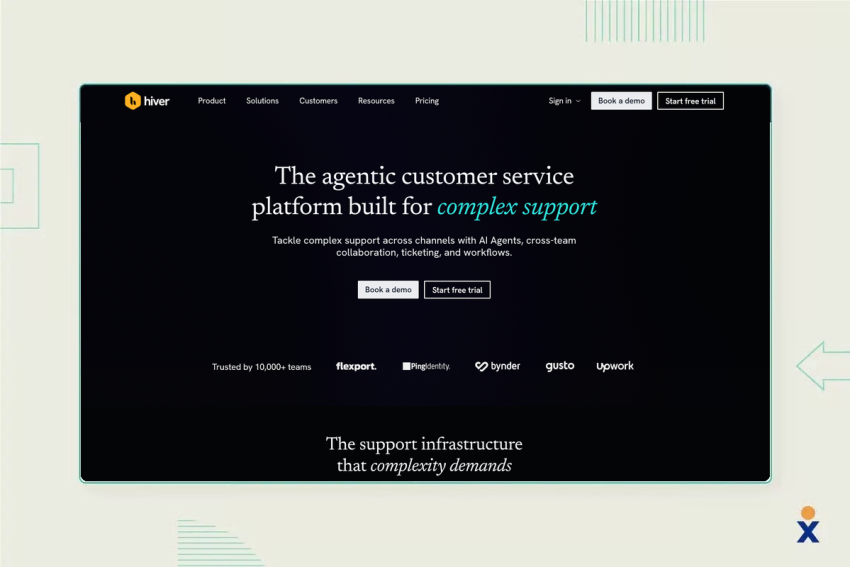
Hiver is an AI-powered customer service platform designed to help teams manage complex customer support from a familiar inbox. It offers two products: Hiver in Gmail, which transforms Gmail into a helpdesk, and Hiver Omni, a standalone omnichannel platform for teams managing support across multiple channels.
Hiver combines shared inboxes, ticketing, automation, AI, analytics, and collaboration tools in one platform. It helps support teams assign conversations, track requests, manage workflows, and keep customer context organized without relying on multiple disconnected tools.
Here’s how it works: Hiver lets teams manage shared inboxes such as support@ or info@, assign conversations to the right team members, route requests, track their status, and collaborate internally using notes, shared drafts, and Slack. For teams that need broader support, Hiver Omni also brings channels such as email, live chat, Slack, voice, WhatsApp, and social into one workspace.
Plus, Hiver’s AI capabilities can go beyond simple reply suggestions. AI Agents can resolve requests and take actions across connected systems, while AI Copilot helps agents draft responses, surface relevant information, and suggest next steps. AI QA and AI Insights can also help teams evaluate response quality and identify recurring customer issues.
Features
Hiver has a wide range of features designed to help businesses streamline customer service and improve team productivity. Here are a few:
- Shared inboxes and ticketing that let teams assign, track, and resolve customer conversations with clear ownership and full history.
- AI Agents that can resolve customer requests, analyze conversations, and perform actions across connected systems.
- Omnichannel support that brings email, live chat, Slack, voice, WhatsApp, and social conversations into one workspace.
- Workflow automation that automates repetitive tasks through rules, routing, scheduled actions, and app-based workflows.
- AI Copilot that helps agents draft replies, find information, and recommend next steps.
Pricing
Hiver offers plans for teams with different customer support requirements, with both Hiver in Gmail and Hiver Omni available on tiered pricing. The paid plans start at $25 per user per month when billed annually.
- Growth: $25 per user per month, billed annually (shared inboxes, ticketing, AI Agents, AI Copilot, Help Center, automations, and analytics).
- Pro: $55 per user per month, billed annually (adds customer portal, SLAs, CSAT, advanced analytics, premium integrations, and API access).
- Elite: $85 per user per month, billed annually (adds AI QA, AI Insights, customer intelligence, skill-based routing, custom objects, SSO, and custom roles).
Hiver also offers a 7-day free trial with access to the Elite plan, and you don’t need a credit card to start the trial.
Pros
AI-powered customer service
Easy Gmail integration
Omnichannel support
Workflow automation
Cons
Advanced features require higher-tier plans
Voice is an add-on
3. Front
Best for collaboration-focused businesses
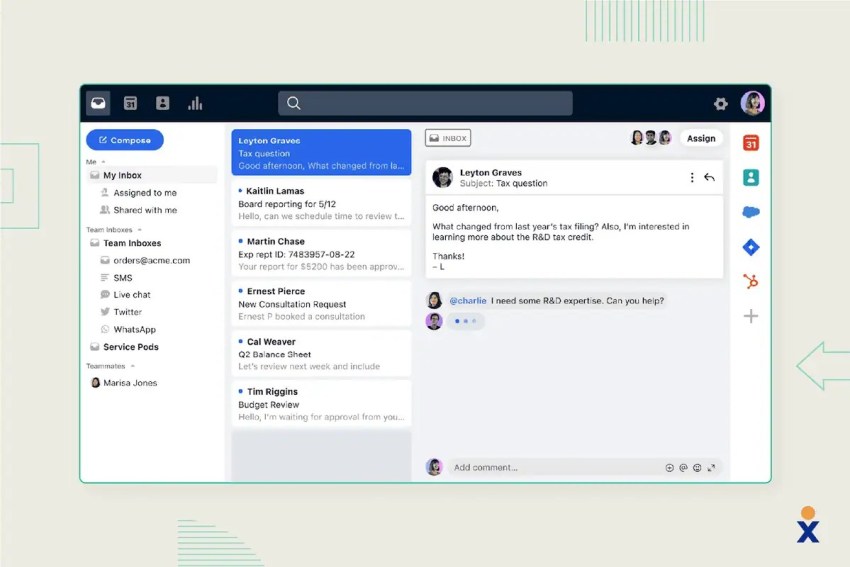
Front offers a collaborative customer service platform that handles complex inquiries through cross-team coordination. With an intuitive, email-like interface, it combines email speed with help desk functionality, making it ideal for industries like manufacturing, logistics, and financial services.
Its multi-channel shared inbox lets customer service teams manage support tickets from email, social media, chat, and more. Front has built-in features like shared drafts, @mentions, and handoff workflows that enhance internal collaboration. The platform also offers automation features and integrates with over 100 apps.
Features
Front comes with some features that help businesses create a positive customer experience, including:
- Collaboration tools, such as comments, shared drafts, handoff workflows, and public replies.
- Automation capabilities, like their rules engine, templates, and custom rules.
- Integrations with 100+ third-party apps and has an open API.
- Pre-built and customizable reports to gather insights
Pricing
Front offers a 14-day free trial and these pricing options:
- Starter: $19 per month per seat, billed annually
- Growth: $59 per month per seat, billed annually
- Scale: $99 per month per seat, billed annually
- Premier: $229 per month per seat, billed annually
Pros
Email management
Internal collaboration
Effective alerts and notifications
Cons
Clunky interface
Lack of customizations
Compatibility issues with some third-party apps
4. Zoho Desk
Best for businesses with high customization needs
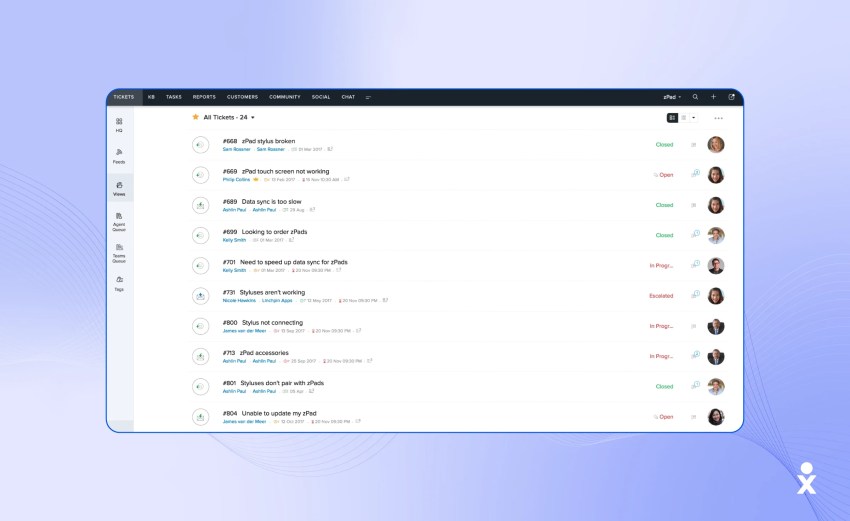
Zoho Desk is a cloud-based help desk solution and offers a customizable help desk with many features and capabilities that streamline customer support. This customer support platform includes an AI-powered assistant, Zia, that automates routine tasks and anticipates follow-up questions for proactive support.
It allows for efficient ticket management through round-robin assignment and parent-child ticketing. The platform is highly customizable, from creating custom modules to color-coding picklists and personalizing ticket IDs. Zoho Desk also offers a strong mobile experience, with custom dashboards and text-to-speech capabilities.
Zoho Desk also supports accessibility enhancements and integrates with various tools through its marketplace.
Features
Zoho Desk offers several beneficial features, including:
- AI and automation tools, like Zia, an interactive AI assistant, and Blueprint widgets to streamline workflows
- Customization options, such as custom modules, field enhancements, field and ticket ID lookup, and customization.
- Ticket management capabilities, like parent-child ticketing, scheduled replies, and mass replies.
Pricing
Zoho offers a free 15-day trial, a free plan with limited features, and these pricing tiers:
- Express: $7 per month per user, billed annually
- Standard: $14 per month per user, billed annually
- Professional: $23 per month per user, billed annually
- Enterprise: $40 per month per user, billed annually
Pros
Flexible platform
Customizable
Robust integration capabilities
Cons
Limited community engagement
Interface design
Ticketing system functionality
5. Zendesk
Best for businesses that want a lot of integrations

Zendesk is often chosen over Freshdesk due to its demonstrated ability to enhance operational efficiency and customer satisfaction. Zendesk’s CX software offers a Freshservice alternative with its integrated ticketing system that manages customer queries in a single agent workspace.
It enables businesses to provide omnichannel support across email, social messaging, phone, and self-service channels. With options like ticket ID personalization and conditional forms, businesses can tailor the platform to fit their needs. It has AI and automation features, such as intelligent routing and predictive analytics.
For those looking for solid security features, Zendesk has encryption and attachment controls to help protect customer data.
Features
Zendesk’s customer service software includes features such as:
- Omnichannel workspace that enables team members to manage customer inquiries in one place.
- Reporting and analytics with prebuilt and customizable dashboards
- Integrations marketplace with various third-party apps.
Pricing
Zendesk has pricing packages for support and sales, and also features suite pricing:
- Suite Team: $55/agent/month, billed annually
- Suite Growth: $89/agent/month, billed annually
- Suite Professional: $115/agent/month, billed annually
Pros
Robust integrations marketplace
Strong reporting and analytics tools
Advanced data privacy
Cons
Expensive
Complex customization
Steep learning curve
6. Intercom
Best for AI-powered support
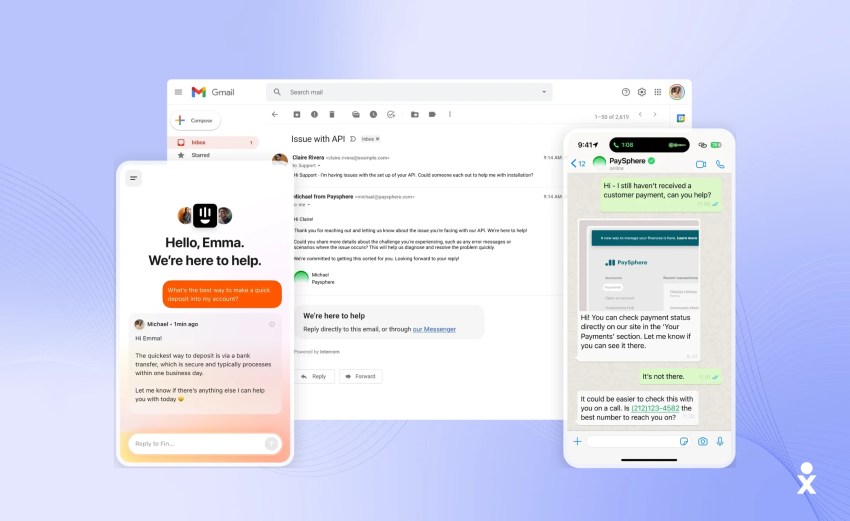
Intercom combines customer support tools with customer engagement and proactive messaging, making it popular among many companies. With features like Fin AI, it automates key processes such as summarizing conversations, personalizing replies, and pre-filling ticket details.
Intercom integrates with various business systems, including customer relationship management (CRM) and marketing platforms, making cross-functional collaboration easier. It’s customizable, allowing businesses to tailor the interface to suit their needs and branding.
Features
With Intercom, you get AI-powered and traditional features, including:
- Fin AI is an artificial intelligence tool that automates ticket summaries and creates personalized replies.
- Centralized view of conversations from email, phone, and messenger.
- Ticketing system with intelligent routing and triage capabilities
Pricing
Intercom offers three pricing options and a 14-day free trial.
- Essential: $29 per month per seat, billed annually
- Advanced: $85 per month per seat, billed annually
- Expert: $132 per month per seat, billed annually
Pros
Effective access controls
Integration capabilities
Highly-customizable
Cons
Slow support response times
Overly complex routing and automations
Confusing user interface
7. HubSpot Service Hub
Best for marketing and sales CRM

HubSpot Service Hub offers customer service software that streamlines customer support tickets and improves team collaboration. It integrates seamlessly into HubSpot’s CRM and provides live chat, a shared inbox, and a ticket management system.
The free version offers plenty of limited features, but upgrading to a paid subscription plan unlocks advanced functionalities like automated workflows, detailed reporting, and a built-in knowledge base.
Features
A few of HubSpot Service Hub’s features include:
- Integrations across platforms like Gmail, Outlook, and Facebook Messenger.
- Shared inbox for enhanced team collaboration.
- Customer portal that provides self-service options.
Pricing
Though HubSpot does not offer a free trial for its customer service software, it does have a free version, as previously mentioned. The pricing plans include:
- Starter: $15 per month per seat, billed annually
- Professional: $90 per month per seat, billed annually
- Enterprise: $150 per month per seat, billed annually
Pros
Sales and marketing hub
Quality automation capabilities
Strong knowledge base functionality
Cons
Confusing pricing structure
Full functionality depends on integration with other HubSpot products
8. Help Scout
Best for growing businesses
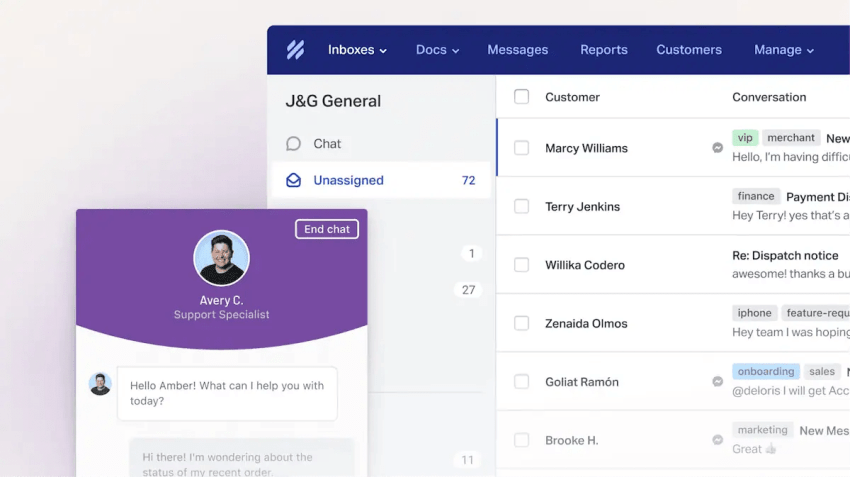
Help Scout simplifies customer support with an easy-to-use platform that focuses on providing a smooth user experience. It features customizable workflows, allowing businesses to adapt the interface to their needs.
Help Scout focuses on a minimalist, shared-inbox experience and offers internal notes, agent collision detection, and canned replies for team collaboration, ensuring customer support teams work together efficiently.
Help Scout also integrates well with other business tools and provides a mobile app for on-the-go access. It offers free automated migration tools for transferring data from Freshdesk and uses a \contact-based pricing model.
Features
Help Scout can be a Freshdesk alternative with features like these:
- Shared inbox that helps teams manage customer conversations across different channels.
- Live chat widget for real-time customer interactions.
- Help desk reporting and analytics tools that provide various reports on email, chat, phone, company, and customer sentiment.
Pricing
If you’d like to try Help Scout, they offer a 15-day free trial. You can then upgrade to one of the following plans:
- Standard: $22 per month per user, billed annually
- Plus: $44 per month per user, billed annually
- Pro: $65 per month per user, billed annually
Pros
Intuitive interface
Affordable for small businesses
Effective collaboration tools via shared inbox
Cons
No ticketing system
Missing some advanced features
Limited mobile functionality
9. Salesforce Service Cloud
Best for Salesforce CRM users

Salesforce Service Cloud is designed to improve CX through integrated case management and adaptable workflow processes. Its automation capabilities, multichannel support, and AI-driven insights help boost employee productivity, support complex customer service operations, and improve customer satisfaction.
Salesforce includes field service management tools, self-service options, live chat, and advanced analytics to help businesses gain customer insights and improve team performance. Although the platform is powerful, its complexity may require training to fully leverage its capabilities.
Features
Salesforce Service Cloud comes with features such as:
- Multichannel support across phone, email, social media, and live chat.
- AI-powered chatbots and predictive analytics with Einstein AI for intelligent customer interactions.
- Collaboration tools, personalized support tools, service level agreement (SLA) management, and a customizable interface.
Pricing
Salesforce offers a wide variety of subscription plan choices, including:
- Starter: $25 per month per user, billed annually
- Service Professional: $80 per month per user, billed annually
- Enterprise: $165 per month per user, billed annually
- Unlimited: $330 per month per user, billed annually
- Einstein 1 Service: $500 per month per user, billed annually
Pros
Omnichannel support
Advanced reporting capabilities
Centralized workspace
Cons
Complex setup and onboarding
Expensive
Works best when integrated with other Salesforce products
10. LiveAgent
Best for live chat support

LiveAgent provides more advanced live chat and call center features compared to Freshdesk. It integrates phone, email, and live chat into a single platform for managing inquiries.
It helps teams handle support requests, automate workflows, and deliver responsive customer support across channels. Its ticketing system offers automatic routing and tracking features so agents can focus on manual tasks.
Advanced call center features like call routing and HD video calls help teams communicate more effectively. LiveAgent also features a built-in knowledge base and analytics tools that allow businesses to monitor performance and refine their support strategies.
Features
LiveAgent’s features include:
- Live chat box to help manage customer interactions.
- Call center functionality, like call routing, transfers, recording, and HD video calls.
- 24/7 technical support that includes a customer self-service portal, a knowledge base, and community forums.
Pricing
LiveAgent has four pricing options to fit most businesses:
- Small: $9 per month per agent, billed annually
- Medium: $29 per month per agent, billed annually
- Large: $49 per month per agent, billed annually
- Enterprise: $69 per month per agent, billed annually
Pros
Strong automation capabilities
Easily connects with social media channels
Offers canned messages for live chat
Cons
Limited reporting
Few customization options
Cluttered user interface
11. HappyFox
Best for project management

HappyFox, our final option for Freshdesk alternatives, simplifies customer support processes, offers customer service ticketing and issue management software equipped with features like ticket merging, auto-routing, and email integration.
It also has automation capabilities, with smart rules and workflows that reduce support teams’ manual tasks. HappyFox also offers multilingual support in over 35 languages, making it ideal for international operations.
Features
HappyFox’s features include:
- Ticketing system with smart routing, ticket merging, email integration, ticket creation, and management.
- Knowledge base that allows you to create and manage help center articles in multiple languages.
- Customizable interface, fields, categories, statuses, priorities, and more.
Pricing
HappyFox offers a 14-day free trial and these pricing plans:
- Basic: $19 per month per seat, billed annually
- Team: $59 per month per seat, billed annually
- Pro: $99 per month per seat, billed annually
- Enterprise PRO: Contact sales for a custom quote
Pros
Offers multilingual support
Easy to use
Integrates with many third-party apps
Cons
No free trial
Some essential features are limited to the enterprise plan
Notification issues
How to Choose the Right Freshdesk Alternative
Switching help desk providers is a major move. If you don’t evaluate the right factors now, you may end up migrating again within a couple of years. Instead of focusing only on the base price, use these steps to compare your options better:
1. Evaluate the hidden total cost of ownership (TCO)
Teams move away from Freshdesk due to rising costs tied to add-ons and usage-based pricing. When comparing alternatives, ask:
- Does the base plan include voice and SMS, or does it require a separate subscription like Freshcaller?
- Are AI features such as chatbots and conversation summaries included, or billed per usage or session?
- Will costs increase as ticket volume or automation usage grows?
Look for a unified platform like Nextiva that bundles communication channels and AI into one plan. A slightly higher base price often reduces total SaaS spend over time.
2. Focus on agentic AI over basic bots
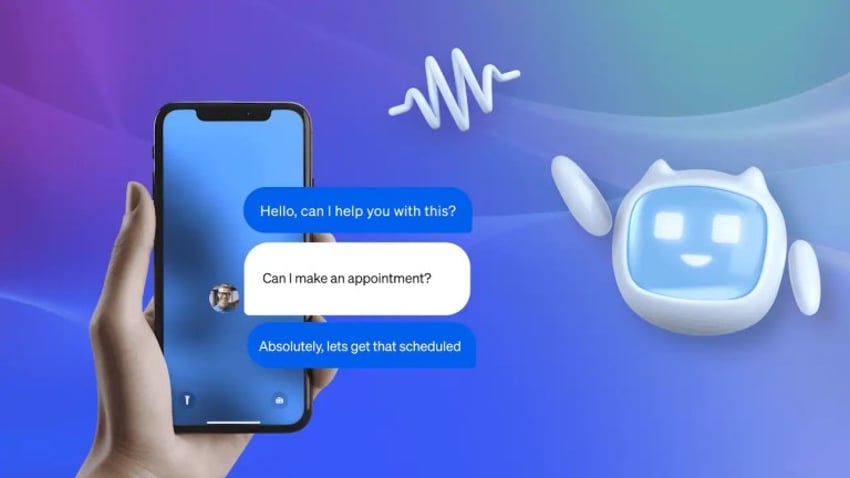
Basic FAQ bots no longer meet customer expectations. They usually delay resolution instead of solving problems. In 2026, platforms focus on agentic AI, which can take action instead of just providing answers.
If the AI cannot complete tasks, it adds friction instead of removing it. Look for AI that can process refunds, update customer records in your CRM, and trigger workflows across systems.
3. Check for native vs. integrated omnichannel
Every omnichannel platform works differently. Some tools combine multiple systems, while others build everything into a single interface. Test how the platform handles channel switching:
- Native omnichannel: Agents stay in one workspace. Conversations, history, and context update instantly across channels.
- Integrated omnichannel: Agents switch tabs or manually sync data between systems.
A native approach reduces handling time and improves the customer experience.
4. Focus on time-to-value (setup speed)
A platform may offer advanced features, but long setup times delay results and increase costs. Look for solutions that offer pre-built workflows and templates, provide simple migration tools, and allow quick setup without heavy technical support
Ask for a sandbox or trial environment before committing. If you cannot build a basic workflow quickly, the platform may be too complex for a fast-moving team.
Switching from Freshdesk: What to Know Before You Migrate
Moving away from Freshdesk needs a successful transition, which depends on how well your new platform supports continuity and long-term growth. Before making the switch, focus on these key areas:
Data migration and ticket history
Your customer data holds the full context of every interaction. Losing that history creates gaps in support quality.
- Preserve your customer context: Ensure past conversations, tags, and custom fields transfer accurately into the new system.
- Clean before you migrate: Remove spam tickets and merge duplicates to avoid carrying unnecessary data into your new platform.
- Look for migration support: Platforms like Nextiva offer guided migration and API-based data mapping, helping teams retain historical context without disruption.
Integration compatibility
A large integration marketplace does not always mean better performance.
- Prioritize native integrations: Direct integrations with tools like CRMs and ecommerce platforms are more stable than relying on middleware.
- Check API flexibility: A strong API allows you to build custom workflows and connect systems as your needs evolve.
- Plan for automation workflows: Modern teams rely on connected systems to trigger actions across platforms, especially with AI-driven processes.
Agent training and onboarding time
Switching platforms often impacts productivity during the transition period.
- Choose an intuitive interface: A unified workspace helps agents manage multiple channels without switching tabs or tools.
- Reduce learning curves: If agents can handle calls, chats, and messages in one place, onboarding becomes faster.
- Evaluate support and training resources: Strong onboarding programs and ongoing support help teams adapt quickly and maintain performance.
Workflow and automation rebuilding
You cannot transfer workflows exactly as they exist today. This step gives you a chance to improve them.
- Audit existing automations: Identify outdated rules and remove unnecessary complexity before rebuilding.
- Simplify where possible: Many teams discover that overbuilt workflows slow down performance.
- Use visual workflow builders: Platforms with drag-and-drop automation make it easier to recreate and optimize routing logic.
Run a final sync of recent tickets just before switching systems to ensure no customer requests get lost during the transition. A well-planned migration sets your team up for faster workflows, better automation, and a more scalable support operation.
Security and compliance
You cannot treat security as an afterthought. This step ensures your new platform protects customer data from day one and supports long-term compliance.
- Build on secure foundations: Built-in HIPAA and PCI-DSS compliance keep sensitive customer data protected during migration and after the switch.
- Meet enterprise standards: SOC 2–aligned infrastructure helps maintain strong internal controls and data integrity.
- Support global compliance: GDPR-ready data handling ensures you can manage customer data across regions without added risk.
- Reduce exposure during migration: End-to-end data protection prevents data loss or breaches when transferring systems.
- Centralize control: Native security features reduce reliance on third-party tools and simplify compliance management.
Why Nextiva Is the Best Freshdesk Alternative
For businesses looking to deliver exceptional customer service, Nextiva’s Unified-CXM platform is the right choice. It brings all customer interactions together, offering a smooth, personalized experience that increases customer and employee satisfaction and naturally builds a loyal customer base.
AI, automation, and real-time insights are just a few customer support tools that help streamline your digital customer journey. Nextiva is flexible and adaptable, and it provides strong data security you can trust.
Explore the #1 Alternative to Freshdesk
Nextiva is the leading solution for a reason: exceptional customer experience. Browse our demos to learn more.
Freshdesk Alternatives FAQs
We get it. Choosing customer service software is a big deal, so you need all the information to make a data-driven decision. Here are some frequently asked questions to fill any gaps.
Freshdesk offers a straightforward interface, but its limitations may not suit every organization. Nextiva is rated higher than Freshdesk across many user review sites, including TrustRadius, Software Advice, G2, and Gartner.
However, depending on your business, one software may be a better fit than another. When making your Freshdesk comparison, consider factors such as:
Features such as intelligent ticket routing, workflow automation, and reporting
Integrations that easily connect with your existing tools and systems, like CRM or email.
Scalability potential, meaning it grows with your business as your customer base expands.
Pricing models that align with your budget
User experience, including an intuitive interface that’s easy to use for both agents and customers
Free Freshdesk alternatives include:
OSticket: An open-source help desk software with a customizable interface and various features.
HelpdeskIT: An open-source option that offers basic ticketing functionality.
Spiceworks: A free IT management tool that offers basic ticketing features
Kayako Classic: A free version of Kayako’s help desk software with limited features compared to the paid plans.
Remember, free software may have specific limitations, lack key features, or may not offer customer support.
Freshworks’ competitors include several customer experience software providers, such as Nextiva, Zendesk, Kustomer, HubSpot Service Hub, Zoho Desk, Help Scout, Intercom, Jira Service Management, Front, and LiveAgent. New software keeps popping up as technology advances, so choose a scalable customer service solution that keeps innovating, like Nextiva.
Small online businesses, especially in ecommerce and digital services, need tools that connect customer support with order data and deliver a fast setup without heavy technical work.
The best alternatives focus on ease of use, quick deployment, and built-in communication channels:
Nextiva is best for small businesses that want voice and SMS built directly into their help desk. It eliminates the need to manage separate communication tools, reducing cost and complexity.
Gorgias is tailored specifically for e-commerce merchants (Shopify, BigCommerce, Magento)
Hiver is ideal for teams that prefer working inside Gmail but need help desk features like shared inboxes, collision detection, and internal notes.
Zoho Desk is a good option for startups that need omnichannel support and basic automation without a high upfront cost.
Improving service quality in 2026 requires businesses to focus on agentic AI, unified data, and smooth customer journeys. The platforms leading that shift:
Nextiva: Improves service with high reliability and a unified workspace where agents manage calls, messages, and customer history in one place without switching tools.
Intercom: Focuses on proactive support using AI to resolve issues before they reach human agents.
Zendesk: Supports complex, global operations with advanced reporting, automation, and intent detection.