

 Customer Experience
  Blog
Blog  Business Communication
  Leadership
  Marketing & Sales
  Nextiva News
  Productivity
  VoIP
VoIP 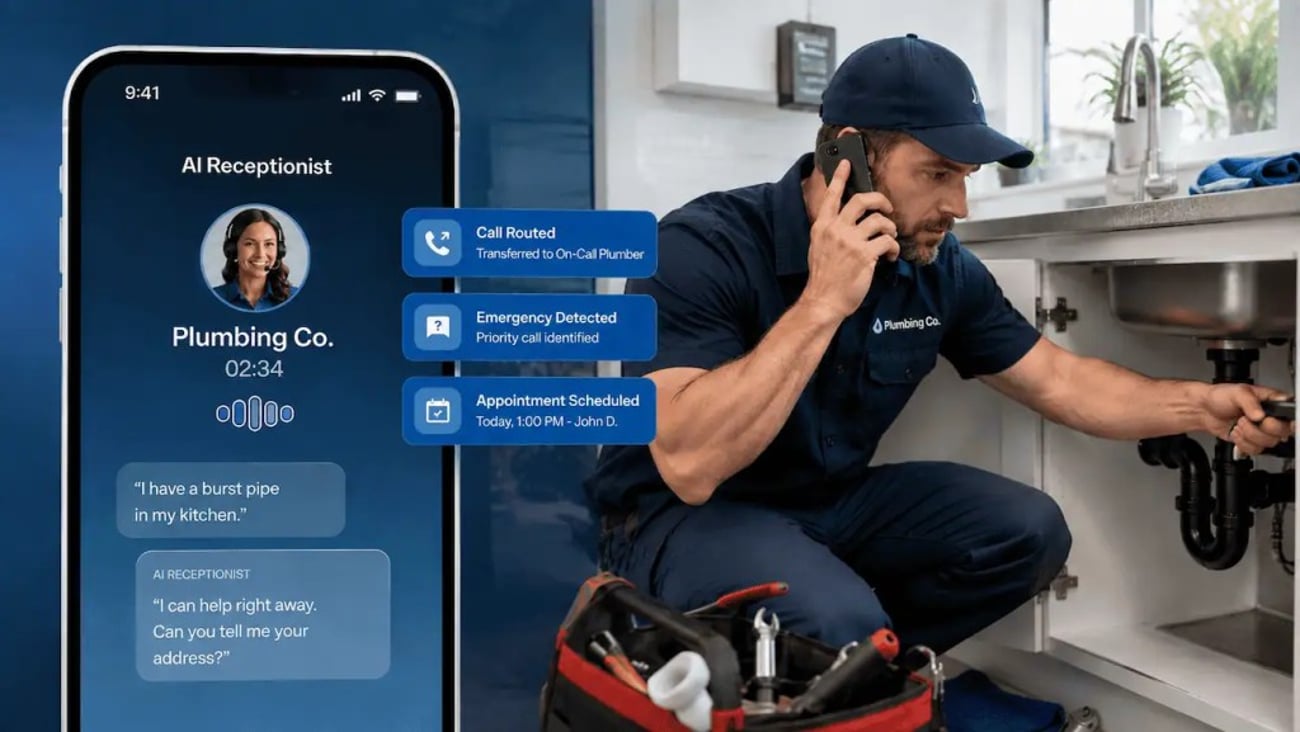

Imagine you’re in the middle of a de-clogging job inside a client’s sink base cabinet when your phone buzzes in your pocket. With your back on the floor and both hands occupied, you can’t take the call.
As someone who’s answered home-service calls long enough, you know that plumbing customers rarely call back, and there’s a higher chance they’ll hang up upon reaching voicemail than leave a message. By the time you check your phone system, the caller may have already reported their problem to another provider.
The tough reality in the plumbing business is that independent contractors and business owners often manage the office while doing field work. Like Buzz Franchise Brands, most of us use a mobile app to schedule jobs, check work order details, and process payments. Yet I’ve seen this happen many times: A missed call is a job that goes to your competitor.
If you’re searching for a phone answering service for plumbers, this guide is for you. We’ll explore three setups (live, AI, and hybrid approaches), their costs, their emergency handling capabilities, and how to determine the best fit for your business.
Try the best AI answering service free for 14 days
XBert AI answers questions and captures leads. Add your 24/7 answering service in minutes.
Why Missed Calls Cost Plumbing Companies Real Revenue
A plumbing customer’s journey or decision path is typically short, especially since most calls are emergencies. Due to the immediate threat of structural damage, homeowners can’t wait and see if a broken pipe will stop leaking.
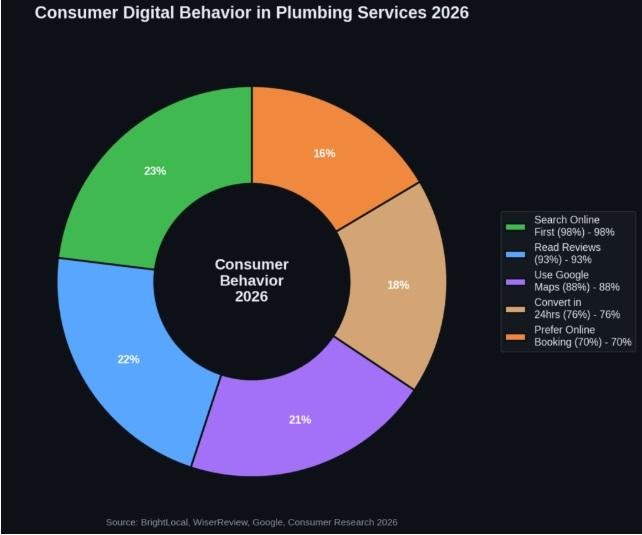
For installation or regular maintenance work, 70% of customers prefer to book online, according to statistics compiled by Amra and Elma. But urgent repair clients rarely compare providers. They usually book with the first plumber who answers.
Speed will give you an edge in this immediate-response sector where 504,500 workers compete for job orders. MIT research shows that plumbing services that respond within five minutes of a call versus 30 minutes increase the likelihood of securing a booking by 21 times.
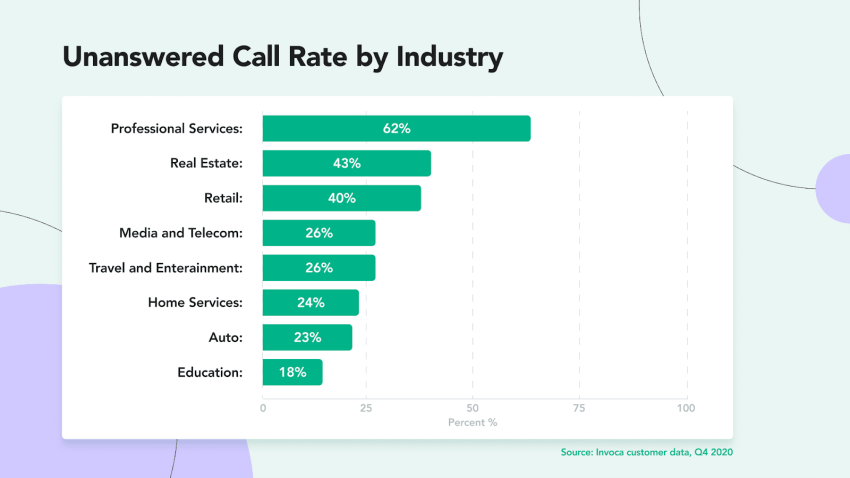
Missing a call is typically a lost opportunity, which you’re unlikely to recover. And it’s a dilemma many plumbers face. Because most hours are spent on fieldwork, home service businesses can miss as many as 24% of incoming calls, according to Invoca data.
Callers also prefer real-time interaction over leaving a message. Over 80% of them won’t leave a message when they reach voicemail. You may never realize losses from these missed phone calls because another company secured the booking.
Trends also show a growing demand for after-hours services, with 41% of calls arriving outside of business hours, according to CallRail. Capturing these leads often means securing higher-value emergency work.
Responding quickly ultimately depends on your communication system. A reliable home-services communications platform like Nextiva allows customers to reach you in crucial moments. Then you can seize the opportunity to qualify the call, book an appointment, or dispatch a technician.
How Plumbing Answering Services Handle Daily Tasks
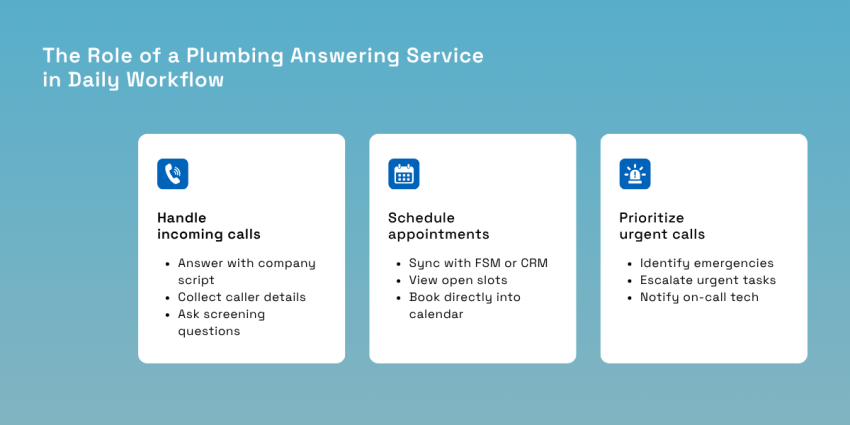
A plumber answering service syncs with your workflow. While your technicians are in the field, agents help manage calls, reducing the need for your staff to pick up every time the phone rings. You win more jobs while keeping your business running smoothly.
1. Routine call handling
Trained operators take every incoming call to your business uniformly, based on a pre-defined process agreed upon with the provider. Using custom call scripts, agents answer with your company name and ask screening questions. They collect information, including the customer’s location, the scope of work for non-urgent maintenance, and job details for urgent work. Offering 24/7 services secures these opportunities even outside of regular business hours.
2. Booking directly into the field service management system (FSM)
With integration, the service can enter customer information directly into your FSM or customer relationship management (CRM) software, like Housecall Pro, ServiceTitan, or Jobber. When agents access the same calendar your office staff uses, they can view dispatch schedules and book appointments directly in open time slots.
3. Filtering and routing
Professional phone answering services like Nextiva develop structured call flows to ensure agents can distinguish routine maintenance from emergency calls. This way, your on-duty technicians are freed up from answering calls by telemarketers, suppliers, or customers requesting quotes or checking on a technician’s estimated time of arrival.
Routine issues like faucet replacements and job estimates can wait until the next day. Meanwhile, active flooding or gas leaks require an urgent dispatch system so requests can be escalated to the on-call tech.
Emergency triage: telling a disaster from a quote
Plumber answering services typically follow a priority classification that categorizes calls by emergency dispatch, next-day callback, or routine scheduling.
Human agents and conversational AI listen for keyword cues and the caller’s voice to determine the severity of issues:
- Urgency terms: Urgent, emergency, can’t wait, right now
- Damage words: Flooding, sewage backing up
- Functionality/failure words: Burst pipe, no water, leaking or overflowing water
- Property threat words: Gas smell, raw sewage
You can list the keywords and thresholds for your answering service partner to refer to. Defining your parameters assures callers that a dispatch service will respond when they say “my basement is flooding.”
For emergencies, agents ask and confirm the problem, location, and access to water shut-offs before contacting an on-call plumber. Notifications continue until the designated person acknowledges the alert.
Live, AI, or Hybrid: Which Phone Setup Fits Your Shop?
You might already be fully committed to hiring a phone answering service. The more important question is which type should you invest in? Live, AI, and hybrid services share answering, scheduling, and dispatch capabilities. Your choice should match your day-to-day operations.
It should fit into your workflow and manage multiple callers, and the provider should have a solid track record for effectively scaling with businesses.
| Factor | Live answering | AI receptionist | Hybrid |
|---|---|---|---|
| Availability | Staffed hours, queues at peak | 24/7, answers on the first ring | 24/7, AI first, human backup |
| Concurrent calls | Limited by headcount | Unlimited, no busy signal | Unlimited |
| Cost model | Per-minute or per-call | Flat monthly | Flat, plus humans for complex calls |
| Books into FSM | Manual, varies | Automatic | Automatic |
| Best for | Empathy-heavy, complex intake | Routine, after-hours, overflow calls | Growing plumbing shops |
There’s no one ideal setup for the industry because every plumbing business is unique. A solo contractor has different needs from a company that sends 10 technicians across several locations. Why does each capability matter?
Availability
Leaking water heaters and frozen pipes can be reported at night or on weekends. Round-the-clock call coverage assures homeowners you’re available to help. Your phone answering solution prevents another company from bagging that job.
Concurrent calls
Simultaneous phone calls can be overwhelming during severe weather or when local water infrastructure breaks down. With an answering service that can handle call volume spikes, customers are less likely to abandon calls due to endless ringing or a busy signal.
Cost model
Beyond the base price, consider how changes in call volume will affect how much you’ll pay.
FSM integration
Ensure that your answering service partner can integrate directly with the FSM software you use. This continuity is crucial in responding promptly when your call intake rises.
These elements work together in unique ways, whether you choose a live, AI, or hybrid answering service. Here’s how each type compares.
1. Live answering service
Human agents, typically belonging to a remote or virtual receptionist service, answer calls based on custom scripts and protocols.
Strengths:
- Build rapport
- Provide high empathy for anxious callers or those who can’t explain problems clearly
- Handle complex and emotionally charged conversations (like billing disputes)
Limitations:
- Availability depends on staffing, especially for after-hours service
- Hold times or missed calls may occur during peak volume periods
- Typical per-minute billing can increase costs for longer calls and expanded coverage
If you handle repeat clients and referrals with complex scheduling requests or queries, live answering is a good choice. Communities with aging homeowners are also more likely to prefer human customer service representatives. Some may prefer speaking with real people who can tailor explanations and adjust pacing to their preferences.
2. AI phone answering service
When you prioritize availability and speed, an AI-powered service can instantly answer calls using speech recognition and natural language models.
Strengths:
- Consistent response time and compliance with predetermined script and call flow
- Simultaneous intake of multiple callers
- Overnight lead capture
- Automated data entry for booking appointments and updating CRM records
- Real-time call summaries
- Outbound calls for follow-ups, lead qualification, or appointment reminders
Limitations:
- Can misinterpret heavy accents, complex idioms, and off-script requests
- Low empathy for distressed caller interactions can lead to customer frustration
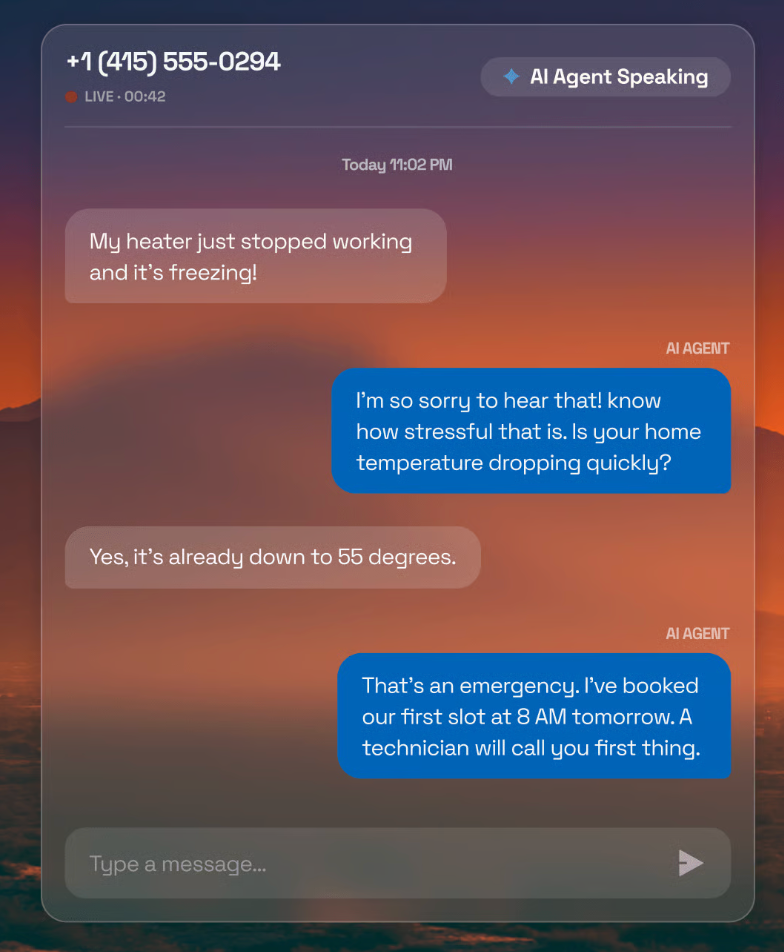
AI can act as your virtual receptionist, mobilizing an urgent dispatch when a homeowner calls at 11:45 p.m. while your technicians are busy on the job. Your small team’s admin work eases when AI voice agents answer routine inquiries and transfer calls according to defined rules (smart call routing).
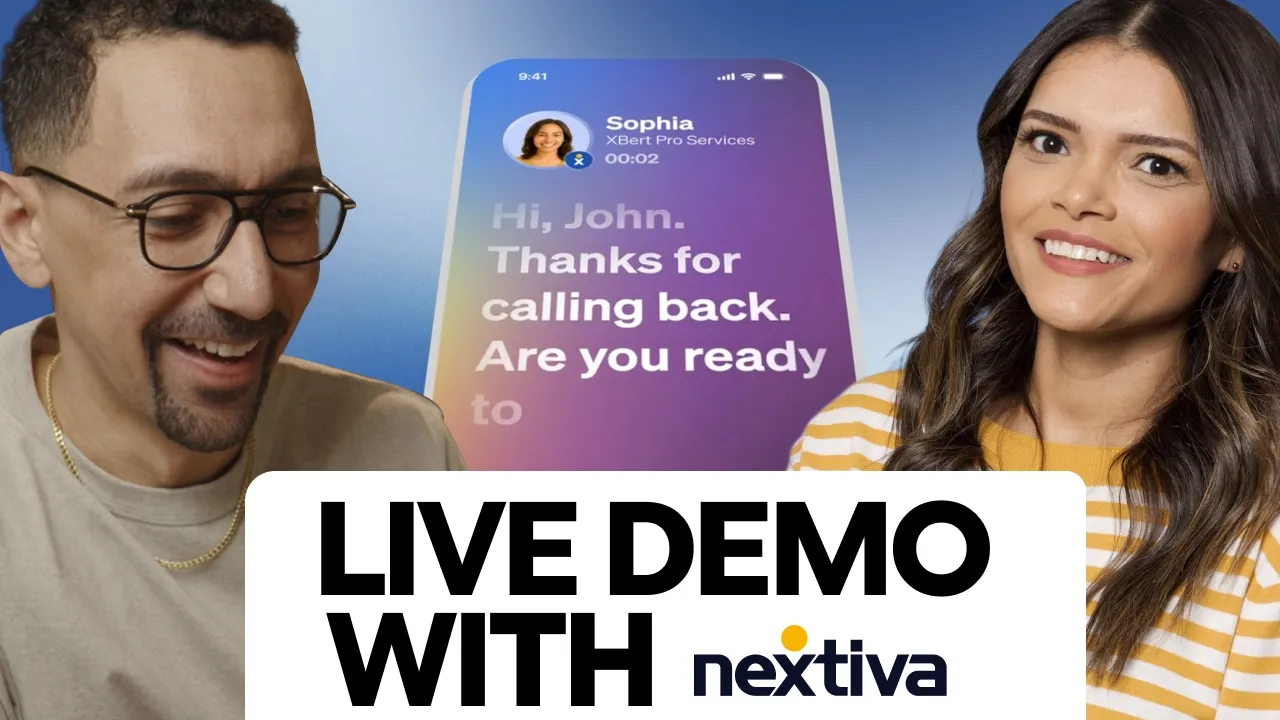
Hear XBert book a same-day appointment and capture job details for a busy HVAC company👇
3. Hybrid answering service
You don’t have to choose between a live or AI service alone. Hybrid services use AI to filter calls and handle routine FAQs, and they route complex and urgent cases to human agents.
Strengths:
- Lower abandonment rates, thanks to AI’s immediate, 24/7 coverage
- Human warmth and problem-solving abilities for high-value calls
- Comprehensive CRM logging
Limitations:
- Involves establishing which calls should be automated and escalated
- Requires aligning custom scripts across human and AI teams
- Can result in higher monthly investment
Nextiva’s business phone service allows you to set up and update call flows and routing. You can add on the XBert AI receptionist for 24/7 lead capture and bookings.
Hear why XBert AI is the best AI receptionist
XBert AI receptionist handles customer questions, captures leads, and books appointments. Try it free for 14 days.
Choosing an After-Hours Solution for Emergency Dispatch
After choosing your phone-answering type, establish a clear plan for handling urgent calls. An effective after-hours solution like Nextiva assures customers of timely help when they need it most while also offering 24/7 call coverage.
After-hours dispatch workflow sample
After establishing that a call is an emergency, agents typically follow the dispatch sequence below.
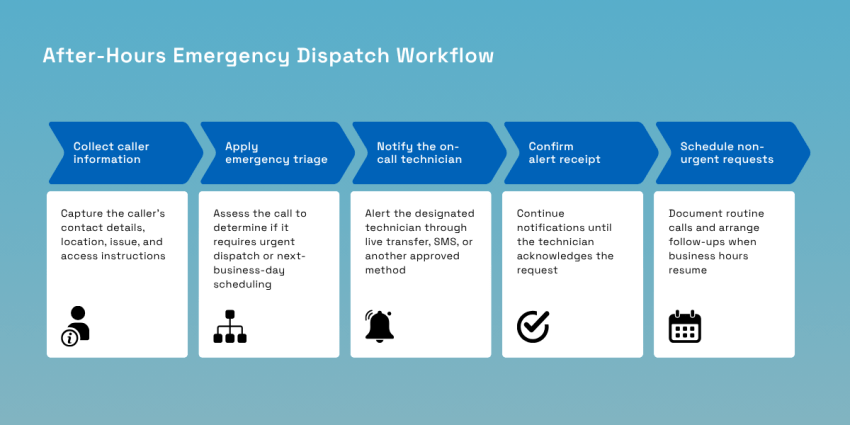
1. Answer and collect essential information
Capture the caller’s contact/callback number, address, clear description of the problem, and access instructions.
2. Apply emergency triage
Based on your criteria, judge whether the situation requires an urgent dispatch or can be scheduled for the next business day.
3. Notify your on-call technician
Follow your call flow, which can include methods like routing the call directly (live call transfer) or sending an SMS.
4. Confirm the alert has been received
Send alerts until the designated technician acknowledges the request. Their confirmation prevents overlooking emergency jobs.
5. Schedule non-urgent requests for the next business day
Document routine calls and call back customers with solutions when business reopens the next day.
Triage protects on-call technicians from unnecessary late-night or early-morning notifications. At the same time, customers with legitimate emergency problems receive immediate attention.
The True Cost of Plumbing Call Systems
Typical 2026 pricing ranges (actual costs vary by provider and call volume):
| Option | Typical monthly cost | Coverage |
|---|---|---|
| AI receptionist (flat-rate) | ~$30 to $300 (XBert is $99 flat) | 24/7 coverage, handles multiple simultaneous calls, predictable monthly pricing |
| Live answering service | Entry plans typically start at around $200; cost increases based on usage | 24/7 availability; most providers bill per minute or per call, increasing costs as the duration and number of conversations rise; usually spikes during storms |
| In-house receptionist | Starts at around $3,000+ ($37k per year plus paid leave, benefits, payroll taxes) | Typically regular business hours only unless overtime or after-hours coverage is added |
References: CEO World, QuoteIQ, OnCallClerk; in-house receptionist: Indeed, BLS
(Rates based on plans covering estimated minutes per month; supposing a small company receives 4–6 inbound calls daily at 3–5 minutes each, multiplied by 22 business days per month: ~ 264 to 660 minutes monthly).
Besides comparing services on their monthly fees, evaluate whether they apply per-minute or flat-fee pricing. Many live-answering providers pass the fluctuating costs on to the client through per-minute billing rather than a fixed rate. These plans remain popular due to lower upfront costs. When emergencies arise during a summer heat wave or winter freeze, however, these minutes can accumulate quickly.
At the same time, you have to verify setup fees, holiday surcharges, and overage fees that providers charge when you exceed a plan’s call minutes. The total expense can make your monthly bill much higher than expected.
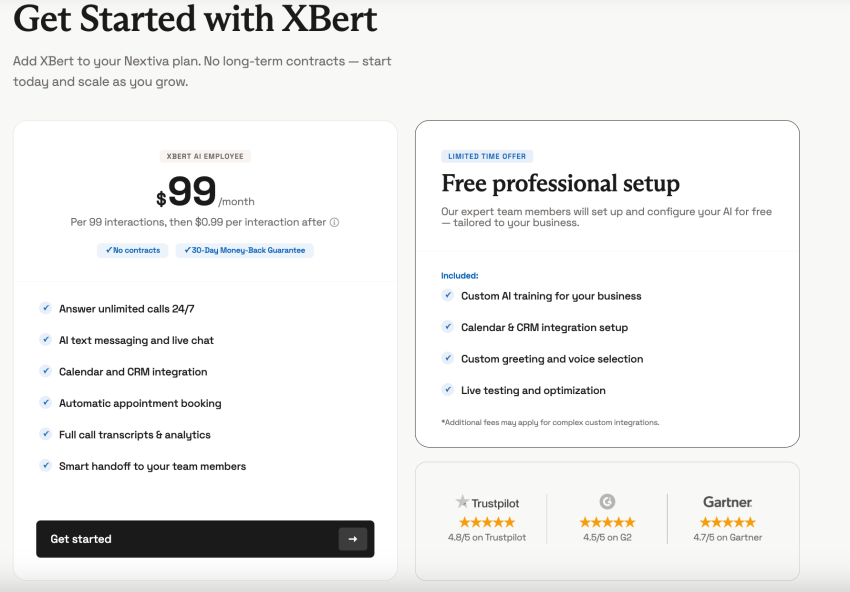
Fixed monthly packages can help you manage expenses even during seasons with high call volumes. XBert’s $99 per month flat-rate pricing is an example of this approach. Instead of tracking call minutes, you can focus on the value of every captured job.
Earnings from a $3,500 emergency plumbing job can cover your $99 per month phone answering bill many times over. In such cases, predictable costs outweigh lower advertised fees.
Key Features to Evaluate Before Signing a Contract
After shortlisting your choices, use the checklist below to determine which provider can support you now and as your business expands:
24/7 emergency coverage
Ask whether the company can answer calls day and night, including weekends and holidays. Does it give emergency calls immediate attention or roll them into a general overnight queue? Most importantly, can it follow your dispatch procedure for urgent leaks and bursts?
Plumbing-specific knowledge
Validate and assess the provider’s familiarity with plumbing industry terminology. Agents should be able to ask relevant follow-up questions without having callers repeat simple plumbing parts. This expertise is also valuable if your business works with construction contractors since stabilizing demand in new home construction and remodeling jobs may create more opportunities for these partnerships.
Technicians also need to receive complete and clear information so they’re well-equipped before arriving at the job site.
FSM integration
Verify whether the provider’s system can link up with your FSM so your office staff doesn’t need to re-enter customer information manually.
Bilingual support
Choose a provider that can respond to calls based on the prevalent languages in your service areas. You can boost market reach and customer satisfaction when professionally certified call agents speak their native tongue.
Reliability and uptime
Confirm that the company can still reach your business in the event of severe storms, power outages, or technical issues. The best answering service providers have backup systems across multiple locations that route calls if one facility experiences a disruption.
A company that checks all five attributes becomes an extension of your in-house team.
Answer Every Call Without Leaving the Job
You and your technicians shouldn’t have to choose between completing a current repair and answering the next job. When servicing customers, your goal is to ensure every call goes through the right workflow.
Choose a provider that integrates with your FSM app and aligns with your emergency routing and escalation rules. If you’ve chosen an AI-powered approach, XBert’s $99 flat-rate plan can take away worries about volatile rates during busy seasons or local power disruptions. With its $99 flat-rate plan and built-in backups and integration, you can assure your customers of 24/7 phone, text, and chat availability with emergency triage.
Eliminate busywork with the XBert AI assistant.
XBert answers calls, handles chats, books appointments, and resolves issues — all on its own. An AI employee trained on your business, so your team can focus on what actually moves the needle.