

 Customer Experience
  Blog
Blog  Business Communication
  Leadership
  Marketing & Sales
  Nextiva News
  Productivity
  VoIP
VoIP 

Most customer experience (CX) leaders I speak to don’t need another explanation of what agentic artificial intelligence (AI) can do. They need to decide what to deploy first, who signs off on an agent’s financial actions, and what numbers to present to the CFO.
The forecasts are certainly ambitious. Gartner predicts that agentic AI will autonomously resolve 80% of common customer service issues by 2029, with a 30% reduction in operational costs.
But there’s another Gartner prediction that I find much more useful when planning an actual deployment:
More than 40% of agentic AI projects are expected to be canceled by the end of 2027. Why?
Reasons cited include:
- Escalating cost per interaction
- Escalating running costs
- Unclear business value
- Inadequate risk controls
Sounds like doom and gloom, doesn’t it? But those numbers (80% autonomy vs. 40% cancellation) aren’t contradictory. They’re the reason you need an agentic CX strategy.
AI is moving quickly, but deploying an agent on top of fragmented data, unclear permissions, and a deflection metric isn’t an agentic CX strategy. It’s a faster way to discover the weaknesses in your existing operation.
In this guide, I’ll build the framework I’d use to take an agentic CX program from ambition to production:
- The architecture underneath it
- A three-horizon implementation sequence
- The governance needed to control autonomous actions
- The measurement framework needed to prove the economics
The goal isn’t to deploy the most autonomous AI possible.
It’s to build something that still works when it meets your real customers, your real systems, and your real constraints.
What Agentic CX Is and How It Differs From Traditional Automation
Agentic CX isn’t simply a chatbot with a large language model behind it.
Sure, it will benefit from machine learning and conversational AI. But it needs to go deeper.
An agentic system can understand the customer’s context, decide what needs to happen, and execute that action on the systems running the business. Gartner similarly describes agentic AI as systems capable of acting autonomously to complete tasks, rather than simply generating information.
That’s an important distinction, because plenty of products are now being described as agentic when they’re really an improved chatbot, an RPA workflow, or a copilot that still needs a human to execute the final step.
I use a simple test when evaluating them: Ask what the system can write to, not what it can understand.
If it can understand that a customer is asking for a refund but cannot change the relevant record, it hasn’t resolved anything.
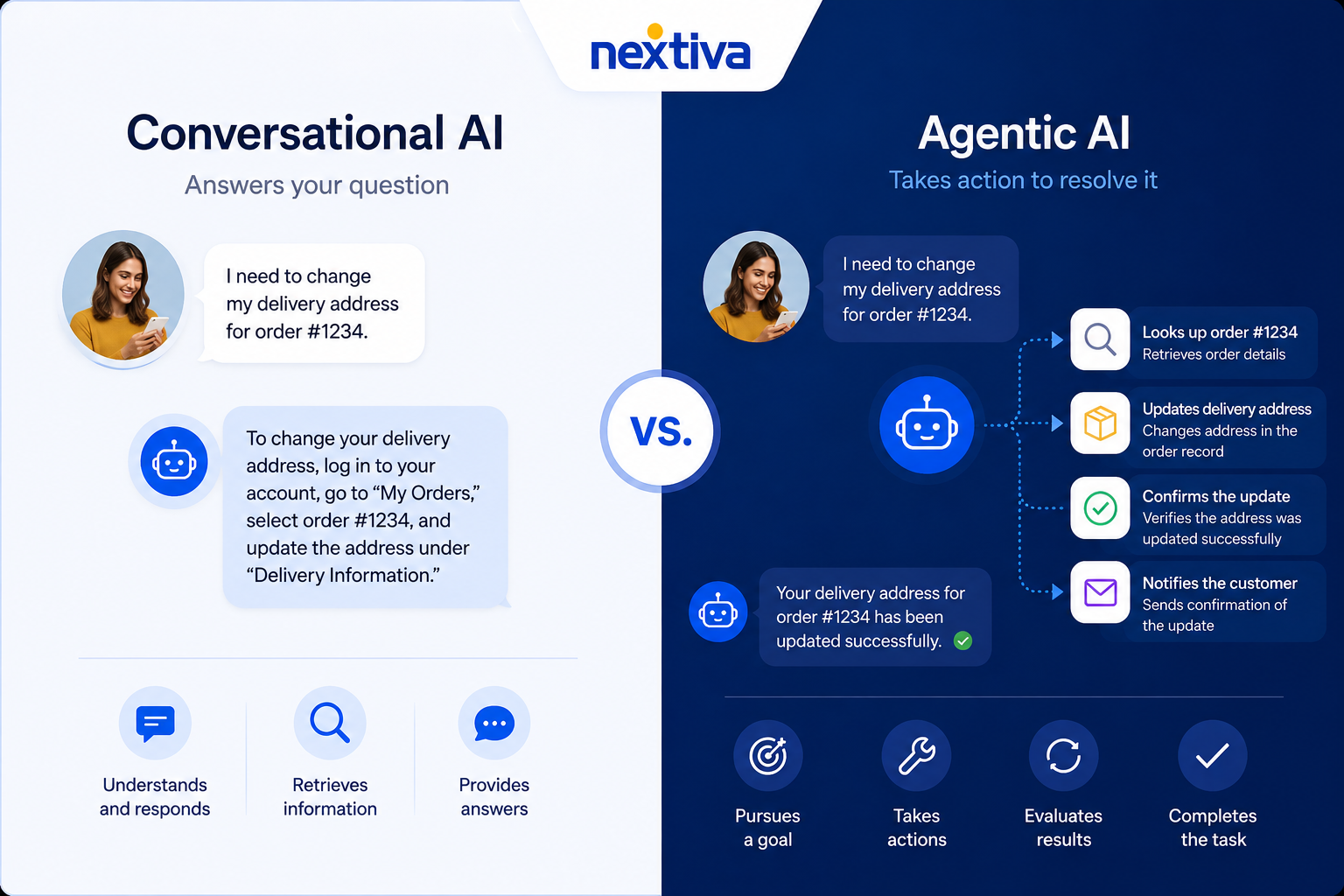
From script-following bots to outcome-driven agents
The previous generation of customer service automation was limited less by comprehension than by execution. A bot could understand that a customer wanted to change an address, but if it couldn’t access the order management system, the conversation still ended with instructions for a human or a self-service link.
This is where the distinction between deflection and resolution becomes important.
Deflection measures interactions that didn’t reach an agent. Resolution measures problems that went away. Those numbers can look very different at scale. An agent that tells a customer how to request a refund might improve your deflection rate. An agent that processes the refund and confirms that it posted improves your resolution rate.
That’s the standard I’d use when assessing any agentic AI platform.
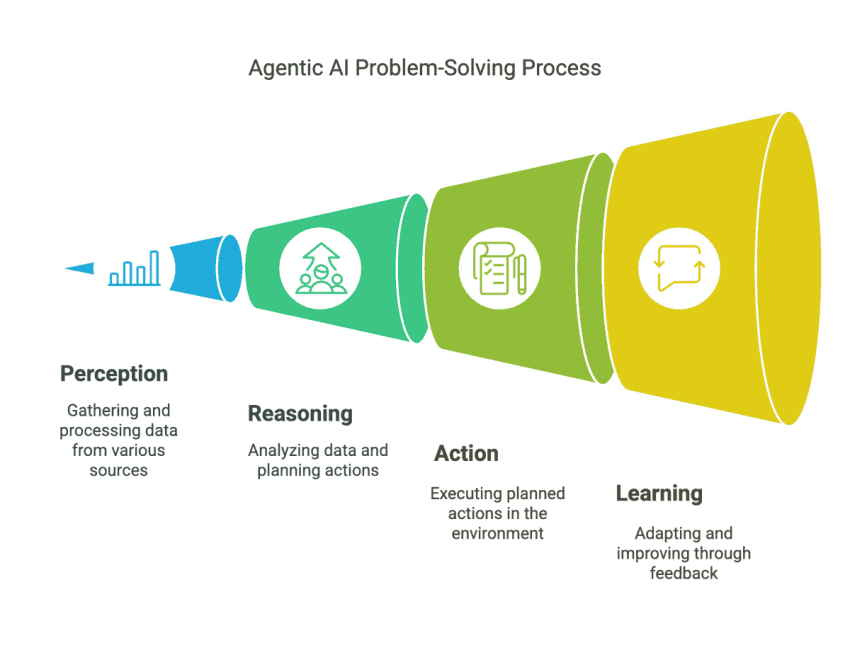
The capabilities that make an agent agentic
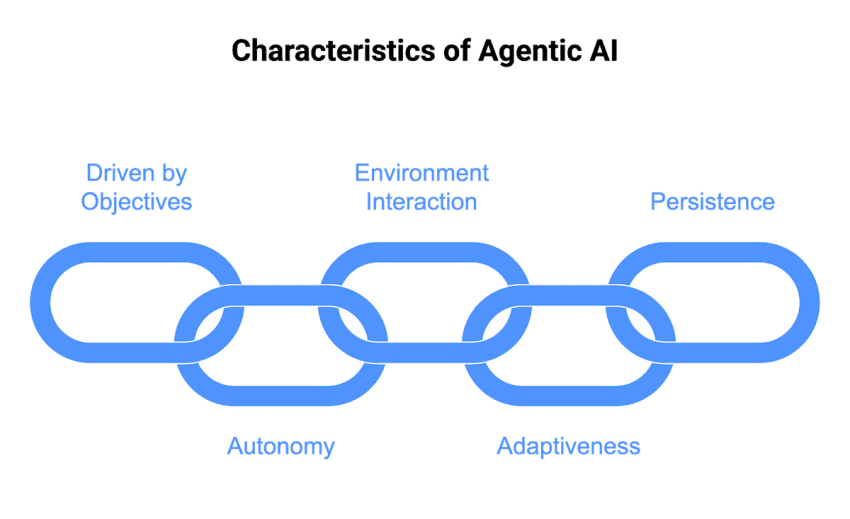
There are three capabilities I would look for:
- Context that persists across channels and interactions
- Multistep reasoning against defined policies
- Tool access to systems like CRM, CCaaS, and payment platforms
The first two are important, but the third is where the real operational difference appears.
An agent can reason perfectly about a customer’s problem. If it can’t safely access the system that needs changing, it can’t resolve the problem.
Speed matters too
Nextiva’s Customer Patience Benchmark found that customers expect chat responses within one minute. For phone, SMS, and ticket responses, customers expect a five-minute window, while they expect email responses within 30 minutes.
When those expectations aren’t met, 56% of customers immediately switch channels and 28% abandon the product entirely.
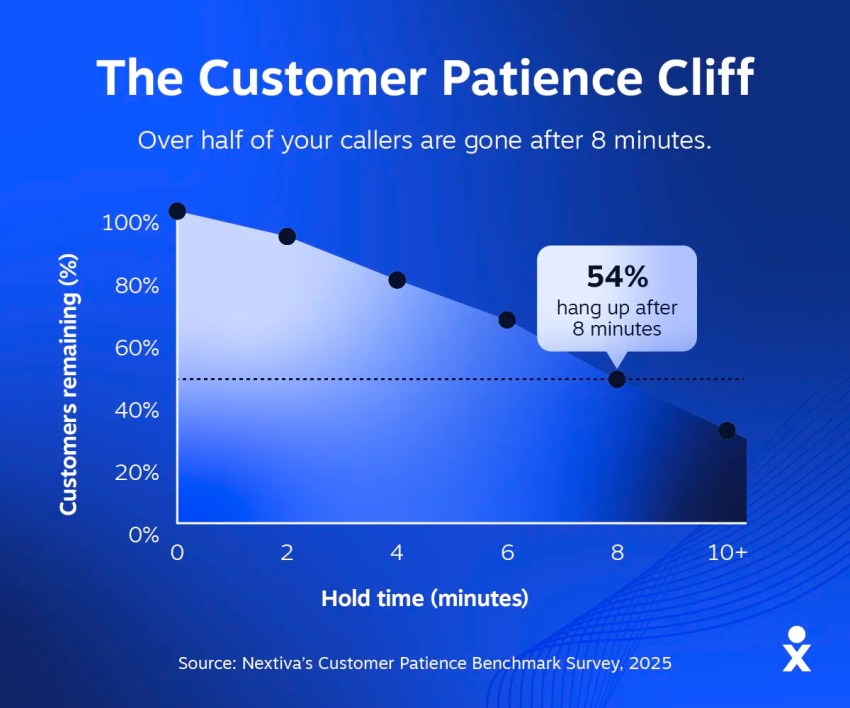
An agent that can reason about a problem but takes too long to resolve it hasn’t created a better CX. It has simply moved the bottleneck.
| Capability | Rule-based chatbot | Generative AI copilot | Autonomous AI agents |
|---|---|---|---|
| Primary job | Match intent and serve an answer | Assist a human agent in real time | Resolve the request end-to-end |
| Acts on systems | No | Suggests, and a human executes | Yes, through governed API calls |
| Handles multi-step tasks | No, single turn | Partially and human-led | Yes, plans and sequences |
| Context across channels | Session only | Session plus agent screen | Persistent customer state |
| Who is accountable | Script owner | Human agent | Policy and guardrail design |
| Success metrics | Containment | Handle time and wrap-up | Autonomous resolution rate |
The difference is not how impressive the conversation sounds. It’s whether the system can take responsibility for the outcome.
The Architectural Pillars of an Agentic CX Strategy
Think about your contact center architecture in three layers:
- Foundation: unified customer data and identity
- Execution: APIs, integrations, and orchestration
- Scale: coordination across customer journeys
Which layer gets overlooked most often? The foundation. Many agentic CX programs struggle because customer data and identity remain fragmented across systems.
Nextiva’s CX Trends research found that customer interaction teams use six or seven tools on average, while 13% use more than 10. Among companies using multiple CX tools, 86% report siloed data, and 81% say consolidating customer data into one system of record would improve CX.
An agent can only make a reliable decision if it has the context needed to do so. Give it incomplete customer data, and you can end up with an agent acting confidently on the wrong information.
Unifying customer data and conversation state
Two problems often get lumped together.
The first is identity. Your AI agent needs to know that the person who called five minutes ago is the same customer who just sent an SMS.
The second is the conversation state. It needs to know what happened during that earlier interaction without making the customer explain it again.
That means connecting:
- Voice, chat, SMS, and email interactions
- Customer identity and account history
- Previous actions, commitments, and unresolved issues
Identity resolution needs to come before autonomy. Think about how we turned multichannel contact centers into omnichannel ones by introducing context awareness.

An agent acting on a partial customer record can make a confidently wrong decision faster than a human ever could. AI needs all the information and history at hand to make the best decision in the fastest possible time.
Orchestration and safe action triggers
Once the foundation is in place, the next layer is execution.
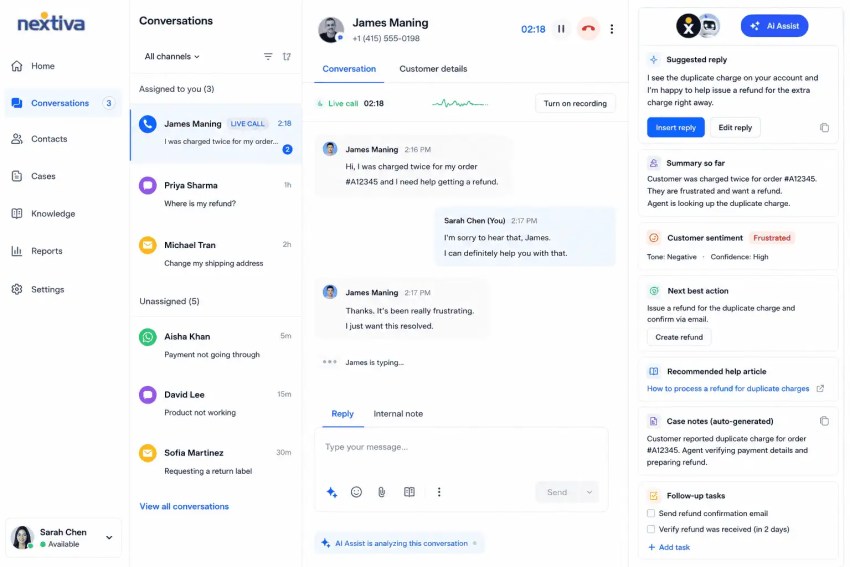
This is where an agent moves from understanding a request to doing something about it. The APIs it can access become the practical boundaries of its autonomy.
A safe API endpoint needs more than authentication.
It needs scoped permissions, transaction limits, and an audit trail for every write. The system should also prevent agents from accidentally executing the same action twice if they retry a failed request.
The other piece is orchestration.
Agents can respond to events, like a missed payment or an abandoned digital customer journey, and proactively contact the customer. That’s potentially valuable, but it creates another risk.
If the trigger is weak, autonomous outreach simply generates more contacts.
At this point, you’ve increased activity rather than improved CX.
A Three-Horizon Roadmap for Implementing Agentic CX
What is the biggest tip I would give to any business or person introducing AI into their business?
Don’t try to move to fully autonomous customer service in one jump. It will go wrong.
That’s the same advice I give for almost any digital transformation. Instead, the safest approach is to earn each stage by proving that the layer underneath it works. This gives you three horizons — each with a clear objective and an exit criterion.
| Horizon | What the AI does | Human role | Exit criteria |
|---|---|---|---|
| 1. Bounded copilot | Surfaces knowledge, drafts summaries, and scores interactions | Executes customer-facing actions | Wrap-up and handling time improve without CSAT loss |
| 2. Autonomous workflows | Completes defined multi-step tasks across channels | Approves exceptions and handles escalations | Autonomous resolution rate holds with flat repeat-contact rate |
| 3. Closed-loop orchestration | Coordinates full journeys and intervenes proactively | Sets policy and audits decision quality | Cost to serve falls while CSAT and first call resolution (FCR) hold |
The important part is the exit criteria.
A roadmap without a measurable condition for moving to the next stage is just a list of ambitions.
Let’s look at the horizons in detail.
Horizon 1: Bounded copilot and task automation
Start where the humans remain in control.
Focus on three areas:
- Real-time knowledge surfacing
- Live sentiment signals
- Automated summaries
These have a relatively small risk surface while still producing measurable productivity gains.
Contact center features like sentiment analysis, AI transcription, and summarization can reduce wrap-up time by up to 50%: a small introduction and a large payoff.
The goal at this stage isn’t total autonomy.
It’s proving that AI can improve agent productivity without damaging customer satisfaction.

Horizon 2: Cross-channel journey orchestration
Once the foundation is working, let the agent act.
Start with high-volume, low-variance workflows where the policy is clear, and the outcome is easy to verify:
- Rescheduling
- Order modifications
- Standard claims
- Billing updates
The callback is a good example, especially as 75% of customers would rather schedule a guaranteed callback than wait on hold. An agent that identifies a queue problem, then offers a callback and books it, is solving a customer journey problem rather than simply demonstrating autonomy.
The key is keeping the workflow bound.
Don’t give the agent permission to handle billing. Permit it to perform a defined billing action under the defined conditions.

Horizon 3: Closed-loop optimization
This is where agentic CX starts to become genuinely ambitious.
The system moves beyond responding to individual interactions and begins coordinating journeys across multiple touchpoints. It can identify predictive signals, intervene proactively, and learn from the outcomes of previous actions.
Few organizations are ready for this stage. That’s fine.
The biggest mistake is reaching for closed-loop orchestration before you have a measurement layer. Without reliable data on resolution, repeat contacts, customer satisfaction, and cost to serve, you won’t know whether the added autonomy creates value or just more activity.
Earn the next horizon by proving the previous one.

Governance That Lets Agents Act Safely
AI governance for contact centers shouldn’t simply be a document that appears after the first autonomous workflow goes live.
It needs to shape the workflow before the agent gets permission to act.
The question isn’t whether an agent should be autonomous. The question is where autonomy is appropriate, where approval is required, and what happens when the system gets it wrong.
Define autonomy by risk
Not every customer interaction deserves the same level of control.
A useful model is to classify actions by their potential impact:
- Low risk: retrieve information or update a non-critical preference.
- Medium risk: change an order, schedule an appointment, or issue a limited credit.
- High risk: move money, delete records, or make a regulatory commitment.
The higher the risk, the stronger the control should be.
That might mean human approval for high-value refunds, spending limits for financial actions, or a complete block on certain changes. The mistake is treating autonomy as a switch. It isn’t.
Scope permissions outside the AI
A prompt can tell an agent what it should do.
It shouldn’t be what stops the agent from doing something it shouldn’t.
Permissions need to be enforced by the systems the agent connects to. This might be the most important piece of information I give you in this guide.
If an agent is allowed to issue refunds, the API should determine the maximum value it can approve rather than relying on an instruction buried in its system prompt.
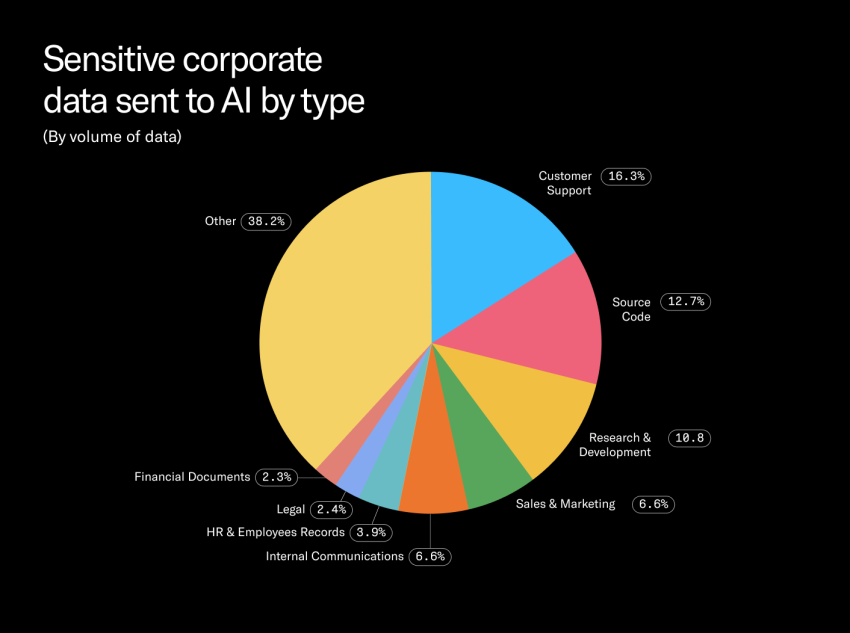
The same principle applies to customer data. Give an agent access to the minimum information it needs, limit the actions available to it, and log what it does. That creates controls you can test independently of the model.
Build human oversight into the workflow
Human involvement doesn’t have to mean putting an agent behind an approval screen for every interaction. Use human oversight where the consequences justify it.
For example, an agent might handle routine address changes autonomously while routing high-value account changes to a human. The important part is to define that distinction before deployment.

Remember that Gartner stat that said 40% of agentic AI projects will get canned by 2027? Poor risk controls are high on the list of reasons that figure is so high.
That makes governance part of the business case, not simply a security requirement.
If you can’t explain what an agent is allowed to do, what requires approval, and how you will intervene when things go wrong, you’re not ready to give it more autonomy.
Measure What Matters Before You Scale
If you can’t explain how an agentic workflow creates value, don’t scale it yet.
This sounds obvious, but measurement is one of the biggest gaps in current AI programs. Adobe’s 2026 AI and Digital Trends research found that only 31% of organizations have a framework for measuring the ROI of agentic AI, compared with 44% for generative AI.
That means many organizations are deploying AI before deciding how they will prove it works.
Start with the customer outcome
Don’t make agent volume your primary success metric.
Track whether the customer got a better outcome:
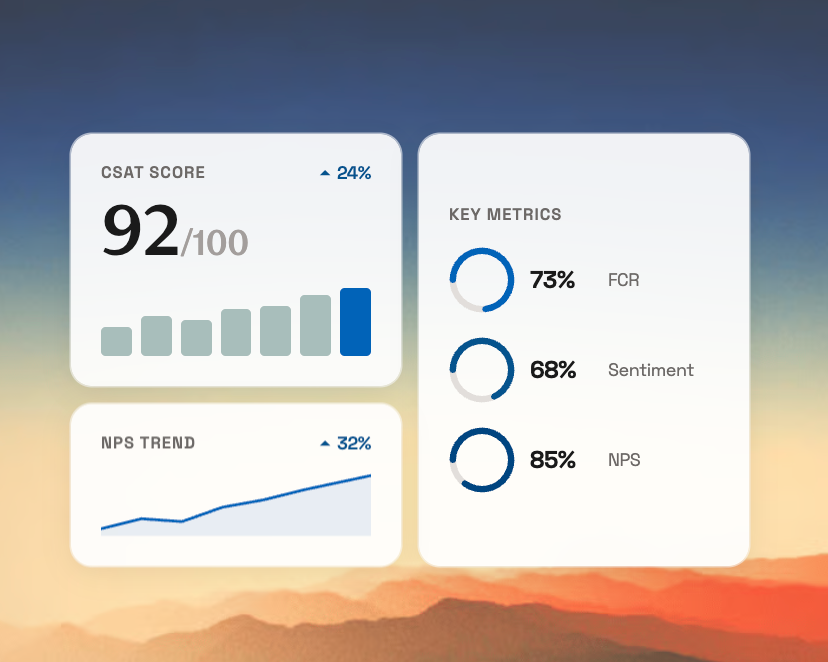
- Resolution rate
- FCR
- Repeat contact rate
These tell you whether the agent is solving problems rather than simply generating interactions.
An agent that handles 50,000 conversations but sends 20,000 customers back to a human hasn’t delivered 50,000 autonomous resolutions. It’s just deflected them.
Add the operational and financial layer
Once the customer outcome is clear, measure what it will cost to deliver. Look at:
- Cost per resolution
- Human escalation rate
- Overall CX cost reduction
- Average handle time
Then add the costs that are easy to overlook, like AI usage, integration maintenance, and human review.
This stage is where an agentic CX business case either gets stronger or falls apart.
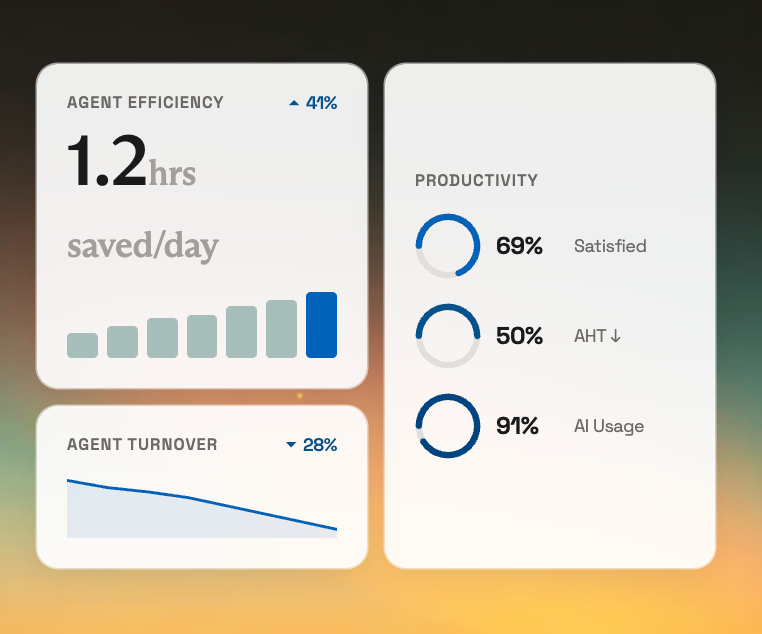
If autonomous resolution increases while repeat contacts also increase, you’ve probably shifted cost rather than removed it. If human escalations fall while customer satisfaction holds, you’ve got something worth scaling.
Create exit criteria for every deployment
Every agentic workflow should have a baseline, a target, and a decision point.
| Metric | Baseline | Target | Decision |
|---|---|---|---|
| Autonomous resolution | 0% | 40% | Scale if sustained |
| Repeat contact | 18% | ≤18% | Stop if it increases |
| CSAT | 82% | ≥82% | Stop if it falls |
The exact numbers will vary by workflow. The principle shouldn’t.
Before you give an agent more authority, know what success looks like, know what failure looks like, and know what number will make you stop.
Choosing the Right Platform for Agentic CX
Once you’ve defined the workflows, permissions, and measurements, the platform decision becomes much easier.
- Don’t start with the AI model.
- Start with the infrastructure around it.
An agentic CX platform needs to connect customer interactions to the systems, data, and controls required to resolve them. If those pieces sit across disconnected products, every new workflow becomes another integration project.
Look beyond the AI model
The model is only one component of an agentic CX architecture. Evaluate the platform across three areas:
- Customer interaction handling
- Workflow orchestration and automation
- Data, security, and governance
The first determines how customers reach the system. The second determines what the system can do. The third determines whether you can safely give it more authority over time.
A platform that performs brilliantly in a demo but requires extensive custom development to connect your CRM, telephony, customer data, and business processes isn’t necessarily the fastest route to production.
Consider consolidation where it makes sense
Fragmentation creates more than an integration headache. It also makes it harder to maintain a consistent view of the customer, measure outcomes across channels, and understand what an AI agent has already done.
That’s why the interaction layer matters.
A consolidated CX platform can bring voice, chat, messaging, routing, automation, and agent assistance into the same operating environment. Your broader enterprise systems can remain the systems of record, while the CX platform coordinates customer interactions.
That distinction matters.
You don’t need to replace every system your business uses to build an agentic CX strategy. You need a reliable layer that connects the customer interaction to those systems and enforces the rules around what the agent can do.

Evaluate production
Ask vendors what happens after the demo:
- Can the platform expose the actions your agents need?
- Can you restrict those actions by role or value?
- Can you see exactly what the AI did when something went wrong?
Those questions tell you much more about production readiness than another impressive AI conversation.
The best platform isn’t the one that promises the most autonomy. It’s the one that gives you a controlled path from assisted interactions to autonomous resolution without losing visibility along the way.

Build Your Agentic CX Plan With Nextiva
The forecasts are real. So is the cancellation risk. What separates the two is rarely the model itself. The key is having the right foundation, the right controls, and the right measurements in place before you give an agent more authority.
This is the order I’d follow:
- Build the data foundation.
- Establish governance and escalation.
- Measure resolution and cost to serve.
Nextiva Contact Center provides a solid foundation for the interaction layer. It brings voice, chat, SMS, email, and social into one workspace, alongside AI orchestration, agent assist, and journey orchestration.
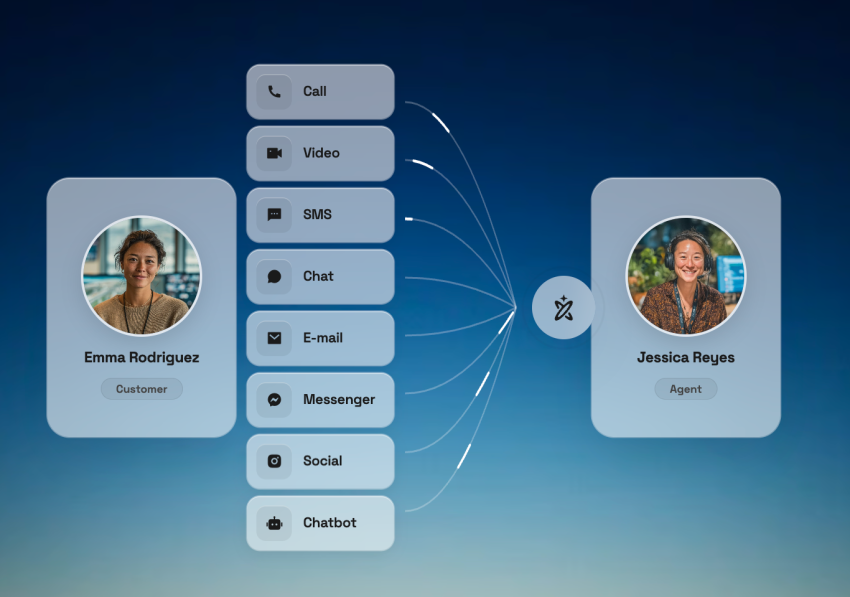
That doesn’t make it your enterprise data platform, and it shouldn’t be positioned that way. Your CRM, ERP, payment platform, and other core systems can remain the systems of record. Nextiva provides the layer that coordinates the customer interaction with those systems.
Start by mapping the journeys where autonomous resolution could create measurable value. Then identify what the agent needs to access, what it can change, and when a human must take over. That’s how you build an agentic CX strategy that can survive contact with production.
See how Nextiva fits into your CX stack.
Connect conversations, AI, and customer journeys across the systems your team already uses.