
 Customer Experience
  Blog
Blog  Business Communication
  Leadership
  Marketing & Sales
  Nextiva News
  Productivity
  VoIP
VoIP 

“Press 1 for sales. Press 2 for support. Press 3 for billing.”
Those days are over. Artificial intelligence (AI) can help.
Why make a customer blunder through an outdated menu when technology exists to deal with their problem immediately? That’s the question that contact center managers are facing regarding the implementation of agentic AI for inbound call routing.
Nextiva research indicates that 59% of callers are forced through multiple transfers, while 56% have to repeat their issue. But that can all change if your business adopts technology that’s been around for a while.
As with any change, however, it pays to be informed and prepared. In this guide, I’ll explain how agentic AI inbound call routing works, what the underlying voice architecture needs to deliver, and how to build a warm handoff that doesn’t force customers to start over.
The Four Stages of Inbound Call Routing Evolution
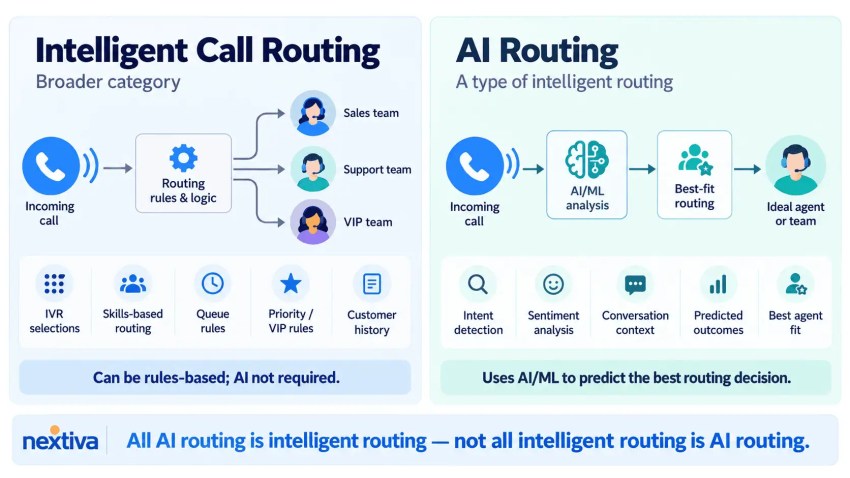
Inbound call routing hasn’t jumped straight from keypad menus to agentic AI. There’s been a steady progression in how contact centers understand callers and decide where to send them. Understanding that progression makes it easier to see what changes when you introduce agentic AI.
Tier 1: DTMF keypad trees and static call flows
This is the traditional interactive voice response (IVR) system. The caller hears a series of options and uses their keypad to navigate a predefined call flow.
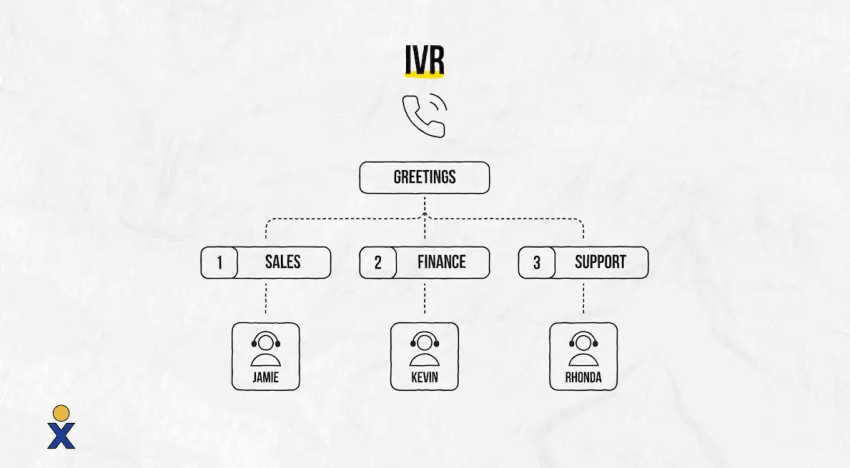
The technology is reliable, but the intelligence sits almost entirely in the design of the flow. If the caller’s needs don’t fit neatly into those branches, the system has very little to work with.
That’s why IVR design often becomes increasingly complicated over time. Every new customer journey creates another branch, another menu, or another routing rule.
Tier 2: Conversational IVR and speech recognition
The next step is letting callers speak instead of forcing them to press buttons and wade through long menus. Speech recognition converts the caller’s words into something the IVR can interpret, while conversational AI systems can use keywords and predefined intent recognition to select the appropriate route.
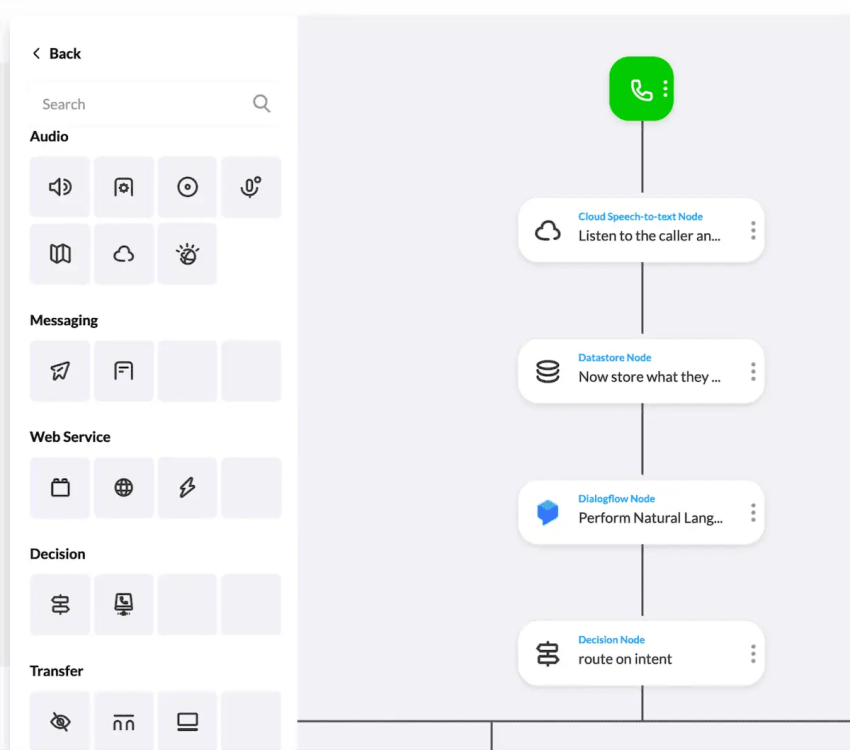
That’s a better experience, but there’s still a fundamental limitation: The system, or large language model (LLM), is generally choosing from paths that someone has already designed.
If a customer says, “My card was charged twice, and I need to know what’s happened,” a conversational IVR might recognize “charged twice” and route the call to billing. It understands more of what the caller said, but it isn’t necessarily reasoning about what needs to happen next.
Tier 3: Predictive routing and CRM lookup
The next evolution combines intelligent call routing with customer data. Instead of treating every caller as an unknown voice, the contact center can identify the customer, retrieve relevant CRM information, and use factors like intent, customer profile, agent skills, and availability to determine where the call should go.
This is where routing starts becoming genuinely context-aware. The limitation is that the system is still primarily making a routing decision. The back-end actions themselves generally remain separate from the routing process.
Tier 4: Agentic AI routing
Agentic AI changes that model. Your system can understand your caller’s intent, retrieve information from connected systems, execute authorized actions, and decide what should happen next. The routing decision becomes part of a larger workflow.
For example, a customer calling about an order doesn’t necessarily need to connect to an agent immediately. Your AI could identify the customer, retrieve the order, check its status, and determine whether the request can be resolved automatically.
If it can’t, AI can route the caller to the appropriate specialist with the relevant context already attached.
That’s a significant shift. Your contact center isn’t just deciding which queue should receive the call. It’s using AI to understand the problem and determine the next best action.
For organizations still running legacy PBX infrastructure, this doesn’t necessarily mean replacing everything at once. Cloud-native platforms like Nextiva provide a path toward intelligent routing while bringing voice, call flows, and contact center capabilities into the same environment.
The important question isn’t whether you have an IVR. It’s how much of the decision-making process your IVR is actually capable of handling.
How Agentic AI Routing Works: Architecture and Flow
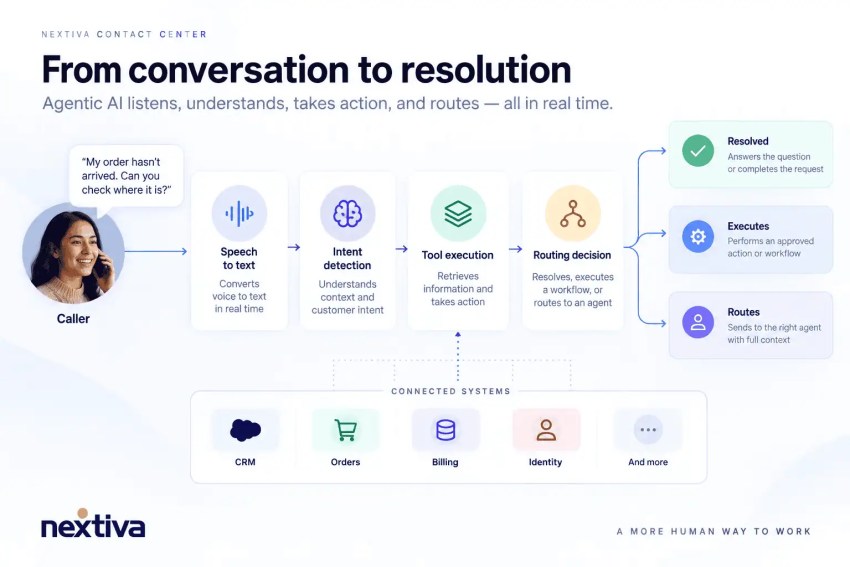
An agentic AI routing system has to do more than understand what a caller is saying. It has to understand the request quickly enough to keep a natural conversation going, retrieve information from other systems, decide what to do with that information, and act on the decision. All of that happens while the caller is still on the line.
The voice pipeline
The process starts with real-time audio streaming. As the caller speaks, the voice pipeline captures their audio and converts it into a text-based call transcription using speech-to-text technology. The system then uses that information to determine intent and establish the context of the request.
The important phrase here is real time. A voice agent can’t afford to wait several seconds between every stage of a conversation. Delays quickly make an otherwise intelligent interaction feel unnatural. Your AI system needs to process speech continuously rather than treating every sentence as a separate request.
From intent detection to action
Once your system understands what the caller wants, the agentic layer can decide what information or action is needed next.
This is where tool calling becomes important. A “tool” is a controlled connection between the AI and another system. It might allow the agent to look up an order, retrieve a customer record, check an account, or trigger an approved workflow.
The AI doesn’t directly access everything in your environment. Instead, it requests a specific action through an approved interface, and the connected system returns the result.
That creates a loop:
Understand → Retrieve → Decide → Act → Verify
The agent can repeat that process when a request requires more than one step.
For example, a caller might say: “My order hasn’t arrived. Can you check where it is?”
The AI agent will identify the customer, retrieve their order, check the latest delivery status, and determine whether the issue can be resolved without human intervention.
- If the answer is straightforward, the call can be resolved.
- If another workflow is required, the agent can execute that workflow if it has permission to do so.
And if a human needs to take over, the agent can route the call to the appropriate team with the completed work attached to the handoff.
Three possible outcomes
At this point, agentic routing can take one of three paths:
- Resolve: The AI answers the question or completes the request.
- Execute: The AI performs an approved back-end action before continuing or routing the call.
- Route: The AI sends the caller to the right human agent with the relevant context.
That distinction matters. A system that simply recognizes “billing” and transfers the call isn’t agentic because it understands more words. The value comes from what it can do with that understanding.
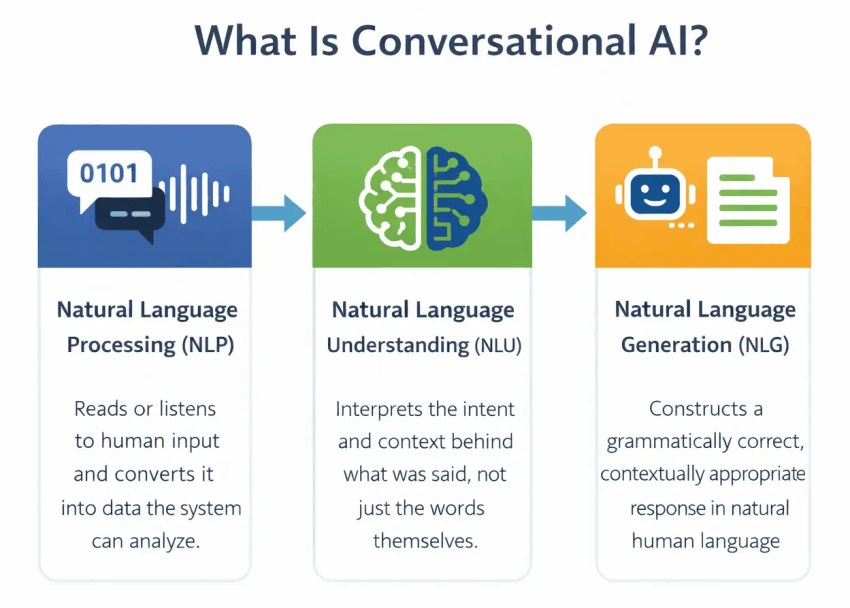
Here, we’re moving from natural language processing (NLP) to natural language understanding (NLU).
Breaking down the architecture
A practical agentic voice architecture needs several layers working together:
- Voice layer: Captures and streams the caller’s audio.
- AI layer: Converts speech into meaning, maintains conversation context, and determines the next action.
- Tool layer: Provides controlled access to CRM, order management, identity, billing, and other back-end systems.
- Routing layer: Determines whether to resolve the interaction, continue through a workflow, or transfer to a human agent.
- Contact center layer: Delivers the call and its context to the right agent when human intervention is required.
Nextiva Contact Center brings voice routing and customer information together through CRM integrations, giving the AI and human agent access to the context they need without forcing the operation to jump between disconnected systems.
The architecture is about more than adding an AI voice layer to an existing IVR. It’s about connecting the conversation to the systems that can actually do something about the customer’s problem.

The Anatomy of a Great Warm Transfer
Getting the caller to the right agent is only half the job.
If the human agent answers and says, “Can you tell me what happened?”, you’ve just recreated the problem the AI was supposed to solve. Your customer has told you the problem already. That’s why you’ve routed them to that specific agent.
The handoff from AI to human needs to carry the conversation with it.
Why cold transfers fail
- A cold transfer moves the call.
- A warm handoff moves the call and the context.
The difference matters when the AI has already spent several minutes identifying the caller, understanding their problem, checking their account, and attempting to resolve it.
Throw that context away at the point of transfer, and the customer has to start again. It’s like when your customer spends ages on web chat, then phones you and has to explain their issue all over again. At least, it might have been like that until you deployed an omnichannel contact center, connecting the history and context.
The receiving agent shouldn’t have to ask for information the customer has already provided. They should be able to see what the caller needs, what the AI has already checked, and why the call reached them.
What should be included in the handoff payload?
Think of the handoff as a structured context payload rather than a simple transfer. At a minimum, I’d want the receiving agent to have:
- Caller identity: Who the customer is and any completed verification.
- Intent: What the caller is trying to achieve.
- Conversation context: A transcript or concise summary of the interaction so far.
- Actions taken: Systems queried, workflows attempted, and results returned.
- Reason for escalation: Why the AI couldn’t complete the request.
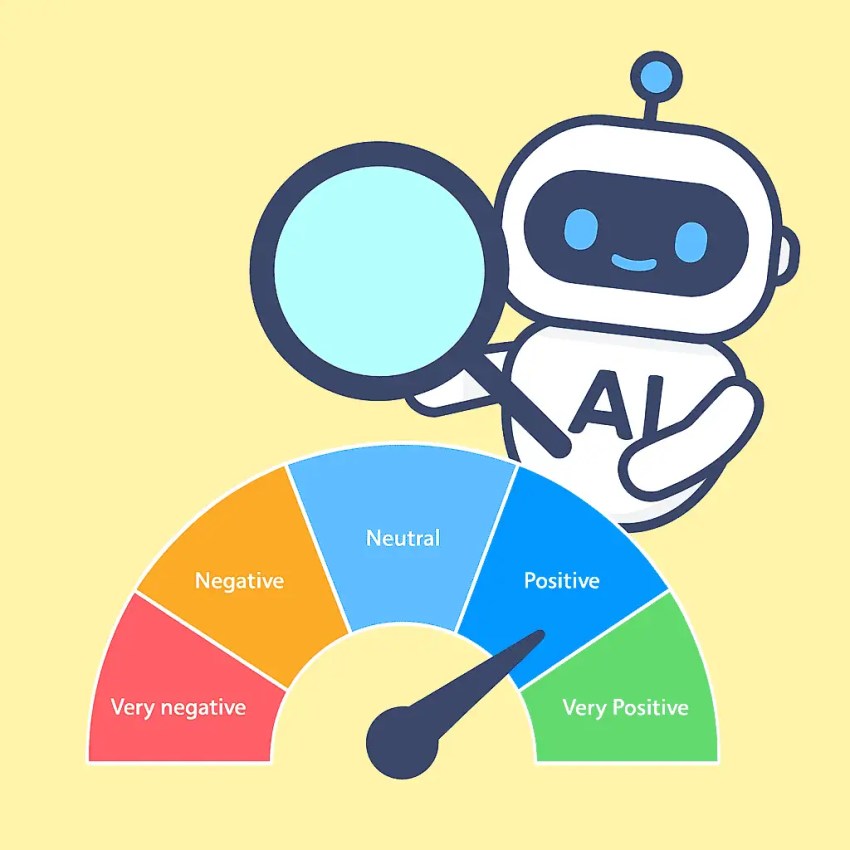
- Sentiment analysis: Relevant signals that indicate frustration, urgency, or escalation risk.
The exact framework will depend on the systems you’re connecting, but the principle is straightforward. Don’t pass the call; pass the work.
Putting the context in front of the agent
The receiving agent also needs that information. This is where computer telephony integration (CTI) and screen pops become important.
A screen pop automatically displays relevant customer information when the call arrives. Instead of switching between your phone system, CRM, order management system, and AI transcript, the agent can start with the information needed to continue the conversation.
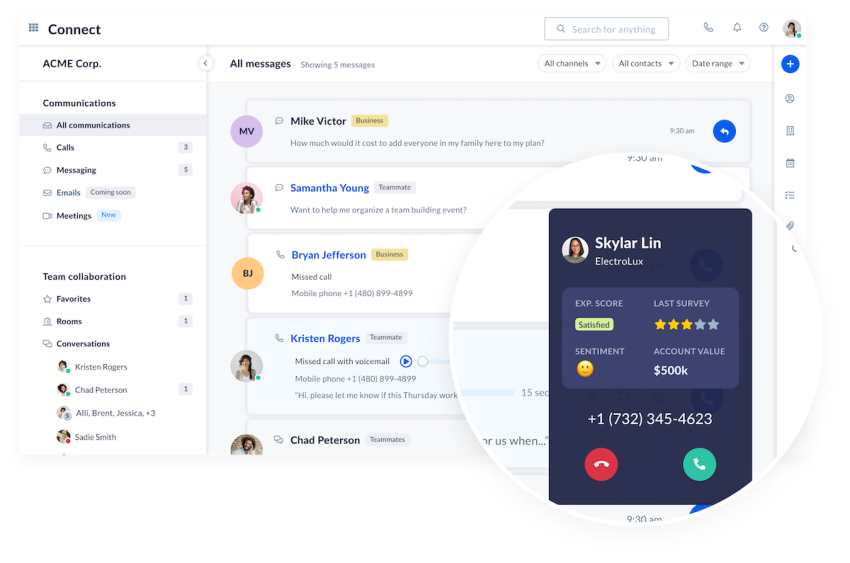
That’s particularly important for specialists handling complex calls. Your AI might have already verified a delayed order, checked the customer’s account, confirmed the delivery status, and identified the reason the request needs human intervention. The specialist shouldn’t need to repeat those steps.
Nextiva Contact Center connects voice interactions with CRM data and agent workflows, helping put customer information and conversation context in front of the human agent during an escalated call.
There’s another reason to design the handoff properly: Sometimes the right outcome isn’t an immediate transfer. If the right specialist isn’t available, the routing system can use that information to offer a callback rather than dumping the caller into another queue.
Nextiva’s 2025 Customer Patience Benchmark found that 75% of callers prefer a callback either all the time or once hold times exceed five minutes.
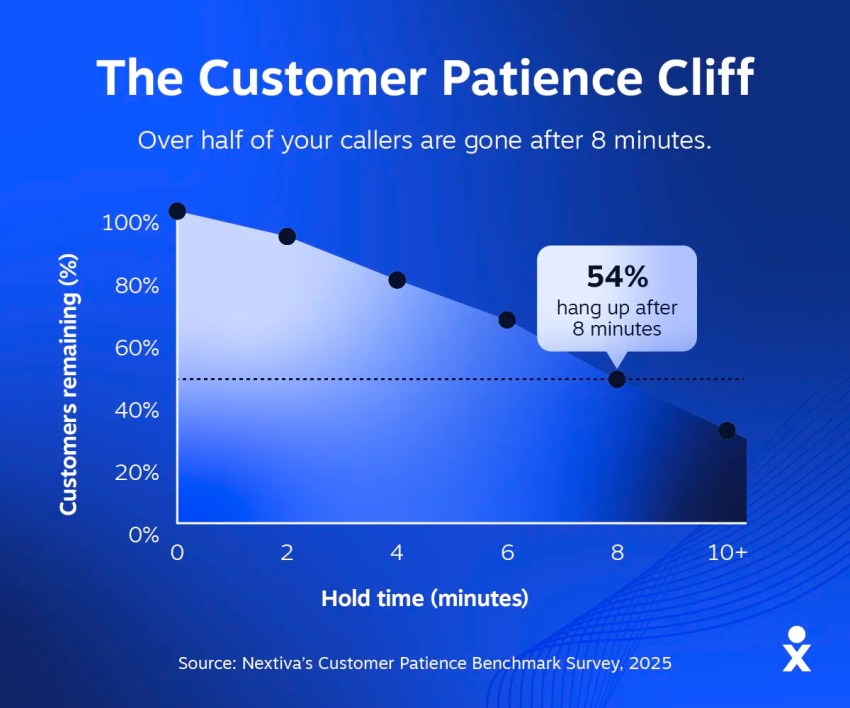
A genuinely intelligent handoff, therefore, isn’t just about transferring a phone call. It’s about transferring enough context, at the right time, to let the next person continue the work rather than start it again.
Latency, Reliability, and Guardrails for Voice AI
A voice agent can be incredibly intelligent and still deliver a terrible customer experience if it takes too long to respond. Silence on a phone call is immediately noticeable. If the caller asks a question and waits several seconds for an answer, they start wondering whether the system is still listening or has stopped working.
Agentic voice routing therefore has a much smaller margin for latency than many other AI applications.
Managing voice latency
The target should be a voice pipeline that responds in under 500 milliseconds wherever possible. That doesn’t mean every back-end action will complete in half a second. It means that the system needs to acknowledge and process the caller’s speech quickly enough to keep the conversation feeling natural.
There are several moving parts behind that response:
- Speech recognition
- AI reasoning and response generation
- Back-end tool API calls
Each stage introduces latency. Chain too many sequential calls together, and the caller starts waiting. Good architecture therefore means doing as much work as possible in parallel, streaming results where possible, and avoiding unnecessary trips between systems.
Handling interruptions naturally
Real conversations aren’t turn-based. That’s not something that comes naturally to AI. People interrupt. They change their minds. They start speaking before the other person has finished. They correct themselves halfway through a sentence.
Voice AI needs to handle those interruptions too. It must allow the caller to interrupt the AI rather than waiting for it to finish speaking. Without effective interruption handling, even an intelligent AI agent can feel like a traditional IVR with a fancy voice.
Your AI routing system should stop speaking when a caller interrupts, capture the new input, and reassess what needs to happen next.
What happens when the AI isn’t sure?
This is where guardrails become non-negotiable. An agentic system shouldn’t be forced to make a decision when its confidence is low or the requested action falls outside its permissions.
Instead, define clear thresholds for what the AI can handle autonomously and what requires human intervention.
For example:
- High confidence and low-risk request: Resolve automatically.
- High confidence but consequential action: Require an extra verification step.
- Low confidence or unsupported request: Route to a human.
The exact thresholds will vary by business and use case. But the important part is designing them before the system reaches production.
Build deterministic fallbacks
Agentic AI shouldn’t be your only route through the contact center. If speech recognition fails, a back-end system is unavailable, or your AI can’t determine the caller’s intent, the caller still needs somewhere to go. This isn’t the right time to offer a callback.
Instead, it’s where “deterministic fallback routing” comes in. Rather than creating an infinite guessing game, your agentic AI inbound call routing system can fall back to a predefined route based on the information it does have.
For example, if AI understands that the caller needs billing support but can’t access the billing system, it can route directly to the billing team. It’s as simple as that. The worst-case scenario is your customers get a human qualified to deal with their inquiry.
The AI has failed to complete the task, but the contact center hasn’t failed the customer.
Reliability has to extend beyond the AI
Like with your existing phone system, your AI routing also depends on the underlying network and telephony infrastructure. A sophisticated AI system is of little use if the phone service can’t support the volume of incoming calls you’re sending through it.
For enterprise deployments, I’d look at:
- Telephony uptime
- Call concurrency
- SIP compatibility
- Failover architecture
Nextiva provides carrier-grade voice infrastructure with proven uptime, supported by redundant infrastructure designed for high-volume communications. That reliability matters because agentic routing isn’t replacing the telephone network. It’s adding intelligence on top of it.
The AI needs to be smart enough to make the right decision.
The platform underneath it needs to be reliable enough to deliver the call.
Business Impact and Operational ROI of Agentic Routing
The business case for agentic routing isn’t just that “AI sounds more natural.” It’s what happens to the cost and outcome of every call once the system can understand the request, do some of the work, and only involve a human when one is actually needed.
Start with the calls that don’t need a human. If a customer wants an order update, needs to verify an account, or has a routine question, there’s little value in sending that call through a queue to an agent who then spends several minutes finding the same information the AI could have retrieved.
That’s where tier 1 automation can reduce cost per call.
Look beyond call deflection
I wouldn’t measure an agentic routing deployment on deflection alone. A call that disappears from the contact center isn’t necessarily a successful outcome. The customer might have abandoned the call, switched to another channel, or called back later.
Instead, measure what actually happened.
Look at:
- First call resolution (FCR)
- Average handle time (AHT)
- Cost per resolved interaction
These metrics tell you whether the technology is actually removing work or simply moving it somewhere else. A well-designed agentic routing system can improve all three by resolving routine requests, reducing unnecessary transfers, and giving human agents the context they need for escalated calls.
The efficiency gains add up
The business impact extends beyond the AI that handles the initial call. When a human agent does become involved, the same architecture can remove work around the interaction.
AI-generated transcripts and summaries can reduce after-call work by around 35%, while agent assist technology has been shown to reduce average handle time by 29.5%. That matters because every minute removed from an interaction creates capacity. The same number of agents can potentially handle more calls, or the contact center can absorb demand without increasing headcount at the same rate.
Where agentic routing makes sense
When introducing agentic routing, take a use-case-by-use-case approach.
- Financial services: Verify a customer’s identity, retrieve account information, and determine whether a request can be completed automatically.
- Healthcare: Identify the reason for a call, retrieve relevant appointment scheduling information, and route the caller to the appropriate team without forcing them through multiple departments.
- Retail: Identify an order, check its status, and resolve straightforward delivery questions before escalating anything that needs human intervention.
The technology isn’t creating value simply because it’s autonomous. It’s creating value when autonomy removes a measurable piece of operational work.
If your AI can’t reach the systems containing the information it needs, it can’t resolve much.
Calculate the economics before you scale
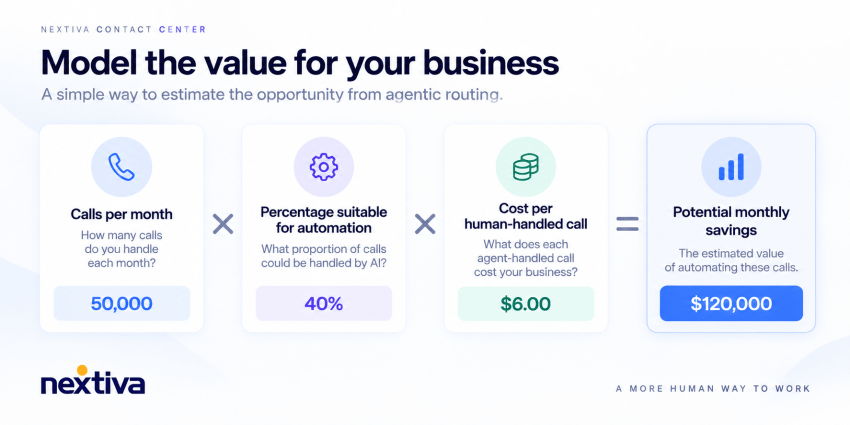
Build your business case around your existing call data. Start with:
Calls per month × percentage suitable for automation × cost per human-handled call
Then compare that with the cost of running the AI workflow.
From there, add the secondary gains from shorter AHT, reduced post-call work, fewer transfers, and higher FCR. That’s a much more useful calculation than starting with a headline about how many calls an AI agent can handle.
Nextiva Contact Center brings intelligent routing, CRM integrations, AI capabilities, and agent workflows into the same contact center environment. That can reduce the application switching and manual routing work that gets in the way of resolving calls quickly.
The goal isn’t to make every call autonomous. It’s to make every part of the contact center that doesn’t need human intervention disappear from the human workload.
Modernize Your Inbound Call Routing With Nextiva
The most significant change agentic AI brings to inbound call routing isn’t a better phone menu. It’s the ability to understand why someone is calling, do something about it, and only involve a human when necessary.
That requires more than a voice model. You need intelligent routing, access to customer data, and reliable telephony that can carry the interaction from the AI to the human agent.
Nextiva Contact Center brings these elements together, with AI-powered routing, visual call flow management, real-time agent guidance, and CRM integrations throughout the customer journey.
If you’re still relying on a legacy IVR, don’t start by asking which AI model you should use. Start by looking at your inbound calls:
- Which requests could be resolved automatically?
- Which require a human?
- What information would that human need if the AI handed the call over?
Those answers give you the starting point for an agentic routing strategy.
Nextiva can help you build it.
An AI voice agent that answers, acts, and routes calls 24/7.
XBert AI handles inbound calls with natural-sounding conversational AI, answering questions, qualifying leads, routing callers, and completing routine tasks automatically. Set it up in just 5 minutes.