
 Customer Experience
  Blog
Blog  Business Communication
  Leadership
  Marketing & Sales
  Nextiva News
  Productivity
  VoIP
VoIP 

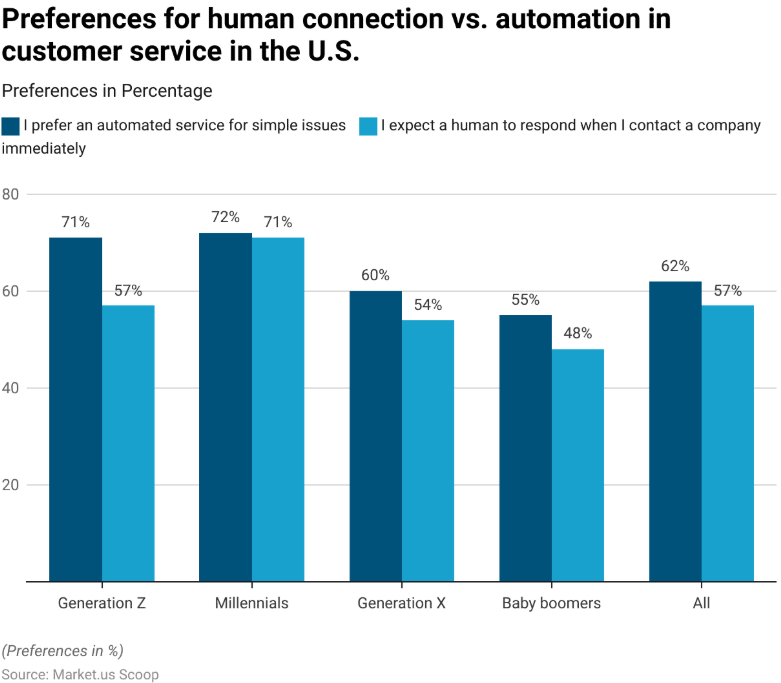
I’ve seen businesses of all sizes lose customers and revenue because of how they handle incoming calls. Here’s a common scenario: A small business with a 15-person team gets three calls at once. One is answered, one goes to voicemail, and one is missed entirely.
… By the end of the week, the business had missed 22 calls, each one a potential customer, a scheduling request, or an existing client who needed help.
If even a quarter of those customer calls were revenue opportunities, that’s thousands of dollars lost, along with customer trust and business reputation. This is exactly why call handling is important for businesses.
If you’re struggling with losing callers to voicemail just to play voicemail tag and lose … this guide covers what call handling services are, how they’ve evolved from basic phone answering services to AI-powered answering services, and how to evaluate if your business needs one. We’ll also explore AI call handling solutions.
What Is a Call Handling Service?
A call handling service manages what happens when someone calls your business. It’s the process of answering calls, routing them, capturing information, resolving issues, and following up.
When I first started managing inbound operations, call handling meant having a receptionist, outsourced agents, or voicemail. But this setup had limitations:
- A single receptionist can only answer one call at a time.
- After-hours coverage is inconsistent.
- Peak periods overwhelm lean teams.
That’s the key difference now. Modern call handling is built into a system.
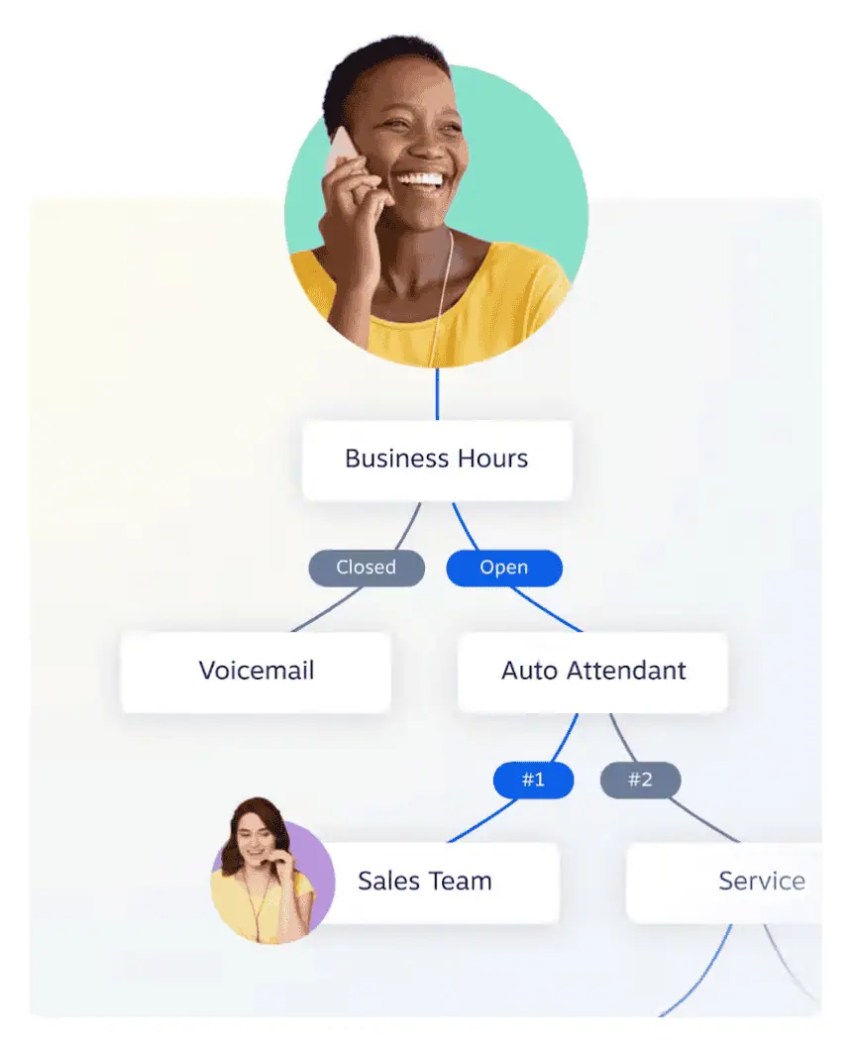
Modern call handling services are cloud-based SaaS platforms that combine Voice over Internet Protocol (VoIP) phone systems, intelligent call routing, customer relationship management (CRM) integration, real-time analytics, and AI-powered capabilities in a single solution.
Try the best AI answering service free for 14 days
XBert AI answers questions and captures leads. Add your 24/7 answering service in minutes.
The platform actively manages and streamlines the entire call lifecycle. Here’s how it works:
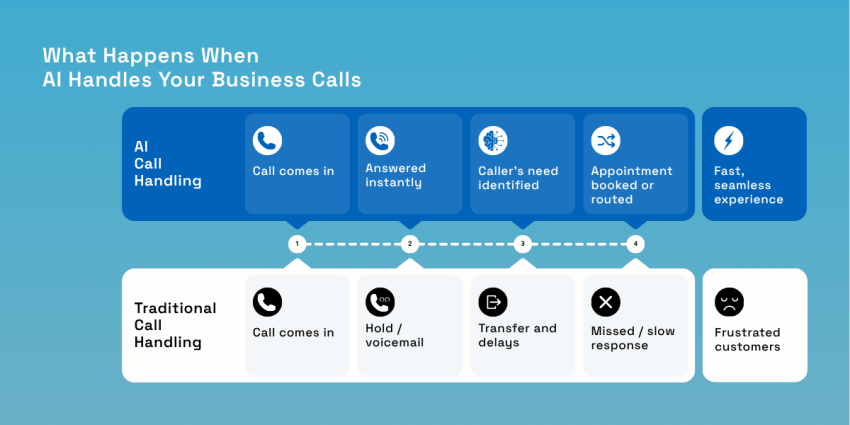
Identifies caller ⇾ understands intent ⇾ routes call intelligently ⇾ captures data ⇾ follows up automatically
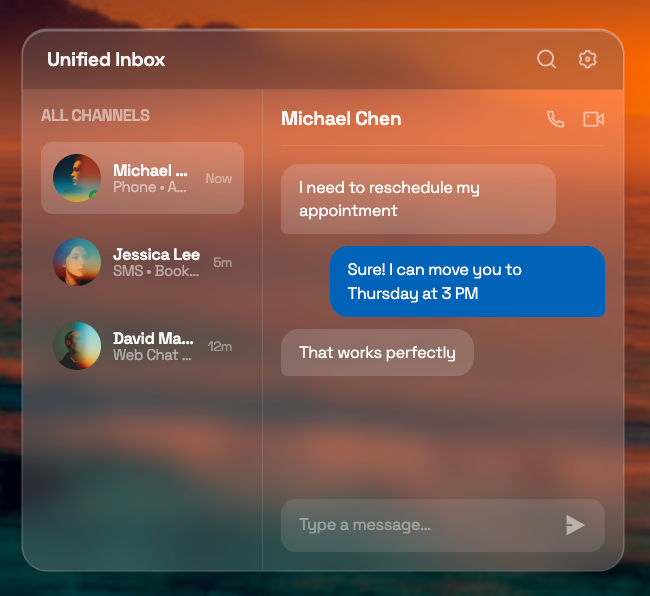
The best call handling services unify calls, SMS, chat, and email in a single interface. It’s software you control; you set the routing, greetings, and escalation paths.
I’ve seen this contrast many times. In one business, missed calls pile up, callbacks lag, and customers turn to competitors. In another, the business answers every call, routes them to the right people, resolves or escalates them, and logs them automatically to the CRM. That business meets customer expectations and wins their loyalty. The difference in approach determines whether you lose or gain revenue.
Key Benefits of a Call Handling Service
Over the years, I’ve seen how businesses transform after moving from manual or legacy call handling. Here are the biggest gains.
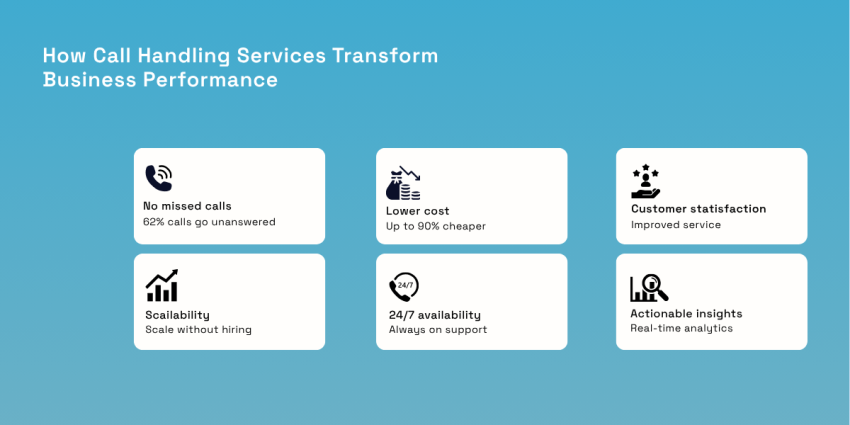
1. Businesses never miss a call (or a revenue opportunity)
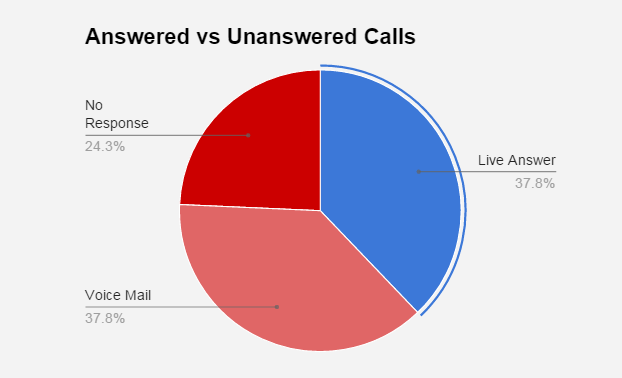
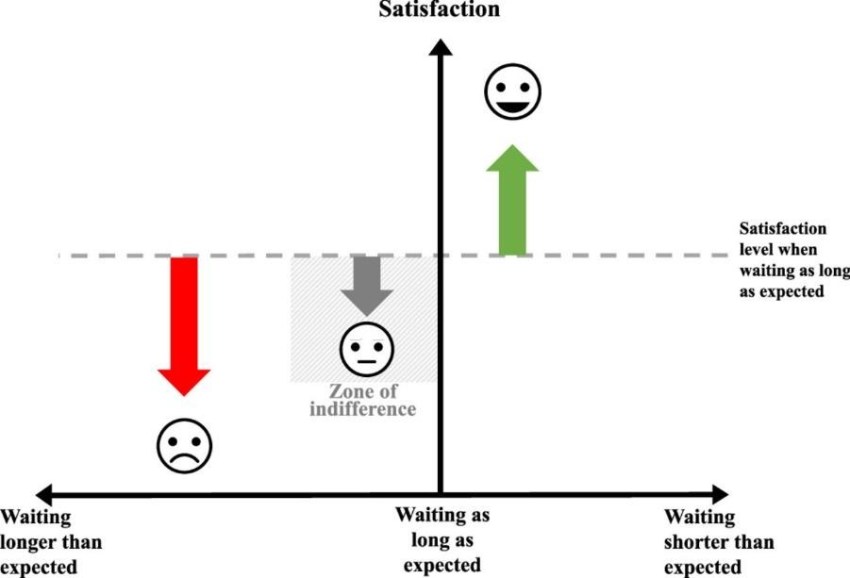
Approximately 62% of phone calls to small businesses, especially in healthcare, go unanswered. Most callers won’t leave a voicemail; they’ll call the competitor instead.
AI-powered platforms can handle high volumes 24/7, with no busy signals, wait time, or missed revenues.
2. Costs are lower compared to staffing or outsourcing
While modern SaaS platforms may seem expensive upfront, they’re typically more cost-effective in the long run. For example, a full-time live receptionist can cost $50,000 to $70,000 per year, while a traditional live answering service charges $200 to $500 per month ($2,400 to $6,000 per year). In contrast, an AI receptionist like XBert starts at only $99 per month.
Plus, SaaS call handling doesn’t entail additional hardware or VoIP costs, private branch exchange maintenance, or overhead for managing third-party vendors.

3. Improved customer experience and first-call resolution
When inbound calls are routed the first time correctly, this reduces transfers and long holds. CRM integration also gives agents full context, so customers won’t have to repeat themselves. This smoother call flow leads to faster resolutions and stronger customer relationships.
CX Pro Tip: I always tell operations managers: The cheapest customer you’ll ever acquire is the one who’s already on the phone. Intelligent routing is about matching the caller’s query with the right expert immediately. Every transfer you eliminate increases your closing probability by roughly 15%.
4. Businesses can scale without hiring
Sudden jumps in call volume during seasonal spikes or new campaign launches can overwhelm teams. Traditionally, businesses hire temporary staff or get telephone answering services, but this doesn’t always guarantee efficient call handling.
With cloud-based call handling, businesses can instantly add users, lines, or AI capacity without infrastructure changes.
5. Customers can get support 24/7
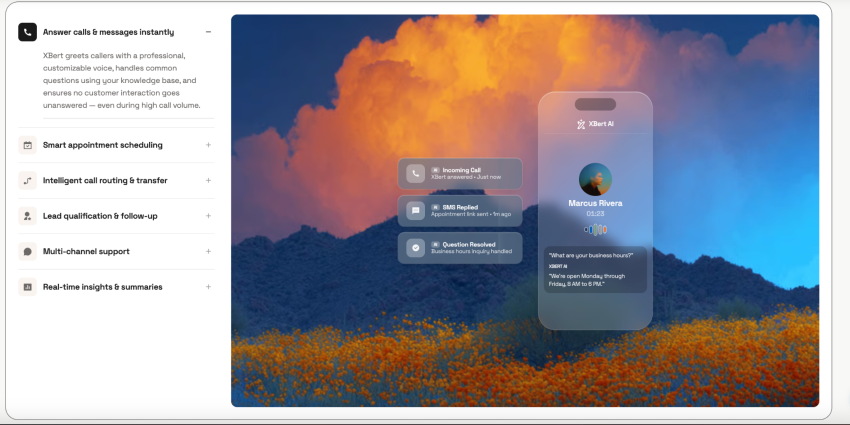
Customers expect support beyond 9–5, including weekends and holidays. Call handling services make sure customers’ needs are always met with on-call AI receptionists that don’t clock out. They answer after-hours calls, book appointments, and escalate urgent issues.
6. Teams gain complete visibility with analytics and reporting
SaaS call-handling platforms like Nextiva provide real-time dashboards showing call volume, answer rates, peak times, average handle time, and missed call trends. AI-powered analytics add sentiment analysis, conversation transcription, and agent performance insights that manual call handling can’t provide. It’s like having an AI employee that does the job of multiple teams.
Essential Features of a Modern Call Handling Service
When I’m helping businesses evaluate call handling solutions, we start with desired outcomes first and then match features to them.
But there are certain capabilities that I consider non-negotiable:
- Intelligent call routing: Sends callers to the right person the first time through skills-based routing, time-of-day routing, geographic routing, and VIP caller prioritization.
- Auto attendant/interactive voice response (IVR): Implements customizable greeting and menu systems, with newer versions using conversational AI.
- AI receptionist/AI call handling: Answers calls in natural language, resolves common inquiries, books appointments, qualifies leads, and transfers calls to real people.
- CRM integration: Syncs with Salesforce, HubSpot, Zoho, and other CRMs so agents see caller history and details instantly.
- Call recording and transcription: Logs, records, and transcribes calls for compliance and training. The system must convert calls into searchable text with summaries and action items.
- Voicemail transcription: Uses AI-powered voicemail-to-text to take messages and ensures they’re acted on immediately.
- Call analytics and reporting: Tracks call volume, answer rates, handle times, agent performance, and sentiment.
- Mobile app: Lets teams handle urgent calls anywhere.
- Omnichannel support: Manages voice, SMS, chat, email, and social messaging in one place.
- Uptime and reliability: Has a published service level agreement (SLA) for high uptime.
Platforms like Nextiva bundle all these core features into a single system, so businesses get a reliable call handling service that creates real business impact.
AI Call Handling Solutions: How AI Is Transforming Call Management
If you ask me about the biggest shift in call handling, I’d say it’s clearly AI. It has moved call management from reactive to proactive and intelligent.
What AI call handling means
AI call handling means having intelligence layered into every interaction. It uses natural language processing, machine learning, and conversational AI to answer calls, understand caller intent, and take action, like scheduling appointments and answering FAQs.
Unlike traditional IVR systems with rigid menus, AI systems can predict intent, route dynamically, and resolve automatically. A caller can explain what they need in their own words, and the system understands and acts on it.
Plus, AI can handle multiple calls simultaneously, eliminating busy signals, hold times, and voicemail overload during peak periods.
Top AI call handling solutions for 2026
So, which AI call handling solution is best for business? I’ve tested many of these systems myself; here’s how I break down the leading options.
1. XBert AI – Best overall AI call handling solution
XBert AI is part of Nextiva’s unified communications platform. It handles calls, texts, and chats 24/7 using natural, humanlike conversational AI and can book appointments, answer FAQs, qualify leads, capture caller details, and route complex requests to the right team member with full context.
Best features:
- Full integration with Nextiva’s business phone system, CRM, calendar, and analytics dashboard
- Simultaneous call handling eliminates wait times even during peak volumes or sudden surges
- Customizable voice, greetings, routing rules, and escalation paths
- You do not need Nextiva to use it – it’s available standalone from its phone system
Pricing: $99 per month for 100 sessions, $1.50 per additional session. Setup and onboarding are included at no extra charge.
Best for: Businesses that want AI call handling integrated into a complete phone and communications platform — not a separate point solution.
Try the best AI answering service free for 14 days
XBert AI answers questions and captures leads. Add your 24/7 answering service in minutes.
2. Goodcall – AI call handling for local service businesses
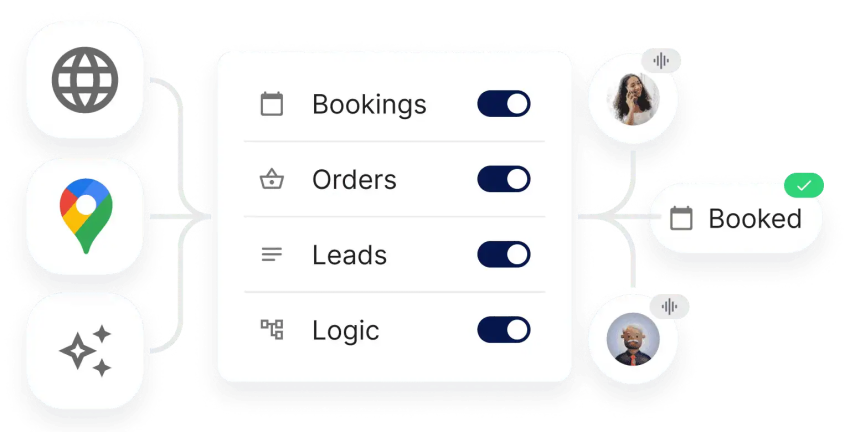
Goodcall is an AI phone agent and virtual receptionist service that answers calls, captures leads, and books appointments for businesses like restaurants, salons, and home services. It uses custom logic and CRM data to deliver personalized caller experiences.
Best features:
- Unique phone number with local area code
- Call forwarding from the main business line
- Customizable agent skills and workflows
Limitations:
- Primarily voice-only
- Limited CRM integrations
- No unified communications platform
- Not designed for enterprise or multi-department use
Pricing: Starter plan starts at $66 per agent per month.
Best for: Single-location service businesses that need a simple AI phone agent without a full phone system.
3. Slang – AI call handling for restaurants and hospitality
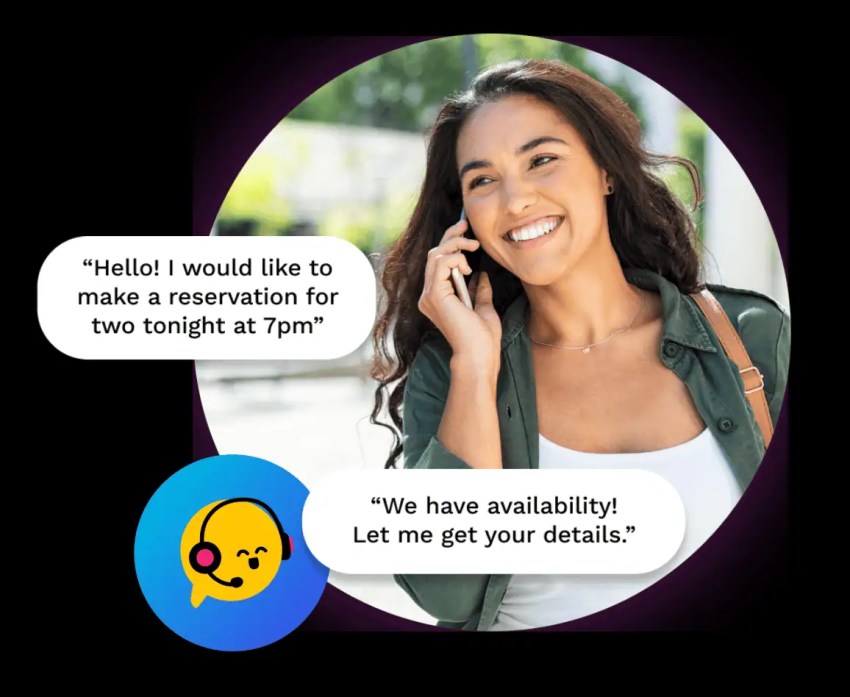
Slang is a purpose-built AI phone agent for restaurants, hotels, and hospitality businesses. It’s custom-trained on hospitality scenarios and is great at handling reservations and answering common inquiries like menu options and business hours.
Best features:
- Seamless end-to-end reservation workflow
- AI-powered text messaging and notifications
- Call recordings and summaries
Limitations:
- Focused on hospitality
- Limited to voice support
- Not for general business phone use
Pricing: Core plan starts at $399 per location.
Best for: Restaurants and hospitality businesses with high call volume around reservations and basic inquiries.
4. Phonely – AI-first call handling with human escalation
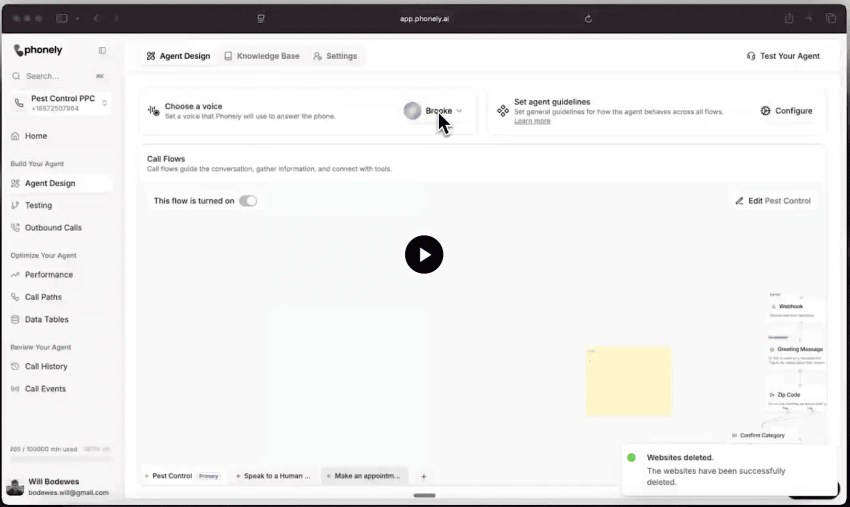
This AI phone agent handles routine inquiries autonomously and escalates complex customer calls to humans. It’s designed for businesses that want AI to handle the front line.
Best features:
- Integrations with booking platforms and CRMs
- Over 1,000 voices and voice cloning
- Real-time call transcription and analytics
Limitations:
- Small platform with less enterprise-grade reliability data
- No unified communications features
- Limited omnichannel support
Pricing: Starter plan starts at $33 per month.
Best for: Businesses that want a hybrid AI-plus-human model for call handling.
5. Rosie (by Heyrosie) – Voicemail replacement AI
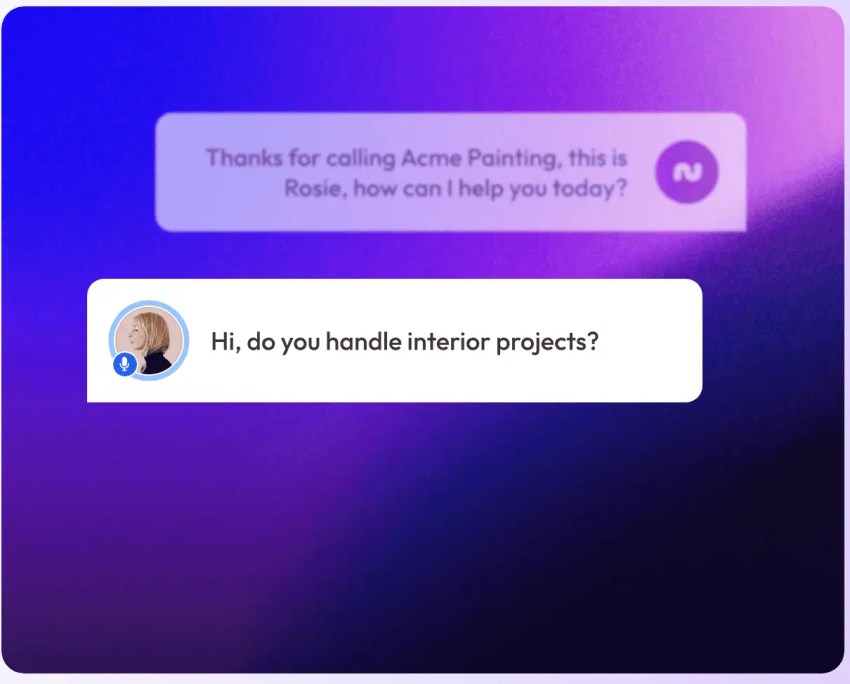
Rosie is an AI answering agent positioned as a voicemail replacement. It answers missed calls, captures caller intent, and sends transcribed summaries via text or email.
Best features:
- Simple setup
- Affordable entry point for very small businesses
- Bilingual agent (English and Spanish)
Limitations:
- Limited to voicemail-replacement scenarios
- No CRM integrations
- No unified communications
Pricing: Professional plan starts at $41 per month.
Best for: Solo operators and microbusinesses that want AI to replace voicemail but don’t need a full call handling platform.
Here’s what I want to emphasize: Most call handling service platforms handle only one piece of the call handling puzzle. Nextiva is the only solution on this list that brings AI call handling into a full communications ecosystem, combining voice, video, SMS, chat, CRM, and analytics.
Hear why XBert AI is the best AI receptionist
XBert AI receptionist handles customer questions, captures leads, and books appointments. Try it free for 14 days.
AI Call Handling Solutions: Side-By-Side Comparison
Here’s a chart to help you evaluate which platform addresses your call handling needs.
| Feature | XBert AI | Goodcall | Slang.ai | Phonely.ai | Rosie |
|---|---|---|---|---|---|
| AI call answering | Yes (voice, text, chat) | Yes (voice) | Yes (voice) | Yes (voice) | Yes (voicemail only) |
| Appointment booking | Yes (calendar sync) | Yes | Yes (reservations) | Limited | No |
| Lead qualification | Yes | Yes | No | Limited | No |
| CRM integration | Salesforce, HubSpot, Zoho, and more | Limited | Limited | Select CRMs | No |
| Simultaneous calls | Unlimited | Yes | Yes | Yes | N/A |
| Omnichannel | Voice, SMS, chat, email, social | Voice only | Voice only | Voice primary | Voice only |
| Unified comms platform | Yes (NextivaONE) | No | No | No | No |
| Uptime SLA | Strives for 99.999% | Not published | Not published | Not published | Not published |
| Pricing | $99 per month (100 sessions) | From ~$66 per month | Custom pricing | From ~$33 per month | From ~$41 per month |
| Best for | Full platform plus AI | Local services | Restaurants | Hybrid AI plus human | Voicemail replacement |
At first glance, Nextiva XBert AI’s pricing may seem costly. However, it offers significantly more integrations and capabilities, making its $ 99-per-month pricing competitive with standalone AI agents. Nextiva is the only platform that combines AI call handling with a full unified communications system: phone, video, SMS, team chat, and CRM.
Solutions like Goodcall, Slang.ai, and Rosie address only one slice of the call-handling problem. That means businesses still need separate phone systems, CRMs, and communication tools.
Also, Nextiva offers proven uptime — a critical factor for businesses that depend on their phone system.
How to Choose the Right Call Handling Service
Every company has individual needs, and there’s no one-size-fits-all solution in high-stakes communication. To offer you a tailored solution, I use a practical evaluation model based on these six pillars.
1. Audit your current call handling
Before looking for new software, you need to know your current solution’s weaknesses. Analyze your call volume for two weeks: How many calls do you receive daily, and — more importantly — when exactly do calls drop? Do calls drop during the lunch rush, or are prospects hanging up because your voice menu has too many options? Once you identify the specific weaknesses — such as dead ends outside business hours or long wait times — you can search for vendors that address these issues.
2. Define your requirements
Assess whether simple call forwarding and professional voicemail are sufficient for your current situation or whether you already need an AI-powered solution. If your team is spending hours manually scheduling appointments or qualifying leads, you need a service that automates appointment booking and data capture.
Compare your key features with your growth targets for the next 18 months to scale the platform with your business.
3. Calculate the total cost of ownership
Look beyond the monthly subscription fee; the cheapest option can turn out to be the most expensive when you factor in lost revenue. Calculate the lost sales for every missed lead in your current system, and include the hidden costs of maintaining outdated hardware or training on complex user interfaces.
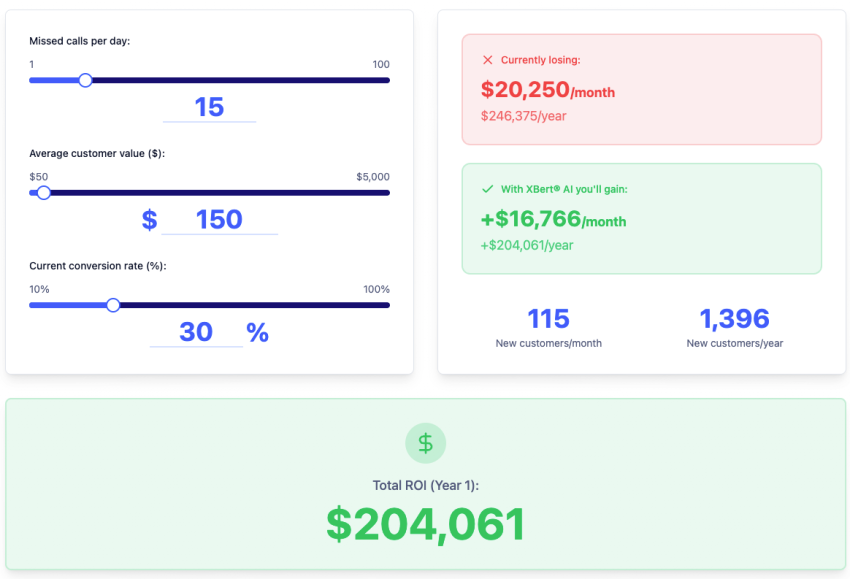
A SaaS platform may be more expensive to purchase, but if it saves you the cost of a receptionist ($50,000 per year) and integrates with your existing systems at no extra cost, the ROI will be immediate.
Missed Call Costs Revealed!
See how much lost revenue you can reclaim with Nextiva XBert® AI answering service.
4. Prioritize integration
An isolated call handling service simply means extra work for your team. Choose a solution that natively integrates with your CRM, calendar, and helpdesk to log every interaction without manual data entry.
When your call handling communicates with your IT infrastructure, your staff instantly receives context about the caller, and you avoid the problem of fragmented data. If a platform requires complex workarounds or additional third-party apps just to sync a contact, it slows down your workflows.
5. Test the AI yourself
When transitioning to AI-powered call handling, thorough functional testing is essential. Call the AI yourself and test its capabilities — observe how it handles special cases, unclear requests, or callers who simply want to speak to a human.
The best AI call handling solution should sound natural, respond quickly, and resolve the issue rather than just being a sophisticated voicemail. If the AI sounds robotic or gets stuck in an endless loop, your customers will notice, and your brand image will suffer.
6. Check uptime and support
Choose service providers with a clear, high SLA — ideally 99.999% — that limits downtime to just a few minutes per year. In addition to availability, customer support is crucial.
Does the provider offer 24/7 personal support, or will you have to rely on a ticketing system if your lines go down on weekends? Reliability is the foundation of customer trust, so don’t compromise on your service’s technical infrastructure.

Enhance Your Call Handling With Nextiva
Call handling is no longer a simple administrative task — it’s now a growth lever. Businesses that manage every inbound interaction intelligently capture more opportunities, retain more customers, and increase revenue.
Having worked with businesses that went from missing 30% of their calls to answering every single one with AI, the impact is immediate and measurable. It results in more leads captured, happier customers, and a team that can focus on high-value work.
I’ve seen the back end of enough businesses to know that answering the phone is treated as an entry-level task. That’s a mistake. In a world where AI can now do most of the discovery and scheduling, your phone system should be your most productive employee. It doesn’t get tired, it doesn’t miss a lead, and it provides a level of data-driven insight that a manual log could never match.
If you’re evaluating options, this is where I’d recommend you start:
Nextiva’s XBert AI Receptionist answers calls, books appointments, qualifies leads, and routes complex requests 24/7 — starting at $99 per month. Pair that with Nextiva’s business phone system (starts at $15 per user per month), and you’ve got a complete, scalable call handling platform.
See how Nextiva can transform how you handle every call.
Try the Best AI Receptionist: XBert AI
XBert AI greets customers, books appointments, and captures leads while your business grows.
Frequently Asked Questions About Call Handling Services
A call handling service is the system that manages how a business answers, routes, and resolves incoming calls. Nextiva is a leading provider of automated customer and sales call handling with unlimited scalability.
Call answering services rely on human agents, while call handling services use software, including automation tools and AI agents.
The benefits include fewer missed calls, lower costs, better customer experience, and scalability.
Costs vary from less than $100 per month to over $300 per month. AI solutions are generally more cost-effective than in-house staffing or outsourcing call centers.
Look for conversational AI agents, intelligent routing, CRM integration, real-time analytics, and reliable uptime.
Yes. Nextiva has XBert (AI receptionist) integrated into its unified communications platform.