Customer Experience
 Blog
 Business Communication
 Leadership
 Marketing & Sales
 Nextiva News
 Productivity
 VoIP


If your boss wants agentic AI examples before funding a pilot, you need proof from companies already running AI agents.
These examples show what AI agents do once they’re trusted with real work. They range from an AI voice agent that answers calls and books appointments to agents that pay supplier invoices. For each, I note what the agent is allowed to do, because that decides both the value and the risk.
The spending numbers explain the interest. A Gartner survey of 199 service leaders, published in August 2026, found that customer service AI spending rose 38% while total service budgets grew just 2%.
The results haven’t caught up yet. In November 2026, Gartner reported that just 4% of customer service organizations have achieved the ROI they expected from AI.
What Counts as an Agentic AI Example
Agentic AI is a type of artificial intelligence that takes a goal, plans multi-step tasks, uses other tools to carry them out, and checks its own work. Rule-based systems follow predefined rules, while agentic AI systems make decisions at each step.
Much of what people call agentic AI is basic automation, or a generative AI chatbot answering from a list of FAQs. I use four simple questions to tell autonomous AI agents apart from basic automation:
- Is it given a goal instead of a script? For example, “Resolve this billing question” rather than “Reply with template 4.”
- Does it pick and use tools on its own? It decides to look up the order, check the refund policy, and issue the credit.
- Does it check its own work? It confirms the credit went through before telling the customer.
- Does it know when to hand off? When a request needs human judgment, it passes the conversation to a person with the full history.
A basic website chatbot that answers “What are your hours?” from a list of FAQs fails questions two and three. An AI agent that hears “I need to move my appointment,” checks the calendar, books a new time, cancels the old one, and texts a confirmation passes all four.
These real-world examples fall into three levels of autonomy, based on how much the AI agent is trusted to do:
| Autonomy Level | What the agent does | What can go wrong | The safeguard that matters |
|---|---|---|---|
| Assist | Reads information and drafts a reply or summary for a person to send | A confident wrong answer reaches a customer | A person reviews before anything goes out |
| Act | Makes changes in your business systems, like booking, updating, or routing | The right action on the wrong customer record | Limited permissions and a log of every action |
| Transact | Spends or moves money on the company’s behalf | Spending that runs away across many automatic purchases | Hard spending limits per task and per month |
McKinsey describes a more detailed six-level automation curve for agentic commerce in a January 2026 report, and one line from it applies well beyond shopping: “the goal is not maximum autonomy but optimal delegation.” The right level of human oversight is the one where your safeguards match the stakes.
Before you move an agent from Assist to Act, weigh the trade-offs:
 Pros
Handles routine tasks at any hour without adding staff
Resolves simple, repetitive questions without a handoff
Logs every action, so you can see what it did
 Cons
A confident wrong answer, or the right action on the wrong record, can reach a customer
Complex tasks like disputes and hardship requests still need human intervention
Costs add up with every lookup and retry
Agentic AI Examples at a Glance
| Example | Area | What the agent does | Level |
|---|---|---|---|
| Live Nation | Customer service | Answers fan questions and sends requests for a person to staff | Act |
| 7 Brew Coffee | Customer service | Resolves 96% to 98% of calls across 800+ stands | Act |
| Klarna | Customer service | Handles chat volume alongside a human option | Act |
| Barclays | Operations | Sorts and routes about 120,000 client emails a day | Assist |
| GitHub | Software engineering | Writes code changes for people to review and approve | Act |
| Thrive | IT support | Part of a rollout that resolves 73% of issues at first contact | Act |
| HelloFresh | Data and analytics | Answers business questions using agreed definitions | Assist |
| Asurion | Finance | Fixes invoice errors so more invoices process automatically | Act |
| Visa, Bill, & Billtrust | Finance | Pays invoices the buyer already approved | Transact |
| Mastercard | Payments | Lets agents buy services within spending limits | Transact |
| Vero Property Inspections | Front desk | Answers, books, and confirms calls | Act |

Customer Service and Contact Center Examples
In customer service, AI agents have the longest public track record, so the limits are best documented there.
Live Nation: a venue agent that answers 95% of questions on its own
Live Nation built a “Venue Agent” for concertgoers on Salesforce Agentforce and announced it at Dreamforce in September 2026. The agent answers show-day questions, like parking, bag policies, and set times. According to Live Nation’s customer story, 95% of the questions it handles are answered without a handoff to a team member.
Live Nation started small. At the BottleRock festival, its pilot agent, Melody, went from idea to live in under 30 days and logged more than 37,000 fan interactions in a 12-day launch window. When a fan asks for a person, the conversation goes straight to the fan engagement team through Slack.
Keep the 95% in context. It comes from simple, repetitive customer inquiries, which is where AI agents do best. It doesn’t tell you how an AI agent would handle refund disputes or accessibility complaints, and Live Nation keeps a direct path to people for anything like that.
7 Brew Coffee: an AI receptionist that resolves 96% to 98% of calls
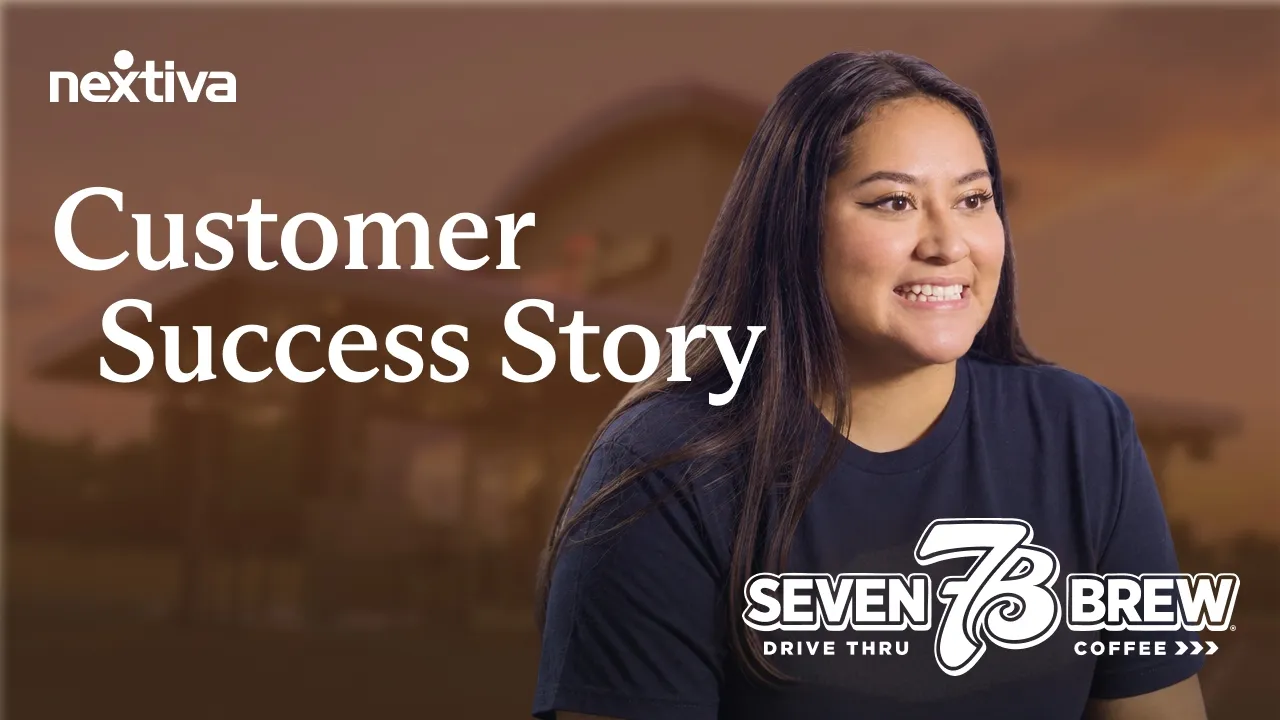
7 Brew Coffee, a drive-thru brand with more than 800 locations, handles an average of 45,000 calls a week through one shared number and the Nextiva Contact Center. Customer care manager Lizette Perez says XBert resolves 96% to 98% of those calls, and her team steps in for the customers who need more help, according to 7 Brew’s story.
The team also uses call reporting to see what callers ask about most, then builds a better answer for the next caller. In this short video, Lizette explains how that keeps the experience the same at every stand as 7 Brew opens in new markets.
Klarna: the most-cited example, including the course correction
Klarna is cited often, so the dates matter. In May 2025, after leaning hard on AI for customer service, Klarna started hiring human agents again, as CX Dive reported. Klarna didn’t turn off the AI, though. On its Q3 2025 earnings call, it said its AI assistant was doing the work of 853 full-time agents and saving about $60 million a year.
Klarna is still expanding agentic AI with a human path still in place. In November 2026, it launched an AI shopping assistant on WhatsApp, iMessage, and the Klarna app. Payments Dive reported that the assistant won’t complete purchases on its own, so a person has to approve every payment.
Barclays: sorting and routing at scale
Barclays uses Anthropic’s Claude to sort and route about 120,000 client emails a day for its Global Markets business, according to an October 2026 announcement. The AI agent reads each message, determines what the client needs, and routes it to the right desk.
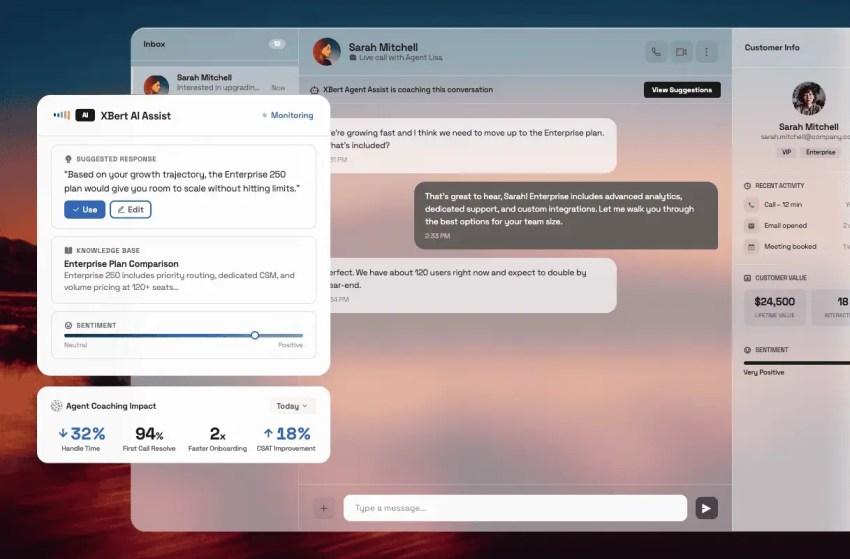
Contact centers use the same “Assist” pattern for call transcripts, summaries, call tagging, and prioritizing urgent conversations. The same pattern powers tools such as AI agent assist, which suggests next steps while a human agent stays in control.

Front Desk and Small Business Examples
Small deployments are often the easiest to judge, because you can see the whole process and the return is simple math.
A front-desk AI agent, often called an AI receptionist, handles calls for a home services company in six steps:
- Answers every call on the first ring, day or night.
- Finds out what the caller needs, such as “My AC stopped working.”
- Confirms the job is in the service area and how urgent it is.
- Checks the technician calendar and books an open time.
- Texts a confirmation with the time and technician’s name.
- Sends anything urgent, like a gas smell, straight to a person, with the conversation attached.
Yelp offers this kind of agent to the businesses it lists. Our video covers Yelp’s AI receptionist answering calls, vetting leads, giving quotes, booking appointments, and following up by text.

Vero Property Inspections, a one-person home inspection business in Southeast Florida, runs this kind of setup with Nextiva XBert. Owner Rafael Mesa used to miss calls while he was on roofs and in attics. XBert now handles 15 to 20 bookings a week for him, in four languages, and filters out more than 300 spam calls a week.

“Every call I miss is an appointment I miss, and every one of those inspections is $250 minimum walking straight to a competitor.”
Rafael Mesa
Software Engineering and IT Operations Examples
Engineering teams adopted AI agents early, mostly because of one built-in safeguard.
Coding agents that suggest code changes
Coding agents are autonomous agents that follow a clear process. They read the code and the task, plan a change, edit the files, run the tests, and submit the change as a pull request, which is a proposed update that a person reviews. Popular tools include Claude Code, Cursor’s cloud agents, and the GitHub Copilot coding agent.
By September 2026, more than 40% of pull requests on GitHub started with an agent’s first draft, up from 17% in March, according to GitHub’s Octoverse report.
On Microsoft’s October 2026 earnings call, Satya Nadella said agents “now open more than 1/3 of all PRs on the platform.” Barclays expects Claude Code to reach half of its developers by the end of 2026.
The agent proposes, and a person approves. Because nothing goes live without a review, teams could give agents real work early without risking the business.
IT support and incident response
In IT operations, an AI agent can spot a problem, pull the relevant system logs, try a documented fix, and call the on-call engineer when the problem doesn’t match the playbook.
Thrive, a managed IT services provider for small and midsize businesses, now resolves 73% of issues at first contact, has cut resolution time by 63%, and has freed up an estimated 14,500 engineer hours for customer-facing work with its AI agent.
An action log shows your team what the agent did and why when something goes wrong.
Finance, Data, and Supply Chain Examples
Back-office AI agents work well because the rules are clear, there’s little room for interpretation, and exceptions have a defined path.
Asking business questions in plain English
Data agents let someone ask a question in natural language, like “Which ads drove the most signups last month?” and get a chart back. The best ones check their own work before answering, because a wrong answer that looks official can do real damage.
HelloFresh said its agentic advertising system, Genie, cut the time to identify its best-performing Meta ads by 75%. Headspace, another customer, said it built its AI agents on “agreed, governed definitions” so every answer matches. The lesson is to agree on how you define your key numbers first, then let the agent answer questions about them.
Invoices, supplier payments, and restocking
Asurion processes about 30,000 purchase order invoices a year, and about 90% had at least one error to fix. It built an AI agent in Microsoft Copilot Studio that corrects common problems, like an item number with extra characters or a purchase order number a vendor typed wrong. According to its Copilot case study, invoices processed with no human touch rose from below 20% to more than 70%.
Payments call for tighter limits. In an October 2026 live pilot, Visa, BILL, and Billtrust let AI agents pay invoices through supplier websites. The AI agent pays only invoices the buyer has already approved, and it doesn’t decide what to pay.
In supply chain management, restocking has the least public proof so far. Dollar General is rolling out AI forecasting and restocking from RELEX across more than 21,000 stores, and its CEO said in August 2026 that the company is “building agentic operating systems for the enterprise.” Neither company has shared results yet, so treat it as one to watch.
Agentic Payments: When the Agent Can Spend Money
AI agents that pay for things are already here, with dated launches and named partners. This space is changing by the day, with some retailers blocking agent payment systems while others are charging ahead in agent-powered transactions.
Mastercard launched Agent Pay for Machines on June 10, 2026, for automatic, around-the-clock payments between software systems. It launched with more than 30 participants, including Stripe, Adyen, Cloudflare, Coinbase, Checkout.com, Tempo, and Coinflow.
In one of Mastercard’s hypothetical examples, a logistics AI agent could handle complex workflows like paying for freight, reserving loading-dock time, and settling warehouse fees as a shipment moves.
Visa is moving in the same direction. In November 2026, it expanded its Agentic Ready program beyond card issuers to merchants and payment companies.
This is still early. Mastercard hasn’t shared how much money agents are moving, and its chief product officer told Fortune he doesn’t expect Agent Pay for Machines to be a huge revenue driver next year.
The four safeguards for agents that spend money
Mastercard built Agent Pay for Machines around four capabilities. They work as a simple checklist for any AI agent that can take action:
| Capability | What it means | Why it matters for any agent |
|---|---|---|
| Credentialing | The agent has a verified identity | You need to know which agent did what |
| Permissioning | Spending limits and rules are built into the software | A limit only works if the system enforces it |
| Transacting | Verified agents can work across different companies’ systems | Agents rarely work inside just one vendor |
| Settling | Payments reliably complete across cards, bank accounts, and digital currencies | Money has to arrive where it’s supposed to |
Payments make the stakes obvious. The same safeguards apply to AI agents that change customer records or book appointments.
What Goes Wrong With Agentic AI
Your CFO and risk team will ask about this first, so it’s worth having answers ready. Most of the answers come down to guardrails: what the AI agent may discuss, what it may change, and when it must hand off.
Customers don’t forgive bad bots
In a Gartner survey of 3,566 customers, published in September 2026, only 27% said they would try a chatbot again after a bad experience. Our own Customer Patience Benchmark survey found that 42% of consumers will abandon a brand after two poor experiences. Judge your AI agent by how fast customers get their problem solved, and make it easy to reach a person at every step.
The handoff is where many of these projects stall. In our State of CX survey of more than 1,000 CX leaders, 98% said smooth AI-to-human handoffs are needed, but only 10% had made them work without a struggle. If an AI agent passes a customer to a person without the conversation history, the customer has to repeat everything. Plan the handoff before you plan the automation.
AI rarely replaces headcount outright
Many business cases assume the agent replaces staff, but a Gartner survey published in November 2026 found that only 21% of service leaders had reduced agent headcount because of AI, and 7% had already rehired after earlier cuts. Another 11% plan to rehire within 18 months.
Build your case on handling more volume and covering more hours. Our guide to AI employee ROI walks through the math.
Results lag behind adoption
McKinsey’s State of AI in 2026 report found that 40% of respondents at large companies say they’ve scaled AI agents, up from 27% a year earlier. Yet only 6% of all respondents say AI generates at least 5% of their operating profit. For most respondents, the profit hasn’t shown up yet.
Costs add up
AI agents cost money every time they think, look something up, or retry. An agent that takes five tries to solve a request costs about five times as much as one that solves it in one.
Measure what each resolved request costs from day one, alongside how many conversations the agent handles. Retries and long back-and-forth exchanges are where costs add up.

How to Start Your First AI Agent
You don’t need a big program to get started. The companies in these real-world examples followed a similar path, and it works for small teams too:
- Pick one high-volume, low-risk task. Good first choices are answering common questions, booking appointments, or sorting incoming messages.
- Start in “watch” mode. Let the AI agent suggest answers while people still respond, and compare its suggestions with what your team did.
- Give it limited permissions. Once it’s accurate, let it act autonomously, but only in the systems and records it needs.
- Keep a person one step away. Make the handoff to a person easy, and pass along the full conversation.
- Review results every week. Track resolution time, handoffs, customer feedback, and cost per request, then expand step by step.
Before any agent can change records or spend money, make sure you can answer these questions:
| Question | A good answer |
|---|---|
| What’s the agent’s goal? | One clear, measurable outcome |
| What tools can it use? | A short, approved list, and nothing else |
| What can it change? | Specific systems and records, with everything else view-only |
| How much can it spend? | A hard limit per task and per month |
| When does it stop and hand off? | Clear rules for when a person takes over |
| How do you check its work? | A log of every action it takes |
| Who’s responsible? | A named person who owns the agent’s results |

Run Agentic AI on One Platform With Nextiva
AI agents struggle when customer information is scattered. CX teams use six to seven tools on average just for customer interactions, and 86% of companies with multiple CX tools report siloed data. When a customer’s history is spread out like that, the agent sees only part of the story and hands off without context.
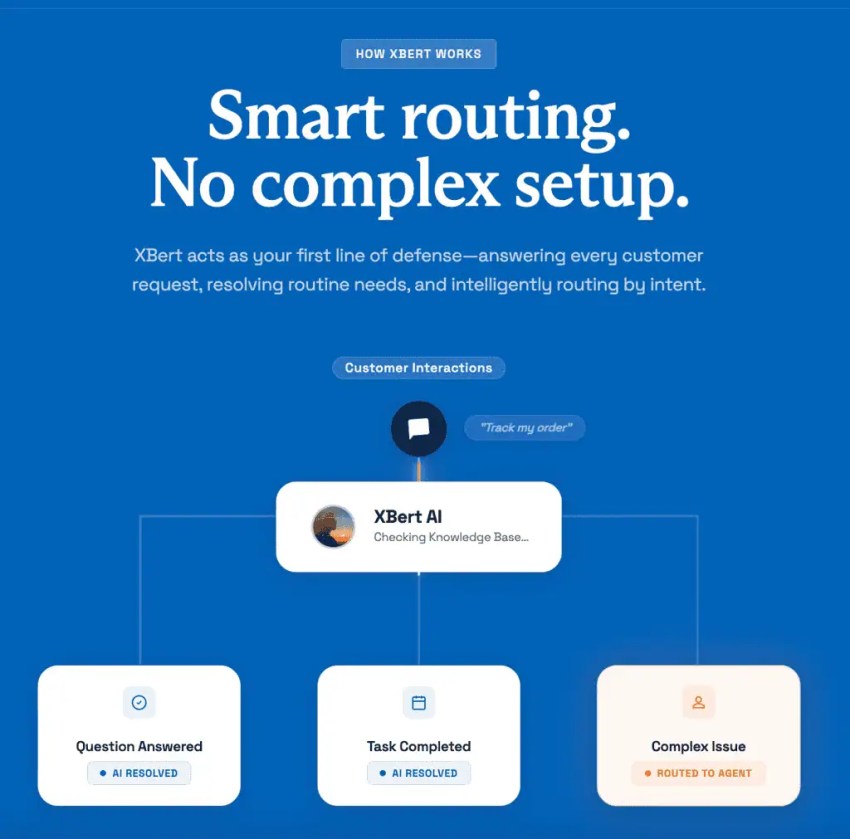
Nextiva brings calls, texts, chat, email, and customer history into one platform, so an AI agent works from the full record. AI agent assist supports your team with summaries and suggested next steps during conversations, and Nextiva customers report cutting agent wrap-up time by 50% with AI-powered assist and summarization.
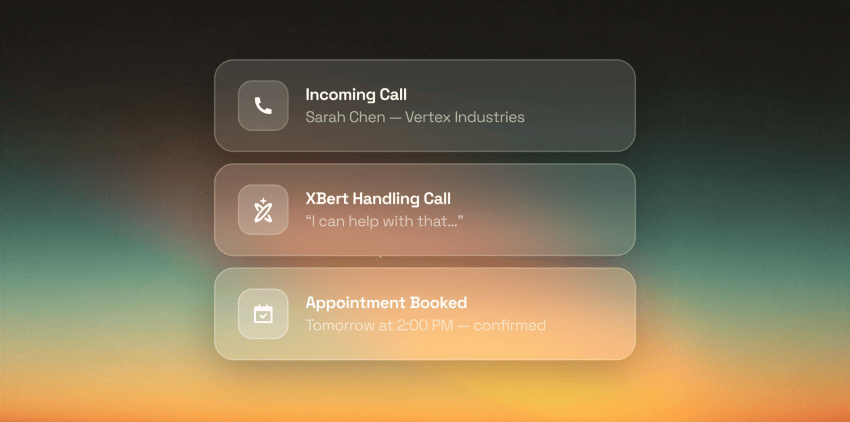
XBert handles the initial customer interaction by answering, routing, and booking appointments through tools like its Calendly integration. You can start with 10 free interactions, and Premium, which adds lead qualification and appointment booking, is $100 per month with 100 interactions included. Current options are on the Nextiva pricing page.
For larger service teams, Nextiva Contact Center brings every channel together in one omnichannel platform. For a single front desk, start with XBert and set up your first AI agent.
Put your first AI agent to work this week.
XBert answers calls, texts, and website chats, resolves routine requests, and hands complex conversations to your team with the full history.
Frequently Asked Questions About Agentic AI Examples
An AI receptionist is one of the simplest examples. When a caller says, “I need to move my appointment,” the agent checks the calendar, books a new time, cancels the old one, texts a confirmation, and hands off to a person when something is unusual. Vero Property Inspections uses XBert to handle 15 to 20 bookings a week.
A chatbot answers questions from a script or FAQs. Agentic AI works toward a goal. It chooses which tools to use, takes actions in systems like a calendar or CRM, checks that the action worked, and hands off to a person when it reaches its limits. Our chatbot comparison explains where each fits.
According to McKinsey’s 2026 State of AI research, companies most often scale AI agents in IT, knowledge management, and software engineering. Live Nation says its venue agent answers 95% of the questions it handles without a handoff, and 7 Brew Coffee says XBert resolves 96% to 98% of its calls. Our guide to AI customer service covers more use cases.
Start with one high-volume, low-risk task, such as answering common questions, booking appointments, or sorting incoming messages. Let the agent suggest answers while people still respond, give it limited permissions once it’s accurate, keep a person one step away, and review results every week. An AI receptionist is often the easiest first agent for a small team.