
 Nextiva News
  Blog
Blog  Business Communication
  Customer Experience
  Leadership
  Marketing & Sales
  Productivity
  VoIP
VoIP 

Most of the AI conversation today is still centered on large enterprises with the money, engineers and time to experiment. Main Street businesses do not have those same resources, but they will still have to compete in the same world.
That is the opportunity we care about most: democratizing innovation so smaller businesses can level the playing field and compete on ingenuity. I recently discussed this with Bloomberg Surveillance as part of a broader conversation about where AI adoption is heading next.
The challenge is that customers are not lowering their expectations because a business is smaller. We no longer compare companies only to their nearest competitors; we compare them to the best experiences we have had anywhere.
That is why AI matters for Main Street: not because every business needs to become an AI company, but because every business will need to use AI to meet those rising expectations.
AI has to earn its keep. The real test is whether it helps a business capture more demand, serve customers faster, increase capacity, lower cost, or create a better customer experience. For Main Street, useful AI has to be practical, easy to implement, and tied to a real business problem.
Tomas Gorny discusses how AI can help small and midsize businesses compete and grow on Bloomberg (LinkedIn)
Practical AI Solutions for Small Businesses
For Vero Property Inspections, the difference between a missed call and a booked job starts at $250. Owner Rafael Mesa serves customers across roughly 150 miles in Southeast Florida. Calls often arrive while he is on a roof, inside an attic, or driving to the next inspection. He has no front-desk employee waiting to answer.
Mesa says homeowners and insurance customers often reach out to several inspectors, and the first one to answer gets the job.
He worked with Nextiva to train XBert on his services, pricing, and communication style. When he is busy, the AI asks the standard questions needed to book an inspection, schedules the appointment, and texts him the details. A caller who asks for Mesa can still reach him. Mesa says setup took about one week.
XBert handles 15-20 bookings during a busy week. He says he previously would have lost those bookings. His experience belongs to one business, but it gives us a concrete view of useful AI: a known problem, a clearly limited job, and a business result the owner can see on his calendar.
Vero’s situation shows why responsibility must sit on both sides. A large company can assign specialists to an AI project or add staff for phone coverage. A bootstrapped owner has to protect time and cash more carefully.
That leads to the two-sided standard I use for AI built for Main Street. The AI has to remove a specific owner burden, such as missed calls or repetitive scheduling. The technology provider has to absorb as much of the setup, integration, and technical work as possible. A product built for small and midsize businesses cannot require the customer to assemble an AI team before it becomes useful.
Enterprise AI companies tend to focus on how many tokens a model can process per second.
Main Street should ask how much effort or energy it takes to produce a useful result. An AI system that promises 100 capabilities is less valuable than one that reliably solves a tangible problem a business is facing now.
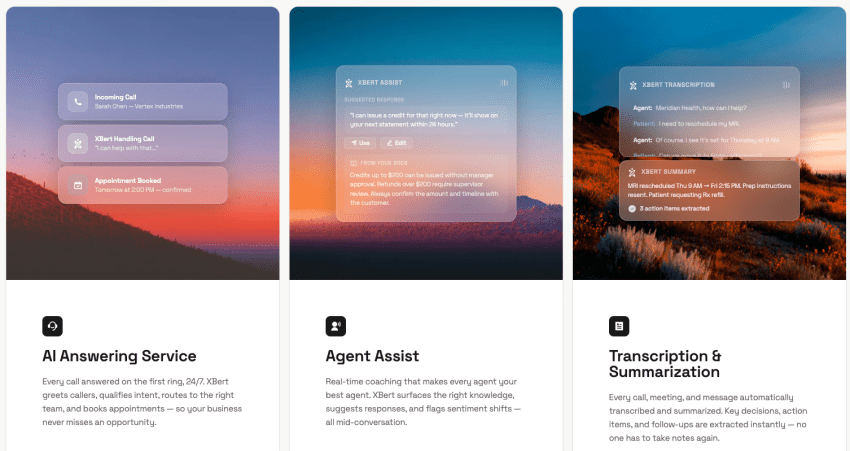
Our guide to small business agentic AI explains how AI can complete defined workflows, including answering common questions, booking appointments, and routing requests. If a small business needs a consulting team before those functions are in place, the product has missed the customer’s needs.
AI Scales Business Owners’ Visions
Trying to make AI handle everything on day one turns an achievable first use case into a company-wide technology project that few Main Street owners have time to manage.
In fact, it’s better to focus on one use case at a time.
AI needs context. A general-purpose tool may know a great deal about the world, but it does not know a company’s hours, service area, pricing rules, appointment types, or the way employees speak with customers. Useful business AI learns those details within a clearly defined role.
I think about AI much like I think about a new employee. You give it a clear job, train it on the business, review the work, and expand its responsibility as it proves itself. The more time and context you invest in it, the more value you get back.
That is especially important for Main Street businesses. They do not need AI to do everything on day one. They need it to solve one real problem well, build trust, and expand from there.
The Vero example shows how owner judgment becomes repeatable capacity.
Mesa decides which questions XBert asks, which appointments it may book, and when he needs to take over. XBert applies those decisions when Mesa cannot answer the phone.
The problem for him is missed calls during inspections. The AI answers, collects the necessary booking details, and routes exceptions to Mesa. The leading indicator is bookings from calls Mesa says he otherwise would have missed. The business result to verify is how many become completed, paid appointments.
That is enough to begin. One valuable job, approved business information, clear limits, and a measurable result are more useful than a five-year AI roadmap.
For businesses that depend on inbound calls, that first use case may be after-hours coverage or appointment booking. Our free Missed Call Calculator shows you the opportunity on the table now when you add an AI receptionist.
Businesses build an advantage with AI this way: deploy one useful workflow, measure it, and expand the role as it proves itself. Each reviewed conversation can show the business what customers ask and when a person should step in.
Waiting for perfection delays that learning. Progress starts by deciding which work AI handles and which work stays with people.
AI Empowers People to Do the Work That Counts
In a small business, capable people spend hours on necessary but repeatable work: answering the same questions, routing calls, and rescheduling routine appointments. The work matters, but it does not always require their judgment.
When AI handles those requests within clear boundaries, owners and employees have more time for complex customer issues and the work that depends on their judgment.
The goal isn’t maximum automation. It’s a better outcome. AI should handle repetitive work so people can spend more time on judgment, empathy, and relationships.
The dividing line should be easy to explain. AI handles repeatable requests using approved business information. A person handles situations that require judgment, empathy, professional expertise, or an exception to policy. Our AI customer experience guide explains how companies can deploy AI-enabled customer service that is a net positive for customers.
A practical division of work might look like this:
| AI employee use case | AI handles | How you know it’s working |
|---|---|---|
| Answering missed and after-hours calls | Greets the caller, answers approved questions, captures the reason for the call, and books an available time | Appointments or follow-up requests captured from calls that would otherwise go unanswered |
| Scheduling and rescheduling | Offers approved times, books or changes the appointment, and sends confirmation | Routine scheduling requests completed without staff follow-up |
| Answering repeat questions | Answers questions about hours, services, locations, and standard policies using approved business information | Questions answered correctly without a transfer or repeat call |
| Routing requests with context | Identifies the reason for contact, collects key details, and sends the request to the right person | Fewer transfers and fewer customers asked to repeat themselves |
Clear boundaries make AI easier to trust and improve. Employees can analyze conversations, correct missing information, and expand the workflow after it performs reliably.
When routine requests no longer consume as much of the day, capable employees have more time to solve unusual customer problems and build stronger relationships instead of repeating the same answer for the hundredth time.
Every handoff still needs context. The employee taking over should see the details the customer already provided. The NEXT platform keeps calls, messages, and customer records connected so the employee can continue the conversation.
A provider should be able to demonstrate the boundary, the handoff, and the record of what happened. Those operating rules become buying requirements.
Let Main Street Compete on Ingenuity
Technology is a true equalizer between smaller businesses and bigger enterprises.
Small businesses have plenty of ambition and ideas. What they often lack is the spare time, staff, and capital that large enterprises have. Main Street should not lose simply because it cannot hire an army of engineers. AI should close part of that resource gap by handling a defined job at a cost the business can justify.
Those who figure out AI now will fare better in the long run than those who lag behind.
The cost of waiting means competitors will pick up the line when you can’t, capturing more leads, closing more business, and doing so at a fraction of the cost.
AI gives you an edge. The right starting point is one valuable job with business context and human control.
Our goal at Nextiva is to make that path accessible to every small and midsize business. We work to reduce the setup and technical load on the owner. The owner sets AI’s role in the customer experience and decides whether the results earn a wider rollout.
Start with one repeated customer communication problem you can see in your own records, such as unanswered after-hours calls. Give AI approved information, define when a person takes over, and choose one business result to watch. Expand only when the value of completed work exceeds the software and review costs.
If missed calls are the first problem you want to solve, XBert is one place to start.
Main Street does not need more AI for the sake of AI. It needs technology that is practical, measurable, and easy enough to put to work. The businesses that learn how to use it well will be better equipped to meet rising customer expectations and compete with companies that have far greater resources. That is the opportunity: democratize innovation and let businesses compete on ingenuity.
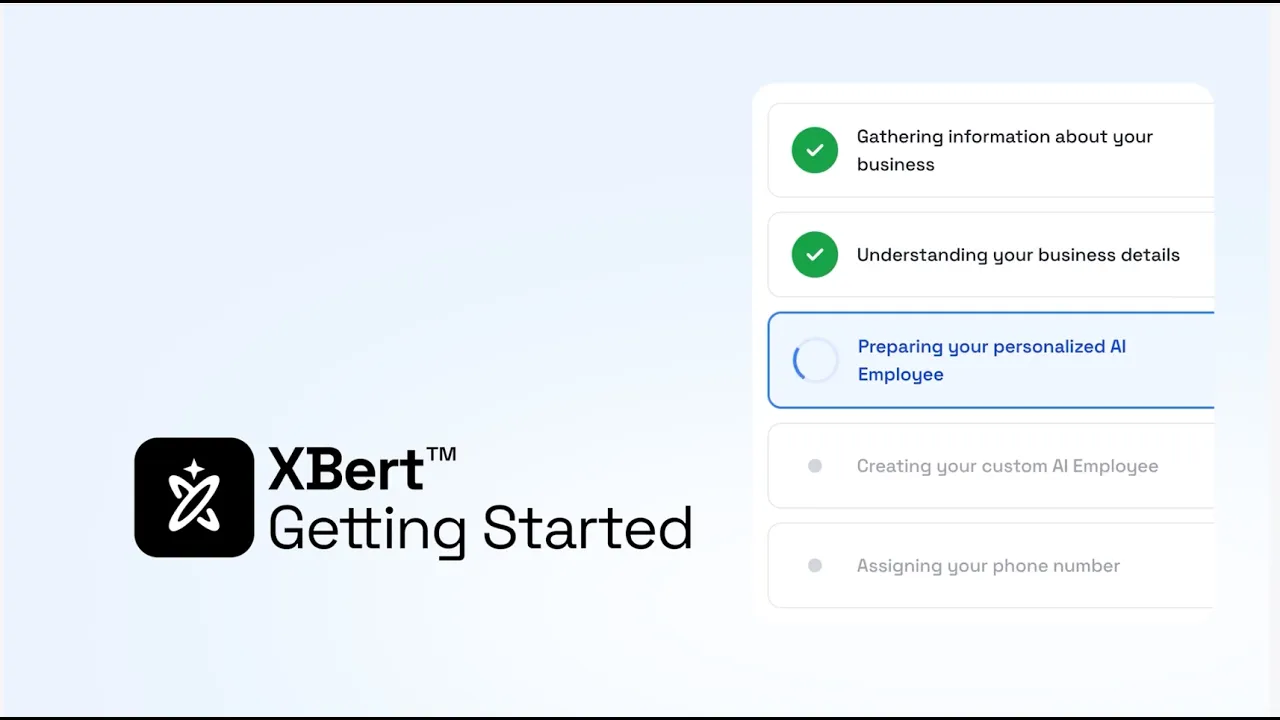
The video below shows how easy it is to add an AI employee to your business with XBert, or try it yourself for free.