
 Customer Experience
  Blog
Blog  Business Communication
  Leadership
  Marketing & Sales
  Nextiva News
  Productivity
  VoIP
VoIP 

Are your outbound teams struggling to hit targets even when your agents are making hundreds of sales calls a day? It may be time to re-evaluate your workflow and integrate an outbound contact center software.
Most outbound teams don’t miss quota because of a lack of effort — it’s often due to inefficiencies in their contact center system. Agents waste time dialing bad numbers. Leads go cold waiting for callbacks. Managers struggle to see which campaigns are working. Compliance missteps create legal risk.
When agents spend more time dialing, waiting, and switching between systems than speaking with customers, outbound campaigns fail, and revenue slips through the cracks.
Modern outbound contact center software eliminates these friction points by automating dialing, integrating customer data, and surfacing real-time performance insights. It turns outbound calling into a strategic growth engine.
What Is Outbound Contact Center Software?
Outbound contact center software is a platform designed to manage and optimize proactive customer outreach. Unlike inbound systems that respond to customer inquiries, outbound platforms initiate communication for sales, follow-ups, surveys, and other proactive services.
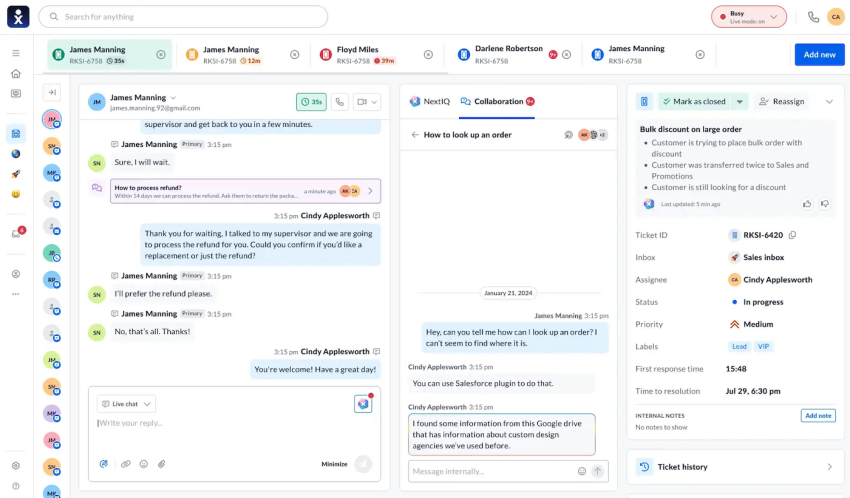
Traditional outbound systems were mostly on-premises dialers or Private Branch Exchange-based call center systems with limited call functionality. In contrast, modern outbound platforms have advanced capabilities, including:
- Automated dialers, such as predictive, progressive, preview, and power dialers
- Customer relationship management (CRM) integrations for context-driven conversations
- Real-time monitoring and analytics
- Compliance management tools
- Multichannel follow-up through SMS and email
Modern outbound contact center software, like Nextiva, enables productivity and data intelligence that maximizes agent talk time while minimizing idle time and risk.
Today, most outbound platforms operate in the cloud. In fact, industry studies estimate that roughly 62% of outbound call tracking of outbound call tracking software deployments in 2026 will be cloud-based.
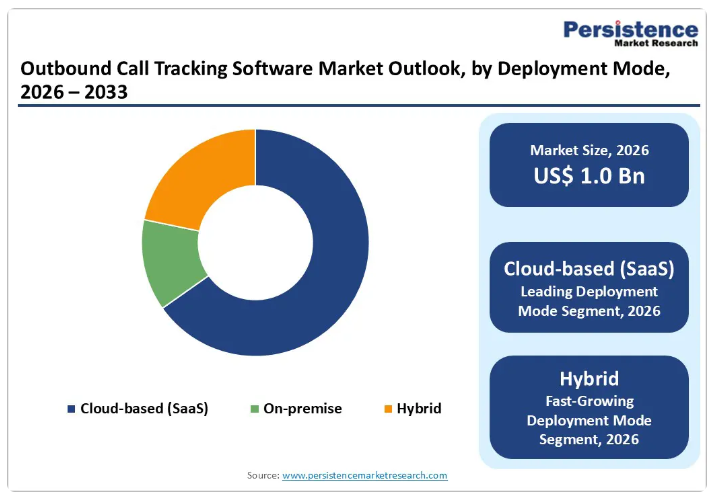
This aligns with broader contact center trends, where cloud platforms account for over 60% of new installations. These statistics hint at a shift away from legacy dialers.
Core Outbound Use Cases
Outbound communication serves many roles beyond traditional cold calling. While sales outreach is the most obvious use, outbound call center software is also valuable throughout the customer lifecycle and in other business functions.
Here are five of its most common use cases.
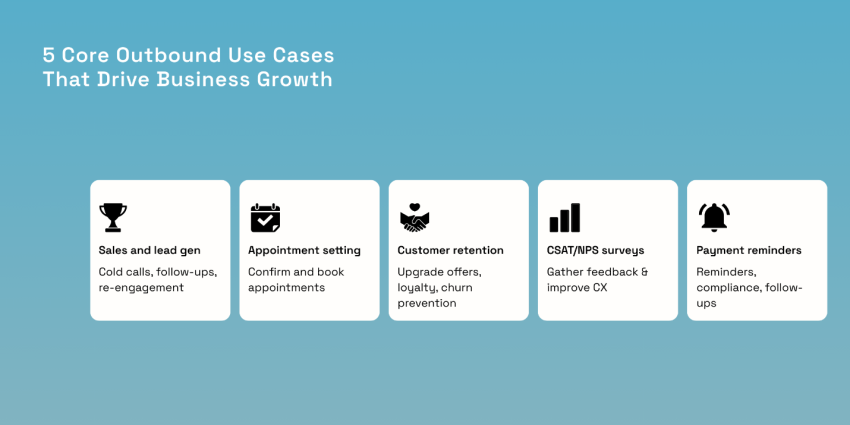
Sales and lead generation
Outbound dialing is central to pipeline growth. Sales teams use this strategy for:
- Cold calling prospect lists
- Following up on marketing-qualified leads
- Reengaging dormant accounts
- Performing account-based outreach
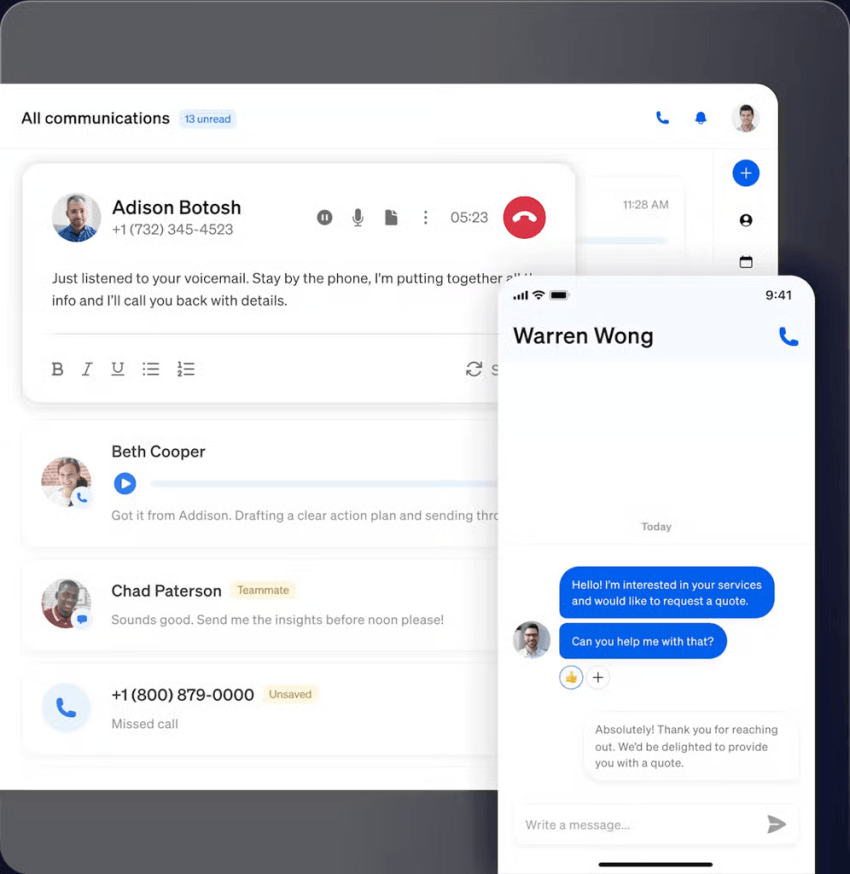
Contact center software helps automate the sales and lead generation process. For example, predictive dialing automatically places multiple outgoing calls and connects agents only when a live person answers, reducing idle time in the queue. CRM integration also enables agents to see customer data and past interactions, giving them context before a conversation starts and increasing conversion rates.
Appointment setting
Healthcare providers, home repair services, legal firms, financial planners, and other professional service providers rely on scheduled meetings. They often use call center services to:
- Remind clients about appointments
- Confirm schedules
- Book consultations
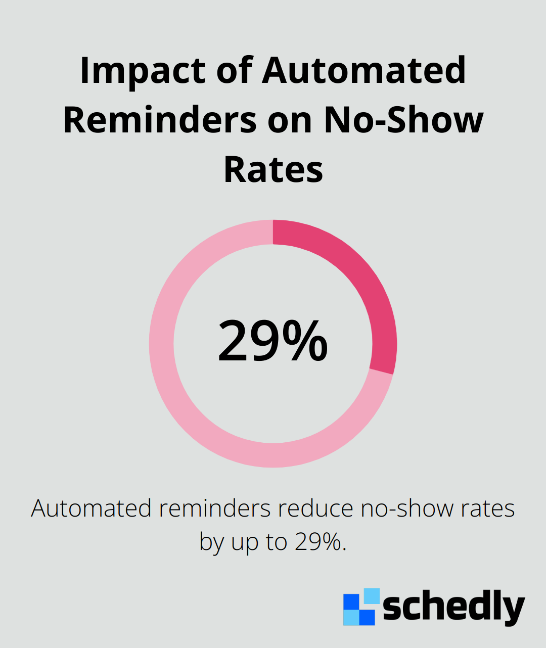
Automated callbacks and calendar integrations in outbound software streamline the appointment-setting process, reducing no-shows and scheduling confusion.
Customer retention and renewals
Not all outbound calls are about cold calling and new sales. Many outbound teams also focus on keeping existing customers by proactively reaching out to:
- Remind customers about expiring subscriptions
- Offer upgrade options or new promotions
- Encourage loyalty program sign-ups
- Reengage with lapsed customers
Contact center software helps outbound teams identify the most valuable accounts through data segmentation and lead prioritization. This allows them to reach high-value customers before they churn.
Customer satisfaction surveys
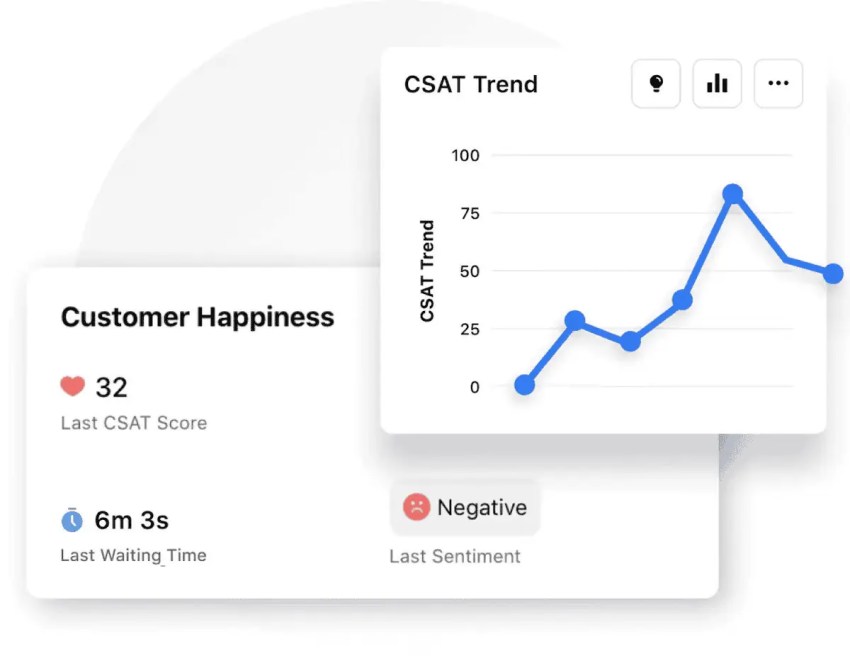
Post-interaction follow-ups help companies measure customer satisfaction and Net Promoter Scores, which they use to improve customer experiences. Outbound software can trigger calls automatically after service events, asking questions like:
- “How was your experience today?”
- “Would you recommend us?”
This helps businesses gather first-party feedback in real time.
Payment reminders and collections
Industries like financial services and utilities use outbound software for:
- Payment reminders
- Compliance-driven disclosures
- Scheduled follow-ups
In regulated industries, outbound software helps businesses maintain compliance with legal and regulatory standards through scripting tools, call recordings, and audit trails.
With all these use cases, outbound outreach should be a powerful revenue driver. For many organizations, however, it’s still an inefficient mix of manual dialing, fragmented data, and limited visibility. This eventually translates to slower pipeline growth, missed renewals, lost customers, and other issues that ultimately affect the bottom line.
The next section provides insight into automated outbound calling features that can eliminate inefficiencies and effectively boost outbound performance.
Key Features That Drive Outbound Performance
Many contact center software providers promise advanced capabilities, but choosing the right platform isn’t about how large a vendor’s tech stack appears to be. Only a handful of features truly separate strong platforms from basic outbound dialers.
Automated dialers
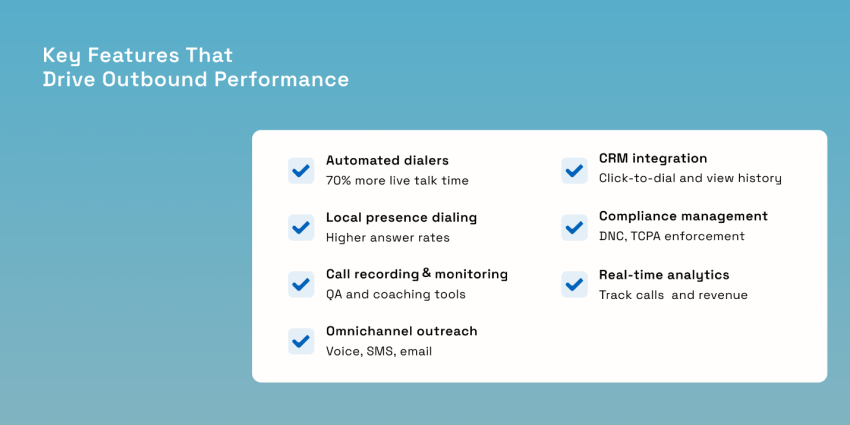
Auto dialers, widely used in telemarketing, reduce wasted time and connect agents to customers faster. They eliminate manual dialing and call logging, optimizing the dialing process. With automated dialing, agents spend 70% more of their day engaging in live conversations rather than waiting in a queue.
- Predictive dialer: Calls multiple numbers at once and connects an agent only when someone answers, improving efficiency in sales outreach and other large call campaigns.
- Power dialer: Calls numbers one at a time automatically as soon as an agent finishes a call, maintaining steady call pacing without overwhelming agents.
- Preview dialer: Allows agents to see customer information first before starting a call, enabling more personalized conversations.
- Progressive dialer: Dials the next number only when an agent signals readiness, ensuring controlled scaling, especially where compliance matters.

CRM integration
Outbound calling is no longer the numbers game it used to be. With 93% of marketers reporting that personalization improves leads and sales, outbound success now depends greatly on context. This is where CRM integration becomes integral to contact center software.
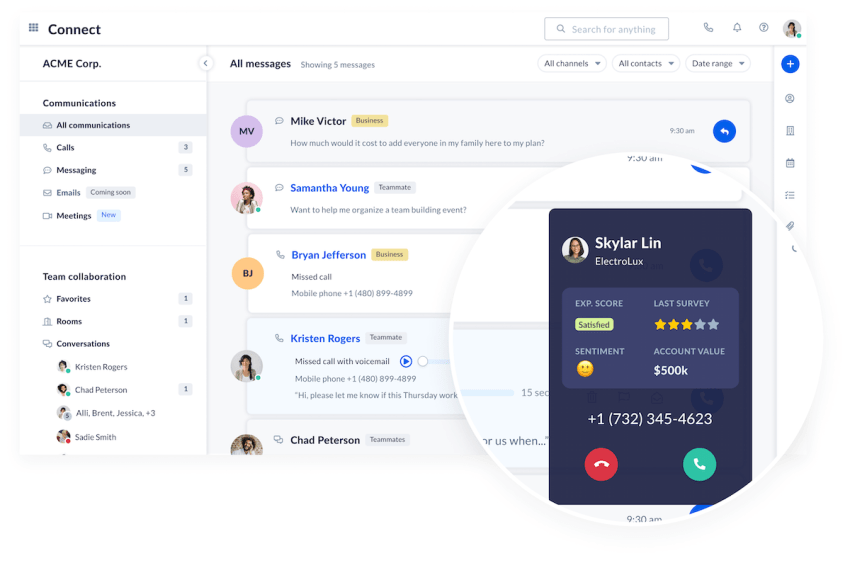
When an outbound calling system connects directly to customer data, agents can:
- Click-to-dial from CRM records
- View customer history instantly to understand their journey
- Log outcomes automatically to reduce data entry errors
- Trigger follow-up workflows for greater efficiency
This prevents agents from calling without context and having awkward or ineffective conversations.
Local presence dialing
This feature displays a phone number with the same area code as the recipient. Since people are more likely to answer calls from local numbers, having a local caller ID helps increase answer rates, especially for geographically targeted campaigns.
Compliance management
Many countries heavily regulate outbound calling. This means businesses must make sure the contact center software they use can manage:
- Do Not Call lists
- Time-zone restrictions
- Call recording disclosures
- Regulatory requirements, such as the Telephone Consumer Protection Act
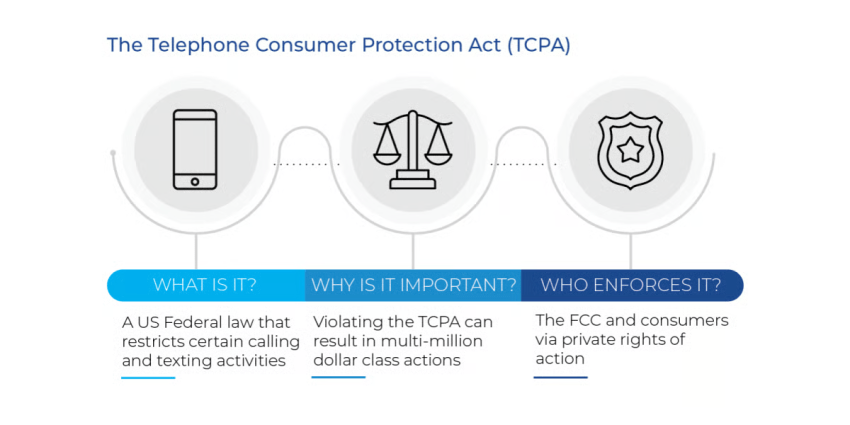
There should be compliance management tools that automatically block restricted numbers, enforce call times, and log consent. This protects businesses from large fines, legal risks, and reputational damage.
Call recording and monitoring
Call recording and monitoring tools help improve training, quality assurance, and agent performance. At their core, outbound software solutions should have these basics:
- Live call monitoring
- Call whisper and barge-in capabilities
- Coaching tools
- QA scorecards
These allow supervisors to ensure call center agents are following scripts and providing excellent service.

Real-time analytics and reporting
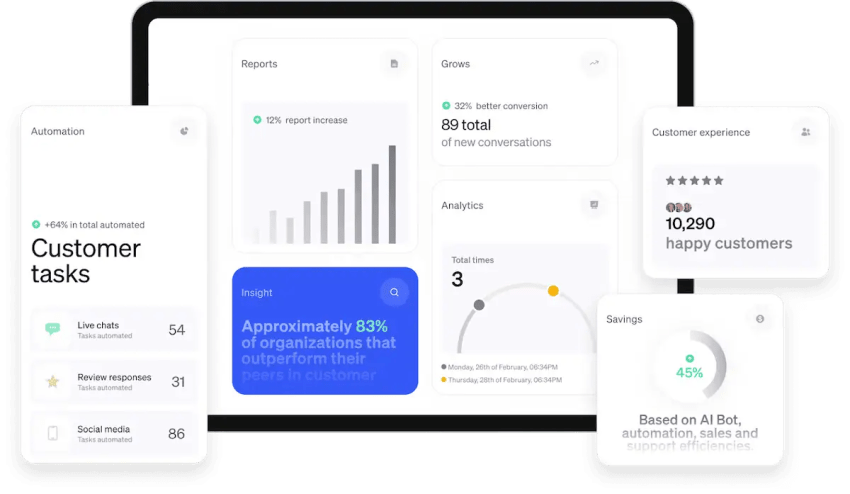
Analytics dashboards should provide more than just pretty charts and optimistic numbers; they should inform staffing decisions, KPIs, and campaign optimization. To know what’s working and what’s not, supervisors must be able to track metrics, including:
- How many calls connect (connect rate)
- How many calls turn into sales (conversion rate)
- How many calls each agent handles (calls per agent)
- How long agents spend talking (average talk time)
- Which campaigns generate revenue (revenue per campaign)
Omnichannel outreach
Outbound communication is no longer just voice. Modern platforms should support outreach across multiple channels, including:
- SMS follow-ups
- Email campaigns
- Push notifications
- Automated reminders
Customers may ignore phone calls but respond to texts or emails, which improves response rates. By reaching customers on the channels they prefer, businesses can achieve deeper and more consistent engagement.
Top 5 Outbound Contact Center Software Platforms
With so many enterprise-grade contact center platforms available, choosing the right one can feel overwhelming. Here are five major providers that consistently make it onto decision-makers’ shortlists.
1. Nextiva
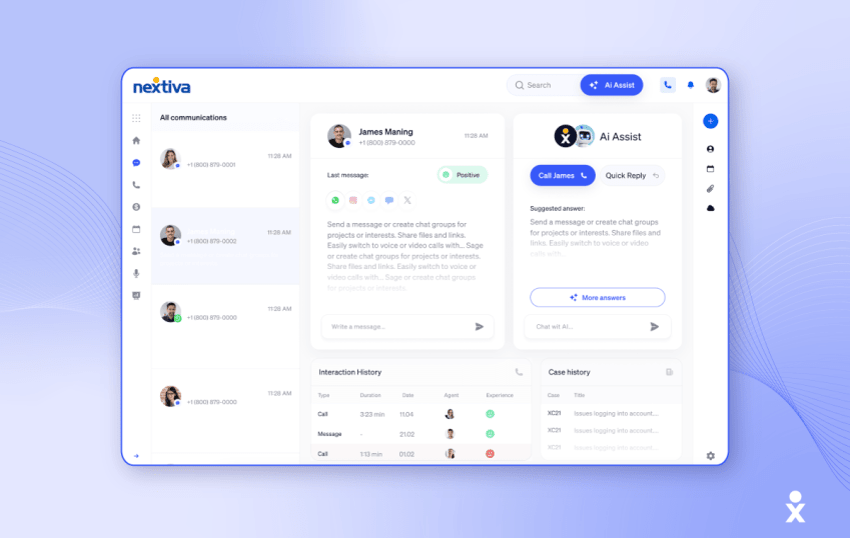
Nextiva is a unified cloud communications and customer experience platform with specialized solutions.
It offers cloud-based inbound and outbound capabilities in one platform, effectively removing silos and ensuring a seamless customer experience. Nextiva is built for hyper-personalized omnichannel conversations that can scale as campaigns grow more complex.
Enterprise-grade security, including SOC 2 and ISO 27001 certifications, keeps customer data safe and engagements compliant. Teams can also stay connected and productive from any device through the NextivaONE app, enhancing scalability and mobility.
Pricing
- Starts at $15 per user per month (billed annually) for small businesses using core features (inbound/outbound voice, business SMS, email, messaging apps, call routing, mobile app). Power Suite CX plans start at $75 per agent per month (billed annually) with flexible pricing for customized plans.
Strengths
- CRM integrations with Salesforce and HubSpot
- Click-to-call and automated dialing
- Real-time dashboards and performance analytics
- AI-supported, context-rich conversations
- Enterprise-grade reliability with 99.999% proven uptime
Best for
- Growing businesses that want a unified communications and outbound platform without stitching together multiple vendors.
2. Five9
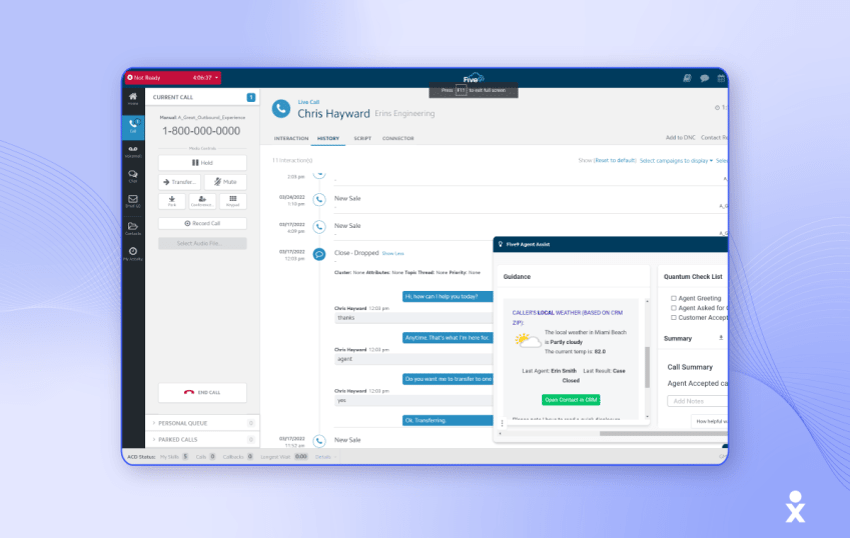
Five9 was designed as a cloud-based alternative to on-premises call center systems.
In addition to enabling businesses to engage customers on their preferred channels (voice, email, chat, SMS, or social media), Five9 also streamlines call center operations through collaborative intelligence (human agent plus AI automation).
It includes customer self-service options, workforce optimization tools, and advanced analytics to support agent productivity.
Pricing
- Starts at $119 per user per month for inbound calls and outbound digital channels.
Strengths
- Dialer technologies (predictive, power, progressive, preview)
- Emergency call services (E911)
- Number reputation management
- AI-powered speech analytics
- Real-time coaching with Agent Assist
Best for
- Large enterprises needing sophisticated outbound automation for high-volume campaigns
3. RingCentral
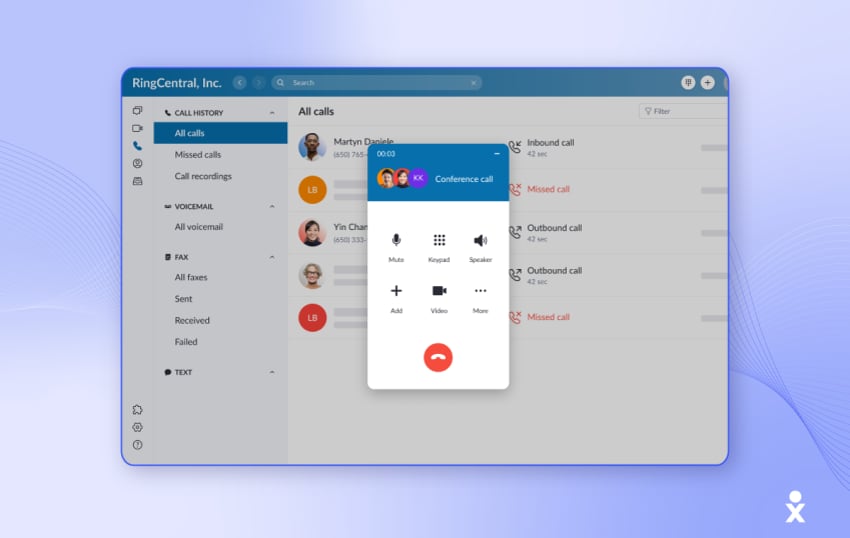
RingCentral is a cloud communications platform that combines phone systems, messaging, video meetings, and contact center tools. It offers an omnichannel contact center that lets businesses integrate their CRM and manage customer interactions in one place.
With its outbound calling capabilities, RingCentral powers conversations with flexible agent scripting and real-time insights.
Pricing
- Starts at $20 per user per month (billed annually) for standard features (unlimited inbound calling, 250 outbound calling minutes per user).
Strengths
- AI receptionists and AI-powered transcription
- Drag-and-drop script builder
- Preview, predictive, and progressive dialers
- CRM integration
Best for
- High-growth companies wanting a scalable cloud communications suite
4. Genesys Cloud CX
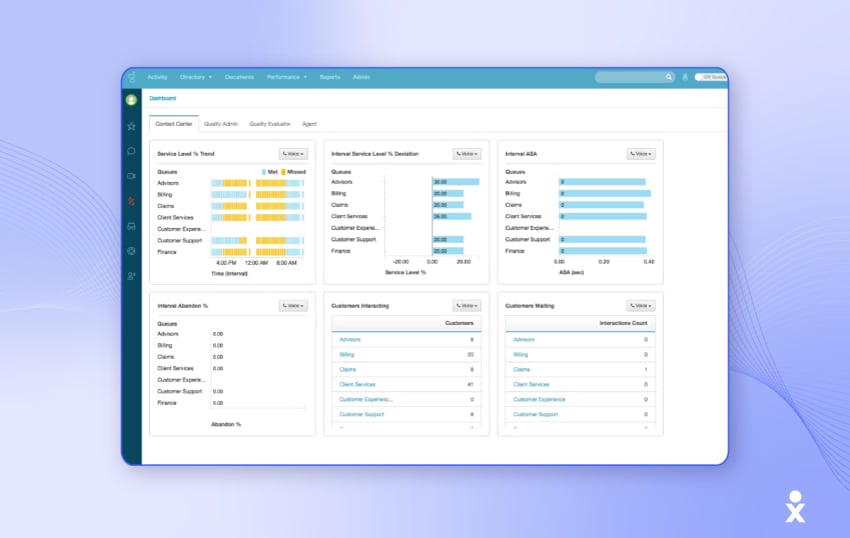
Genesys Cloud CX is a comprehensive AI-powered cloud contact center solution that enables businesses to manage both internal communication and customer engagement in one place.
Unified customer data and native embedded AI power personalized experiences, uncovering insights across interactions. This helps businesses monitor performance and better understand customer needs.
Pricing
- Entry plan starts at $75 per user per month (billed annually) with access to basic features (voice channel, call routing, interactive voice response, outbound campaigns, and analytics).
Strengths
- Omnichannel engagement with intelligent routing
- Built-in workforce engagement
- AI-driven routing
- Advanced analytics
Best for
- Enterprises with complex global outbound operations
5. NiCE CXone
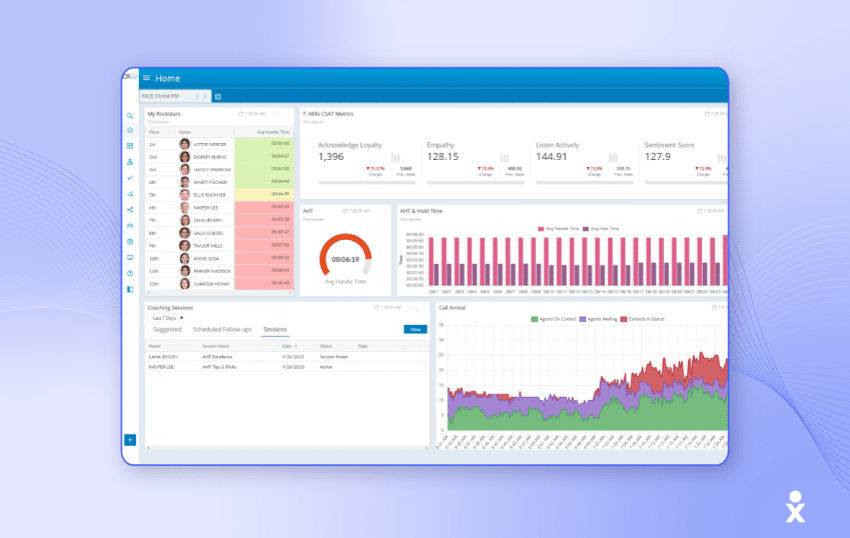
NiCE CXone is an AI-first customer experience platform that turns data into intelligent action. Through its proactive outbound engagement, businesses can reach existing and prospective customers on their preferred channels and make personalized offers.
Aside from the typical outbound software tool stack, it includes recording and compliance as a core feature across all plans.
Pricing
- Starts at $110 per user per month for core features (voice and digital channels, omnichannel routing, proactive engagement, and recording and compliance).
Strengths
- Strong compliance management
- Solid cloud architecture with over 40 built-in apps
- Workforce optimization
- AI-powered call scoring
- Pre-built integrations and open APIs
Best for
- Highly regulated industries and data-heavy outbound teams
Why Nextiva Is the Smart Choice for Outbound Teams
Outbound success isn’t about dialing more numbers to keep call volume high. It’s about making every call count by connecting with the right person at the right time with the right context. This requires an intuitive outbound call center solution, like Nextiva.
As a unified customer experience platform that connects voice, SMS, CRM data, analytics, and AI into one scalable solution, Nextiva delivers:
- Combined inbound and outbound capabilities
- Enterprise-grade reliability
- Intuitive interface for rapid onboarding
- Deep analytics for revenue optimization
- Strong compliance and security standards
With Nextiva’s hosted contact center, teams can launch smarter campaigns, improve connect rates, and drive measurable revenue without adding complexity — that’s intelligent engagement that scales with business growth.
Top AI-Powered Contact Center Solution
Transform your customer interactions with a contact center platform that saves you time and money, reduces agent and supervisor stress, and flexibly adapts to fit your needs.