

 Customer Experience
  Blog
Blog  Business Communication
  Leadership
  Marketing & Sales
  Nextiva News
  Productivity
  VoIP
VoIP 

How intelligent can contact center technology really be? Turns out, extremely.
Thanks to features like AI-powered self-service receptionists, omnichannel routing, and predictive analytics, a technology once used only for simple call routing and answering can now manage and automate all your contact center processes and proactively suggest improvements.
Let’s look at what makes a contact center intelligent, how it differs from traditional systems, and how you can benefit from it from day one.
What Is an Intelligent Contact Center?
An intelligent contact center uses AI, machine learning, automation, and real-time analytics to deliver proactive, personalized, and efficient customer support across voice and digital channels.
You still get all the familiar features of call center software (e.g., routing, queues, call reports, etc.), but the processes shift from reactive and manual to predictive and adaptive. You’re no longer reliant on data manipulation, manual call routing, or your agents’ call time.
Here are some key features of an intelligent contact center:
- AI-based architecture instead of retrofitted automation
- Omnichannel platform with unified customer context
- Predictive and prescriptive analytics
- Real-time agent support
- Continuous optimization based on interaction data

Intelligent Contact Center vs. Traditional Contact Center
| Category | Traditional Contact Center | Intelligent Contact Center |
|---|---|---|
| Approach | Reactive: Customers initiate contact and agents respond to issues after they occur. | Proactive: Systems anticipate customer needs, identify risks, and resolve issues before escalation. |
| Core Technology | Basic telephony, IVR menus, manual workflows, and siloed systems. | AI-powered routing, virtual agents, predictive analytics, omnichannel orchestration, and cloud-native scalability. |
| Customer Engagement | Primarily voice-based customer interactions with limited channel integration. | Omnichannel engagement across voice, SMS, chat, email, social, and digital platforms in a unified system. |
| Data Utilization | Limited reporting. Data gets stored but is rarely operationalized in real time. | Real-time analytics, sentiment analysis, predictive modeling, automated insights, and continuous performance optimization. |
| Agent Experience | Manual notetaking, frequent system switching, static scripts, and high administrative workload. | AI assist, automated call summaries, contextual knowledge surfacing, guided workflows, and workflow automation. |
| Routing and Resolution | Rule-based routing with limited personalization. | Intelligent, skills-based routing powered by AI and customer history for faster, more accurate resolutions. |
| Scalability | Scaling requires hiring and training more agents. Infrastructure is often hardware dependent. | Automation absorbs routine volume. Cloud-based infrastructure scales dynamically with demand. |
| Cost Structure | Higher operational costs due to labor-heavy processes and on-premises systems. | Lower cost per interaction through automation, optimization, and cloud efficiency. |
| Performance Management | Historical reporting and manual QA processes. | Live dashboards, predictive forecasting, automated QA, and continuous improvement tools. |
| Customer Experience | Longer wait times, repetitive information requests, and inconsistent service. | Personalized, seamless, and faster experiences driven by unified customer data and AI insights. |

Key Components of an Intelligent Contact Center
Here are the main components of what makes a contact center “intelligent”.
Intelligent virtual agents and conversational AI
IVAs and chatbots use conversational AI and natural language processing to handle the initial incoming calls. Instead of waiting on hold, these virtual agents and AI receptionists can ask questions that help with routing, troubleshooting, or customer self-service.
For example, AI agents can handle tasks such as:
- FAQs
- Account inquiries
- Scheduling appointments
- Status inquiries
- Password resets
Businesses can start with simple initial contact requests and, as the systems learn, outsource more complex, multistage interactions such as order changes, billing disputes, returns and exchanges, onboarding guides, contract renewals, and proactive outreach based on customer behavior.
After a period, and once these automations have gained your customers’ trust, they can reduce operating costs while improving availability. Human employees have more time to address technical and emotional issues, while the virtual agents handle transactional and self-service requests.
Smart and predictive routing
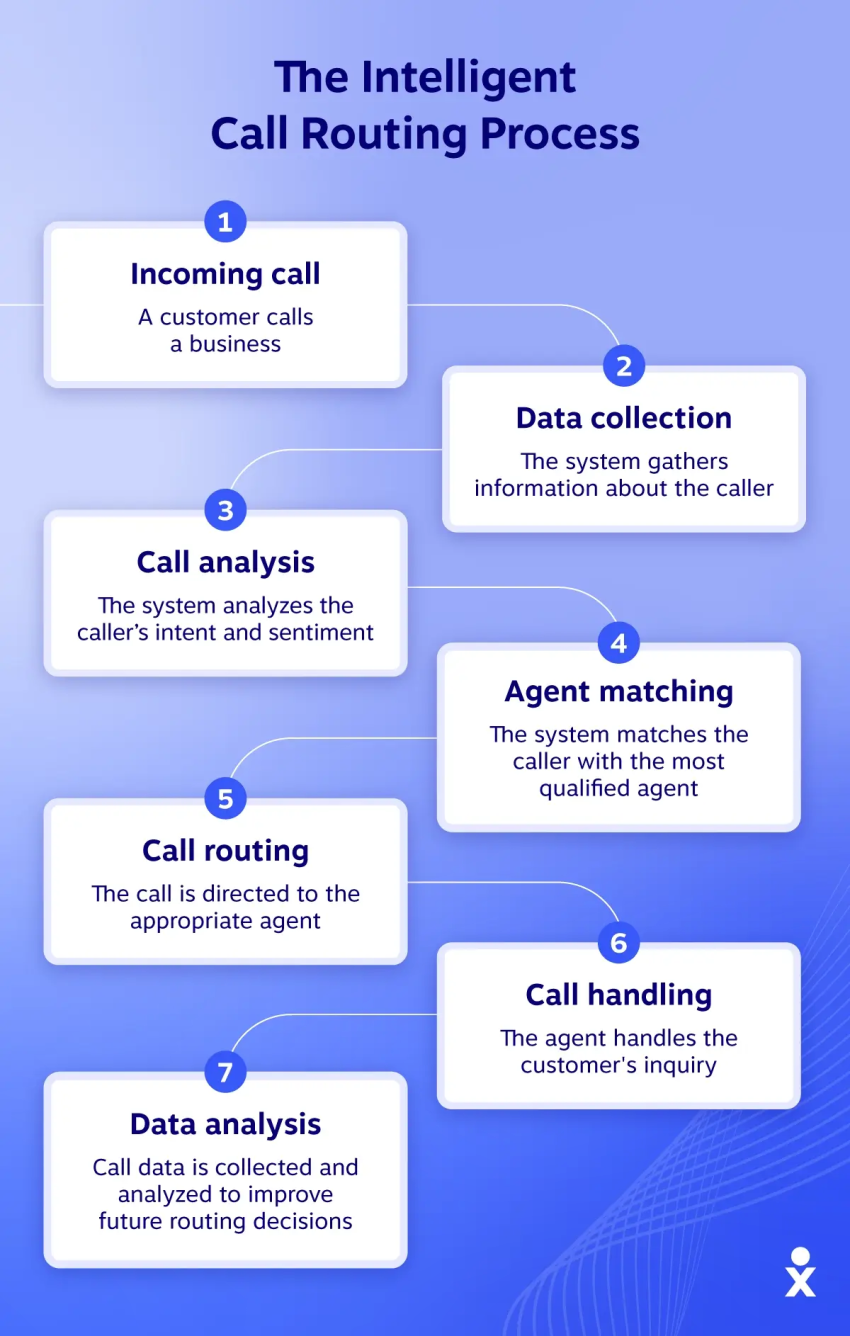
Intelligent routing analyzes every step in your contact center’s inbound call process. It goes beyond simply capturing and routing call details like phone numbers and VIP callers. Instead, it considers:
- Customer history: Past interactions, purchase behavior, open tickets, previous resolutions, and channel preferences to prevent repetition and ensure continuity.
- Interaction intent: The reason for the interaction, determined through interactive voice assistants, chatbots, or speech analysis, to route customers to the right agent on first contact.
- Mood: Real-time emotion recognition based on tone of voice and speech patterns to prioritize dissatisfied customers or escalate urgent issues.
- Skill requirements: Agent expertise, certifications, language skills, and performance history to match customers to the most appropriate agent.
- Customer value: Customer lifetime value, status, renewal status, or churn risk to ensure critical calls receive the appropriate level of service and attention.
Intelligent contact centers assign customers to the most qualified agent on first contact, improve first call resolution rates (FCR), and reduce call transfers. Especially for small business call centers, implementing an AI phone answering service saves time determining the reason for the call and resolving initial issues.
Real-time Agent Assist
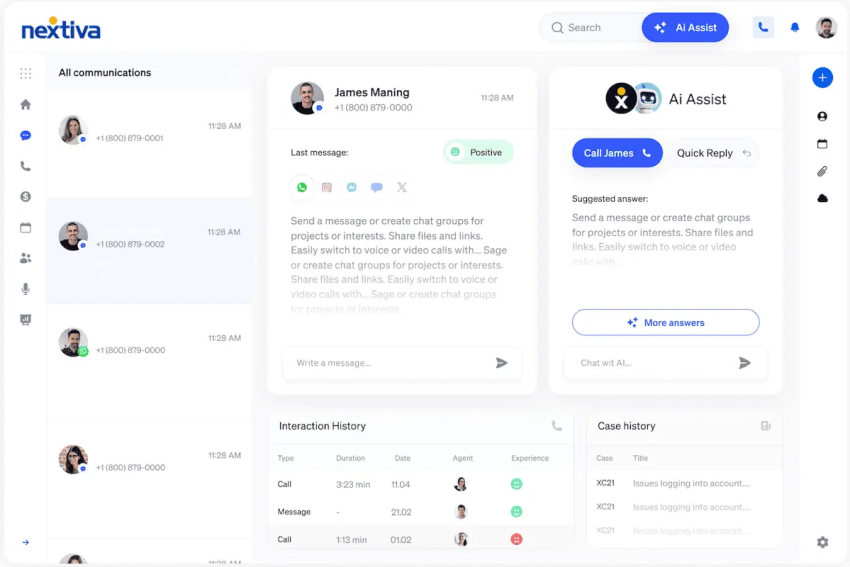
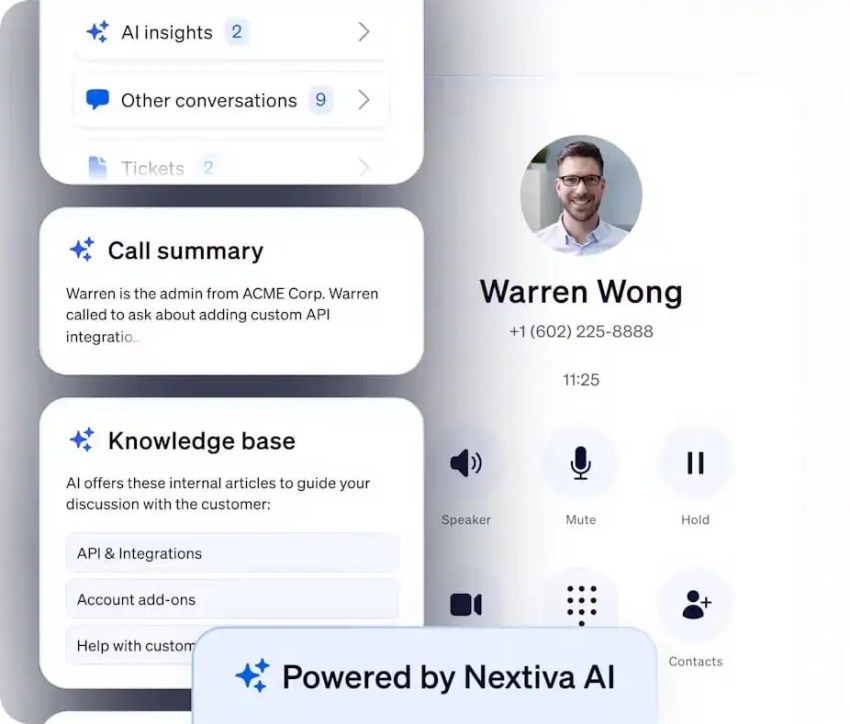
AI supports agents during live interactions by introducing an on-screen assistant that proactively pops up or can be sought out and consulted. This Agent Assist technology helps out by:
- Transcribing conversations
- Detecting sentiment shifts
- Suggesting next best actions
- Surfacing relevant knowledge articles
- Creating generative AI call summaries
Agent Assist technology is here to aid your contact center agents and help customers receive more timely, well-informed responses, thereby improving FCR and reducing average handle time.
Predictive and prescriptive analytics
In enterprise contact centers, you’ve got more data than most. When put to good use (i.e., with a comprehensive analytics suite), you can not only interpret but also predict a wealth of useful information, such as:
- Call volume: Forecast spikes based on seasonality, marketing campaigns, billing cycles, outages, or product launches (enabling more accurate staffing and queue management).
- Likely churn: Identify at-risk customers by analyzing sentiment trends, complaint frequency, reduced usage patterns, late payments, or competitor mentions.
- Escalation risks: Detect patterns that typically lead to supervisor involvement — like repeated transfers, unresolved tickets, or negative sentiment — before they happen.
- Renewal behavior: Predict which customers are likely to renew, downgrade, or cancel based on engagement levels, product adoption, support history, and contract timelines.
Armed with this data, prescriptive analytics recommends the following actions to be taken:
- Specific offers: Automatically highlight personalized discounts, loyalty incentives, or feature bundles tailored to the customer’s usage profile.
- Retention actions: Trigger proactive outreach from a specialized retention team when churn risk crosses a defined threshold.
- Routing adjustments: Prioritize high-value or at-risk customers to senior agents trained in de-escalation and negotiation.
- Workforce rebalancing: Shift staffing levels in real time based on predicted contact volume or issue type to prevent bottlenecks.
Imagine a SaaS company with annual subscriptions. Predictive analytics flags a customer 45 days before renewal because product usage has declined, two recent support tickets show negative sentiment, and a billing inquiry suggests budget sensitivity.
Instead of waiting for cancellation, the analytics package automatically:
- Alerts the account manager
- Routes the next inbound call to a senior retention specialist
- Surfaces a tailored upgrade offer with flexible billing
- Prompts the agent with talking points based on the customer’s usage gaps
Rather than reacting to customer churn after it happens, you intervene early to improve renewal rates, increase lifetime value, and turn a potential cancellation into an upsell opportunity.
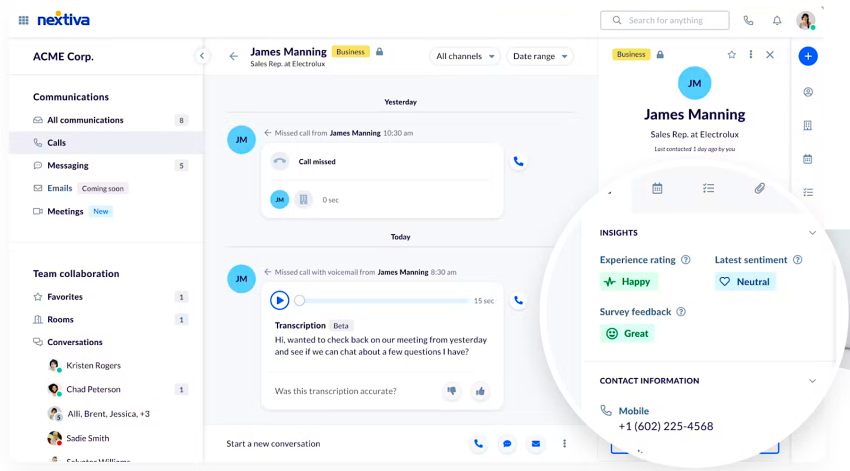
Voice and sentiment analytics
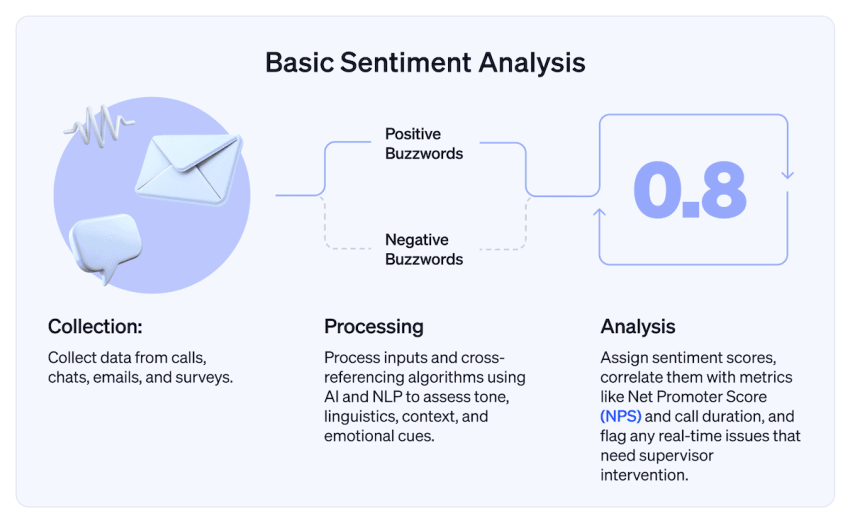
Once set up, intelligent contact centers analyze every single interaction for:
- Emotional tone
- Compliance risk
- Keyword triggers
- Escalation patterns
This happens in real-time, alerting supervisors and contact center managers. But it also happens after the call, identifying skill gaps and informing training.
Once you have this information, these patterns, and this analysis, you can inform QA, coaching, and proactive outreach. It’s what you do with these outputs that triggers genuine transformation and kickstarts continuous improvement.
Workforce intelligence and optimization
AI-powered workforce optimization (WFM) improves the administration and planning side of contact center operations, such as:
- Staffing forecasts: Accurately predict contact volume by channel, time of day, seasonality, campaign activity, and known business events to ensure the right number of agents are scheduled without overstaffing.
- Schedule adherence: Monitor real-time agent activity against scheduled shifts, breaks, and SLAs and automatically alert supervisors to potential coverage gaps before service levels drop.
- Intraday adjustments: Make dynamic changes throughout the day based on live call volume, queue backlogs, unexpected absenteeism, or emerging trends.
- Agent flexibility: Enable self-service shift swaps, flexible scheduling, skills-based cross-training, and remote staffing models.
An intelligent contact center optimizes both customer outcomes and agent well-being. You get less wait time and more productive staff.
Business Benefits of an Intelligent Contact Center
Let’s take a look at the benefits for businesses.
Increased productivity
Every tech and contact center solution promises to increase productivity. Here, automation handles routine tasks, allowing agents to focus on high-value interactions. They free up time by no longer having to answer repeated customer inquiries about opening times or account balances.
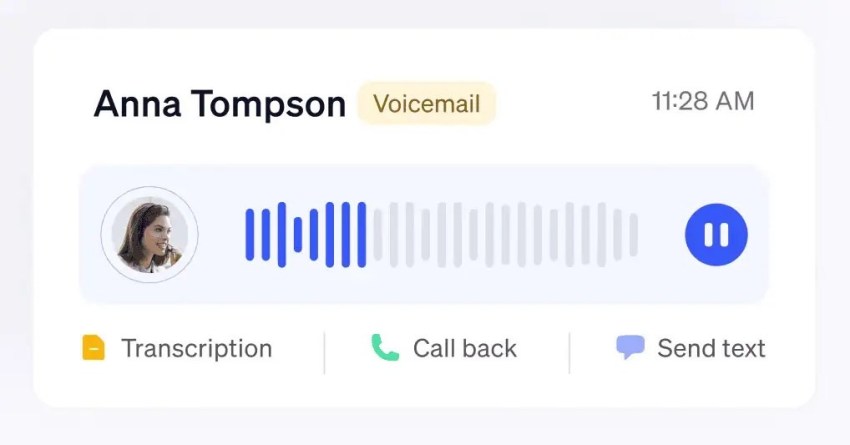
As an added benefit, removing not only these routine tasks but also the pre- and post-work reduces cognitive load, too. Rather than being forever worried about wrap-up time and constantly taking notes, team members can focus on solving the customer problem, and automation handles transcription, CRM updates, and call tagging.
Lower operational costs
An intelligent contact center doesn’t completely replace human work, but it optimizes it. Routing routine, transactional inquiries to virtual agents helps handle high call volumes more effectively, reducing the need for employees to perform routine tasks and allowing them to focus on value-added tasks. Overhead call center costs decrease, and employee skills improve.
Smarter call routing also reduces the number of costly and frustrating transfers. The combination of reduced manual effort and optimized staffing decisions based on predictive analytics lowers costs per interaction. Agents spend less time on manual follow-up and can instead focus on more complex issues.

Improved customer satisfaction
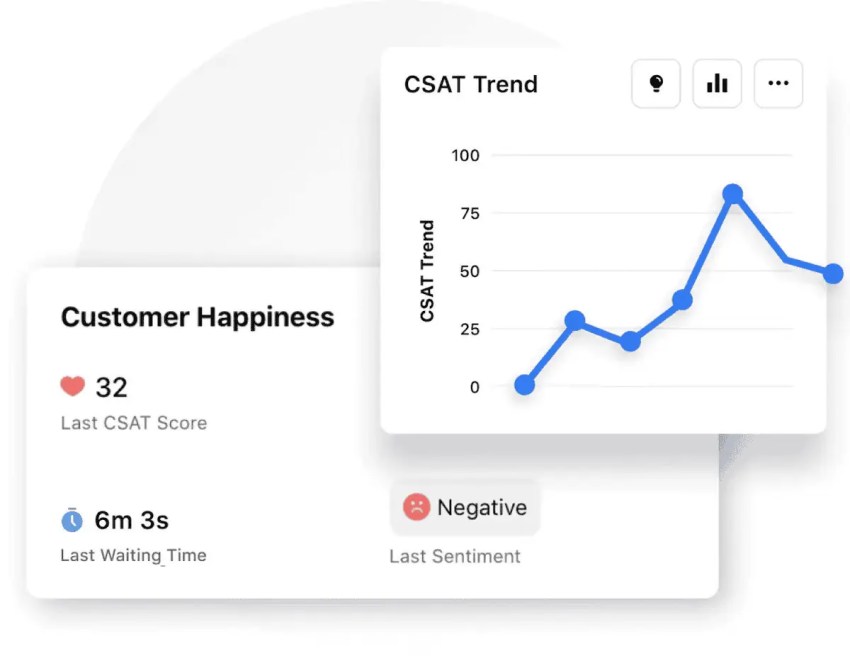
The compounding effect of happier and more productive agents leads to higher customer satisfaction (CSAT) scores.
When your business can deliver:
- Faster responses
- Personalized interactions
- Minimal repetition
- Consistent cross-channel experience
Customers find it a pleasure to do business with you. You set the standard for customer service, while their other providers keep them waiting, don’t have pertinent information to hand, and ask the same questions every time they transfer them to another member of staff.
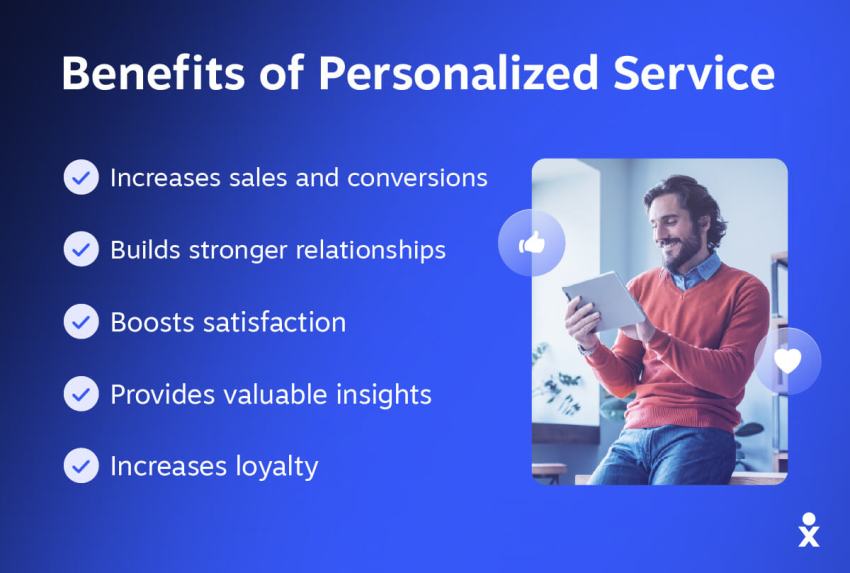
Enhanced personalization at scale
Customers expect you to know who they are and why they’re calling. Thanks to deep native CRM integrations, an intelligent contact center instantly surfaces all relevant customer data.
Even before the agent greets the customer, the agent has access to the customer’s purchase history, current support tickets, and previous interactions across communication channels. This unified customer data turns a generic customer service interaction into contextual, highly personalized support, where every customer receives priority without slowing down the queue.
Revenue growth opportunities
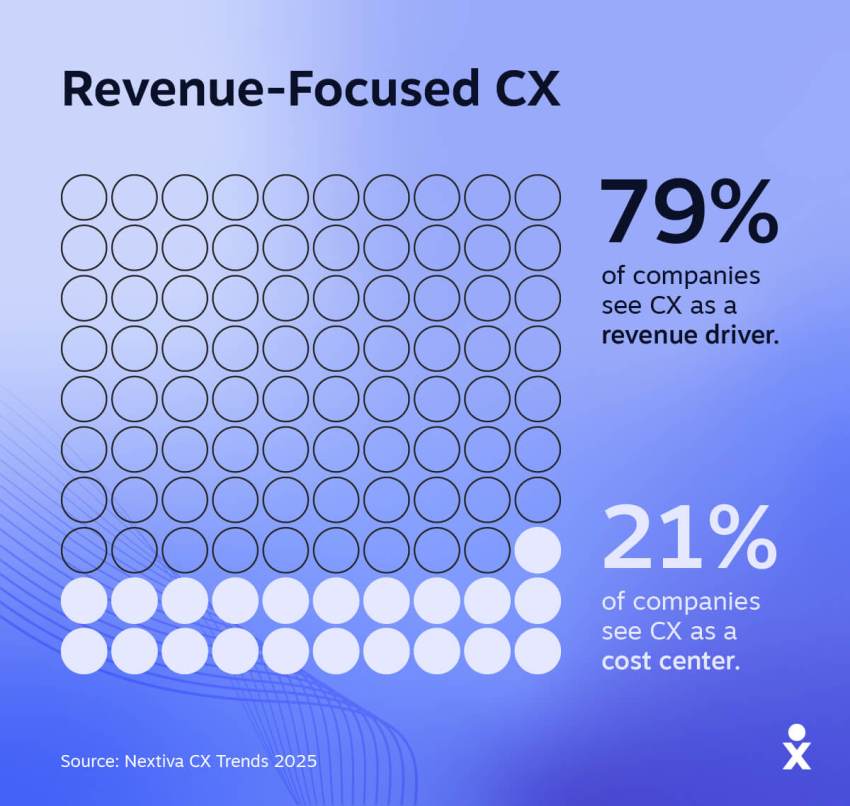
Intelligent contact centers not only save money and increase productivity but also offer growth opportunities that take your operation from a cost center to a profit center.
Thanks to unified, real-time data, your contact center can identify:
- Upselling and cross-selling opportunities: Recognize when a customer needs a new or improved product instead of basic technical support.
- Customer churn risk detection: Escalate calls automatically when customers show signs of cancellation or non-renewal.
- Proactive customer engagement: Initiate automated or manual contact based on customer behavior — for example, recognizing a frequent flyer and offering travel insurance or a seat upgrade during a routine booking call in a live chat.
What Makes a Contact Center Intelligent?
It’s one thing to say contact center technology has become truly intelligent, but how does that work behind the scenes?
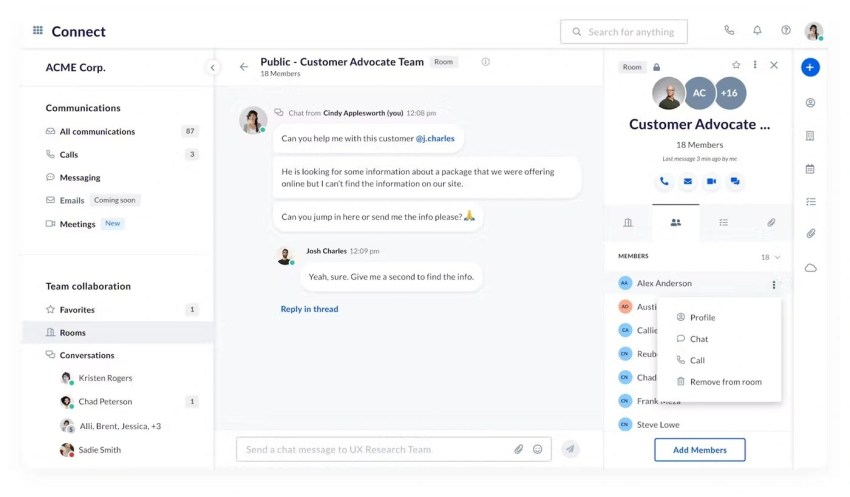
- Unified architecture: All channels operate on one platform. Voice, chat, email, SMS, and social media share a single system. With no siloed tools, agents have complete context, customers get consistent experiences, and reporting is unified.
- AI embedded across the journey: AI powers routing, analytics, QA, WFM, and reporting. AI works behind the scenes at every stage, predicting needs, guiding agents, analyzing sentiment, automating tasks, and surfacing insights for faster, more accurate resolutions.
- Continuous learning loop: Every interaction drives improvement. Data from every contact informs training, improves routing decisions, and expands self-service coverage. Over time, the system gets smarter, reducing escalations and improving first-contact resolution.
- Human-AI collaboration: AI augments agents rather than replacing them. It handles repetitive and data-heavy tasks, freeing agents to focus on judgment, problem-solving, and empathy. Agents retain control and make the final decision, while AI boosts efficiency and accuracy.
Common Challenges and How to Address Them
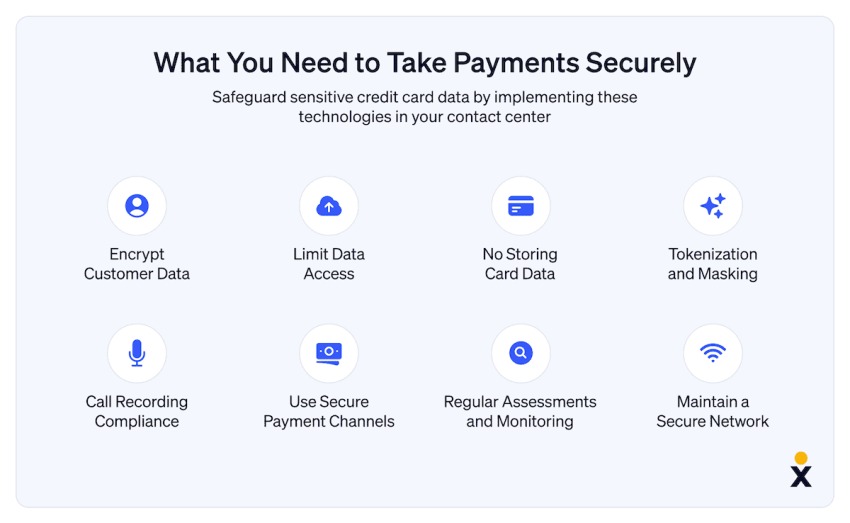
Data privacy and compliance
You might think the benefits are purely transactional when introducing AI into your contact center. But the bigger picture includes local, national, and industry compliance regulations.
How to address: Implement strict data handling policies, anonymize sensitive information, enforce role-based access, and ensure all AI systems comply with GDPR, HIPAA, and internal security standards. Conduct regular audits and maintain clear documentation for accountability.
Agent resistance
Some agents may fear that AI will replace them or complicate their workflows, which can slow adoption and breed a bad atmosphere.
How to address: Provide hands-on training and workshops showing AI as a supportive tool. Share success stories, highlight how AI reduces repetitive tasks, and involve agents in system design to build trust and ownership.
Integration complexity
Multiple siloed systems can make AI deployment challenging and reduce operational efficiency.
How to address: Choose platforms with native integrations or robust APIs to unify telephony, CRM, chat, and analytics. Roll out in phases, test key workflows first, and maintain a single source of truth to prevent data fragmentation.
Investment and ROI justification
AI initiatives can seem costly or abstract without clear, measurable outcomes. The board and CFO must see tangible impact before signing off.
How to address: Define success metrics upfront and track KPIs like reduced handle time, higher first-contact resolution, improved CSAT/NPS scores, and cost per interaction. Start with pilot programs to demonstrate ROI before scaling enterprise-wide.

Intelligent Contact Center Trends
It’s important in any contact center to understand not just the current state of your contact center, but also the trends that are likely to occur once implemented and long into the future.
Here are a few possibilities you should consider when planning for long-term success:
| Trend | Description | Impact |
|---|---|---|
| Emotion detection and empathy modeling | AI analyzes voice tone, word choice, and chat sentiment to detect frustration, satisfaction, or urgency. | Agents receive real-time guidance to respond with empathy, improving satisfaction and reducing escalations. |
| Multimodal AI support (image and document processing) | AI can process images, PDFs, and screenshots shared by customers. | Enables faster resolution for troubleshooting, claims, and onboarding, reducing back-and-forth and manual review. |
| Predictive behavioral routing | Customers get routed based on history, skill matching, and predicted behavior (e.g., likelihood to churn or upgrade). | Increases first-contact resolution and enables proactive engagement to strengthen loyalty. |
| AI-driven workforce flexibility | Dynamic scheduling, intraday adjustments, and task reallocation based on predicted volume or agent performance. | Maintains service levels, reduces agent burnout, and improves operational efficiency. |
| Hyper-personalized customer journeys | AI tailors interactions using historical behavior, preferences, and predicted needs across all channels. | Every touchpoint feels relevant and seamless, boosting satisfaction, loyalty, and conversion. |
| Advanced self-service handling complex workflows | AI-powered virtual agents manage multistep processes like order changes, troubleshooting, or appointment management. | Frees up live agents for high-value interactions while providing customers with faster, 24/7 support. |
How Nextiva Powers the Intelligent Contact Center
AI is at the core of every interaction
Nextiva embeds contact center AI across every component of its intelligent contact center technology:
- Intelligent virtual agents
- Advanced routing
- Agent assist
- Sentiment analytics
- Automated summaries
Unified omnichannel platform
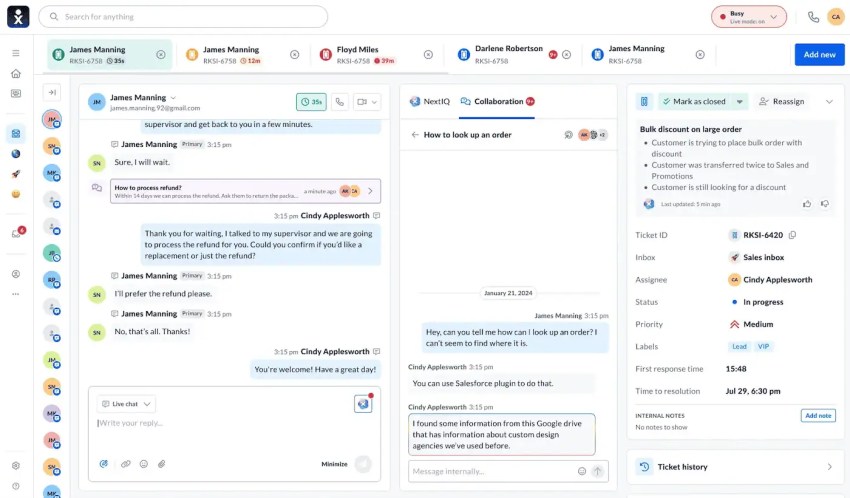
Nextiva doesn’t just provide the option for voice, SMS, chat, email, and social interactions. That’s called multichannel. Instead, it brings all those channels together to operate in a single environment. This is called omnichannel.
Context follows the customer regardless of which channel they choose or whether they switch between voice, messaging, or email. Agents get the full picture every time they interact with your customers, setting them up to deliver the best possible customer experience.
Real-time visibility and optimization
Supervisors gain full visibility into everything they need for day-to-day operations and management. Instead of reacting to calls when they’ve listened back a week later, you get real-time insight into things like:
- Service levels
- Sentiment trends
- Agent performance
- Routing efficiency
With this data — and alerts when thresholds are breached — you can make immediate changes and escalate calls as needed.
Scalable cloud infrastructure
From small businesses to large enterprises, Nextiva supports growth without infrastructure overhauls:
- Distributed network and global points of presence: Operates across eight global points of presence and carrier-grade data centers, reducing latency and ensuring call quality.
- 99.999% uptime: Maintained through redundant systems and 24/7 network monitoring.
- Automatic failover and business continuity: Automatically reroutes calls and services to alternative connections or mobile devices during local outages.
- Rapid, flexible scaling: Enables administrators to add users, extensions, or branch offices in minutes through the admin portal without additional hardware.
- Proactive monitoring and support: Engineering teams continuously detect and resolve issues, with real-time dashboards for administrators.
- Security and compliance: Protects data through enterprise-grade encryption and compliance with PCI, HIPAA, SOC-2, and GDPR.
Break Down Silos With an Intelligent Contact Center: Nextiva
The presence of AI does not define an intelligent contact center. Nor will one totally replace human agents, skills, and emotions. Instead, an intelligent contact center is defined by how intelligently AI, automation, analytics, and human expertise work together.
When you move from reactive, siloed operations to proactive, unified intelligence, you gain more than efficiency. You gain faster resolution, stronger customer loyalty, empowered agents, and scalable growth.
With an AI-powered, unified contact center platform, Nextiva helps businesses design intelligent systems that anticipate needs, streamline workflows, and continuously improve every interaction.
For more information about Nextiva’s AI-powered contact center solutions, compare our range of solutions here. 👇
Top Ranked AI-Powered Contact Center Solution
Transform your customer interactions with a contact center platform that saves you time and money, reduces agent and supervisor stress, and flexibly adapts to fit your needs.