
 Marketing & Sales
  Blog
Blog  Business Communication
  Customer Experience
  Leadership
  Nextiva News
  Productivity
  VoIP
VoIP 

Marketing and sales teams keep searching for stronger ways to generate and convert leads. Traditional forms fail to match the speed and interaction that today’s buyers expect. Conversational AI chatbots drive lead generation by turning passive visitors into active conversations.
Buyers finish most of their research before they speak with sales. They expect instant answers, tailored guidance, and smooth interactions. Chatbots meet these needs by qualifying leads, booking meetings, and guiding users toward decisions in real time.
AI chatbots engage customers while improving the overall user experience with instant responses and 24/7 availability. It feels like chatting with a real person who stays available even at 2 a.m. When users land on your website, they can ask questions and get answers right away without waiting.
Many solutions offer options to automate chats using AI while facilitating live chats with human agents. Learn more about why you should opt for an AI-powered solution.
Try the best AI answering service free for 14 days
XBert AI answers questions and captures leads. Add your 24/7 answering service in minutes.
Quick Comparison: Top Lead Gen Chatbots
| Chatbot | Best for | Driver | Pricing |
|---|---|---|---|
| Nextiva | All-in-one sales and CX | Unified voice, SMS, and AI chat | Plans typically start around $15-$30/user/month, with advanced CX suites (Power Suite CX) priced higher based on features and usage |
| Drift | Enterprise B2B | ABM and account identification | Custom pricing; commonly reported starting around $2,500/month for premium tiers |
| Intercom | SaaS / Support-led | Fin AI resolution agent | Starts around $29/seat/month + usage-based pricing (e.g., $0.99 per Fin AI resolution); total cost varies with volume |
| Zendesk | Service-led sales | Behavior-triggered messaging | Plans start around $55/month per agent; advanced features and AI add-ons increase total cost |
| Tidio | Small business | Lyro AI + Shopify native | Free plan available; paid plans start $29/month, with Lyro AI and advanced features as add-ons |
Why Use AI Chatbots for Lead Generation?
AI chatbots streamline your lead-generation process by engaging and qualifying leads, reducing the burden on your sales agents by taking up the routine tasks that may feel overwhelming, and supporting marketing teams with AI tools.
Immediate responses and engagement
Chatbots respond instantly to inquiries and engage potential leads when they express interest, enabling instant engagement. Suppose a potential customer visits your website at midnight with a burning question about your product. Now, instead of keeping them waiting until morning, a chatbot instantly provides them with the answer.
Chatbots provide real-time responses to ensure potential leads receive the information exactly when needed. This creates a seamless and engaging user experience that drives conversions and improves customer satisfaction.
Lead qualification and nurturing
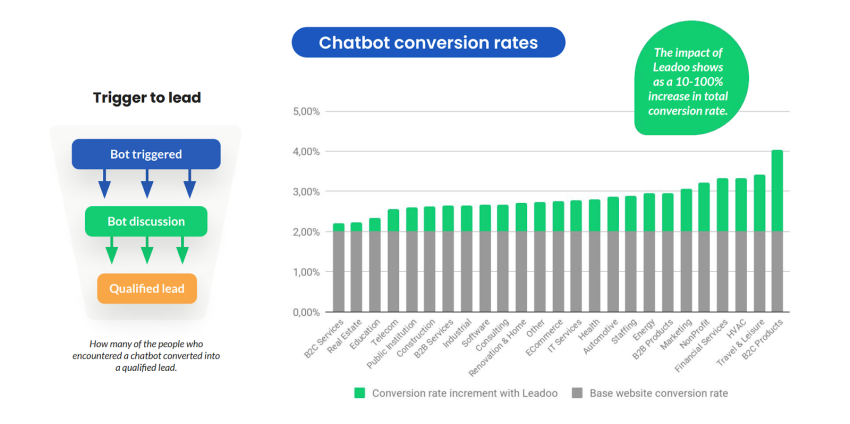
Not every visitor to your website is looking to make a purchase. Many people will casually browse or simply be curious about your offerings. Chatbots are one of the top communication channels they use along the buying journey to ask basic questions and even discuss pricing.
You can also program chatbots to ask questions about a visitor’s budget, demographic, and specific requirements. Answers to these questions will help you to qualify visitors and set the context for your team to follow up on potential opportunities.
Apart from basic scripts, modern chatbots detect user intent, identify high-value prospects, support engaging high-value prospects through smarter chatbot interactions, and route qualified leads straight to sales teams.
Most of the B2B buyer journey is over before prospects contact the dedicated sales team. In such situations, chatbots represent your sales representatives, helping visitors find what they’re seeking on your website and guiding them through the sales funnel.
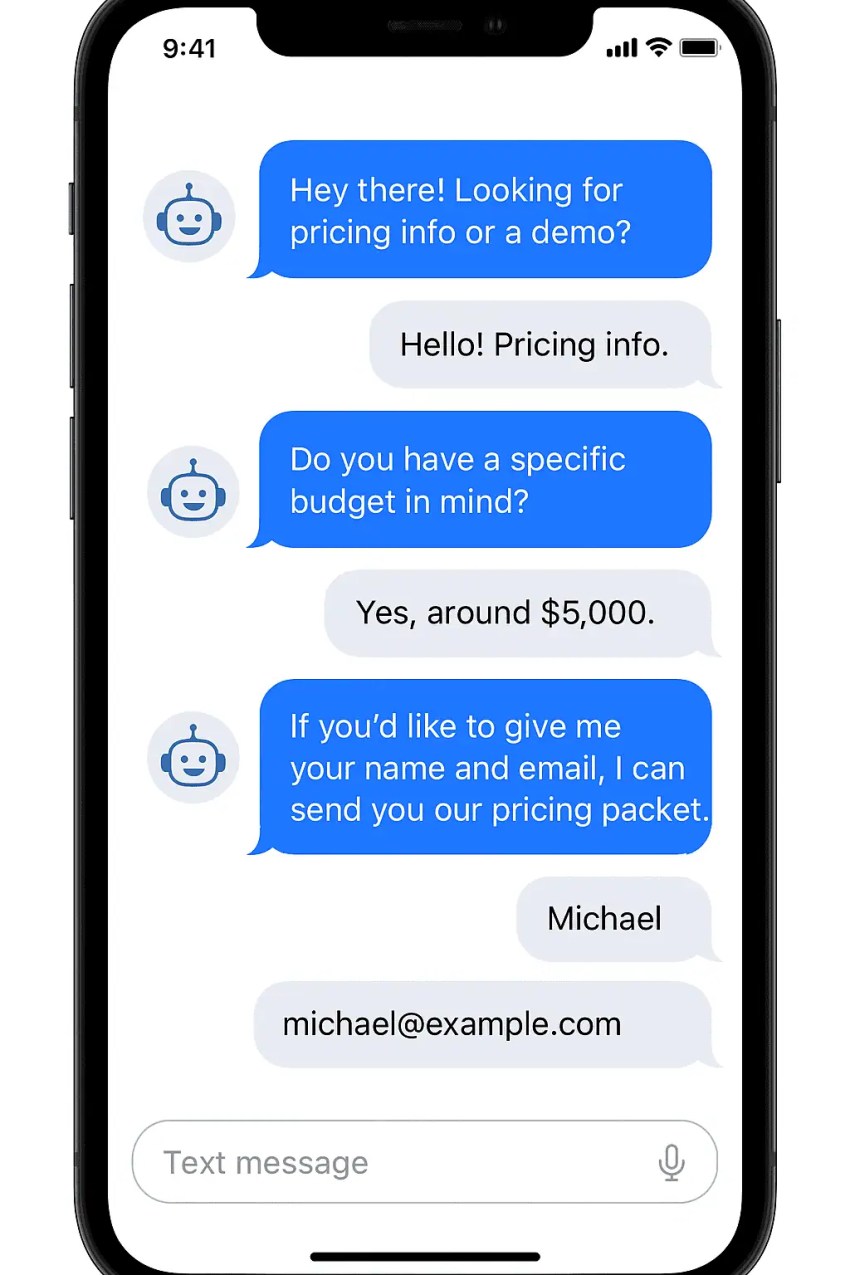
Cost-effective communication
Chatbots are available 24/7 without significant overhead, and they can handle multiple interactions simultaneously. This minimizes the need for extensive customer support teams, especially when businesses need small teams to control costs.
Chatbots make your current teams more productive and efficient. They answer several frequently asked questions, helping your team to focus on more critical issues and complex conversations. They also enable you to optimize resources and improve overall efficiency across the entire workflow.
User data collection and insights
Conventional methods require website visitors to fill out generic contact forms or capture forms, which lack a human touch and are monotonous compared to modern conversational marketing. They can also be too lengthy, resulting in the customer leaving your website within minutes, if not seconds.
Chatbots follow a conversational approach, making customers more likely to engage and provide information during customer conversations. You can collect valuable customer data, such as preferences, behaviors, and pain points, including detailed visitor behavior insights.
This data helps determine trends and patterns to gain actionable insights that refine your marketing efforts, lead-generation strategy, improve targeting, and personalize future interactions at scale using detailed analytics.
Improved customer experience
We live in an information-charged, attention-starved world, and today’s customers lack the interest or focus to go through an entire website. Studies show that the average time people spend on a webpage is 54 seconds.
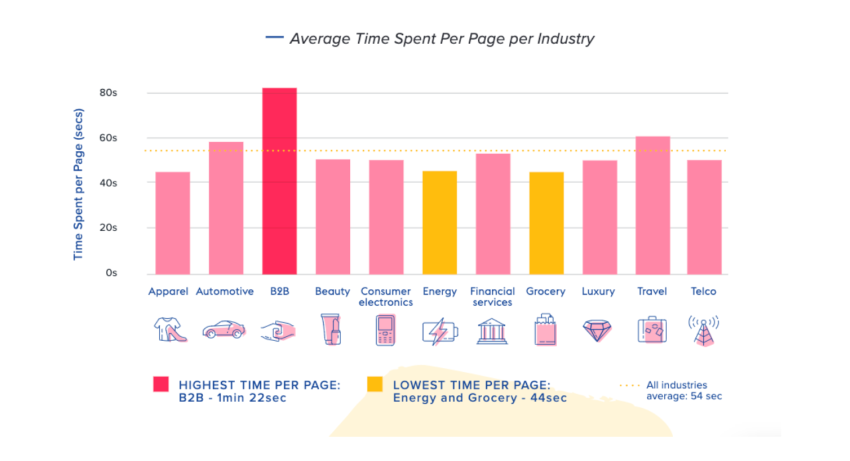
So, you need to give them an easier way to express their needs and get solutions without depending on outdated traditional web forms.
With a conversational AI chatbot for sales, you can take your customer satisfaction and experience to the next level using AI-powered tools. Think of it as a shopping assistant for your customers. These lead-generation chatbots can recommend products, answer questions, and seamlessly guide users where they wish to go.
What Makes a Chatbot Effective for Lead Generation?
In 2026, simple decision-tree bots have faded out. Modern systems handle multi-step tasks using advanced tools and actively move prospects forward. A high-performing lead generation chatbot works like a digital SDR and helps shorten the sales cycle for most businesses.
An effective chatbot should:
Engage visitors instantly (5-minute rule)
Fast responses increase lead conversion chances. Responding within five minutes can improve conversion odds by up to 900%. Top-performing chatbots trigger conversations using intent signals, for example, when a visitor checks a pricing page twice within 24 hours. They can start a conversation before the user leaves, or enable automated routing and advanced routing to the right teams.
Qualify leads using smart questions
Chatbots replace static forms with dynamic frameworks such as BANT (budget, authority, need, timeline). This interactive method improves lead qualification efficiency by up to 45%, supports nurturing leads, and ensures sales teams spend time only on sales-ready prospects.
Integrate with your CRM (bi-directional sync)
Modern chatbots, along with sending notifications, support crm integration and sync with crm systems, ensuring deep integration across tools. They identify whether a visitor already exists in your system, update records, attach full chat transcripts, and trigger alerts in tools like Slack or Microsoft Teams so sales teams can step in immediately.
Personalize responses based on behavior
Chatbots use first-party intent data based on visitor behavior and past chatbot interactions to adjust tone and offers. A visitor coming from a top 10 CRM search may see a comparison guide, while someone from an enterprise-focused campaign may receive an offer for a custom ROI (return on investment) consultation.
Support multiple communication channels
Buyers move across platforms. Effective chatbots maintain single, continuous customer conversations across your website, WhatsApp, Instagram, and SMS, so users can switch devices without repeating information.
Key Features to Look for in a Lead Generation Chatbot
Do not get distracted by surface-level features. Focus on what directly impacts cost per lead and customer acquisition using chatbot software with strong capabilities.
Generative intelligence and intent detection
Older bots fail when users make small changes in phrasing or spelling. Modern systems use AI tools and understand the meaning behind questions. Whether a user asks about pricing directly or indirectly, the chatbot recognizes intent and responds accurately.
Intelligent workflow automation
A strong chatbot directs traffic based on lead value and automates the entire workflow. High-intent prospects from large companies move straight to a live agent, while lower-intent users enter automated nurture sequences.
OTP and data verification
To prevent low-quality or fake entries, top chatbots include one-time password verification through email or SMS during the conversation. This ensures high-quality lead data and that every lead in your system remains valid and reachable.
Native meeting booking
Speed drives conversions. Chatbots should connect directly with tools like Calendly, Google Calendar, or Outlook so users can schedule demos within the chat window, removing delays caused by email back-and-forth.
Advanced analytics and attribution
Strong analytics show which content and campaigns generate leads. Multi-touch attribution helps track the exact blog post or ad that led to a conversation and eventual sale.
Multi-language support and scalability
Global growth requires chatbots that support multiple languages. Real-time translation across 50+ languages allows businesses to capture leads in new markets without building separate regional teams.
5 Best AI Chatbots for Lead Generation
There are several AI chatbots on the market for effective lead generation. Below are the top five picks.
1. Nextiva
Nextiva offers live chat automation that helps engage visitors and qualify leads effectively. The platform supports communication through multiple channels, including website chat, SMS, and social media.
By seamlessly integrating it with a CRM platform, you can more easily manage quality leads and set custom workflows to handle different inquiries from various channels.
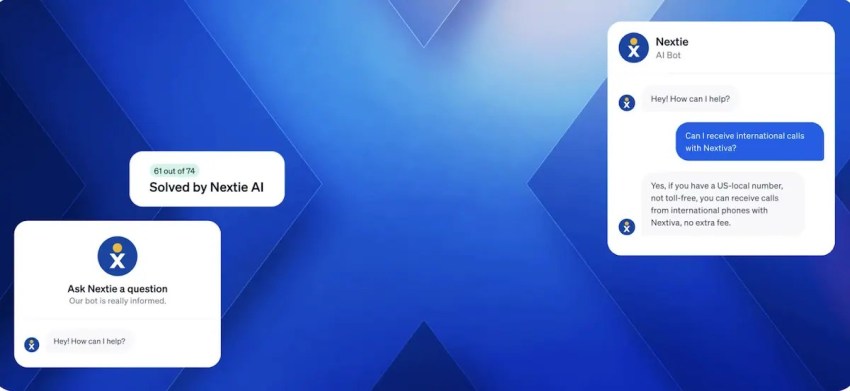
With Nextiva, you get support for over 50 languages, making it easier to respect customers’ preferences for the language they want to communicate in. The solution uses natural language processing and machine learning to keep these interactions personalized to users’ needs.
While AI lets you address routine inquiries, it seamlessly transfers communication to the human support team when encountering a complex query or when customers need their issue resolved urgently. You can easily customize and train the virtual agents to route conversations to live agents.
Nextiva is a provider on this list that connects digital AI chat and traditional sales communication (voice and video). It works best for businesses that want a single platform to manage every customer interaction.
Pros and cons of Nextiva chatbot
 Pros
Pros
Unified omnichannel inbox (web, chat, SMS, voice) ensures no lead data lost
AI summarization reduces manual CRM updates
Web-to-phone callback increases conversion opportunities
 Cons
Cons
May offer more capabilities than smaller teams immediately need
Pricing can vary based on usage and feature selection
Initial setup may require implementation support
Lead generation highlights:
- Omnichannel continuity: Maintains a single lead profile across chat, SMS, and social channels
- AI summarization: Summarizes conversations so sales reps can quickly understand lead intent
- ACD callback: Allows high-intent visitors to request an immediate call from a sales agent
Hear why XBert AI is the best AI receptionist
XBert AI receptionist handles customer questions, captures leads, and books appointments. Try it free for 14 days.
2. Drift
Drift offers a chatbot platform that helps marketers generate leads through live chat and in-app messaging. It integrates directly with your calendar, assisting prospects in booking meetings through the chat interface.
Its integration with tools like HubSpot and others can improve your existing workflows. Although Drift works well with most platforms, some users have reported challenges when integrating with Salesforce.
Here are more details about their challenge:
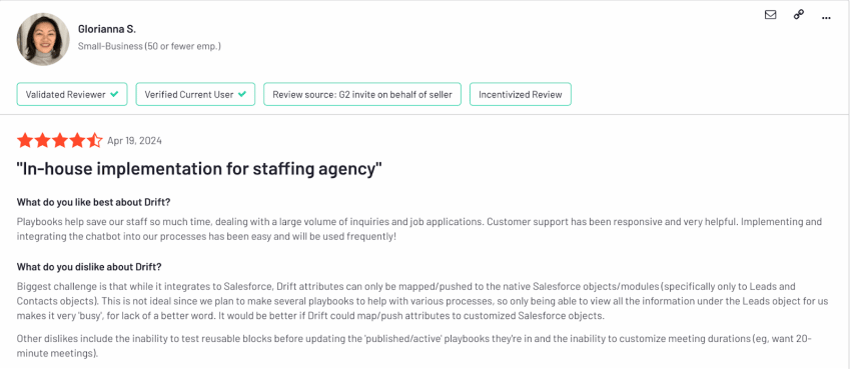
Overall, users found Drift easy to implement into existing processes, making the team more effective in handling large volumes of inquiries. However, while it’s popular, some users might find its advanced configuration challenging.
Pros and cons of Drift chatbot
Pros
Identifies anonymous visitors from target accounts
Fastlane meeting booking reduces speed-to-lead delays
Advanced routing based on behavior and account ownership
Cons
High starting price ($2,500/month)
Integration challenges with Salesforce reported
Slower feature updates noted by some users
Lead generation highlights:
- Drift intel: Identifies anonymous B2B visitors using IP-to-company matching
- Fastlane for forms: Replaces static forms with interactive chat to reduce drop-offs
- Account-based routing: Directs high-value leads to the right account owner instantly
3. Intercom
Intercom lets users customize chatbots to fit their specific needs. Its customizable chat interface makes it easier for them to engage and qualify leads.
The chatbot comes with pre-built templates to automate repetitive interactions. You can rely on the platform to send follow-up emails, schedule appointments, or update user information, which allows sales teams to focus on performing activities critical to their role.
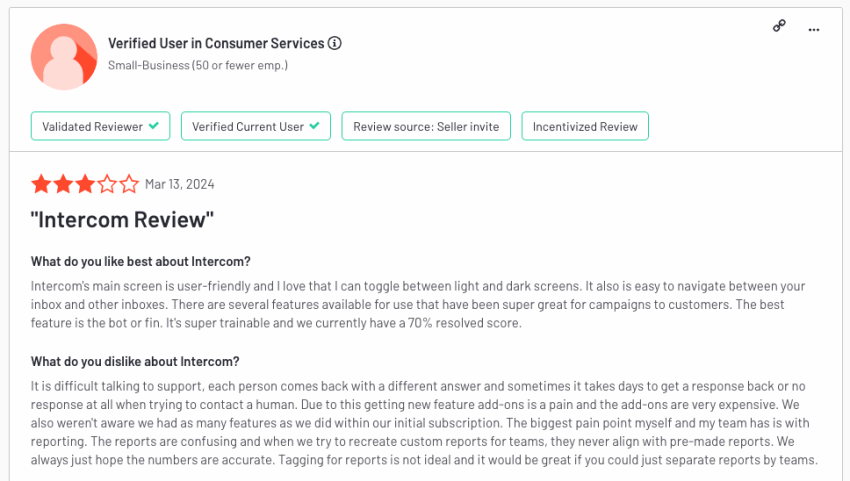
These chatbots support communications on multiple channels, helping businesses attract inquiries across different platforms. Despite their great aesthetic, there might be some gaps to take into account regarding Intercom’s customer experience.
Pros and cons of Intercom chatbot
Pros
Fin AI agent resolves queries using advanced AI
Highly polished and customizable chat interface
Strong automation for onboarding and engagement
Cons
Pricing can scale quickly with usage
Learning curve for new users
Reports of slower support response times
Lead generation highlights:
- Fin AI agent: Handles complex, non-linear sales conversations using advanced AI
- PLG triggers: Engages users based on in-product behavior
- Interactive product tours: Guides prospects through features directly within chat
4. Zendesk
Zendesk offers live and automated chat functionalities that trigger based on users’ actions. The chatbot monitors the behavior of users in real time. When the moment is right, the chatbot is triggered to engage visitors with appropriate messaging.
Whenever a complex query seems tricky to address, the chatbot seamlessly hands it over to a live agent, helping prospects get assistance that’s personalized to the complexity of their questions or problems.
The chatbot showcases the performance with details on timing, the number of incoming chats, and agent activity via email to track performance effectively. Be mindful that the company tends to be exceptionally aggressive with service renewals, as seen below.
Pros and cons of Zendesk chatbot
Pros
Extensive ecosystem with 1,000+ integrations
Strong global support and compliance
Reliable behavior-based chat triggers
Cons
Interface can feel complex and heavy
Rigid contracts and add-on costs
Scaling teams increases costs due to per-agent pricing
Lead generation highlights:
- Sunshine Conversations API: Enables custom lead-gen workflows across messaging channels
- Behavioral triggers: Engages users based on actions like visiting pricing pages
- Knowledge base integration: Educates prospects before routing them to sales
5. Tidio
Tidio is a user-friendly chatbot that provides a no-code builder with various pre-built chatbot templates for effective lead generation. It offers a live chat that runs around the clock and instantly answers users’ queries.
With Tidio, you get predetermined canned responses to common questions users ask. Simply put, you don’t have to type in the same answer to a question asked several times.
Although users love Tidio’s customizable features, some feel that more advanced customization options would be beneficial.
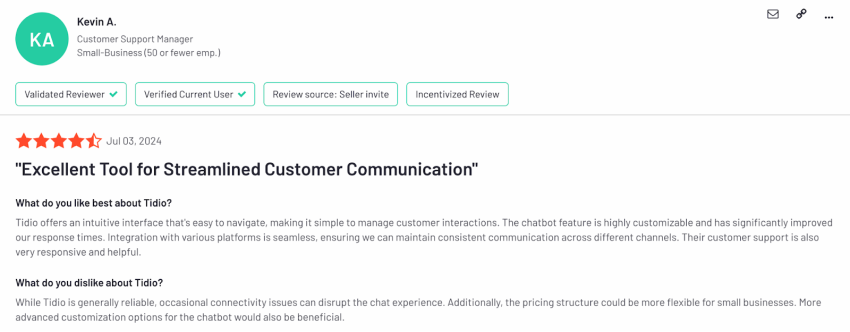
Like many other automation tools, Tidio offers multi-channel functionality to connect with potential customers on different platforms.
Pros and cons of Tidio chatbot
Pros
Quick setup with pre-built templates
Strong ecommerce integrations (e.g., Shopify)
Easy for non-technical users to manage
Cons
Limited scalability for larger teams
Basic analytics and reporting
Usage limits on lower-tier plans
Lead generation highlights:
- Lyro AI engine: Learns from website content to answer lead questions
- E-commerce integrations: Works with platforms like Shopify and Wix to recover abandoned carts
- Visual lead scoring: Uses simple workflows to categorize leads based on behavior
How to Choose the Right Chatbot for Your Business
Choose a chatbot based on your sales complexity, especially if your technical team is limited or lacks technical expertise.
- Small businesses (solopreneur tier): Focus on speed to value. Choose tools with pre-built templates for lead generation. If setup takes longer than 30 minutes, the tool likely adds unnecessary complexity.
- SaaS companies (product-led tier): Use chatbots with event-based triggers. A chatbot should track user actions, such as repeated feature use without upgrading, and step in as an in-app guide to push conversions at the right moment.
- E-commerce (conversion tier): Focus on revenue recovery. Chatbots should handle order-related questions and trigger abandoned cart reminders through channels like WhatsApp to bring users back and complete purchases.
- Enterprises (scale tier): Security and control matter most. Look for SOC 2 Type II compliance, single sign-on for teams, and the ability to manage large volumes across multiple channels in one unified platform like Nextiva.
Do’s & Don’ts of Conversational Sales Chatbots
Below are some practices you should follow (and some to avoid) when working with conversational sales chatbots to support long-term business growth:
Chatbot dos for lead generation
Here are the things you should do:
- Know your purpose: Before setting up a chatbot, you must know your purpose. Do you want to generate more leads, have more conversations, or simply improve user experience? Setting clear goals is the first step.
- Define your target audience: For any lead-generation strategy to work, you should direct your efforts at the right audience. Focusing too much effort on people who do not need your product would waste time and resources.
- Craft engaging content: To improve your customer engagement, craft answers that are not only informative but also engaging. Customers are more likely to interact if your responses are creative and friendly. Add a pinch of humor to connect better with the user.
- Develop a persona for your chatbot: Your chatbot must have a personality that syncs with your brand’s voice. It can be funny, quirky, gentle, sassy, or anything that you would like it to be. Just don’t sound robotic. A unique personality will make your brand stand out.
- Personalize your messages: Personalization is the key to designing a perfect chatbot, as just giving real-time responses is not enough. Advanced personalized features can increase return on investment by 200%.
- Monitor performance and optimize: You must regularly monitor your chatbot’s performance to identify areas for improvement. Pay attention to the numbers — how many views or clicks, how much time users spend, etc., and optimize your campaign accordingly.
Chatbot don’ts for lead generation
Follow these suggestions to help you avoid the pitfalls of working with conversational sales chatbots:
- Don’t sound too formal: Keep the interactions fun and friendly. Remember that you are talking to a human, and humans connect better when there is a personal touch. Avoid overly scripted responses or robotic language, which may turn your customers away.
- Don’t give generic answers: Be specific with your answers. Listen to the user carefully. Respond to what they’re asking, and provide precise and clear explanations.
- Don’t nag the user: Your ultimate goal may be to increase conversion rates. Remember that a user will not immediately purchase without knowing about your brand. Focus on providing value first.
- Don’t set and forget your chatbot: To provide accurate information to your users, regularly update your chatbot with the latest knowledge about your products and offerings.
- Don’t avoid experimentation: You must continuously test and experiment with your chatbot to see what works best for you. Try different chatbot scripts, responses, etc., to find out what resonates the most with your audience.
Related: Top Chatbot Providers: Key Features, Uses, & Campaign Ideas
All Your Chat Needs Covered
AI-powered chatbots assist customers seamlessly with a 24/7 live chat facility, offering personalized interactions.
These platforms connect with CRMs to enrich the context of every interaction. You can train many of them to lead visitors to share their contact information while asking relevant questions that help qualify them as leads.
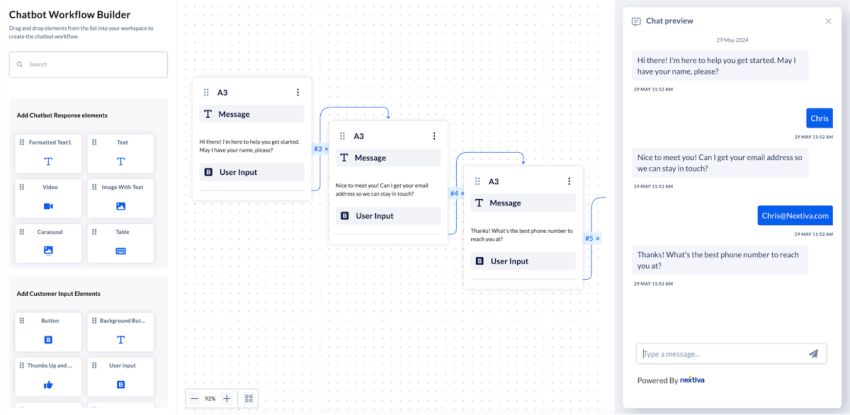
Whether you want to engage customers with a live chat or let AI take the lead, Nextiva’s marketing suite has you covered.
Nextiva offers a highly customizable chat solution that personalizes customer experience at scale.
AI chatbots. It could automate up to 90% of your interactions.
Frequently Asked Questions (FAQs) About Lead Generation Chatbots
An AI chatbot for lead generation is a conversational software tool powered by artificial intelligence and natural language processing. It helps businesses identify, engage, and qualify potential customers on websites or social media.
Unlike traditional button-based bots, these chatbots understand user intent, answer detailed product questions around the clock, and capture key information such as email addresses and phone numbers. They then pass high-quality prospects directly into your CRM, ready for follow-up.
A strong example comes from Nextiva’s AI Virtual Agent. For instance, a visitor lands on a pricing page and pauses, unsure about next steps. The chatbot triggers a proactive message: “Hi! Exploring our Power Suite? Want a quick 2-minute breakdown of how AI transcription saves teams 10 hours a week?
Once interest is shown, the chatbot asks a few targeted questions, such as the company size and industry, then offers instant demo booking on a sales rep’s calendar.
Chatbots work by using natural language processing (NLP) to understand user intent and respond accordingly. They can be integrated with various platforms, including websites, social media, and messaging apps, to engage with potential customers.
When a user interacts with a chatbot, it analyzes the input and generates a response based on its programming and the data it has been trained on. This enables chatbots to provide personalized interactions, answer frequently asked questions, and even route conversations to human agents when necessary.
For instance, a lead generation chatbot can ask targeted questions to qualify leads and then direct high-value prospects to a dedicated sales team for further engagement.
Modern chatbots execute clear, revenue-focused workflows.
Website lead capture (Always-on funnel): Chatbots replace static forms by engaging users based on behavior, such as repeat visits to pricing pages.
Demo booking (Speed-to-lead): Instant scheduling turns conversations into confirmed meetings within seconds.
Lead qualification (Smart filtering): Bots score leads in real time, ensuring only qualified prospects reach sales.
Product recommendations (Digital concierge): Chatbots suggest relevant products or plans based on user activity, improving conversion rates.
Customer re-engagement (Win-back strategy): Bots reconnect with inactive leads through messaging channels with targeted offers or content.
Chatbots raise conversion rates by removing speed-to-lead delays. Quick responses are important as reaching a lead within minutes sharply improves the chances of conversion. Chatbots engage visitors instantly, day or night, so they don’t leave for a competitor. They guide users with short, interactive prompts instead of long forms, making it easier to move toward a demo or signup.
Chatbots do not replace SDRs, but they strengthen their impact. They handle early-stage tasks such as answering common questions, verifying contact details, and qualifying leads. This frees SDRs to focus on high-value conversations and closing deals. Strong teams use a hybrid approach where the chatbot prepares the lead before passing it to a human rep.
Yes. Many regions, including the EU and California, require chatbots to disclose their identity. A chatbot should introduce itself clearly in the first message, such as stating it is a virtual assistant. This approach builds trust and keeps your lead generation process compliant.
Track performance using clear, outcome-based metrics:
Lead-to-meeting rate: Number of chats that turn into booked demos
Cost per lead (CPL): Total chatbot cost divided by leads generated
Handoff success rate: Number of qualified leads accepted by the sales team
Yes, they perform well in B2B environments. Chatbots support account-based marketing by recognizing visitors from target companies and tailoring the conversation. For example, they can greet a known company and guide them directly to relevant solutions, which increases engagement and improves conversion quality.