

 Customer Experience
  Blog
Blog  Business Communication
  Leadership
  Marketing & Sales
  Nextiva News
  Productivity
  VoIP
VoIP 

Conversational AI talks and agentic AI acts. Sure. But that distinction is only useful up to a point. The question that matters when you’re putting either into production is what changes to your risk, architecture, and approval process when software is allowed to do something rather than simply telling someone what to do.
That distinction is becoming harder to ignore. McKinsey’s 2025 global survey found that 62% of organizations are already experimenting with or piloting AI agents, while 23% are scaling an agentic system somewhere in the enterprise. Yet no more than 10% report scaling agents within any individual business function. At the same time, 51% of organizations using AI report experiencing at least one negative consequence. That’s a lot of interest and relatively little deep deployment.
The bottleneck is capability: knowing what happens when the system is wrong. That’s a different category of risk.
In this guide, we’ll use reversibility as the dividing line between the two. We’ll look at autonomy as a spectrum, examine how the underlying architectures differ, and offer a practical framework for deciding what AI should be allowed to do without human approval.
The Distinction, Stated Precisely
When you strip everything back, the difference between agentic AI and conversational AI is straightforward:
- Conversational AI is built to understand and respond to people.
- Agentic AI is built to pursue a goal by taking actions.
That sounds like a simple distinction, but the important difference is what sits behind the large language model. Once an AI system can interact with external systems and change their state, you’re dealing with a fundamentally different risk profile.
Conversational AI
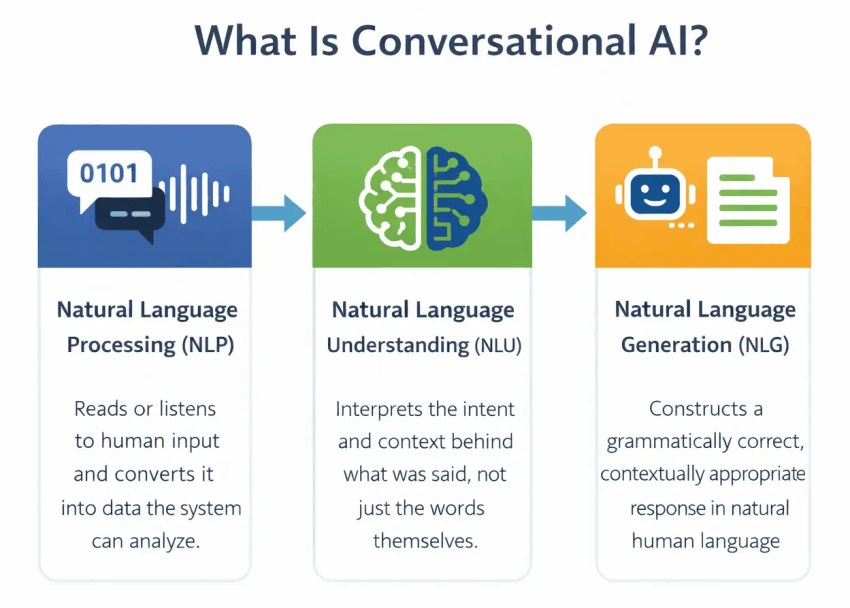
Conversational AI understands and produces language. This is called natural language processing.
It can classify intent, extract entities, and maintain context across turns. It can retrieve information, use generative AI to form responses, and communicate through text or speech. It can also retrieve information from another system. A customer might ask about an order; the AI looks up the order record and returns the answer.
Then it stops. That’s where the line is. If it’s not connected to an external tool that can change state, the process ends.
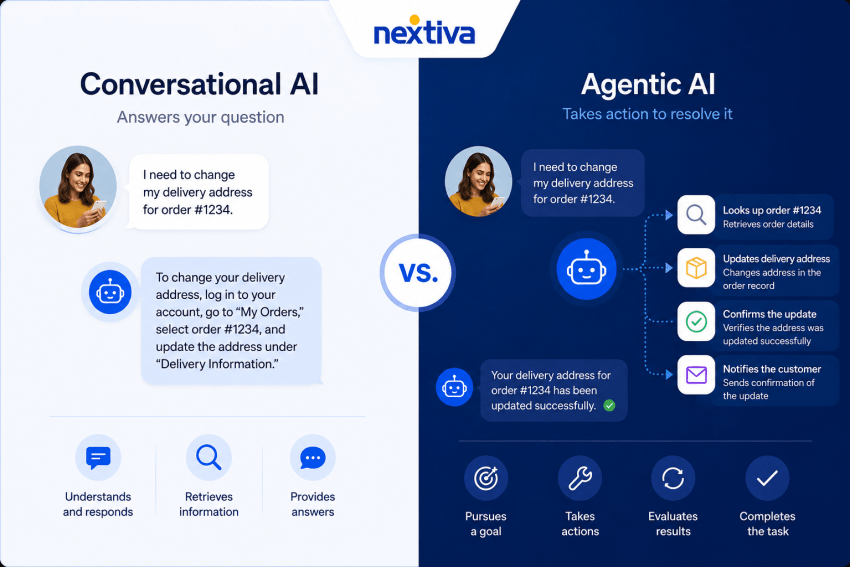
A conversational system can tell a customer that their order is eligible for a refund. However, it can’t issue the refund. That’s where agentic AI excels.
Agentic AI
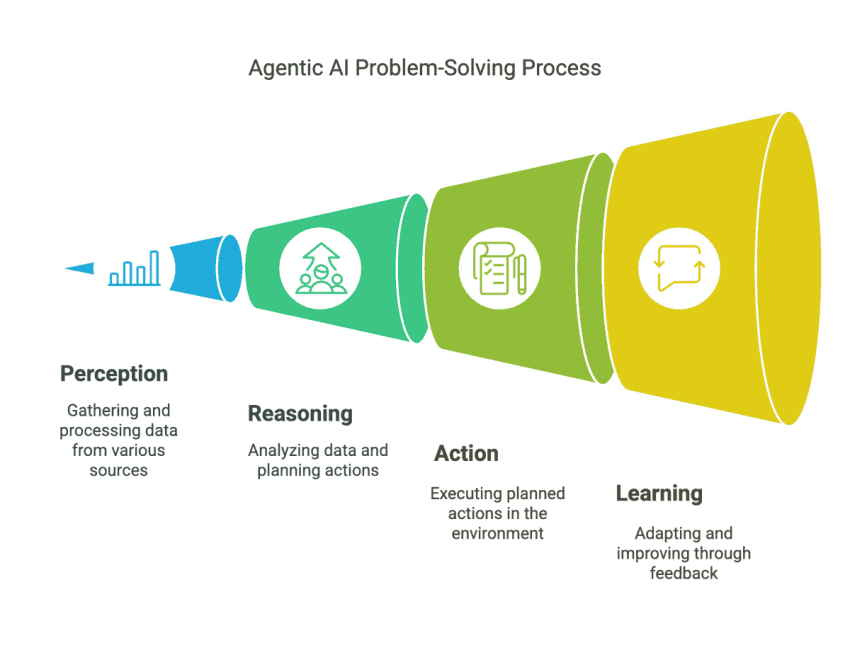
Agentic AI adds a loop. The system works toward a goal by deciding what needs to happen, selecting the appropriate tool, executing an action, evaluating the result, and deciding whether another step is required. Tool or function calling provides the mechanism for interacting with external systems and APIs.
The model itself still produces text. What makes the system agentic is that something listens to that output and has permission to act on it. That distinction is important because it clarifies where the risk lies.
A highly capable model that’s connected only to read-only information has a very different risk profile from the same model that’s connected to a payment system, CRM, or order management platform and has permission to make changes.
So when I’m assessing an agentic system, I don’t start by asking how intelligent the model is. I ask what it’s connected to, what it can change, and what happens when it makes the wrong decision.
Reversibility Is the Real Dividing Line
A conversational system can give you a wrong answer. An agentic system can take the wrong action. Those sound like variations of the same problem until you consider what happens next.
If the answer is wrong, you can correct it, apologize, and improve the system. If the action is wrong, you may already have issued the refund, cancelled the order, changed the record, or contacted the wrong customer. The difference is reversibility.
Autonomy is a spectrum
Your choice shouldn’t be between using conversational AI and using agentic AI. Rather, it’s about choosing what to automate and when.
There are several levels of autonomy. The right level depends on what happens when the system gets it wrong:
| Level | What the system does | If it is wrong | Control needed |
|---|---|---|---|
| Answer | Responds using knowledge or retrieval | Bad information; correctable | Accuracy monitoring and escalation |
| Read | Looks up records to inform the answer | Wrong context surfaced | Access scoping |
| Draft | Prepares an action for a human to approve | Nothing, until a person approves | Review queue |
| Act, reversible | Books, schedules, updates, and records | Undo and rerun | Audit log and rollback path |
| Act, irreversible | Sends money, deletes data, contacts a customer | Can’t be taken back | Explicit authorization and hard limits |
The important question isn’t whether you should use agentic AI. It’s which row each workflow belongs in and whether you’ve built the controls that row requires. For example, order tracking and payment might both be actions, but they shouldn’t have the same level of autonomy. One can usually be changed, while the other may be much harder to recover from.
Earn the right to act
Autonomy should be earned per action, not granted to the system as a whole.
Start with the lowest-risk version of the workflow:
- Let the system read information before allowing it to change that information.
- Let it draft an action before allowing it to execute one.
- Measure what happens.
If an action is consistently correct, easily reversible, and tightly bound, you have a case for increasing the system’s autonomy. If the consequences are hard to reverse, keep a human involved and put hard limits around what the system can do.
How the Architecture Differs
The architectural difference isn’t simply that agentic AI has more AI behind it. Conversational systems are generally built around a relatively linear interaction:
- Understand the input.
- Retrieve the relevant state or information.
- Generate and return a response.
Agentic systems introduce a loop:
- Work toward a goal.
- Select and execute a tool.
- Evaluate the result and decide what happens next.
That difference changes the latency budget, the failure modes, and the way you need to manage state.
The conversational pipeline
A conversational system is linear. The customer provides an input, and the system interprets the intent, retrieves relevant information, generates a response, and delivers it back through the appropriate channel.
It’s like a conveyor belt in a factory. Everything happens, and then there’s a final output. However, there’s a major difference between a conveyor belt and a customer interaction: Someone is waiting for you to resolve their problem on the other end of the phone.
Nextiva’s Customer Patience Benchmark found that 85.3% of website chat users expect a response within five minutes, while 72.3% of phone callers expect the same.
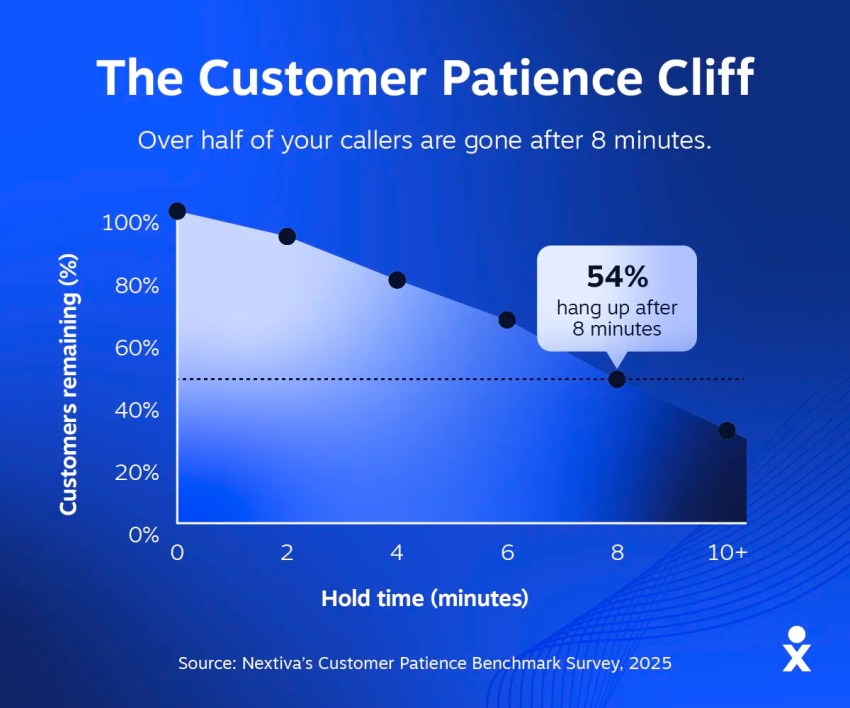
That makes response speed part of the architecture rather than a performance metric you worry about later. Every extra model call, retrieval step, or external lookup adds time. In a customer-facing conversation, those milliseconds and seconds are visible to the person on the other end. It may only be short, but it all adds to your total resolution time.
The agentic loop
An agentic system is iterative rather than linear. It’s not a conveyor belt. It’s more like a… well, it’s more like a loop if we’re being honest.
The model interprets the goal, uses generative AI to get a result, and decides what to do next. It may repeat that process several times before task execution to ensure it gets it right. That’s literal machine learning.
That creates three production questions that don’t exist in quite the same way for a simple conversational system:
- What happens when a tool call fails?
- How many iterations are allowed?
- What state persists between steps?
Those decisions need to be designed into the system. If a tool fails, the agent needs a defined fallback rather than an infinite retry loop. Think about the times you’ve tried to log in to a portal and kept getting the same error message, even though you entered the correct password. That’s what you need to avoid here. If a task requires multiple steps, you need a limit on how long the agent can keep reasoning and acting.
There’s also a trade-off that many agentic AI discussions overlook (and it’s an important one): each loop iteration costs time and tokens.
A system that reasons more deeply can potentially make better decisions. But it takes longer to reach them. That’s fine when the customer isn’t waiting for the result, but it’s a very different proposition when you’re trying to maintain a natural voice conversation.
That’s another reason why you shouldn’t make every customer interaction fully agentic. Use the conversational architecture where response time is visible, and the customer is waiting. But use the agentic loop when the work is more complex, the steps are well-defined, and a few extra seconds won’t damage the experience.
Governance: Deciding What It May Do Alone
Governance is where agentic AI becomes an enterprise architecture problem. The question isn’t whether an agent can take an action. It’s whether you’ve decided that it should be allowed to take that action without someone checking it first.
That decision needs to account for three things:
- What the action can change
- How difficult it is to reverse
- What happens if the agent gets it wrong
Defining when model outputs require human validation is one of the practices associated with organizations getting more value from AI. Governance isn’t simply a brake on deployment; done properly, it helps you deploy with more confidence.
There are three fundamentally different ways to supervise an AI system.
Human in the loop, on the loop, and out of the loop
There are three ways to supervise an AI system:
- Human in the loop: A person approves the action before the AI executes.
- Human on the loop: The action executes automatically while a person monitors the system and can intervene.
- Human out of the loop: The system operates unattended, with review happening after the fact.
None of these is inherently more mature than the others. The right choice depends on the workflow and its reversibility. A low-risk action that you can easily undo might operate without approval. An irreversible action might require explicit human authorization every time.
The goal isn’t to move everything toward full autonomy. It’s to give each action the level of autonomy it has earned.

Scope the permissions, not the prompt
This is probably the most important practical rule in the article. A prompt is guidance. It isn’t an access control.
If an agent has credentials that allow it to issue refunds of any size, telling it to “only issue refunds below $500” doesn’t create a meaningful security boundary. The actual controls need to exist outside the model.
I know, it probably should work that way. So let’s do everything in our power to ensure that we create genuine permissions and don’t get stung by making assumptions.
That means:
- Restricting what the API can access
- Enforcing transaction and spending limits
- Limiting which records and fields can be changed
Design every agent on the basis that it will eventually misunderstand its instructions, experience hallucinations, or be manipulated. Then ask a much more useful question:
If the agent behaves as badly as it’s permitted to behave, can we survive the result?
If the answer is no, the permissions are too broad.
When the action involves money
For a dose of seriousness, let’s look at situations when money’s involved. Payments are the clearest example of when to scope permissions, as they can be consequential and hard to reverse.
Rather than trusting an AI agent to behave correctly, emerging payment frameworks are putting identity, authorization, and transaction limits outside the model itself:
- Google’s Agent Payments Protocol, or AP2, uses cryptographically signed mandates to provide verifiable evidence of what a user authorized, what an agent assembled, and what was ultimately charged.
- Mastercard’s Agent Pay for Machines similarly focuses on verifying agents, enforcing spending limits, and controlling machine-to-machine transactions.
- Visa is developing its own trusted-agent infrastructure around authentication and authorization.
The important point isn’t which protocol wins. It’s why this infrastructure exists in the first place. “The agent did it” isn’t an acceptable answer when money moves (or when any customer experience matters, realistically).
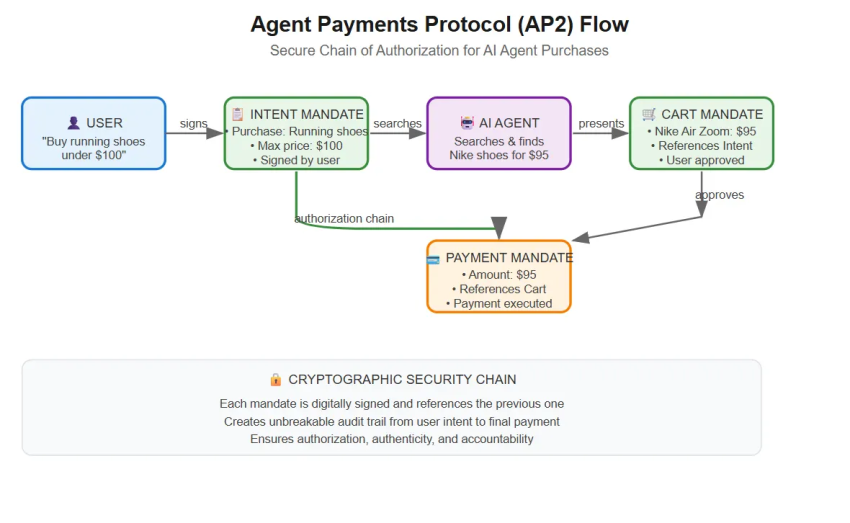
Any team giving an agent authority over an irreversible action needs three things:
- A verified identity
- An enforced limit
- A record of what was authorized
The model’s confidence isn’t one of them.
Most internal deployments don’t yet have all three. That should tell you something about where the real work in agentic AI still sits.
Where Each AI Fits
Most enterprises need to choose between conversational AI and agentic AI.
The more useful architecture is often a conversational front end with agentic automation behind it. The customer gets a fast, natural interaction, while the systems behind that interaction can handle the more complex work.
Put conversational AI at the customer boundary
Conversational AI is usually the better fit when the customer is directly involved in the interaction.
That’s where three things matter most:
- Response speed
- Natural language
- The ability to recover gracefully from a wrong answer
A customer shouldn’t have to wait while an agent reasons through six backend actions just to answer a simple question. The conversational layer should handle the interaction and keep the experience moving.
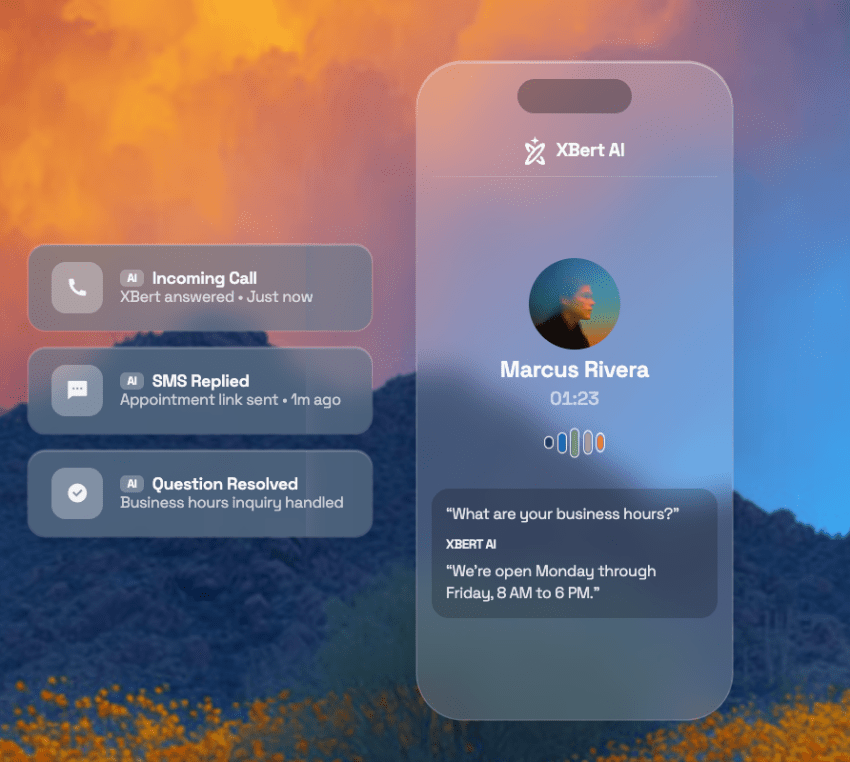
Put agentic AI behind the conversation
Agentic AI earns its place when the work requires multiple steps across systems. That could mean reconciling records, assembling a case file, or completing post-interaction updates. The customer doesn’t need to see every step, and a few extra seconds of processing are less noticeable when the work happens behind the scenes.
Tata Play is a good example. Its customer service operation combines conversational channels with AI-powered automation connected to backend systems, so it can resolve routine requests without a human agent.
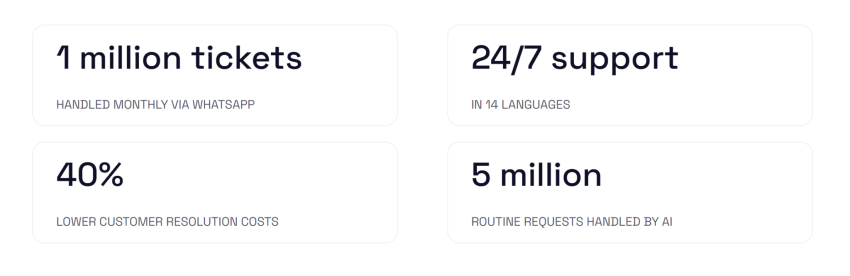
This approach has helped Tata Play handle more than 5 million routine customer requests through AI and reduce support costs by 40%. The important part isn’t that Tata Play chose agentic AI over conversational AI. It combined the two.
The customer interacts through a conversational interface. Automation handles the work behind it.
Draw the boundary around the risk
The dividing line between the two shouldn’t be arbitrary. Draw it around what the system is allowed to change and how difficult that change is to reverse.
If an action is low risk, well defined, and easily undone, agentic automation can make sense. When an action involves money, sensitive data, or an outcome that cannot realistically be recalled, much stricter controls are required.
Evolving a Conversational System Into an Agentic One
You don’t need to rip out an existing conversational system to introduce agentic capabilities.
Approach the transition as a question of permission rather than technology. The model is rarely the difficult part. The difficult part is deciding what you’re comfortable allowing it to do.
Instrument what already fails
Start with the places where your existing system hands conversations to humans. Look for three things:
- Repetitive tasks
- Clear decision points
- Consistent outcomes
Those are usually the strongest candidates for agentic automation because you already have evidence that the work exists and can define what a successful outcome looks like.
Before giving an agent permission to act, measure how often the current process succeeds, where it fails, and what happens when it does.
Expose actions through properly scoped APIs
Once you’ve identified a suitable workflow, expose the required actions through APIs with limits enforced outside the model.
Don’t give an agent broad access to a database or application and rely on the prompt to keep it within bounds. Instead, define exactly what each action can do, which records it can access, and what limits apply.
A tool that can update one specific customer field is very different from one that can modify an entire customer record. The narrower the permission, the easier it is to control the worst possible outcome.
Start in draft mode
Like with any new technology you introduce in your business, it pays to run a pilot program or proof of concept. Before allowing an agent to execute a new action, have it prepare the action for human approval.
Then measure three things:
- How often the action is approved
- What humans change
- Why actions are rejected
This process gives you evidence about whether the agent is ready for greater autonomy rather than forcing you to make that decision based on a successful demonstration.
Earn autonomy per action
This is the step most AI roadmaps skip. Don’t decide that an agent is autonomous. Decide that a particular action is autonomous.
If an agent consistently prepares accurate appointment changes, you may eventually allow it to make those changes without approval. If it regularly gets refund exceptions wrong, keep refunds in a review queue.
Autonomy should be earned through observed performance, not granted because the underlying model is impressive.
Build Conversational AI and Agentic AI With Nextiva
You don’t need to choose between conversational AI and agentic AI. The more useful question is whether your customer experience platform gives you the flexibility to use each where it makes sense.
Nextiva brings the conversational experience and the automation behind it into the same platform rather than forcing you to stitch together separate systems.
That means you can combine:
- Conversational handling across voice, chat, and messaging
- AI assistance for customer service teams
- Automation for routine customer interactions
The important part is controlling those capabilities. You can decide which interactions should simply answer questions, which should retrieve information, and which should take action. That gives your team a practical way to introduce greater autonomy without handing an AI system unrestricted access to your business.
Before you speak to a vendor, map your workflows against the reversibility spectrum we’ve used in this guide. You may already have automated workflows for content creation, financial risk management, or operational efficiency.
Ask yourself:
What can the AI do, what happens if it gets it wrong, and what level of approval does that action deserve?
Once you’ve answered those questions, evaluating platforms becomes much easier. You’re no longer asking whether an AI agent is capable of doing something. You’re asking whether the platform gives you the controls to let it do that thing safely.
Ready to put that thinking into practice? See how Nextiva Contact Center can help you build a more intelligent customer experience while keeping AI under control.
Explore Nextiva Contact Center →
Your AI-Powered Contact Center
Create amazing customer experiences with AI-powered contact center software. Scalable contact center platform built for omnichannel customer conversations.